
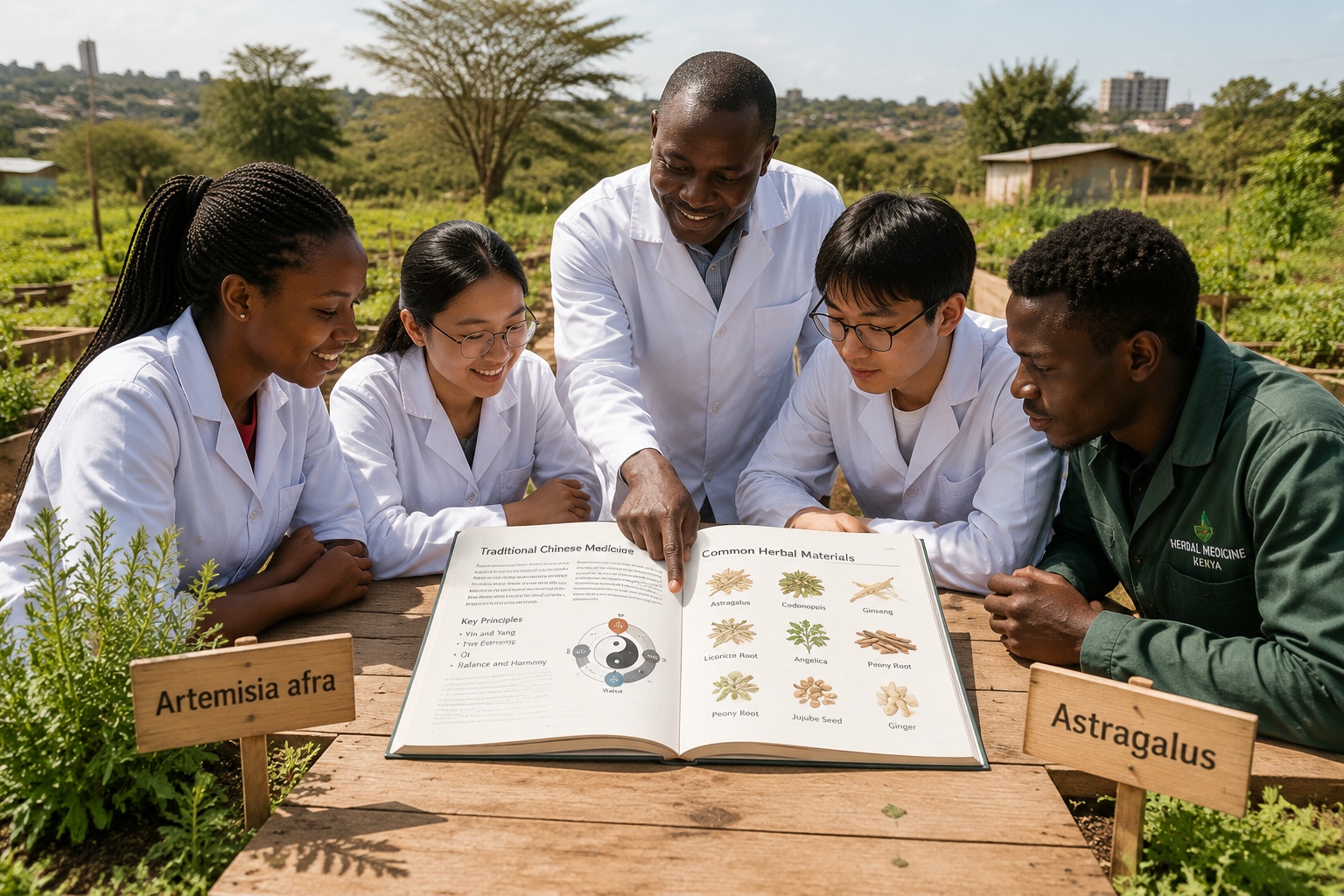

On a bright morning at a herb garden just outside Nairobi, a young Kenyan woman named Grace Wanjiru pulls a leaf from a low-growing plant and holds it up to the sunlight. “This is Qinghao — sweet wormwood,” she says, carefully pronouncing the Chinese name. “We have been using it for malaria for generations, but we didn’t call it that.” Grace is one of fifteen students enrolled in a new certificate course in traditional Chinese medicine (TCM) at a local college, and the course uses a brand-new English-language textbook written by Chinese and Kenyan scholars — one of the first of its kind. It covers about 60 common Chinese herbs, but also about 30 plants that grow wild in east Africa. “At first we thought TCM was strange,” she says with a smile. “Now we are finding it in our own backyard.”
China’s medical presence in Africa goes back decades, much longer than most people realise. Since 1963, Chinese medical teams have treated more than 200 million patients across the continent. Many of those teams included acupuncturists and herbal medicine specialists who brought their skills to hospitals from Algiers to Dar es Salaam. What is new is the attempt to teach TCM systematically in English, using materials produced inside Africa, with African plants and African health problems in mind. The Nairobi textbook project is one of the clearest examples of this change.
Why a textbook matters
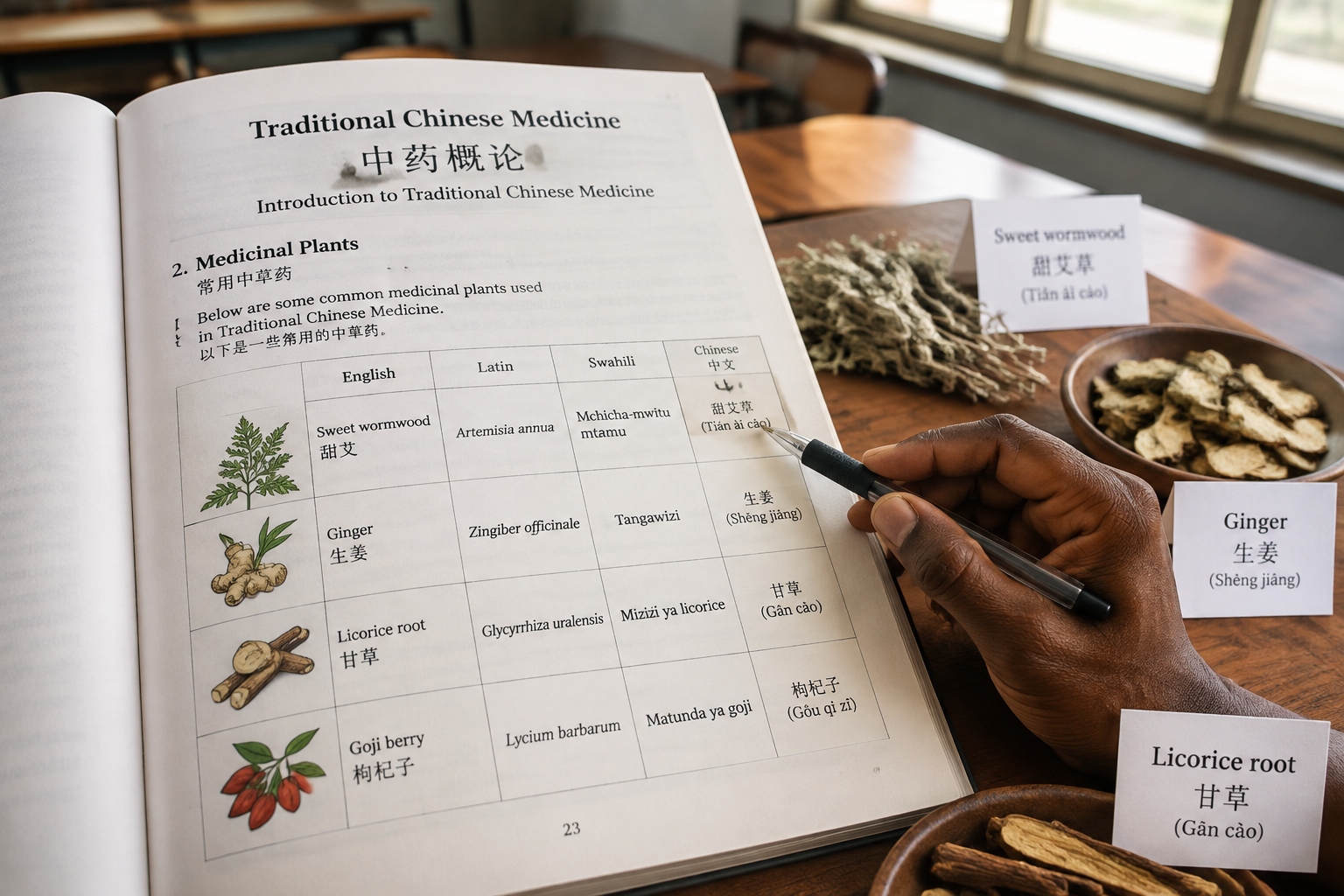
The making of the textbook took two years. A core group of pharmacognosists and medical educators from China and Kenya travelled to field sites around the country, photographed plants, and tested their chemical markers in a small laboratory. They debated terminology endlessly. The word “qi” was kept as a Chinese term, with a footnote explaining that it means more than “breath” or “energy”. By contrast, “yin” and “yang” are not left bare; each is explained as an aspect of dynamic balance, with examples from everyday life. “The biggest challenge is not translation,” says Dr Li Wei, a TCM professor who co-edited the book. “It is helping students connect concepts like meridians to their own cultural understanding of the body.”
During a field trip in the Rift Valley, the team came across a shrub that locals call “mnyaa”. Dried leaves were used as a mouthwash and a remedy for gum infections. DNA analysis showed it to be Rhamnus prinoides, a plant whose bark has been used in Chinese medicine for clearing heat. The shrub is now in the textbook with a note: “Mnyaa clears heat and expels dampness, much like the root of Phellodendron.” This kind of cross-cultural discovery appears throughout the book.
The book also addresses local diseases. Chapters on malaria, anaemia, and chronic joint pain replace some of the typical examples taken from Chinese textbooks. Each herb profile includes both the botanical name and local Swahili names when they exist. In class, students are often divided on whether to tap the pulse or look at the tongue first. The instructor encourages them to compare their own pulse-reading with the way their grandmothers feel a child’s forehead. This blending is at the heart of the book.
A garden that teaches itself
The textbook is only half the story. Next to the campus, a herb garden of about two hectares is both a farm and a classroom. Chinese species such as astragalus and ginseng share beds with African species such as Artemisia afra, a local cousin of sweet wormwood that is traditionally used in the highlands for coughs and fevers. “Some Chinese herbs struggle with the Kenyan climate,” explains James Oduor, the garden manager. “But others grow faster here than in China. Soil, sunlight, water — everything tells you something different.”
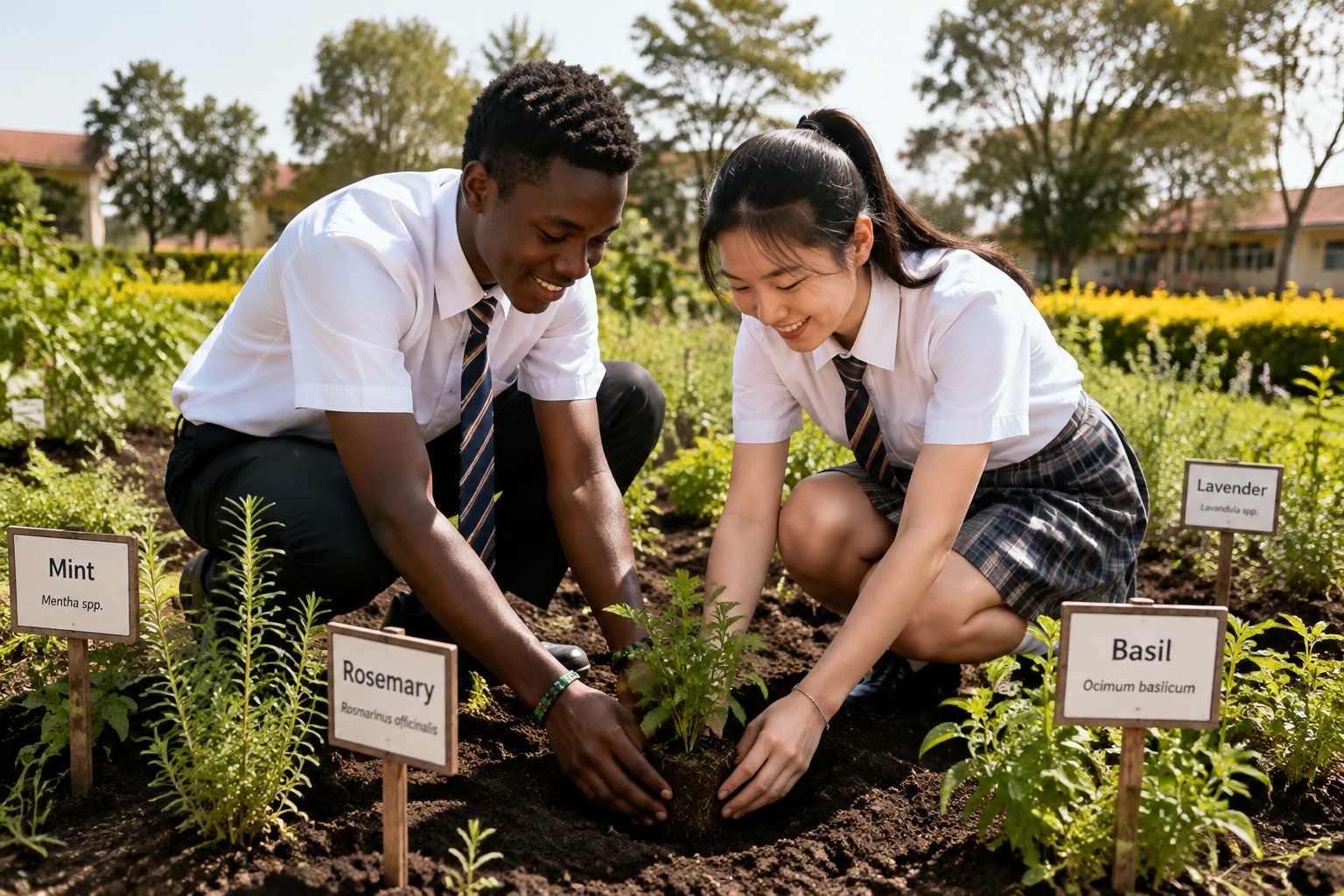
Students spend at least two days a week in the garden. They learn when to harvest roots, leaves, and flowers, how to dry them, and how to make simple decoctions. Some of the harvest goes to a small community clinic on the edge of the campus, where a local clinical officer prescribes herbal teas and tinctures to patients, under supervision. “We are not setting up a hospital,” says Oduor. “We are testing a model where a garden close to a clinic can provide safe, affordable plant medicine.”
Local reaction has been more positive than expected. A survey among the first cohort of students showed that most shifted from curiosity to practical interest after seeing that the same herbs could be used in treatment that they knew from home. The clinic now attracts patients who cannot afford expensive imported drugs. One district nurse, who prefers to remain anonymous, describes it as “unofficial integration”: she refers some patients to the TCM clinic, even though that phrase is still carefully handled in official documents.
Real limits, slow steps
There are limits too. Neither Kenya nor most other African countries formally recognises TCM as a licensed medical system. The newly trained students are not fully licensed to practice independently; they work only inside the project’s clinic or under a qualified professional. Chinese herbal products must pass generic drug standards, and many traditional formulations do not meet those requirements. The herb garden is therefore seen not as a shortcut but as a slow way to build evidence and trust.
The team is also worried about sustainability. In Kenya, wild Artemisia afra is increasingly harvested for commercial use, and overharvesting has become a real concern. The garden, with its careful planting and seed storage, plays a small conservation role. In the long run, the project hopes to produce seeds and seedlings locally instead of importing from China. That would make the medicine both cheaper and more resilient to supply chain problems.
This is perhaps why the project matters beyond its modest size. It is not about exporting a fixed system, but about creating a dialogue. The book is already being used in a pilot class in southern Nigeria, and the garden team is preparing a distance-learning module. They estimate that if the pilot works, similar gardens could be planted in three more African countries within five years.
A bridge that lasts
This is not about planting a Chinese medicine shop in the middle of Nairobi. It is about a slow, careful exchange between two medical cultures. An English textbook may not be a sensational headline, but it is exactly the kind of bridge that lasts. The book remains open on the classroom table as the sun sets over the garden. Grace Wanjiru turns to the chapter on malaria and draws a small diagram to explain why the herb tastes bitter but works. “We are not replacing our medicine,” she says. “We are giving both our medicines a bigger name.”
Start the discussion at forum.chinacomes.com