
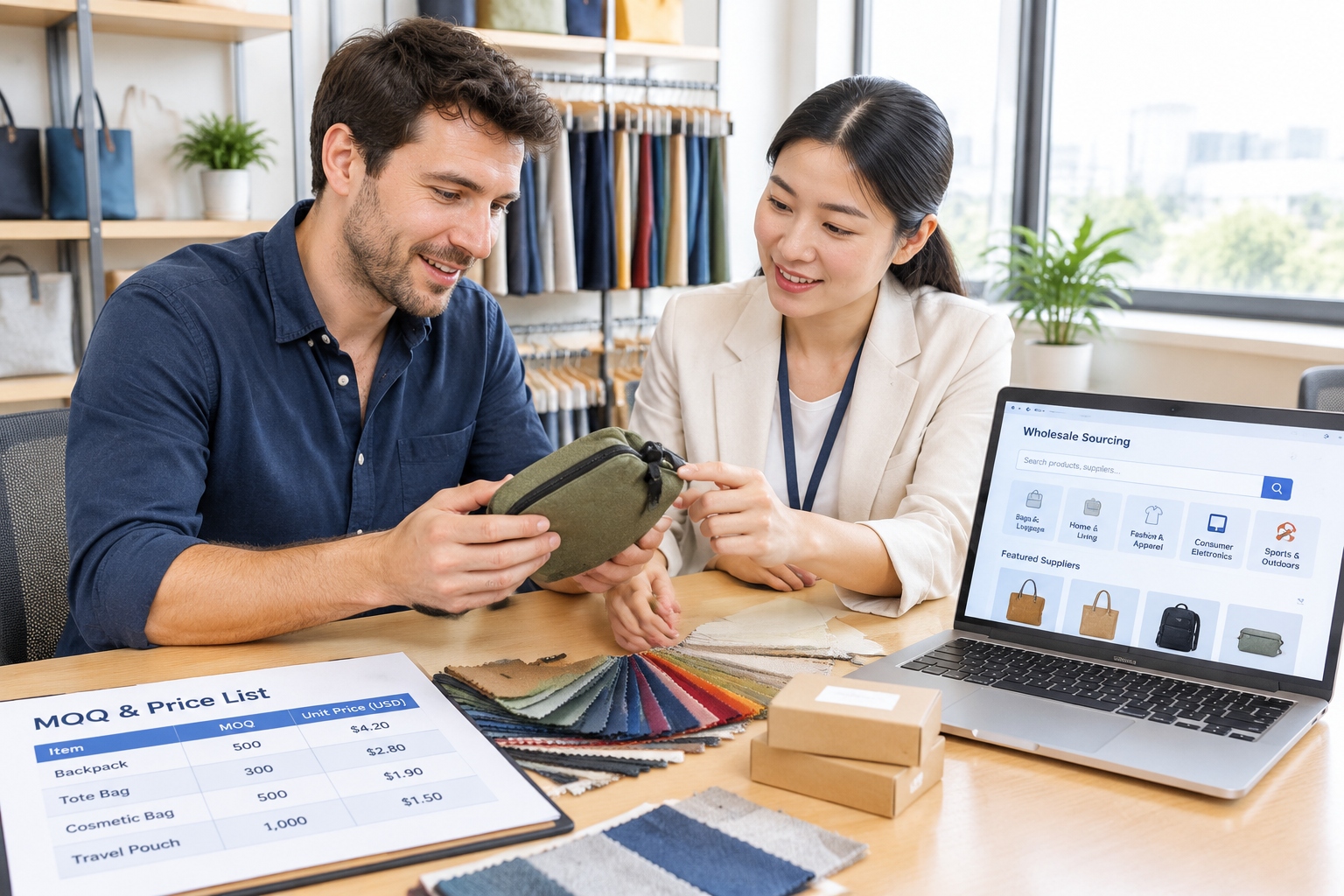

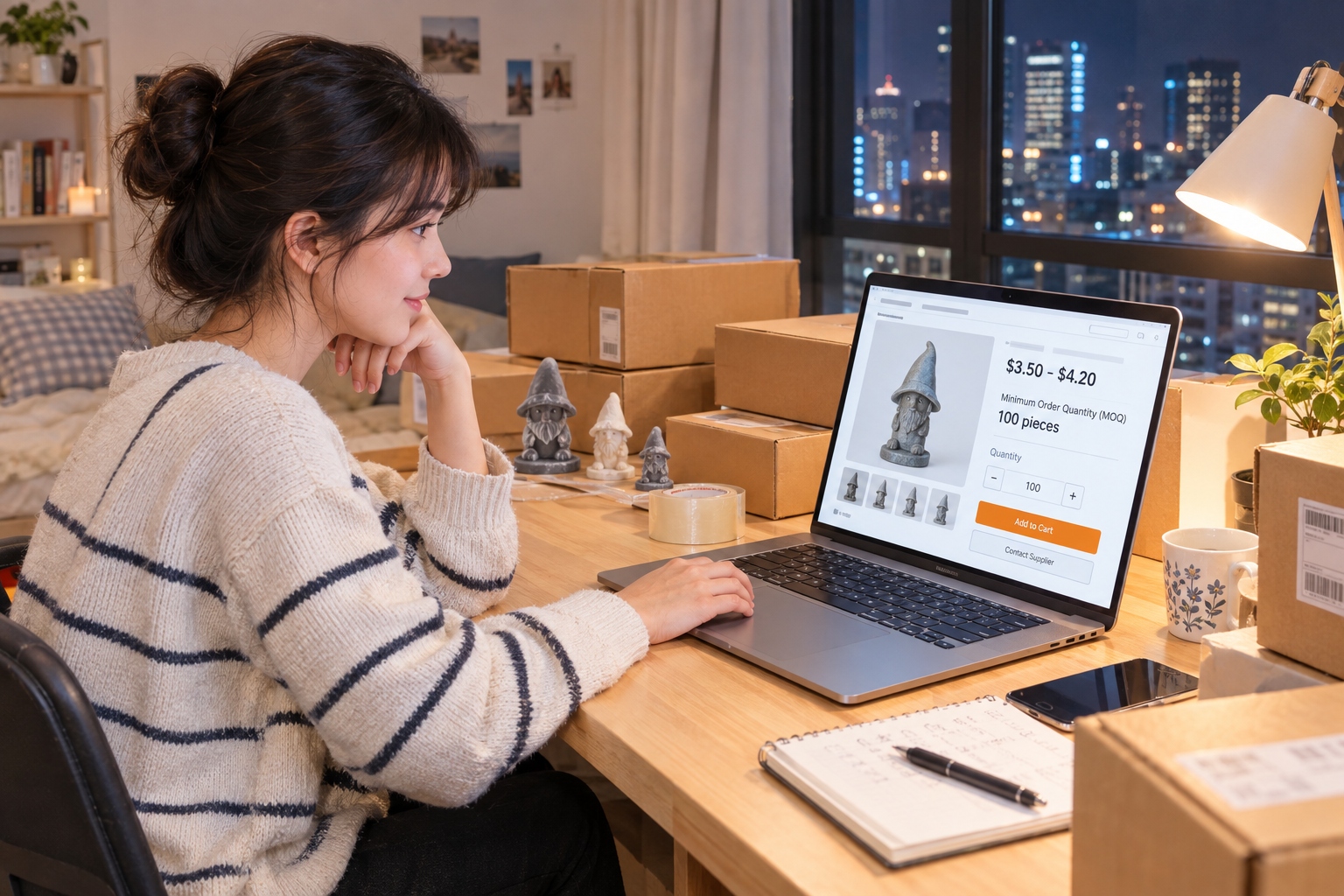
It is late in the evening in a one-bedroom apartment in Valencia. Maria has been scrolling through Alibaba for an hour, looking for small padded pouches to package her handmade earrings. She finally writes to a factory: “Hello, could I order 50 pieces for testing?” The reply arrives fast: “MOQ is 1,000.” She asks if 50 is possible. Then the conversation goes quiet. For most small business owners, this is the moment they tell themselves China sourcing is only for big companies.
Maybe you have been in that exact same moment. If so, here is what I would tell Maria: a 1,000-piece minimum does not mean you need a container, and it does not mean Chinese manufacturing is out of reach. What you actually need is a smarter buying route, not a bigger warehouse.
Why factories set MOQs in the first place
MOQ, or minimum order quantity, is the smallest number of units a manufacturer will make in one production run. It is easy to read it as a dismissal, but suppliers are doing their own math. A custom print needs a plate; a plastic product needs a mold; a fabric run may need a minimum amount of cloth from a dye house. These costs exist whether the factory makes ten units or ten thousand.
So when a supplier says “MOQ 1,000,” it usually means: at 1,000 units, I can cover fixed costs and still process your order. It is not a fixed law of nature. If you accept a stock color, skip custom packaging, offer a higher unit price, or order a sample first, the conversation often changes.
Understanding this matters before you start searching. A tiny online shop should not behave like a supermarket chain. Your goal is to find factories set up for flexible batches, or even better, skip the factory altogether for certain products.
Where to find low-MOQ suppliers
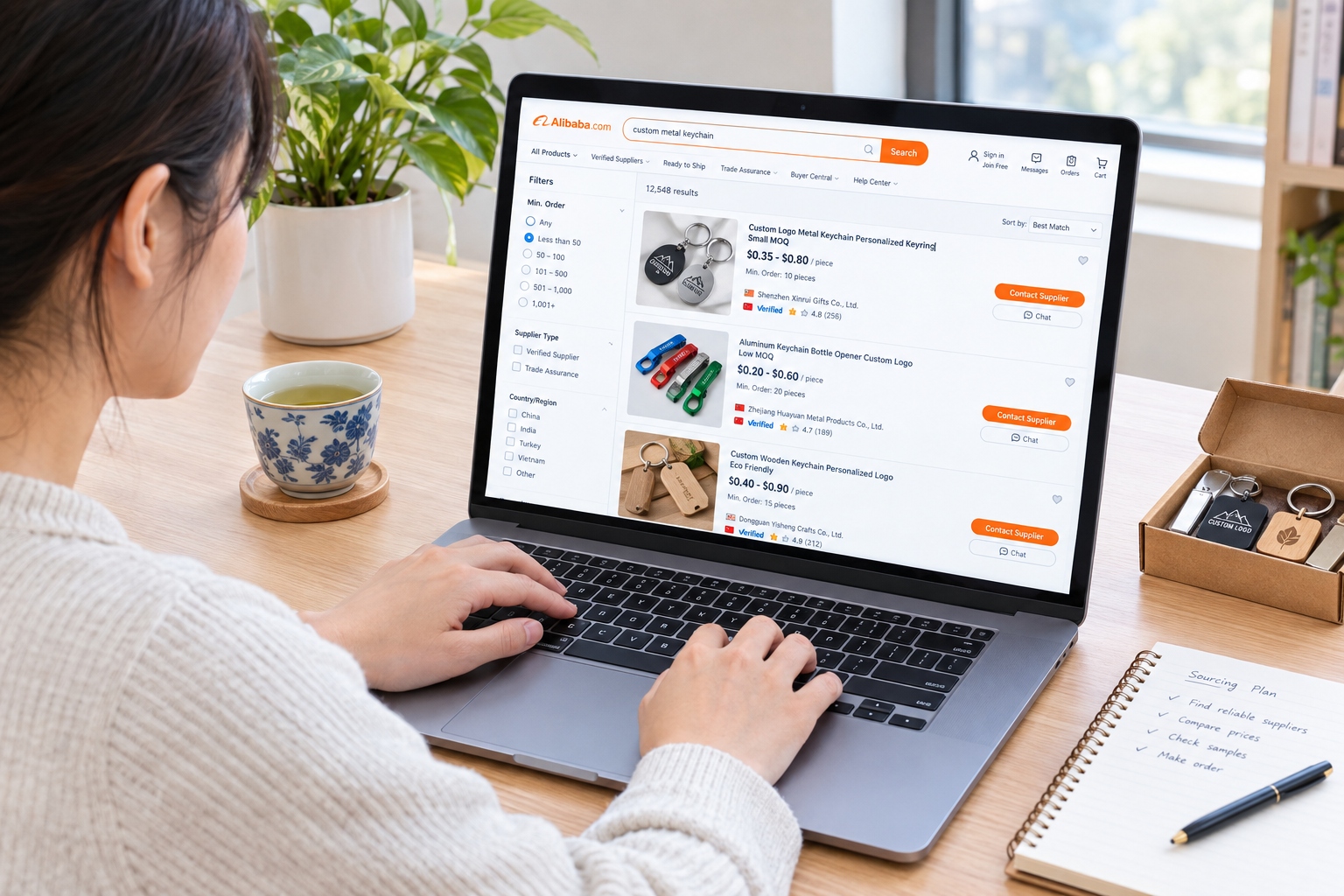
The most obvious starting place is a B2B platform like Alibaba or Made-in-China. Do not just type a product name and click the top result. Use the filters. Set the minimum order quantity to a low number, and check “Ready to Ship” or “In Stock” if you do not need custom branding. Products listed this way are already made, so the MOQ is usually small.
Then pay attention to language. Factories that write “MOQ 10 pcs” are different from factories that only describe mass quantities. Search with phrases like “sample order,” “small quantity accepted,” and “low MOQ.” On Alibaba, you can also look for “custom sample available,” which often means the supplier understands the value of testing before bulk.
For very small quantities, retail-wholesale platforms like AliExpress and DHgate are also worth a look. They charge more per piece, but you can order a dozen units and see if your advertising converts before you invest deeper. If you find a winning product, you can later order bigger from the original factory through an agent.
If you have extra patience, Chinese domestic wholesale platform 1688 is another layer worth knowing about. It is a bit like the “local Alibaba” used by millions of small shop owners, street vendors, and WeChat sellers. Minimums on 1688 are low because buyers are small. Listings often say “2 pieces start” or “10 pieces start.” The catch: 1688 is in Chinese and usually requires local payment. A sourcing agent can handle that for you, and the total savings often make up for their fee.
Skip the MOQ by buying stock products
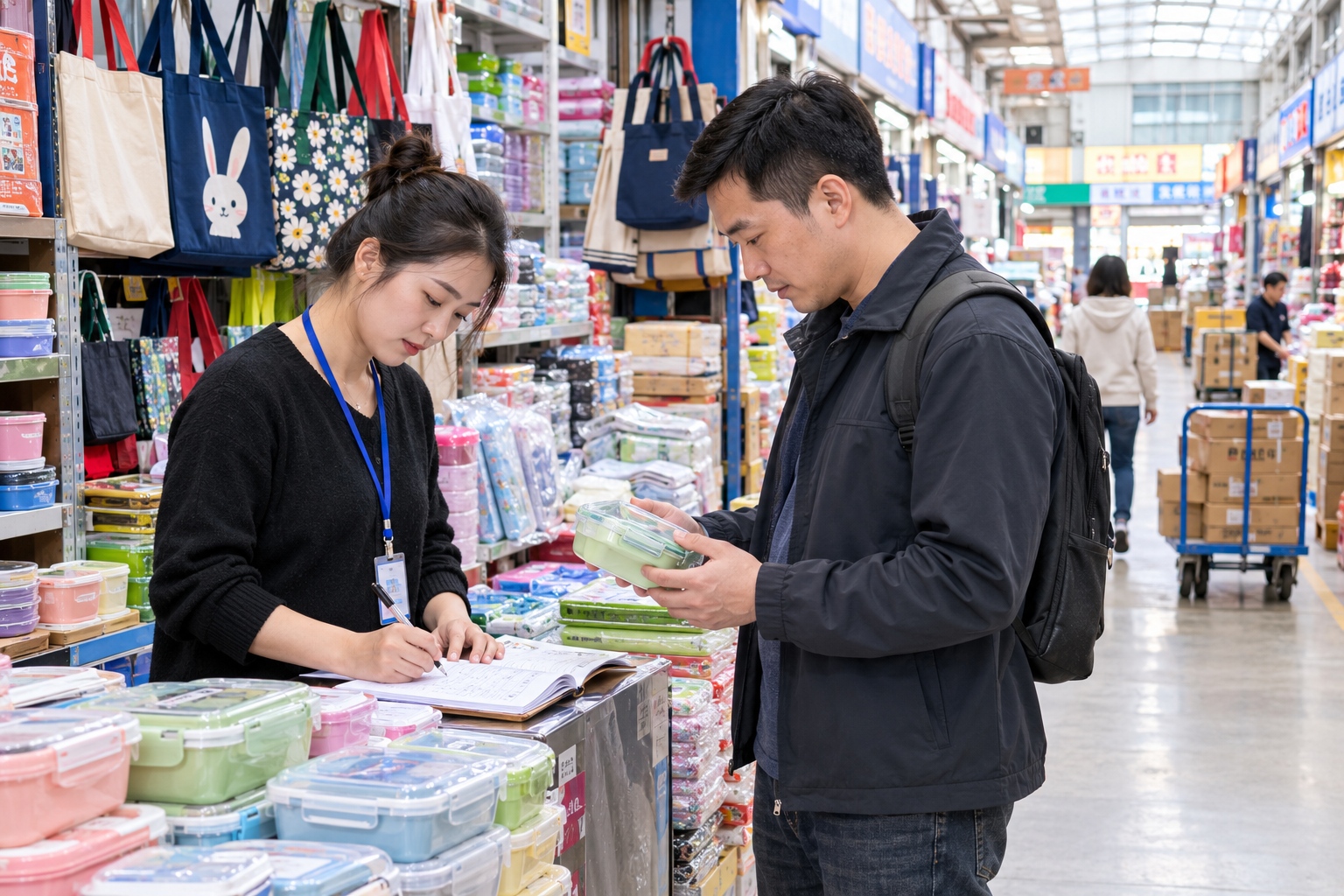
If the product you want already exists in a standard design, you do not need to commission it as a custom factory order. In China’s big wholesale markets, especially Yiwu International Trade City and the market districts of Guangzhou and Shenzhen, thousands of booths sell finished goods in surprisingly small lots. You can pick twenty lamps from one stall, thirty phone cases from another, and fifteen notebooks from a third. No MOQ, because the inventory already exists.
If you cannot fly in, a sourcing agent can do this for you. They can walk the market or use the “现货” (stock) option on 1688. They buy the quantity you want, combine everything into one export carton, and send it to your forwarder. This is often the fastest way to test product-market fit without paying for molds, printing plates, or custom packaging.
The trade-off: you lose some control. Colors, sizes, and packaging are the seller’s existing choices. For a first test order, that is usually fine. An already-made product with plain packaging beats a custom product that becomes unsold inventory.
Share your MOQ with another small business
When you truly need custom work, consider sharing an order. Say the MOQ for a custom tote bag is 600 pieces, and you want 300. Find another small online store that wants 300 in a different color or style, ideally in a non-competing market. One of you places the order; the other pays their share after agreeing on details clearly.
Co-buying partners can be found in seller communities on Facebook, e-commerce forums, and local small business associations. A good sourcing agent can also combine your order with other clients. That is a common practice in Chinese supply chains: flexible factories often accept smaller quantities when they know the buyer is serious and will reorder.
A word of caution: use an agreement. Talk about who pays, who inspects, who receives the shipment, and what happens if quality is bad. Trust matters, but so does a clear email thread.
You do not need a full container — use LCL
Even after you get your MOQ down, many first-time buyers worry about shipping. They picture an 18-wheeler leaving a Chinese port carrying one massive container with their name on it. That is not how smaller buyers need to work. Ocean containers can be shared through a shipping method called LCL, or less-than-container-load. A forwarder combines several buyers’ goods in one container, and when it arrives at the destination port, customs clears each portion separately. You pay for your actual space, not the whole container.
LCL works well for an order of a few cubic meters. If your first order is even smaller, courier and air express are common ways to ship a test batch. Many sellers start with air express, learn what sells, then move to LCL or full-container once volume increases.
When you purchase from several factories, a forwarder or sourcing agent can collect all cartons at one warehouse in China, consolidate them, and send them as one shipment. That reduces freight cost and removes the pain of receiving several separate courier bills.
A practical checklist for your first small order
If you are still not sure which route fits, this short list can guide you:
- If you do not need a custom logo, start with ready-to-ship or stock goods. Order the smallest number that still makes sense for your market.
- If you need custom branding, look for low-MOQ suppliers and say you are a new buyer planning a small trial order. Ask for a price based on basic packaging.
- Order samples before bulk production. Samples are usually cheap and they quickly reveal what the factory is really capable of.
- Use Alibaba’s Trade Assurance or an escrow service on your first orders. Never send 100% of the payment to a bank account before you have an established relationship. Serious suppliers understand why buyers use trade protection.
- When goods are ready, ask a freight forwarder for an LCL quote. Do not assume a container is mandatory. If the shipment is very small, air express may be acceptable as a market test.
- Decide whether you are testing demand or building a full brand. Testing requires stock, not custom packaging. Full branding can come after the first sales prove the product.
The bigger picture
The Chinese supply chain is not one locked gate. It is actually built for speed and fast iteration. Millions of domestic sellers in China order tiny batches and restock quickly through 1688 and WeChat commerce, and many export factories are used to this rhythm. MOQs can be far lower than you assume if you search in the right place, buy existing stock when possible, split an order when the math makes sense, and keep shipping flexible.
The real problem for first-time importers is that they look at the biggest entrance and assume that is the only way in. Walk around the building a little. There are doors almost everywhere.
Start the discussion at forum.chinacomes.com