
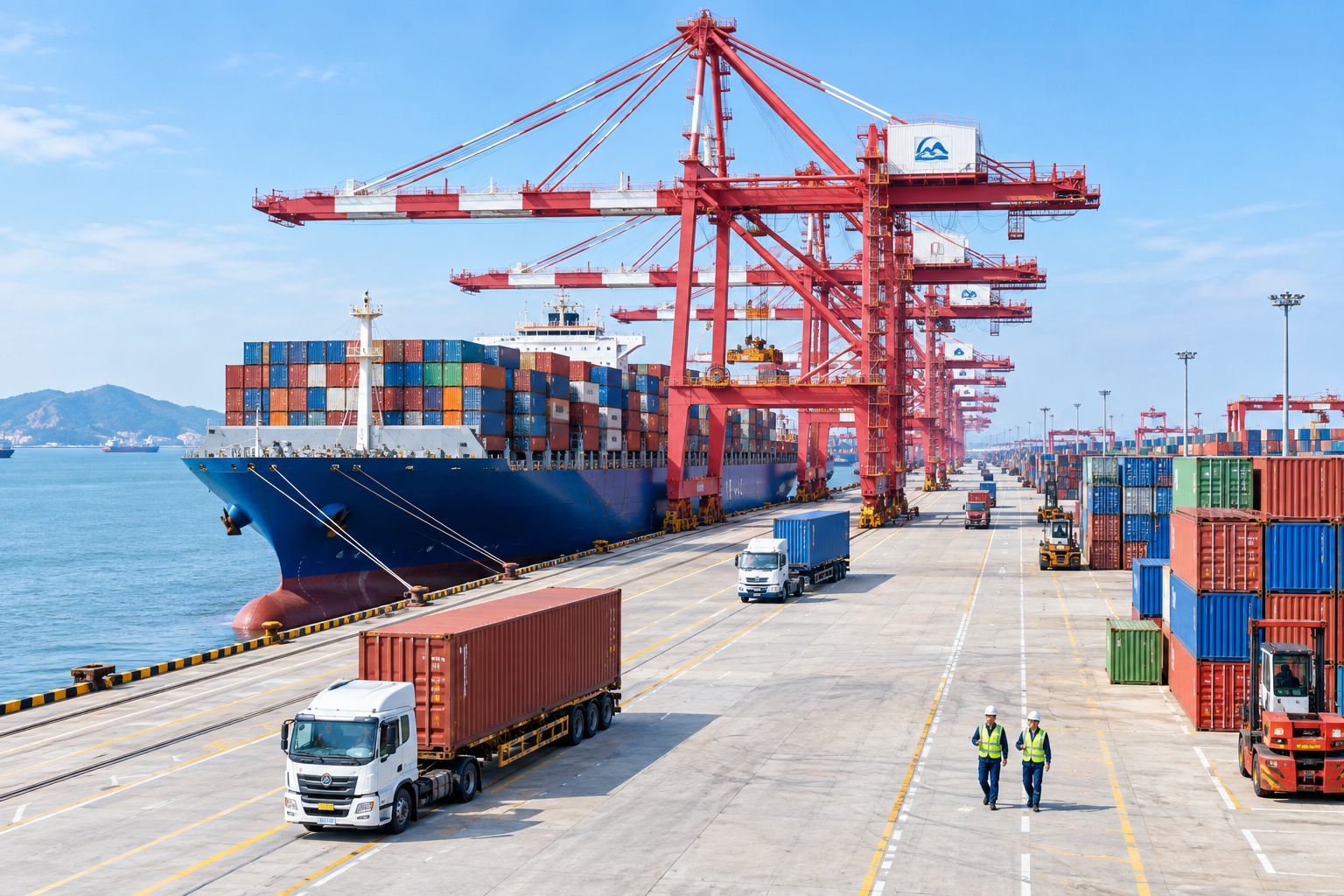

Shipping from China Is a Second Decision
Every order from China contains a second decision: how to move the goods. After paying for 200 pieces of ceramic tableware at a Foshan factory, you still need to get them to your door. The right choice among sea freight, air freight and express courier affects not just price but launch timing, inventory strategy, and even whether customs delays become part of your story.
This guide is written for small and medium orders – say, from one cubic metre to a full container, or a few hundred kilograms to several tons. It explains real-world options, common cost rules, and the paperwork needed to make a confident decision.
Sea Freight vs Air Freight vs Express: A Quick Comparison
China’s export logistics network is enormous. Shanghai alone moves more than 47 million TEUs each year, and Shenzhen, Ningbo and Guangzhou operate around the clock. For a buyer outside China, the practical question usually comes down to trade-offs between speed and money.
| Mode | Typical door-to-door transit time | Indicative freight cost | Best for |
|---|---|---|---|
| Express courier (DHL, FedEx, UPS) | 3-6 days | Highest, often USD 10-25 per kg (volume-based) | Samples, e-commerce parcels, urgent replenishment orders |
| Air freight | 5-12 days | Medium-high, roughly USD 3-8 per kg, depending on density | Higher value goods, medium deadlines, 100-1,000 kg shipments |
| Sea freight (LCL/FCL) | 20-45 days | Lowest, often USD 100-400 per cubic metre | Bulk, heavy, or non-urgent products |
Keep in mind that freight rates move with the market, fuel prices and seasonal peaks. Use the table as a framework for comparing quotes, not as a fixed price list.
Sea Freight: Slow, Economic, and Good for Bulk
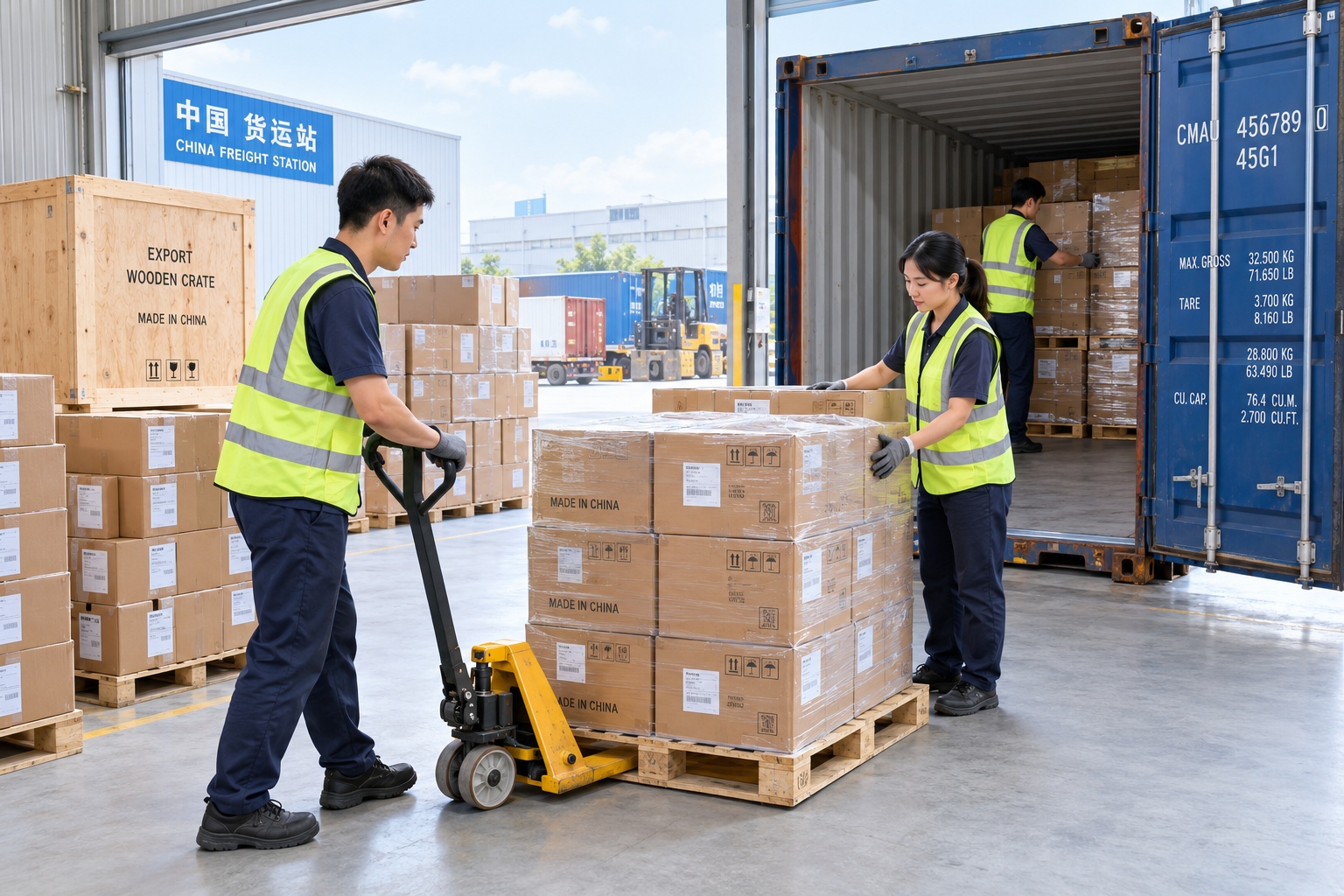
Sea freight is the natural default for bulky, dense products. Chinese suppliers often quote on FOB terms, which means the price of the goods includes delivery to the port. You then pay freight and destination charges separately. For very small orders, however, LCL makes sea freight possible without paying for an entire container.
LCL vs FCL: What Makes Sense for Small Orders
LCL (less than container load) groups your cargo with other exporters’ goods in one shared container. You pay only for the space your cartons occupy inside the container. LCL usually has one minimum charge, often approximately 1 cubic metre, but it is an economical way to ship 1 to 10 cubic metres. FCL (full container load) is a dedicated container. A 20-foot container provides about 25-28 cubic metres of practical space, while a 40-foot container gives 55-60. Because the mainland price includes the whole container, FCL becomes financially interesting when your order reaches about 15-18 cubic metres; otherwise you are paying for unused space.
For shippers, cargo insurance and customs documents still need to be arranged. On the destination side, a local customs broker must clear the goods unless you choose a DDP (delivered duty paid) solution through your forwarder. DDP can simplify the process for buyers, but always ask what is included in the price.
Air Freight: Speed Without the Express Price
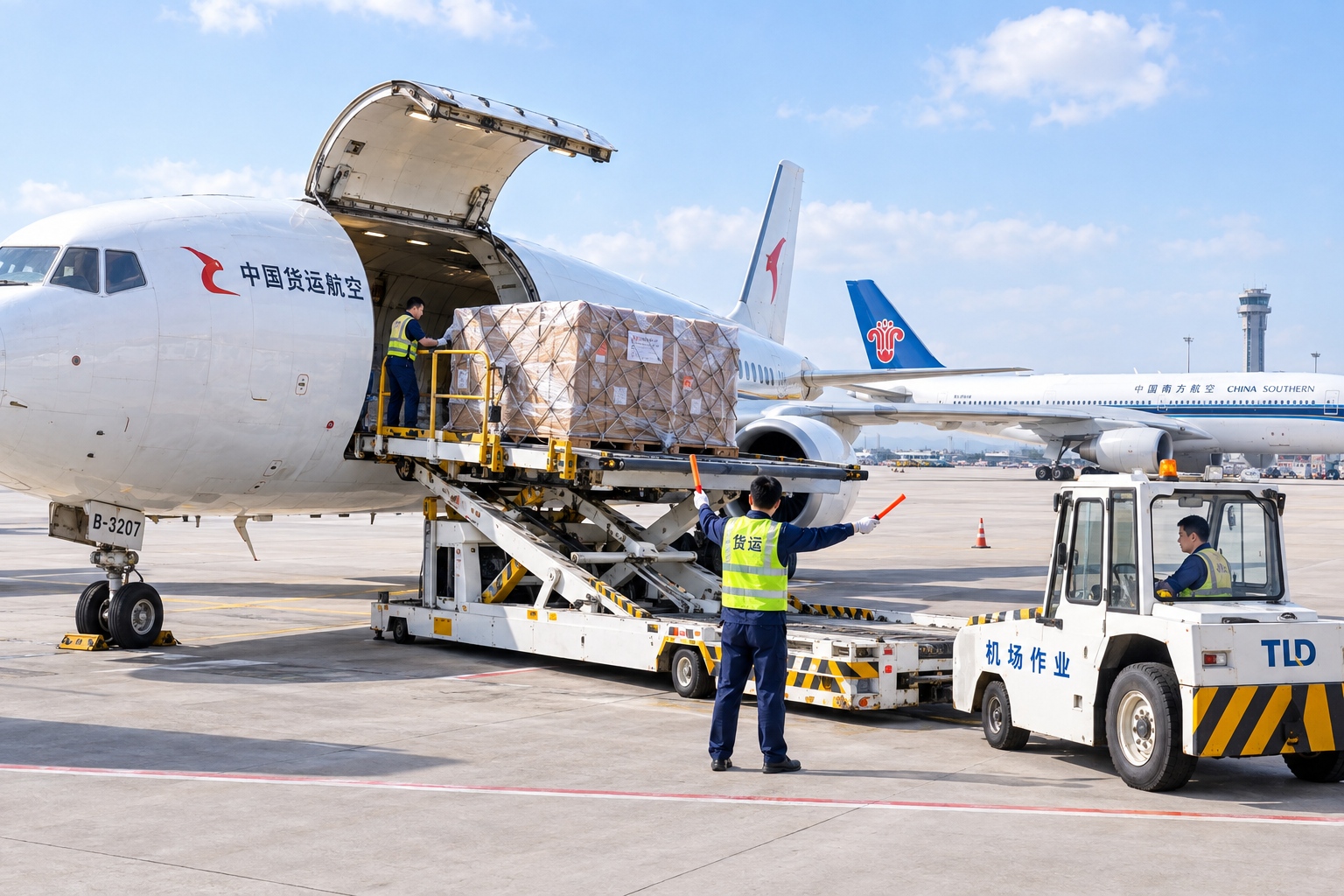
Air freight is the middle option. Many small and medium importers use it when they cannot wait for ocean shipping but do not need same-day courier service. Consolidators in Chinese gateway cities, such as Shanghai, Guangzhou and Zhengzhou, merge dozens of small shipments onto one aircraft pallet, which makes air cargo less expensive than you might expect.
Chargeable Weight: How Airlines Price Air Cargo
Airlines charge for the larger of actual weight and dimensional weight. The industry formula is length (cm) x width (cm) x height (cm) divided by 6,000. If a carton of soft winter blankets occupies 0.12 cubic metres but weighs only 8 kg, the volume weight is 20 kg, and the charge will be based on that 20 kg. During quote comparison, ask forwarders whether they apply the weight divisor of 5,000 or 6,000, because this one factor can change the final price substantially.
Air freight works well for electronics, fashion accessories, cosmetics, machine spare parts and other high-value or time-sensitive goods. Transit time from an export certificate to arrival door is often 5 to 12 days. It is not cost-effective for large-volume but low-value products, or for boxes that are mostly air.
Express Couriers: DHL, FedEx and UPS for Small Parcels
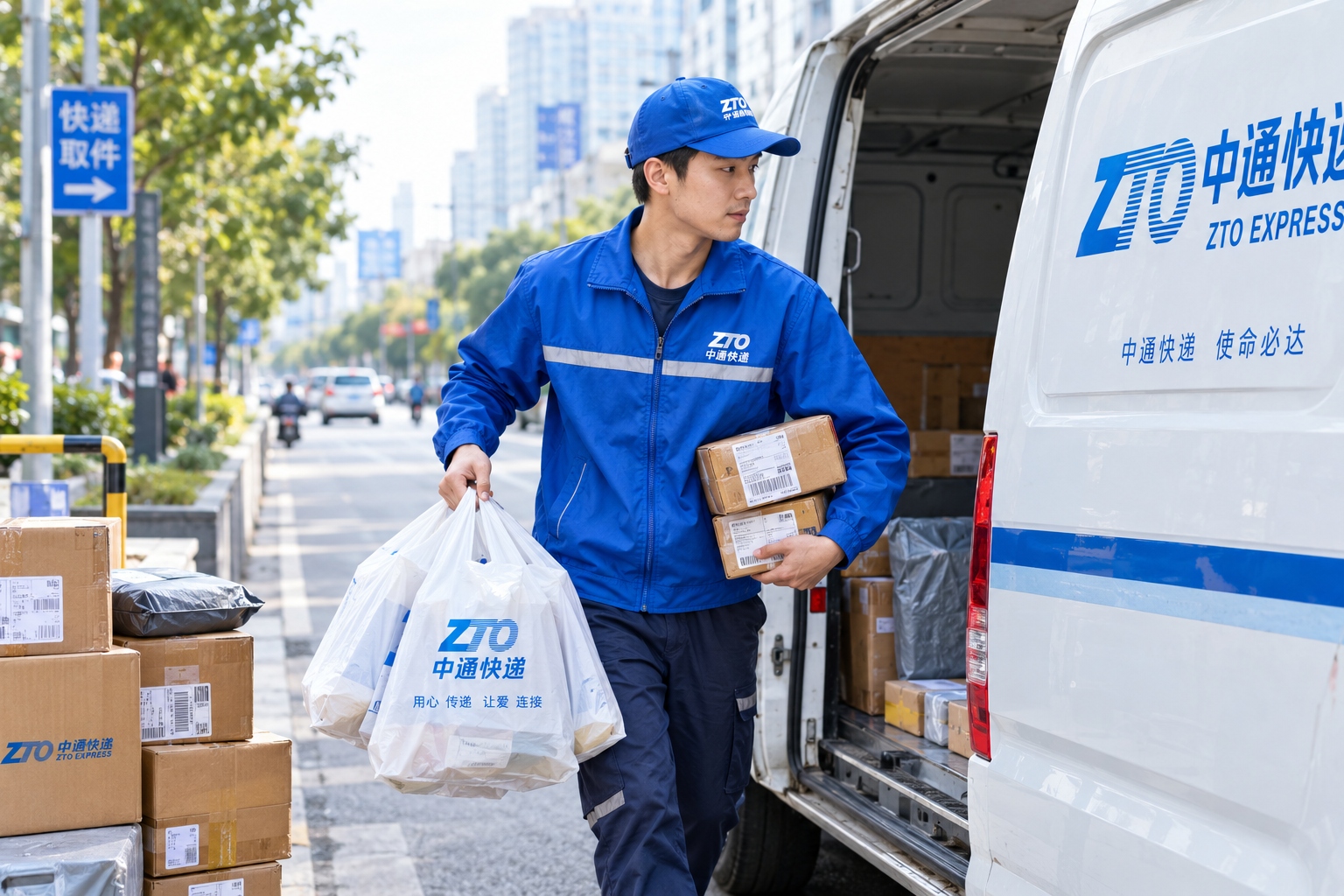
International courier services are the fastest and most convenient option for orders up to a few hundred kilograms. DHL, FedEx and UPS maintain integrated worldwide networks, and they act as both carrier and customs broker. With DDP delivery, they often clear goods based on commercial documents provided before the flight and advance the duties and taxes to speed up customs clearance.
The downsides are cost and volume. Express couriers use a higher volumetric divisor, commonly 5,000 for international shipments, and the base rate is two to three times higher than ordinary air cargo. A mid-sized parcel can easily cost more to ship than your supplier’s factory price. That does not mean shopping by express is wrong; it is the best choice for samples, spare parts, emergency restocking, or low-value e-commerce items that qualify for de minimis duty exemptions in the destination country.
Always confirm the courier’s fuel surcharge, remote-area fee, and the exact dimensional formula before sending the goods. A 57 x 47 x 39 cm package, sent at USD 18 per kg, can surprise you unless you calculate the volume weight first.
How to Estimate the True Shipping Cost from China
A freight quote is seldom complete. The one-line number usually misses insurance, import duty, local charges and courier surcharges. A landed-cost worksheet helps you compare actual alternatives.
A Shipping Cost Estimate Template
| Cost item | Notes | Estimated amount |
|---|---|---|
| FOB value of goods | Purchase price agreed with supplier in China | USD ____ |
| Main freight | Sea, air, or express quote from forwarder/courier | USD ____ |
| Origin charges | Export packaging, trucking to port, export customs, THC | USD ____ |
| Destination charges | Terminal handling, customs broker, port-to-door trucking | USD ____ |
| Cargo insurance | Typical premium: about 0.2-0.5% of insured value | USD ____ |
| Import duty and tax | Based on HS code and your country’s tariff schedule | USD ____ |
| Total landed cost | Sum of all items | USD ____ |
Also look at the INCOTERM. Common Incoterms for China imports are FOB, CIF, or EXW. With EXW, the buyer takes responsibility from the factory gate, which gives more control but requires a forwarding agent. With CIF, the seller pays for insurance and ocean freight to the port of destination, but does not pay import duty. If you are not experienced, a DDP quote from a freight forwarder removes most surprises.
Customs Clearance: Avoid Delays, Fees and Penalties
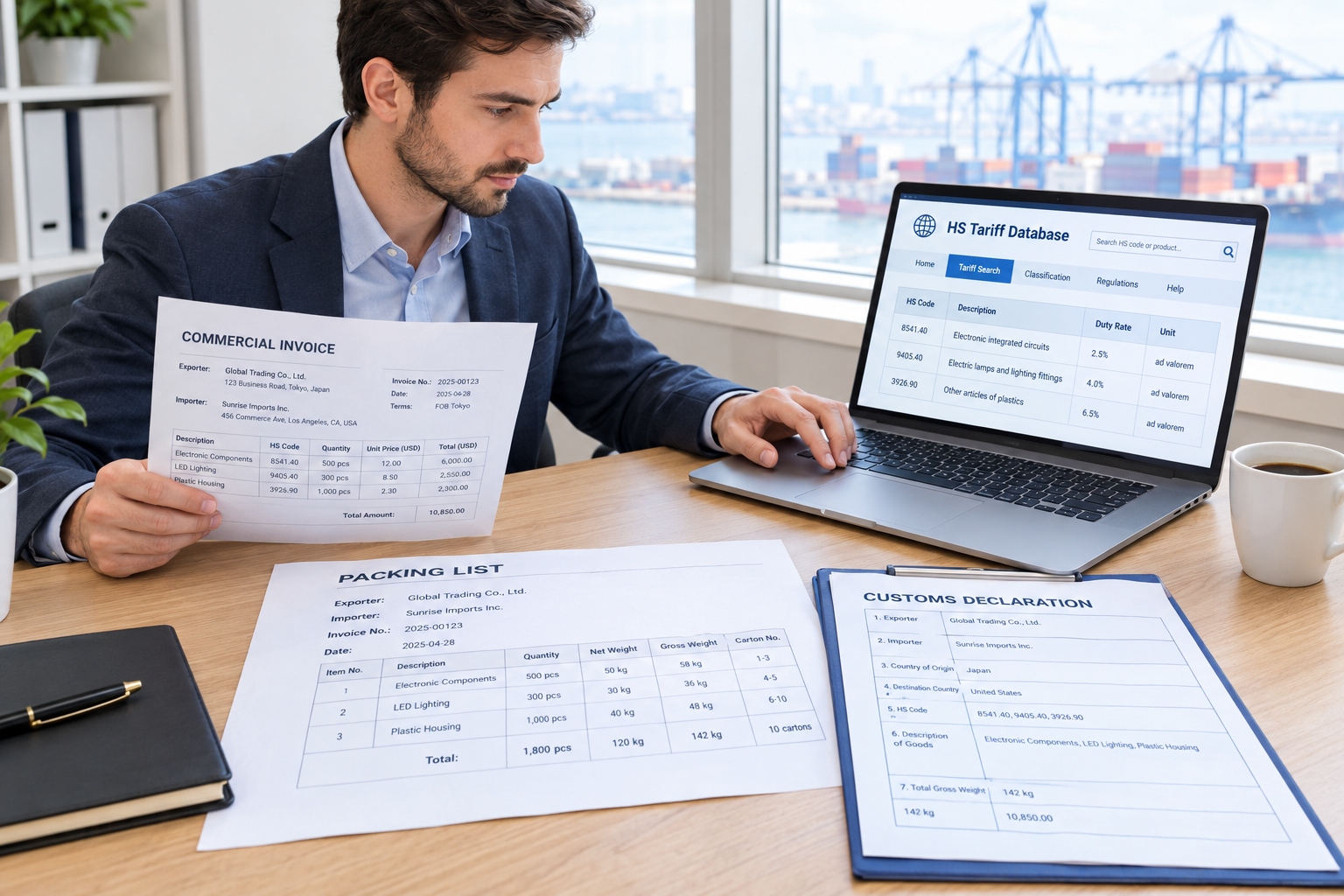
Most clearance problems start with a vague commercial invoice. The customs broker cannot classify “assorted hardware” under the correct HS code. The invoice should describe the goods in plain, complete language, for example: “plastic water bottle, 750 ml, dark blue, no handle” with country of origin and unit value.
Documents to Prepare Before You Ship
- Commercial invoice (in English) showing product descriptions, unit prices and quantity
- Packing list with weights, carton sizes and number of pieces
- Bills of lading / air waybill issued by the carrier
- Certificate of origin if it is required for a trade agreement or import licence
- Your supplier’s export declaration documentation if requested by your country’s customs
Use the correct HS code and determine the duty rate before delivery. In the United States, low-value direct-to-consumer shipments under USD 800 may enter duty-free under de minimis rules, but commercial shipments may face additional Section 301 tariffs on Chinese-made goods. In the European Union, import VAT applies to almost all commercial goods, so calculate it into your final price. Different countries notify rules and controls, and the importer of record is ultimately responsible for whichever procedure applies.
Do not ask your Chinese supplier to write USD 50 on a USD 2,000 invoice to avoid duty. Customs authorities monitor pricing patterns; the penalty for undervaluation is often several times the unpaid tax, and repeated violations can lead to your shipments being selected for a full inspection every time.
Wrap-up
Shipping from China is not a gamble when you break the decision into simple steps: estimate the volume and weight, compare courier, air and sea quotes, use a landed-cost sheet, and prepare documents before freight moves. That routine helps small and medium buyers avoid common setbacks, keep costs predictable and import with confidence.
Start the discussion at forum.chinacomes.com