
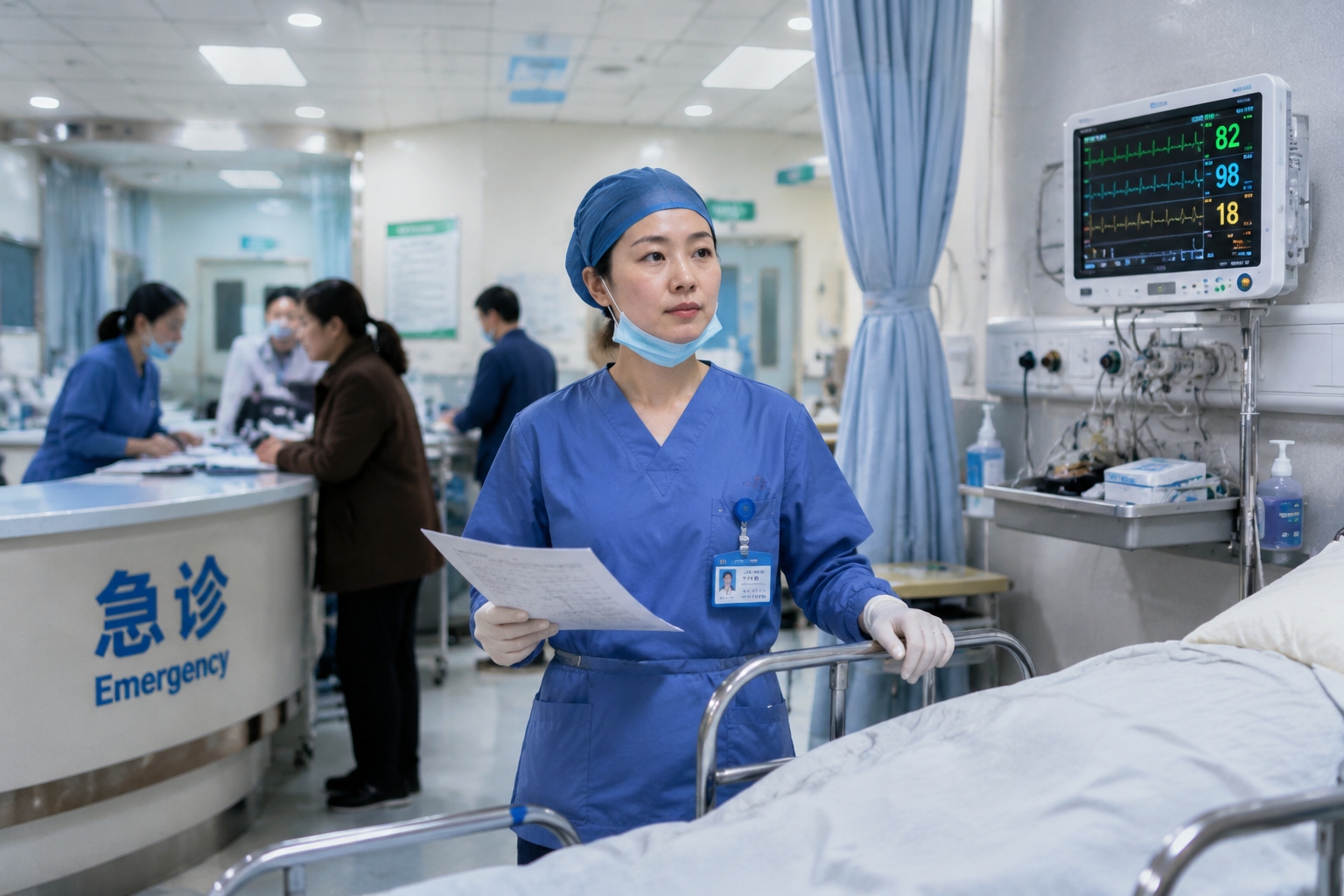

Night Falls, But the Emergency Room Never Sleeps
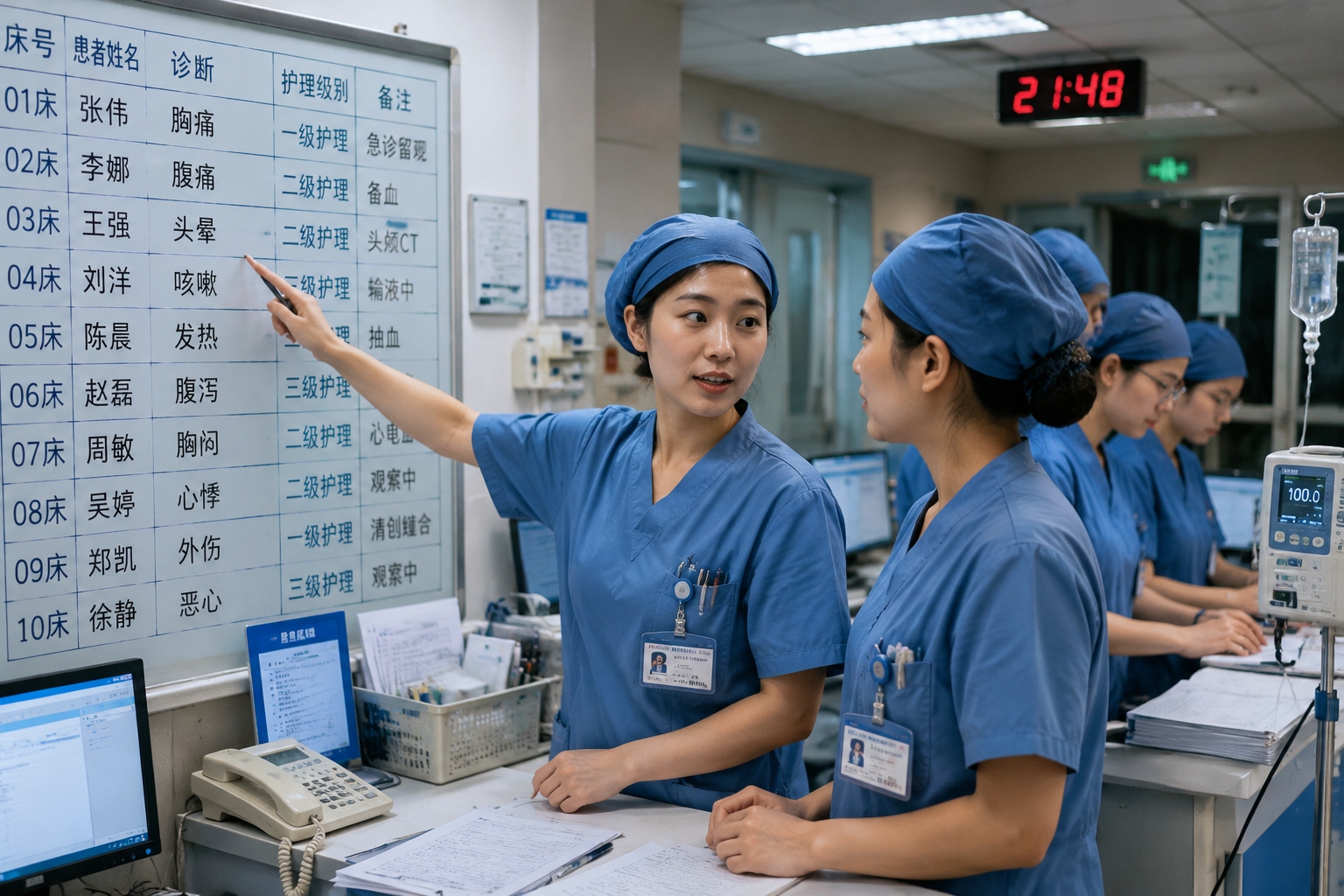
At 7:58 p.m., Li Mei (a pseudonym) has not yet pinned on her name badge, but she is already moving. The emergency department at a large public hospital in Nanjing smells of disinfectant and overripe fruit, two things that can coexist on a busy evening in China. Nurses from the day shift are doing their handover in clipped sentences: one patient in Room 7 is waiting for an inpatient bed, another needs an urgent CT, and a third is due for another blood draw. Li Mei takes the folded sheet, glances at the whiteboard, then ties her nurse’s shoes. She has been an emergency nurse for eleven years. The city outside is beginning to slow down, but the people around her have just entered their most exposed hours.
China’s large public hospitals are graded by size and capability. Grade III Level A institutions are the country’s closest equivalent to major trauma centres. Nanjing, an hour and a half west of Shanghai by train, has several. That matters at 2 a.m., because an ER inside this kind of hospital can keep a CT scanner, a satellite lab, a pharmacy window and an emergency operating room running through the night. Li Mei works in a department organised in zones: red for resuscitation, yellow for urgent cases and green for minor complaints. On most nights, her team is a handful of nurses and two doctors. The rest of the hospital is on call, but call takes an extra few minutes. Those few minutes are what Li Mei tries to fill.
First Case: The Heart That Stopped at 11:12
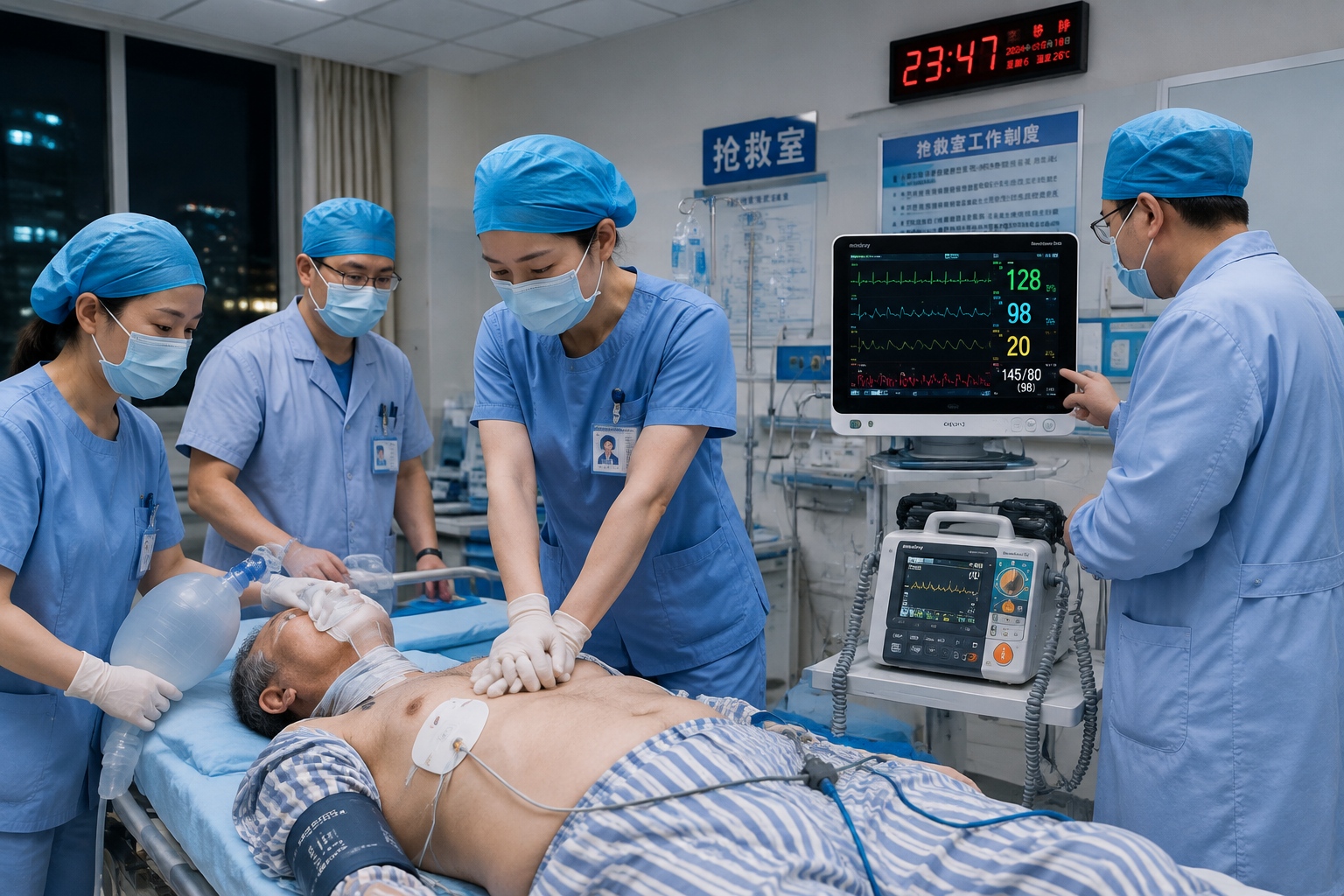
At 11:12 p.m., a 67-year-old man collapsed in his kitchen while his wife was making tea. The dispatcher on 120 coached her through chest compressions until the ambulance arrived. By the time the stretcher comes through the sliding door, his face is grey and no pulse can be felt.
Li Mei climbs onto a small platform at the side of the bed. She places her hands on the man’s chest and starts compressions. The room suddenly has six people in it: a doctor at the head, a nurse drawing up adrenaline, another adjusting the defibrillator, a resident preparing the ventilator. Li Mei does not count out loud, but everyone can hear the rhythm. After two shocks, the monitor shows a heartbeat again. The team steps back, breathing hard. No one says he is saved. The man is still unconscious; whether his brain got enough oxygen is a question for tomorrow.
Li Mei writes the time on the resuscitation record and wipes the sweat from the back of her neck. Outside the curtain, the man’s wife stands with both hands pressed against her mouth. She grabs Li Mei’s arm and says, Thank you. There are moments when the correct answer is not you’re welcome, but I know.
Second Case: A Crushed Hand and a Race Against the Clock
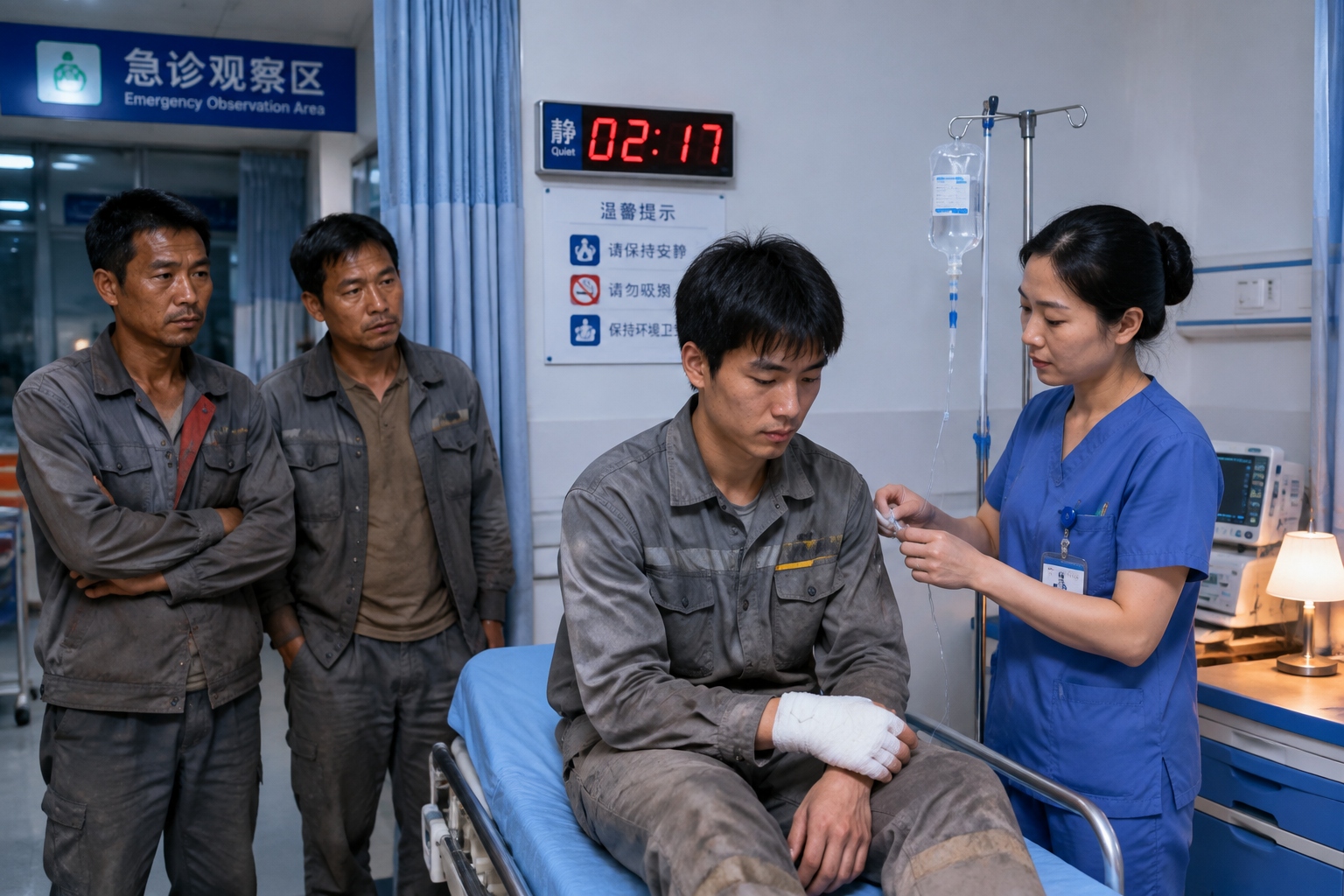
At 1:15 a.m., three men in dusty work shirts push through the entrance. In the middle, a young worker holds his right arm tight against his chest. A blood-soaked towel is wrapped around his hand. He works for a metal furniture factory on the city’s edge, and at the end of his shift a punch press came down on his palm. Two fingers are barely attached.
Li Mei moves him into the yellow zone. Her job in the next 45 minutes is not to be his doctor, but to be the person who makes sure every wall between him and surgery shifts. She calls the orthopaedic hand surgeon, who begins driving back from home. She asks the lab to check blood type and prepare for transfusion. She tells the radiology desk to hold an X-ray slot. Because his parents are in another province, the factory supervisor signs the consent form with a shaky hand; in China, workplace injuries often depend on insurance approval, but in an emergency the hospital cannot wait for documents.
The surgeon arrives at 1:55 a.m. The patient is on the operating table twenty minutes later. Li Mei turns away, knowing that nine hours of the night are still ahead. She walks through the observation ward and stops at Bed 9.
Third Case: The Older Woman Who Was Not Fine
Bed 9 holds a 71-year-old woman who arrived complaining of stomach pain. A junior doctor wrote gastritis and prescribed an IV drip. The woman tells Li Mei she feels a little better and wants to be left alone. But Li Mei notices that her skin feels dry, her pulse is weak, and her blood pressure has dropped a few points since midnight. Not dramatic, but not stable.
Li Mei opens the medical notes and sees that the woman has high blood pressure and a history of smoking. She walks back to the doctor and asks him to look again, then asks a hesitant question: could this be the aorta? The doctor re-examines her, orders a CT, and the scan reveals a leaking abdominal aortic aneurysm. At 4:40 a.m., the woman is moved upstairs for emergency surgery. No alarm sounds, no dramatic heroics. The save happened before the problem could turn into a collapse.
What a Night Shift Does to a Nurse’s Body and Mind
By 5 a.m., Li Mei’s lower back is sore, her throat is dry, and she has not checked her phone for hours. There is no formal break on a night like this. The tea in her mug has gone cold twice. She drinks it anyway.
Nursing in China has changed a great deal in the past decade. Nurses work under increasingly standardised conditions, with triage protocols, quality inspections and simulation training. But the psychological costs of the job remain less visible. After a traumatic resuscitation, most Chinese emergency departments do not have scheduled debriefing sessions. The closest thing is a quiet conversation in the break room: someone buys a warm bottle of soy milk from a vending machine and says, that one was hard. The others nod. Then they go back to the ward.
Li Mei says she rarely tells her non-medical friends what she does on a night shift, because the stories are either too technical or too hard to hear. She has also learnt to hold her reactions carefully. In an ER, crying is not a failure, but crying before the shift ends is.
China’s Night ER: What Works and What Still Varies
For international readers, it may help to know that emergency care is one of the areas where Chinese hospitals have invested heavily in recent decades. The medical emergency number is 120. Large hospitals run green channels for stroke, heart attack and major trauma, meaning patients bypass queues and payment steps at the moment of crisis. Li Mei’s resuscitation room has a central monitoring station, defibrillators that run self-tests and doors that open automatically for an incoming stretcher. At its best, this system works quickly and well.
But the quality still varies. Nurses in elite urban hospitals usually have better pay and more support than their peers in county-level hospitals, where a single night nurse may cover a whole ward. The differences are regional and structural, not the result of one simple policy. What is shared across them is the same reality: night hours do not bend around exhaustion, and patients do not wait for daylight to get sick.
Dawn Falls, and the City Comes Back to Life
At 6:30 a.m., the fluorescent lights in the ER look pale against the real daylight coming through the window. Li Mei begins the handover for the morning shift. Bed numbers, unusual events, requests from families that cannot be forgotten. She writes carefully, because the day staff will build their shift on these notes.
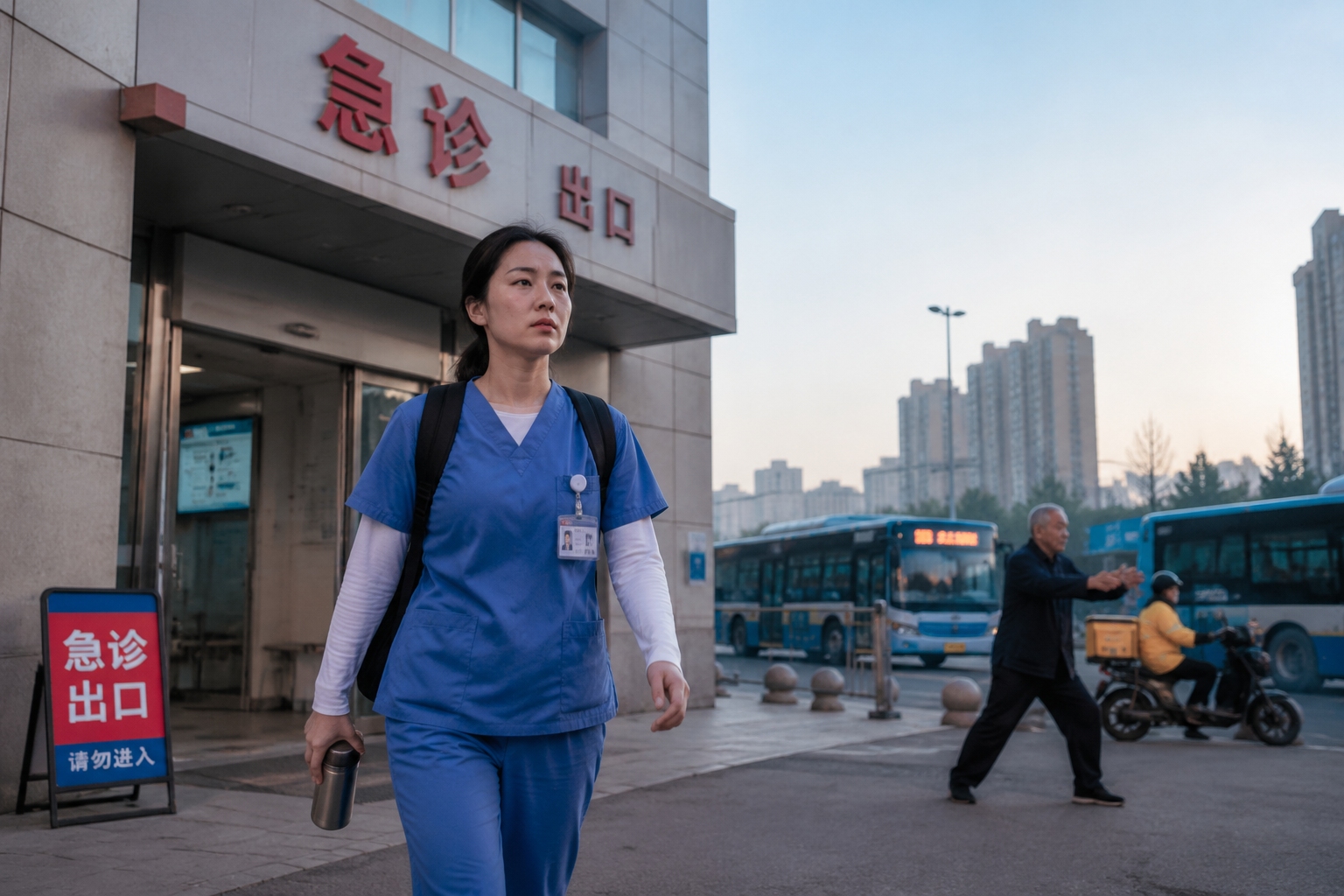
At 7:50 a.m., she walks out through the emergency entrance carrying a black backpack and a thermal flask. The city is waking: buses are moving, delivery riders are waiting at red lights, and elderly people in tracksuits are heading toward the park. For most of them, the night was unremarkable. For Li Mei, it was another ordinary night of work—ordinary only in the sense that nothing put an end to the days of the people she had met before sunrise.
Start the discussion at forum.chinacomes.com