


Introduction: A Surprising Queue
On a Saturday afternoon in Shanghai’s Xintiandi, a line of mostly young people snakes out of a Fujifilm store. They aren’t here for the latest digital camera or a phone case. They’re waiting to buy packs of Instax film — the iconic white-framed instant photos that, in an age of unlimited digital storage, feel almost defiantly analog.

It’s a scene repeated across China: in Beijing’s Sanlitun, Chengdu’s Taikoo Li, and countless second-hand markets on Xianyu, where vintage Polaroid cameras sell for hundreds of dollars. The instant camera, once relegated to toy status, has made a powerful comeback. But why, when every smartphone offers unlimited retakes and instant filters, would anyone choose a blurry, often expensive little print that can’t be deleted?
The Irreplaceable Value of the Un-deletable
Digital photos are cheap. We take dozens of selfies, delete the bad ones, edit the good ones. The result is a curated, often sterile gallery. The instant photo offers the opposite: one shot, one chance, no delete button. “That tension makes the moment real,” says 24-year-old Lin Xiao, a graduate student in Guangzhou who carries a mini Instax in her bag. “When I press the shutter, I’m fully present. If it’s blurry or overexposed, that’s part of the memory.”
This “imperfection” is precisely what attracts many. In a culture obsessed with digital perfection — filtered faces, flawless landscapes — the analog print feels honest. It captures a moment as it was, not as it could be edited. The physical object also carries a weight that a JPEG lacks. It can be held, passed around, pinned to a wall, or slipped into a wallet.
Rituals of Sharing: From Handmade Albums to Social Media
The instant photo has spawned new rituals. Young enthusiasts create “hand accounts” (手账) — decorated journals where they paste prints alongside handwriting, stickers, and washi tape. Some host mini-exhibitions in cafes, displaying strings of Polaroid portraits. On Xiaohongshu (Little Red Book), the hashtag #拍立得 has over 2 billion views, with users sharing tips, setups, and emotional stories tied to specific prints.
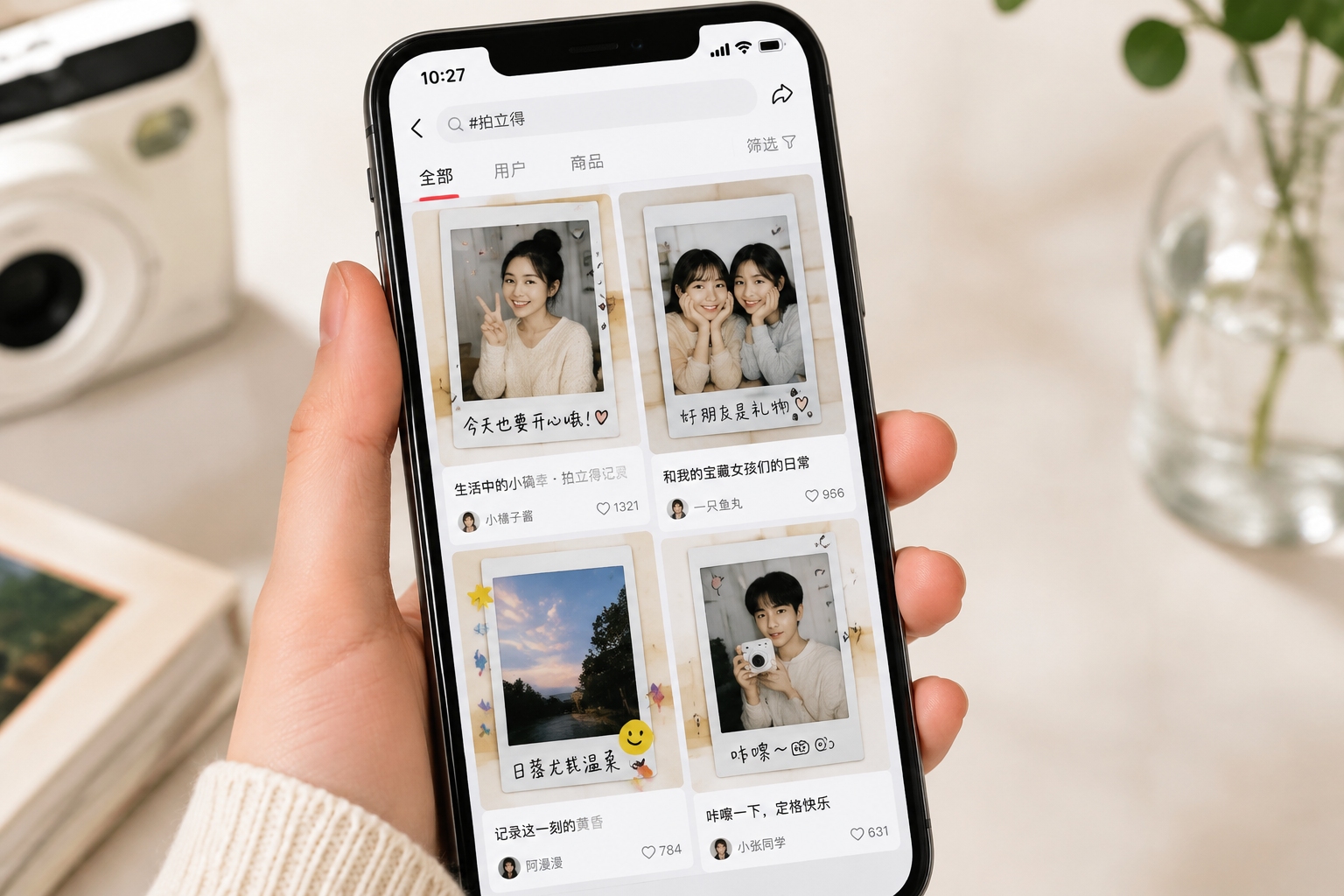
“I never put my digital photos on my wall — they just sit in my phone,” says Zhang Wei, a 27-year-old designer in Shenzhen. “But every Polaroid on my fridge has a story. I remember exactly who gave it to me, or where I was when I took it.” The process of shaking the print (though manufacturers say it’s not necessary), watching it develop, and sharing the physical copy transforms photography from a passive swipe into an active, social experience.
An Analog Antidote to Digital Anxiety
For some, the instant camera is a small act of rebellion against the overload of digital life. “We spend hours scrolling, and photos disappear into feeds,” says Dr. Chen Yan, a psychologist in Beijing who studies technology habits. “The instant print forces a pause. It’s slow, deliberate, and finite. That can be therapeutic in a world of infinite notifications.”
This “slow photography” movement resonates with a generation that has grown up online. The tactile feedback — the whir of the motor, the smell of the chemistry, the glossy surface — engages senses that screens bypass. It’s a form of mindfulness, if only for the 90 seconds it takes the image to appear.
Not All Rose-Tinted: The Real Costs
But the revival isn’t without drawbacks. Instant film is expensive — a pack of 10 shots can cost ¥60-80 (about $8-11), making each click a conscious expense. The prints are small, prone to fading, and require careful storage in albums or boxes away from light. Critics argue that the quality is inferior to even entry-level digital cameras. “I love the concept, but I end up with a drawer full of underexposed photos that I never look at,” admits 31-year-old teacher Liu Ting from Hangzhou.
Environmental concerns also loom: film cartridges contain plastic and chemicals, and the lithium batteries in some cameras are not replaceable. Fujifilm has launched recycling programs, but the footprint remains higher than digital alternatives.
Fleeting Nostalgia or Lasting Lifestyle?
Is this just a retro fad, like vinyl records and film cameras for hipsters? Possibly. But the numbers suggest more: Fujifilm reported that Instax sales grew 30% in China in 2023, and the company has opened dedicated “Instax experiences” in Shanghai and Beijing. The trend has also revived the second-hand market for vintage Polaroid and original Fujifilm Instax cameras.
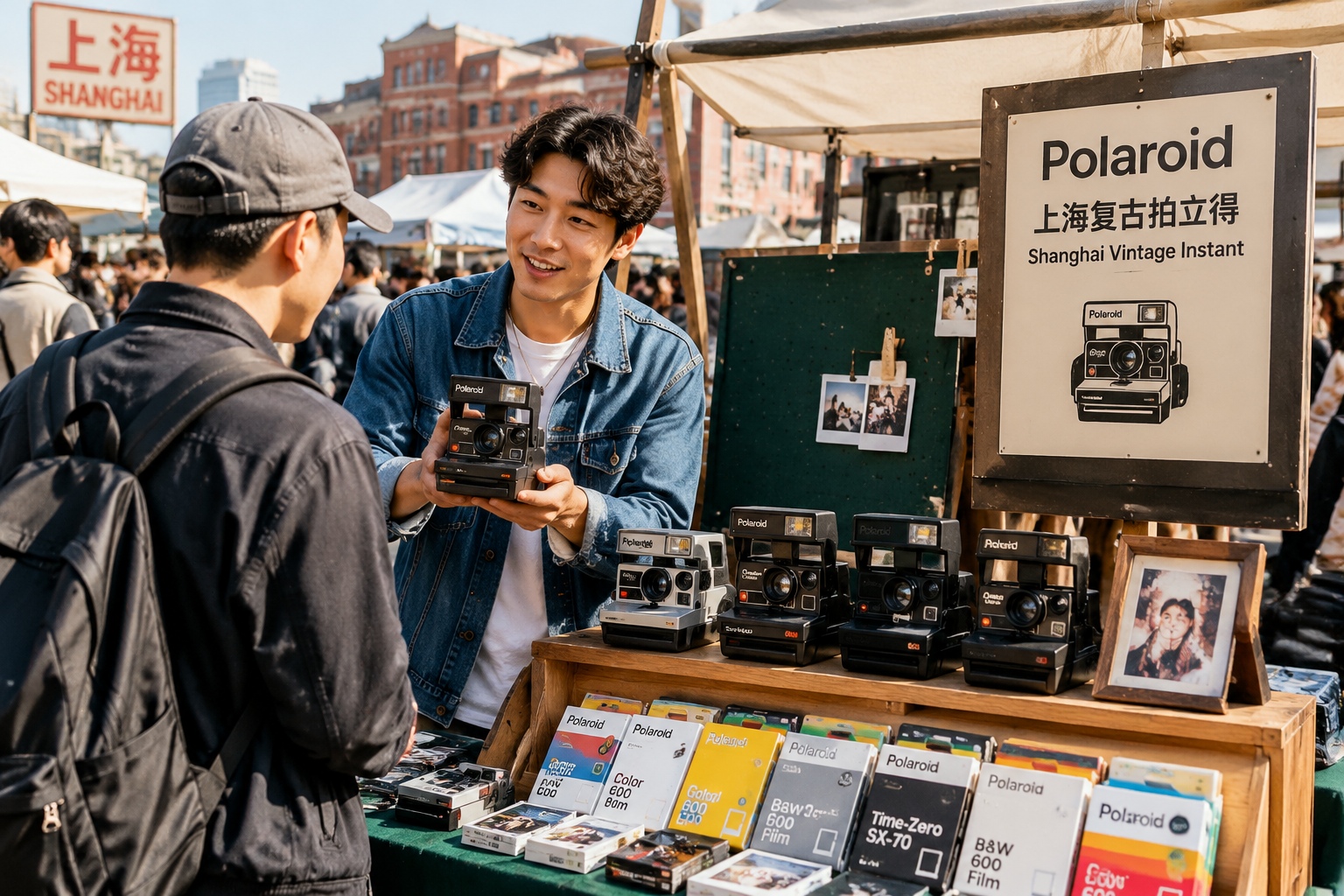
The appeal may be deeper than nostalgia. In a hyper-digital world, the desire for tangible, imperfect, and irreplaceable objects is a quiet counter-current. Young people are not abandoning smartphones — but they are carving out space for analog rituals that slow them down. As long as that desire exists, the instant photo will likely stay.
“It’s not about rejecting digital,” says Lin Xiao. “It’s about having something that is truly mine — not a file, but a photograph.”
Start the discussion at forum.chinacomes.com