
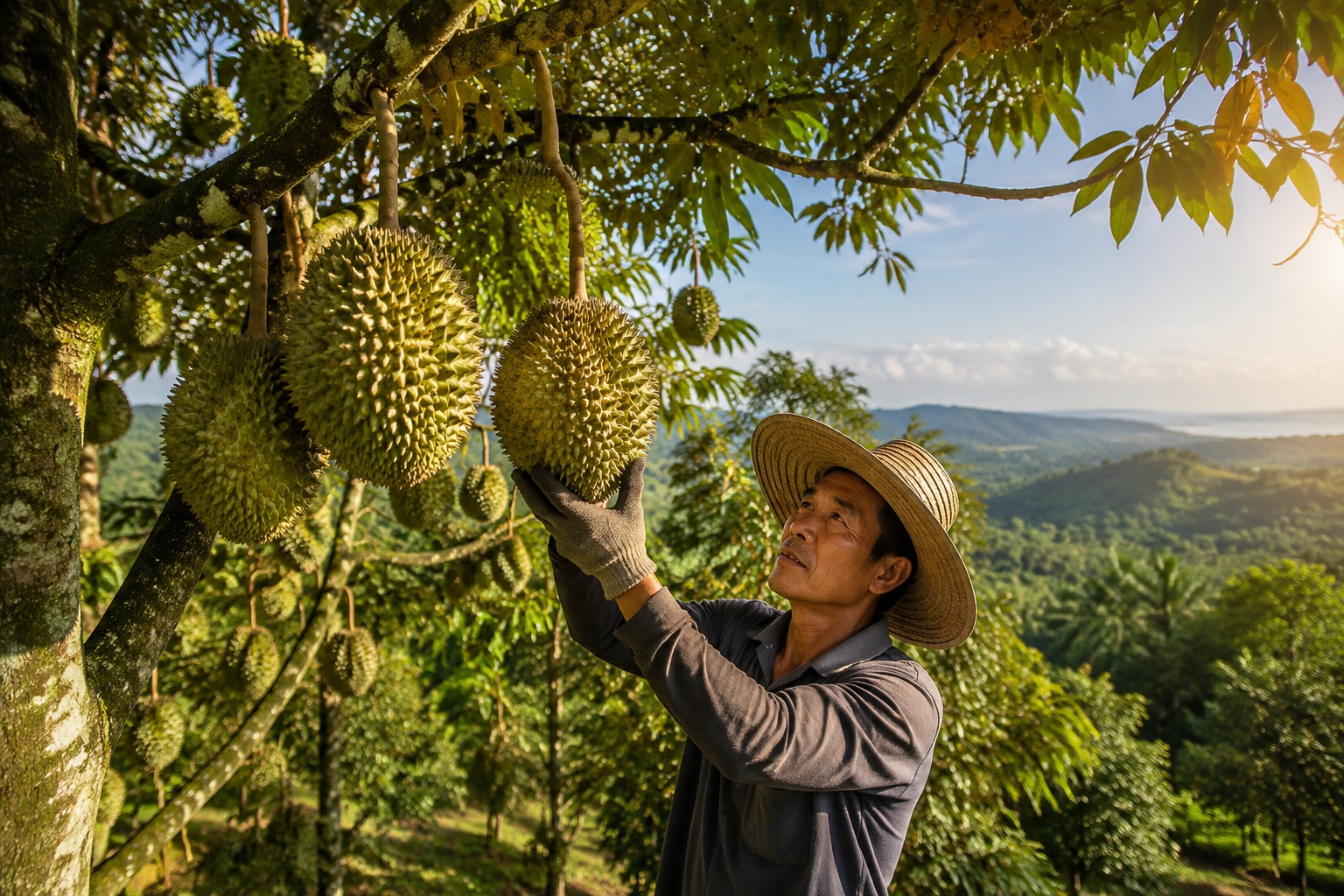

At a fruit stall in Sanya, a tourist picks up a chunk of golden durian and sniffs it. “Thailand?” she asks. The vendor shakes his head. “Baoting, about an hour away.” The tourist does a double take. She’s tasted durian before, but always from a plane that had flown across the border. This time, it’s homegrown.
For decades, China’s durian obsession was a story of imports. The fruit, famously pungent and creamy, became a middle-class status symbol. In 2023, China imported more than 800,000 tons of fresh durian, mostly from Thailand. That’s a lot of spiky cargo. But importation has a downside: the fruit is harvested early to survive the long journey, and it’s no match for a durian that ripens on the tree.
On the tropical island of Hainan, a small but determined group of farmers is betting they can offer something better. They’re part of a wider push called “tropical high-efficiency agriculture” — a somewhat dry term that describes a very exciting reality: using science and careful planning to get more from limited land. And their first results are already showing up on fruit stalls.
The Durian Problem
Durian is big business. In Thailand alone, the fruit represents billions of dollars in exports. China is the thirstiest market, and its appetite seems endless. But the logistics are grueling. A durian tree’s fruit must be cut at a specific stage, then cooled, packed, and flown to cities like Shanghai or Beijing. The whole process takes days, and the fruit often arrives underripe and flavorless.
There’s also a freshness gap. In Southeast Asia, locals insist on eating tree-ripened durian that falls naturally. That’s a luxury we can’t usually get in China’s northern cities. Hainan, on the other hand, is only a domestic flight away. If it can grow the fruit well, it could offer a much fresher product to millions of people.
Hainan’s Answer
Hainan has actually tried to grow durian before. As early as the 1970s, farmers planted seedlings from Thailand, but typhoons and poor soil made results disappointing. For decades, the island didn’t produce enough to matter. The recent breakthrough comes from a combination of new technology and persistence.
Today, Hainan has over 2,000 hectares of durian orchards, mostly in the southern counties of Baoting, Sanya, and Ledong. Farmers use grafting to create rootstocks that resist typhoons and choose varieties that tolerate the island’s humidity. They employ drip irrigation, smart weather stations, and even “greenhouse” covers for young trees. The goal is simple: maximize yield per hectare while maintaining quality.
The first commercial harvests occurred in 2023, and the fruit quickly became a hit. Local durians are sold at similar prices to imports, but they carry a label that says “Hainan” — and a much lower carbon footprint.
A Farmer’s Gamble
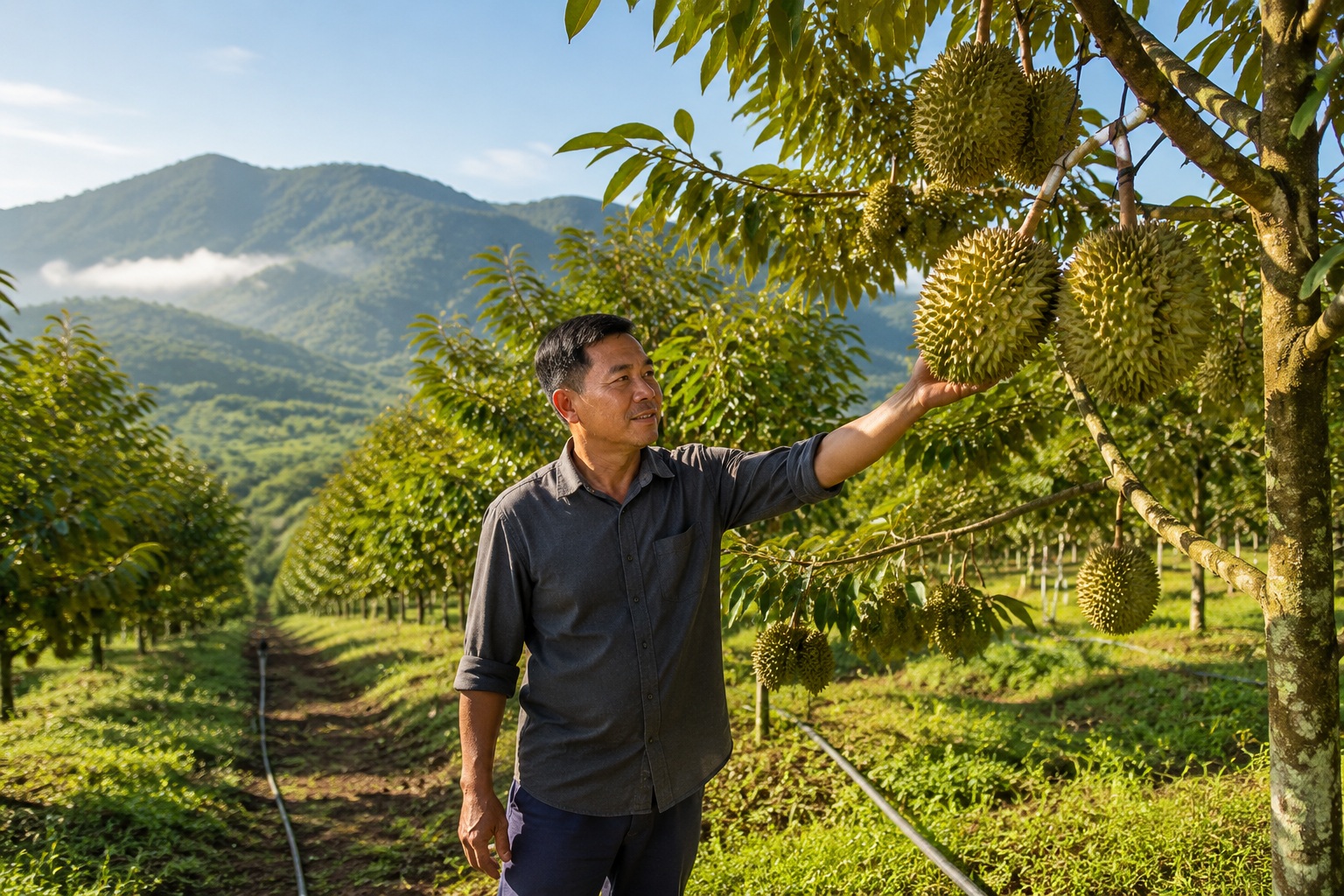
Twenty kilometers from Sanya, 45-year-old farmer Li Wenqing walks through his orchard, checking the white blossoms that are about to become durian. He planted his first trees in 2018, and seven years later, they’re heavy with fruit. “People laughed at me,” he says, wiping sweat from his forehead. “Everyone said durian could not grow outside Southeast Asia.”
Li’s farm is compact—just 3 hectares—but he packs them with techniques that didn’t exist a decade ago. Trees are spaced strategically to reduce wind damage. A soil probe reads moisture and nutrients, sending data to his phone. He uses organic fertilizers made from coconut shells and fish meal. When a typhoon watch hits, he ties down the young branches with a system of ropes and pulleys. “It’s a lot of work, but the reward is a fruit that tastes like the actual sun, not an airplane cabin.”
Hainan vs. Thailand: A Blind Tasting
To see what the hype is about, we joined a tasting session in Sanya. A fruit seller set up a table with two plates. On the left, a Thai durian; on the right, a Hainan-grown one. Both were labeled only by number — this was a blind test. The seller wanted to show that the local fruit could hold its own, maybe even outshine the imported one.
We closed our eyes and took a bite. The Thai durian was pungent, sweet, with a faintly boozy note. It’s what most Chinese consumers are used to. The Hainan durian was different: less aggressive, creamier, with a texture like custard and a delicate, slightly nutty flavor. Some tasters preferred the Thai intensity; others found the Hainan version more elegant and balanced.
After a second round, we asked the seller which was which. The numbers revealed the obvious: the creamier one was from Hainan. Out of six tasters, four said they’d choose the Hainan fruit for its milder aroma and less cloying sweetness. The other two stick with the classic Thai kick.
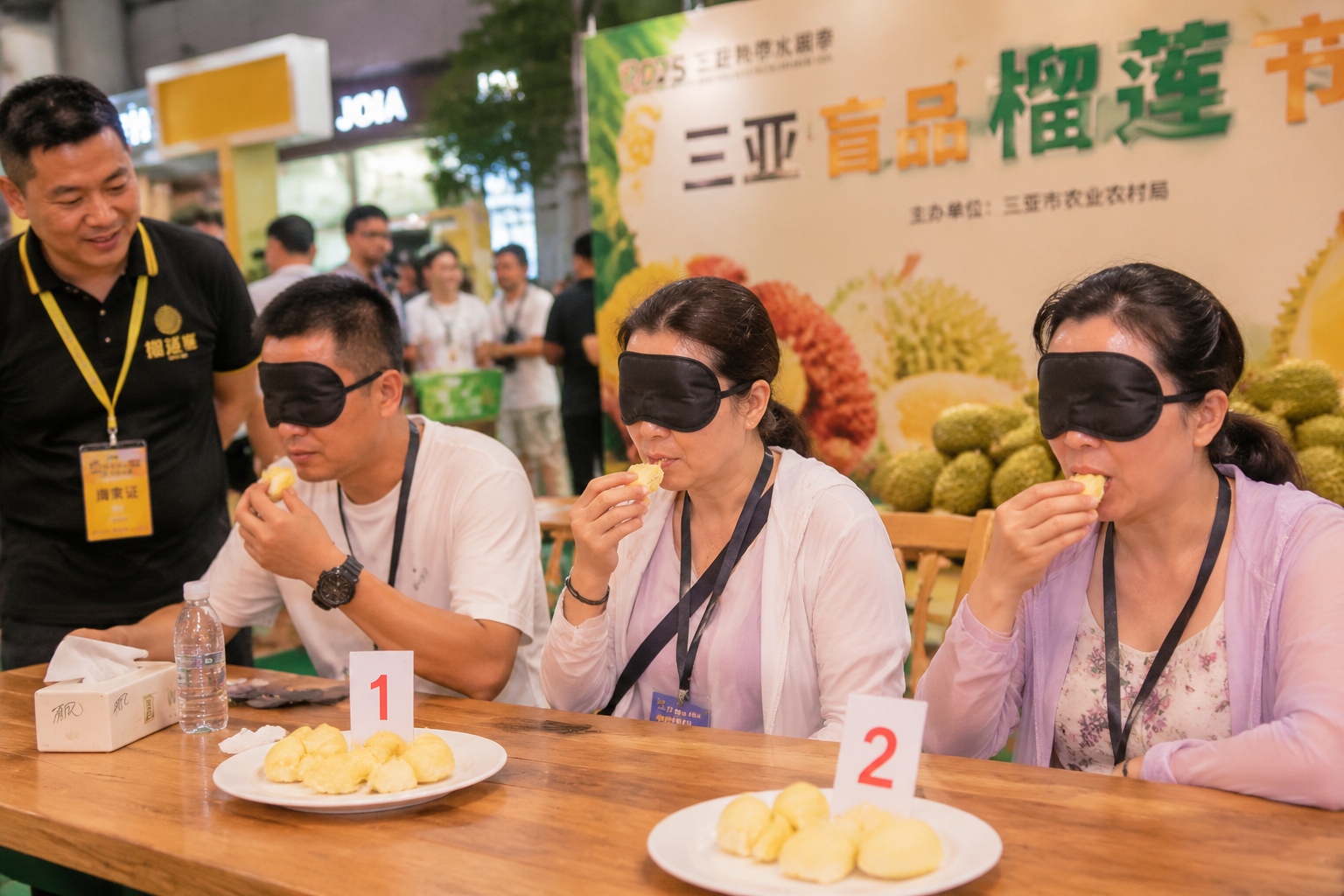
The difference makes sense. The same tropical fruit can pick up different aromas depending on soil, moisture, and sunlight. Hainan’s volcanic soils and fluctuating coastal breezes give its durians an identity distinct from Thailand’s. It’s not about “better” — it’s about having a choice, and a fresher one at that.
Coffee’s Second Act
Durian isn’t the only crop getting a makeover. Hainan has a long coffee history: the city of Xinglong has been growing beans since the 1950s, largely thanks to returning overseas Chinese who brought arabica seeds from South America. But the industry dwindled as cheaper imported coffee flooded the market.
Now, that same high-efficiency agriculture push is bringing coffee back. Farmers are planting better varieties, like Catimor and Bourbon, and experimenting with processing methods. The island’s rainy season, acidic soils, and moderate temperatures create a smooth, low-acid bean that some experts compare to Indonesian profiles.
Today, Hainan’s coffee plantations cover a few thousand acres — a fraction of the area in Vietnam or Brazil. But they have a strategic advantage: proximity to China’s booming coffee market. While the rest of the world’s coffee consumption grows at about 2% annually, China’s is growing at double digits. Hainan wants to capture that demand.
At the Xinglong Coffee Park, you can walk through aromatic rows of shrubs, watch cherry-drying on traditional patios, and taste a small-batch cup that tastes of chocolate and walnuts. The farm also uses technology: soil moisture sensors trigger irrigation, and GPS-guided drones monitor for disease. It’s a far cry from the smallholder coffee plots of a generation ago.
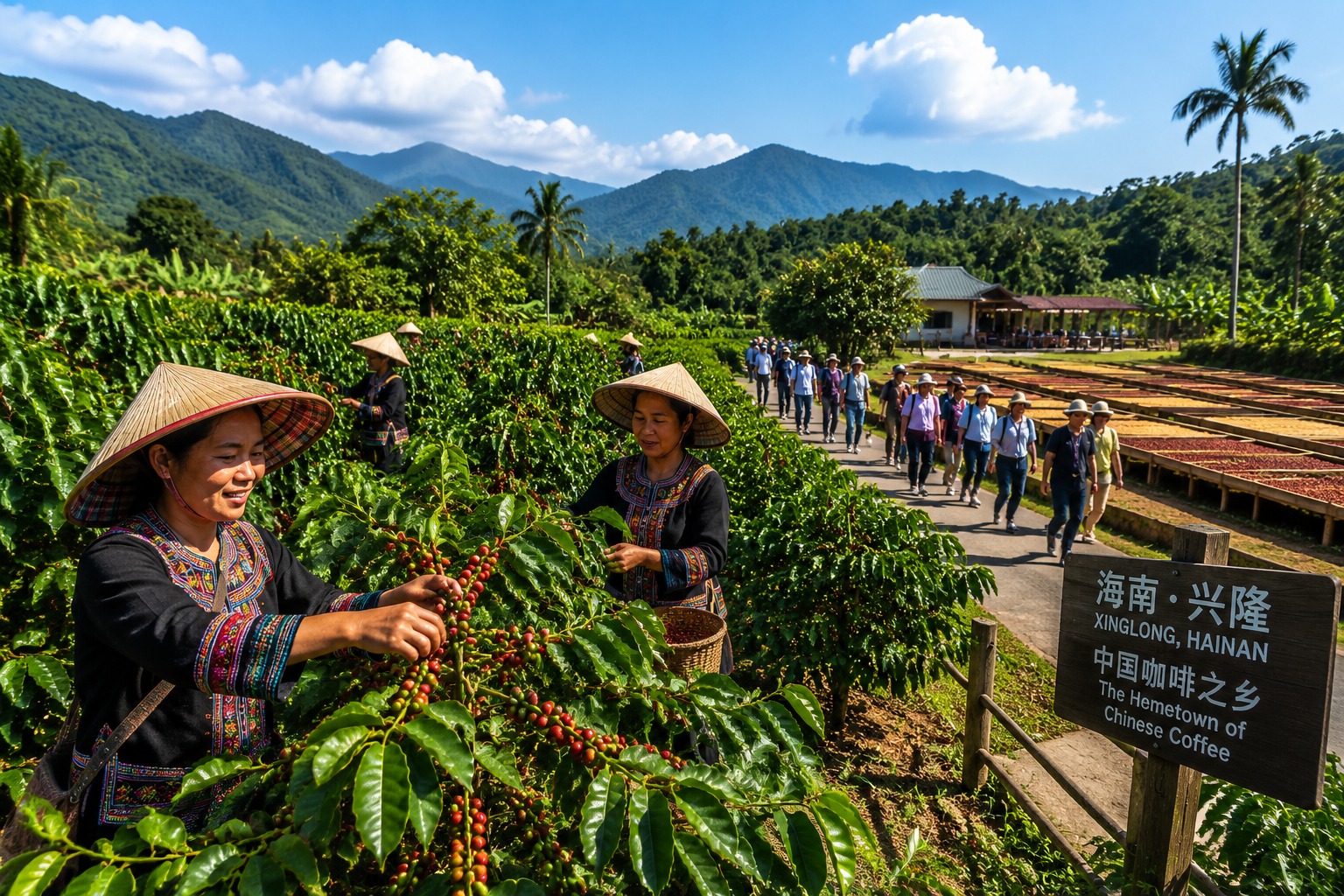
Hainan coffee still makes up a tiny slice of China’s overall coffee consumption, but it’s a source of pride. It also signals that tropical agriculture doesn’t have to be stuck in the past. With the same techniques used for durian — grafting, precise irrigation, and soil analysis — a historical crop can become a modern specialty.
What Western Readers Should Understand
If you arrive from Europe or North America, you might immediately think of “locavore” movements or organic farmers’ markets. The idea of growing your own tropical fruit isn’t just about nostalgia; it’s about strategic resilience. China has less than 10% of the world’s arable land but around 18% of its population. That math is never far away. So when the government talks about “high-efficiency agriculture,” it means something specific: using every piece of land as smartly as possible, often with science and tech.
That explains why Hainan’s experiment matters beyond the island. The durian and coffee crops aren’t just about making a novelty; they are proving that with enough applied knowledge, even the most challenging crops can be grown near home. The same techniques used on a durian farm in Baoting might be adapted for strawberries in a cold northern greenhouse or tomatoes on a rooftop in Shanghai.
Challenges Remain
It’s not all smooth sailing. Typhoons can destroy an orchard in a single night, as happened in 2021 when more than half of Hainan’s young durians died in a freak storm. Weather patterns are unpredictable, and because the fruit is new, farmers are still learning the best methods. There’s also the question of scale. Even if Hainan produces, say, 10,000 tons of durian in a few years, it still represents less than 1% of China’s annual imports. The same goes for coffee: Hainan can be a boutique player, but it won’t be another Vietnam.
And there’s a social consideration. Local products often come with a higher price tag because of the labor and technology involved. So far, Hainan durians have sold at a premium, positioning them as specialty items rather than budget alternatives. That may change as yields improve, but it’s a reminder that “challenging imports” isn’t the same as “replacing imports.”
The Road Ahead
For now, the story of Hainan’s durian and coffee is a story of ambition. It’s about a subtropical island using every trick in the book to create a more self-sufficient future. The fruit farmers are not trying to go back to some idyllic past; they’re looking forward, using data, genetics, and careful planning.
If you visit Hainan, you can taste the future. In the same afternoon, you can sit in a coffee shop in Sanya sipping a pour-over made from backyard beans, then drive into the hills and bite into a creamy durian that didn’t cross the sea. It’s a reminder that in the 21st-century China, even the spikiest, stinkiest fruit can find a home.
Start the discussion at forum.chinacomes.com