

Introduction
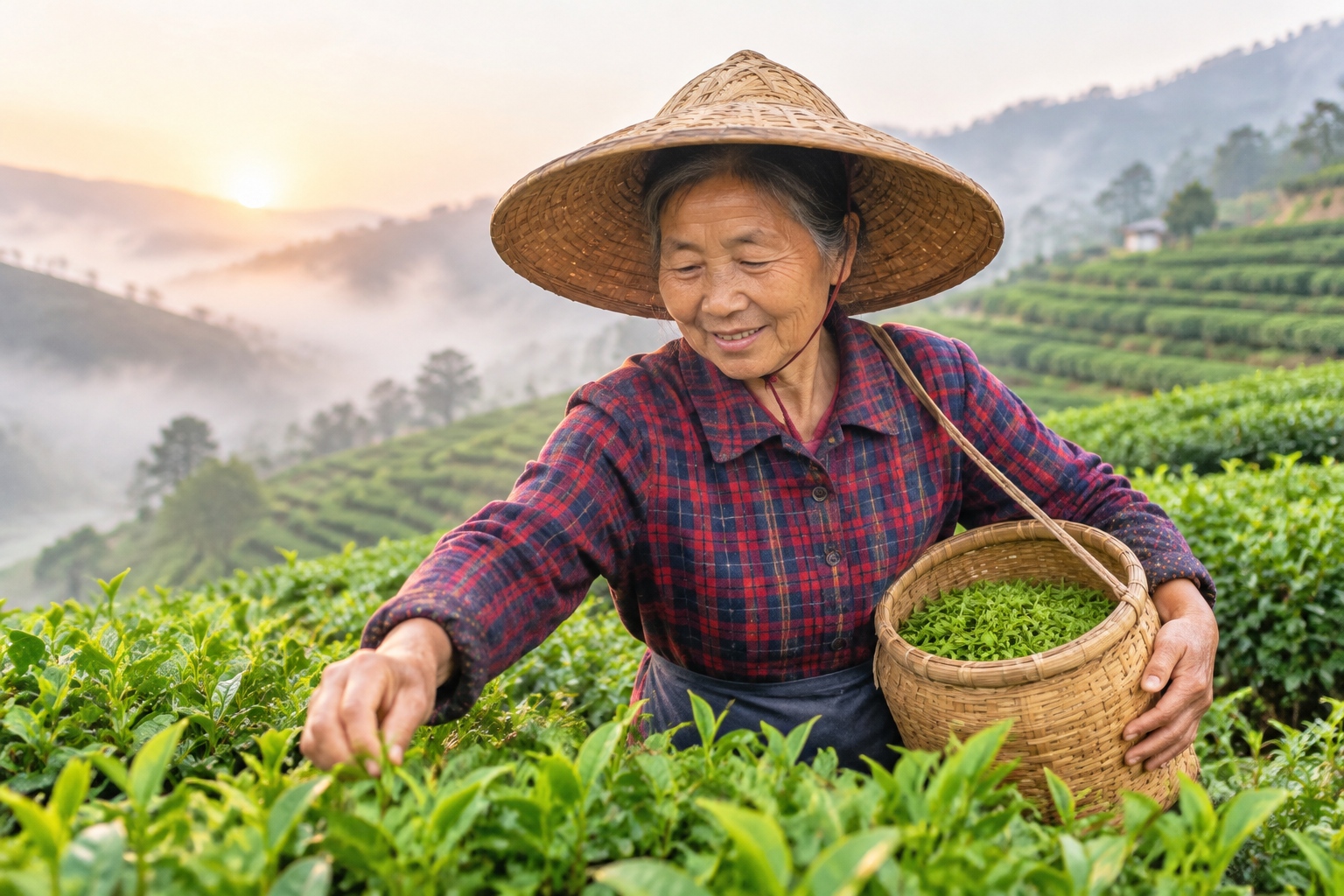
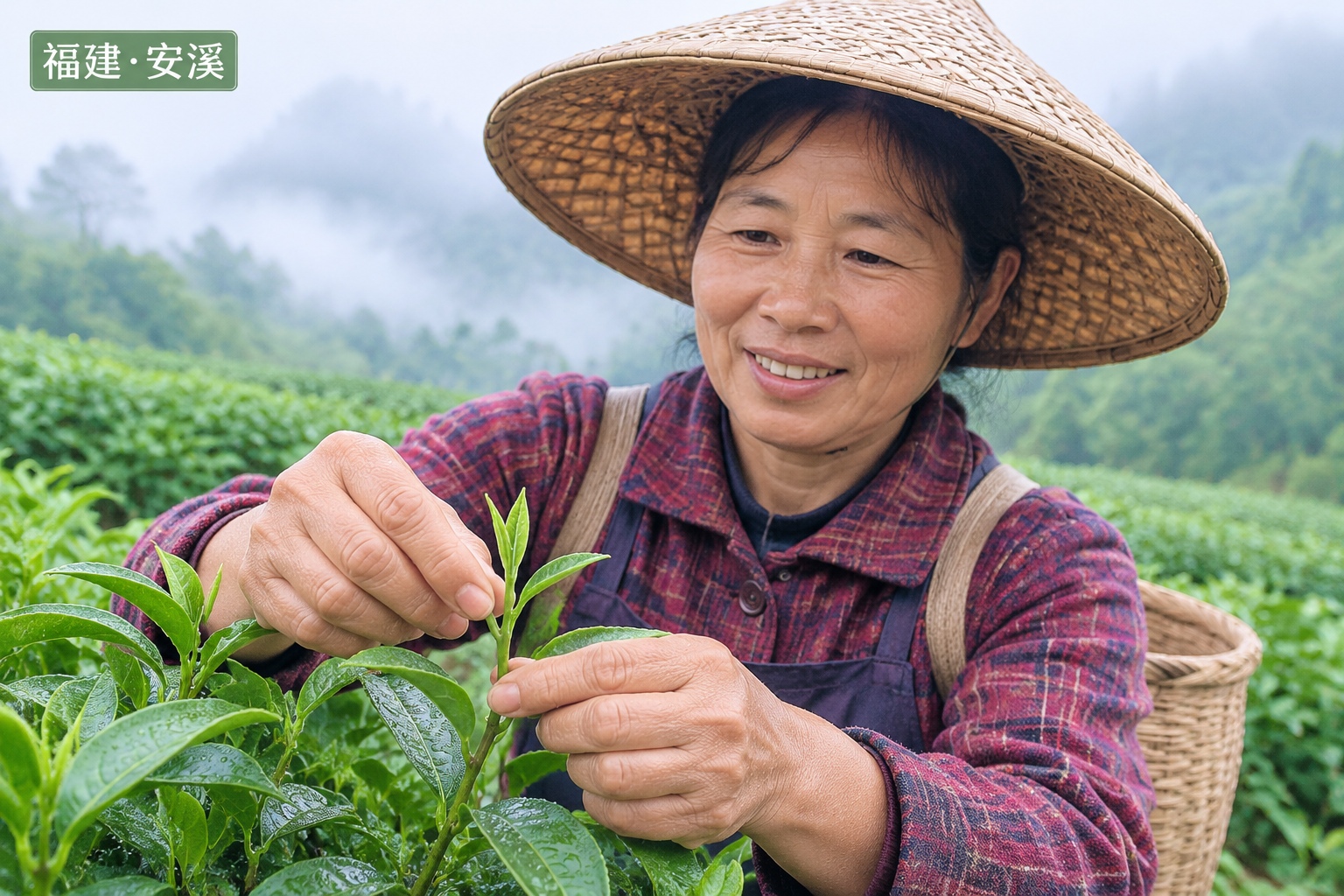
At 5:30 a.m., the mist is still hanging low over the hills of Anxi County in southeast China’s Fujian Province. In a small tea garden, 58-year-old Wei Xiuying is already picking leaves. Her fingers move quickly, plucking two or three leaves and a bud from each branch. “Only the young ones,” she says, holding up a bright green sprout. These leaves will be transformed into Tieguanyin, one of China’s most celebrated oolong teas.
Anxi and the Legend of Tieguanyin
Anxi County, located in the heart of Fujian, has been producing tea for over a thousand years. The name Tieguanyin — literally “Iron Goddess of Mercy” — dates back to the early Qing Dynasty. Locals tell a story of a poor farmer who found a neglected temple with an iron statue of Guanyin, the goddess of mercy. He cleaned it and offered tea. That night, he dreamed he found a shining tea tree. The next day, he discovered the tree near the temple. The tea from it became known as Tieguanyin.
Whether myth or history, the legend reflects the deep connection between tea, place, and faith in Anxi. Today, the county is home to more than 600,000 people involved in the tea industry, and its tea gardens cover over 40,000 hectares. The region’s subtropical climate, high humidity, and red soil create ideal growing conditions for this particular cultivar.
From Leaf to Cup: The Craft
Tieguanyin is a semi-oxidized oolong tea, and its production is a meticulous art. The process begins with sun withering, where fresh leaves are spread out under the sun for about 30 minutes. Then comes the more intricate stage of shaking — the leaves are tossed in bamboo trays to allow the edges to bruise while the centers remain intact. This initiates oxidation, which gives oolong its distinctive flavor and aroma.
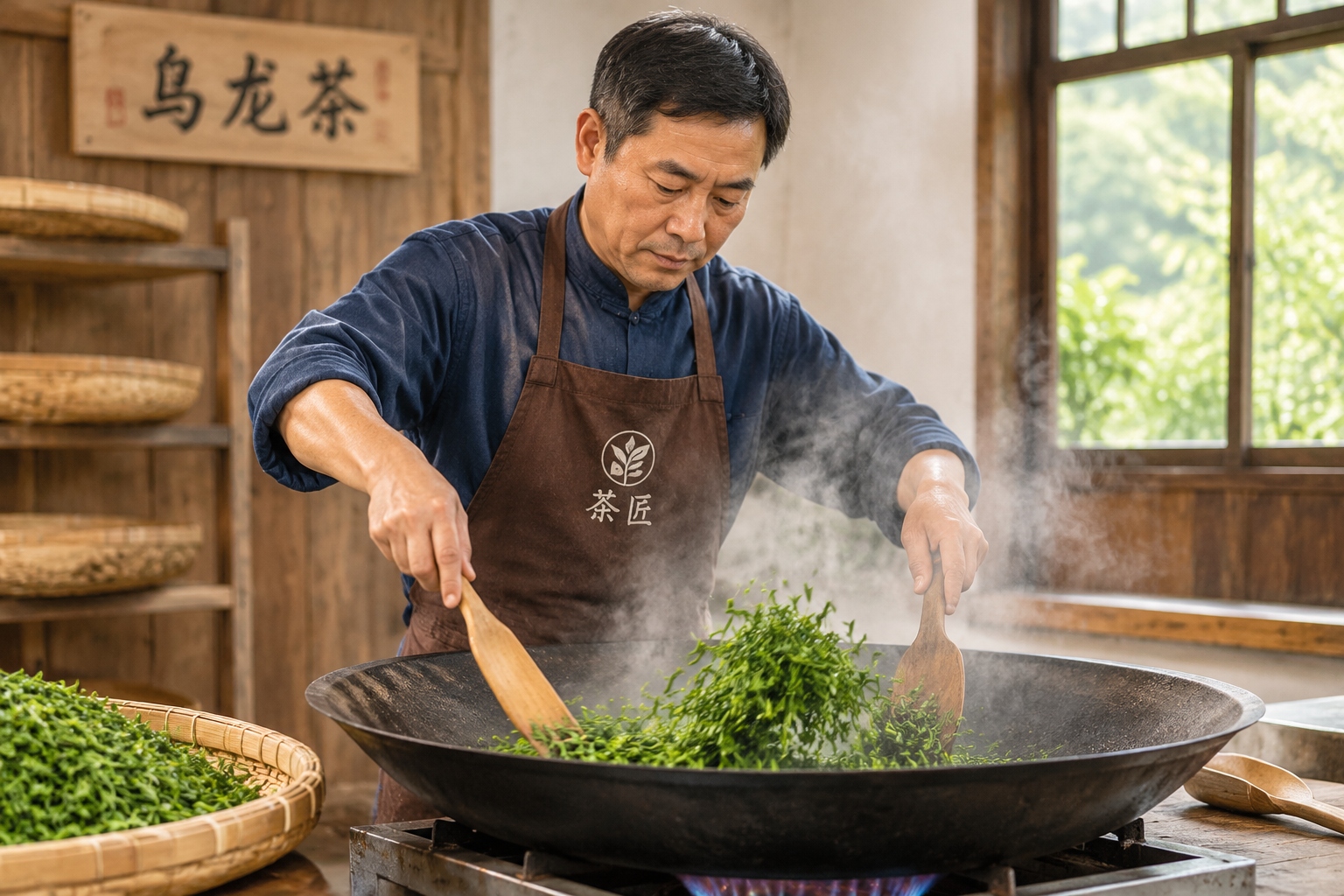
After oxidation reaches the desired level, the leaves are quickly heated in a hot wok to halt the process. This is followed by rolling, where the leaves are twisted into tight curls. Finally, they are baked to reduce moisture and enhance flavor. The exact timing and temperature depend on the weather and the tea master’s experience.
“Every batch is different,” explains 45-year-old tea master Lin Qinghe as he rolls a handful of twisted leaves in a hot wok. “You have to watch, smell, and feel.” The process, from fresh leaf to finished product, takes about 30 hours. A skilled master can produce only a few kilograms a day, and the finest Tieguanyin can sell for thousands of RMB per kilogram.
The Tea Economy: A Billion-RMB Industry
Anxi Tieguanyin is not just a drink; it is an economic engine. In 2023, the total value of Anxi’s tea industry exceeded 100 billion RMB (about $14 billion). This includes everything from planting and processing to sales and logistics. For many local families, tea is the main source of income. Tea gardens provide jobs for about 800,000 people, and the county has more than 1,200 tea-processing companies.
The tea market in Anxi town is a sensory overload. Every morning, traders from across China and beyond crowd into the wholesale market. They sniff samples, sip small cups, and negotiate prices with seasoned precision. In recent years, e-commerce and live-streaming have opened new channels. Young buyers can purchase fresh Tieguanyin directly from farmers on platforms like Douyin and Taobao. Many tea farmers have turned their homes into showrooms, offering virtual tastings and doorstep delivery.
A New Generation in the Tea Fields
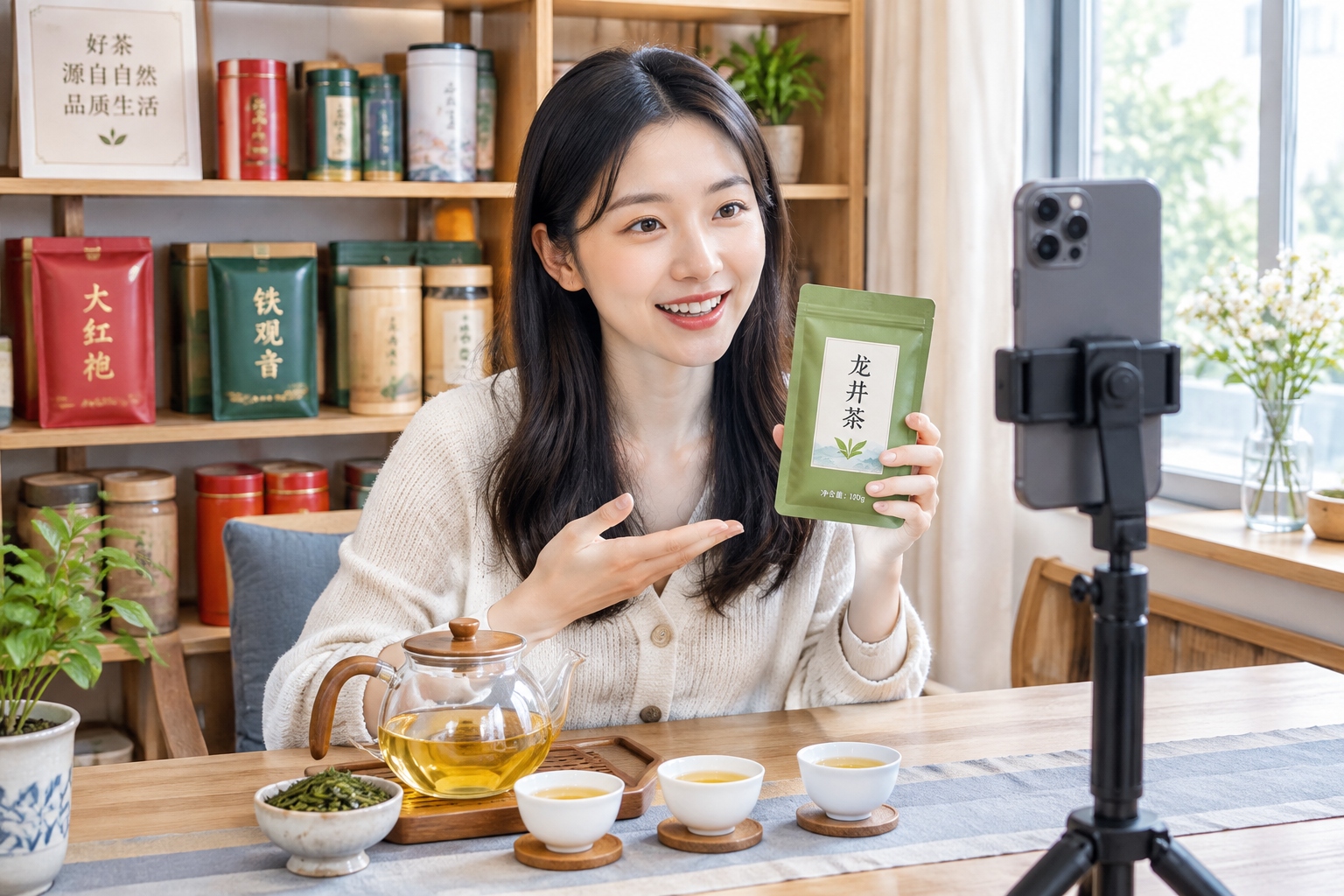
The younger generation is also reshaping the industry. Wang Xin, 27, returned to her hometown after working in Shanghai. She now manages her family’s online tea shop. “We used to sell only to wholesalers. Now, we tell the story of our tea and our village to customers directly,” she says, holding her phone in a lively live-stream session. Her studio, set up in her parents’ living room, is filled with tea samples, a camera, and ring light.
Some are experimenting with new products: cold-brewed Tieguanyin, tea-flavored pastries, and even tea-based skincare. These innovations are helping to keep the tradition relevant to modern lifestyles. Tea education has also become popular; young adults in cities attend weekend courses to learn the art of Gongfu tea brewing, creating fresh demand beyond casual drinking.
Challenges and the Road Ahead
The industry is not without problems. Brand dilution, label fraud, and the environmental impact of intensive planting are real concerns. Many teas processed outside Anxi claim the Tieguanyin name, undermining consumer trust. To combat this, the local government has introduced strict geographical origin certification and a traceability system that assigns QR codes to every packaged product. These codes allow customers to see the exact garden and date of harvest.
Environmental sustainability is another priority. For decades, many tea farms relied heavily on chemical fertilizers and pesticides. Now, ecological planting is on the rise. “We have reduced pesticide use by half,” says Wei Xiuying, who has converted her 2-hectare farm to organic practices. In 2022, Anxi County became one of the first recipients of the “China Eco-Label Tea” certification.
As the sun sets over the rolling hills, Wei carries her basket of fresh leaves to the processing workshop. The garden she planted 30 years ago is still producing. “A good cup of tea needs time and care,” she says. “It is the same with our industry.”
Conclusion
Anxi Tieguanyin is a story of people, land, and tradition transformed into a modern economic force. It shows how an age-old craft can adapt to the digital age while staying true to its roots. Next time you sip a cup of this amber liquor, you are tasting not just tea — you are tasting a piece of contemporary China.
Start the discussion at forum.chinacomes.com