
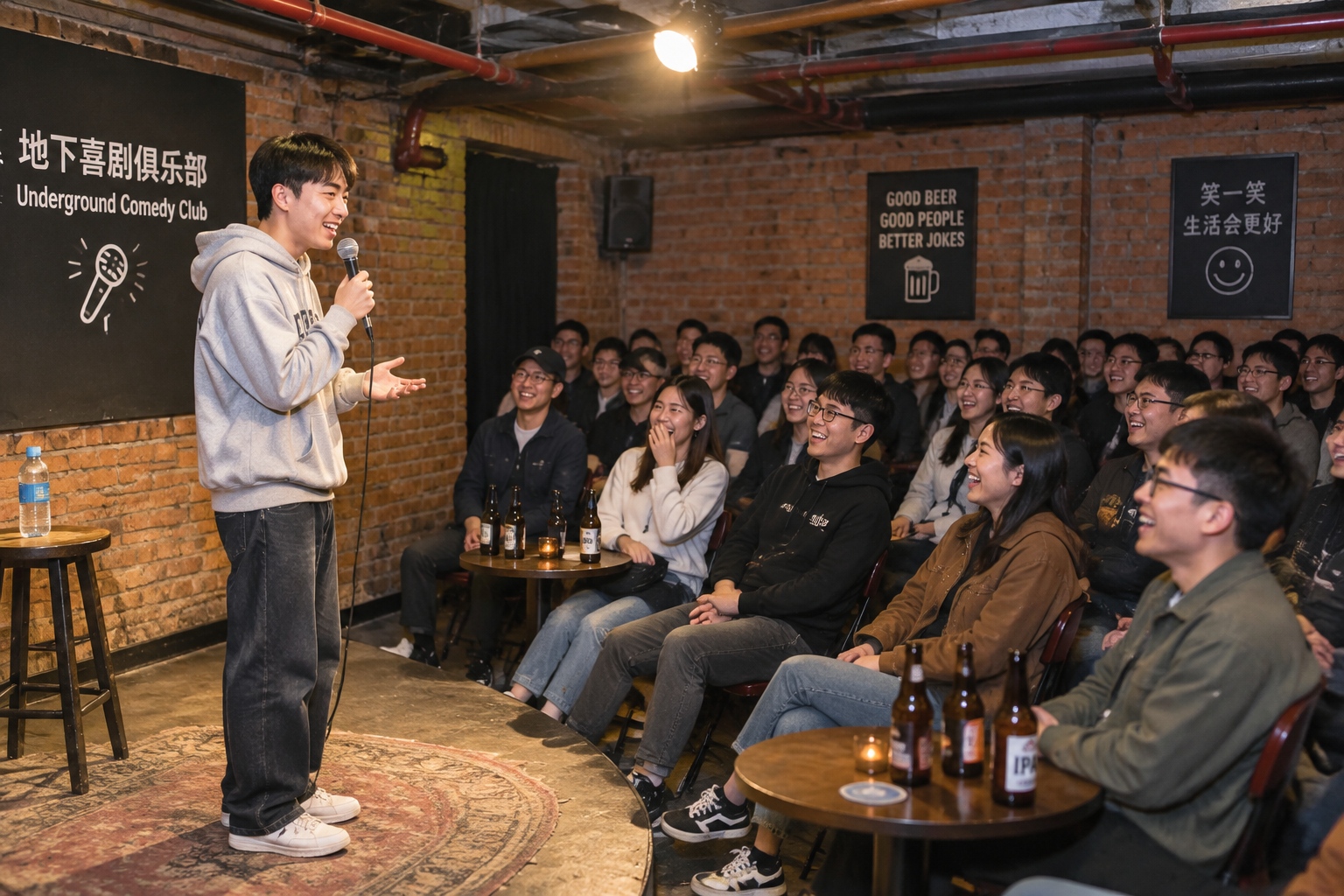

A Thursday Night in a Beijing Basement
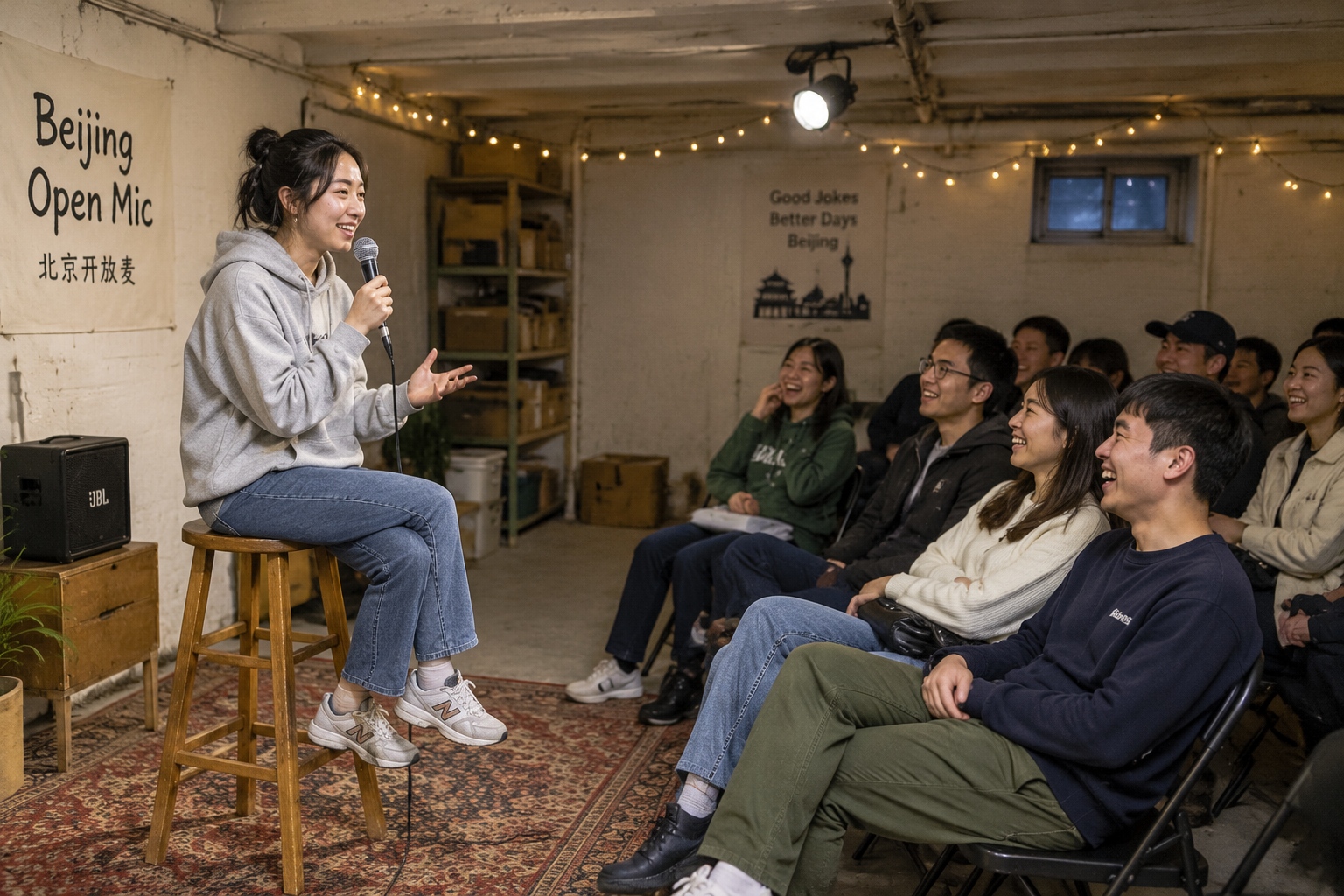
It’s a little past eight on a Thursday, and the room smells of spilled beer and someone’s half-eaten malatang. Forty people are crammed into folding chairs in a basement that used to be a storage unit, somewhere off a side street in Beijing’s Dongcheng district. A single spotlight hits a wooden stool and a cheap microphone. The ceiling is low enough that the tallest comic of the night keeps ducking.
A woman in her late twenties, hoodie and sneakers, grabs the mic. “So my mom called me again today,” she says. “She asked when I’m getting married. I told her I can’t even afford to rent a one-bedroom alone. She said, ‘That’s why you need a husband.'” The room cracks up. A guy near the front nearly knocks over his drink.
This is open-mic night, and most of the people on stage are not professional comedians. They’re programmers, teachers, delivery coordinators, and recent graduates who signed up on a group chat earlier that week. In Chinese they call it tuokouxiu, a loose transliteration of “talk show,” but what happens here looks much more like Western stand-up: one person, a microphone, and five minutes to make strangers laugh.
How Stand-Up Went Underground, Then Everywhere
Stand-up comedy is young in China. For decades, the dominant comedic forms were xiangsheng, a traditional two-person crosstalk act with roots in Qing-dynasty street performance, and sketch comedy on the Lunar New Year gala watched by hundreds of millions. Solo stand-up barely existed until the 2010s.
Then came the televised shows. A streaming competition called Rock & Roast turned a handful of comics into online celebrities, and suddenly millions of young people wanted to try it themselves. The spillover landed in small clubs. Open mics multiplied in Beijing, Shanghai, Shenzhen, Chengdu, and Guangzhou. People use “underground” loosely here. It mostly means small, cheap, unpolished rooms where anyone can test material before a live crowd, not some secret society.
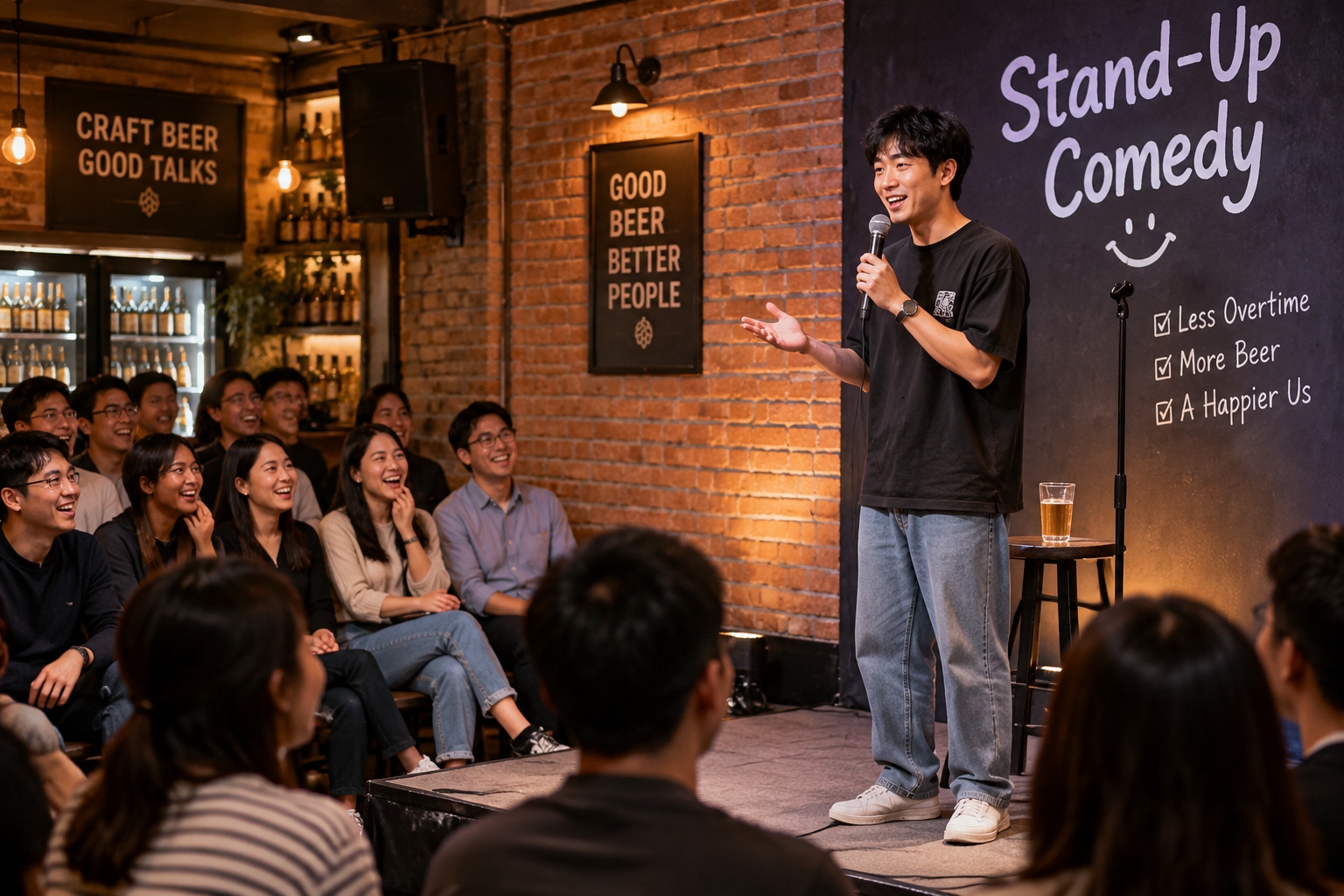
The venues share a certain look. A craft-beer bar that clears its tables after nine. A bookstore basement with exposed pipes. A co-working space on weekends. Tickets run anywhere from free for open mics to around 80 to 150 yuan for a weekend showcase with experienced performers. The crowd skews young, mostly in their twenties and thirties, the same people who show up in the jokes.
What They’re Actually Joking About
If you sit through a few shows, you start to notice the themes repeat. The material is relentlessly about the texture of ordinary working life, and three subjects come up again and again.
Neijuan: The Overtime Grind
The word neijuan, literally “involution,” has become shorthand for a specific exhaustion: everyone working harder and longer just to stay in the same place. A comic who works at an internet company does a bit about his company’s “996” schedule, nine in the morning to nine at night, six days a week. “Our HR said work-life balance is important,” he says. “So they installed a nap pod. Right next to my desk. So I never have to go home.” The laugh is the laugh of recognition. Half the room has lived it.
Housing Anxiety
Rents and home prices in big cities are a bottomless well of material. A performer from a smaller city jokes about moving to Shanghai: “Back home, my salary could buy an apartment. Here it buys the bathroom. Maybe. If I don’t eat.” Another riffs on the matchmaking logic that still ties marriage to property. “My date asked if I own a flat. I said no. She asked if my parents own a flat. I said I am the flat. I’m the family’s only asset.”
Parents and the Generation Gap
Family pressure is the third pillar. Comics mine the gap between parents who grew up in scarcity and children raised in relative plenty but drowning in expectation. There are bits about mothers forwarding health misinformation on WeChat, fathers who can’t understand why anyone would quit a stable government job, and the annual interrogation at Lunar New Year dinner about salary, marriage, and grandchildren. One woman describes her aunt’s questions as “a performance review I never signed up for.”
Working the Edges
Comedians everywhere learn where the lines are. In China, performers develop an instinct for which topics land and which fall flat, and they build their sets accordingly. The craft question most of them talk about is not politics but specificity: how to make a joke about your own life land for a stranger.
The best performers are precise. They name the exact brand of instant noodles, the exact phrasing of a boss’s passive-aggressive message, the exact amount their landlord raised the rent. The humor comes from shared detail, not from shock. A 29-year-old comic who performs on weekends told me she rewrites a five-minute set maybe fifteen times before she trusts it. “The crowd knows immediately if you’re faking it,” she said. “They’ve lived the same week I have.”
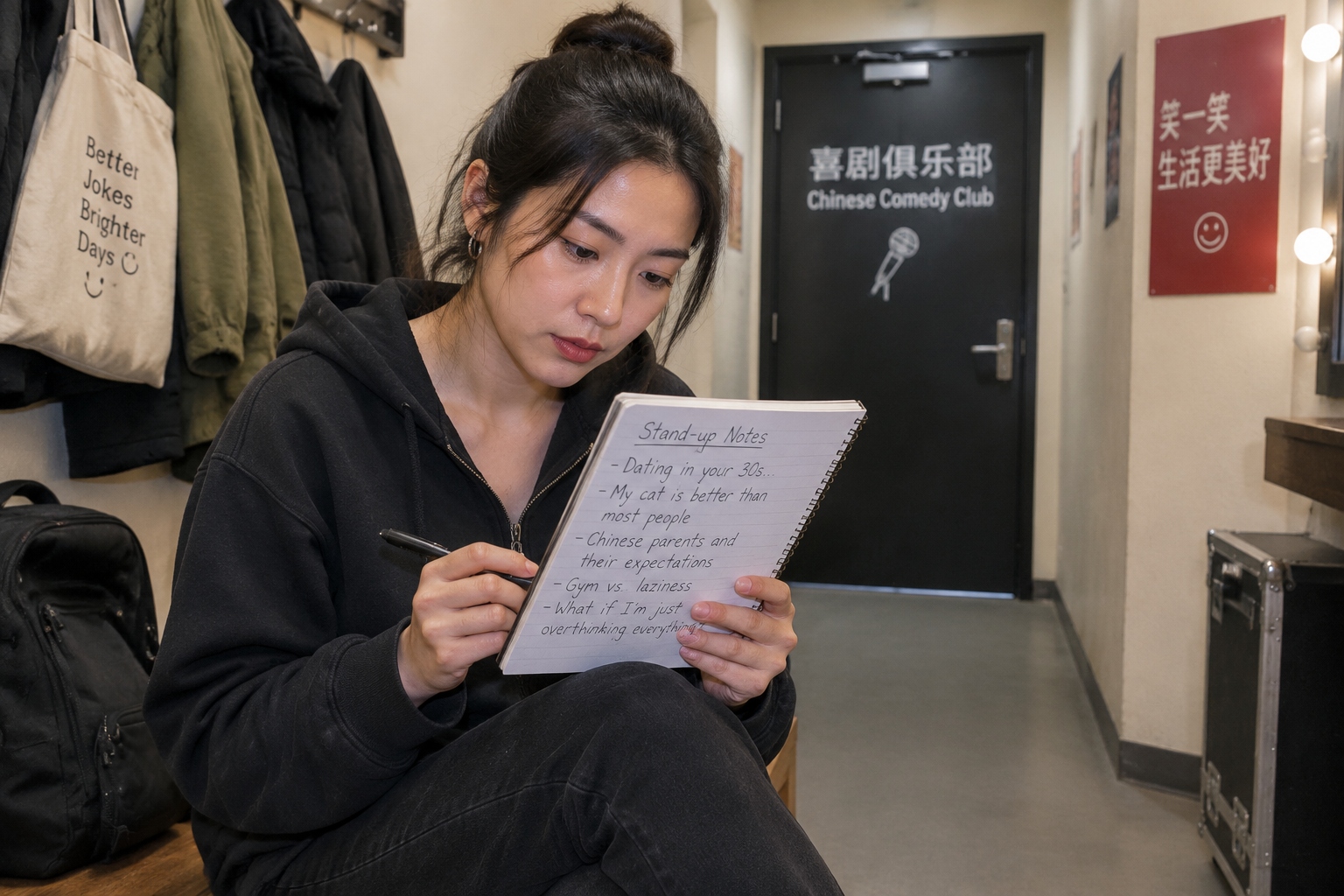
There’s also a self-deprecating streak that runs through almost every set. Comics turn the laugh on themselves first: their bad dating luck, their shrinking savings, their inability to meet parental expectations. It’s a comedy of the squeezed middle, performed by the squeezed middle, for an audience of the squeezed middle.
Who’s Laughing, and Why
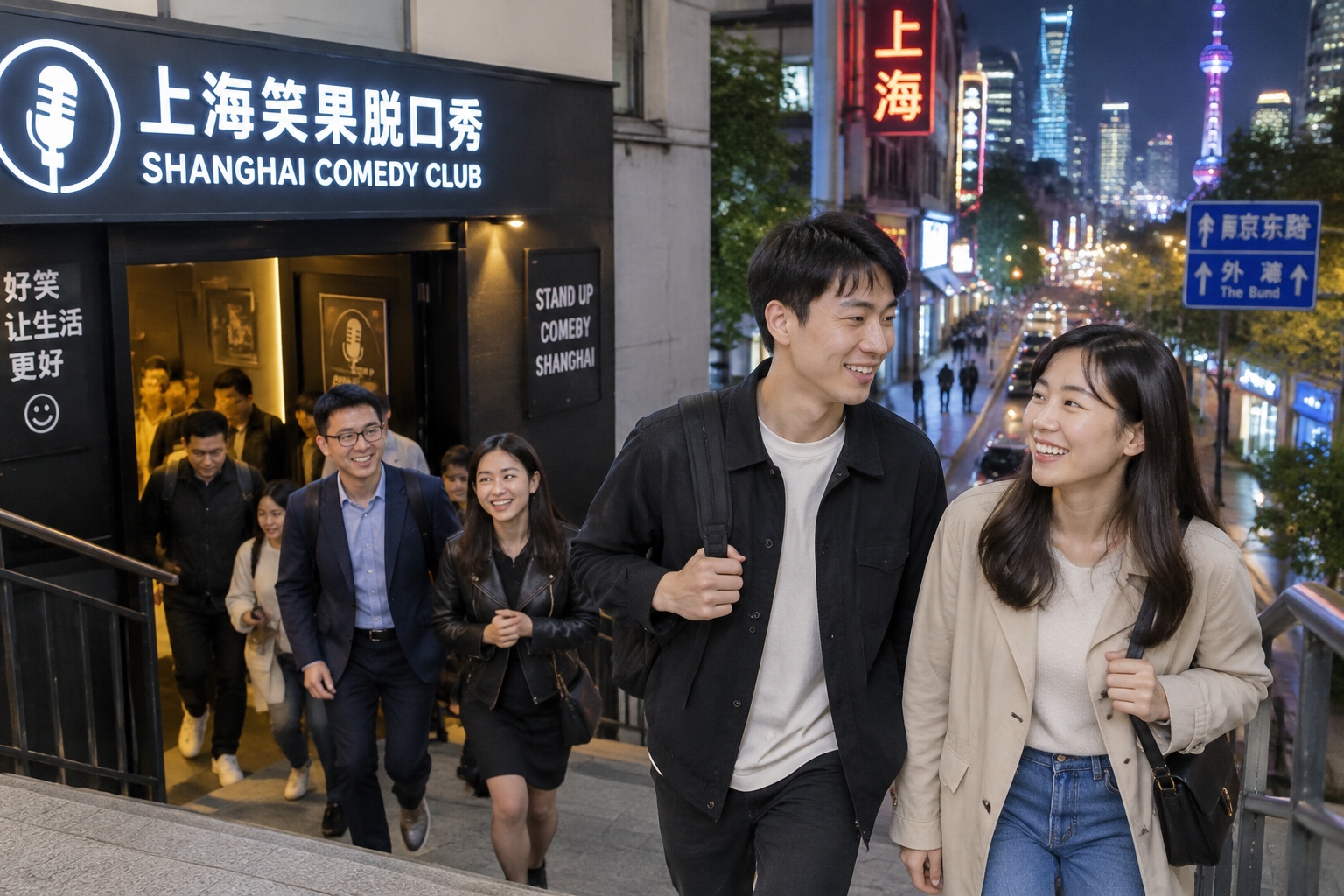
After one Shanghai showcase, I talked to a few people filing out into the night. A 26-year-old product manager said she comes twice a month. “It’s cheaper than therapy,” she said, only half joking. “Someone says out loud the thing you’ve been feeling all week, and the whole room laughs, and you feel less insane.”
A couple in their early thirties said they’d started coming because the TV shows made them curious, but they kept coming for the rawness. “On screen everything is polished,” the husband said. “Here people mess up. Someone bombs and just stands there. It’s human.”
Not everyone connects with every set. Older audience members sometimes don’t catch the workplace slang. A joke about a dating app or a niche gaming reference sails past anyone over forty. And the overtime and housing material, so cathartic for a city office worker, means less to someone who grew up and stayed in a smaller town. The comedy is generational and urban, and it knows its crowd.
Why It Keeps Growing
What strikes you, after a few nights of this, is how ordinary the whole thing is. There’s no manifesto. People aren’t there to make statements. They’re there because the daily grind is heavy and laughing about it in a room full of strangers who get it feels good.
The scene is still small and scrappy. Many open-mic performers will never go pro; they do it for the same reason people join a weekend band or a running club. But the rooms keep filling up. New clubs open in second-tier cities. The jokes travel on short-video apps, clipped into fifteen-second highlights that rack up millions of views.
At the end of that Thursday night in Beijing, the host thanks everyone, reminds the crowd to tip the performers, and plugs next week’s lineup. People file up the stairs into the cold, still quoting their favorite lines. The woman with the hoodie is outside, scrolling her phone, waiting for a ride. Her mom, she tells me, still hasn’t stopped asking about marriage. “Good,” she says. “That’s three more minutes of material.”
Start the discussion at forum.chinacomes.com