


First, a Scene from a Shanghai Clinic
On a Tuesday morning in a Shanghai community health center, a Chinese nurse calls out the name “Daniel” with a patient smile. A two-month-old American baby is about to get his first doses of polio and DTaP vaccines. The mother, Emily, worried that the nurse might not speak English, is surprised to receive a bilingual consent form and a nod to proceed. This is how vaccination works in China for expats: it’s more straightforward than most people expect.
China runs one of the world’s largest immunization programs. If you live in China with your family, your children are not left out. And adults can also get a range of self-pay vaccines at local clinics. Let’s walk through the system from the ground level.
The National Immunization Program: What’s Free for Kids
China’s National Immunization Program (NIP) provides 14 types of vaccines free of charge, protecting children against 15 infectious diseases. These are the same vaccines Chinese children receive, and foreign children are entitled to them if they reside in China. The program covers:
- Hepatitis B
- Tuberculosis (BCG)
- Polio (IPV and OPV)
- Diphtheria, whooping cough, tetanus (DTaP and Td)
- Measles, mumps, rubella (MMR and Mr)
- Japanese encephalitis
- Meningitis A and A+C
- Hepatitis A
These vaccines follow a standard schedule, usually starting at birth and continuing through age 6. Your local community health center will give you a card that lists the dates for each shot. Unlike in some countries, there is no need to visit a special “travel clinic” – you simply bring your child to the nearest designated vaccination site.
How Foreign Children Get Vaccinated
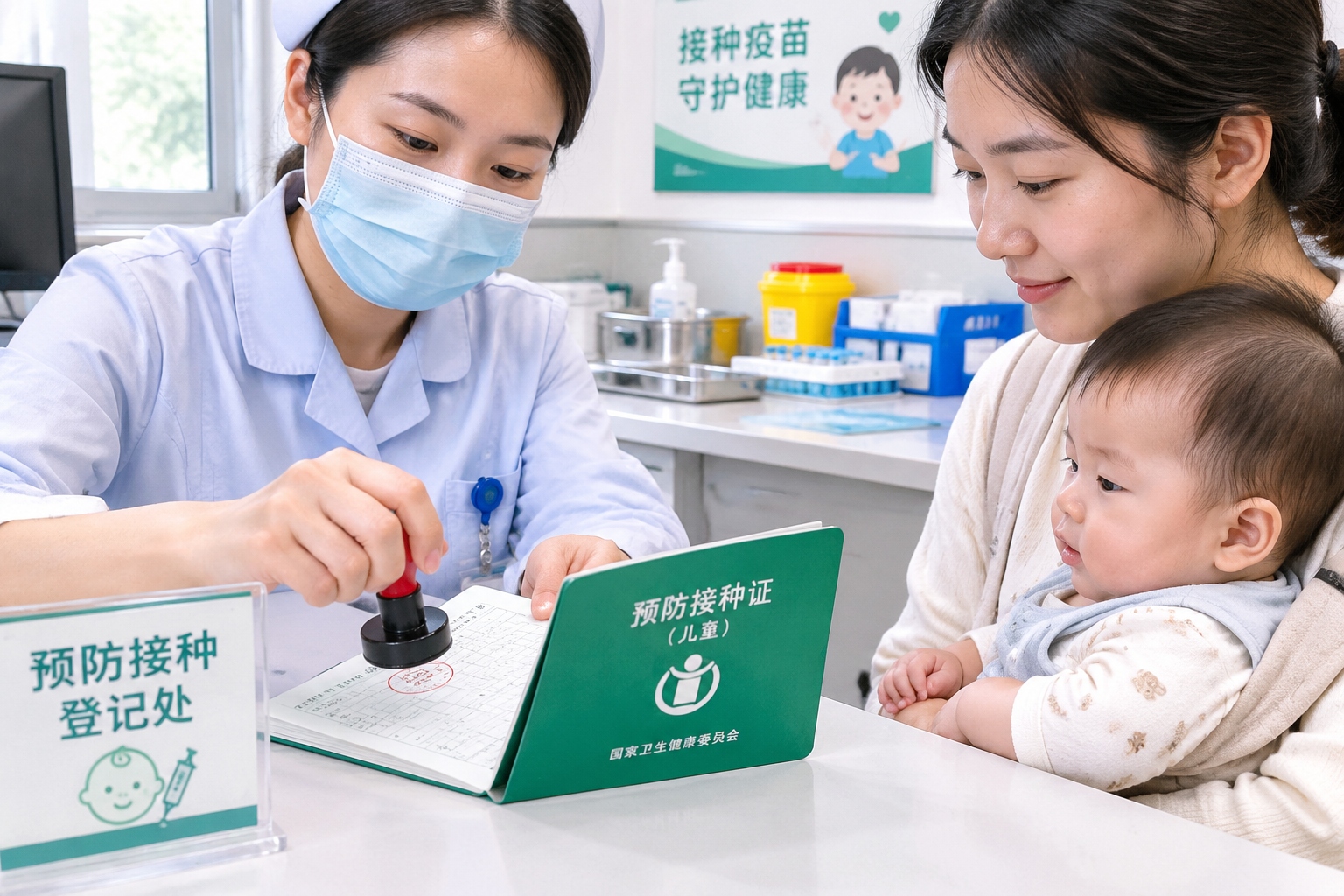
If your child was born in China, the hospital will issue a Preventive Vaccination Certificate (预防接种证, commonly called the “Little Green Book”) before discharge. If you arrived later, you need to register at a community health center near your residence.
The process is simple:
- Find the community health center (社区卫生服务中心) that covers your district. Ask your landlord or local expat group – they’ll know.
- Bring your child’s passport, residence permit, birth certificate (translated if needed), and any previous immunization records.
- Register with the vaccination desk. They’ll add your child to the system and give you a Little Green Book.
- Follow the schedule printed on the book. Shots are usually given on weekdays, sometimes Saturday mornings – check your center’s opening hours.
Foreign children get the same free NIP vaccines as Chinese children. If you prefer a combination vaccine (like the 5-in-1 or 6-in-1 shot) that is not on the national schedule, it will be offered as a “Category II” vaccine at your own expense. Some parents choose this to reduce the number of injections. The choice is yours – just ask the doctor.
The Little Green Book and School Checks
The Little Green Book is your child’s immunization record. It contains every vaccine dose, the date, the manufacturer, and the signature of the vaccinating nurse. This book is essential for school enrollment. When you register your child at a Chinese kindergarten, primary school, or even an international school, the school will ask to review it to ensure your child has completed the required doses.
If your child is transferring from abroad, the school may accept foreign records, but Chinese schools and the health authorities often want them converted into the Chinese format. You can bring your foreign vaccine records to the community health center and ask staff to map the shots to China’s schedule. In larger cities, many centers now use English-friendly forms, but it’s safer to bring a certified translation or have a Chinese-speaking friend help you.
Adult Vaccines: Self-Pay Options
Adults living in China can also get vaccinated, though most shots for adults are “Category II” and cost money. The most commonly requested ones include:
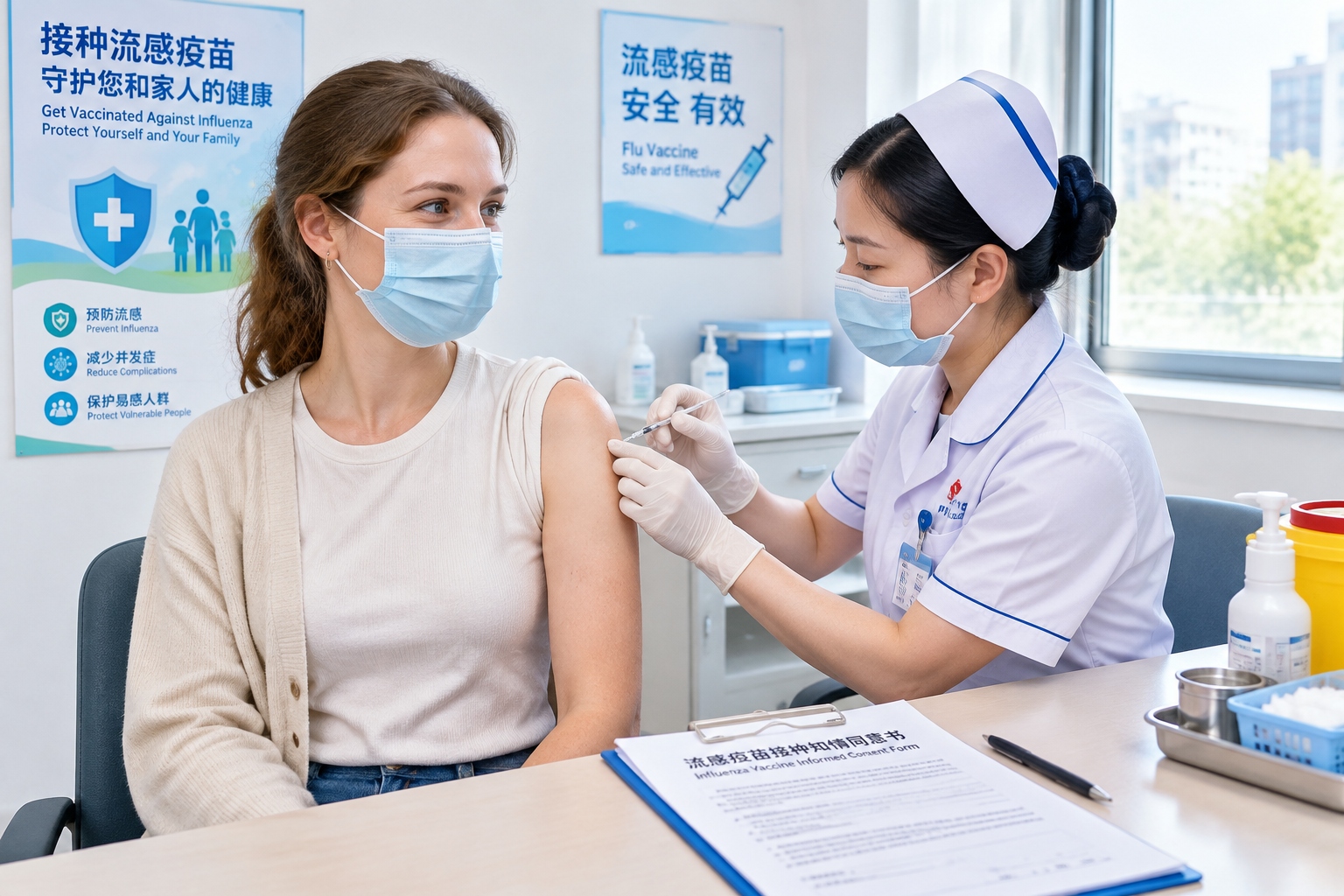
- Seasonal influenza vaccine – available every autumn, priced around 60–200 RMB depending on whether it’s trivalent or quadrivalent, imported or domestic.
- HPV vaccine – for women and men. In China, the HPV vaccine is in high demand, especially the 9-valent version. Foreign residents can make appointments at local community centers or designated hospitals, but supply can be tight. Bring your passport and residence permit. Prices are around 1,300 RMB per dose for the 9-valent vaccine.
- Shingles vaccine – for people over 50, available at some centers, costing about 1,600 RMB per dose.
- Hepatitis B booster – if your antibody levels are low, you can get a booster at any clinic, usually under 100 RMB.
- Tetanus vaccine – after an injury, go to the emergency room or a community clinic for a booster if it’s been more than 10 years.
To receive any self-pay vaccine, you simply walk into a community health center or a larger hospital’s vaccination clinic and ask. You’ll fill out a form, pay, and get the shot. No appointment is usually needed for flu shots in autumn, but HPV vaccines often require a reservation.
Language, Brands, and Records – What to Watch For
In first-tier cities like Beijing, Shanghai, and Guangzhou, many community health centers have some English-speaking staff or use translation apps. But you should still prepare essential phrases or bring a bilingual friend. The vaccination consent form is usually in Chinese, but larger hospitals often provide multilingual versions. If you’re unsure, ask to speak with the person in charge – they are generally helpful.
Vaccine brands differ between China and your home country. For example, the MMR vaccine in China is produced by domestic manufacturers and, in rare cases, international brands like GSK or Merck are not always available. If you have a preference, ask the clinic if they have imported options. For polio, China now uses inactivated polio vaccine (IPV) for the first two doses, then oral drops – this is similar to many countries.
After every shot, ask for a signed record. If your clinic only gives a Chinese vaccine card, you can later get an official English translation at an International Travel Health Care Center (国际旅行卫生保健中心), which is also the place to go for the “Yellow Book”.
Cross-Border Travel: Getting International Vaccine Certificates
If you plan to take a trip back home or to a third country, and that country requires proof of vaccination (for example, yellow fever before traveling to parts of Africa), China’s International Travel Health Care Center can issue a Vaccination or Prophylaxis Certificate – the internationally recognized “Yellow Book”. These centers are located in major cities. You can also get your child’s vaccine record translated into English and officially authenticated. This is particularly useful if you’re returning to your home country and your doctor needs to see proof of vaccines.
Visit the center in your city at least a week before your trip – they typically need a few days to process the certificate. Bring your passport, two passport-style photos, and any existing vaccine records.
Practical Tips for New Expats
Here’s what experienced expat parents often say:
- Don’t worry about “Chinese vaccines being different.” Most NIP vaccines are WHO-prequalified and meet international standards.
- Keep a copy of your child’s vaccine record in both Chinese and English. Take a photo on your phone after each visit.
- If you’re from the US, some states may have specific requirements for school entry – you may need to show a certified translated record. The International Health Care Center can do this.
- Expect that the community health center will be busier than a private clinic. Go early when they open, especially for adult walk-in shots.
Checklist: Vaccine Verification for Foreign Children Entering Chinese Schools
Use this printable list to prepare for school enrollment:
| Age | Required vaccines for school entry |
|---|---|
| Birth – 1 month | Hepatitis B (1st dose), BCG |
| 1 month – 6 months | Hepatitis B (2nd and 3rd doses), Polio (IPV & OPV), DTaP |
| 6 months – 12 months | Meningitis A, Measles-containing vaccine |
| 1 – 2 years | Japanese encephalitis, MMR (combined with measles-rubella), Hepatitis A |
| 2 – 3 years | Meningitis A+C booster |
| 4 – 6 years | Polio booster, DTaP booster, MMR follow-up |
Check that all doses are recorded in the Little Green Book. If some doses were given abroad, ask a community health center to transfer the records into the Chinese system before you enroll your child. It might take a few extra minutes, but it saves delays.
The Takeaway
Vaccination in China is accessible, organized, and – for children – mostly free. The system may look different from your home country, but once you understand how the registry works, it’s easy to navigate. Start by registering your child at the local community health center, keep that Little Green Book safe, and never hesitate to ask questions. Expats who have done it will tell you: the hardest part is not the vaccine – it’s finding the right building entrance. But that’s just another day in China.
Start the discussion at forum.chinacomes.com