

At the Base of a Giant
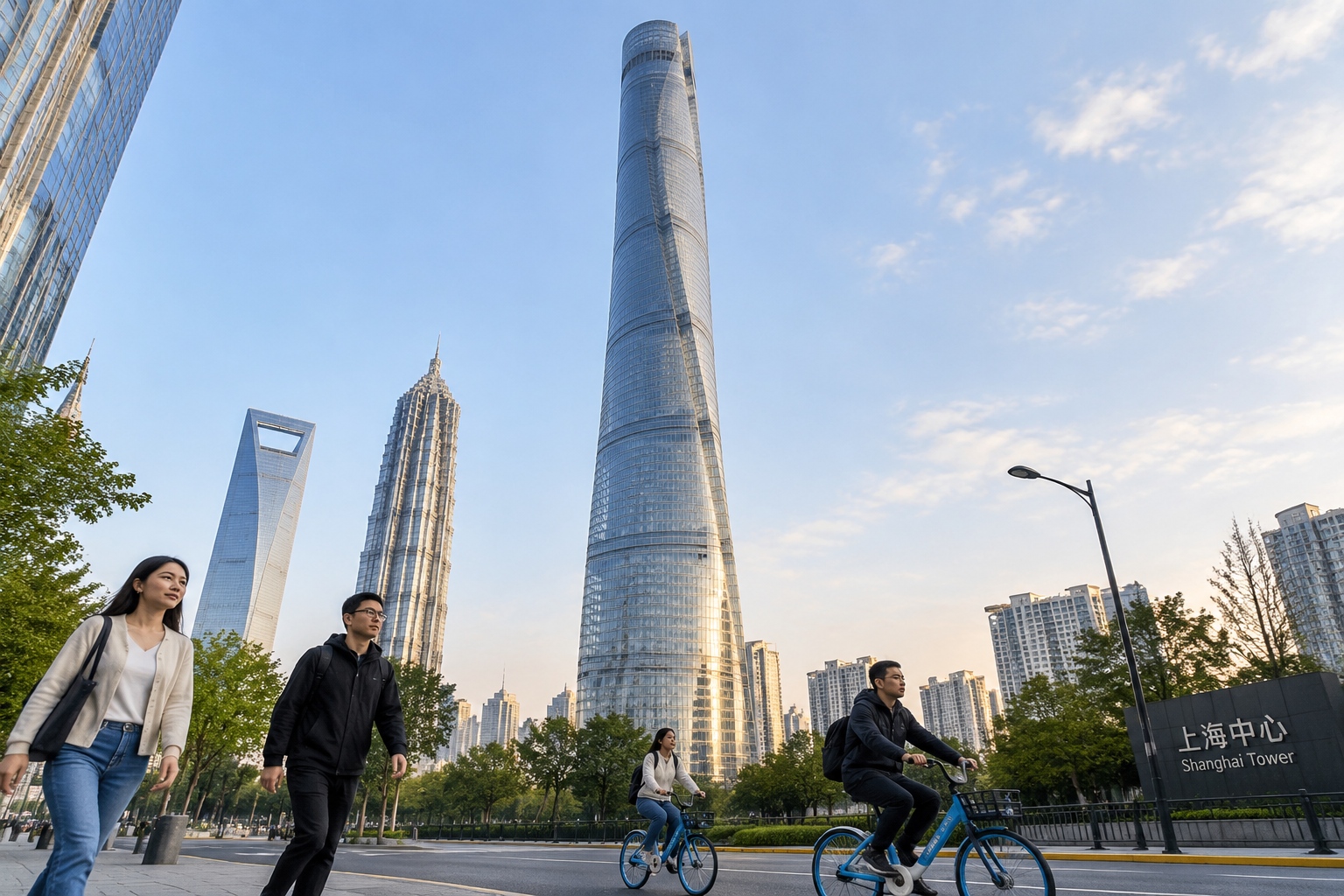
At 7:15 on a Tuesday morning, the air outside Shanghai Tower is already thick with humidity. I stand at the corner of Yincheng Road and Huanyuan Road, craning my neck. The building disappears into a low cloud. Somewhere up there, 632 meters above me, is the world’s second-tallest skyscraper. Today, I’m going to climb it—not all 128 floors, but the final 20, from the 108th floor to the observation deck. The rest I’ll cover in the world’s fastest elevators, which travel at 20.5 meters per second. My ears are already popping just thinking about it.
I’m joined by Li Wei, a maintenance engineer who has worked here since 2015. He hands me a hard hat. ‘You’ll need it for the stairwell,’ he says. ‘It’s not a tourist route.’
We enter through a service door on the B2 level. The lobby is a cathedral of glass and steel, but we bypass the marble and head to a freight elevator. The doors close, and we shoot upward. My stomach drops. The digital display races through numbers: 10, 50, 100. In less than a minute, we’re at 108.
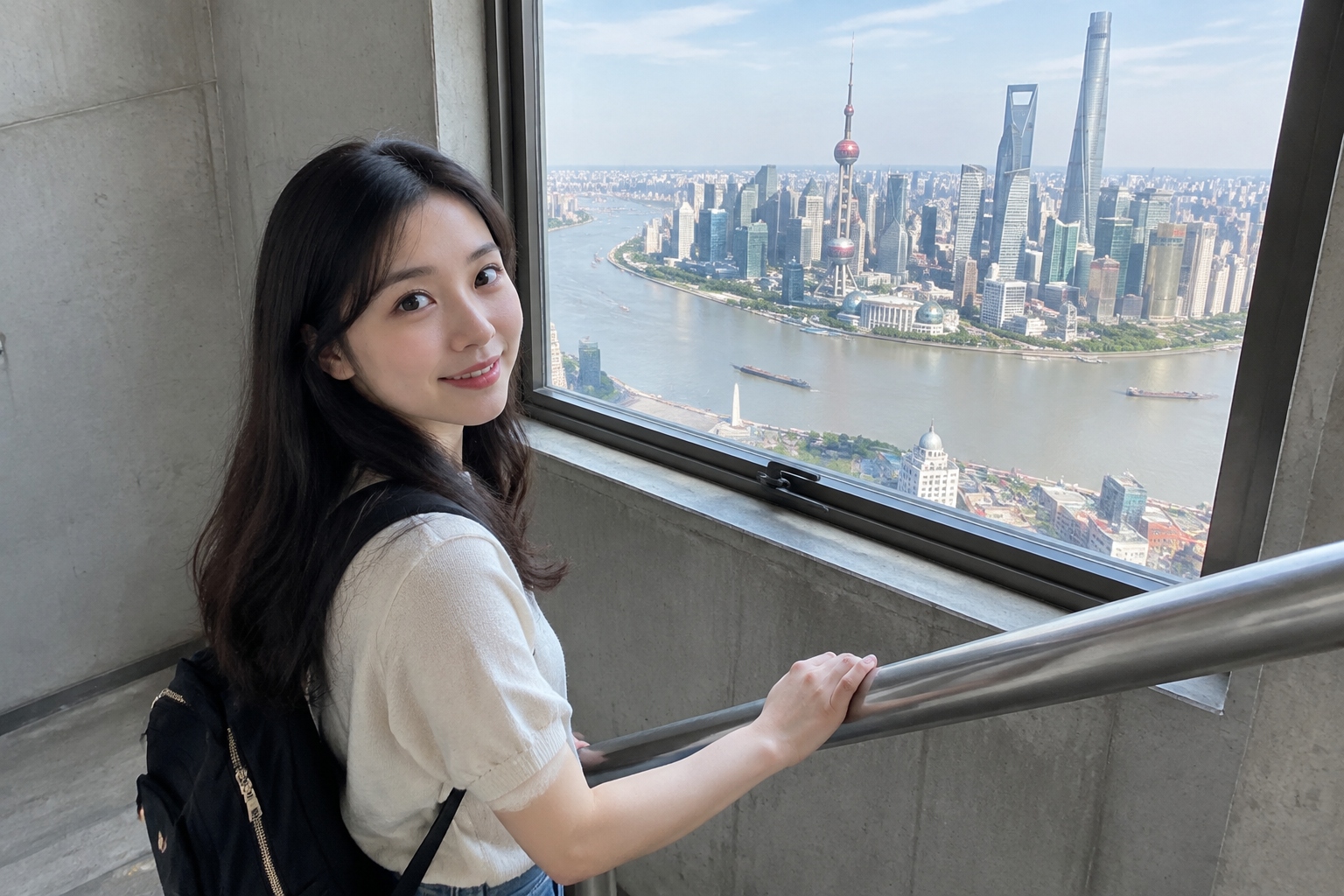
The stairwell is narrow, concrete, and silent except for the hum of ventilation. The air is cooler here, almost chilly. Li Wei sets a steady pace. By the 115th floor, my calves are burning. The steps are steep, and the altitude makes each breath feel shallow. I stop to catch my breath, and Li Wei points to a small window. ‘Look,’ he says. Through the glass, I can see the Huangpu River, a brown ribbon winding between the towers. The cars on the bridge look like ants.
Engineering the Impossible
We continue. At the 120th floor, the stairwell ends. We step into a mechanical room filled with the hum of generators and the smell of oil. This is the heart of the building’s wind damping system—a 1,000-ton tuned mass damper that sways to counteract the building’s movement. Li Wei explains that on windy days, the tower can sway up to 1.5 meters at the top. ‘You don’t feel it much inside,’ he says. ‘But if you’re up here during a typhoon, you can hear the steel groaning.’
The engineering that keeps Shanghai Tower upright is a story in itself. The building’s double-skin facade—two layers of glass with a gap between them—acts like a thermos, reducing energy consumption by 20 percent. The twisting shape, which rotates 120 degrees from base to top, helps reduce wind loads by 24 percent. On the roof, 270 vertical-axis wind turbines generate enough electricity to power the exterior lighting. These are not just technical achievements; they are attempts to make a vertical city sustainable.
But can a skyscraper be sustainable? The answer is complicated. Shanghai Tower uses less energy than a conventional building of its size, but it still consumes vast resources. It houses offices, a hotel, restaurants, and an observation deck. It is a city within a city. Yet it also depends on the grid, on water, on supply chains that stretch across the globe.
From the Top, a City in Fast Forward
We take another elevator to the 125th floor, then a final set of stairs to the 128th. The observation deck is closed to the public today, but Li Wei has a key. The door opens, and we step out.
The view is not what I expected. It’s not a postcard. It’s a living map. The Bund, with its colonial-era buildings, is a thin strip of beige. Behind it, the Pudong skyline—the Oriental Pearl Tower, the Jin Mao Tower, the Shanghai World Financial Center—looks like a set of toys. Beyond that, endless rows of apartment blocks stretch to the horizon, gray and uniform. The Huangpu River curves through it all, crowded with barges.
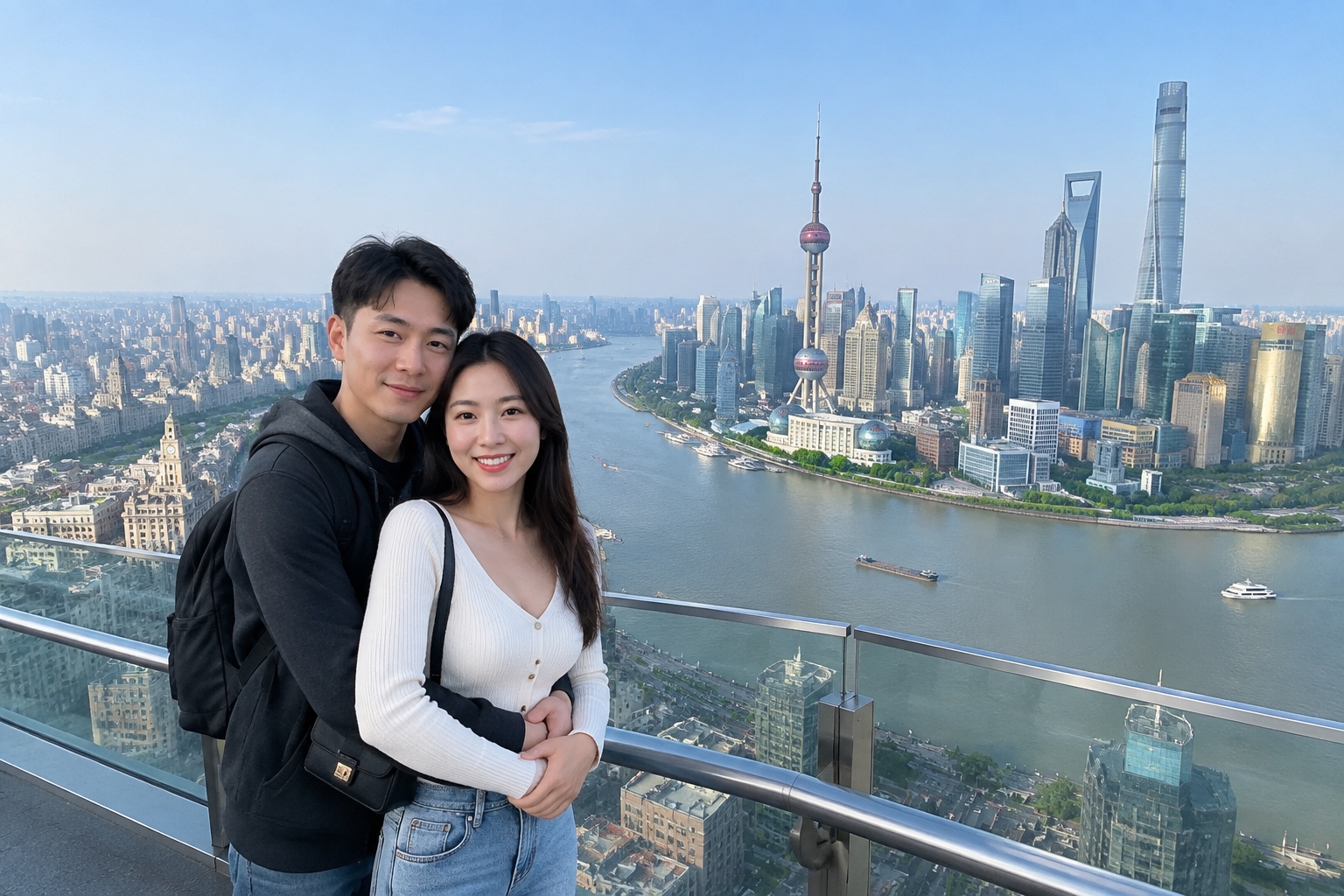
I ask Li Wei what he sees when he looks out. He shrugs. ‘I see my apartment building,’ he says, pointing to a cluster of high-rises in the distance. ‘It’s 20 kilometers away. On a clear day, I can see the window of my living room. My wife jokes that I’m spying on her.’
Li Wei has been working here for eight years. He started as a cleaner, then trained as a maintenance technician. He knows every corner of the building. ‘People think it’s glamorous to work in the tallest building,’ he says. ‘But it’s just a job. I fix things. I clean things. The height doesn’t matter.’
The People Who Live in the Clouds
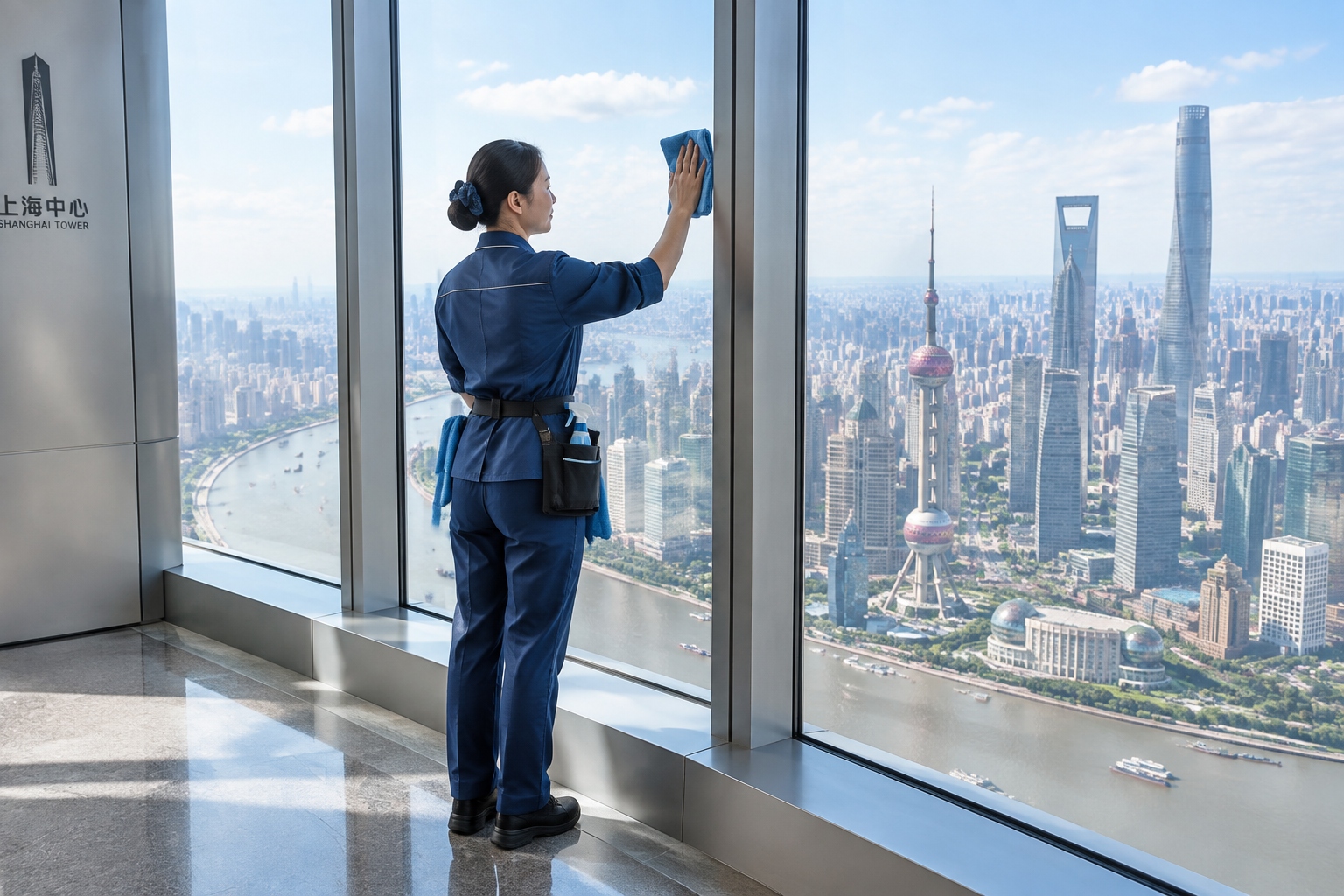
Later, I meet Wang Xiulan, a cleaner on the 118th floor observation deck. She is 52, from Anhui province. She starts her shift at 6 a.m., before the first tourists arrive. ‘I wipe the fingerprints off the glass,’ she says. ‘Thousands of them every day. People want to touch the sky.’ She laughs. ‘But the sky is just glass. And behind the glass, there’s a city that never stops.’
Wang has never been to the top. ‘I don’t like heights,’ she admits. ‘I stay on 118. That’s high enough for me.’
Her words stay with me as I look out again. The future, I think, is not the building itself. It’s the people who keep it running—the engineers, the cleaners, the office workers who ride the elevators every day. The future is not a height. It’s a routine.
Does Height Equal the Future?
Shanghai Tower is a marvel of engineering. But does it represent the future? Or is it just a demonstration of modern industrial capacity? The answer depends on who you ask. For city planners, it’s a symbol of Shanghai’s ambition to be a global financial hub. For architects, it’s a test of what’s possible with glass and steel. For the people who work there, it’s a place to earn a living.
The future is not just about building higher. It’s about building smarter. Shanghai Tower is a step in that direction, but it’s not the destination. The real future is in the streets below—in the electric buses, the bike lanes, the parks, the neighborhoods. It’s in the way people live, not the height of the buildings they live in.
As I descend, the elevator drops so fast that my ears pop again. The city rushes up to meet me. On the ground, the humidity hits me like a wall. I look up, but the top of the tower is still hidden in the clouds.
Maybe that’s the point. The future is always just out of sight. We build higher and higher, hoping to catch a glimpse of it. But the future is not something we can see from a window. It’s something we create, floor by floor, day by day, in the routine of ordinary life.
I walk away, and the tower disappears behind a row of trees. For a moment, it’s just another building. Then I turn the corner, and there it is again, piercing the sky. A monument to what we can do, and a reminder of what we still don’t know.
Start the discussion at forum.chinacomes.com