

A Waterfall, a Picnic Mat, and No Plans
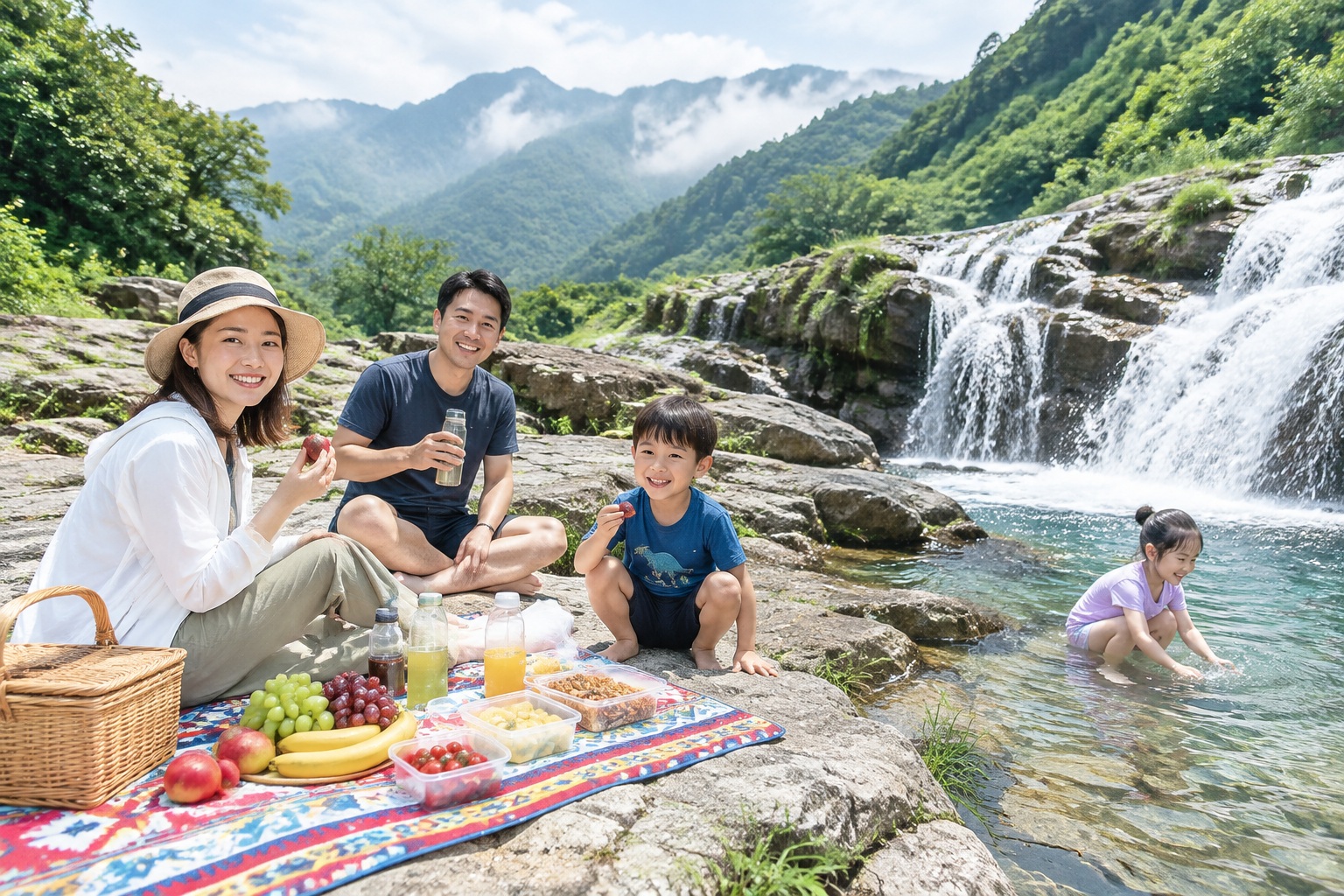
On a bright Saturday morning, I followed three friends out of Guiyang, the capital of China’s southwestern Guizhou Province. We drove past high-rises and coffee shops, then into rolling green hills where the road narrowed and the air smelled of wet grass. An hour later, we parked at the end of a dirt path and walked for ten minutes. Then we heard it: the low, soothing rumble of a waterfall. What we found was not a famous scenic spot, but a natural plunge pool ringed by smooth stones. It was already dotted with small groups of locals — some settling into folding chairs, others spreading blankets over the rocks. We unpacked our own: a mat, some boiled peanuts, oranges, and an iced tea. Welcome to a Guiyang weekend.
Ask any local how to spend a free day in Guiyang, and you might hear one of two answers: hike to a waterfall or have lunch by one. The city is surrounded by mountains, rivers, and dozens of hidden waterfalls. During the summer — when the average temperature hovers around 24°C (75°F) — these shady, misty spots offer a natural form of air conditioning. But the ritual is about more than escaping the heat. It is about slowing down, sharing food, and letting kids splash in cold, clear water.
Why Guiyang? A City That Knows How to Cool Down
Guiyang doesn’t look like most people’s image of China. It’s not a mega-city of glass towers. Instead, it’s a provincial capital of about six million people, tucked into the Yunnan-Guizhou Plateau. The city is often called “the summer capital” or “cool island” in China, because even in July the nights get comfortably cool. This geography shapes everything. Forests cover about 55 percent of the city’s land, and water is never far away. For locals, waterfalls are not tourist destinations but part of the neighborhood. You can drive from the city center to a mountain stream in under an hour. This explains why so many residents treat a waterfall like a backyard.
Visitors often assume they need to travel far to see Guizhou’s famous Huangguoshu Waterfall, but Guiyang people keep a quieter map. They know small cascades behind villages, pools hidden by bamboo, and streams where the water burns cold even in August. Many of these places don’t appear on tourist apps, and some don’t even have names. They are simply spots passed down through family stories and school memories. It’s this local knowledge that makes the waterfall picnic feel intimate and real.
There is also a cultural reason that Guiyang people gravitate toward streams and falls. In Guizhou, many ethnic groups, such as Miao and Buyi, have long treated waters as sacred meeting places. Festivals and crafts often happen around rivers. Over time, the habit of gathering near water has become a shared urban custom, even for those who don’t speak an ethnic language. So when you see a young couple with a bluetooth speaker and a shopping bag of fruit, they are not copying a trend. They are continuing a very old habit.
What’s in the Picnic Basket?
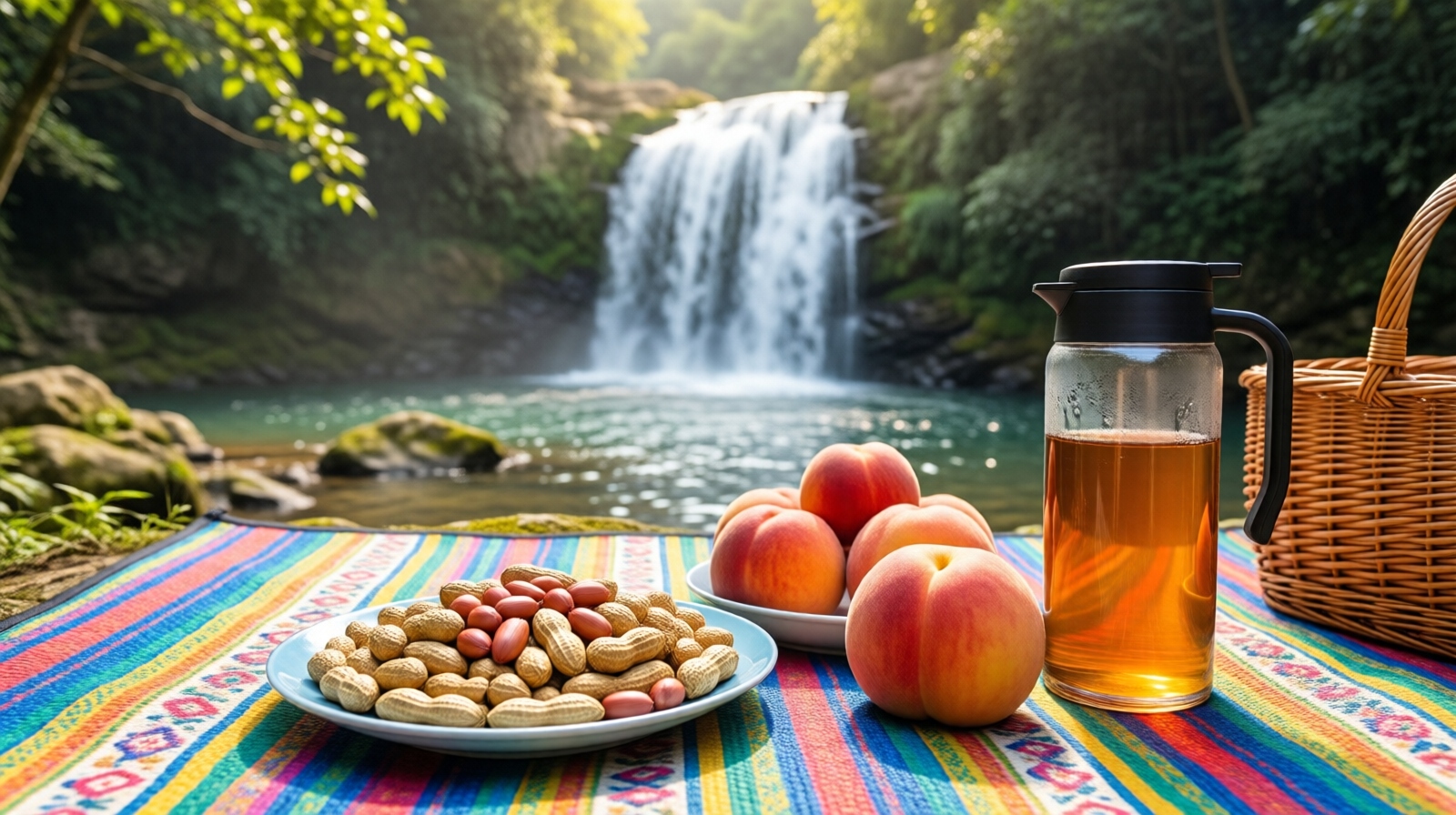
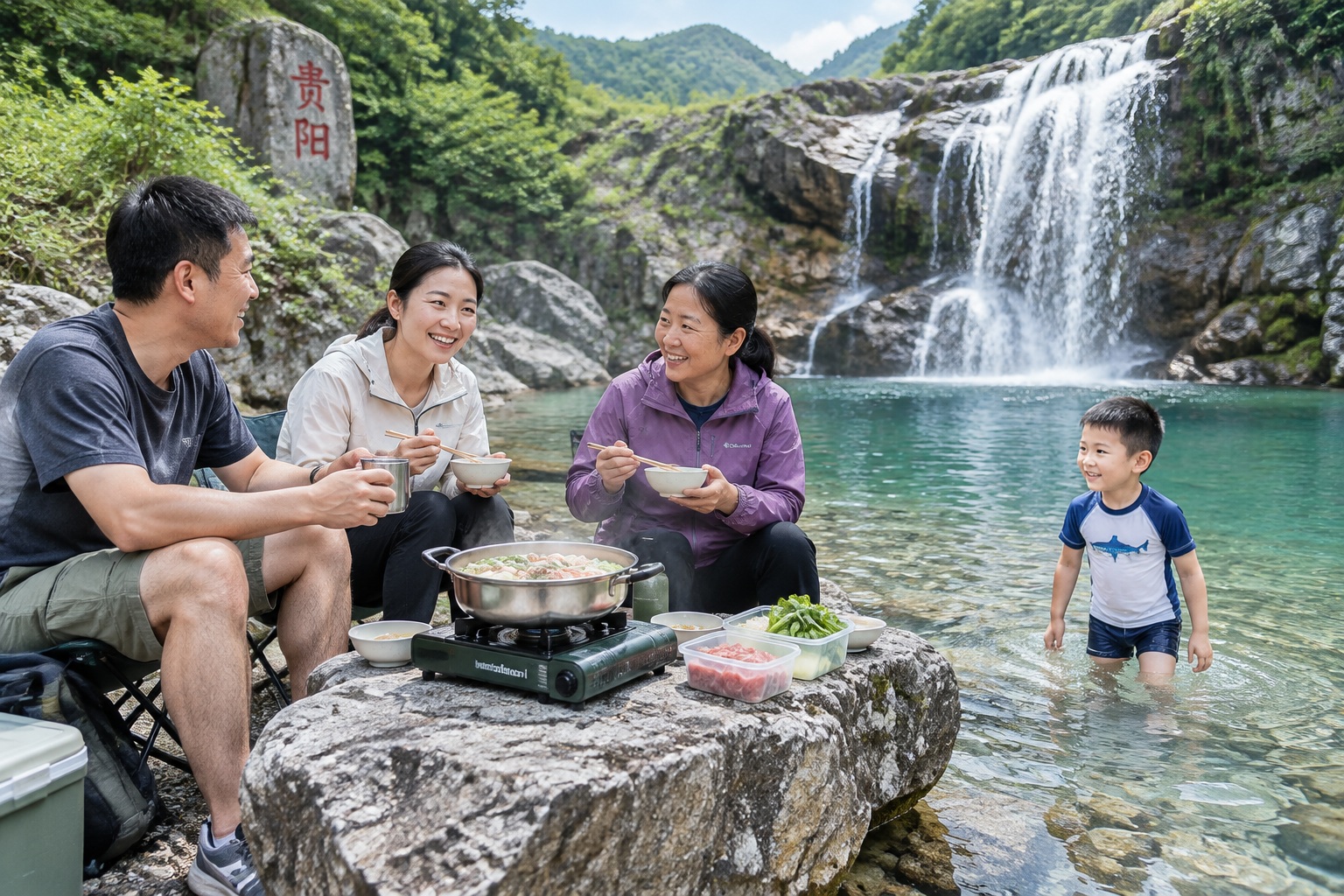
A Guiyang waterfall picnic is a study in local taste. The food isn’t fancy, but it’s full of character. You might see a cold plate of lu wei — spiced braised tofu, kelp, and quail eggs. There’s always a plastic bag of fresh fruit, often yellow peaches or small tomatoes. Some families bring a thermos of bitter tea, while others buy bottles of ice-cold soda from a farmer who has set up a cooler on the path. The most ambitious bring a full hotpot set. It’s not uncommon to see people piling sliced beef, mushrooms, and wild vegetables into a bubbling pot balanced between rocks. Children eat first, then nap in a folding canvas chair while adults stay at the water’s edge. In many ways, the waterfall picnic is comfort food for the soul, not just the stomach.
If you come early enough, you might catch a villager selling homemade rice tofu or cool gluten snacks from a bamboo basket. These simple marketplaces appear only on weekends and only near popular watering holes. They are not tourist shops but a tiny extra income for nearby farm families. For guests, they are a chance to taste a Guizhou snack without a restaurant menu. Around noon, appetites expand, and you’ll see families roast corn or sweet potatoes over a small charcoal fire. The occasional smoke drifting up from the water is a familiar sight.
Beyond the Postcard: A Tradition in Motion
This way of spending weekends isn’t frozen in time. I watched a woman order her family’s picnic supplies from a delivery app; thirty minutes later, a scooter appeared across the stream, and someone carried over a bag of ice and drinks. Nearby, a retiree played mahjong on a foldable board while his grandson filmed the waterfall for a video. Young people depend on maps, reviews, and social media to find new spots. These habits make the old tradition feel alive. But popularity also brings challenges. Some hidden places now see crowds on sunny weekends, and parking can be tight. In response, village residents have begun charging small fees to watch cars or selling homemade drinks. It’s a modest, improvised economy that helps keep the spots tidy and safe.
There’s also a growing creative side. Some groups bring portable speakers and dance along the waterline; others set up a small movie screen on a white sheet. While these additions might look odd to outsiders, they reflect how a new generation is making the old habit its own. The waterfall isn’t a museum piece; it’s a living stage for whatever makes a weekend feel like a break.
Even the younger children are connected to both worlds. They might spend an hour catching tadpoles, then another hour on a smartphone playing a game. Their parents don’t see this as a contradiction. The goal is to be outdoors, not to escape technology entirely. In this way, the waterfall picnic absorbs the modern age without abandoning its core: face-to-face time with friends and family.
Leaving Only Footprints
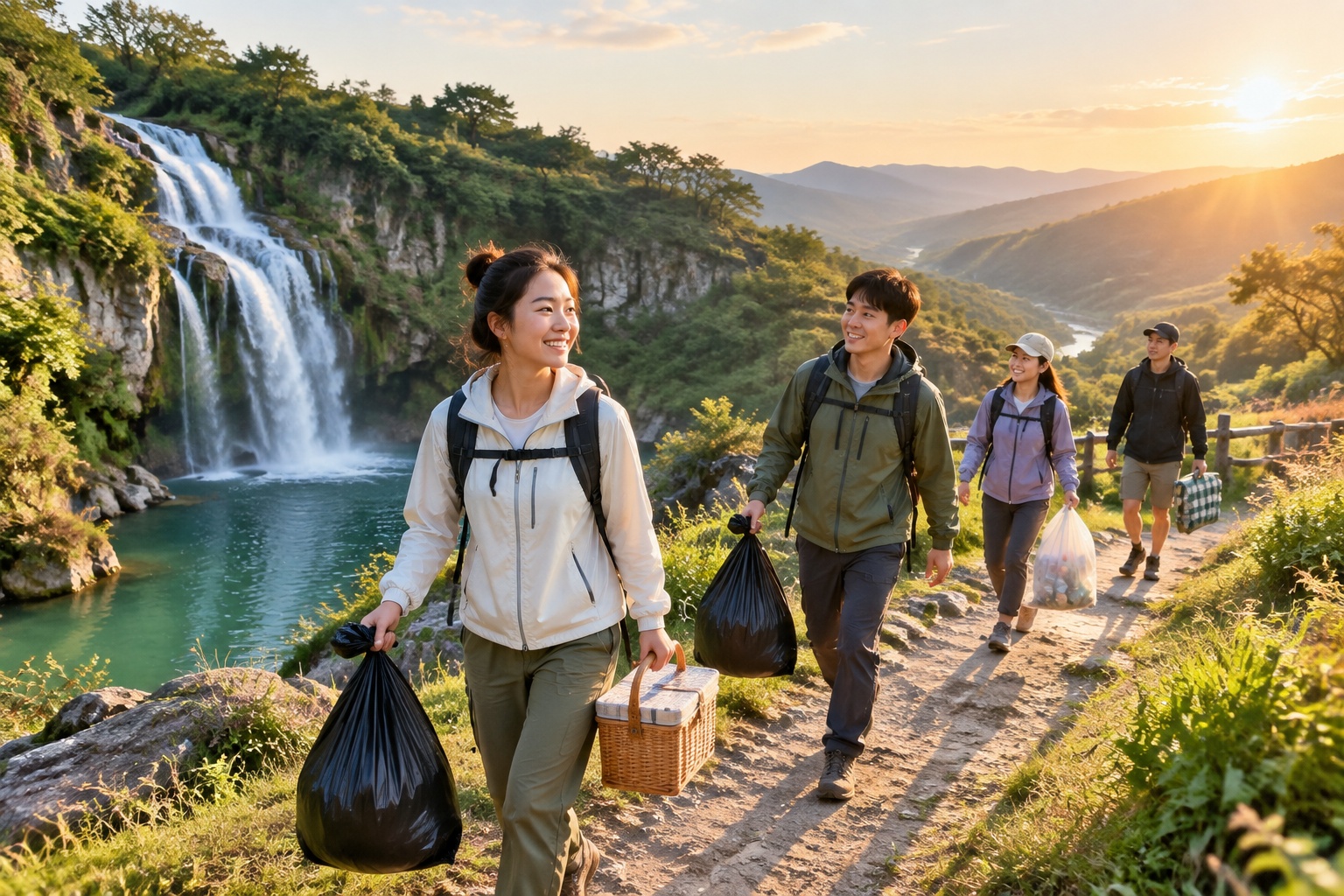
The most encouraging change is environmental awareness. Locals are increasingly careful to pack up everything they bring. Some groups bring extra trash bags and pick up litter left by others. On my visit, a woman in her seventies carefully collected used plastic cups into a basket and carried them back up the hill. When I praised her, she smiled and said: “We want the waterfall to be there for our grandchildren too.” It reminded me that a waterfall picnic is not just a way to have fun — it’s a way of caring for the place you call home.
Many locations are also monitored by volunteer teams, especially after flooding or busy holidays. They post reminders on social media about fire safety and rubbish sorting. The message is simple: if you love this place, take care of it. The fact that this ethic is becoming common among weekend picnickers gives me hope for the future of these unmarked natural corners.
As evening came, we rolled up our mats and walked back to the car. The waterfall’s sound faded slowly, replaced by the hum of insects. Guiyang’s waterfall picnic has no entrance sign, no souvenir shop, no official name. Yet it offers what few travel destinations can: a simple afternoon of being with people you like, in a place that refreshes you. That’s the real portrait of life in Guiyang — and maybe the best secret China has to share.
Start the discussion at forum.chinacomes.com