
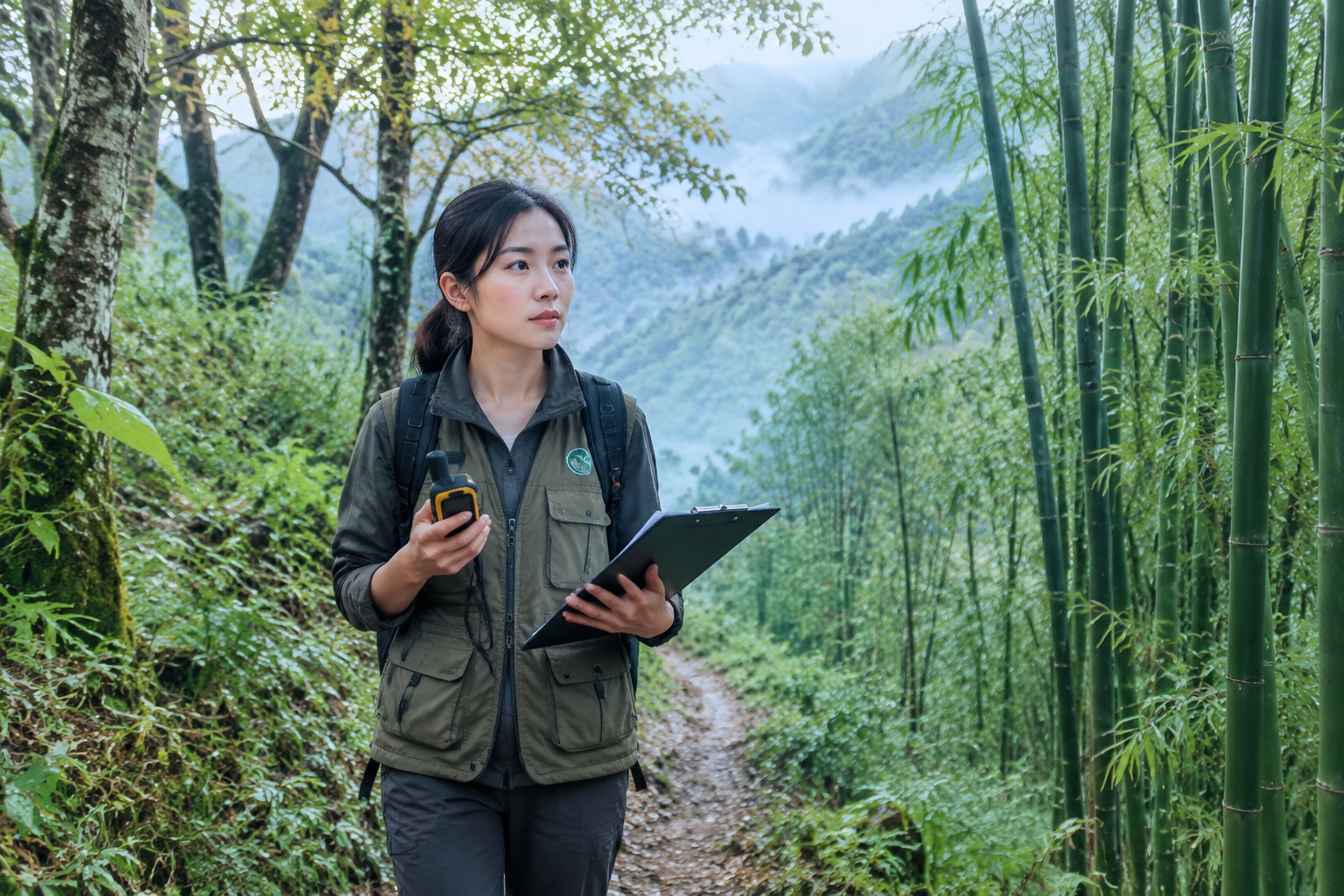

A bamboo plot three hours from the nearest road
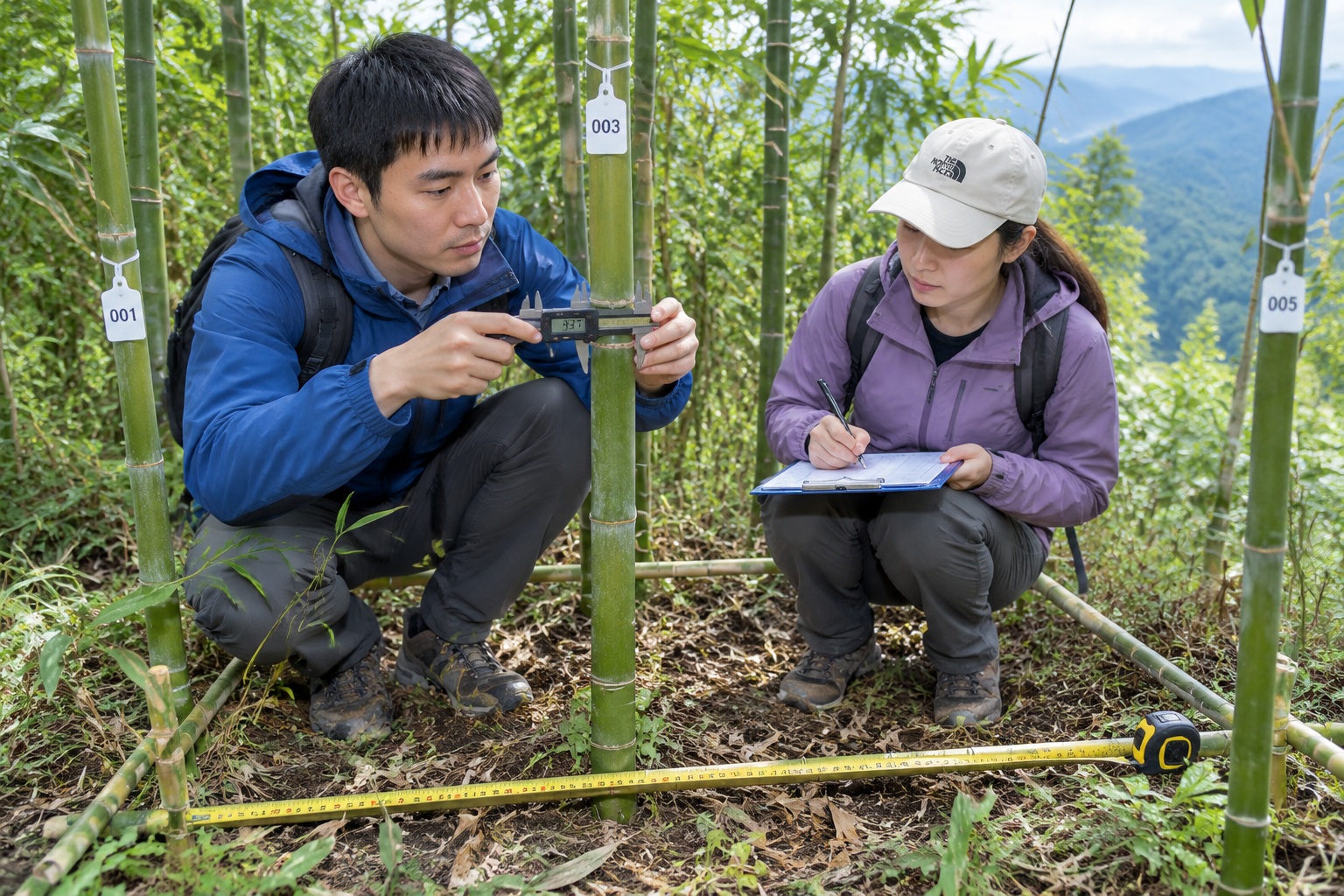
Reaching the monitoring plot in the Qinling Mountains of Shaanxi province takes about three hours on foot. The trail climbs through oak and birch, crosses a stream twice, then pushes into a stand of arrow bamboo so dense that you part it with your forearms. Twice a year, a team from the Foping National Nature Reserve counts the culms inside fixed square plots. They measure height, note how many stems have flowered, how many have died back, and how many carry panda bite marks.
The work is slow and unglamorous, and it exists because of one simple fact: wild giant pandas eat almost nothing else. An adult spends 10 to 14 hours a day feeding and gets through roughly 12 to 38 kilograms of bamboo stems and leaves, because each mouthful delivers very little energy. When the bamboo moves, the pandas have to move with it.
That is the question behind a decade of Chinese climate research: as temperatures rise and rainfall patterns change across the mountains of southwest China, where will the bamboo go?
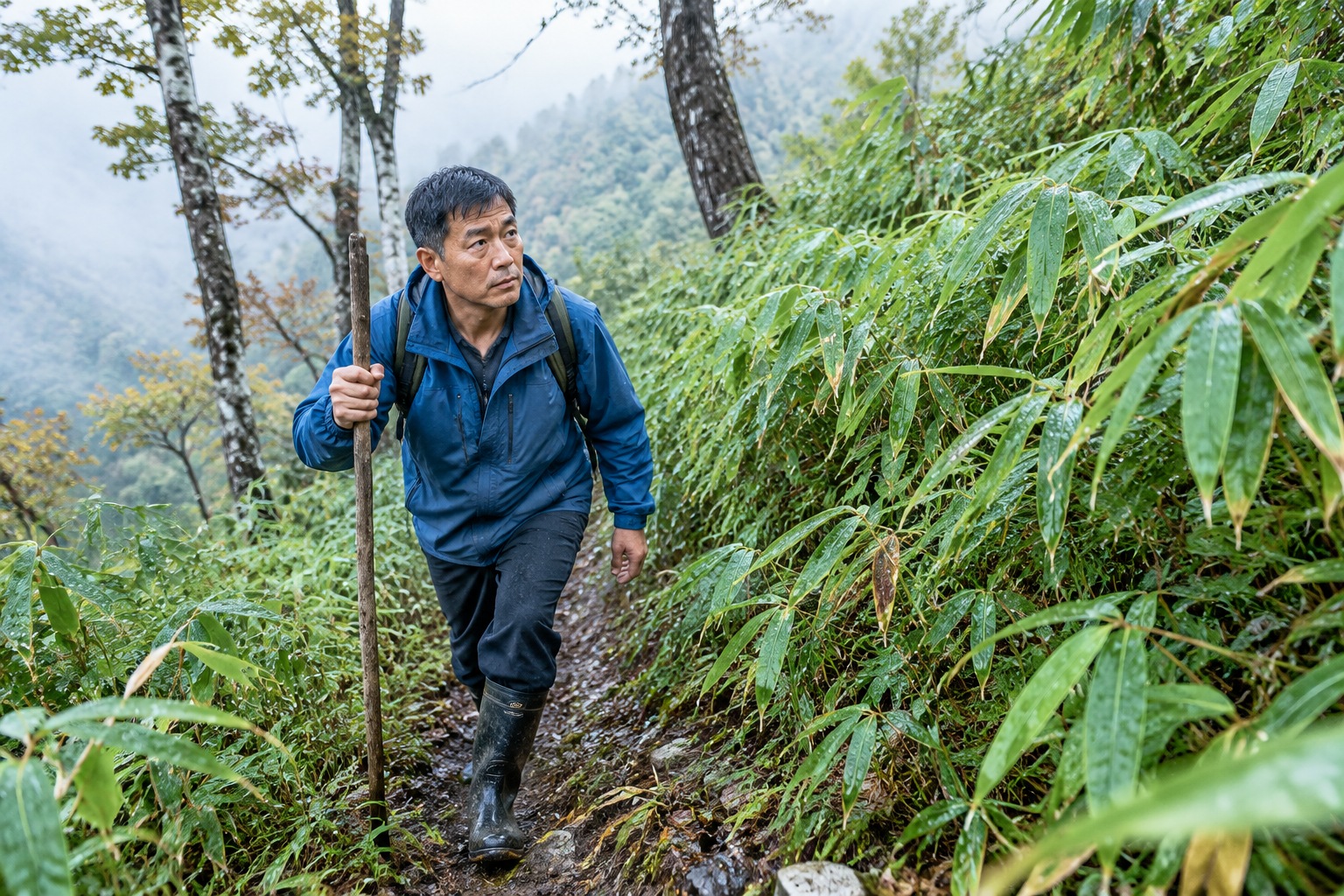
Bamboo looks tough, but each species has a narrow comfort zone
Arrow bamboo and its relatives dominate the understory of high-altitude forests in Sichuan, Shaanxi and Gansu, and they are fussier than they look. Fargesia species grow best where summers are cool and misty and where the soil stays damp. Bashania fargesii, the mainstay of the panda diet in the Qinling, responds closely to spring warmth and soil moisture. Push temperatures up, or stretch the dry season, and growth slows, culms thin out, and flowering can be triggered.
Bamboo has a second trait that makes it fragile in exactly the wrong way. Most species flower synchronously across enormous areas, set seed once, and die. The interval between flowerings runs from roughly 30 to 60 years, depending on the species. In the early 1980s, a die-off of arrow bamboo in the Minshan and Qinling mountains was linked to the starvation deaths of more than 100 pandas, and it is a large part of the reason China began building a reserve network and a captive breeding program in the first place.
Normally a die-off is survivable. Pandas walk over the ridge to a valley where a different bamboo species is still alive. Climate change makes that walk harder, because it removes the valleys one at a time rather than all at once.
What the models project, and where they disagree
Since around 2015, research teams at the Chinese Academy of Sciences and several universities have run species distribution models for panda bamboo. Feed in temperature, rainfall, elevation, soil and a climate scenario; out come maps of where each bamboo species could grow in 2050, 2070 or 2100.
The direction of travel is consistent across most of these studies. Suitable bamboo habitat shifts upslope, and in parts of the panda’s range it also shrinks. Under high-emissions pathways, several published projections put the loss of currently suitable panda habitat somewhere between a quarter and a third by the end of the century, with the bamboo belt climbing a few hundred metres. Under lower-emissions pathways, the losses are much smaller.
That spread is the honest headline. The models disagree far more about magnitude than about direction, and most of the difference comes from the emissions assumption rather than from the ecology.
Why a mountain is a bad shape for a shifting climate
Here is the geometry problem. A mountain is roughly triangular. As the suitable climate band moves upward, the land area inside that band gets smaller, because the mountain is narrower up there, and eventually the band runs off the top.
In the Qinling, the highest peaks reach about 3,700 metres, and the bamboo zone already sits close to the summit ridges in places. In the Hengduan Mountains to the west and the high country of southern Gansu, there is more vertical room. Where a mountain has no summit left to give, the species has to move sideways: across valleys, roads, farmland and rivers.
That sideways movement is where fragmentation bites. China’s fourth national giant panda survey, carried out between 2011 and 2014, counted 1,864 wild pandas across roughly 2.6 million hectares of habitat. But that habitat is not one block of forest. It is dozens of patches of different sizes, separated by highways, hydropower dams, towns, mines, farmland and grazing land. Officials now put the wild population at about 1,900; the number of separate patches has barely changed.
How to read a now versus 2050 map
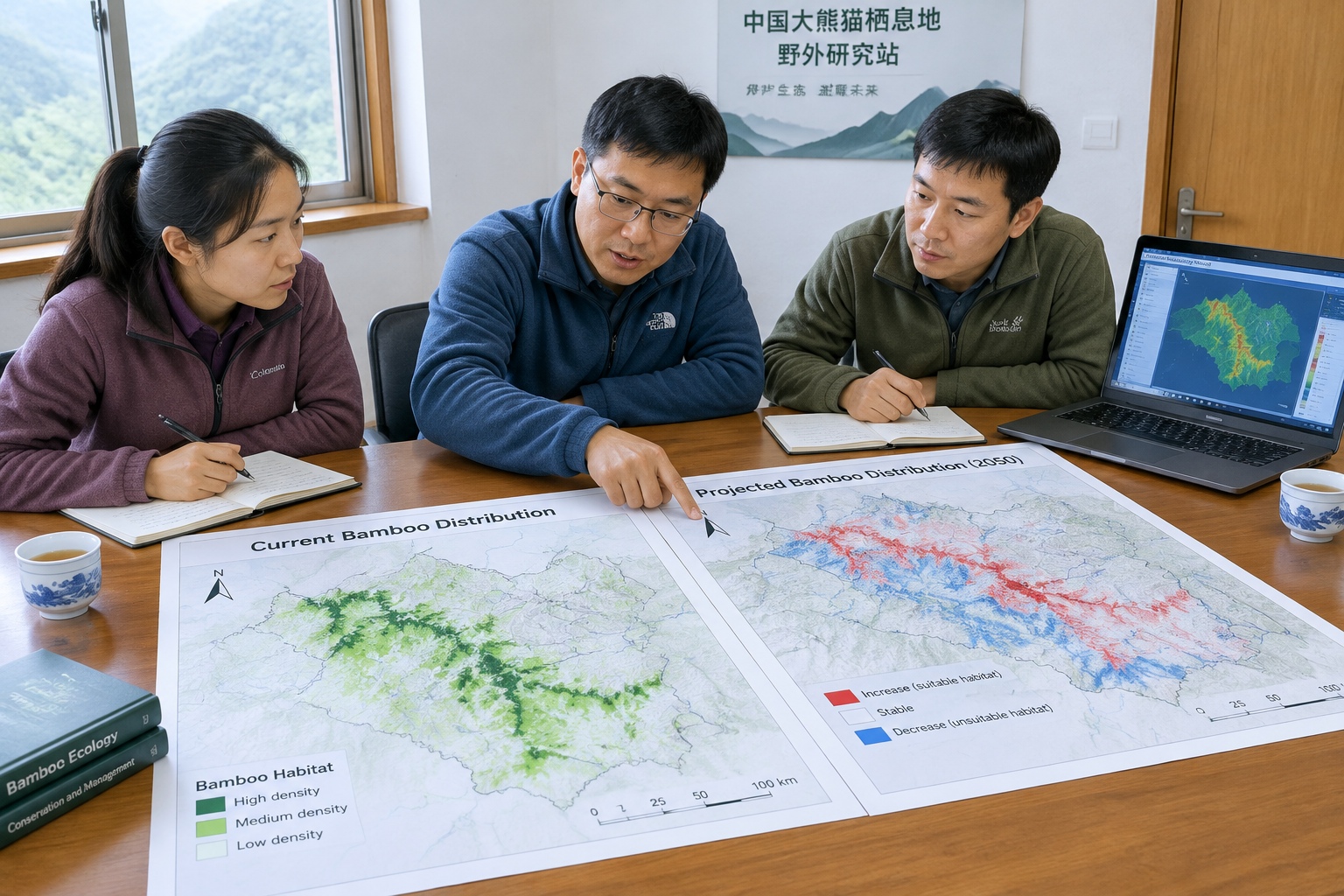
Open almost any of these studies and you will find the same pair of maps side by side. The left one shows where the bamboo grows today. The right one shows where the model says it could grow in 2050, under a stated emissions scenario.
Three colours do most of the work. One marks habitat that is suitable now and stays suitable. A second marks habitat that is suitable now but drops out of the suitable range; in the panda literature this is usually drawn in red, and it is the part that matters for the animals alive today. A third marks newly suitable ground, typically higher up the slope.
The trap for readers is assuming that the third colour is a rescue. It is not automatic. Newly suitable ground on the next mountain is only useful if a panda can get there, and pandas are not long-distance dispersers: young animals typically settle within a few kilometres of where they were born. Bamboo also does not arrive at a new elevation on schedule. It has to seed, germinate and spread, which takes years to decades, and most of these maps are static snapshots that do not model that lag.
What conservation is actually doing about it
The largest answer is the Giant Panda National Park, established in October 2021. It covers about 27,000 square kilometres across Sichuan, Shaanxi and Gansu, stitches together 67 previously separate protected areas, and holds more than two-thirds of the wild population. Its central design idea is not to fence pandas in, but to reconnect the patches they live in.
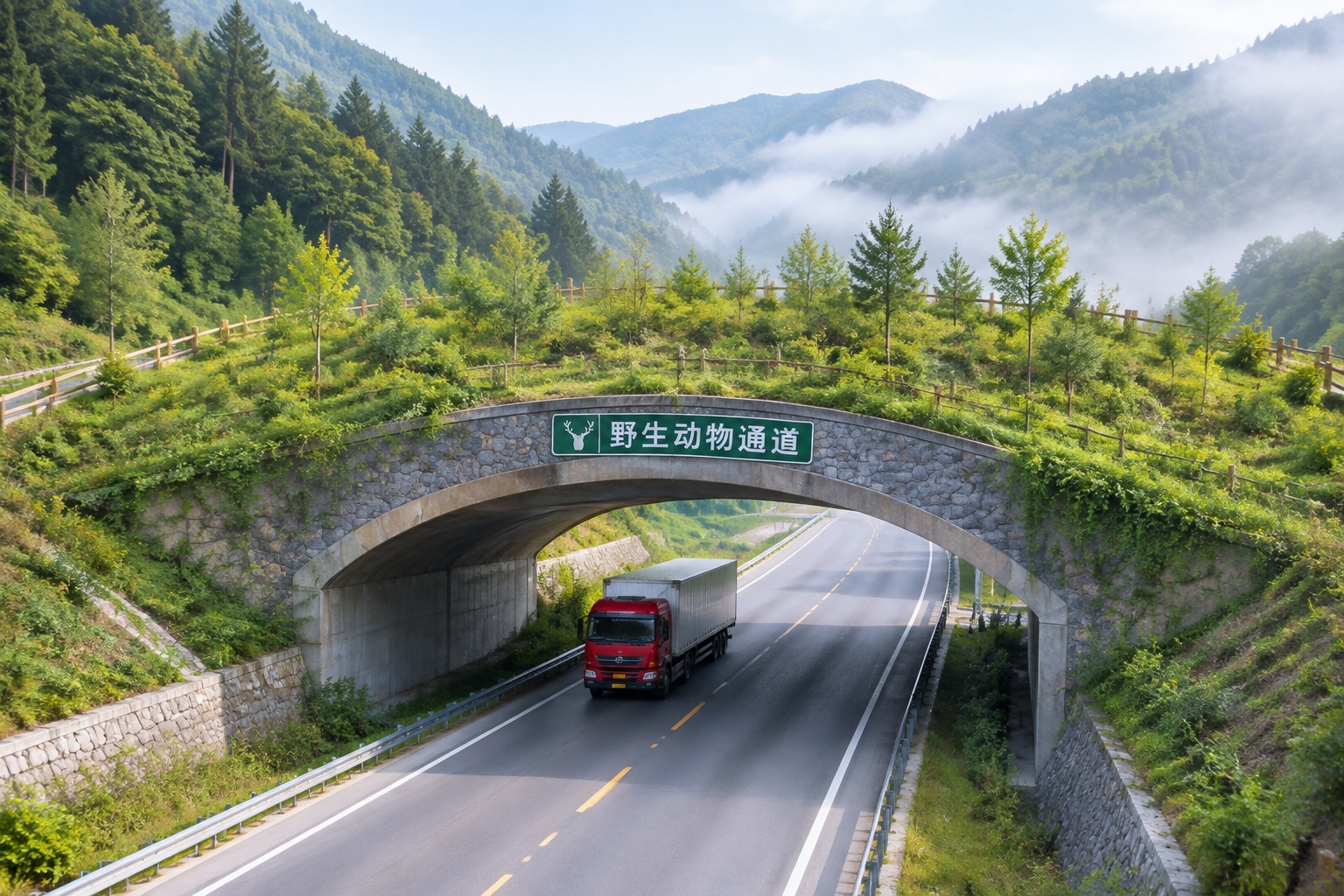
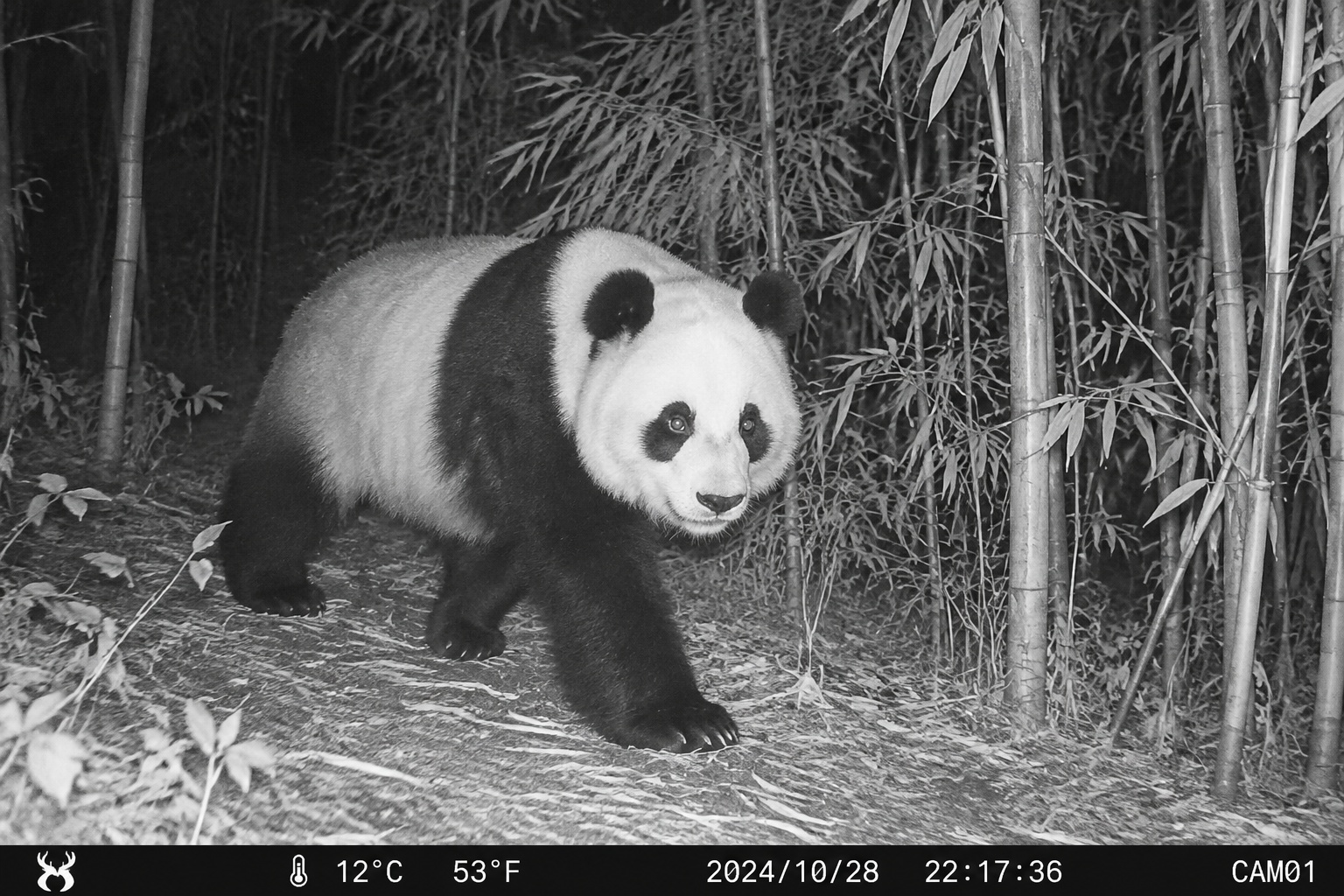
Corridors are the practical tool. In the Qinling, a narrow strip of restored forest around Laoxiancheng reconnects panda groups that had been cut off from each other for decades, and camera traps have since recorded animals using it. Elsewhere, highways and railways running through the park have been routed into tunnels and bridges so the ground above them stays passable; on some stretches, engineers have built vegetated crossings specifically for wildlife.
A second, more contested idea is assisted movement: planting bamboo seedlings at higher elevations ahead of the climate shift, or moving plants from one mountain to another. Chinese researchers have modelled the option and generally treat it as a last resort, because it risks moving pests and pathogens and blurring genetic boundaries between bamboo populations that evolved separately.
Underneath all of it sits monitoring, and most of that is done on foot. Infrared camera grids have been running in panda reserves for two decades. Bamboo plots are re-measured twice a year. Scat is collected for DNA. Thousands of villagers living inside the park are employed as ecological forest rangers; nationwide, the same programme employs more than a million people. It is one of the quieter exports of Chinese conservation: paying the people who live on the land to walk it regularly and write down what they see.
What nobody can yet say for certain
Several things remain open. Bamboo spreads mostly through underground rhizomes rather than seeds, and most models handle that crudely. Extreme events are poorly represented in long-run climate averages, yet a single severe drought may matter more than a slow warming trend. The summer of 2022, when Sichuan endured its worst heat and drought in six decades, gave researchers an unwelcome natural experiment in exactly that.
Pandas are not passive either. They already switch between bamboo species seasonally, and they eat a wider range of plants than most people assume. A population with connected habitat and several bamboo species to choose from is more resilient than a population in a single valley, which is the core argument for corridors over fences.
What is on the table is not a choice between pandas will be fine and pandas are doomed. It is a spread of outcomes that depends heavily on how much the planet warms, and on whether the animals can keep moving as their food source does.
Where this is actually happening, if you want to see it
Almost every panda image made for visitors comes from one place: the Chengdu Research Base of Giant Panda Breeding, where the animals live in enclosures and the crowds are large. The wild version of the story is spread across more than 60 reserves that most travellers never see, and much of it sits in places that do not appear on tourist maps at all, such as the Foping and Changqing reserves in the Qinling, the Baishuijiang reserve in southern Gansu, and the forests of the Xiaoxiangling range in Sichuan.
You cannot simply walk into most of them. Access is restricted, permits are limited, and the animals avoid people. But you can see the edge of the system: the bamboo itself, growing in dark stands above the villages, and the rangers who climb up to it twice a year with a notebook.
Whether climate change takes away the bamboo will not be announced in a headline. It will be recorded, plot by plot, on ridges three hours from the nearest road.
Start the discussion at forum.chinacomes.com