
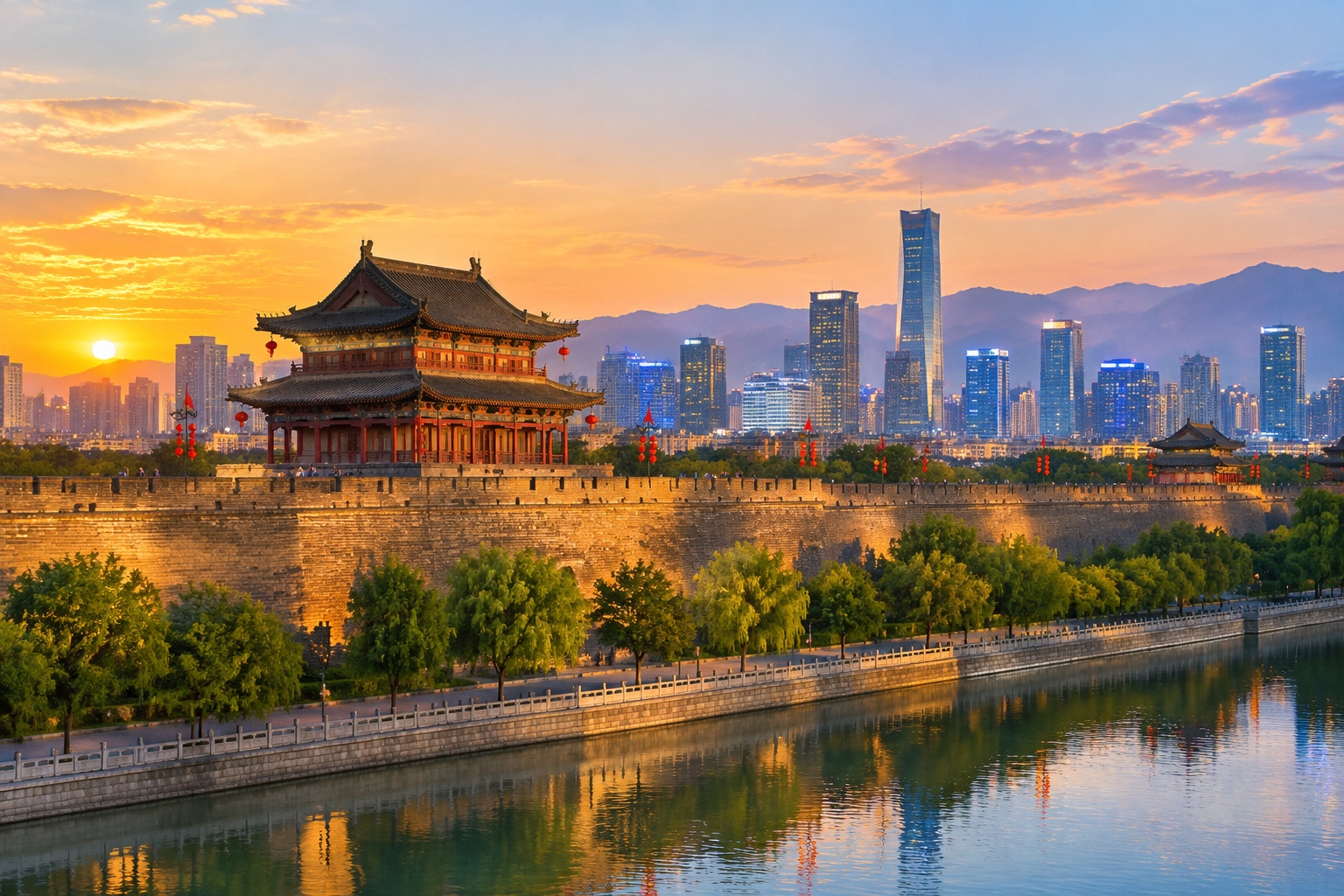

One City, Two Timelines
One spring afternoon I rented a bicycle on the Ming Dynasty city wall in Xi’an. To one side lay parapets that have stood since 1378. To the other, across the moat, rose glass office towers and construction cranes. That juxtaposition sums up this ancient capital: it is quietly building a 21st-century economy without leaving its centuries-old identity behind.
Xi’an is not used to being ignored. It was once called Chang’an and served as China’s capital for 13 dynasties. During the Tang dynasty, it was the most populous city in the world and the eastern endpoint of the Silk Road, drawing traders from Persia, the Byzantine Empire, and Central Asia. Those global connections shaped a culture that remains strikingly cosmopolitan today.
Modern Xi’an often flies under the radar. The city of 13 million is now a key node for the China-Europe Railway Express and reported a GDP of roughly 1.2 trillion yuan in 2023. It is half an hour by high-speed rail from the nearest aerospace research cluster and home to major semiconductor plants. For business visitors, it offers a rare chance to see a historic site and an industrial hub in the same day, sometimes in the same sightline.
Tracing the Imperial Past
The Terracotta Army
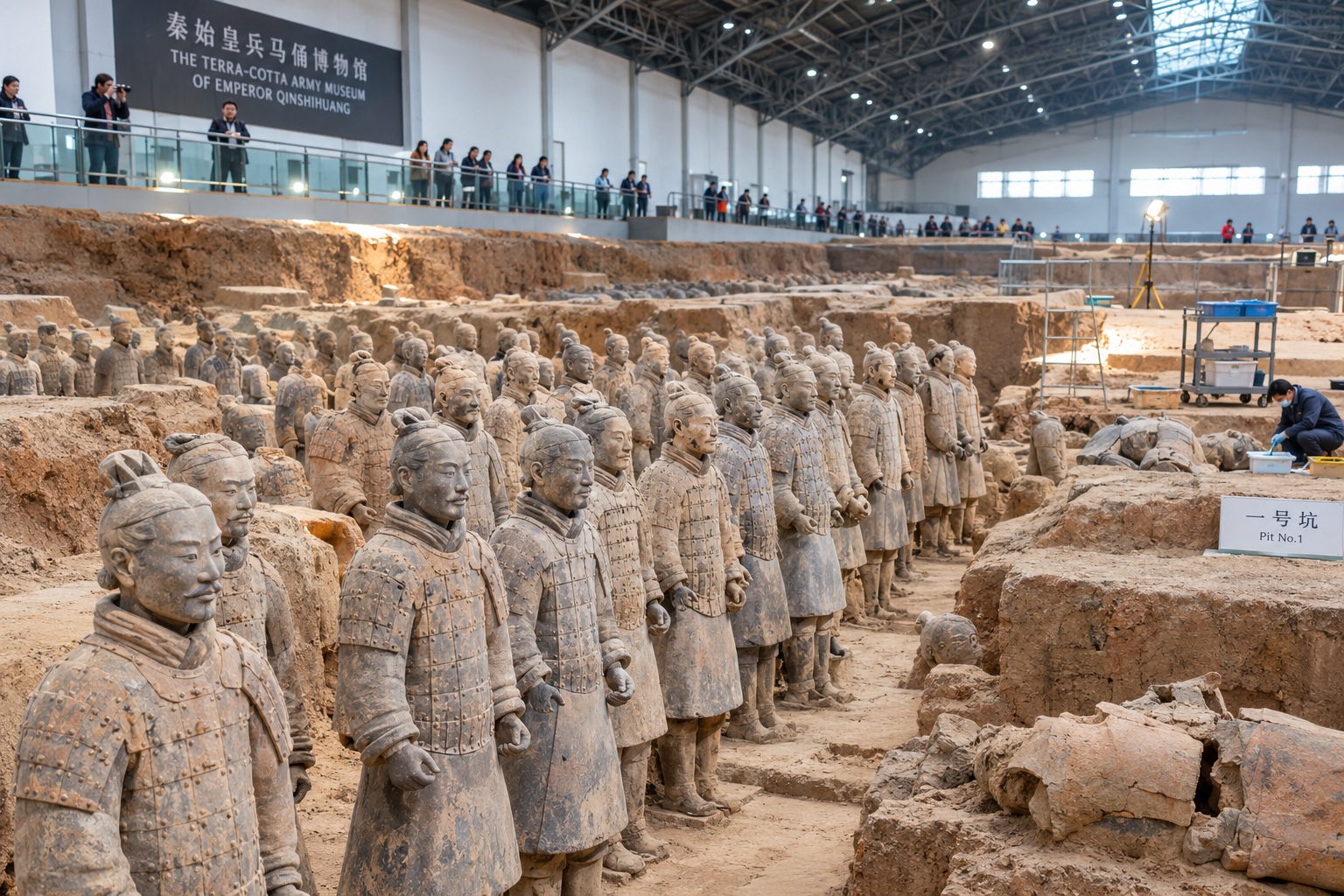
Discovered in 1974 by farmers digging a well, the Terracotta Army includes about 8,000 life-size soldiers, each with a distinct face, plus horses and chariots. They were placed near the tomb of Qin Shi Huang, China’s first emperor, to defend him in the afterlife. The site is still being excavated, which makes it feel less like a museum and more like an active archaeological event.
The pits are also an extraordinary example of production and quality control. Clay figures were built from standardized parts in workshop-like assembly lines, then given individual faces. In a way, this ancient industrial approach never really left the region. When you watch modern logistics or manufacturing in Xi’an, you can trace a certain lineage of standardized scale and government-led projects back to Qin reforms: consistent currency, weights, even cart axle widths.
Get there early, before nine, to avoid the crowds; the museum is less than an hour from the center by car or subway. If you can, use a professional guide to connect the details with the broader story of Chinese political power and its expression in stone and clay.
Cycling the City Wall
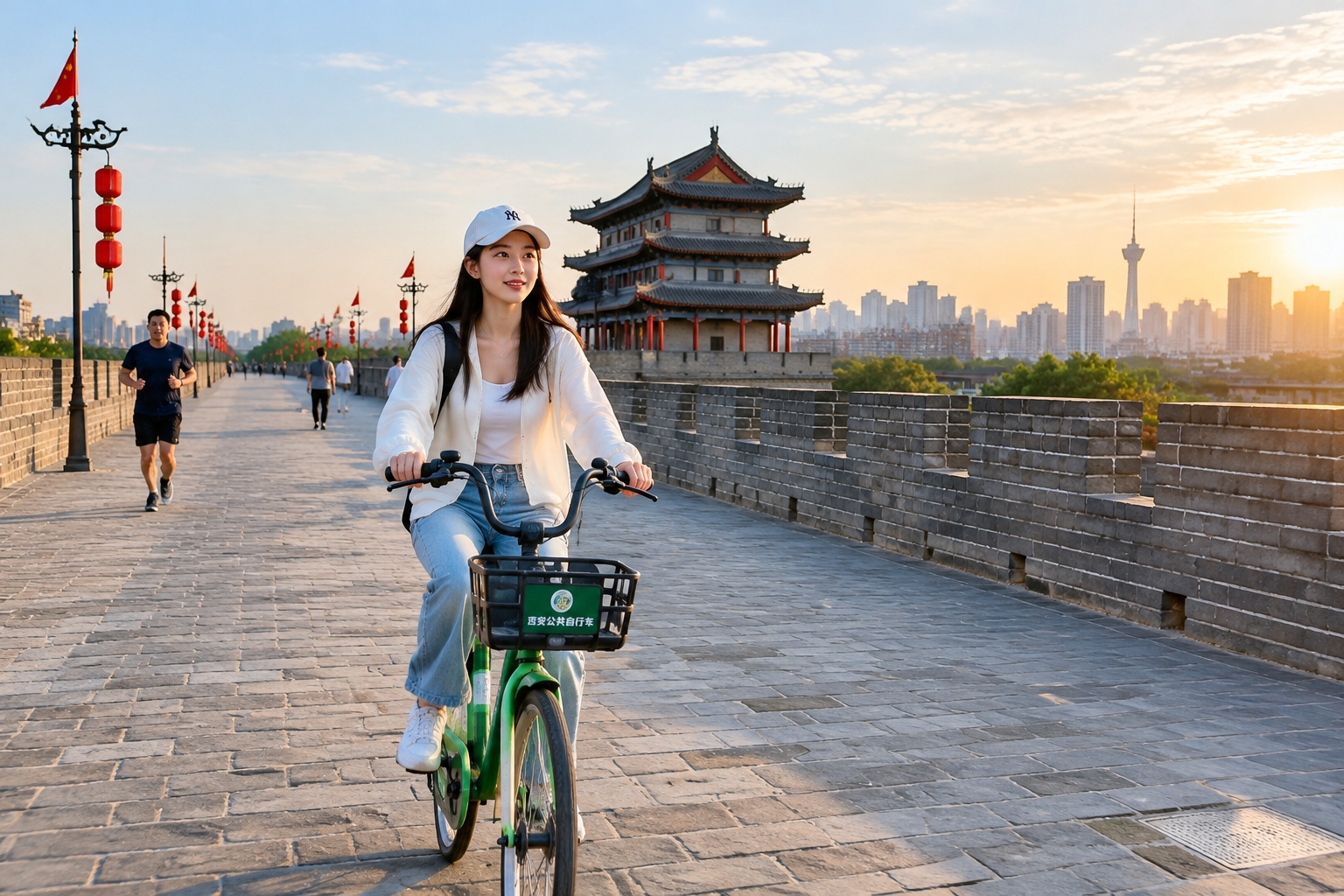
Xi’an’s 13.7-kilometer Ming city wall is the largest complete city wall in China. Rent a bike at the South Gate and cycle between ancient watchtowers while watching modern office towers rise beyond the wall. Try it near sunset, when the light makes both eras look their best.
All over the wall, daily life goes on: pensioners rest on benches, couples take selfies, children run along the wide diagonal stones. Unlike many ancient monuments in China, this wall is not treated as a static relic. It is a municipal park built on a fortification, a favorite weekend venue for running clubs and even outdoor yoga.
Muslim Quarter: Where History Meets Street Food
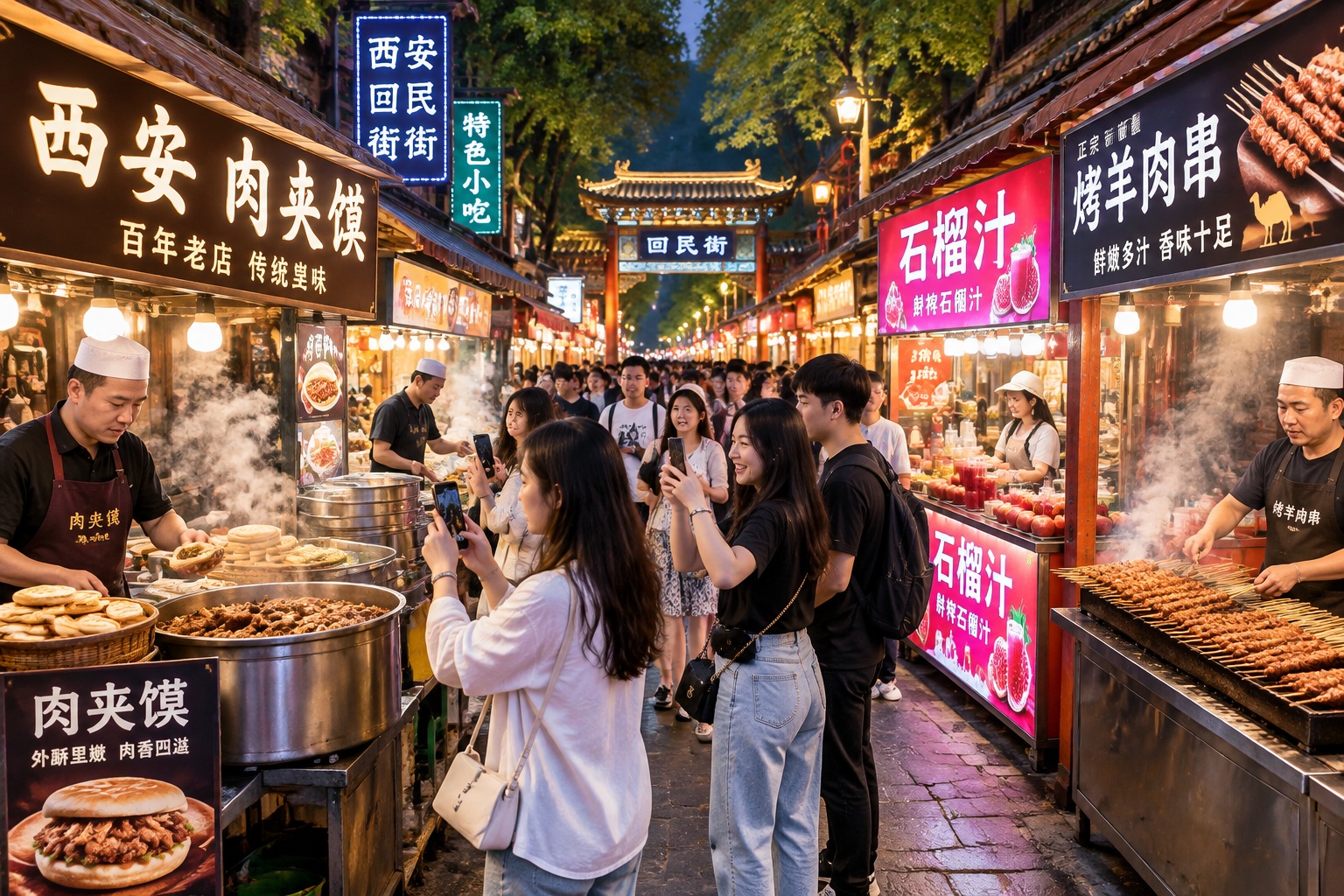
A short walk from the Bell Tower, this maze of streets has housed Xi’an’s Hui Muslim community for centuries. In the evening, it becomes a packed night market where you can sample roujiamo (flatbread with braised pork or beef), yangrou paomo (lamb soup with torn bread), and numerous skewers. The lines outside family-run shops are also a great place to observe modern Chinese consumers — they order via their phones and pay with QR codes, all while continuing a centuries-old food culture.
The area is also a reminder of Xi’an’s role as a Silk Road meeting point. Hui families preserve culinary techniques from Central Asia, but have fused them with local ingredients. Ask for suantang shuijiao (garlic-soup dumplings) if you want an example of that fusion. A seat at a communal table will tell you more about how ordinary Chinese use their cities than any business briefing.
The Quiet High-Tech Transformation
Hard Tech and Strategic Industries
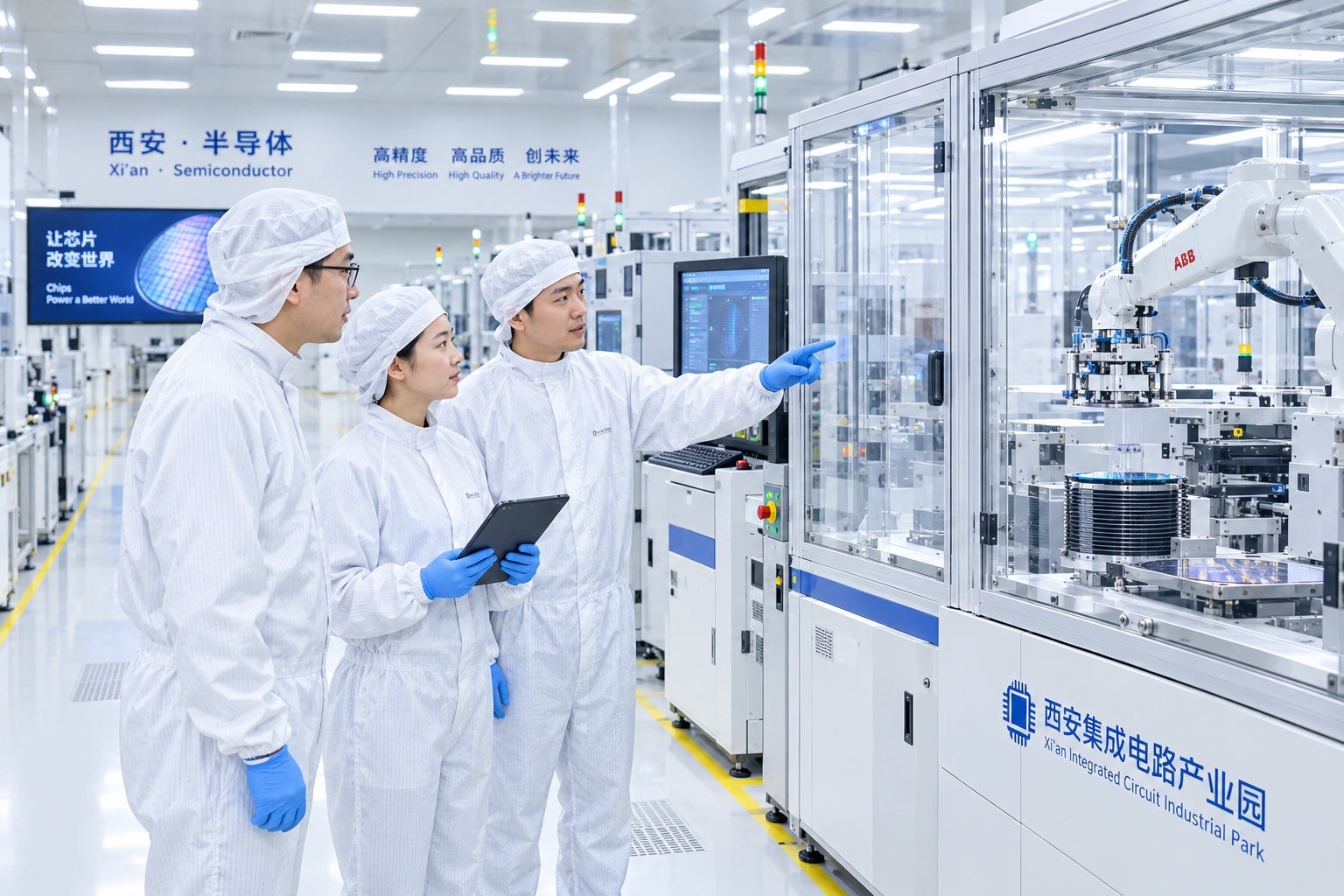
Beyond the old city, Xi’an has become an important base for what Chinese planners call hard tech: semiconductors, space and aviation, clean energy, and new materials. Samsung operates one of its largest memory-chip plants here. Local companies manage the country’s largest liquid-propellant rocket engine production line. The Xi’an High-tech Industries Development Zone, founded in 1991, hosts a cluster of global suppliers, domestic startups, and research institutes. The city also benefits from major infrastructure such as the China-Europe Railway Express and local operations of BYD, the world’s largest electric vehicle maker by sales.
The hard tech label is deliberate. It separates this kind of work from the consumer-internet economy found in Beijing and Shenzhen. Instead of food delivery or social apps, success here is measured in chip yields, engine thrust, or the ability to produce high-purity materials. For foreign enterprises exploring R&D in China, that creates a different and often more straightforward partner profile: engineering-led, less marketing-driven, and closely connected to university labs.
Universities and Talent
Xi’an’s technical advantage comes from its universities. Xi’an Jiaotong University, Northwestern Polytechnical University, and Xidian University produce a steady stream of engineers and computer scientists. Xi’an Jiaotong is one of China’s nine elite universities, while Xidian is particularly strong in communication and radar technology. Entry-level salaries are noticeably lower than in Beijing or Shenzhen, making the city attractive for research centers and manufacturing investment.
Climate and cost of living are part of the package. A two-bedroom apartment in a modern compound in the high-tech zone might cost less than half of what it would in Shanghai. That lets companies build larger teams for the same budget and gives fresh graduates a real chance to buy a home. City officials promote this quality-of-life advantage when recruiting talent from coastal cities.
A Two-Day Playbook for Business Visitors
Day 1: History
Start at the Terracotta Army early. Return to the city by noon and spend the late afternoon bicycling the wall. End the day in the Muslim Quarter for dinner and a close-up look at local consumption habits.
Day 2: Modern Xi’an
Reserve a day for the High-tech Development Zone. Contact Xi’an’s investment promotion agency in advance to arrange visits to companies. In the afternoon, walk through university technology parks or take a high-speed train from the new station to see how integrated the logistics network is.
Practical Essentials
The metro connects the airport and downtown; buy a card or use Alipay/WeChat. Taxis are common, but ride-hailing through Didi is more reliable for non-Chinese speakers. Print bilingual business cards, bring your passport for any park visit, and arrive on time. English is fine with young professionals, but an offline translation app helps elsewhere.
Choose spring (March–May) and autumn (September–November) for the best climate. Summer can be hot, and winter is dry and colourless. Pack a mask if you are sensitive to air quality and comfortable shoes for walking through excavation pits and muddy industrial sites. If you are invited to a meal, never start eating before the host; the phrase chi fan (eat rice) is a common invitation to dinner and is part of building trust.
Conclusion
Xi’an is not a city stuck in the past. It is a living demonstration of how ancient culture can coexist with modern industry. Walk the walls in the morning, tour a semiconductor lab in the afternoon, and taste street food at night. Understanding Xi’an gives you a clearer picture of China’s next phase: deep foundations in both history and technology. The real insight is that the old city and the new factories are just two versions of the same spirit—systematic, ambitious, and always ready to build on its own ruins.
Start the discussion at forum.chinacomes.com