

Morning at Zhuanxin Market: A Map of Yunnan on One Table
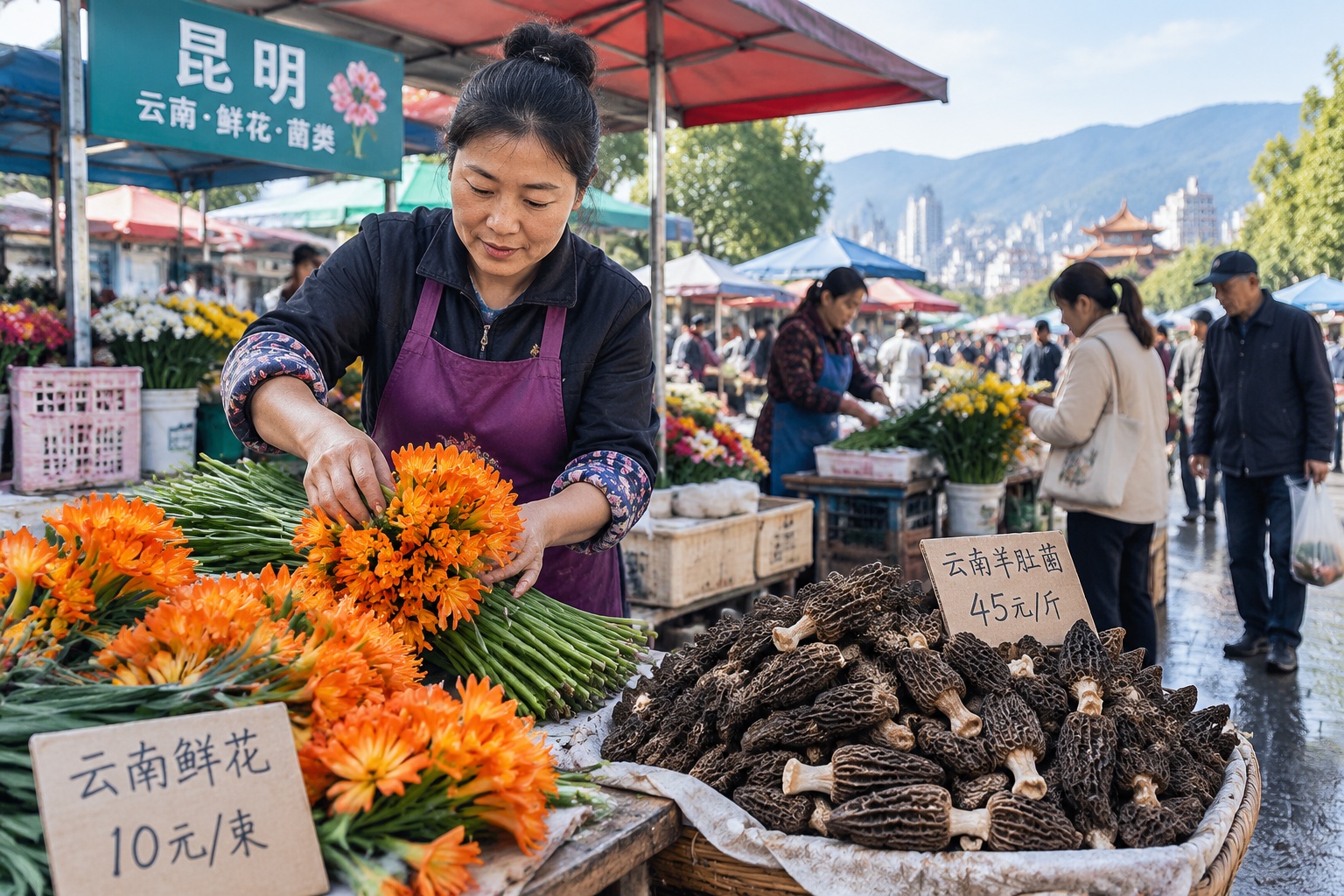
It’s 7:30 a.m. in Kunming, and the light is still soft over Zhuanxin Wet Market. A woman in a purple apron is arranging tiny, bright orange flowers next to a pile of dark, wrinkled morel mushrooms. Across the aisle, a Dai vendor is weighing a bundle of lemongrass for a customer who just finished her morning tai chi. No one finds this odd. In Yunnan, flowers are food, mushrooms are currency, and the boundaries between ethnic traditions blur into a single, fragrant street.
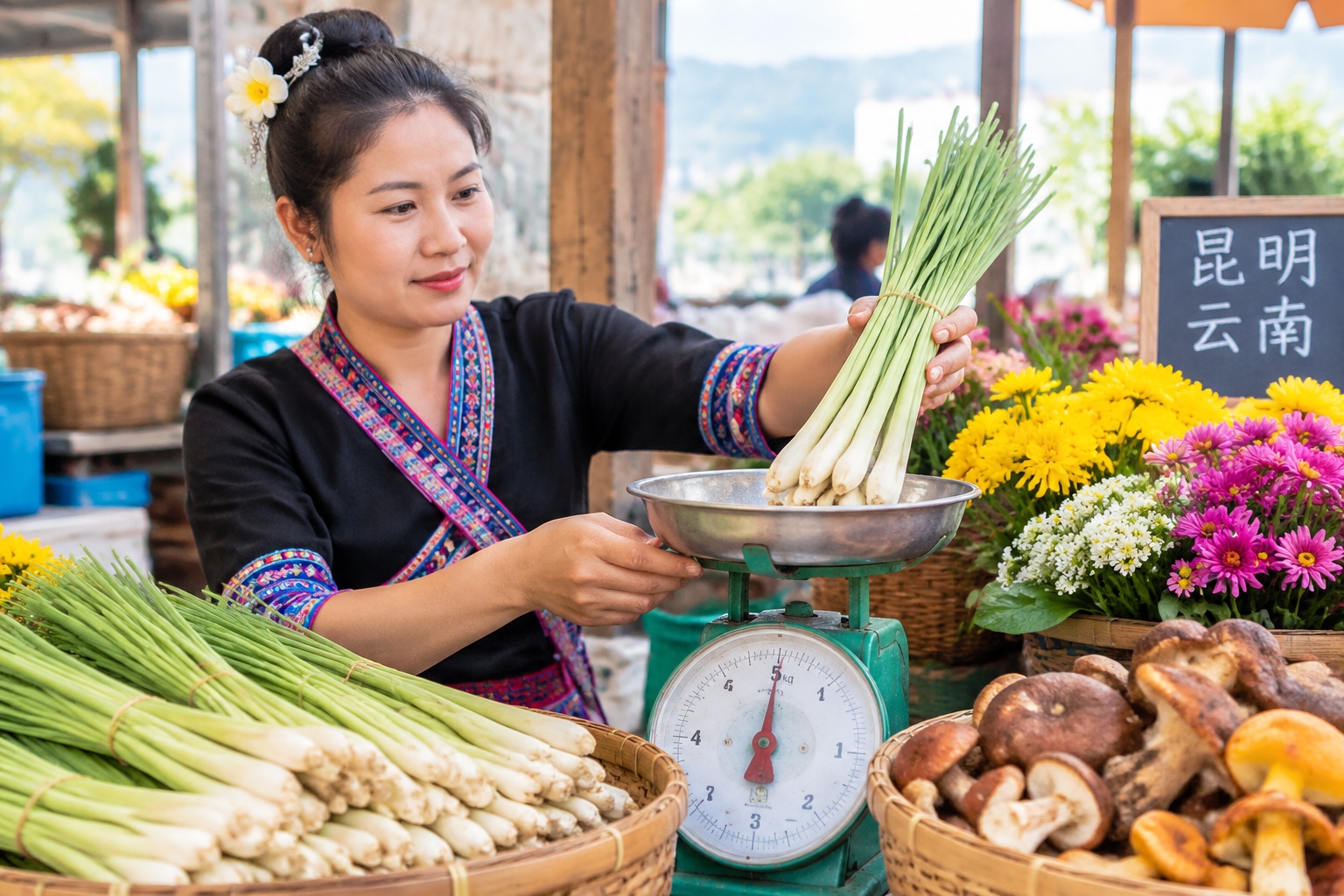
Zhuanxin Market is not a tourist attraction. It is where office workers grab breakfast, where grandmothers debate the freshness of bitter greens, and where chefs from nearby restaurants hunt for ingredients they cannot find anywhere else in China. The market is a living map of Yunnan’s geography: from the tropical south come bananas and pineapple; from the highlands arrive dozens of wild mushroom varieties—porcini, chanterelles, and the prized jizong, which can sell for hundreds of yuan per kilo in peak season.
What Makes Yunnan’s Markets Different
Walk down any aisle and you will see things that do not exist in a Beijing or Shanghai supermarket. There are bundles of fish mint, a leaf that tastes like cilantro and raw fish at the same time. There are fermented bamboo shoots, pickled in clay jars. There are rice cakes shaped like small discs, stacked in banana leaves. And there are the flowers: jasmine, banana blossoms, pomegranate flowers, and the tiny yellow blooms of the rapeseed plant, all sold by the handful for stir-fries.
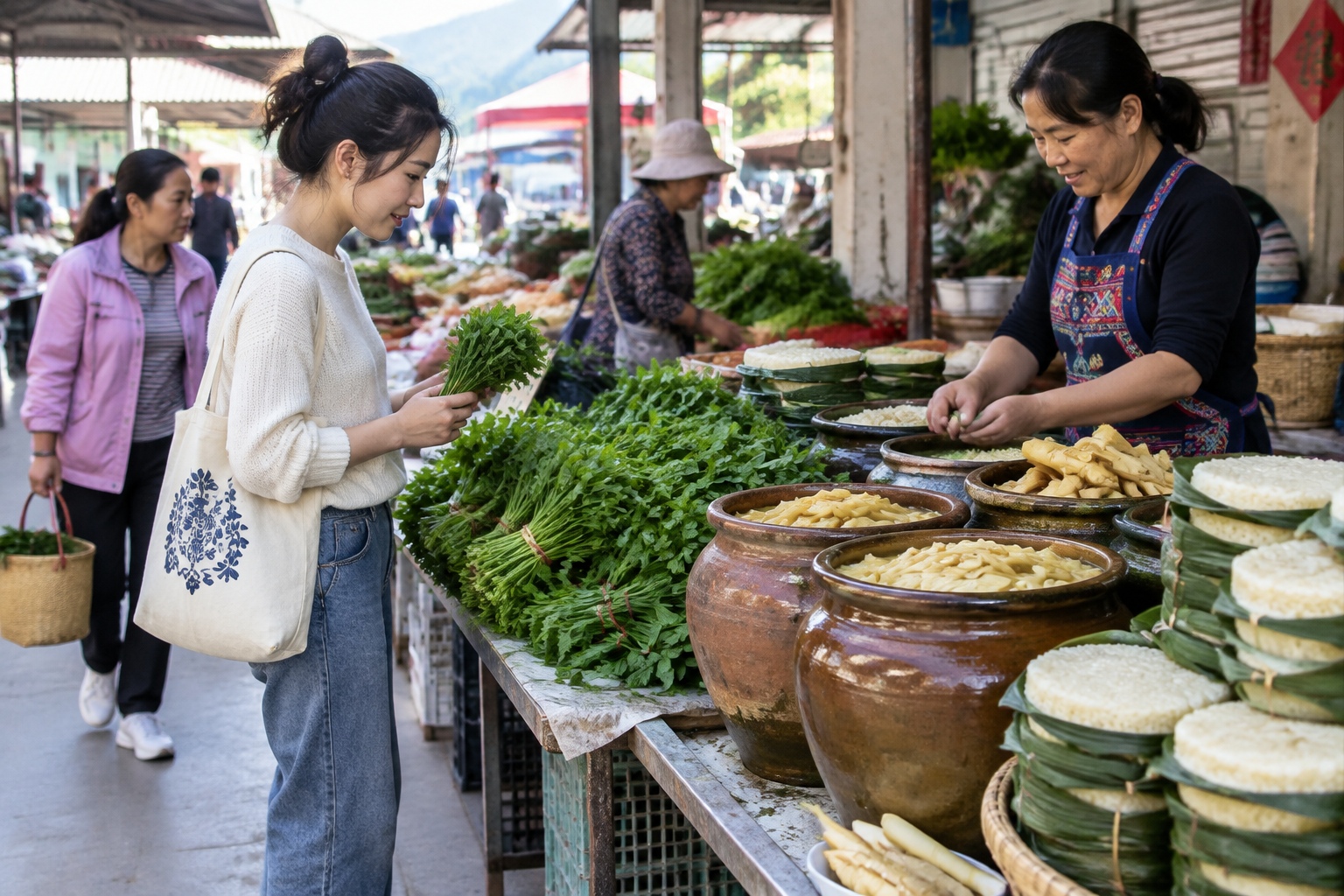
Yunnan is home to 25 officially recognized ethnic minority groups, and their food traditions coexist in the same market without hierarchy. A Yi vendor might sell buckwheat cakes next to a Han farmer selling tofu. A Hui stall offers beef jerky while a Dai family nearby wraps sticky rice in banana leaves. This is not a curated diversity exhibit. It is simply how lunch gets made.
From Market to Village: The Rhythm of Dali
Three hours west of Kunming, the city of Dali sits between the Cangshan Mountains and Erhai Lake. The old town is famous for its stone-paved streets and white-walled Bai courtyards, but the real life happens in the villages that ring the lake. In Caicun, a village of about 2,000 people, mornings begin with the sound of water splashing from the lake and the smell of wood smoke from breakfast fires.
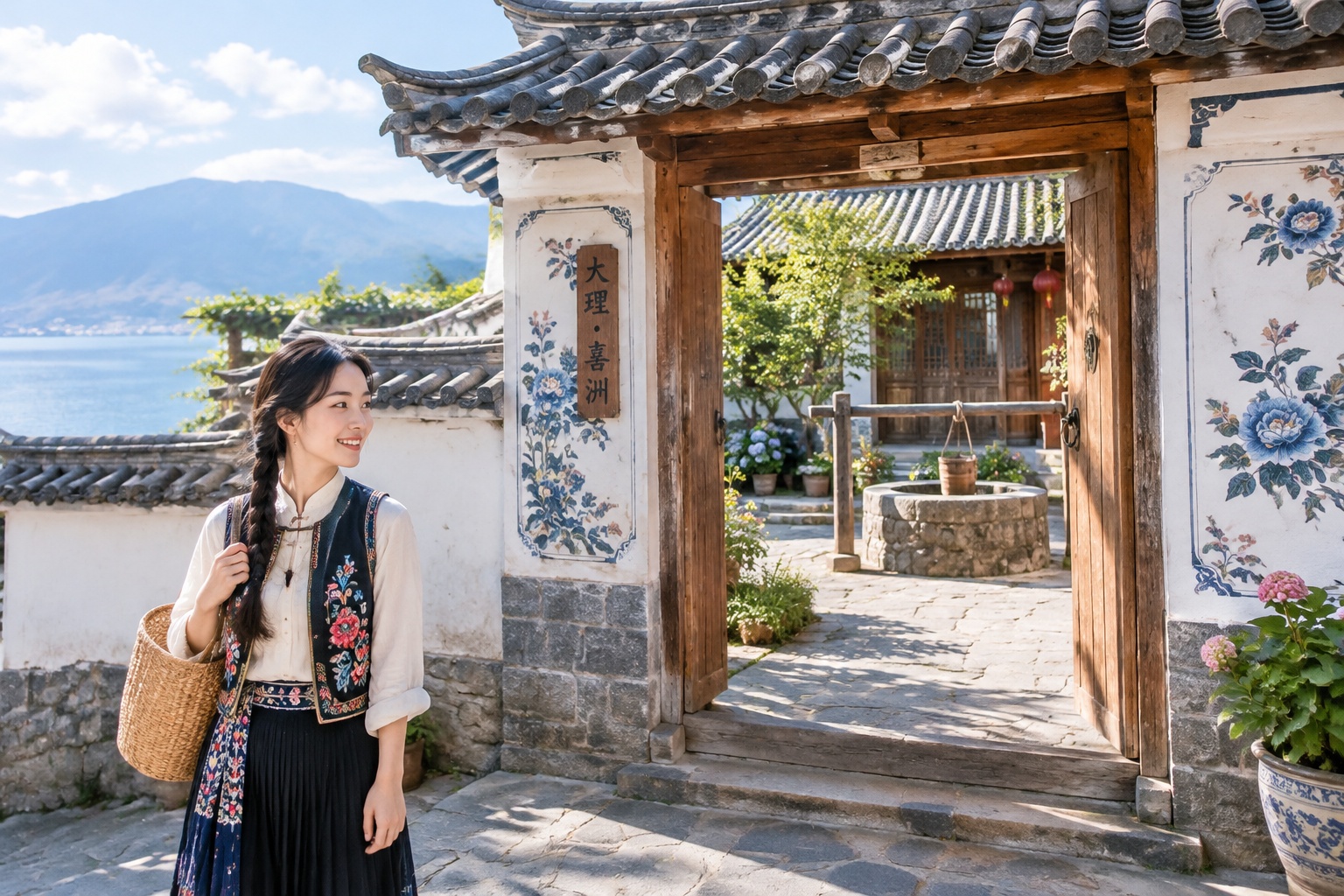
Bai architecture is distinctive: white walls, grey tile roofs, and intricate paintings of flowers and birds above the doorways. Many courtyards have a central well and a small garden. Life moves at a different pace here. Neighbors still drop by unannounced. The weekly market in nearby Xizhou is a social event as much as a shopping trip—people come from surrounding villages to buy cloth, tools, and snacks, but also to gossip and catch up.
The Newcomers: Migrants and Their Daily Lives
In the past decade, Dali has attracted a wave of domestic migrants—young people from big cities seeking a slower life, artists, and remote workers. They rent rooms in Bai courtyards or build small guesthouses on the outskirts. On a Tuesday afternoon in a Caicun café, you might hear a conversation in Mandarin about coding projects next to a table of local women playing cards. The two worlds overlap but do not fully merge.
For the newcomers, daily life involves navigating local customs: learning when to buy vegetables (early), how to greet elders (respectfully), and where to find the best rice noodles (the stall with the longest line). Some stay for years; others leave after a season. But their presence has changed the village economy—more cafes, more guesthouses, and a slow rise in rent.
Geography on a Plate
Yunnan’s food is shaped by its landscape. The province rises from tropical rainforests in the south to snow-capped peaks in the northwest, creating microclimates that support an astonishing variety of plants and animals. This is why the same market can sell both tropical fruits and alpine mushrooms. It is also why Yunnan cuisine varies so much from one valley to the next.
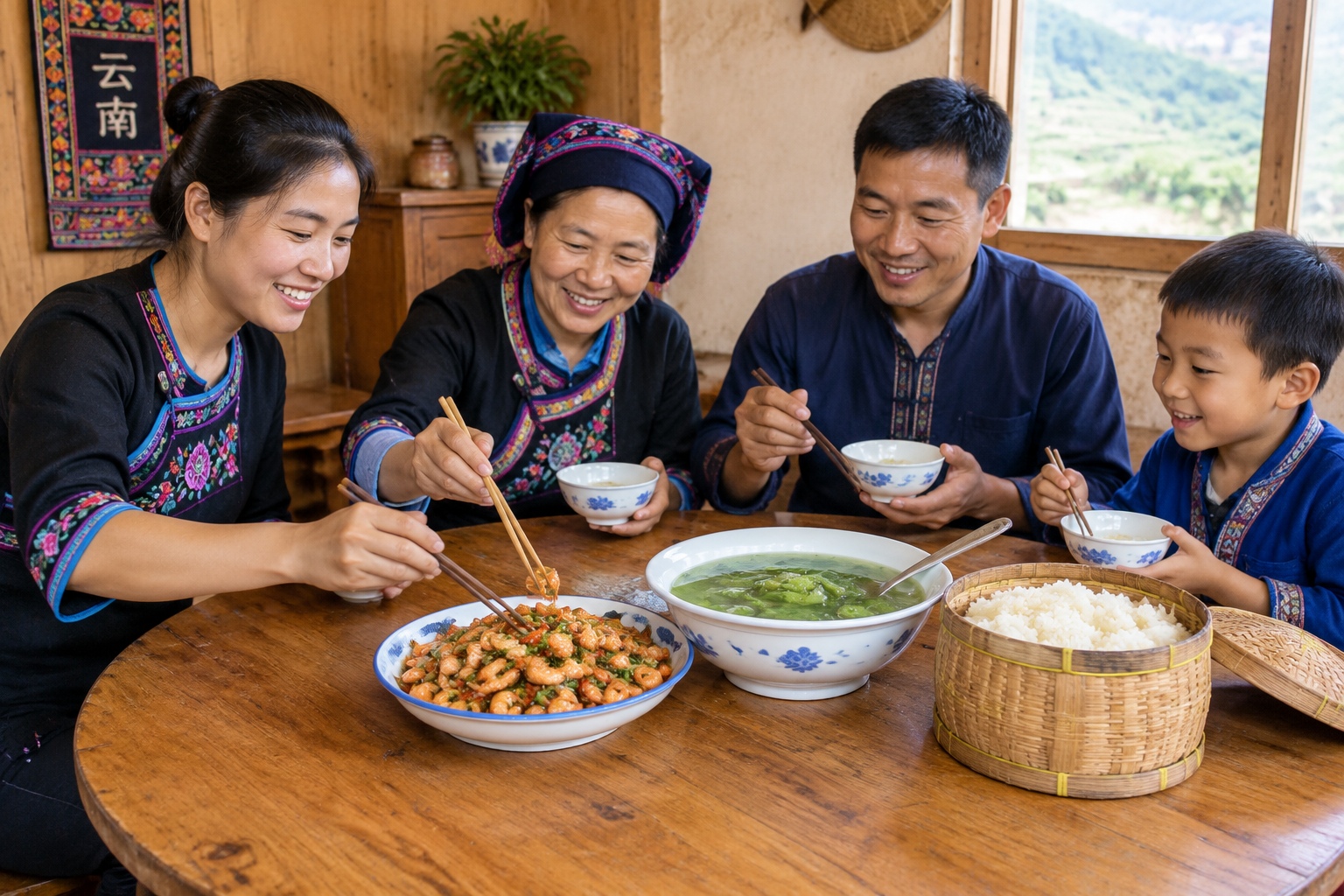
In the villages around Erhai Lake, the daily diet reflects the Bai tradition: freshwater fish from the lake, rice from nearby paddies, and vegetables grown in small plots behind the house. A typical home-cooked meal might include stir-fried lake shrimp with garlic, a soup of bitter greens, and sticky rice steamed in a bamboo basket. Meals are eaten at a round table, with dishes shared and tea poured continuously.
Everyday Connections
What strikes a visitor most is not the exotic ingredients or the picturesque courtyards. It is the ordinariness of it all. A grandmother buying flowers for her dinner table. A child running errands for his mother at the market. A group of neighbors sharing a plate of sunflower seeds on a street corner. These small rituals are the fabric of daily life in Yunnan, and they are remarkably resilient.
For overseas readers, Yunnan offers a window into a China that is not defined by megacities or high-speed rail. It is a China where diversity is not a policy slogan but a fact of the marketplace—where the question ‘what’s for dinner?’ can have a hundred different answers, depending on which mountain you come from.
Start the discussion at forum.chinacomes.com