


Why Would Anyone Move Back?
In late 2023, a German appliance maker quietly moved its basic toaster production from Guangdong to northern Vietnam. By mid-2024, it sent the line for a new smart kettle in the opposite direction. The reason was not patriotic, not emotional. The toaster design had not changed in years. The kettle needed at least forty design tweaks and three different wireless charging modules before launch. Vietnam had lower wages and newer factories, but every iteration took ten to fourteen days because engineering teams, component shops and test labs were not within walking distance of one another. In Guangdong, those all existed within a one-hour drive.
The shift explains something that official trade data can only hint at. Global brands keep coming back to Guangdong not because it defies economics, but because the economics of “making changes” is different here. To understand how that works in practice, I spent a week with international sourcing managers visiting five very different factories across the Pearl River Delta.
Five Factories, Five Answers
The five visits were not chosen because they were flashy. They were chosen because they represent the ordinary backbone of supply chains that brands rely on: electronics assembly, metal finishing, small appliances, packaging, and molds. At each stop, the same theme appeared.
1. Shenzhen: Speed Is Built Into the Building
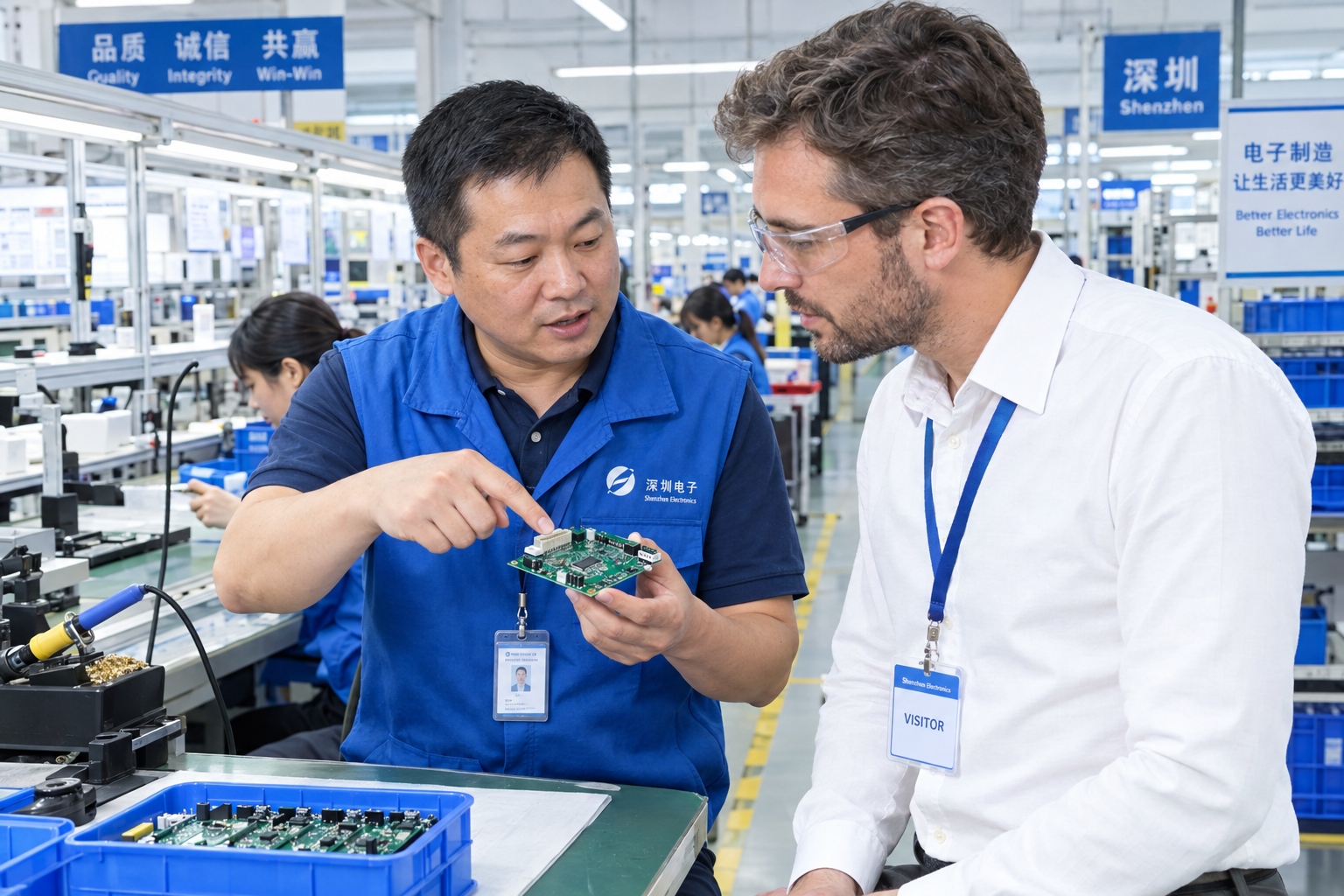
The first stop was a power-supply and control-board factory in Bao’an District, Shenzhen. The line was packed into a 1990s concrete building, with vertical transfer lifts and components stacked in blue trays. The plant manager asked our group: “If you place an order at noon, when do you need samples?” One buyer answered, “in two weeks.” The manager said, “if the components are available, first samples can be ready Thursday morning.”
That confidence was not a stunt. Shenzhen has hundreds of distributors for microcontrollers, resistors, capacitors, connectors and PCB shops in surrounding neighborhoods. For an engineer, sending a revised design out for rework is like ordering a coffee. In a less dense supply chain, each prototype cycle has to be scheduled, shipped, and imported. When your product needs five cycles of refinement, the difference is a month.
“In our market, time-to-market can cost more than labor,” said one of the buyers, an American who worked in Shenzhen earlier in his career. “That is why we keep coming back for new products.”
2. Dongguan: Your Suppliers Are Your Neighbors
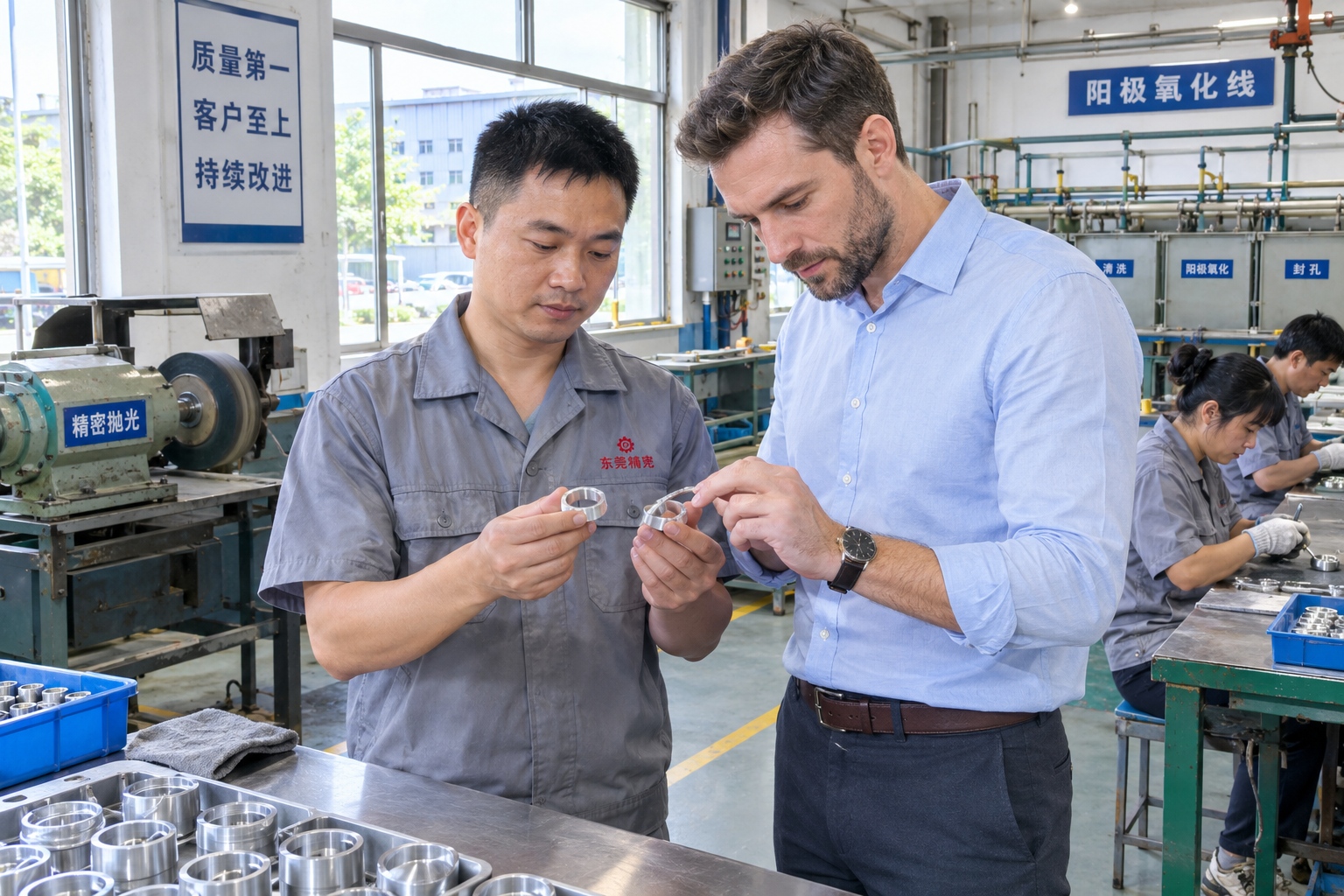
The second visit was a metal accessories plant in a dense industrial cluster outside Dongguan. It produces brushed aluminum rings, small hinges, and decorative parts for headphones and smart-home devices. The director set two pieces of aluminum on a table, one finished with bead blasting, one with a polished surface. “Which effect fits your brand?” he asked. Within an hour, we could compare several variations from a plating workshop two streets away.
This kind of tactile negotiation is hard to replicate in Southeast Asian industrial parks, where specialty finishing often requires sending parts to a different province or country. For a nickel-plated ring, the wage cost is only a fraction of the total cost; coordination and shipping matter more.
A Dutch buyer summed it up: “In Guangdong, we don’t send a spec and pray. We walk from one workshop to another, look at the surface under sunlight, and leave with an answer.”
3. Foshan: Repetition Creates Muscle Memory
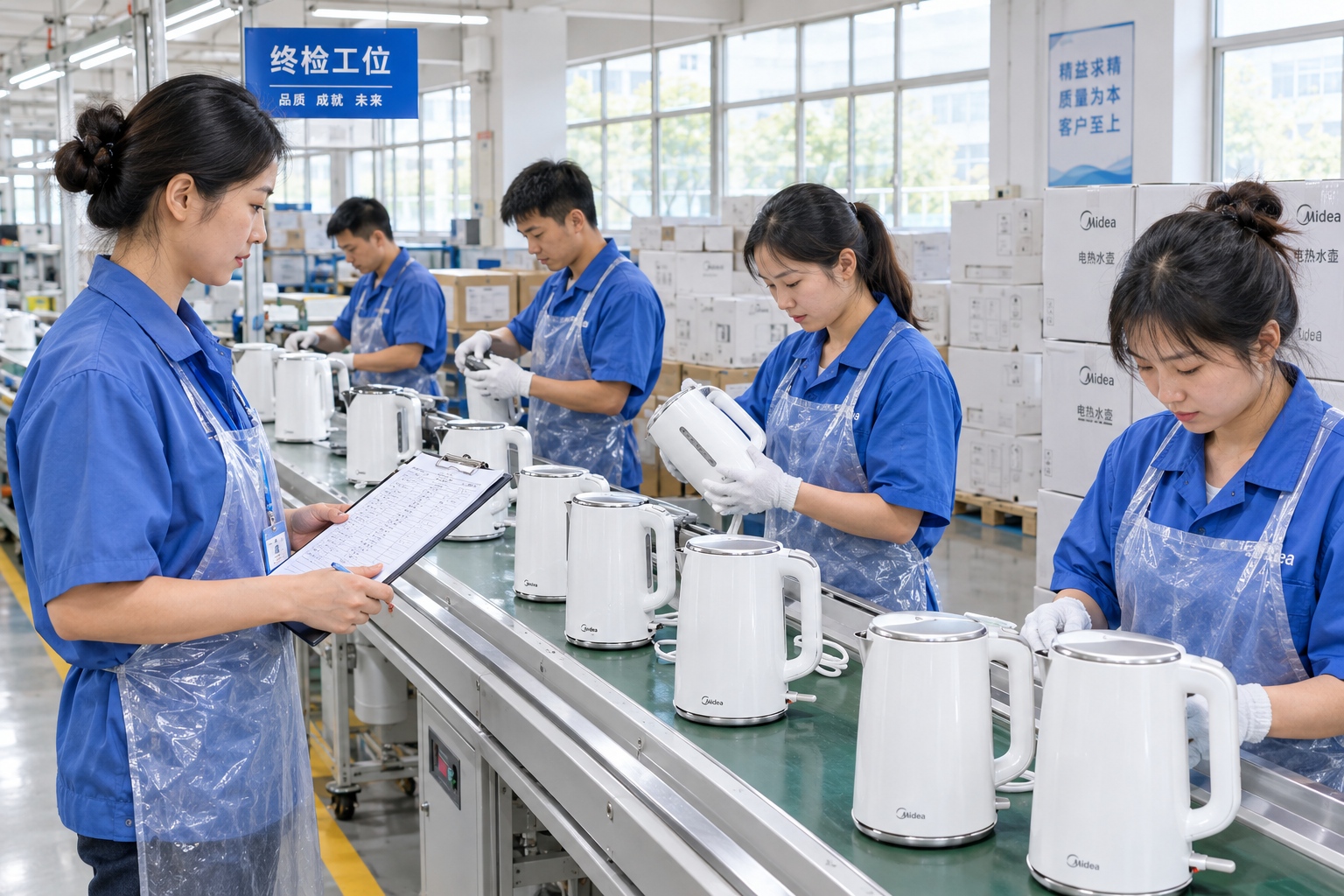
The third visit was to a kitchen appliance factory in Foshan that makes electric kettles in volumes that would make a European factory nervous. It was not a glamorous factory. The memorable thing was the pass rate. Forty days earlier, an international brand had tested 300,000 units of a new kettle; 62 failed. That is an entry failure rate of about 0.02 percent. One factor is obvious: many line workers have been assembling kettles for over a decade. The factory also has senior supervisors who know, from experience, what a small batch difference means.
Cheaper labor in Southeast Asia often comes with higher turnover. Some suppliers in Vietnamese electronics towns reported monthly turnover rates of 3 to 6 percent; each departure means lost quality. “It is not that Vietnamese workers cannot reach this standard,” an operations director said. “It is that Guangdong factories have already spent twenty years learning how to hold the standard.”
4. Panyu: Packaging Is the Hidden Delivery Risk
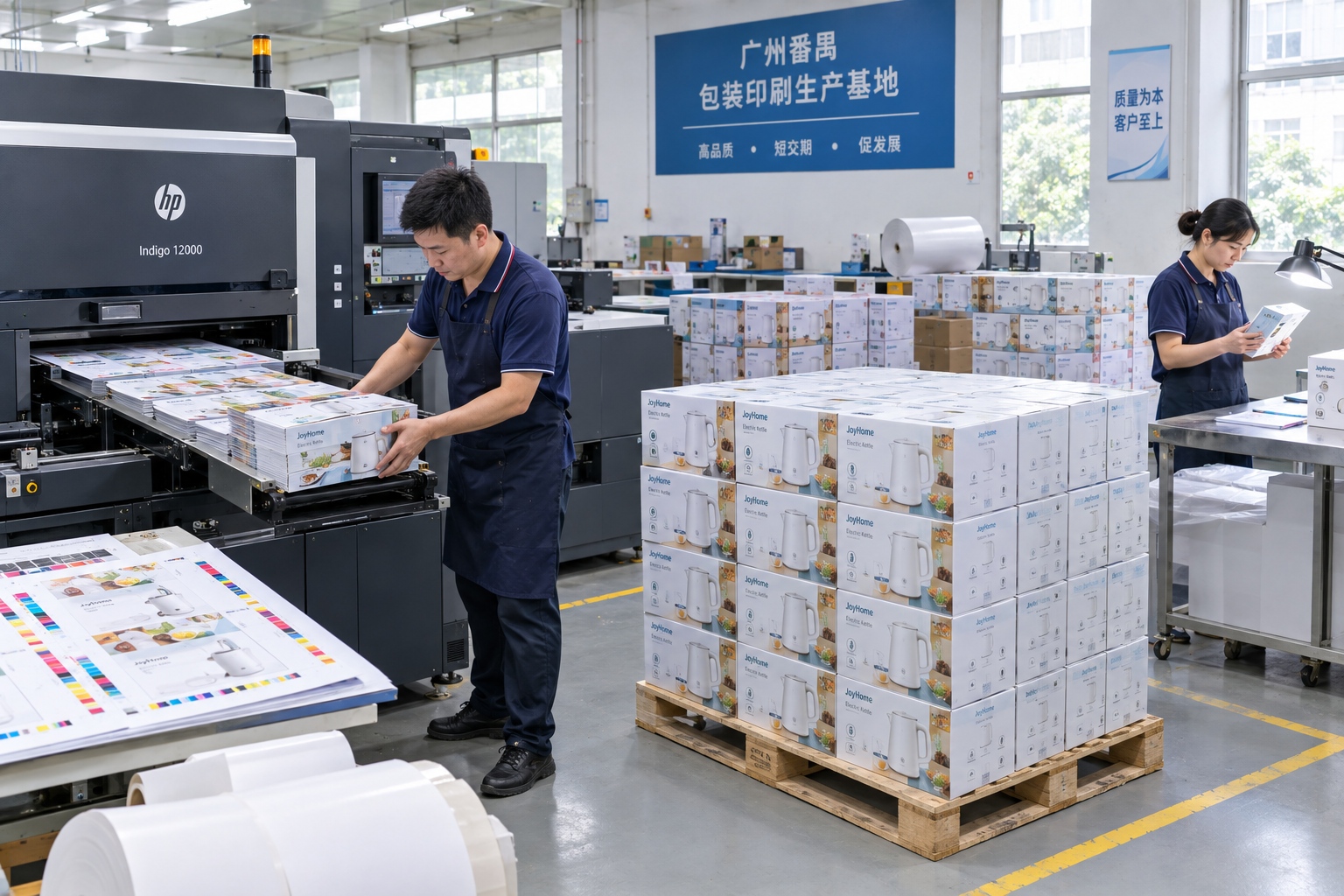
The fourth visit was not high-tech. It was a packaging factory in Panyu, a district in Guangzhou that still feels like a small city. The factory handles short runs for new product launches: 1,000 gift boxes with a multilingual label, 3,000 folding cartons with a new barcode. For many consumer brands, the slowest part of a launch is not the product; it is the packaging. If the box slips, the retailer promotion slips.
In Guangdong, packaging is treated as an everyday commodity. Ink, paper, dies, anti-counterfeit labels and lamination films are all available within 50 kilometers. The factory said it could finish a 5,000-box order in four working days. If your assembly plant is far away, that box can hold up an entire launch.
5. Humen: Molds Are the Final Gatekeeper
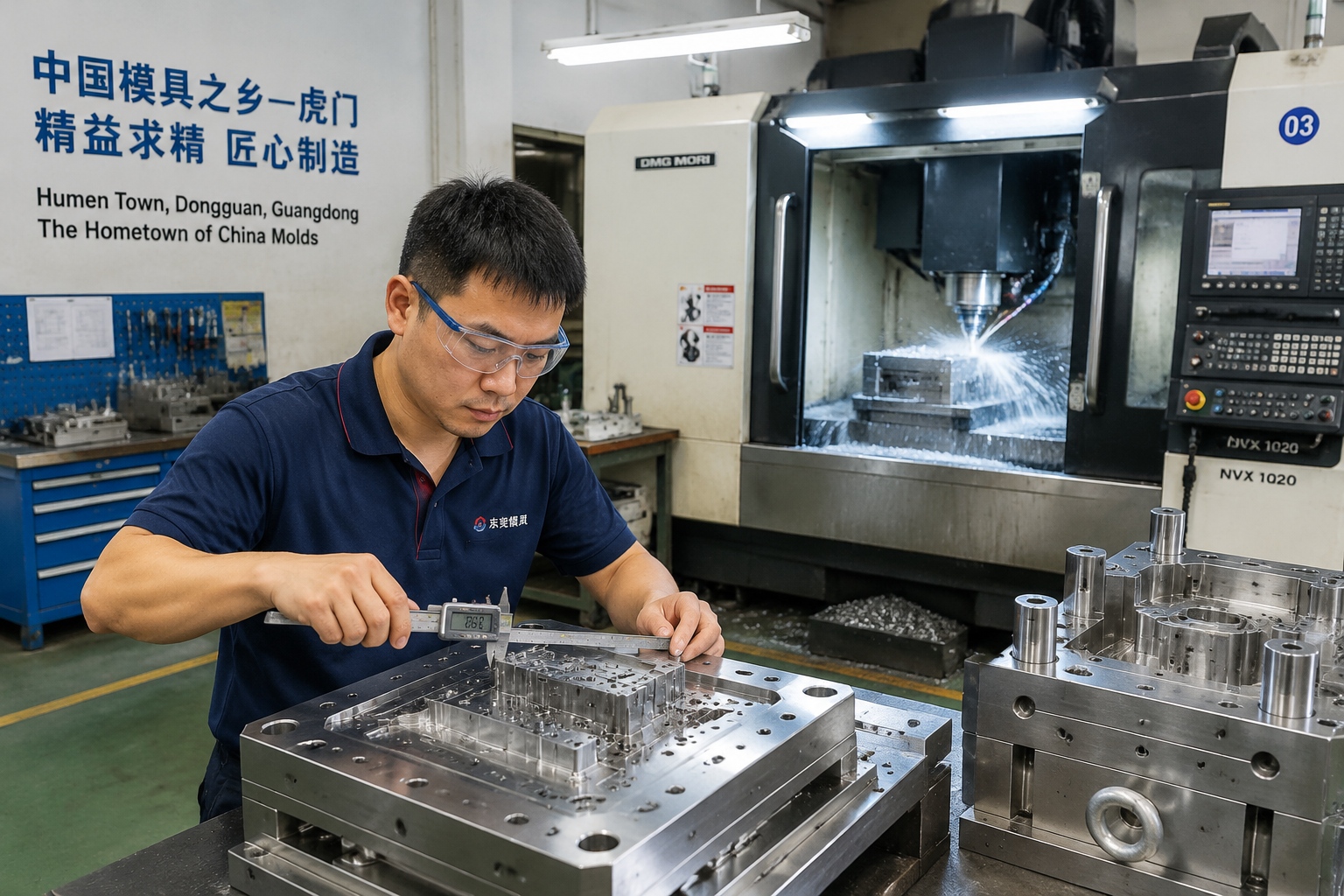
The last stop was a mold shop in Humen, a town known for tooling. A mold for a new plastic part was clamped in a CNC machine, with coolant spraying over the steel. The owner said: “If your mold is poor, your product can never be competitive. We are part of the first decision.”
The visit took 90 minutes, but the lesson stayed with the group. A brand that eventually assembles in Vietnam still needs a mold made somewhere. Molds are iterative: they must be cut, tested, adjusted, tested again. Guangdong’s mold ecosystem can deliver a complex mold in about 30 days, compared with 8 weeks in many other places. Even if mass production moves away, specialized tooling often remains anchored here.
Guangdong vs. Southeast Asia: Trade-Off, Not a Race
If I tell only these stories, the picture is incomplete. Guangdong has real disadvantages. Monthly manufacturing wages in the Pearl River Delta have risen to roughly 6,000 to 9,000 yuan, about 830 to 1,250 US dollars, several times higher than in Thailand or Vietnam. Land is tight and environmental rules are stricter than a decade ago. For simple products with stable design, Southeast Asia often wins. Furniture, basic textiles and some household goods are already produced more cheaply in Vietnam or Indonesia.
So why not put everything there? Because price per unit is not the same as total cost. In a volatile business environment, retail models want small quantities and fast replenishment. A product with a short life cycle sitting in a container for 20 days is more expensive than a product made in Guangdong in 10 days. If a defect is found, a supplier in Guangdong can correct the mold or production process within a week. An overseas factory may need a month for another trial.
The smarter view is “dual supply” rather than “leaving China.” A supply chain planner for an electronics brand told me: “We route mature products to Vietnam and keep new products in Guangdong. By the time a product matures, the process has been optimized here. Then we transfer it.” This is not a victory lap. It is a division of labor based on what each region does best.
What Buyers Say After Walking the Same Floor
At the last evening, the visiting managers compared notes. One from a U.S. medical device company said: “If I send a drawing to a Singapore-based engineering firm, I wait two days for feedback. If I send it to Shenzhen, I get feedback the same day—not because they are smarter, but because they can ask the tooling or component supplier next door.”
A buyer for a Scandinavian houseware brand added: “I used to think Guangdong was only about saving production costs. Now I think it is about saving correction costs. Those are different numbers.”
These remarks match broader procurement patterns. Consulting firms including McKinsey and Bain have noted that China’s export share remains high in complex industries, while low-complexity goods shift to other countries. Products that change frequently and need repeated communication still follow the ecosystem that has practiced for decades.
The Real Secret Is Density, Not Nationalism
If you walk through these five factories, you don’t see a futuristic fantasy. You see fluorescent lights, 3D printers next to manual machines, quality charts handwritten on whiteboards, managers in dusty safety shoes. What you see is density: people who have known each other through years of trial and error. Knowledge travels not through memos but through face-to-face talk at the factory gate.
Global brands keep returning because Guangdong is cheap where it matters most—the cost of changing course. That ability does not die cheaply.
Start the discussion at forum.chinacomes.com