
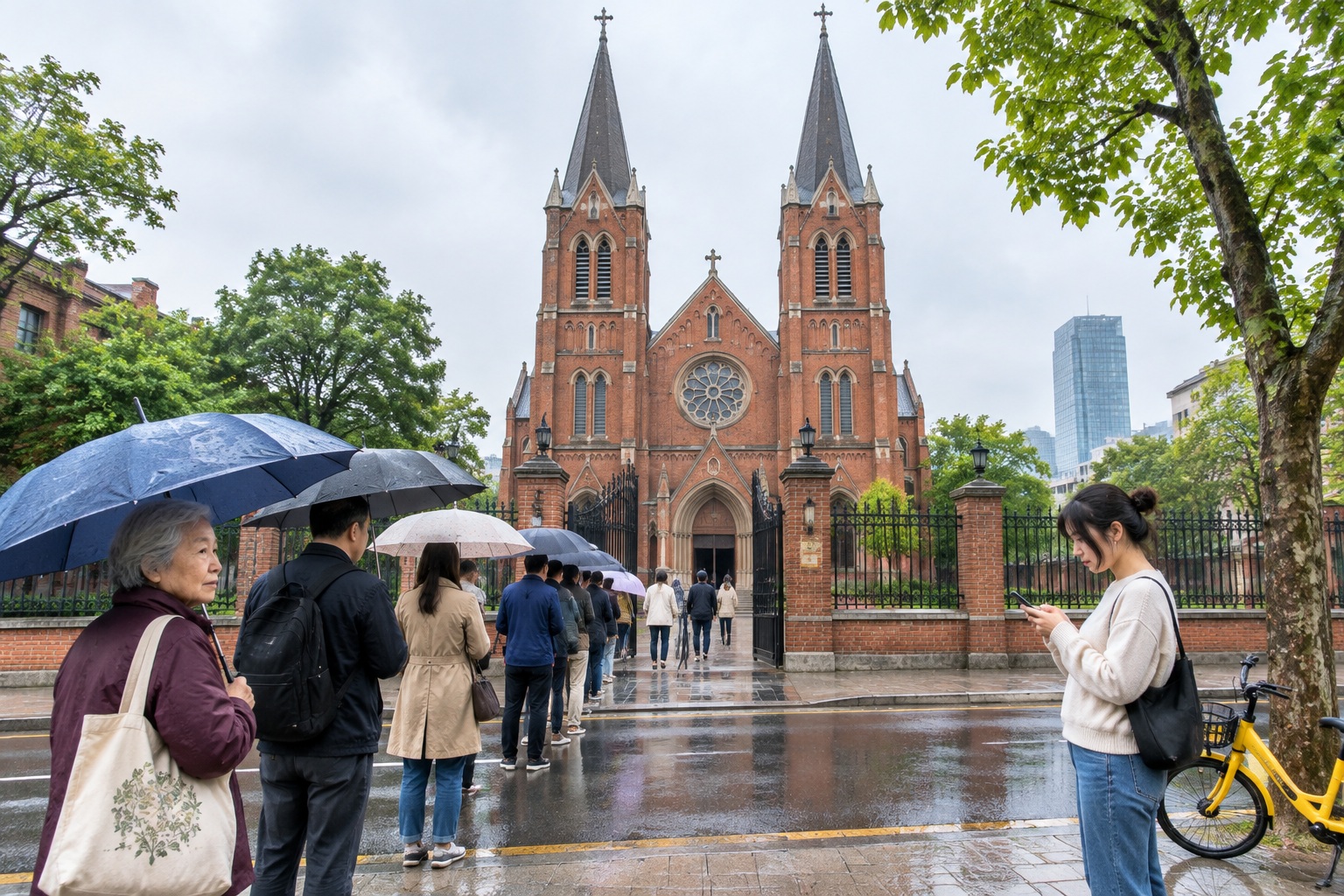

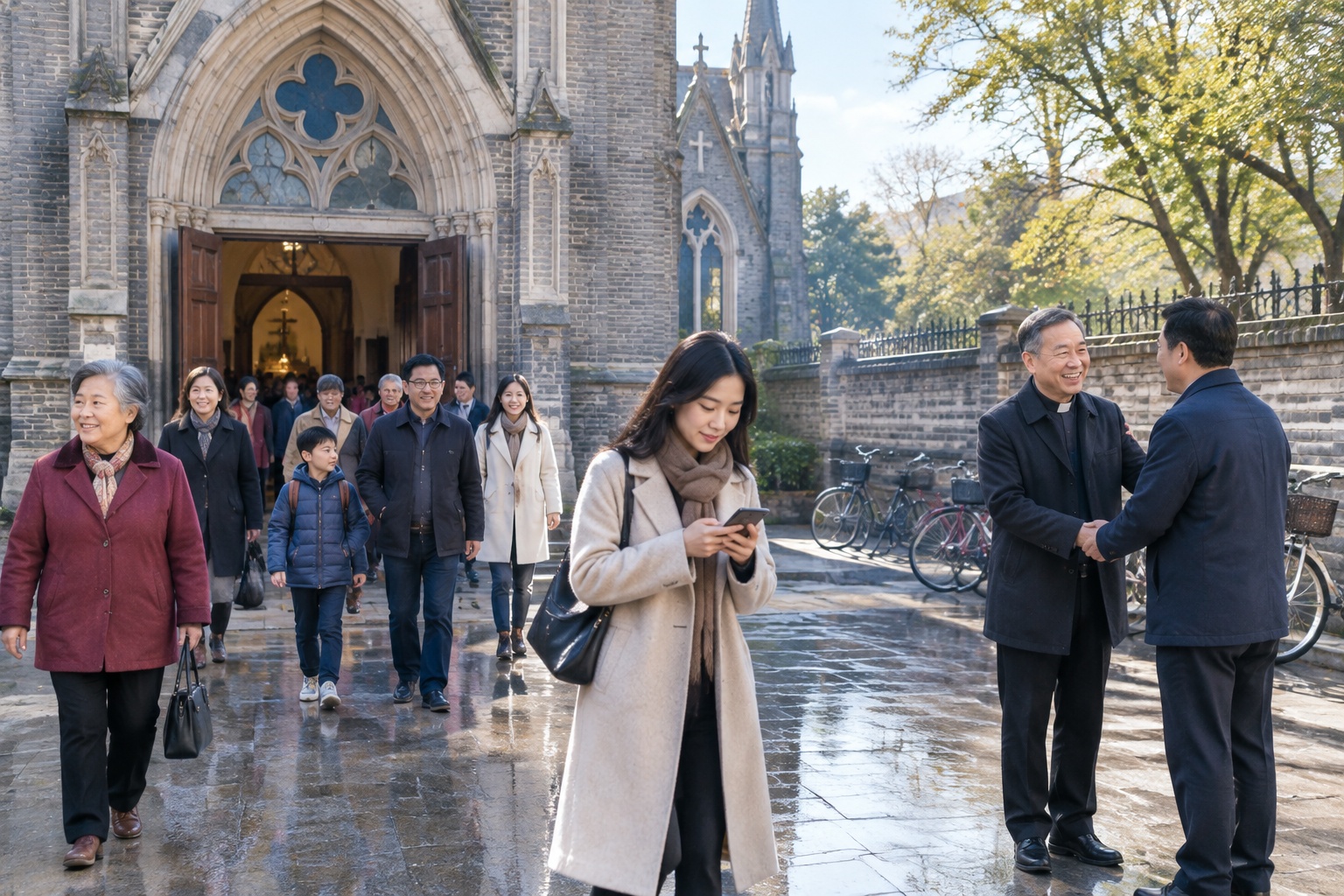
A rainy Sunday morning in Shanghai. It is 6:40, the twin red-brick towers of St. Ignatius Cathedral in Xujiahui are still half in shadow, and the first communicants are already pushing through the iron gate. An elderly woman with a canvas tote. A young man in wet running shoes. By the time the bells sound at seven, the line has curled around the corner onto Puxi Road.
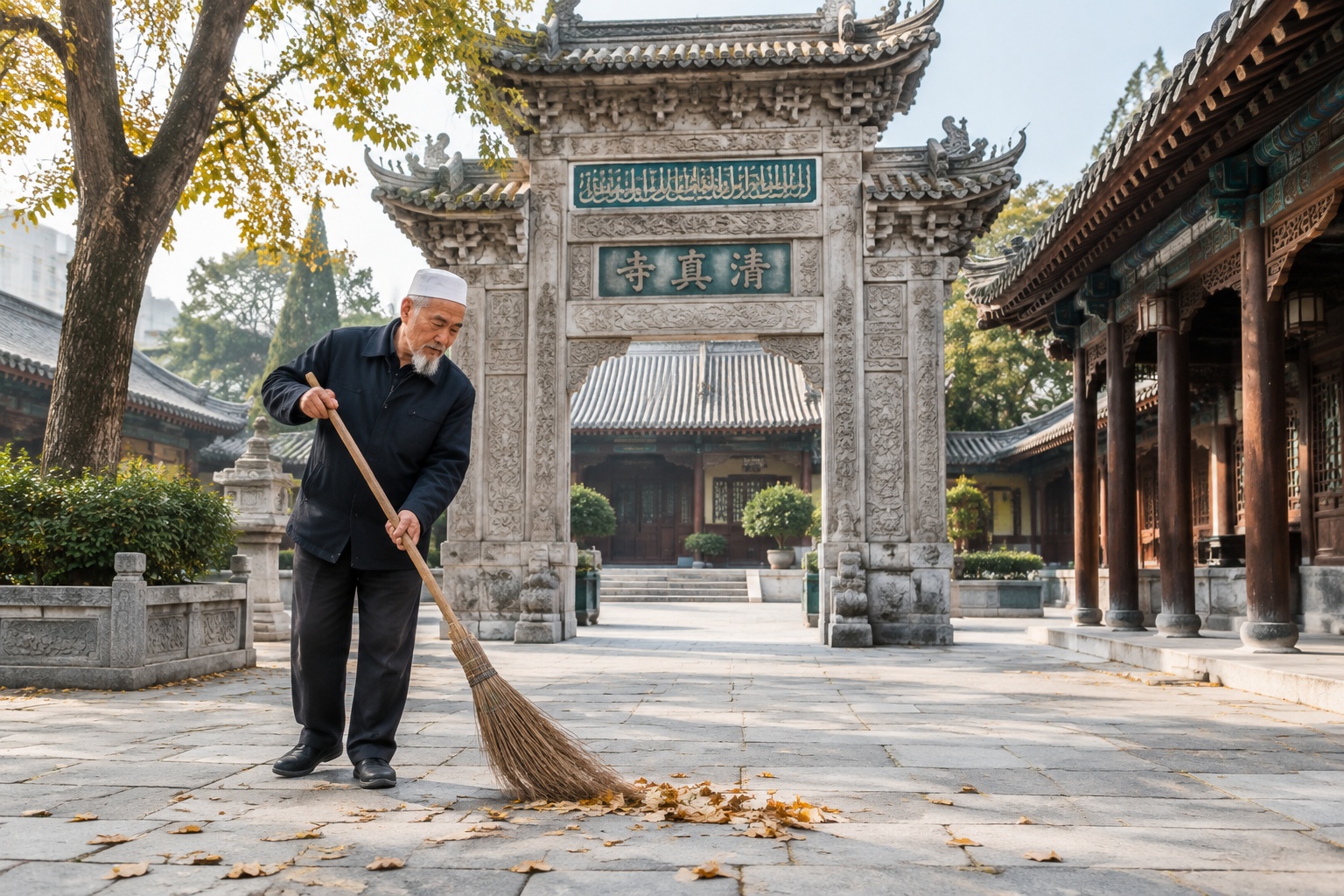
Nine hundred kilometers away in Xi’an, on the same day and well before sunrise, morning prayer has already finished at the Great Mosque on Huajue Lane. The old man sweeping the courtyard speaks in the local Xi’an dialect. Just past him stands a stone archway carved with Arabic calligraphy and Chinese characters; beyond it, a Ming-dynasty courtyard with flying eaves and timber corridors. It looks like a scholar’s garden. In many ways, it is.
For a lot of readers outside China, this does not match the picture they carry — a country run by an atheist party, where religion is something that happens elsewhere, or quietly, or not at all. Walk any Chinese city at street level, though, and the picture starts to crack.
How many religious sites are there in China?
According to the State Council Information Office, China has more than 140,000 registered places of worship. They are not all mountain monasteries. Many sit wedged between apartment blocks, office towers and ground-floor shops. A prayer meeting room on the top floor of a shopping mall. A Buddhist temple that has occupied the same narrow alley for two hundred years.
Buddhism, Taoism, Islam and Christianity: a short map
Buddhism arrived roughly two thousand years ago along the Silk Road, and by the Tang and Song dynasties had been reshaped by Chinese society. Chan and Pure Land became its most distinctly Chinese branches. Today, places like Lingyin Temple in Hangzhou or Jade Buddha Temple in Shanghai are both houses of worship and weekend destinations — a dual identity that regularly confuses foreign visitors.
Taoism is China’s only homegrown institutional religion. Its temples sit in hills and neighborhoods alike, and daily practice — incense, tai chi, temple fair days — is woven into local calendars and traditional medicine.
Islam entered China in the 7th century via maritime trade routes and overland caravans. The Muslim population is estimated at 20 to 25 million, including Hui, Uyghur, Kazakh and other ethnic groups. Mosques in Xi’an, Quanzhou and Guangzhou are centuries old, and many were built as Chinese courtyards — which tends to surprise first-time foreign visitors.
Christianity includes both Catholic and Protestant communities, both of which expanded notably after the 16th century and again in the 19th. Churches like St. Ignatius in Shanghai, Xishiku in Beijing, or St. Paul’s in Nanjing are now part of the ordinary weekday rhythm of their neighborhoods.
How faith fits into an ordinary Chinese week
The more useful question is not how many sites exist, but how belief sits inside a normal week.
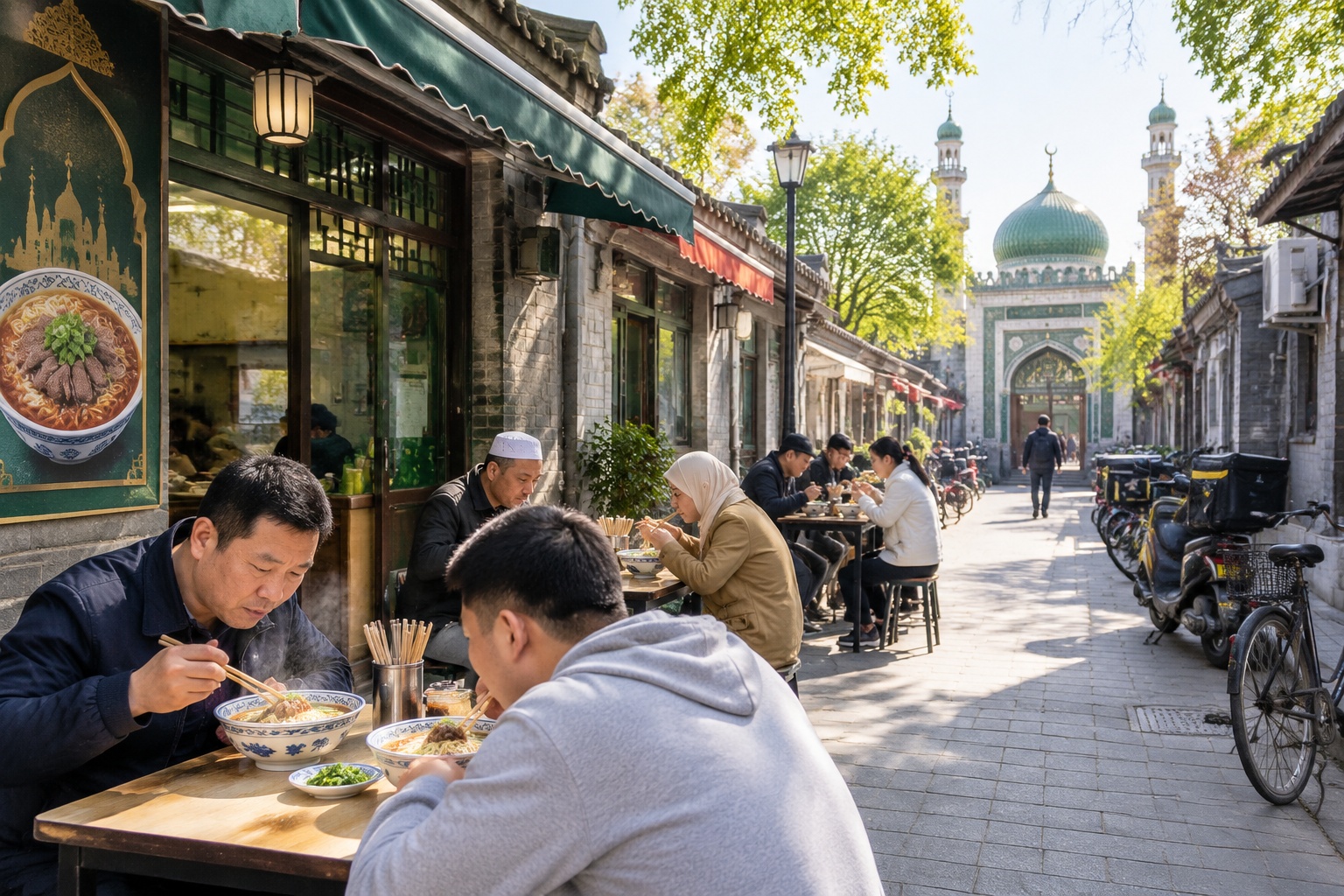
Friday lunchtime in Beijing’s Niujie, the historic Hui district. The lanes around the mosque fill up: bowls of beef noodles, lamb buns, tea in paper cups. Men drift back for afternoon prayer. Next door are a primary school and a neighborhood clinic. People arrive a little early, eat nearby, and go back to work.
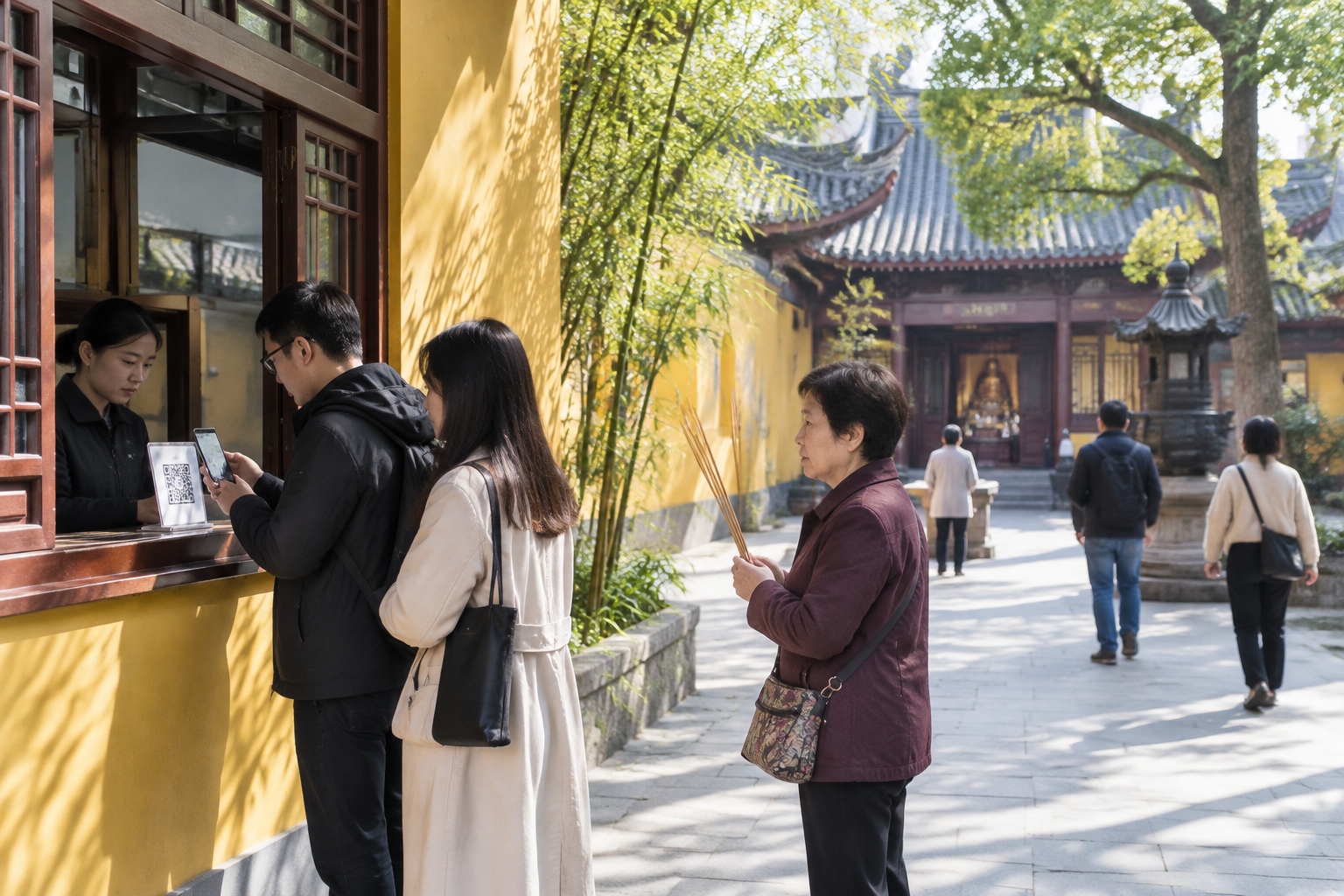
On the first day of a lunar month in Hangzhou or Shanghai, the line at Lingyin Temple or Jade Buddha Temple forms before dawn. Young office workers scan a QR code for their incense-and-flower ticket. Some people come just to walk around, drink tea in the temple courtyard, take photographs. Others come with something specific on their minds. Both are welcome.
At Christmas, Protestant churches in Shenzhen or Chengdu fill up — often with a majority of non-believers drawn by the music and atmosphere, the way you might go to a concert. On other Sundays the same church might hold sixty people at evening service.
How to balance a site’s devotional role with its tourism role is a running local conversation. The bigger, quieter fact is that for most believers, faith is simply one part of an ordinary week, threaded into the schedules of office workers, retirees and small shop owners.
The ‘atheist China’ cliché, and why it misleads
A few things are worth saying plainly.
The word ‘atheist’ gets used to define China, but the more accurate sentence is: a secular state whose constitution guarantees freedom of religious belief. Places of worship are in theory required to register, and religious organizations largely operate inside that registered framework. Unregistered activity is treated as illegal — a rule many countries share, though how it is applied and where its edges fall is a subject of ongoing international discussion.
Another observation: Chinese religious life is plural, overlapping and undramatic. In one family, a grandmother lights incense on the first and fifteenth of the lunar month, a father who would never call himself religious lives by Confucian habits, and a daughter is a Christian. Foreign visitors often find this impossible, because they are used to thinking of religious identity as a set of mutually exclusive labels.
If you want to see it yourself, where to go
Some places where you can watch ordinary religious life rather than a performance:
- St. Ignatius Cathedral, Xujiahui, Shanghai — Sunday morning Mass; arrive early.
- Great Mosque on Huajue Lane, Xi’an — early morning or late afternoon; dress modestly.
- Niujie Mosque, Beijing — around Friday noon; the surrounding snack street is worth an hour on its own.
- Lingyin Temple, Hangzhou — get there before 7 a.m. and you will miss the crowds.
- Qingjing Mosque, Quanzhou — one of the oldest surviving mosques in China, part of a UNESCO World Heritage listing.
A few simple courtesies: ask before photographing people mid-prayer. Dress conservatively inside a mosque. Inside a Buddhist temple, don’t pose with your back to a Buddha statue for a selfie. These are the same manners you would use anywhere else in China.
Why this matters more than the numbers
Churches and mosques exist in China not because they were recently ‘allowed back.’ They have been there all along — from the first mosques built by Arab traders in the 7th century to urban churches raised in the 20th. Religious space is part of the texture of Chinese cities. You can hear it next to a breakfast stall in Xi’an, feel it on a Friday afternoon in Niujie, and see it in the line outside a church on Christmas Eve. The numbers do not need to say anything dramatic. They just need to be told accurately.
Start the discussion at forum.chinacomes.com