
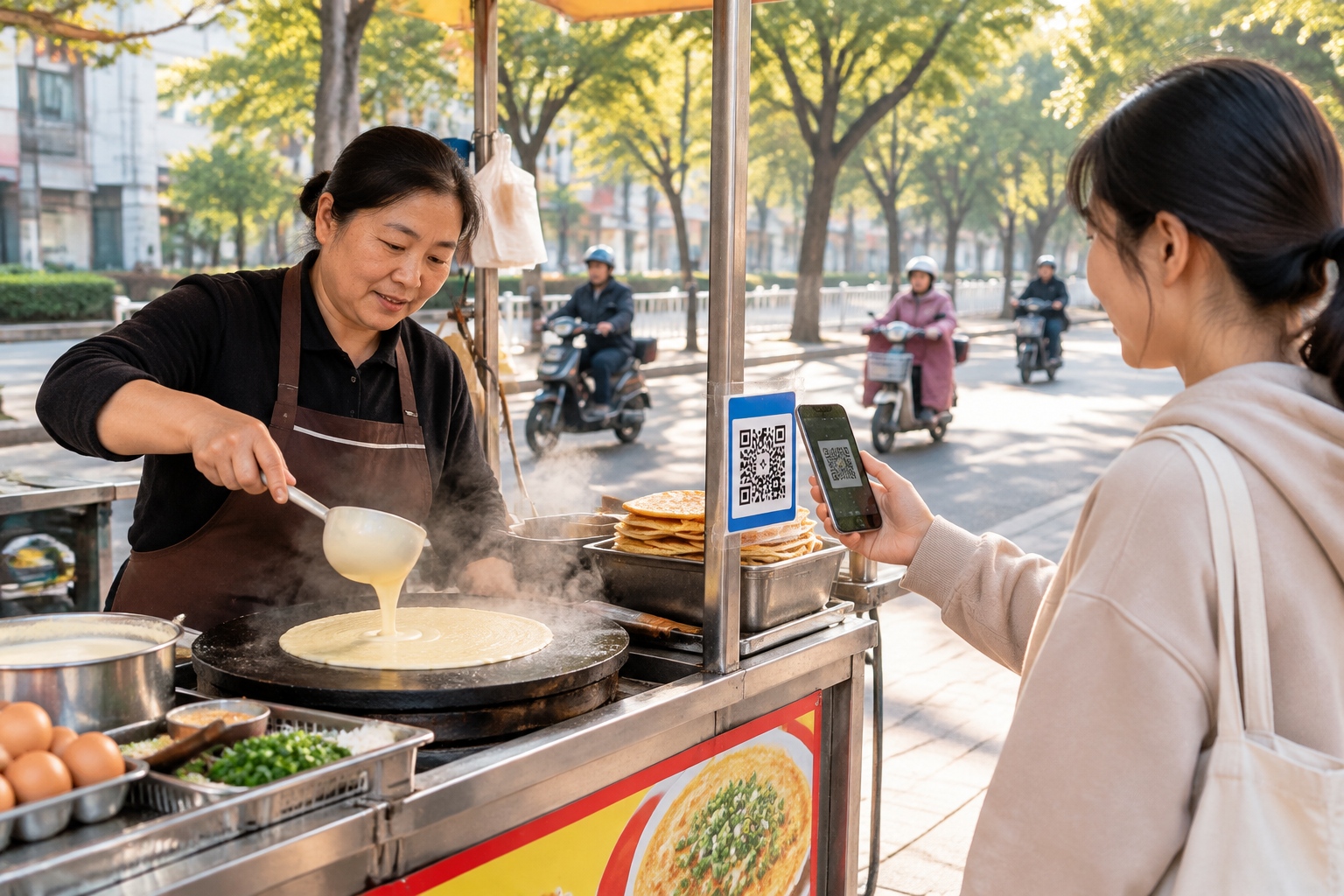

The Setup: Thirty Days Without Paper Money
For the first three days, I carried a folded 100-yuan note in my back pocket. By day four, I forgot it was there. By day seven, it had gone through the wash and come out as pulp.
I had set the rules on March 1st: for thirty days, no physical banknotes or coins. Everything — groceries, subway fare, coffee, a friend’s birthday gift, even temple donations — would go through my phone. WeChat Pay and Alipay, China’s two dominant mobile payment apps, would be my only wallets. If a place didn’t accept mobile payment, I would have to find a workaround or go without.
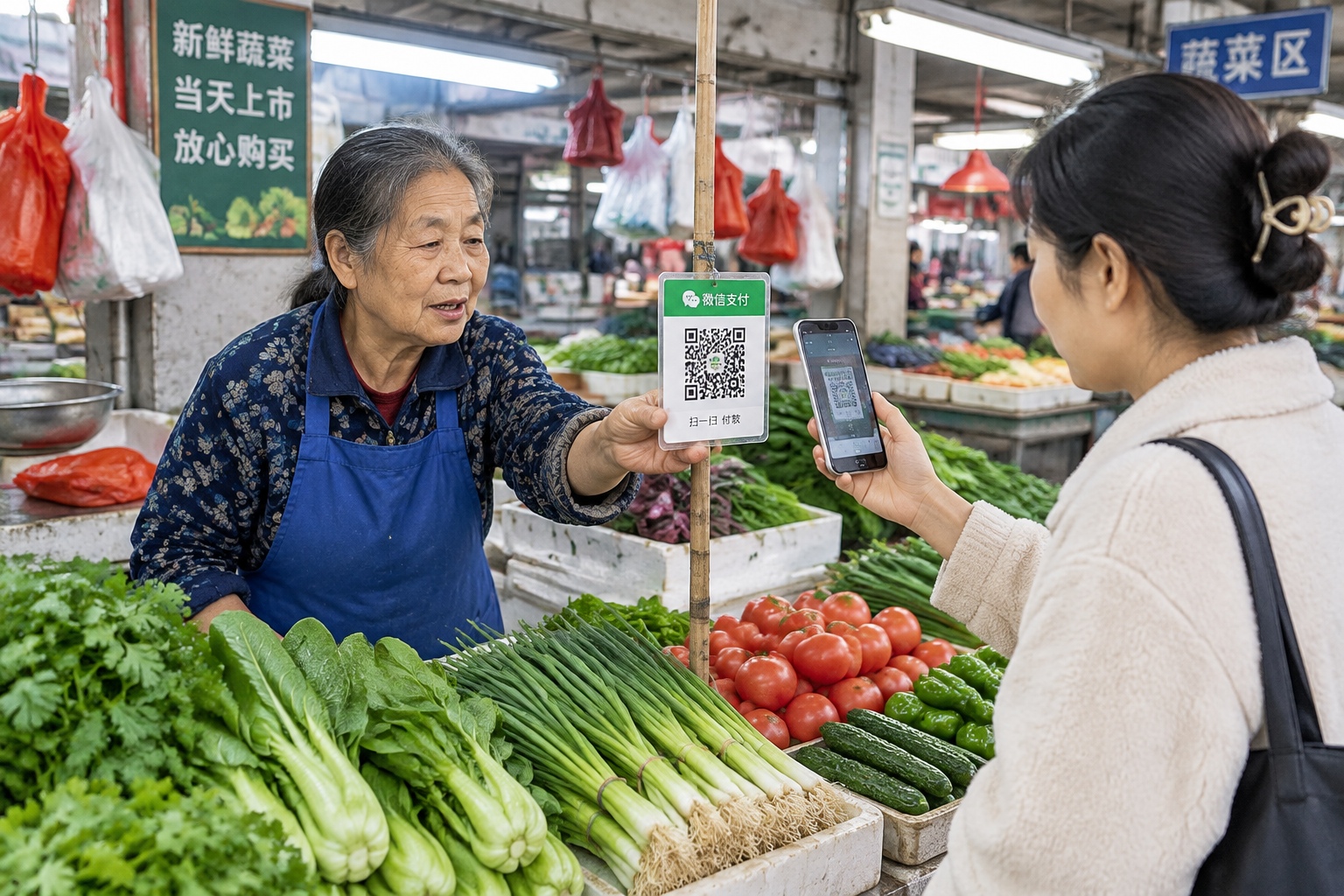
This is not a novelty here. Mobile payment penetration in China is above 85%. A 76-year-old vegetable seller in the wet market has a QR code taped to her pole. A street guitarist has one clipped to his case. But knowing the statistics and living inside the system are different things. I wanted to feel where it was smooth — and where it scraped.
Week One: The Disappearance of Friction
The first surprise was not the convenience. It was the silence.
In a cash economy, paying creates a small social moment: you hand something over, someone makes change, there’s eye contact, a brief “thanks.” In China’s mobile payment world, most transactions are nearly invisible. You hold up your phone, a beep sounds, you walk away. The vendor doesn’t look up. It’s transactional in the most literal sense.
At a noodle shop near my apartment, I watched an elderly man pay with his face — literally. He stared into a small tablet on the counter, and a green checkmark appeared with a chime. He was gone before the noodles hit the water.
By day five, I had stopped thinking about payment at all. That, I would learn, was both the luxury and the trap.
The First Wall
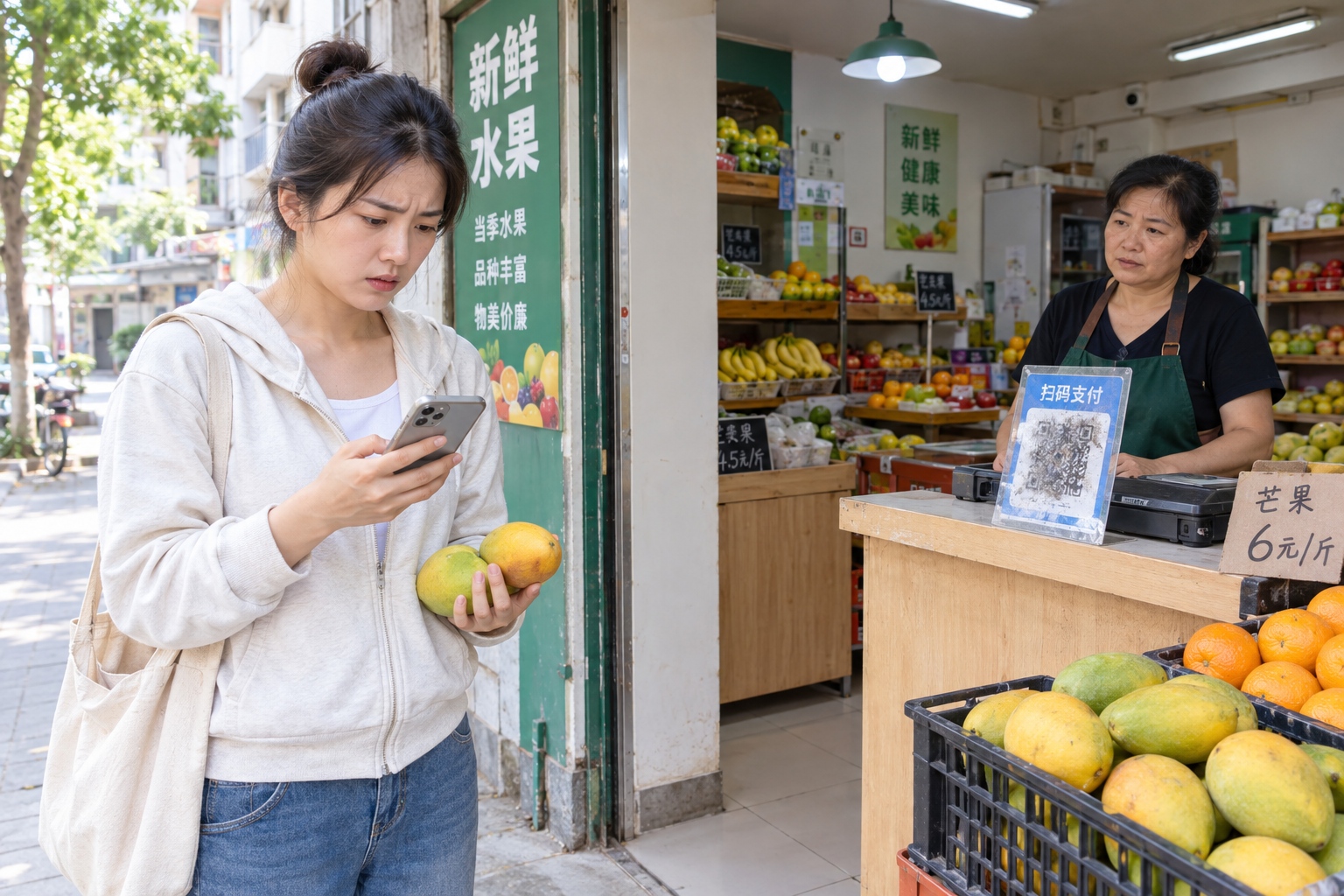
On day nine, I hit my first real obstacle. I was visiting a retired teacher in a residential compound on the city’s outskirts and wanted to bring her fruit. The fruit shop had a QR code, but it was broken — the laminated sign was smeared, and the owner, a middle-aged man in an apron, shrugged. “Cash only today. My code’s frozen.”
I had no cash. My phone was at 12% battery. I stood there holding two mangoes, genuinely unsure what to do.
I ended up walking to a bank ATM two blocks away, withdrawing 100 yuan, paying a 2-yuan service fee for using an overseas card, walking back, and buying the mangoes. Total time: twenty-three minutes. Ten of those were spent staring at my phone, trying to figure out if there was an app I was missing. There wasn’t.
The lesson: China’s cashless system is staggeringly comprehensive, but it’s not seamless. When it breaks — a frozen code, a dead battery, a network outage — you feel the absence of cash like a missing tooth. You keep reaching for it, and there’s just a gap.
How My Brain Rewired Around Money
Around day fifteen, I noticed something had shifted in how I spent.
Cash has physical weight. You open your wallet, you see the stack thin. There is a small, tactile grief watching a 100-yuan note become two 50s become a 20 and some coins. That grief — mild, constant — keeps you honest.
With mobile payment, that grief disappears. The gesture is identical whether you’re spending 3 yuan or 300. You tap. You go. I found myself buying small things — a drink here, a snack there — without the tiny hesitation I normally felt. By the end of the month, I had spent roughly 15% more on incidental purchases than the previous month. Not catastrophic, but noticeable.
The flip side: I tracked every transaction with a precision I never managed with cash. WeChat and Alipay generate automatic spending reports. I could see exactly how much went to food, transport, gifts, impulse buys. In a cash month, that data vanished. Now I had a complete map of my spending. Uncomfortable and useful in equal measure.

The Power Bank Became My Wallet
Nobody tells you that living cashless means your entire financial life depends on a battery.
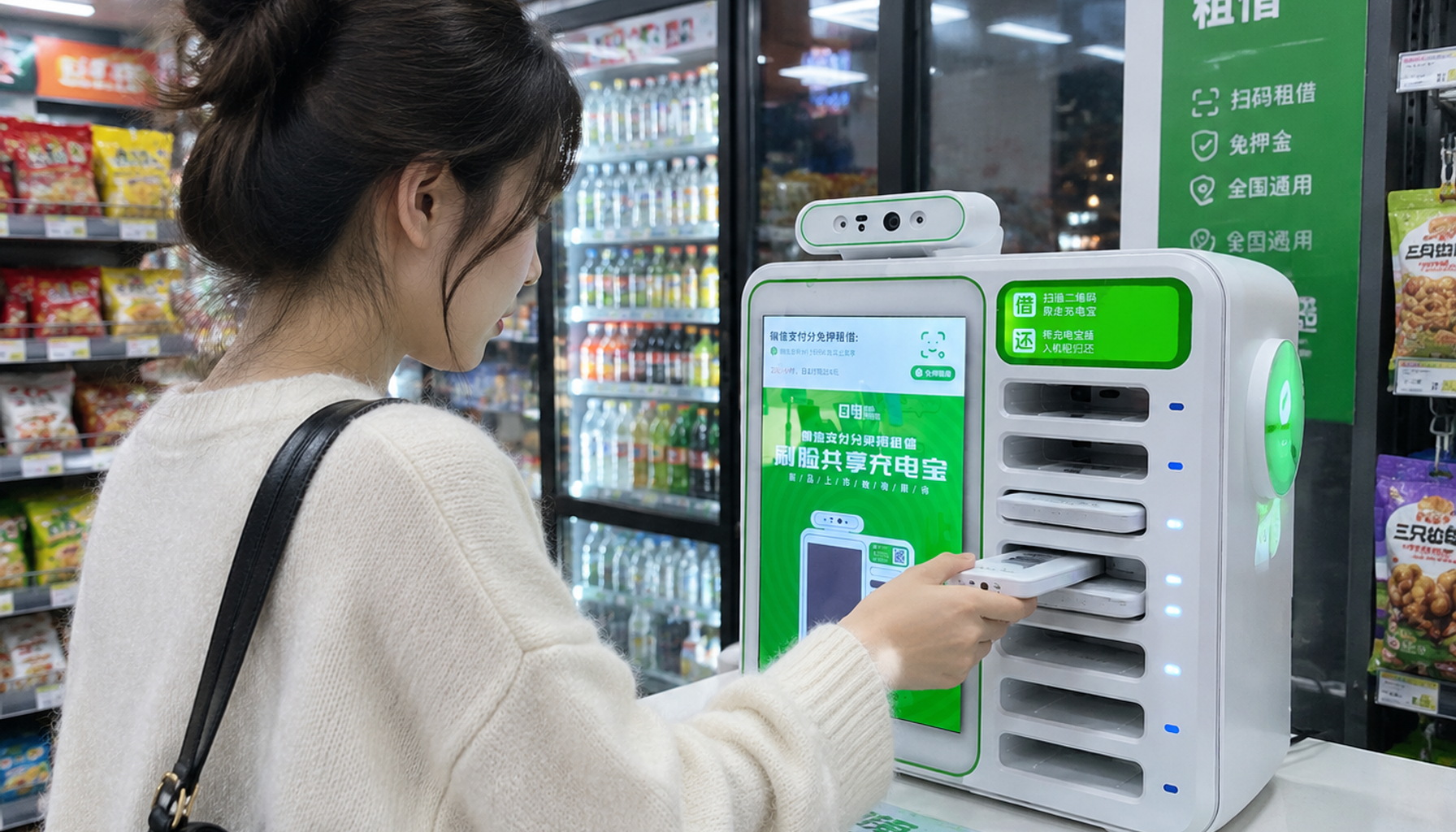
By week three, I had developed a low-grade anxiety about phone charge. Anything below 40% felt like walking around with a torn wallet. I bought a second power bank. I knew the location of every convenience store in my neighborhood that rented portable batteries — and there are many. Shared power bank kiosks are everywhere in China, in restaurants, bars, subway stations. In a strange way, they are the infrastructure of financial access.
On day twenty-two, my phone died at a night market across town. No cash, no battery, no way home except to walk forty minutes to a station that accepted physical tickets. I ended up sitting in a convenience store, charging from a wall outlet, eating a bag of chips I couldn’t pay for until the phone came back to life. The cashier was patient. She had seen this before.
Who Gets Left Behind
This is the part that doesn’t fit neatly into a story about progress.
China’s mobile payment revolution has been remarkably inclusive by global standards. Even the smallest street vendors accept QR codes. But it is not universal.
I met a man in his late seventies at a park. He practiced tai chi, then sat and read a newspaper. He had a smartphone — his daughter gave him one — but he didn’t use mobile payment. “Too complicated,” he said. “I don’t trust it.” He carried a small cloth wallet with cash. Most places accepted it, but some didn’t. He had learned which shops were friendly to cash. His world had narrowed, not dramatically, but enough that I noticed.
Foreign visitors face a different version of the same problem. Setting up WeChat Pay or Alipay with an overseas card used to be a headache. Both platforms now support international cards, but the experience still isn’t as smooth as it is for locals. Tourists find themselves in a strange limbo: surrounded by a payment system that works for everyone else, but not quite for them.
And when the system goes down — as it did during a regional network outage in 2022 — people find themselves unable to pay for anything, not because they lack money, but because their phones can’t reach the server. Digital convenience is also digital dependency.
What a Month Without Cash Actually Taught Me
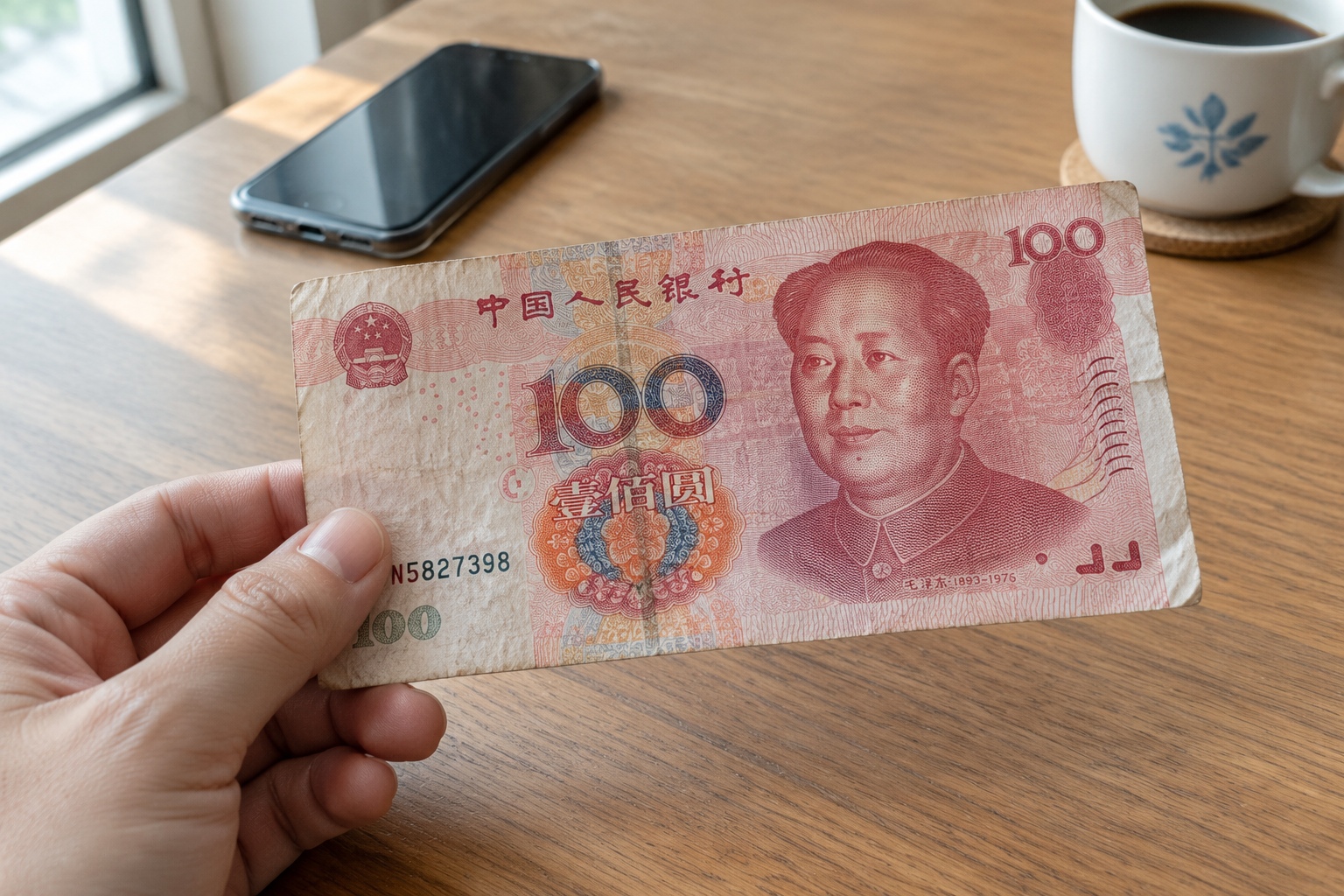
On day thirty, I pulled the crumpled remains of that original 100-yuan note from my jacket. Washed, dried, wrinkled beyond recognition. I took it to a bank, and the teller exchanged it without a word.
I still have that note. It’s in my desk drawer — not as a backup, but as a memory. Living without cash for a month didn’t make me want to abandon it. It made me understand why China went all-in on mobile payment so quickly, and why cash hasn’t fully disappeared.
The system works, mostly. It works because the infrastructure is dense, the apps are simple, and the social norm is overwhelming. When everyone around you pays with a phone, you pay with a phone. When a vendor doesn’t accept cash, you adapt. The friction is low enough that you stop noticing it.
But the friction hasn’t disappeared. It has just moved. It lives in battery levels, network connections, app glitches, the small anxiety of a phone that won’t turn on. It lives in the people who can’t or won’t adapt — the old man with his cloth wallet, the tourist fumbling with a foreign card. The future arrived early in China, and for most people, it’s better. But “most people” is not “everyone.”
On the morning of day thirty-one, I went back to the breakfast stall. The woman behind the griddle recognized me. I held up my phone. She nodded. I scanned. Eleven seconds. No words exchanged. Just a beep, a green checkmark, and the familiar hiss of batter hitting a hot iron.
I walked away eating my jianbing and didn’t think about money once. That, I think, is the real story of China’s cashless society. Payment didn’t become easier. It became invisible.
Start the discussion at forum.chinacomes.com