

A Ship That Has to Climb a Wall
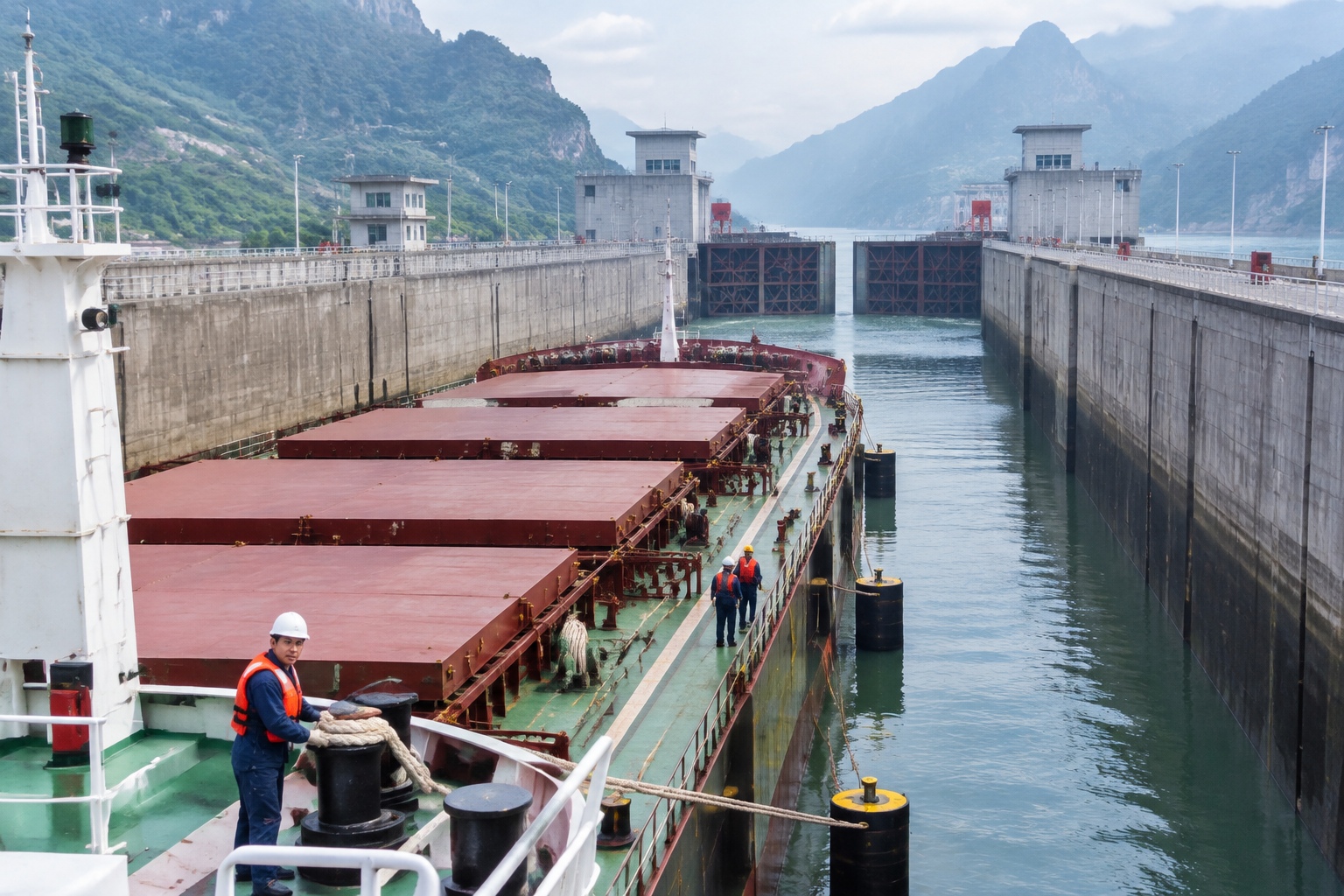
At Sandouping in Yichang, Hubei, the Yangtze River meets a concrete wall 185 meters high. On one side, the reservoir stretches upstream toward Chongqing. On the other, the river drops toward the plains of Hubei and eventually Shanghai. For a captain moving iron ore, cars or containers, the dam is not a scenic stop. It is a 113-meter vertical problem.
Every day, fleets of up to 10,000 tons solve that problem without going over the dam. They enter a lock, wait as water lifts them, and repeat the process four more times. It is less like sailing and more like climbing a staircase made of water.
Why the Three Gorges Dam Needs a Ship Lock
The Yangtze is China’s main east-west freight corridor. Chongqing, a municipality of more than 30 million people, sits upstream. Wuhan, Nanjing and Shanghai sit downstream. Factories in the upper basin ship cars, machinery and electronics downriver. Coal, ore, building materials and consumer goods move upriver. Before the dam, this route was limited by shallow water, rapids and seasonal floods. The dam changed the river into a deep reservoir for hundreds of kilometers, allowing larger ships to reach Chongqing.
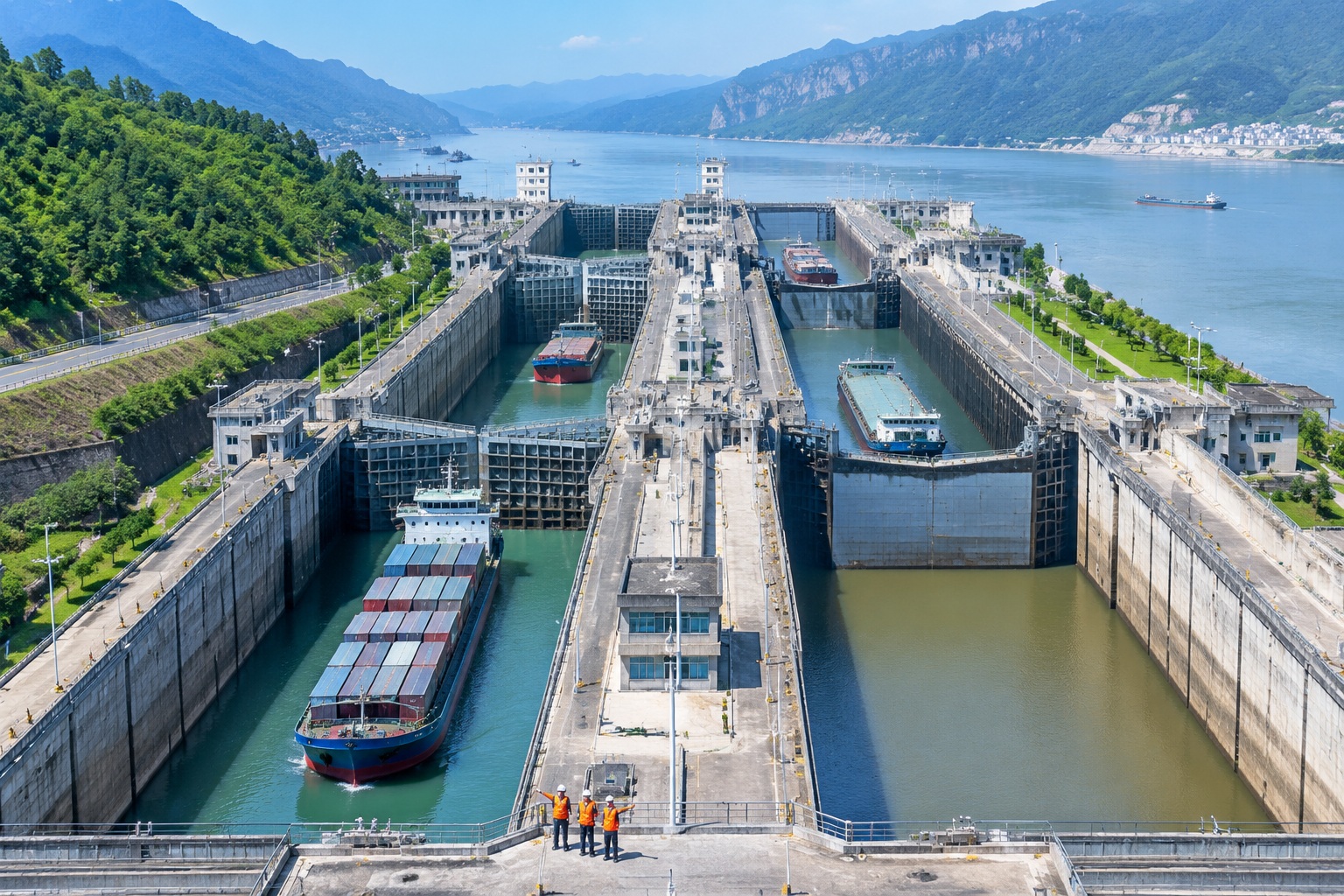
The dam itself is 2,309 meters long and 185 meters high, with 22.5 gigawatts of installed hydropower capacity—the largest in the world. But a dam also creates a height difference. At normal operating levels, the water behind the Three Gorges Dam can be more than 100 meters higher than the water below. A ship cannot simply sail through. It must be raised or lowered. The solution is the Three Gorges ship lock, a twin five-step system on the north bank, plus a vertical ship lift for smaller vessels.
The Yangtze is already the world’s busiest inland waterway by cargo volume. Its trunk line handles more than 3 billion metric tons of port cargo a year. The Three Gorges section is the hinge between the upstream manufacturing cities and the downstream ports. If that hinge sticks, the whole system feels it.
Five Chambers, 113 Meters, One Long Staircase
The ship lock is not one giant box. It is two parallel lanes, each with five chambers in a row. Each chamber is 280 meters long, 34 meters wide and has a minimum water depth of 5 meters. That is long enough to hold a 10,000-ton barge fleet or several smaller vessels at once. The total rise or fall across the five steps is up to 113 meters—roughly the height of a 35-story building.
A 10,000-ton fleet on the Yangtze is often a pushed convoy: a powerful tug pushing several barges, with the total cargo capacity reaching 10,000 tons. These are not ocean liners. They are floating freight trains, and the lock chamber is their track.
When a ship goes upstream, it enters the lowest chamber. The downstream gate closes behind it. Water flows in through culverts, raising the ship about 20 to 22 meters. The gate in front opens, and the ship moves into the next chamber. The process repeats. After five chambers, the ship is at reservoir level. Going downstream, the sequence reverses: the ship enters the top chamber, water drains out, and it descends step by step.
The entire lockage takes about three to four hours, depending on how many ships are sharing the chamber and how quickly the water valves operate. It is not a dramatic roller coaster. It is a slow, controlled, highly choreographed operation. The lock runs 24 hours a day, with scheduled maintenance windows that are planned around traffic.
What It Feels Like Inside the Lock
From the deck of a bulk carrier, the lock chamber looks like a concrete canyon. Crew members secure the vessel to floating bollards—mooring points built into the lock walls that slide up and down with the water. If the ship were tied to a fixed point, it would be left hanging as the water rises. The floating bollards keep the lines tight and the ship stable.
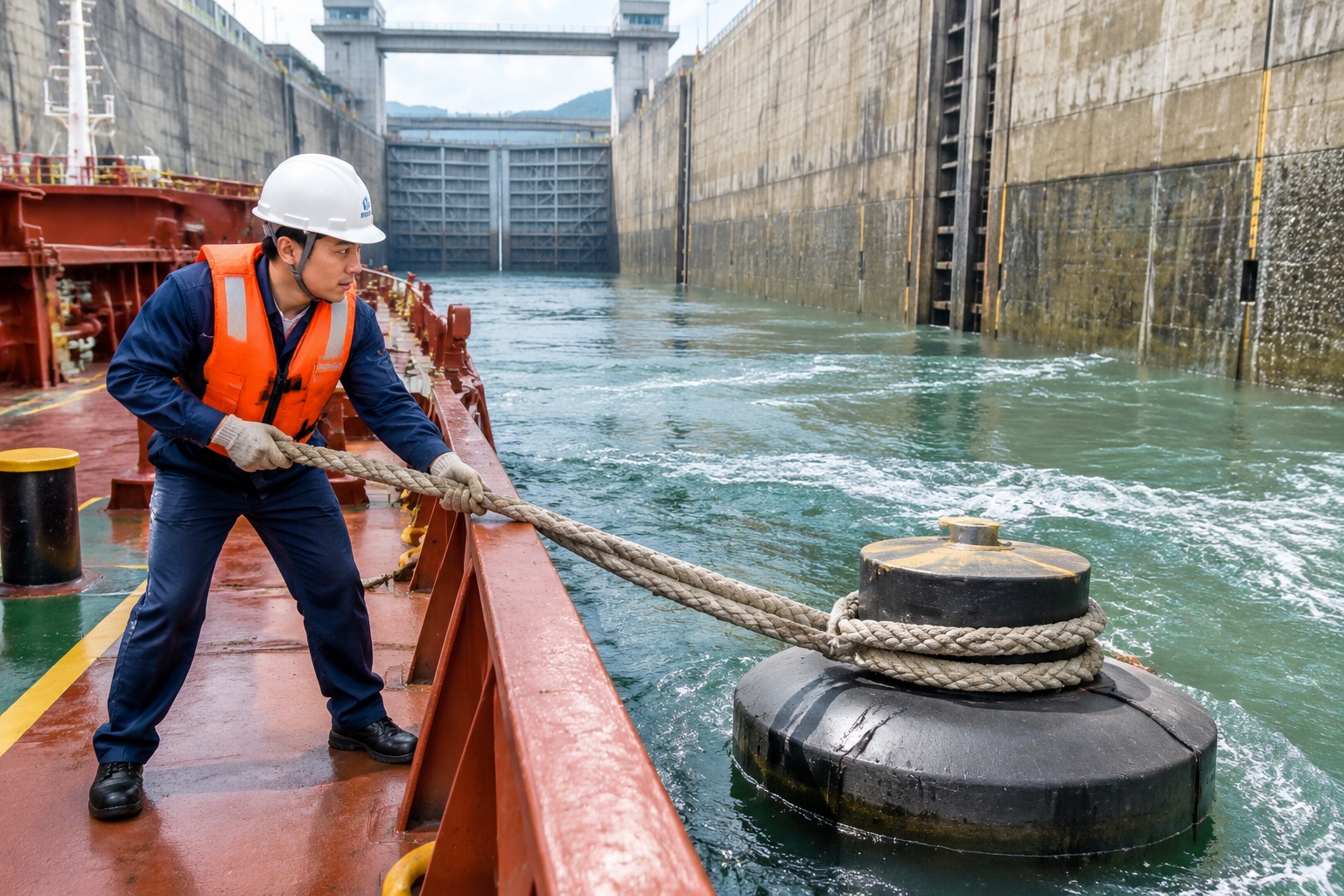
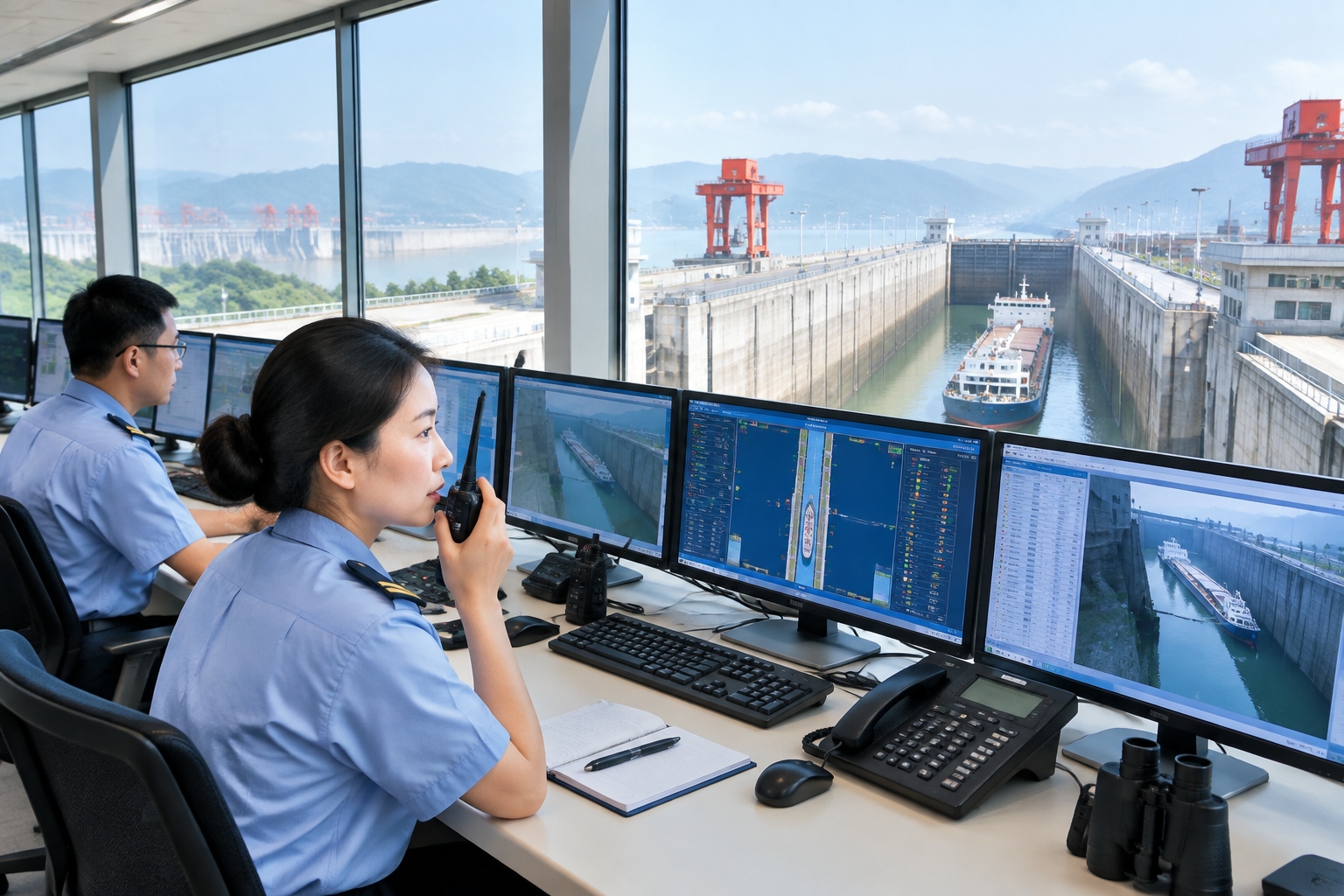
Water enters through openings in the floor and walls, not as a waterfall but as a powerful, steady surge. The surface can swirl and boil. Deckhands watch the lines. In the control room, operators track water levels, gate positions and ship positions on screens. They talk to captains by radio. A lockage is a team operation between the crew, the lock staff and the traffic control system.
A Water Elevator for Smaller Ships
For smaller ships, there is a faster option: the Three Gorges ship lift. It can lift a 3,000-ton vessel 113 meters in about 40 minutes. The ship enters a chamber, the chamber is raised or lowered with counterweights and cables, and the ship exits. It works like a vertical elevator for boats. But the ship lift cannot handle the largest 10,000-ton fleets. Those still use the five-step lock.
The Bottleneck Behind the Engineering Marvel
The Three Gorges ship lock was designed with an annual one-way capacity of about 50 million metric tons, or 100 million tons in both directions. That target was passed in 2011. Since then, cargo volumes have continued to rise. In recent years, the lock has handled more than 150 million metric tons annually, far beyond its original design.
That success has created a familiar problem: congestion. At peak times, ships wait at anchor downstream or upstream for hours, sometimes days, for a lock slot. The wait is managed like a queue at a busy airport. Ships report their position and cargo. Traffic controllers assign lockages. A 10,000-ton fleet carrying urgent goods may still have to wait behind hundreds of other vessels.
The ship lift helps, but it only serves smaller vessels. The biggest ships—the ones that make the Yangtze a true bulk corridor—still depend on the five-step lock. This is why China is studying a new water transport channel at the Three Gorges, including additional lock capacity. The project is in early stages and would take years to build. The goal is not to replace the existing lock but to relieve a choke point that has become a victim of its own success.
Why This Matters Beyond China
Inland water transport is often the cheapest way to move heavy goods over long distances. One 10,000-ton fleet can carry as much as several hundred trucks. On the Yangtze, that math shapes the cost of coal, steel, cars and construction materials across central and western China. When the lock runs smoothly, factories upstream are closer to global markets. When it backs up, inventories rise and delivery times stretch.
The Three Gorges ship lock is therefore more than an engineering wonder. It is a piece of economic infrastructure that ordinary people feel indirectly: in the price of goods, the pace of construction and the competitiveness of inland cities. For overseas readers, it offers a useful way to understand how China moves things. The country’s ports and high-speed rail get more attention, but the quiet workhorses are often on the water.
Looking Upstream
A 10,000-ton fleet does not fly over the Three Gorges Dam. It climbs. It enters a concrete chamber, waits while the water lifts it 22 meters, moves forward, and does it again. Four more times. The journey is slow, mechanical and remarkably ordinary to the people who operate it every day.
That ordinariness is the real engineering achievement. The dam is a global landmark. The lock is a working tool. And on the Yangtze, the working tool is what keeps goods—and the economy—moving upstream.
Start the discussion at forum.chinacomes.com