
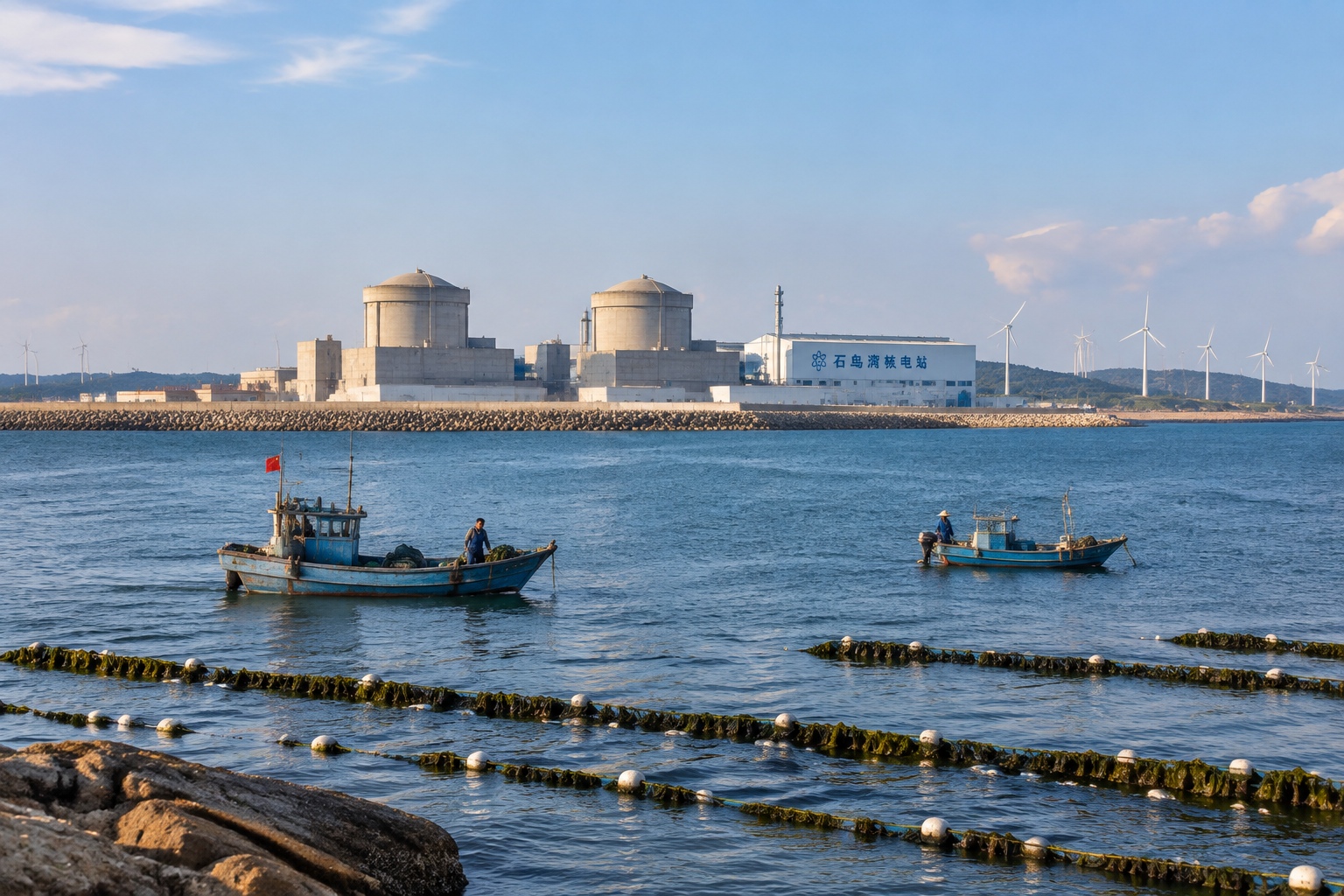

Drive east from Rongcheng, at the tip of the Shandong peninsula, and the coast road passes kelp rafts, a handful of fishing boats and a line of wind turbines. Then, on the left, low concrete buildings appear — no giant white dome, no cathedral silhouette. Inside steel vessels in those buildings, a nuclear reaction has been running on a commercial schedule since December 2023.
This is Shidaowan, home to the HTR-PM, a high-temperature gas-cooled reactor pebble-bed module. Two small reactors, each 250 megawatts thermal, drive one 210-megawatt steam turbine. It is the first fourth-generation nuclear plant in the world to operate commercially: it sells power, runs like an ordinary utility asset, and is no longer counted as an experiment. Other countries have Gen IV prototypes. None of them is selling electricity yet.
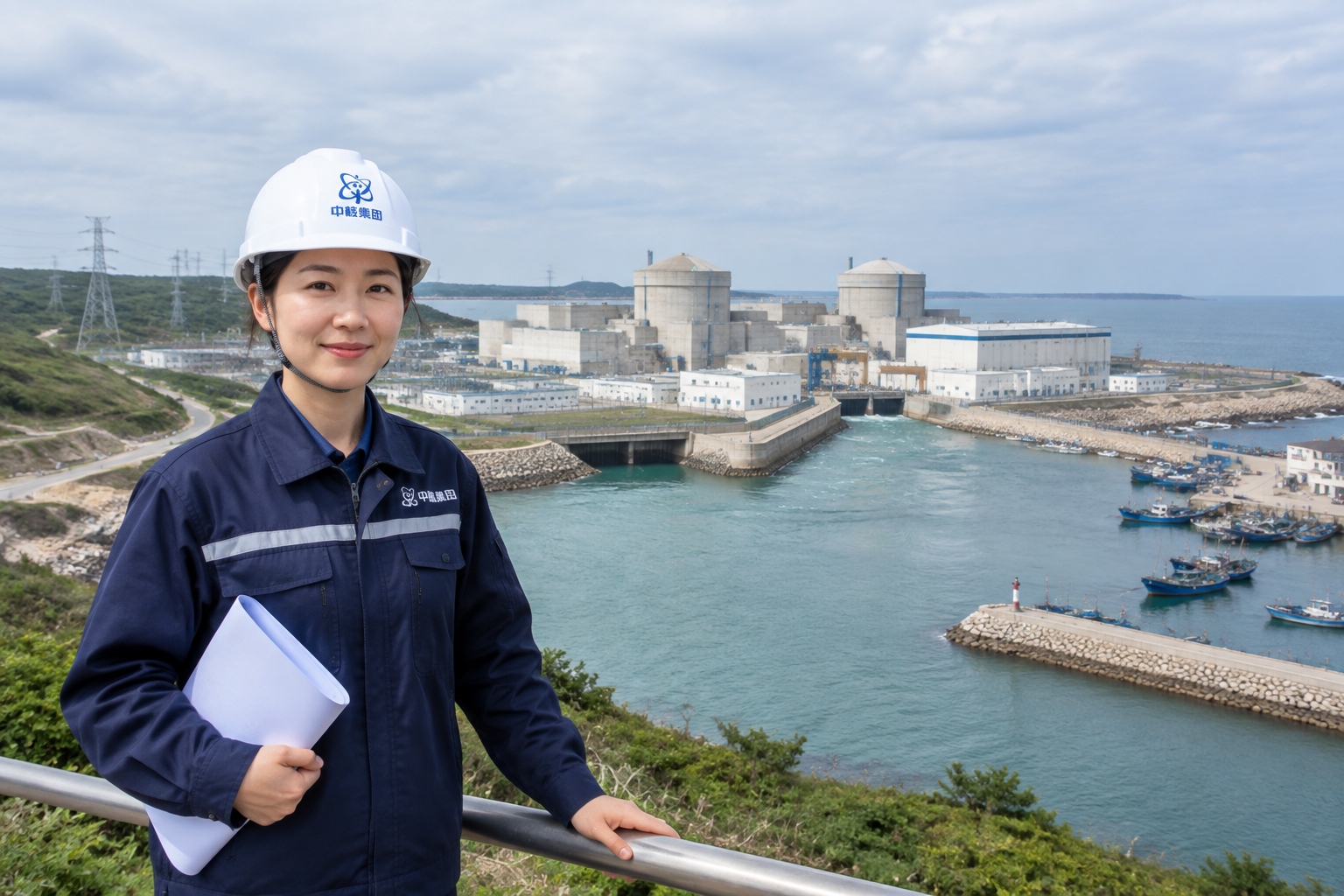
What “fourth generation” actually means
The label comes from the Generation IV International Forum, a group of governments that agreed on what the next era of nuclear power should look like: better use of fuel, less long-lived waste, safety that does not depend on pumps and human decisions, and stronger resistance to the spread of weapons material.
Almost every reactor running today is a light-water reactor — the kind that boils or pressurises ordinary water, uses uranium fuel rods, and needs active cooling to stay safe. Designs like China’s Hualong One or the US AP1000 are refined versions of that same idea, which is why they are called Generation III or III+.
HTR-PM is a different machine. Its coolant is helium gas, not water. Its moderator is graphite. And its fuel is not a rod but a ball.
The fuel is the safety system
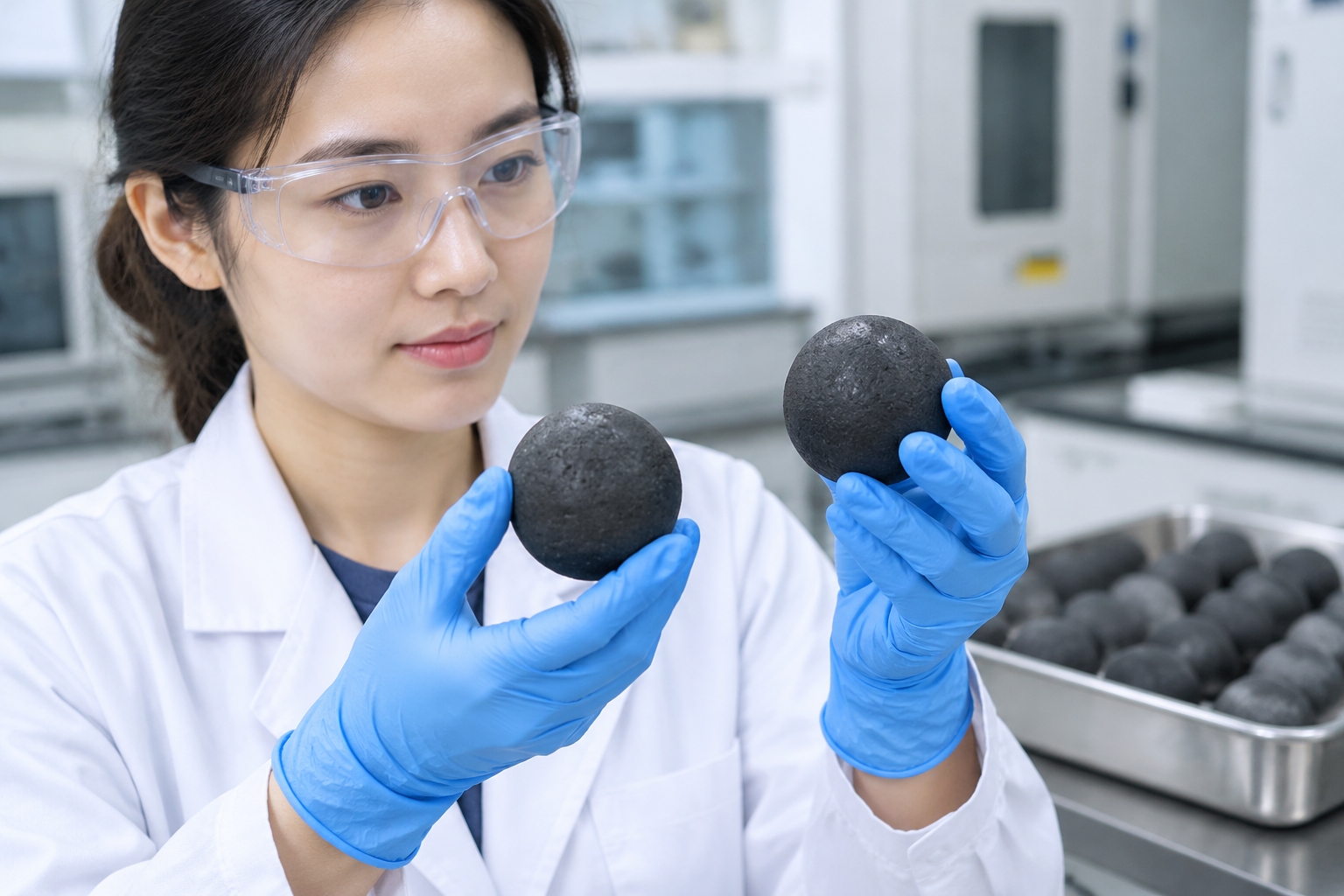
Each fuel element is a graphite sphere about the size of a tennis ball, roughly six centimetres across. Inside sit thousands of tiny uranium kernels — around 12,000 per sphere — each wrapped in layers of carbon and silicon carbide. That coating is known as TRISO, and it is the trick of the whole design. It holds fission products inside at temperatures far above anything the reactor reaches in normal operation, and above what a severe accident could produce.
The spheres are loaded into a core of graphite, and helium is pumped through the gaps between them. The gas enters at about 250°C and leaves at 750°C — hot enough to make steam that a chemical plant, not just a turbine, can use.
Because the core is built so that rising temperature reduces the chain reaction, and because helium and graphite simply cannot melt, the classic nuclear accident — a core that overheats, melts and releases radiation — is designed out rather than managed. If the helium circulators stop, decay heat travels by conduction and radiation into the steel pressure vessel and then into the surrounding concrete. No pumps, no backup diesel generators, no split-second operator decisions.
That matters beyond physics. A reactor whose worst case does not involve a significant off-site release could, in principle, be sited closer to cities and factories than today’s plants — which is exactly where its heat would be useful. It does not mean the risks vanish. Maintenance, fuel handling, cyber security and cost all remain real.
From a university test reactor to the grid
China did not start here. Tsinghua University built a 10-megawatt test unit, HTR-10, that went critical in 2000 and ran for years as a research machine. That gave engineers operating data long before anyone poured concrete at Shidaowan.
Construction of HTR-PM began in December 2012, and like most first-of-a-kind projects it was reworked and delayed along the way. The first module reached criticality in September 2021, the second in November 2021. The plant was connected to the grid in December 2021. After a 168-hour continuous run at full power, it was declared commercially operational in December 2023. Since then, the operator has run tests in which the primary helium circulators are stopped to show that the core settles without intervention.
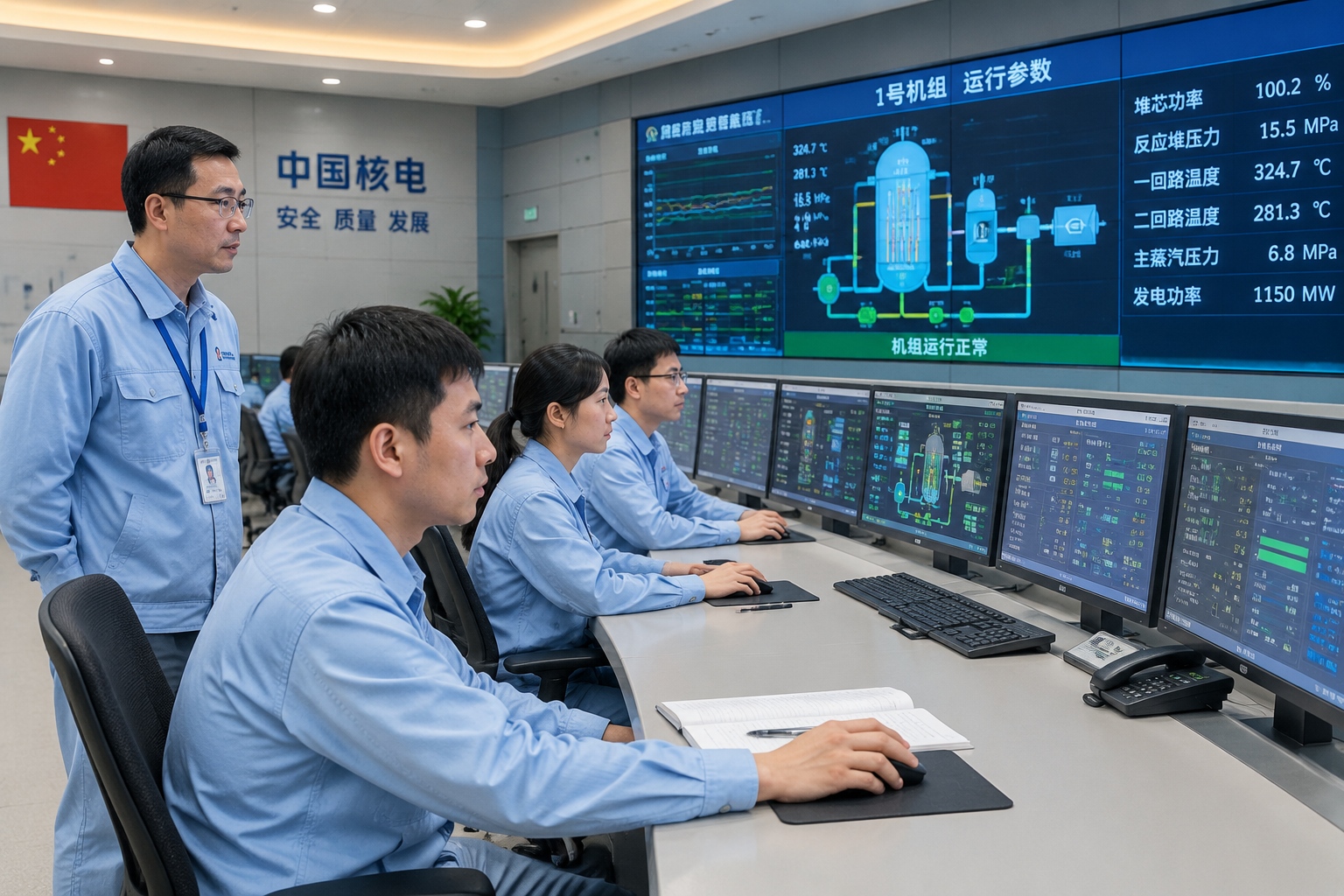
Why it landed on this particular coast
Shidaowan sits in Rongcheng, part of Weihai, on a site that already hosted nuclear construction. That matters more than it sounds. A first-of-a-kind reactor needs somewhere that regulators, grid connections, cooling water, roads able to carry heavy components and an experienced workforce are already in place. Nuclear siting in China, as anywhere, is slow and politically sensitive; building next to an existing plant skips years of argument.
Shandong itself fits the technology. The province is one of China’s industrial engines — steel, chemicals, aluminium, refining — with huge demand for both electricity and process heat. A reactor that can deliver 750°C steam is more interesting to a chemical complex than one that only makes electricity.
The funding model was unusual too. Huaneng, one of the country’s big five state power generators, led the project together with China National Nuclear Corporation and Tsinghua University. That combination — a utility that would run the plant, a nuclear builder, and a university that invented the design — is difficult to assemble quickly anywhere else in the world.
What it means for people who do not work in nuclear
At 210 megawatts, HTR-PM is small. A Hualong One is more than five times larger. Running at a typical capacity factor, it produces roughly 1.6 terawatt-hours a year — on the order of the electricity used by 600,000 Chinese households. That is a city, not a province.
The design’s real promise is heat. High-temperature gas reactors can supply steam for chemicals, desalination and district heating, or drive the thermochemical processes that make hydrogen without fossil fuel. A reactor sited inside an industrial park would replace coal boilers, not just power plants — a bigger emissions win in a country that still burns a great deal of coal to make process heat.
Where the rest of the world stands
The United States has several Gen IV projects moving through licensing: X-energy’s Xe-100, another pebble-bed design chosen for a Dow chemical site in Texas; TerraPower’s Natrium sodium-cooled plant in Wyoming; and Kairos Power’s fluoride-salt-cooled reactors. All are aiming at the late 2020s or the 2030s.
Japan restarted its HTTR test reactor in 2021 and has demonstrated hydrogen production using its heat. Germany built pebble-bed reactors decades ago, including the THTR-300, and shut them down; its nuclear phase-out ended that line of work. South Africa’s PBMR programme was cancelled in 2010. In each case the technology was understood — the money and the political permission were not sustained.
China’s advantage was not one clever idea. It was continuity: a test reactor that ran for years, steady state funding, a regulator willing to license a first-of-a-kind build, and a site that already existed.
The parts that are still hard
Cost is the obvious problem. First-of-a-kind plants are expensive, and HTR-PM is a small unit with two reactor vessels, two fuel-handling systems and a lot of steel for every megawatt. The economics only improve if the design is repeated. The plan is HTR-PM600: six modules driving a single 600-megawatt turbine. Six modules do not cost six times as much, but nobody has done it yet.
Fuel is a bottleneck as well. Making TRISO pebbles at industrial scale, at consistent quality, is a specialised business with few suppliers. Regulation is another. No regulator outside China has licensed a commercial high-temperature gas reactor, so every other country is writing the rules from scratch, which takes years before the first shovel goes in.
And public trust does not travel with the technology. China’s nuclear programme has expanded with relatively little of the public opposition seen in Europe, but siting still requires local consent, and a new design raises new questions that operators have to answer in plain language rather than in engineering terms.
What to watch
The interesting question about Shidaowan is not whether fourth-generation nuclear works. It is whether this design can be built again — cheaply, on schedule, and in numbers. One plant on the Shandong coast has proved the physics and the engineering. The next five would prove the business.
Start the discussion at forum.chinacomes.com