

The envelope on the kitchen table
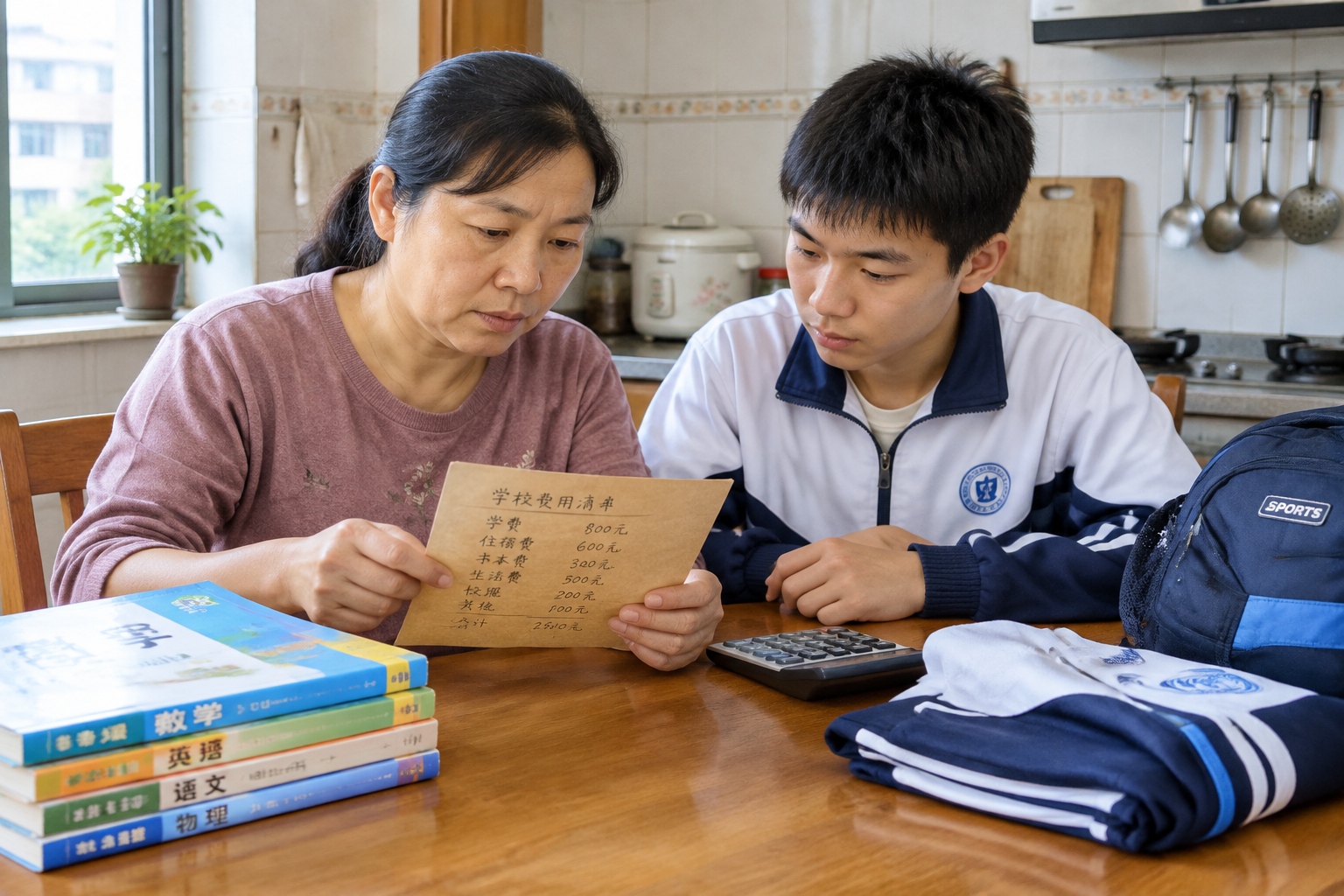
On the last Sunday of August, Wang Li sits at her kitchen table in Zhuzhou, a factory city in Hunan province, and does the arithmetic on the back of an envelope. Her son is starting the second year of junior high. Tuition is zero and textbooks are free — that part of the bill was settled by law years ago. The rest is not.
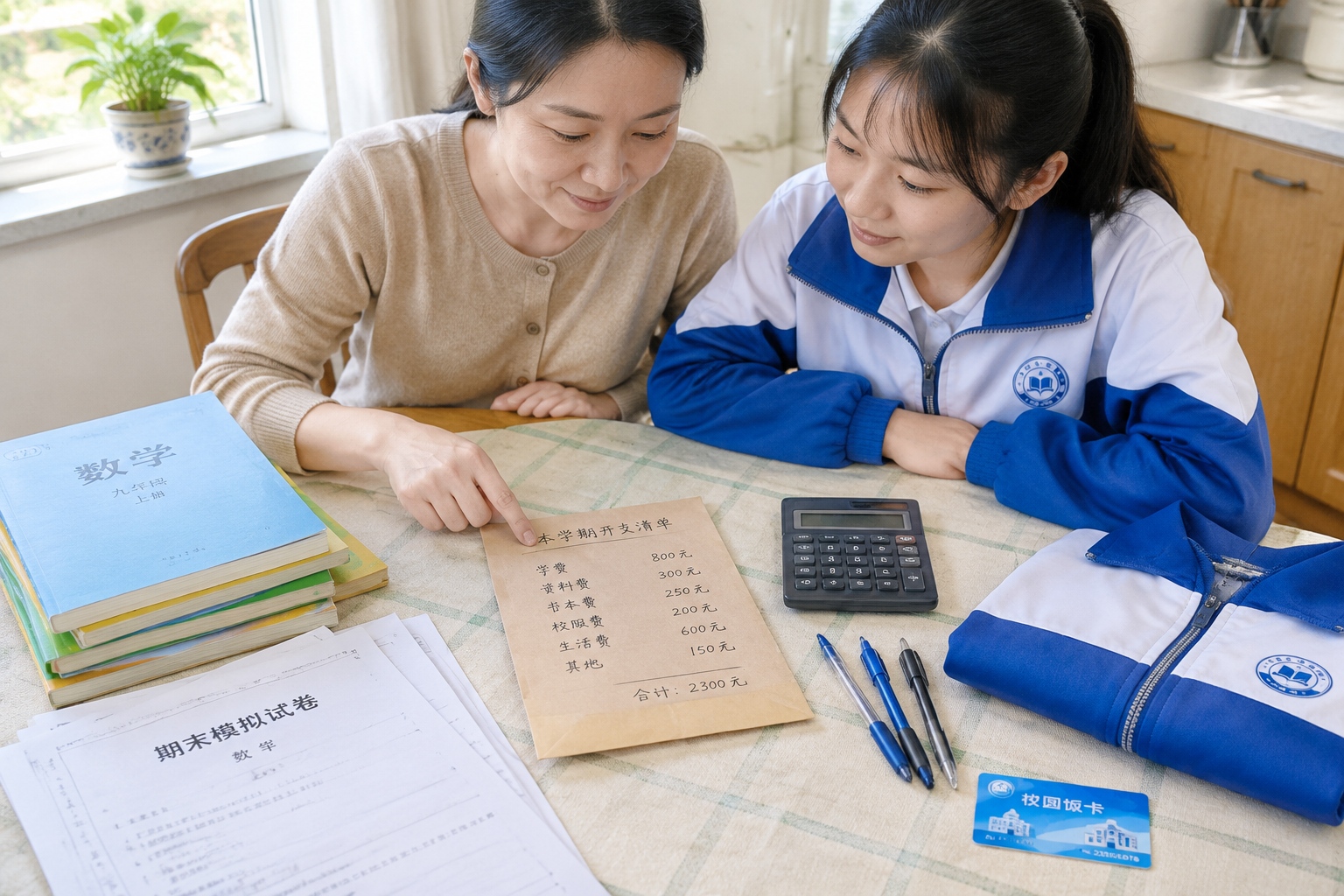
Meals at school: 800 yuan for the term. After-school supervision, which keeps him in class until 5:30 so she can finish her shift: 600 yuan. Workbooks and mock exam papers: about 400. Uniform and shoes: 300. A Saturday English class, held in a converted apartment two blocks away: 1,200 for twelve sessions. The school-run insurance policy that costs 100 yuan and covers almost nothing: 100. The envelope comes to roughly 3,400 yuan — about five weeks of household income, once you count her logistics job and her husband’s ride-hailing shifts.
Wang Li is not a “tiger mother” and does not think of herself as one. She is doing what most parents in her building do. Multiply her envelope by the households around her and you begin to see the scale of the thing: China has about 290 million students in formal education, from kindergarten to doctoral programmes, and the money moving through the system every year comes out of two very different wallets — the state’s and the family’s.
What the state pays for
Start with the public ledger. China’s total spending on education reached about 6.46 trillion yuan (roughly $900 billion) in 2023, according to the Ministry of Education’s annual statistics. Fiscal education spending — the money that comes straight out of government budgets — was about 5 trillion yuan, or 4 percent of GDP.
That 4 percent is worth pausing on. The target was written into a State Council document in 1993. It took nineteen years to reach, and it has been held there most years since 2012. In a country that spent much of the 1980s and 1990s telling villages to fix their own schoolhouses, that is a real shift in what the state considers its job.
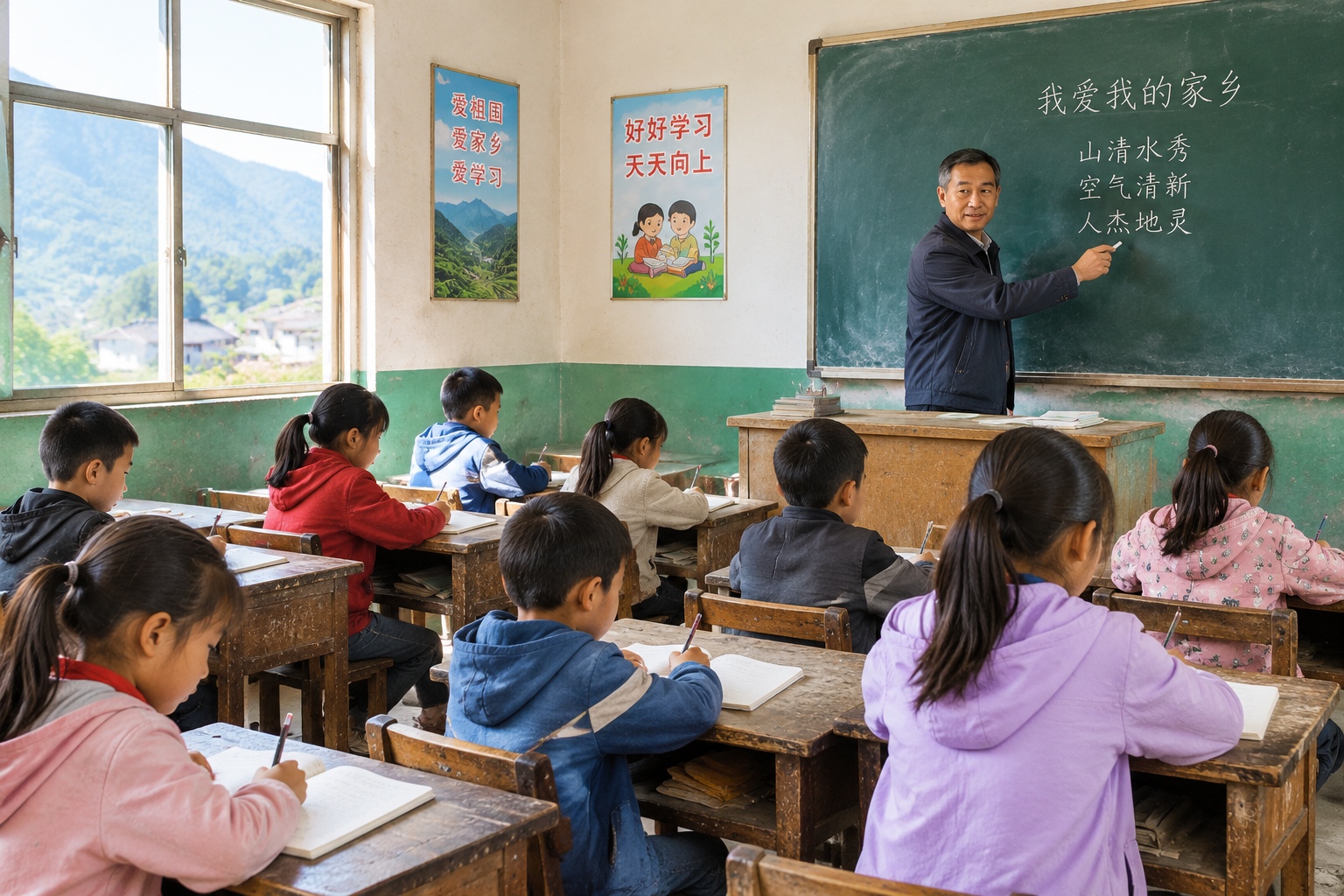
What it buys is mostly unglamorous: nine years of free tuition and free textbooks for every child; a boarding subsidy of roughly 1,000 to 1,250 yuan a year for poor rural students; a daily meal allowance of about 5 yuan (70 US cents) for some 37 million pupils in poorer counties; and salaries for the teachers who stay. The Special Post Teacher programme, launched in 2006, has sent more than a million university graduates into rural schools on fixed-term contracts. By 2021 the government said all 2,895 counties had passed a “basic equilibrium” review of compulsory education — meaning the gap between the weakest and strongest schools inside a county met a minimum standard. The current goal is “quality balance,” which is a much harder promise to keep.
What the system produces
The output numbers are the ones usually quoted abroad, and they are genuinely striking.
Adult literacy runs at about 97 percent; the 2020 census put the illiteracy rate at 2.67 percent, down from 22 percent in 1982. The nine-year consolidation rate — the share of children who finish all nine compulsory years — reached about 95.7 percent. Gross enrolment in high school is about 92 percent. Gross enrolment in higher education hit 60.2 percent in 2023, up from 30 percent in 2012 and 15 percent in 2000. In 2019 China crossed the 50 percent threshold that UNESCO calls mass universalisation.
That last figure is the one that has reshaped ordinary life. In 1998, roughly one in ten young Chinese went to university. Today it is more than half, and Chinese universities award more science and engineering degrees than any other country. In 2024, 11.79 million students graduated, roughly a third of them in engineering or other STEM fields.
Chinese pupils also score well on international tests. In PISA 2018, the four regions China entered — Beijing, Shanghai, Jiangsu and Zhejiang — ranked first in reading, maths and science. That result comes with an asterisk big enough to read from orbit: those four regions hold about 180 million people and are among the richest parts of the country. They are not a sample of China.
Equity has several faces
The gap between city and countryside
Two schools, both public. In a county in Guizhou, a primary school with about 40 pupils has five teachers, no dedicated English teacher for the early grades, and a science lab that is a cupboard. In Shanghai, a district school has a swimming pool, a robotics club and a psychologist on staff. National per-student spending has narrowed between rural and urban areas. Teacher quality, parents’ own education levels, and what a family can add on top have not.
The gaokao is not one exam
China’s college entrance exam is usually described as a single national test. It is closer to thirty provincial competitions with different papers, different marking and — crucially — different admission quotas for the same universities. In 2024, 13.42 million students registered for the gaokao. Henan province alone accounted for about 1.36 million of them; Beijing had roughly 67,000. The two groups compete for seats at Peking University and Tsinghua in separate pools. A Beijing student faces a few tens of thousands of rivals for those places. A Henan student faces more than a million.
Housing, tutoring and the price of a good school
Because admission to a public school is normally tied to where a family lives, a good school district became a property asset. In the late 2010s, ten-square-metre courtyard rooms in central Beijing were advertised at more than a million yuan because of the primary school they fed into. Beijing and other cities later introduced lottery-style multi-school assignment to cool the market, with mixed results.
Then came the “double reduction” policy of July 2021, which banned for-profit tutoring in core academic subjects and barred weekend and holiday classes altogether. The listed giants of the industry lost most of their value; New Oriental, once China’s biggest tutoring company, now sells agricultural products through livestreaming. Demand for an edge did not disappear. It moved into apartments, small parent-run groups and WeChat, where one-on-one prices rose. Families with money and networks can still buy extra help. Families without cannot.
Children who move, and children who stay
About 14 million children of migrant workers attend school in the cities where their parents work, and most now sit in ordinary public classrooms rather than the separate, poorly funded schools of twenty years ago. But in the biggest cities, entry still runs through a points system based on residence permits, social insurance payments and paperwork, and a family missing the right documents can be pushed back to the county it came from. Meanwhile the 2020 census counted about 42 million children in rural areas living apart from at least one parent — the “left-behind” generation, now largely raised by grandparents.
What families actually do
In hundreds of county towns, the most visible education strategy is simply relocation. A mother rents a small flat next to the one high school that sends students to real universities, and lives there with the child for three years while the father works elsewhere. It is called peidu — accompanying study — and it is a household decision about money, marriage and time.
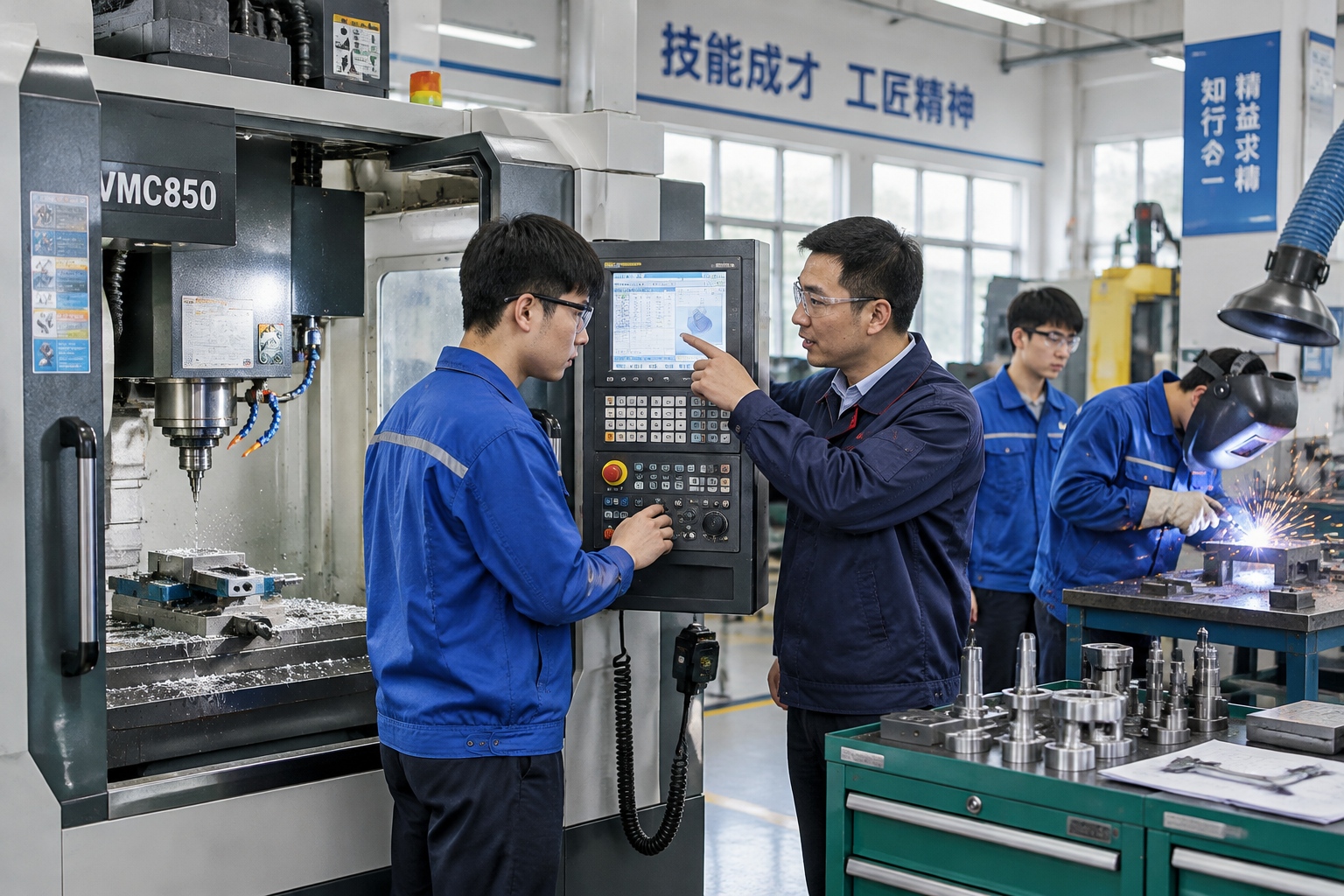
About four in ten upper-secondary students are in vocational schools, which for decades carried a stigma as the destination for those who failed. That is shifting slowly. A skilled machining or welding graduate from a good vocational college in Guangdong or Zhejiang can earn 6,000 to 8,000 yuan a month within a few years, sometimes more than a classmate with an ordinary bachelor’s degree. A 2022 revision of the Vocational Education Law opened a formal route from vocational school to applied universities, and the entrance exam for that route is still far less crowded than the gaokao.
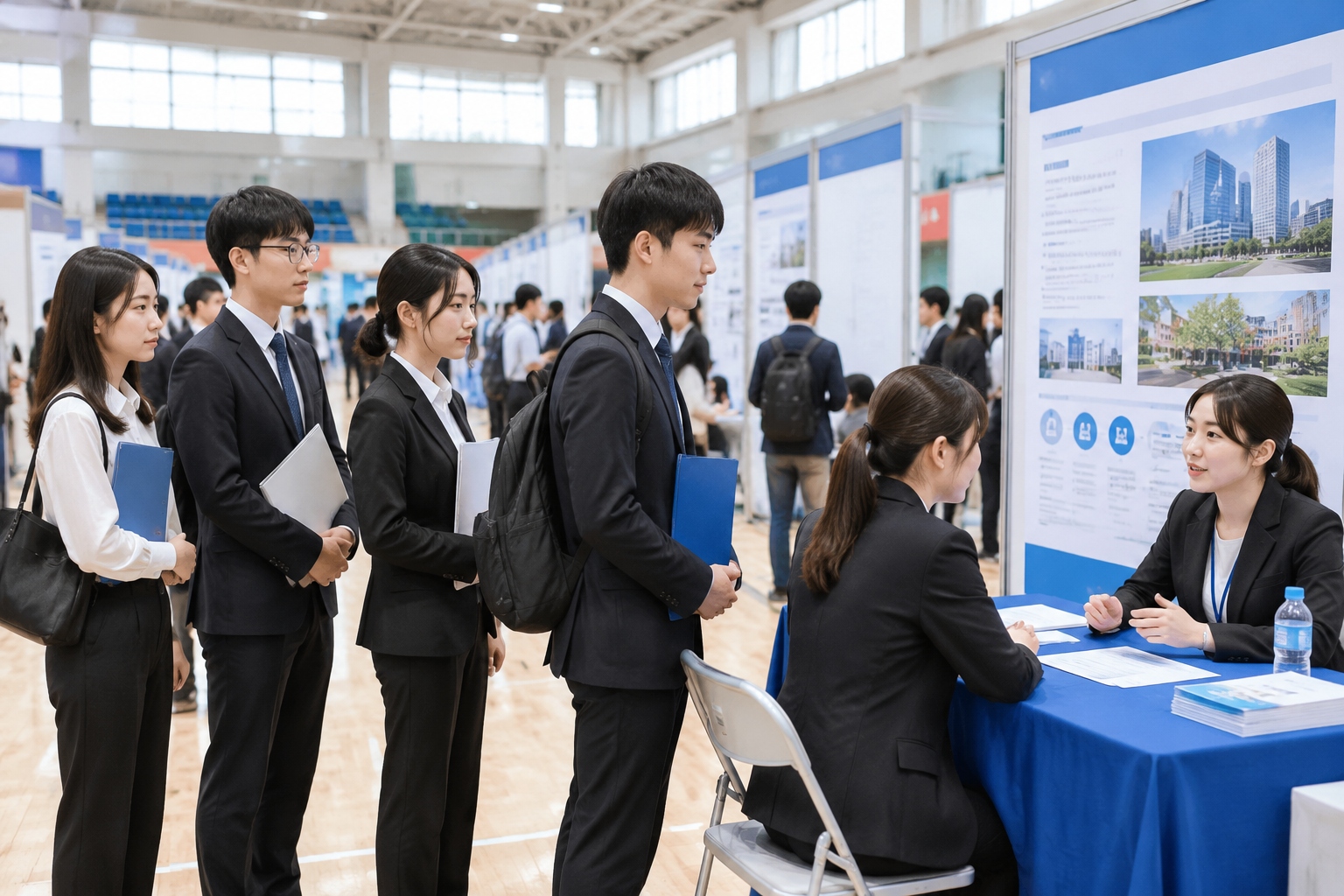
At the other end, the graduate market has tightened. In 2024, 11.79 million people graduated from Chinese universities, and youth unemployment among 16-to-24-year-olds who are not in school has hovered in the mid-teens since the government changed how it counts. The national civil service exam drew more than three million applicants for about 39,000 posts.
How policy is responding
The state’s answers are incremental rather than dramatic: pushing counties from “basic balance” toward “quality balance”; a programme to strengthen county high schools so families do not have to move to provincial capitals; higher subsidies for rural teachers; a student aid system that distributes more than 300 billion yuan a year in scholarships, grants and loans; and the gradual rollout of the 3+1+2 gaokao format, which lets students choose subjects instead of splitting into fixed science and humanities tracks.
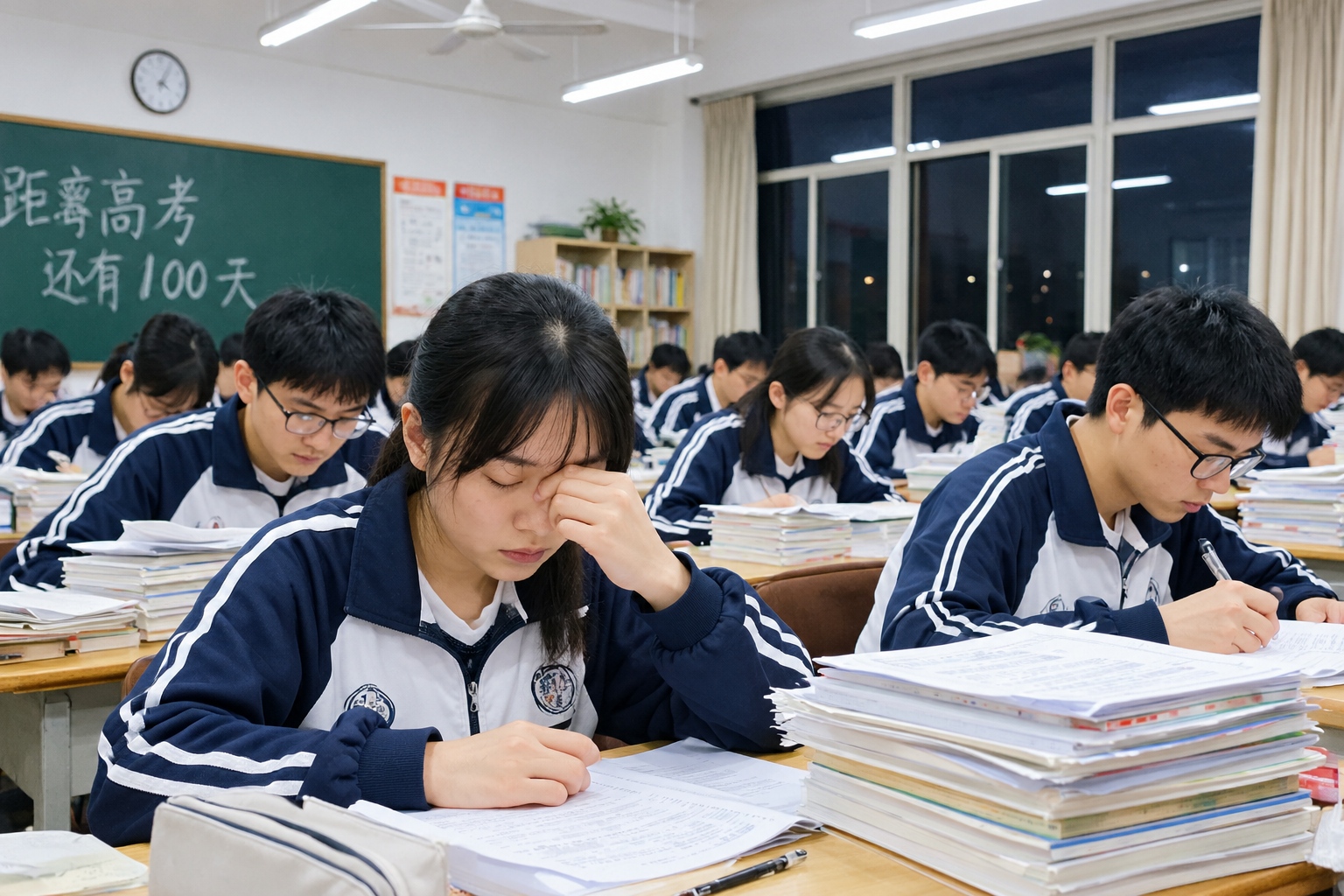
None of this removes the underlying arithmetic. Good seats at good universities are scarce. Scarcity creates competition. Competition creates winners who are also exhausted.
What outsiders tend to get wrong
Two mistakes are common. The first is to treat Chinese education as one machine producing identical test-takers. In reality, the variation inside the system — between Shanghai and a village in Gansu, between a key high school and a vocational one — is wider than the variation between many countries. The second is to assume every parent is an obsessive pushing a child through six tutoring sessions a week. Plenty are trying to opt out. More are simply trying to keep up. The most anxious are usually those who have just enough to lose.
What is genuinely unusual is the combination: very high public investment, very high private spending, very high mobility, and a fairness problem that has narrowed in some places and hardened in others.
Back to the envelope
Wang Li finishes her list, photographs it and sends it to her husband. He replies with two words and a thumbs-up. Their son, who is fourteen and mostly interested in basketball, does not know what the term costs. He knows his mother’s English is bad, that his maths teacher is strict, and that if he does well over the next three years he will sit the gaokao in a province where the queue is shorter than in Henan — because his parents registered him here on purpose.
That is the Chinese education system in one household: a state that now pays most of the bill, a family that pays a large share of its income on top, and a teenage boy in the middle of it, practising free throws in the corridor before dinner.
Start the discussion at forum.chinacomes.com