
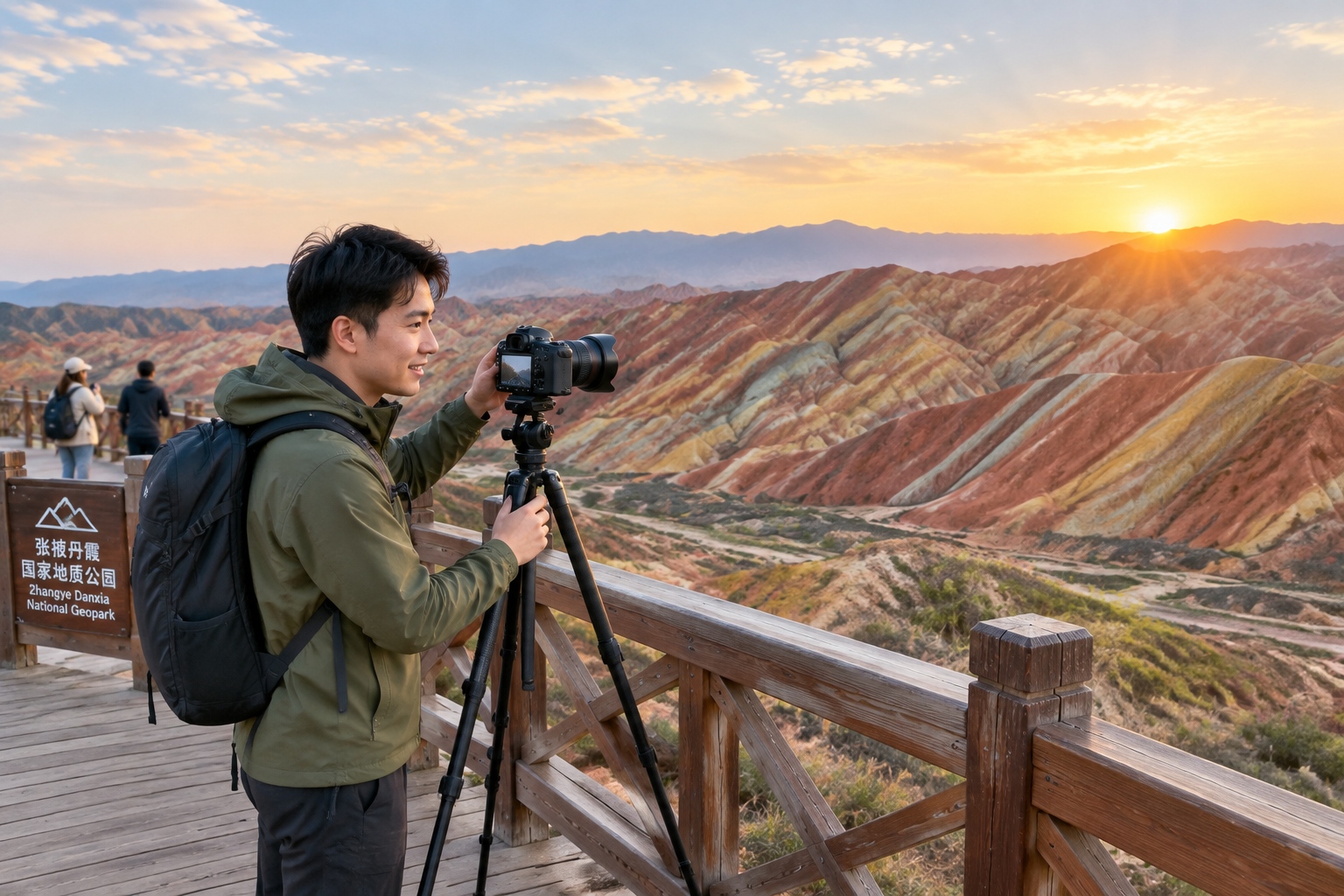

Arriving Before the Crowds
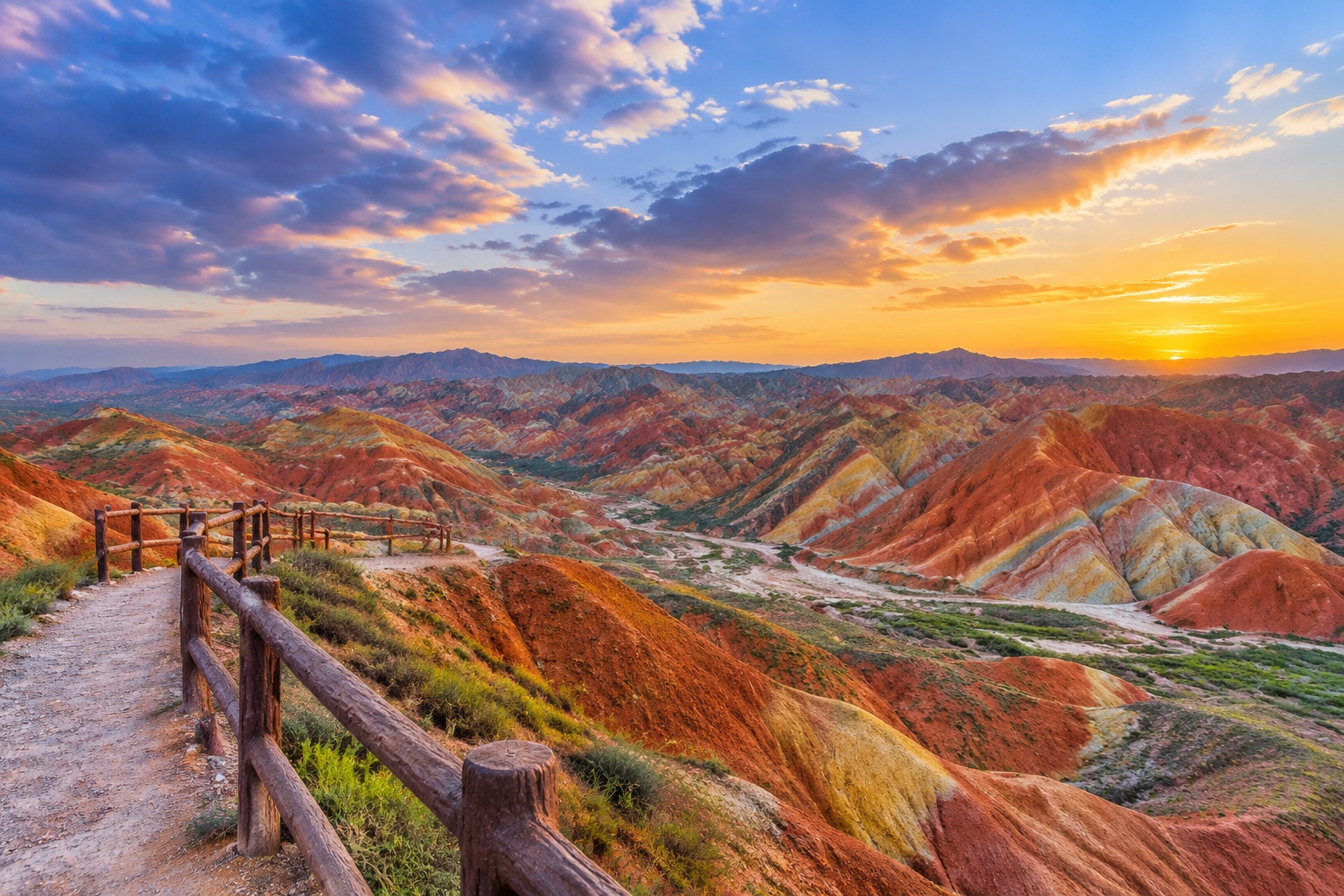
At 6:15 a.m., the shuttle bus from the north entrance of Zhangye Danxia Global Geopark lurches to a stop at Platform 1. I step out into air that smells of dry earth and juniper. The sun hasn’t yet crested the Qilian Mountains, and the famous rainbow stripes are still muted, a watercolor wash of rust and ochre. Already, a dozen people are clustered at the railing, phones held high. One man is directing his wife: “Move left! No, left! The red one!” She sighs, poses, and he snaps. They will post that photo tonight. It will look exactly like a thousand others.
But the colors are just waking up. For the next twenty minutes, as the light shifts, the ridges will glow like embers. The trick is to be ready—and to know where to stand.
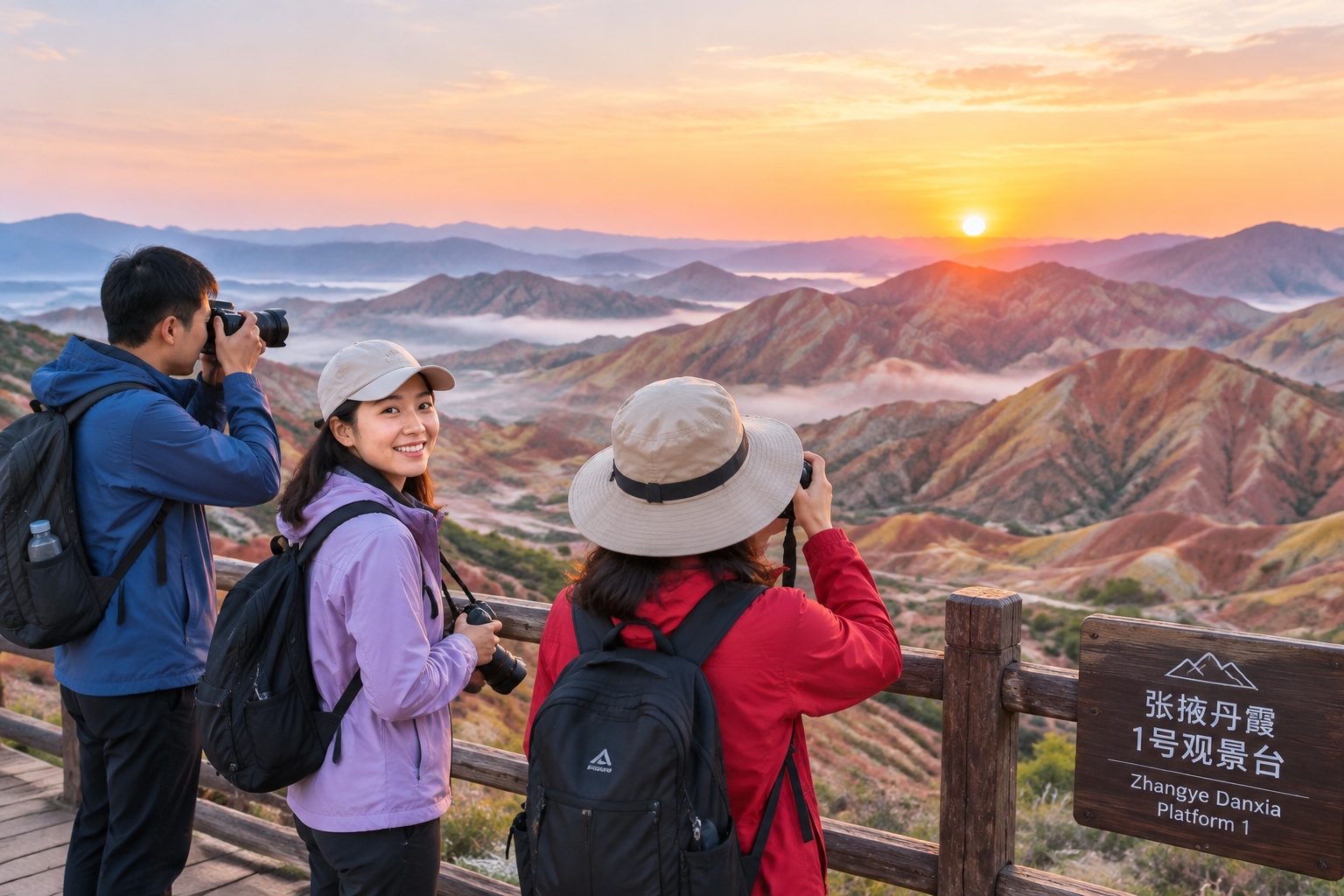
Why Most Photos Look the Same (and How to Fix It)
Zhangye Danxia is not a secret. In 2019, the geopark received over 2.6 million visitors. On a typical summer day, thousands file through the four main viewing platforms, each named for its shape: Platform 1 (the largest), Platform 2, Platform 3, and Platform 4 (the highest). The shuttle buses run on a loop, and most people follow the same route: get off, walk to the railing, take a selfie, get back on. The result is a flood of photos that are technically fine but visually identical—flat midday light, a sea of heads, and a horizon line that cuts the frame in half.
The fix is not a better camera. It’s a different approach. Start by treating the park as a landscape, not a backdrop. That means paying attention to light, angle, and scale. It also means being willing to wait, walk, and sometimes ignore the obvious shot.
Timing Is Everything: Light and Weather
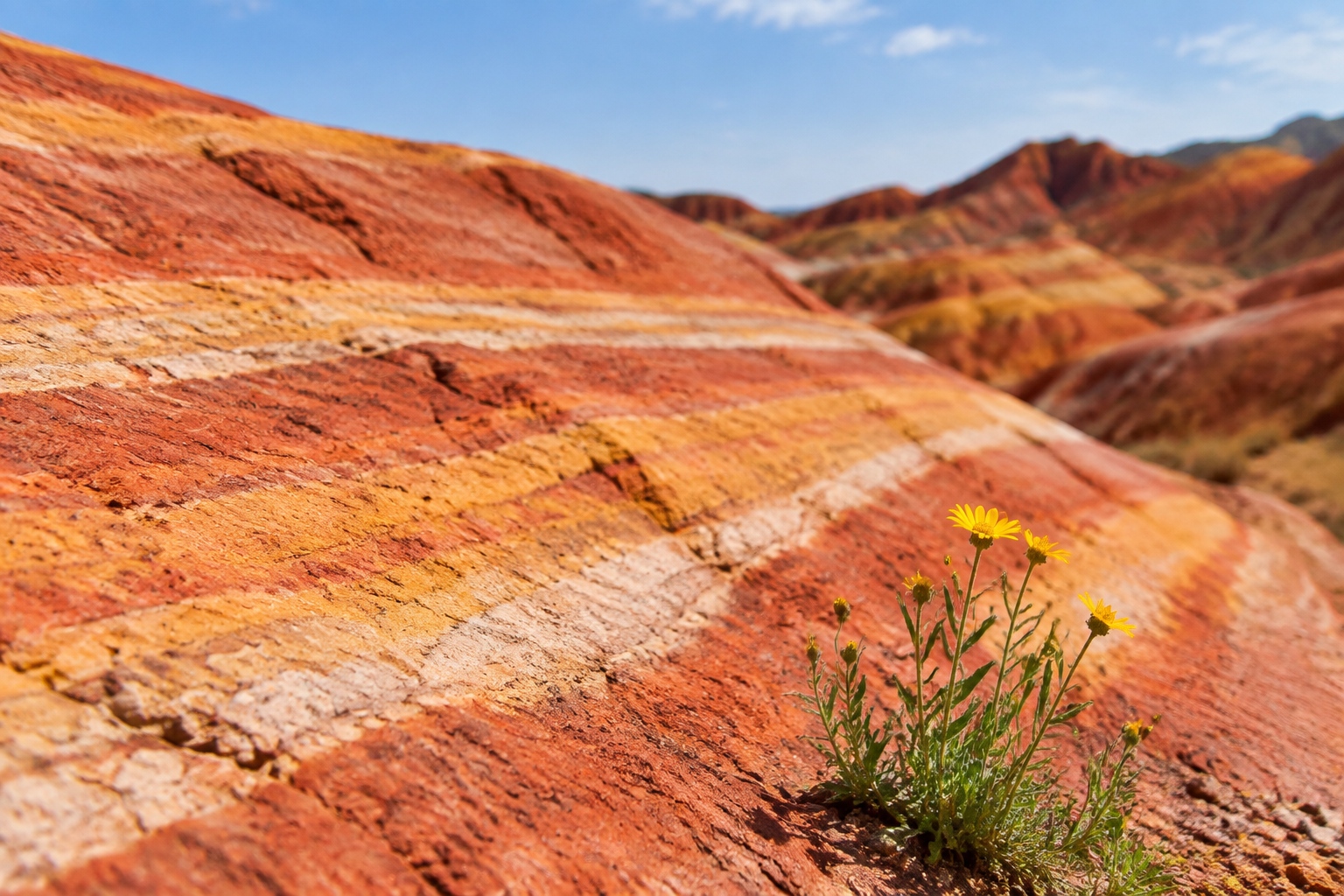
The single biggest improvement you can make is to shoot at the right time. The park opens at 6:30 a.m. in summer (7:00 a.m. in winter) and closes at 6:00 p.m. or later depending on the season. Sunrise and sunset are when the colors are most saturated, because the low sun angle brings out the reds and oranges. Midday light is harsh and washes everything out.
Sunrise vs. Sunset
Sunrise is quieter. The shuttle buses start running at 6:30 a.m., but if you’re staying near the park, you can walk to the north entrance and catch the first bus. The light hits Platform 1 first, then moves across the ridges. Sunset is more dramatic, with longer shadows and warmer tones, but it’s also more crowded. Choose your battle.
The Magic of Rain
If you can, visit after a rain. The wet rock becomes darker and more vibrant, and the clouds add drama to the sky. Just check the weather forecast—thunderstorms are common in summer, and you don’t want to be on an exposed ridge during lightning.
Also consider the season. May to October is the best window. July and August are the hottest and busiest. Late September and early October offer cooler temperatures and fewer crowds, but avoid the first week of October, which is China’s National Day holiday. Winter is cold and sometimes snowy, but the contrast of snow on the red rock can be stunning if you’re prepared for the cold.
Where to Stand: Beyond the Main Platforms
The four platforms are not created equal. Platform 4 is the highest and offers the most panoramic view, but it’s also the most crowded. Platform 2 is smaller and often overlooked, with a closer view of the layered ridges. Platform 1 is the largest and has a few short trails that lead away from the main railing. Walk five minutes along any of these trails, and you’ll leave 90% of the crowd behind.
Platform by Platform
- Platform 1: The largest, with a wide view of the main valley. Good for sunrise. Walk to the far end for a quieter angle.
- Platform 2: Smaller, with a close-up view of the striped cliffs. Often less crowded because it requires a short hike from the shuttle stop.
- Platform 3: A mid-level platform with a good balance of color and texture. The trail from Platform 2 to Platform 3 is a hidden gem.
- Platform 4: The highest and most famous. The view is spectacular, but you’ll share it with hundreds of others. Go early or late.
The Hidden Overlook
One of my favorite spots is a small overlook between Platform 2 and Platform 3, reached by a wooden staircase that most people pass by. It faces east, so it’s perfect for sunrise. There’s no railing, just a flat rock ledge—be careful, but the lack of infrastructure means no heads in your frame.
Another option is to take the shuttle to Platform 4, then walk down the paved road toward Platform 3. The road curves along the ridge, and you can frame the mountains with the road as a leading line. Just watch for shuttle buses.
Composition Tips for Unique Shots
Once you’ve found a good spot, think about how you’re framing the scene. Here are a few techniques that work well at Zhangye Danxia:
- Use a foreground element. A single tree, a brightly colored jacket, or a rock can anchor the image and give a sense of scale. Without a foreground, the mountains can look like a flat pattern.
- Shoot vertically or horizontally? The stripes run horizontally, so a horizontal frame emphasizes the layers. But a vertical frame can capture the sweep of a single ridge against the sky.
- Look for lines. The ridges themselves are natural leading lines. Position yourself so they draw the eye into the frame.
- Include people—but make them small. A tiny figure in the distance gives scale and a sense of awe. A large group of people in the foreground does the opposite.
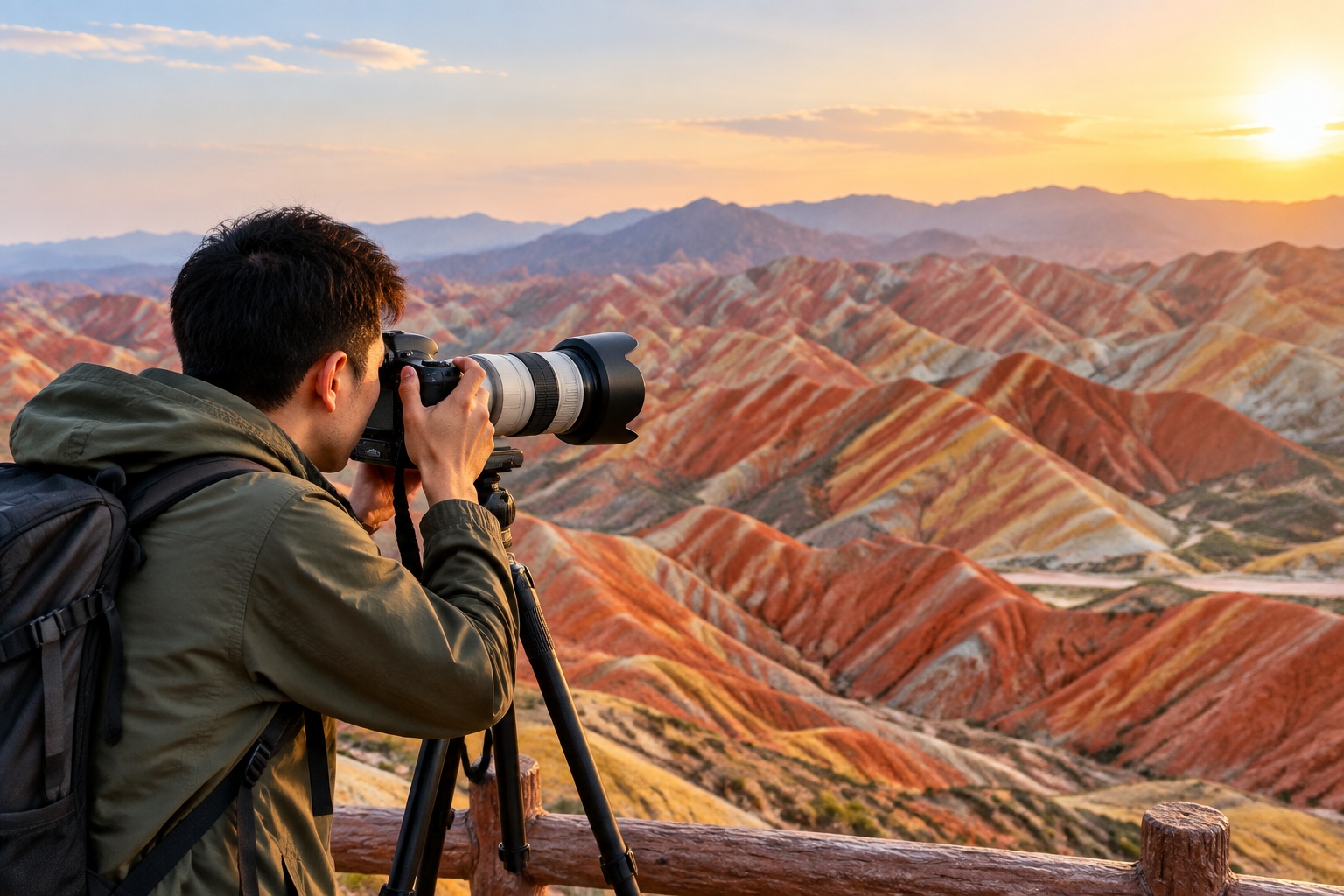
- Try a telephoto lens. Zooming in compresses the layers, turning the landscape into abstract bands of color. A 70-200mm lens is ideal.
- Shoot in RAW. This gives you more flexibility in editing, especially for recovering highlights and shadows.
Gear and Settings
You don’t need a professional kit, but a few items will make your life easier:
- Camera: Any camera with manual controls will do. A smartphone can work, but a dedicated camera gives you more control over exposure and depth of field.
- Lenses: A wide-angle (16-35mm) for landscapes, and a telephoto (70-200mm) for compression. A polarizing filter can reduce glare and deepen the colors—but use it sparingly, as it can also darken the sky unevenly.
- Tripod: Useful for sunrise and sunset shots, but some platforms are too crowded to set one up. A lightweight travel tripod is best.
- Settings: Start with aperture priority (f/8 to f/11 for sharpness), ISO 100, and let the camera choose the shutter speed. If you’re shooting handheld in low light, raise the ISO to 400 or 800. Bracket your exposures if you plan to blend them later.
Editing: Enhance, Don’t Exaggerate
The colors at Zhangye Danxia are already vivid, so editing should be subtle. In Lightroom or Snapseed, try these adjustments:
- Increase contrast slightly.
- Boost saturation by 10-15%, no more.
- Use the dehaze tool to cut through atmospheric haze.
- Adjust white balance to make the reds warmer and the blues cooler.
- Use a graduated filter to darken the sky if it’s blown out.
The goal is to make the image look like what you saw, not like a neon poster. Over-editing is the fastest way to make a photo look like a tourist shot.
Practical Tips for Visiting Zhangye Danxia
Getting There and Tickets
Zhangye is in Gansu Province, about 500 km northwest of Lanzhou. High-speed trains connect Zhangye to Lanzhou (about 3 hours), Xining (2 hours), and Dunhuang (4 hours). From Zhangye West Station, take a taxi or the tourist bus to the Danxia Scenic Area (about 40 minutes). The entrance fee is around 75 CNY (about $10) plus 20 CNY for the shuttle bus. The ticket is valid for one day. You can buy tickets at the gate or online via WeChat.
When to Go and What to Bring
May to October is the best time, avoiding Chinese public holidays. Weekdays are less crowded than weekends. Bring water, sunscreen, a hat, and layered clothing. The temperature can swing from 30°C (86°F) during the day to 10°C (50°F) at night. Wear comfortable walking shoes. Stay on the trails and platforms. The rock is fragile, and stepping off the path can damage the formations. Drones are prohibited without a permit.
Final Frame
The rainbow mountains are not a secret. But a good photograph is. It comes from patience, from watching how the light moves, from stepping two meters to the left. And from remembering that the best shot is the one that makes someone ask, “Where is that?”—not “Which filter did you use?”
Start the discussion at forum.chinacomes.com