

A Morning That Starts at the Alley Mouth
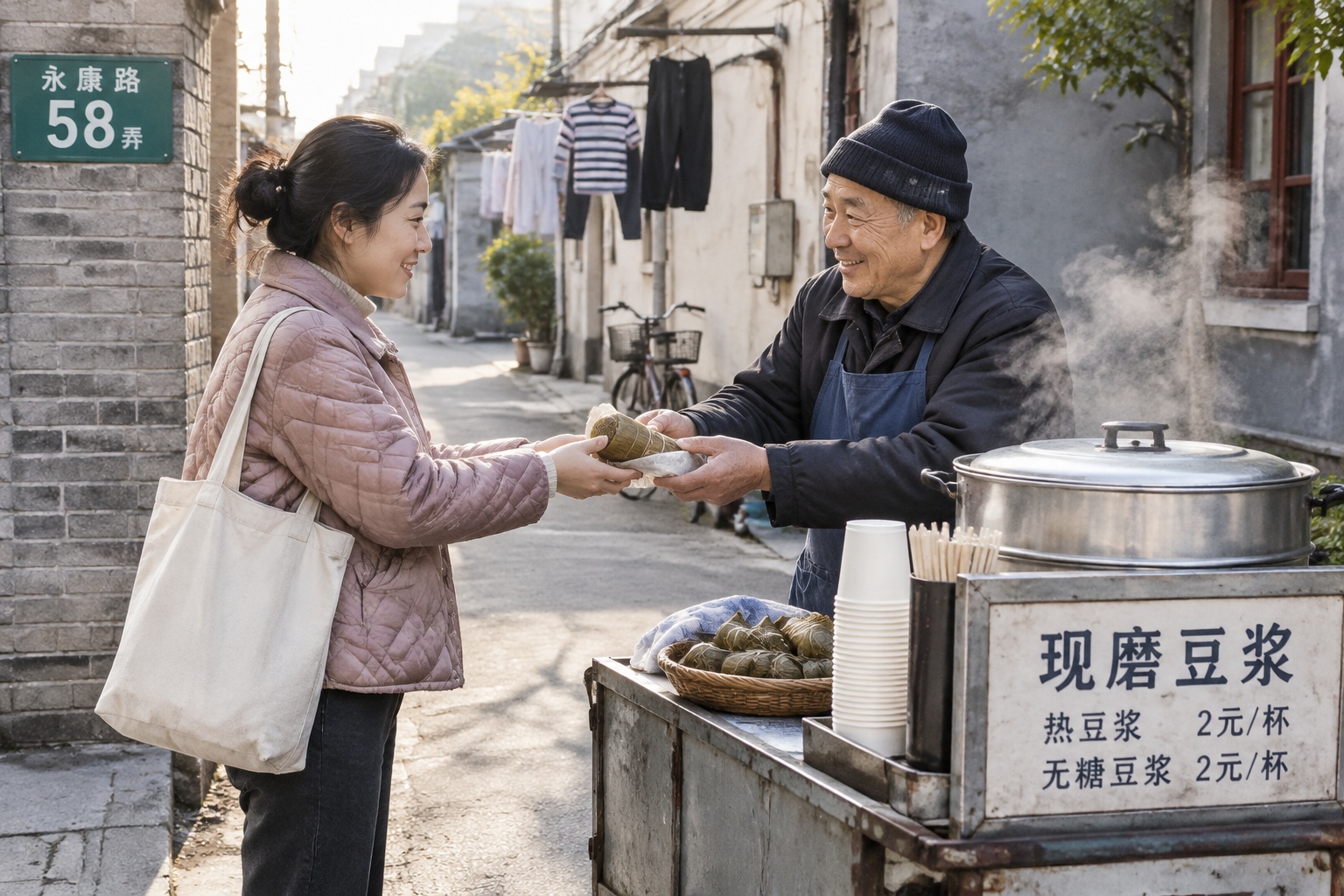
At 6:40 a.m., the alley off Xiangyang Road is still half asleep. A woman in a quilted jacket sets up her steamer cart, and the first customer—a man in his sixties carrying a cloth bag—orders a cifantuan: sticky rice wrapped around pickled vegetables, pork floss, and a strip of fried dough. She presses it tight in plastic film, hands it over, and takes his coins without looking up.
Two steps away, a soy milk vendor pours hot, slightly sweet liquid into a paper cup. The steam curls into the cold air. This is not a scene staged for tourists. It is a Tuesday morning in a residential lane, and the same ritual repeats across thousands of Shanghai street corners before the city’s office towers switch on their lights.
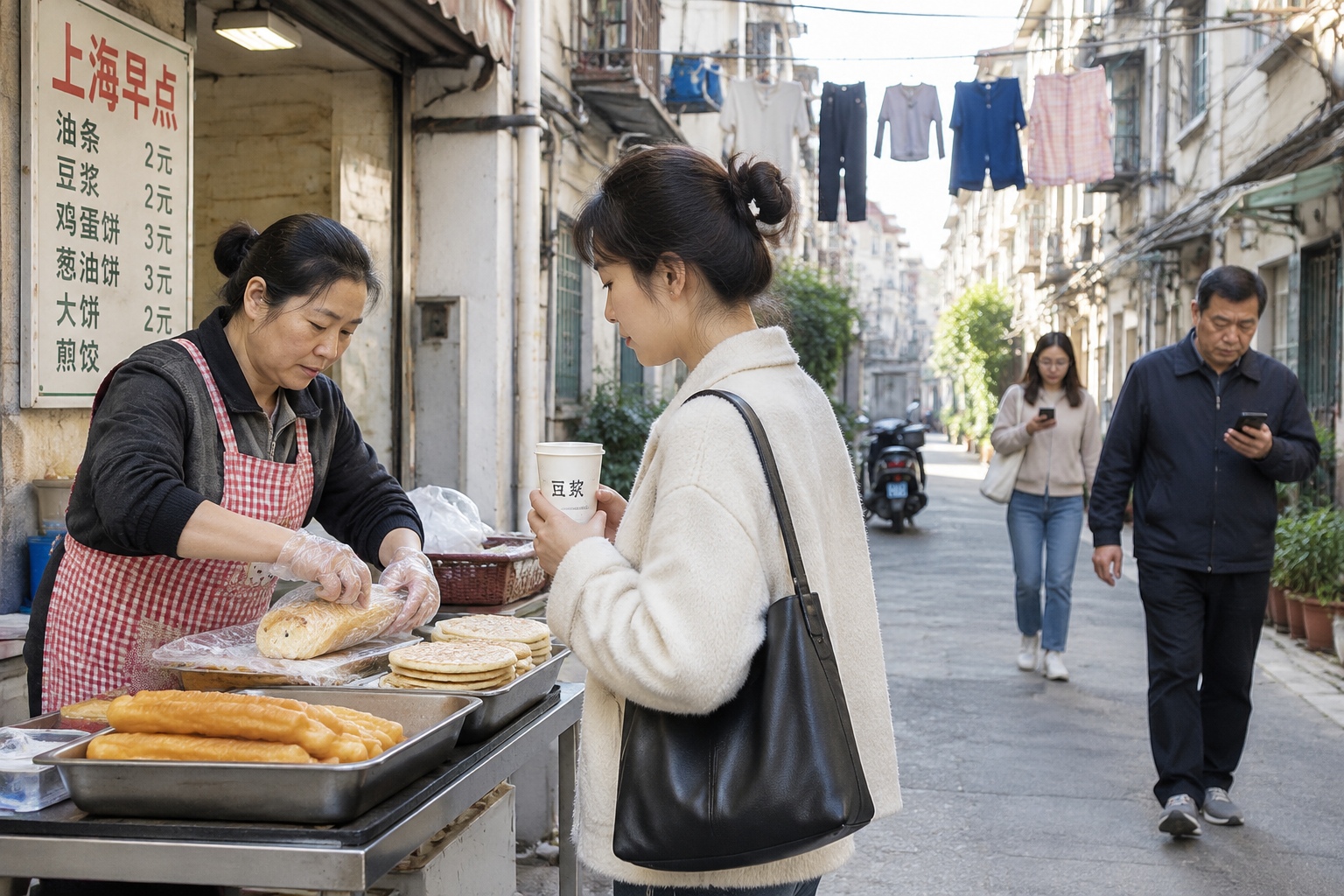
Breakfast here is fast but not rushed. People eat standing, or walk with their cup in one hand and phone in the other. The alley mouth is a threshold: behind it are laundry lines, bicycle bells, and the low murmur of neighbors; in front is the wider city, already humming with scooters and delivery bikes.
QR Codes at the Wet Market
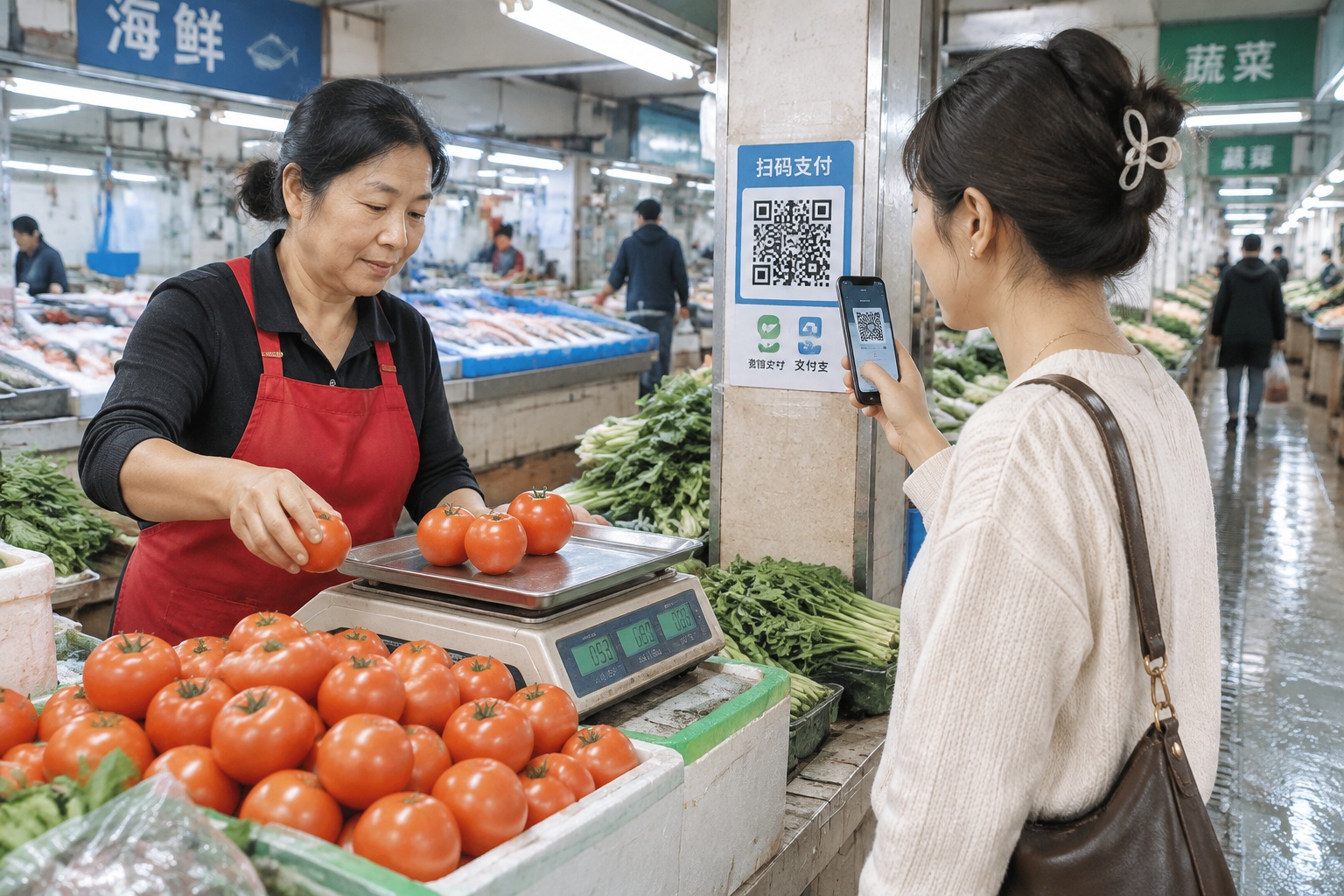
By 8 a.m., the wet market on Wulumuqi Road is loud and bright. Fluorescent tubes reflect off wet floors. Vendors call out prices for xiaolongxia—crayfish—and fresh gailan. A woman in her fifties, wearing a red apron and a gold bracelet, weighs a bag of tomatoes for a customer. The customer lifts her phone. A QR code taped to the stall’s plastic sheet beeps. The transaction takes three seconds.
This is the quiet digital revolution in Shanghai’s daily life. Wet markets, once cash-only, now run on WeChat Pay and Alipay. The vendors may not use ride-hailing apps or stream on Douyin, but they manage digital wallets as naturally as they handle cabbage. For older residents, the QR code has become a familiar tool, not a barrier.
Outside the market, a young delivery rider in a blue helmet checks his phone. He picks up an order from a noodle shop and disappears into traffic. The wet market and the delivery app are not separate worlds. They are two ends of the same food chain, connected by a phone screen.
Shikumen, Old Shanghai, and the Coffee Next Door
To understand why coffee and alley life coexist so easily, you need a quick lesson in Shanghai’s urban history. In the early 20th century, shikumen—stone-gate lane houses—housed both Chinese families and, later, White Russian and Jewish refugees. The lanes were dense, communal, and practical. A few blocks away, along the Bund and the French Concession, cafes and bakeries served the city’s growing merchant class.
The laokela—a term for the old Shanghai gentleman who speaks fluent English, wears a tailored shirt, and knows his coffee—emerged from this mix. But so did the auntie who haggles over fish and the retiree who plays cards on a wooden stool. Shanghai’s refinement was never only in ballrooms. It was also in the way a vendor folds a newspaper cone for roasted chestnuts.
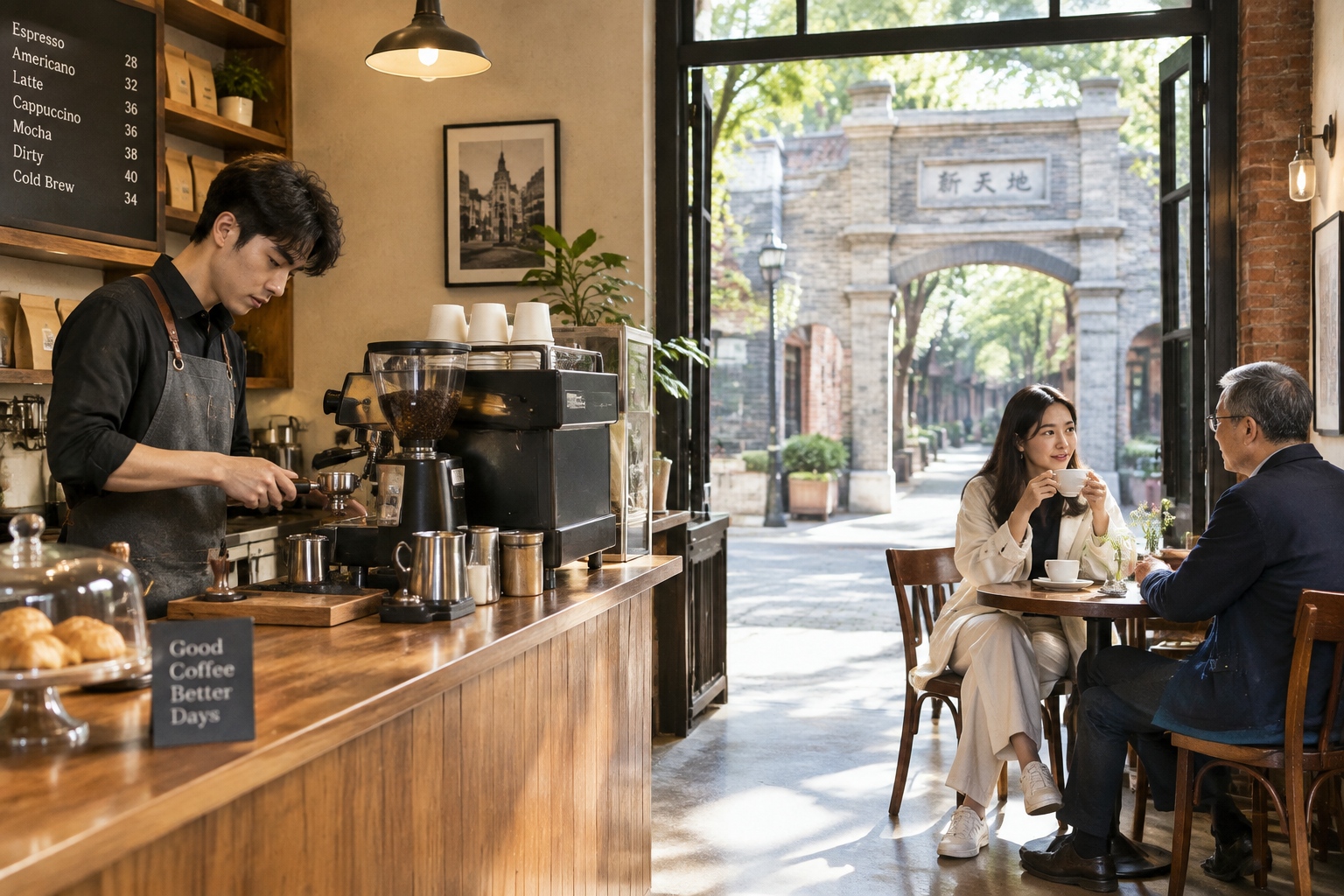
Today, that history shows up in unlikely places. A specialty coffee shop might open in a converted shikumen ground floor, its espresso machine humming where a coal stove once stood. The barista speaks Mandarin with a Shanghai accent. The customers include a young creative in vintage sneakers and an older man who orders an Americano and reads the newspaper.
Old Neighbors, New Arrivals, Same Block
On Anfu Road, a narrow street lined with plane trees, the mix is visible. A local auntie sells ci fan gao—fried rice cakes—from a small window. Next door, a boutique sells hand-poured candles. Across the street, a young couple from Hangzhou runs a natural wine bar. At 4 p.m., the auntie closes her window and the wine bar starts chilling bottles.
This coexistence is not always smooth. Rents rise. Old shops close. Some longtime residents feel pushed out. But the street itself remains a shared space. Delivery riders, dog walkers, schoolchildren, and tourists all use the same pavement. The neighborhood changes, but it does not empty.
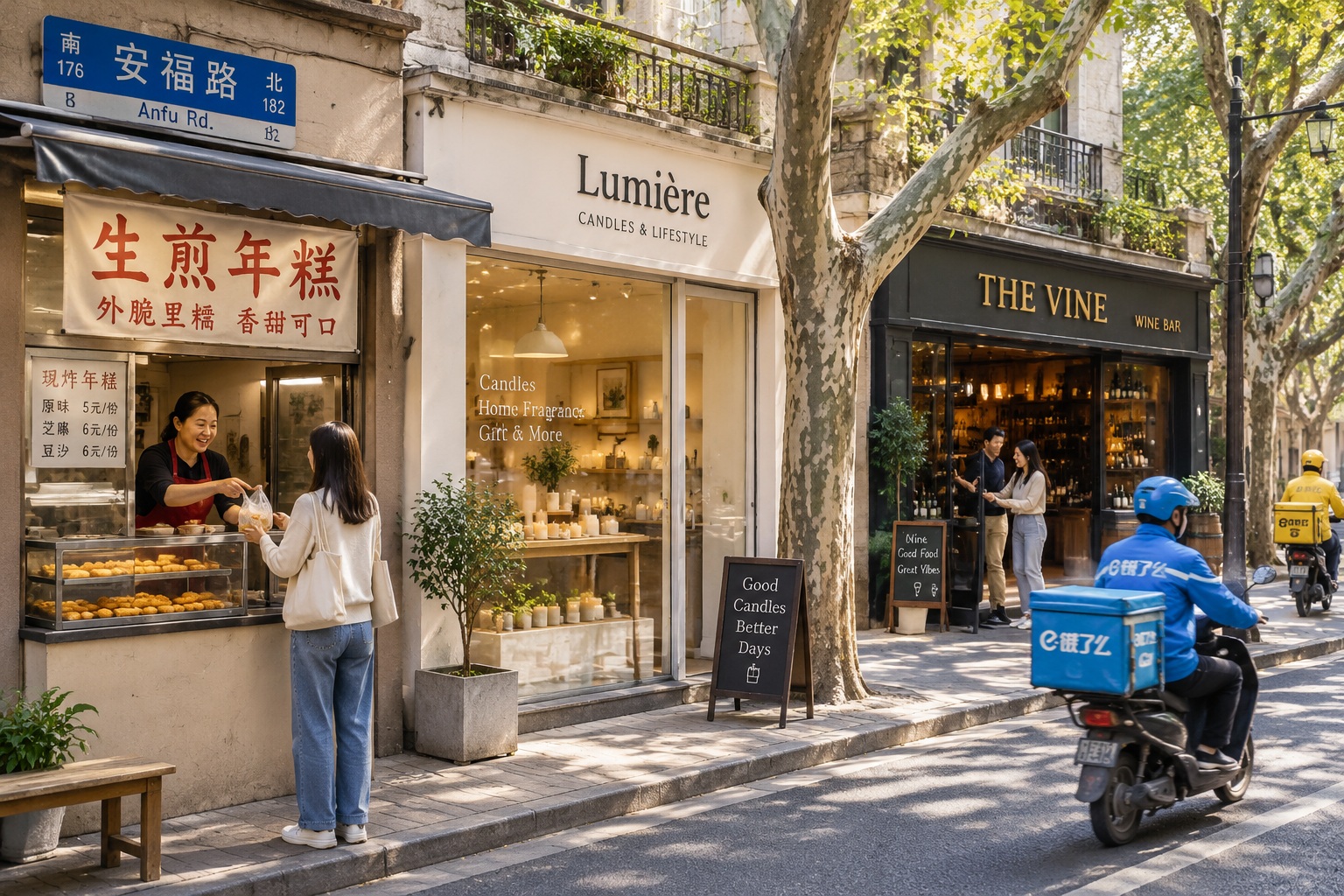
For newcomers, the appeal is the texture: the smell of scallion oil noodles, the sound of Shanghainese spoken in a hardware store, the sight of pajamas worn to the corner shop. For old residents, the coffee shops and boutiques are a sign that the area still has life. The block adapts, and people adapt with it.
From Alley to Cafe: What Stays, What Shifts
By 7 p.m., the alley off Xiangyang Road is quiet again. The breakfast cart is gone. A cat sits on a stool. The coffee shop on the corner is full. A young woman works on a laptop. Two friends share a slice of cake. The espresso machine hisses.
Shanghai’s daily fabric is not a battle between old and new. It is a layering. The wet market still opens at dawn. The QR code still beeps. The shikumen walls still hold their ground. And the coffee, somehow, fits right in.
What remains constant is the rhythm: early mornings, quick meals, small transactions, and the steady hum of people moving through shared spaces. The city changes fast, but its neighborhoods remember how to live.
Start the discussion at forum.chinacomes.com