
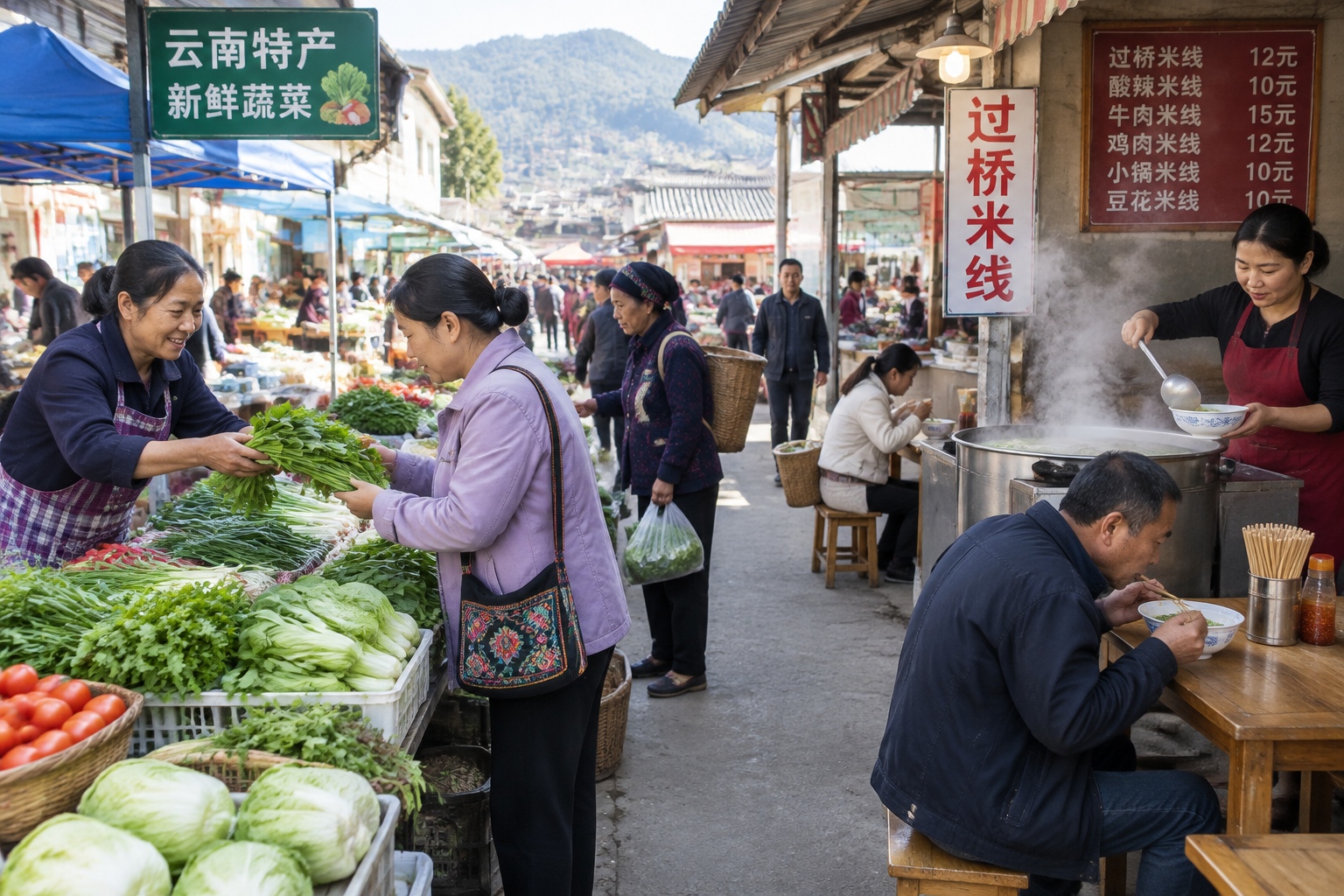

Introduction: A Tourist Trap in Kunming
I was standing in front of a flashy stall in Kunming’s Nanqiang Street, staring at a bowl of “Guoqiao Mixian” (Crossing the Bridge Noodles) that cost 128 yuan. The broth was lukewarm, the chicken was dry, and the rice noodles were clumpy. A local friend who had joined me shook his head. “This is not the real thing,” he said. “You paid for the decoration, not the taste.”
That evening, he took me to a tiny shop hidden in a residential alley. We ate the same dish for 28 yuan — and it was one of the best meals of my life. The broth was scalding hot, the slices of chicken were tender, and the noodles absorbed the rich flavor perfectly. I realized then that Yunnan’s street food scene is full of treasures, but you need to know where to look.
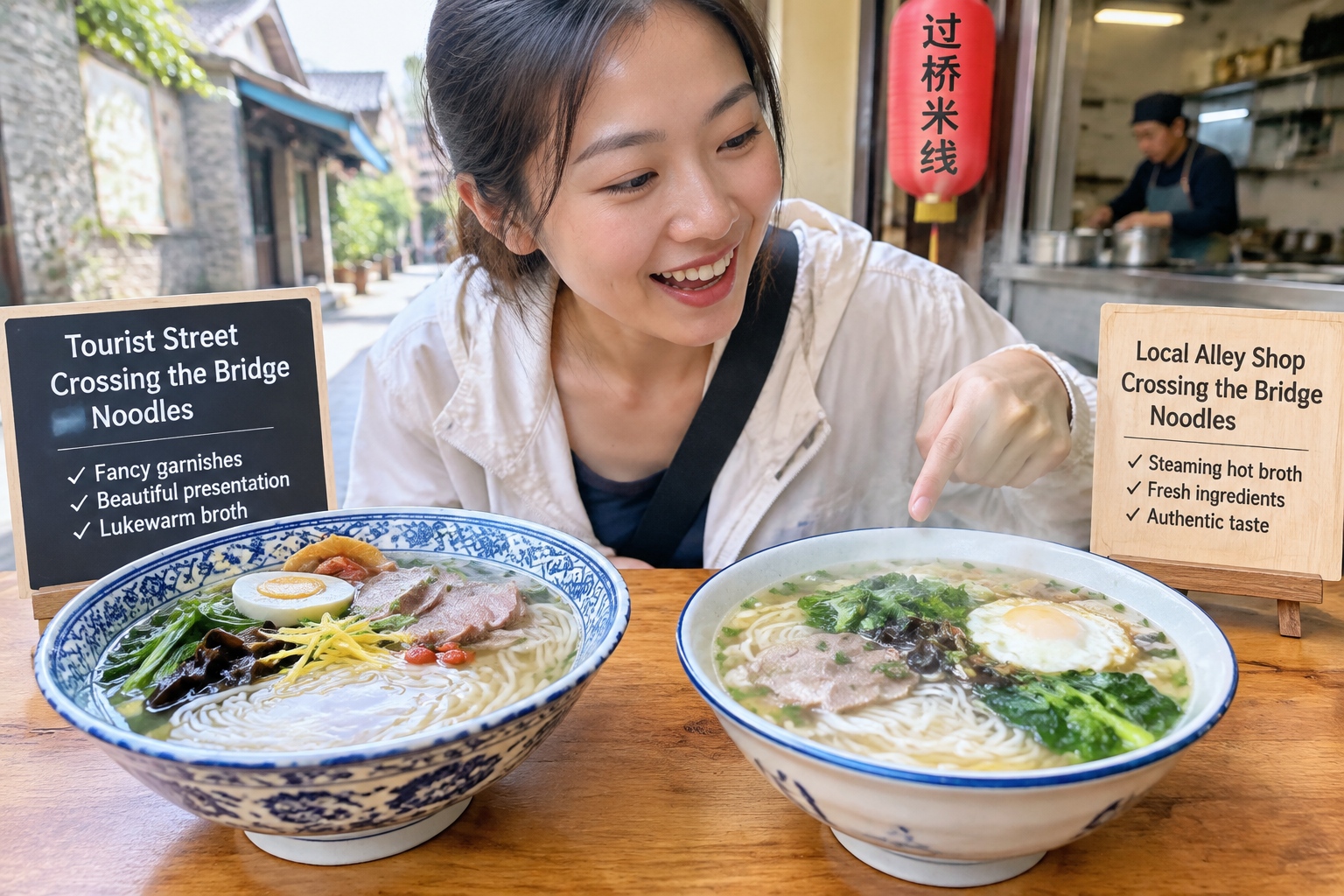
This guide is written for travelers like you — people who want to taste the real Yunnan, not the overpriced, watered-down versions sold to tourists. I’ll share the common traps, the local tricks, and the best dishes you absolutely must try.
Why Yunnan Street Food Is a Minefield for Tourists
Yunnan is a food paradise. Its diverse ethnic groups, unique climate, and fresh ingredients create a culinary scene unlike anywhere in China. But precisely because it’s so popular, tourist areas are flooded with stalls that prioritize profit over authenticity.
The Price Trap
In tourist hotspots like Lijiang Old Town or Dali’s Renmin Road, a bowl of “Crossing the Bridge Noodles” can cost anywhere from 80 to 200 yuan. Locals pay 15–30 yuan. The difference? The broth is often pre-made and reheated, the ingredients are frozen, and the portion is smaller. The high price covers rent and commissions to tour guides, not quality.
The “Localized” Taste
Many stalls modify dishes to suit tourists’ palates — less spicy, less sour, less funky. For example, authentic Yunnan Erkuai (rice cakes) should be slightly chewy and grilled with a smoky char, but tourist versions are often deep-fried and served with sugary sauces. You lose the real texture and flavor.
The Freshness Issue
Yunnan cuisine relies heavily on fresh herbs, mushrooms, and vegetables. In tourist areas, ingredients may sit out all day. Locals pay attention to turnover — a busy stall means fresh food. A quiet stall often means yesterday’s leftovers.
How to Eat Like a Local: The Golden Rules
To avoid the traps, follow these simple rules that Yunnan locals themselves use.
1. Head to the Wet Market
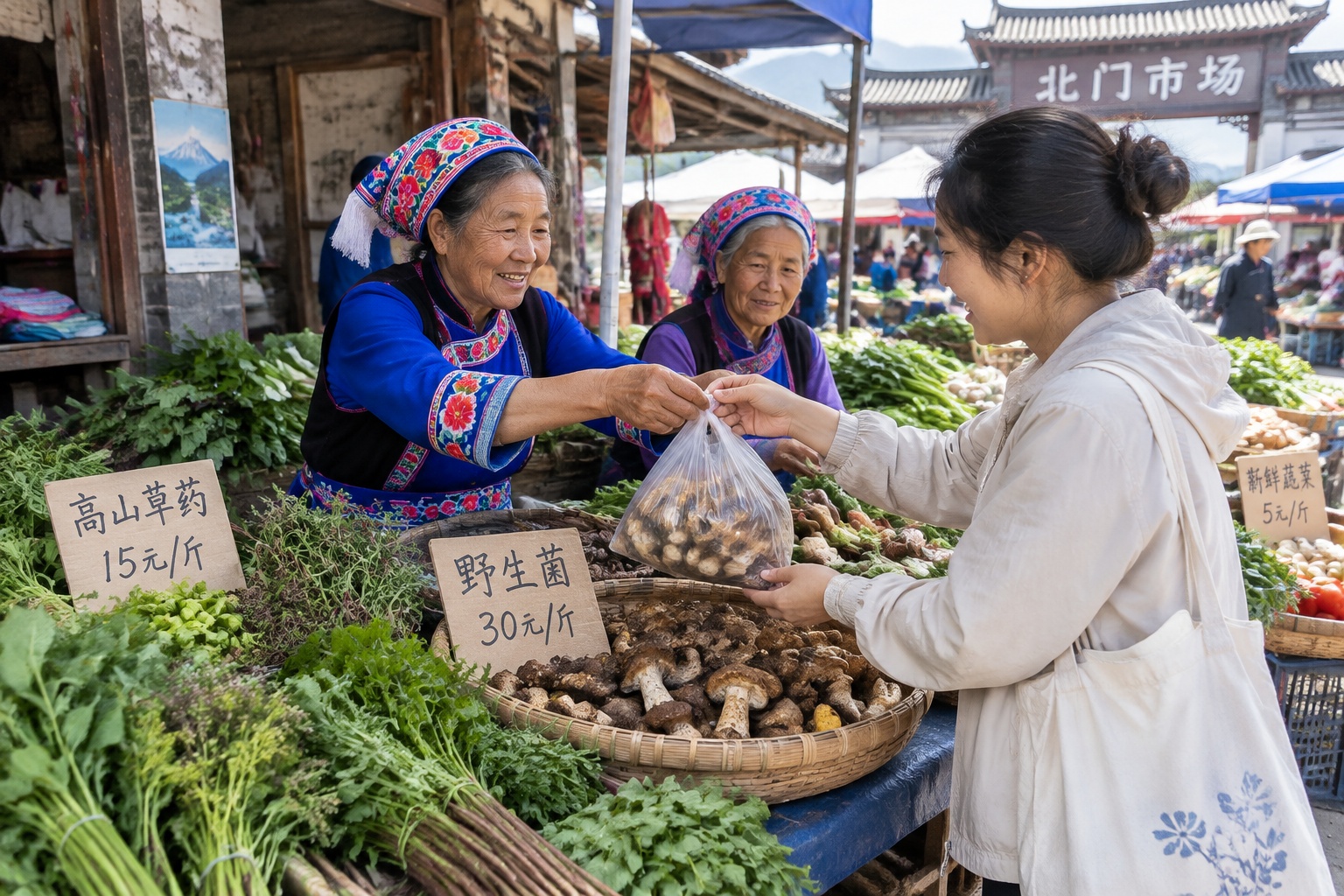
Every city has a morning wet market (e.g., Kunming’s Zhuangyuan Market, Dali’s Beimen Market). This is where locals buy fresh produce and eat breakfast. You’ll find stalls selling rice noodles, tofu pudding, and grilled meats at half the price of tourist streets. Arrive before 9:00 AM for the best selection.
Example: At Kunming’s Dashijie Market, a bowl of small-pot rice noodles (Xiaoguo Mixian) costs 8 yuan. The broth is made from bones and simmered overnight. The vendor has been there for 20 years.
2. Observe the Queues
A long queue of locals is your best sign. Don’t be afraid to join — they are usually fast. If a stall has no customers during peak meal times, skip it.
Insider tip: In Dali, look for “Old Grandma” stalls. They are often run by elderly Bai women who have been making the same dish for decades. They don’t advertise, but their loyal customers find them.
3. Eat at Specialty Shops
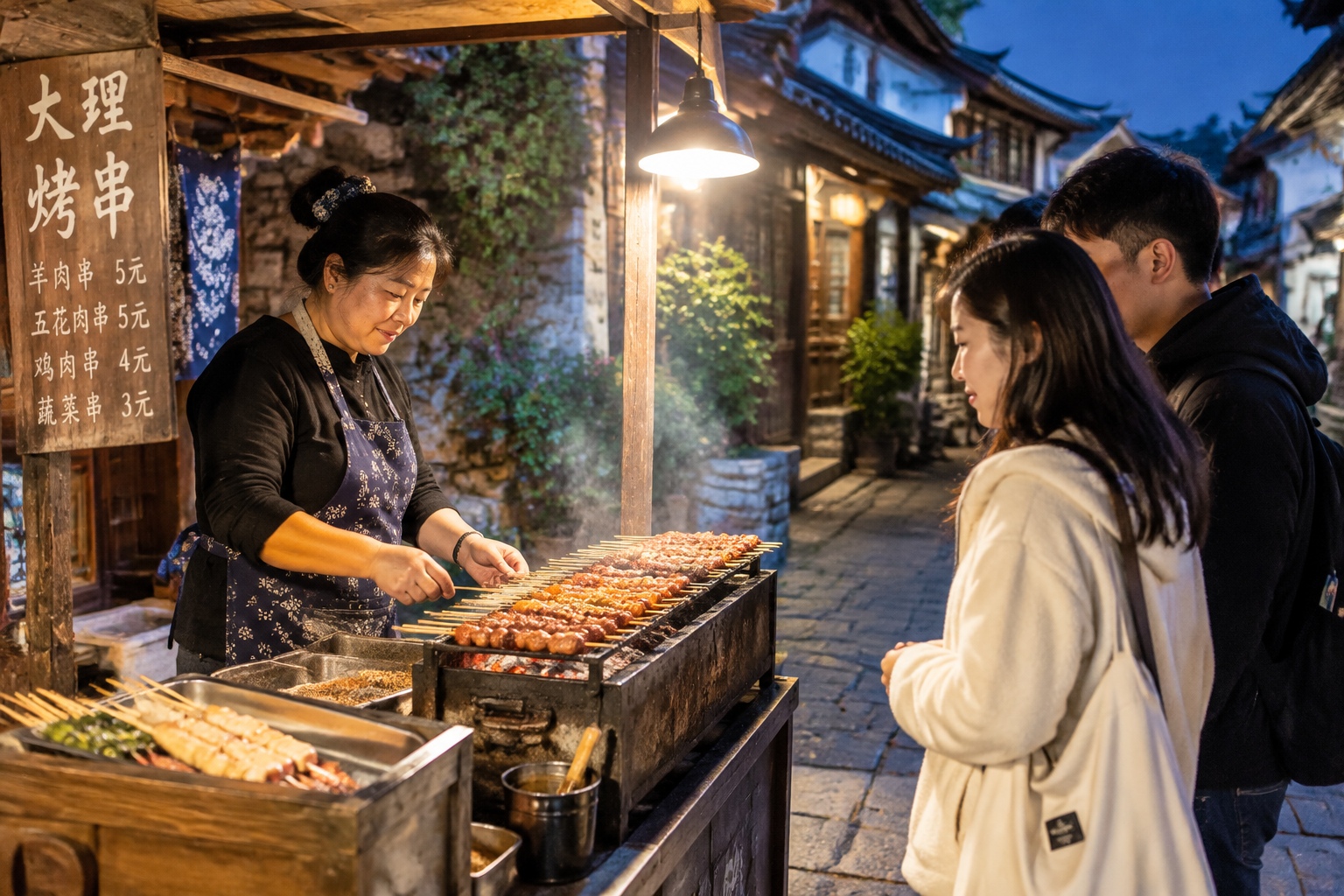
Instead of a menu with 50 items, look for shops that specialize in one or two dishes. A shop that only sells “Crossing the Bridge Noodles” will likely make it better than a general restaurant. The same goes for grilled skewers, Erkuai, or milk fans (Rushan).
Dishes You Must Try — and Their Local Versions
Crossing the Bridge Noodles (Guoqiao Mixian)
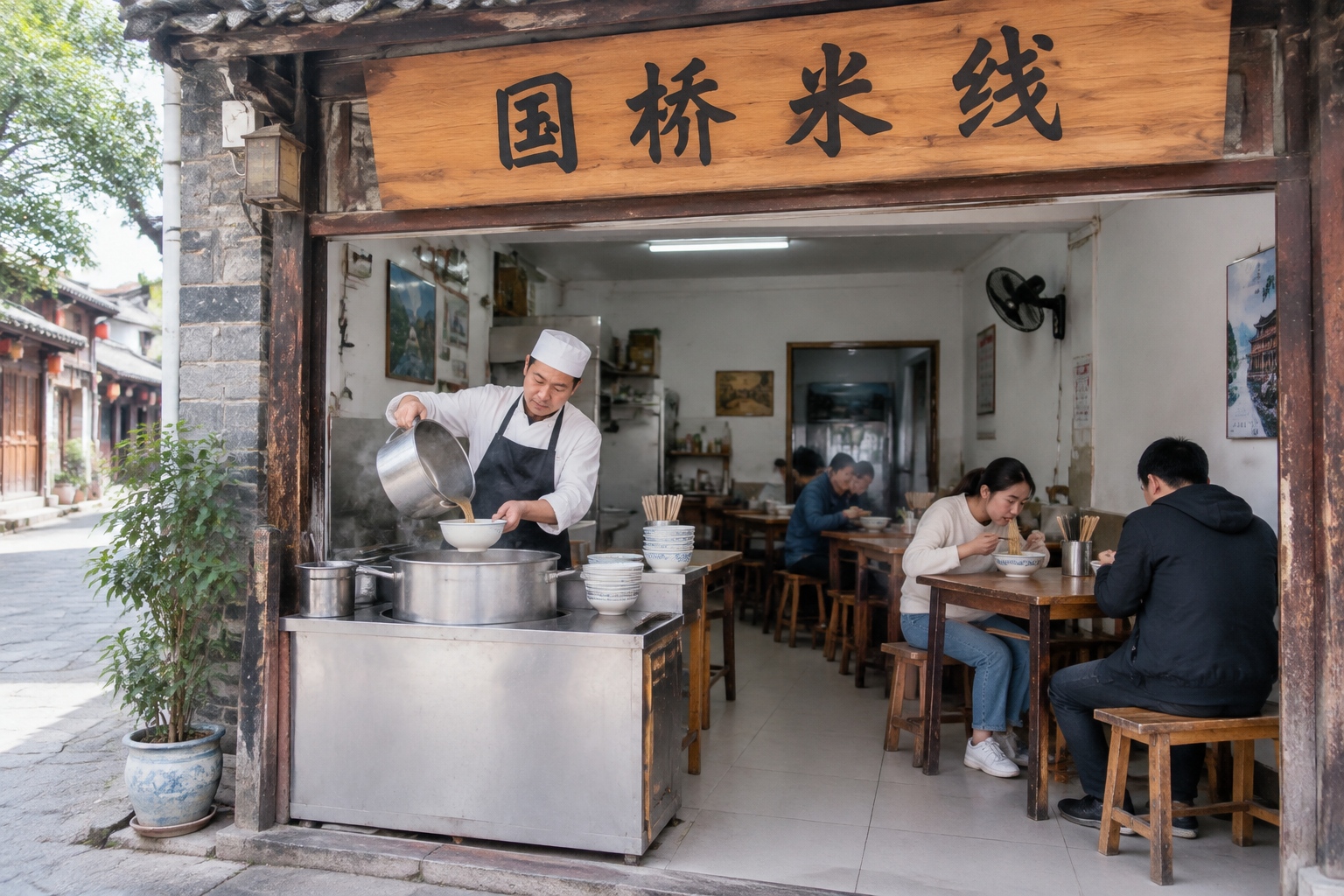
Don’t be fooled by the name — authentic version is a DIY experience. You receive a bowl of boiling broth, and you add raw ingredients (chicken slices, greens, rice noodles) yourself. The broth should be so hot that it cooks the meat on contact. Look for shops with a visible bone broth pot.
Steam Pot Chicken (Qiguo Ji)
A specialty from Jianchuan, this chicken is steamed in a ceramic pot without adding water — only steam collected from the pot’s unique design. The result is a clear, intensely flavorful broth. Best enjoyed in a specialty restaurant, not a street stall.
Erkuai (Rice Cakes)
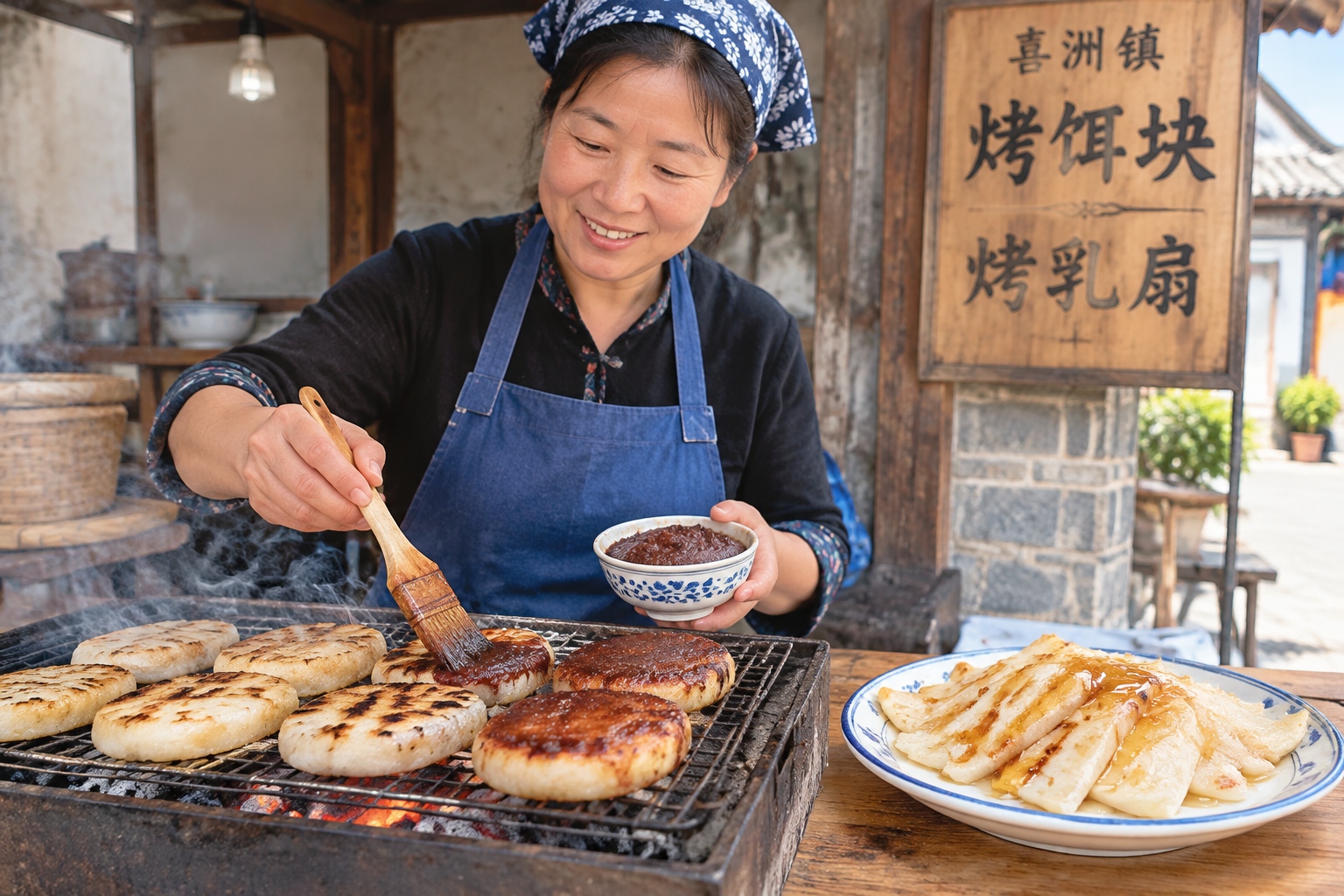
Try grilled Erkuai brushed with local fermented bean paste (Doubanjiang) or sweet soy sauce. The texture should be slightly crispy outside and chewy inside. Avoid deep-fried versions.
Rushan (Milk Fan) and Rubing (Milk Cake)
These are made from cow or goat milk. Rushan is dried into thin sheets, often grilled and eaten with honey or sugar. Rubing is a firm, slightly salty cheese-like cake that can be fried or grilled. Locals eat them as snacks or in salads.
City-Specific Tips: Where to Find Real Food
Kunming
Skip Nanqiang Street (too touristy). Go to Wenlin Street, a lively area with many small eateries run by locals. For a real breakfast, visit any market near the city center.
Dali
Avoid Renmin Road’s main stretch. Instead, wander into the narrow alleys of the old town. Also, take a short trip to Xizhou Town, where you can try the famous Xizhou Baba (a stuffed flatbread).
Lijiang
Old Town Lijiang is overpriced. Walk 10 minutes north to Shuhe Ancient Town, where many locals still live. You’ll find better prices and authentic Naxi cuisine.
Xishuangbanna
This tropical region has unique Dai cuisine. Try the night market at Gaozhuang, but stick to stalls with high turnover. Don’t miss the Dai-style grilled fish wrapped in banana leaves.
Practical Tips for the Smart Eater
- Learn a few Chinese words: “Zhe ge duo shao qian?” (How much is this?) and “Shao la” (less spicy) can help.
- Bring cash: Some old stalls don’t accept digital payments, though most do.
- Drink only bottled water — tap water is not safe.
- Eat early: The best ingredients are used in the morning and early lunch. Stalls that are still open at 9 PM are often reheating leftovers.
- Be adventurous but cautious: If something smells off, trust your instinct.
Conclusion: The Real Yunnan Is Waiting
Yunnan’s street food is a journey through flavors you won’t find anywhere else. Once you know how to spot the traps, you’ll be rewarded with meals that are not only cheaper but also deeply satisfying. Locals don’t eat at the flashiest spots; they eat where the food is honest. Follow their lead, and every meal becomes a story worth telling.
Now go out there, skip the tourist menu, and find your own bowl of real Crossing the Bridge Noodles. Your taste buds (and your wallet) will thank you.
Start the discussion at forum.chinacomes.com