
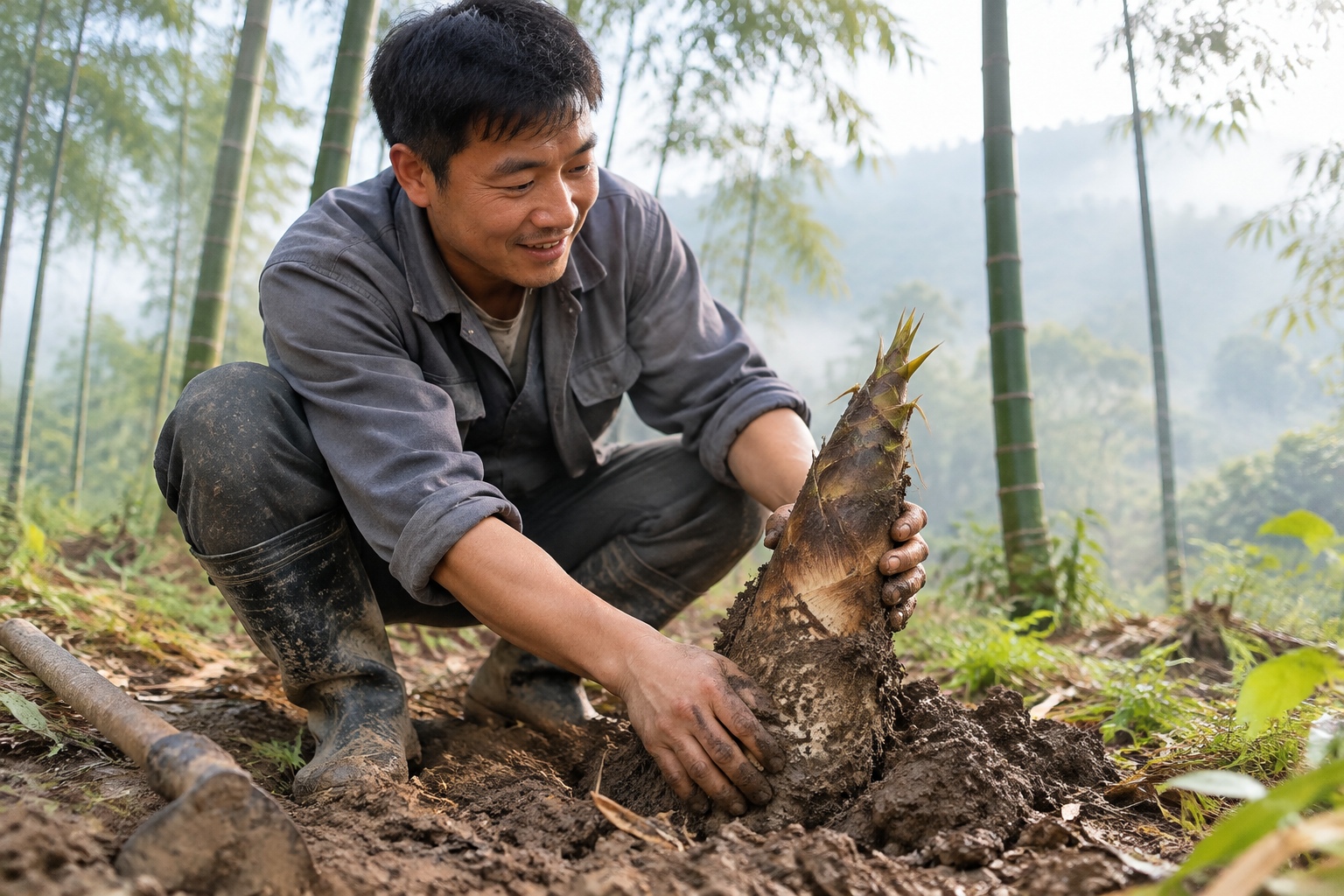

The Moment It Leaves the Soil
At 5:30 AM in Anji County, Zhejiang Province, an experienced bamboo shoot digger named Mr. Chen cuts a plump, golden-tipped shoot from the wet earth. Within seconds, he places it into a woven bag lined with damp moss. This is the first step of a 48-hour race against the clock — a race that will end at a dinner table in Shanghai, 250 kilometers away.
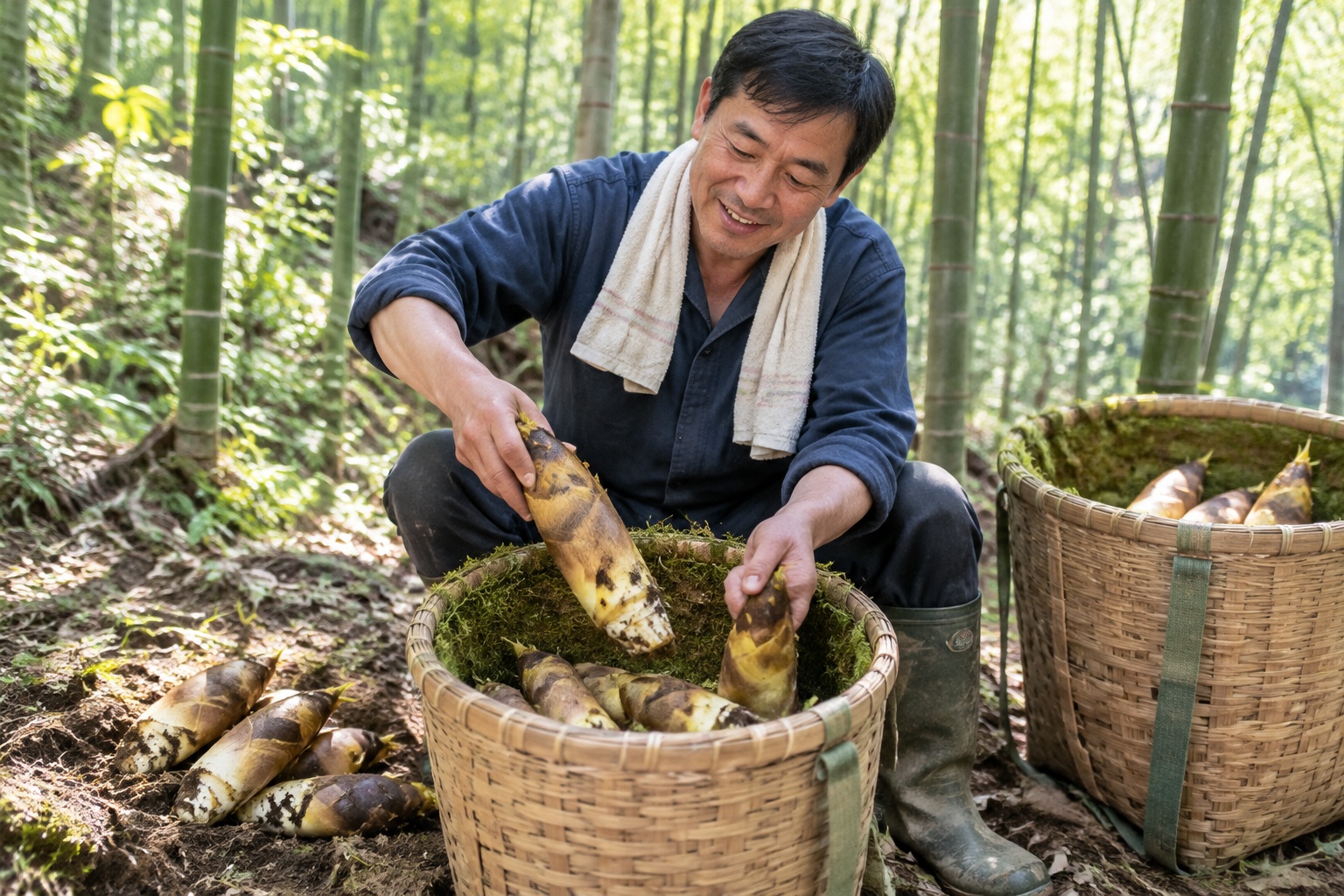
By 7 AM, Mr. Chen’s basket has been weighed and recorded at a village collection point. The shoots are quickly loaded onto a refrigerated pickup truck. The temperature inside is 2°C, just above freezing. This immediate cold chain is the difference between a bamboo shoot that tastes like fresh morning dew and one that becomes woody and bitter.
The Cold Chain: A Network of Speed and Precision
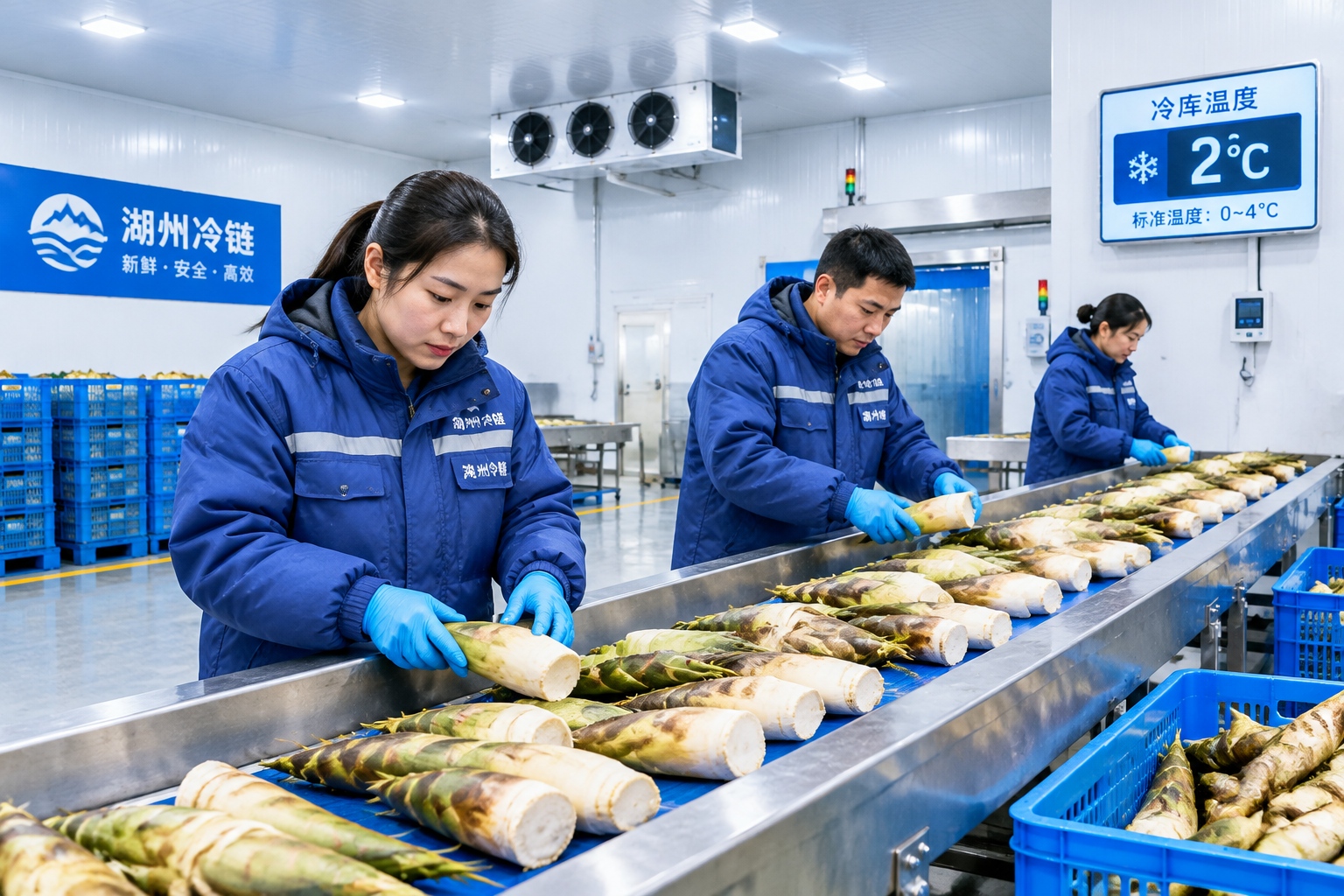
China’s fresh food logistics is among the most efficient in the world. For bamboo shoots, the critical window is the first 12 hours. From the collection point, the truck heads to a regional cold storage hub in Huzhou, a 40-minute drive. There, the shoots are sorted by size and quality. Damaged or imperfect shoots are diverted to local markets or processing factories; the premium ones are packed in perforated plastic crates and loaded onto a larger refrigerated trailer destined for Shanghai.
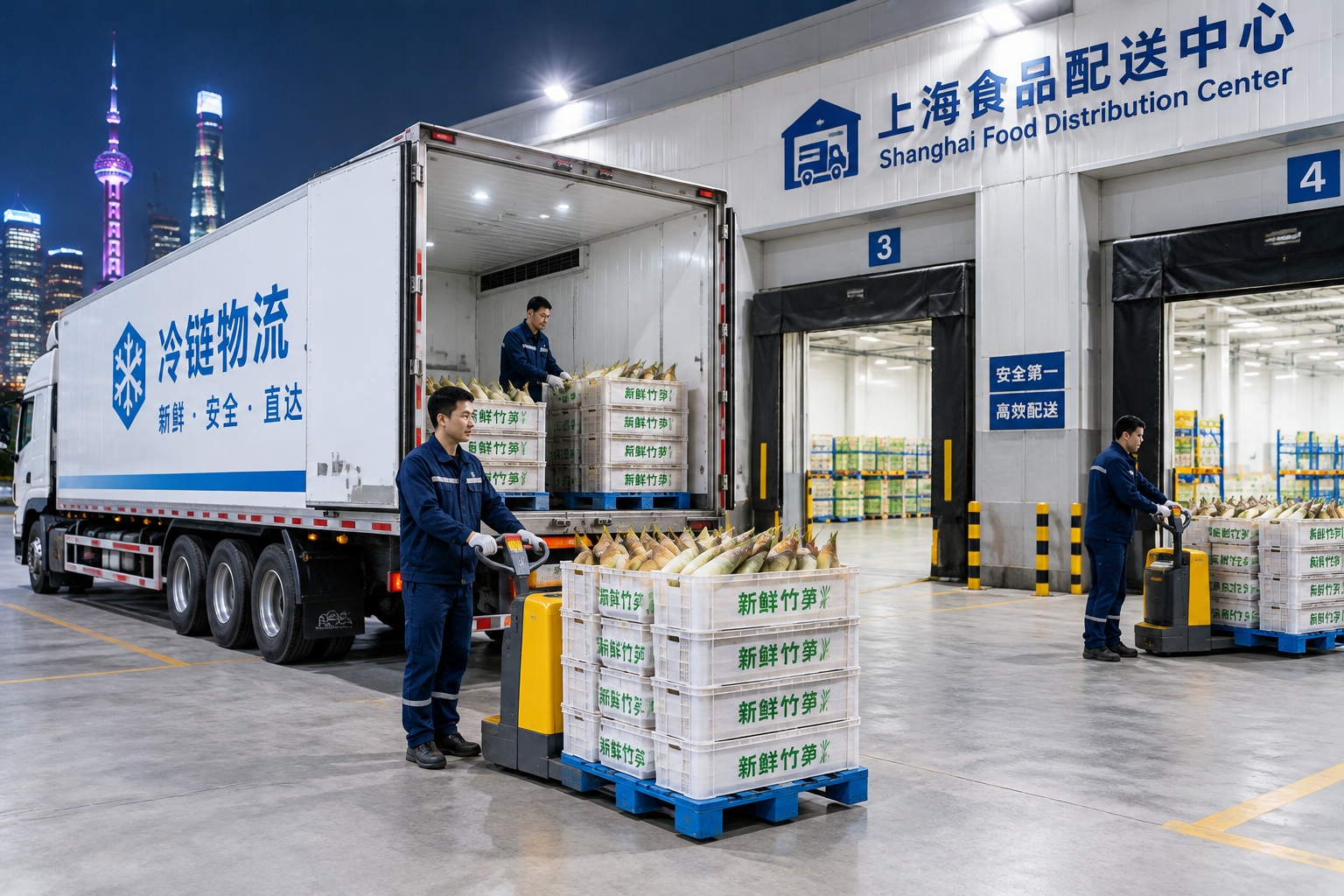
By 2 PM, the trailer departs. It travels along the G50 Expressway, a major route connecting inland Zhejiang to the Yangtze River Delta ports. The driver, Mr. Li, has been trained to maintain constant temperature and avoid sudden braking — the shoots are sensitive to vibration. He arrives at a Shanghai fresh-food distribution center in Minhang District by 8 PM, after a six-hour, 200-km journey.
Inside the Distribution Center
The distribution center is a cavernous building humming with electric pallet jacks and workers in thermal jackets. Here, the bamboo shoots join thousands of other fresh items from across China: leafy greens from Shandong, berries from Yunnan, fish from Fujian. The sorting machines scan barcodes and assign each crate to one of dozens of outgoing lanes based on the next-day delivery destinations: wet markets, supermarket chains, community group-buy lockers, and high-end grocery stores.
By 11 PM, the bamboo shoots have been repackaged into smaller, customer-ready portions. Some are vacuum-sealed with edible labels; others are kept loose for traditional market stalls. The entire process — from arrival to final allocation — takes just three hours.
For the community group-buy channel, the shoots are then loaded onto light electric vans. These vans, silent and zero-emission, operate through the night, making multiple drops to neighborhood pickup points across Shanghai’s residential areas.
Final Miles to the Kitchen
At 5 AM the next day — just 24 hours after being dug — the bamboo shoots arrive at a community group-buy locker in a Pudong apartment complex. Ms. Wang, a marketing manager, receives a WeChat notification that her order is ready. On her way to work, she stops by the locker, scans the QR code, and takes home four shoots, still firm and smelling of forest.
That evening, her family enjoys a simple stir-fry with bamboo shoots, pork belly, and scallions, cleaned and sliced in minutes. The entire journey from mountain to table: 48 hours.
What Made This Possible?
China’s quest for freshness has been propelled by massive infrastructure investments. Cold storage capacity across the country has more than doubled from 2015 to 2023, reaching over 200 million cubic meters. Expressways now connect 98% of towns with populations over 200,000. And digital platforms — from WeChat mini-programs to large e-commerce players — seamlessly link rural pickers to urban consumers.
But infrastructure alone is not the whole story. Behind it is a system of habits: farmers who understand pre-cooling, drivers who respect cold-chain protocols, and consumers who trust the system enough to order fresh produce daily without seeing it first.
The bamboo shoot’s 48-hour journey is not exceptional. It is the quiet norm in China today — a norm that many no longer notice, because it works so reliably.
Start the discussion at forum.chinacomes.com