

A grassy ridge half an hour from Hangzhou
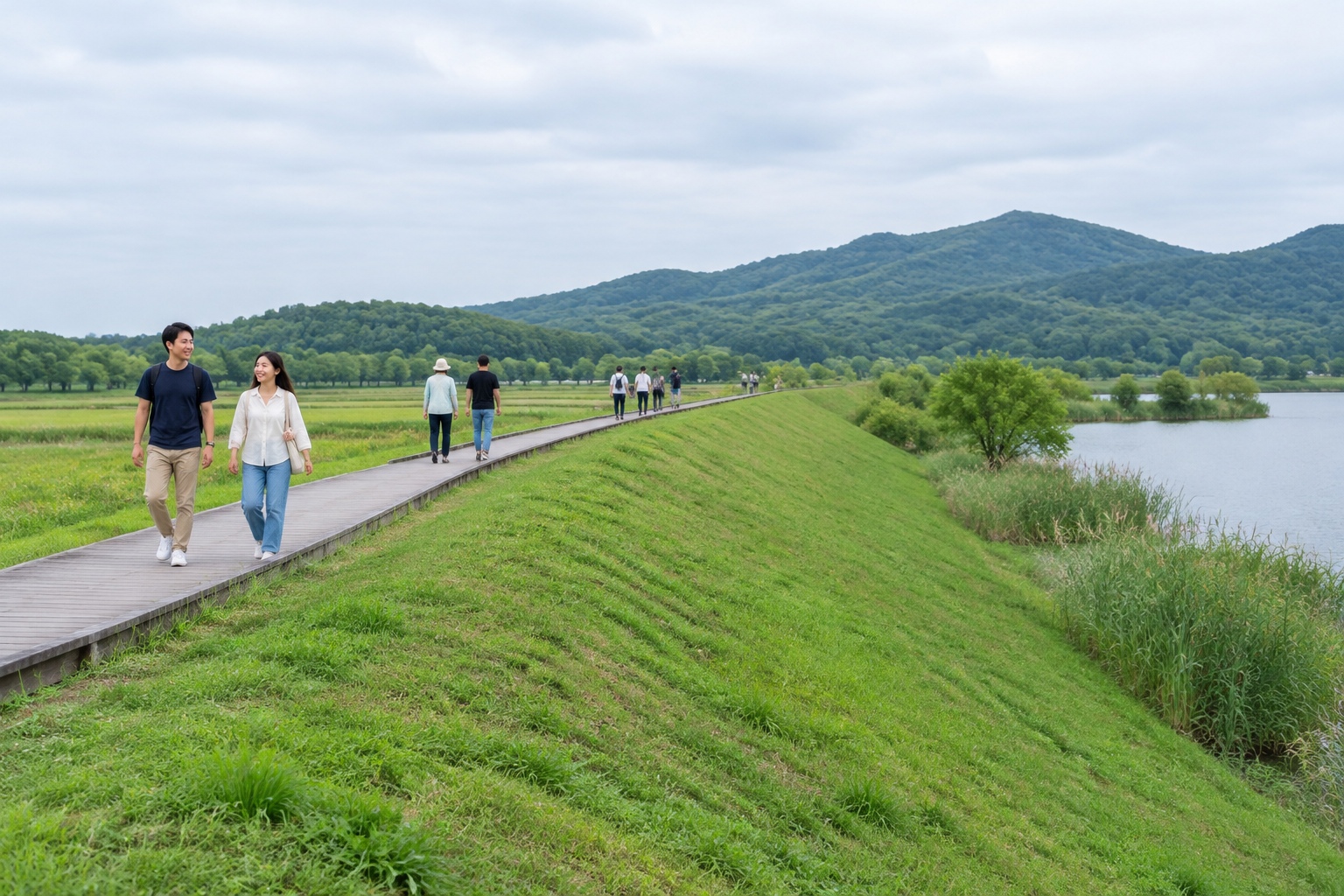
The first thing you notice at Liangzhu is how little there is to notice. About 20 kilometres northwest of downtown Hangzhou, in Zhejiang province, a long grassy ridge crosses the fields. Wooden walkways run along the top. Visitors walk the path, photograph a small lake, and move on.
Under the grass is a city wall, built roughly 5,000 years ago out of layer after layer of rammed earth. At its base the wall is up to 60 metres thick, and it runs about 6 kilometres in a rough rectangle. For a few centuries, this was the centre of one of the most complex societies on Earth.
What Liangzhu actually is
The name refers to two things. The Liangzhu culture was a late Neolithic society spread across the Yangtze River Delta — today’s Zhejiang, Jiangsu and Shanghai — between roughly 3300 and 2300 BCE. Liangzhu city was its capital.
Sizes help. The walled inner city covers about 300 hectares, roughly 3 square kilometres. Add the outer districts, workshops and elite platforms, and the protected archaeological site covers 14.3 square kilometres — about 2,000 football pitches. The first potsherds were picked up here in 1936 by Shi Xingeng, then a young employee of a Hangzhou museum. The wall itself was not confirmed until 2007, when archaeologists from the Zhejiang Provincial Institute of Cultural Relics and Archaeology traced its stone foundation.
A wall made of dirt, and eight water gates
Liangzhu’s builders had no metal tools and no wheeled transport. They raised the wall by dumping soil in thin layers and pounding it hard, a technique known in Chinese as hangtu, or rammed earth. At the bottom they laid a cushion of stones so water would drain away instead of softening the base.
Eight gaps in the wall were left as water gates, wide enough for boats. Inside, the city was crisscrossed with canals and timber docks; in 2010 archaeologists lifted a 7.65-metre wooden canoe out of the mud nearby. In the middle of the city, workers raised a platform called Mojiaoshan — 30 hectares, more than 10 metres high, built entirely by hand — and set three large earthen mounds on top of it. The biggest structures Liangzhu left behind are not towers or tombs. They are foundations.

Eleven dams, older than the pyramids at Giza
Outside the city, archaeologists have identified 11 dams. High dams sit at the foot of the hills to the north, catching monsoon runoff; low dams closer to the city hold water back for the fields. A 5-kilometre levee known as Tangshan protected the settlement from the river. Together the system controlled roughly 100 square kilometres of catchment, with reservoirs holding, by some estimates, several million cubic metres of water.
Dates matter here. Djoser’s Step Pyramid in Egypt was built around 2650 BCE and the Giza pyramids around 2560 BCE. Parts of Liangzhu’s water system were in use centuries earlier. It is the oldest large-scale hydraulic engineering yet found anywhere, and it required something harder than earthmoving: an authority that could summon thousands of workers, feed them, and keep the project going across seasons.
Jade: how we know somebody was in charge
In 1986, excavators at a site called Fanshan opened 11 tombs. The bones had mostly dissolved in the wet, acidic soil; the jade had not. Thousands of jade objects came out of those graves — tubes, discs, axes — while ordinary burials of the same period contain a few pottery jars and perhaps a stone tool.
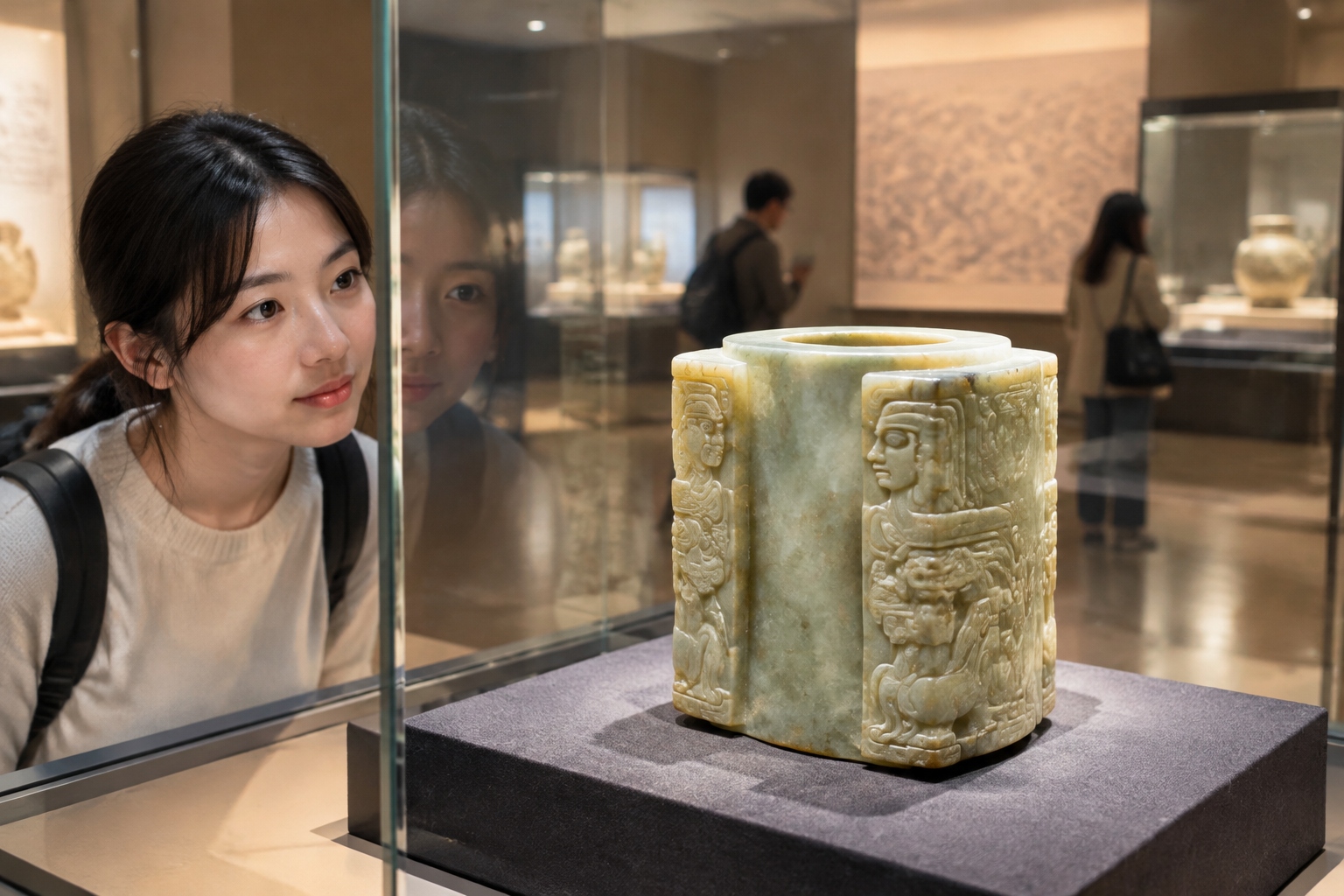
The signature object is a cong: a square tube with a round hole through the middle, carved on each corner with a repeated image of a man in a feathered headdress above a beast’s face. The largest one, from Fanshan tomb 12, weighs about 6.5 kilogrammes. Jade is harder than steel, and Liangzhu’s craftsmen cut it by rubbing with quartz sand and bamboo, drilling holes that could take weeks. Making one cong was a serious investment of skilled labour. Being buried with hundreds of them was a statement about who you were.
Rice, labour and the size of the machine
All of this rested on rice. Farmers in the delta worked the wetlands with polished stone tools and triangular stone ploughshares, and laid out paddy fields with banks and ditches to hold and drain water. Surplus rice fed people who did not farm: jade cutters, carpenters, boat builders, organisers. Archaeologists who have tried to price the labour conclude that the Mojiaoshan platform alone would have taken millions of person-days, and the full city considerably more. Some estimates put the population of the city and its hinterland at 20,000 to 30,000 at its peak.
Then the water won
Around 2300 BCE, Liangzhu empties out. Roads and platforms are sealed under layers of sand and silt. A 2021 study in the journal Science Advances, using a stalagmite from a cave in central China as a rainfall record, found a sharp increase in extreme flooding around 4,300 years ago — the same moment Liangzhu and other Neolithic societies in the lower Yangtze fade from the archaeological record. The people who built the ancient world’s most ambitious water system appear to have been undone by water, and by a second possibility: that a society organised around managing water could not hold together when the managing failed.
Why you are hearing about Liangzhu now
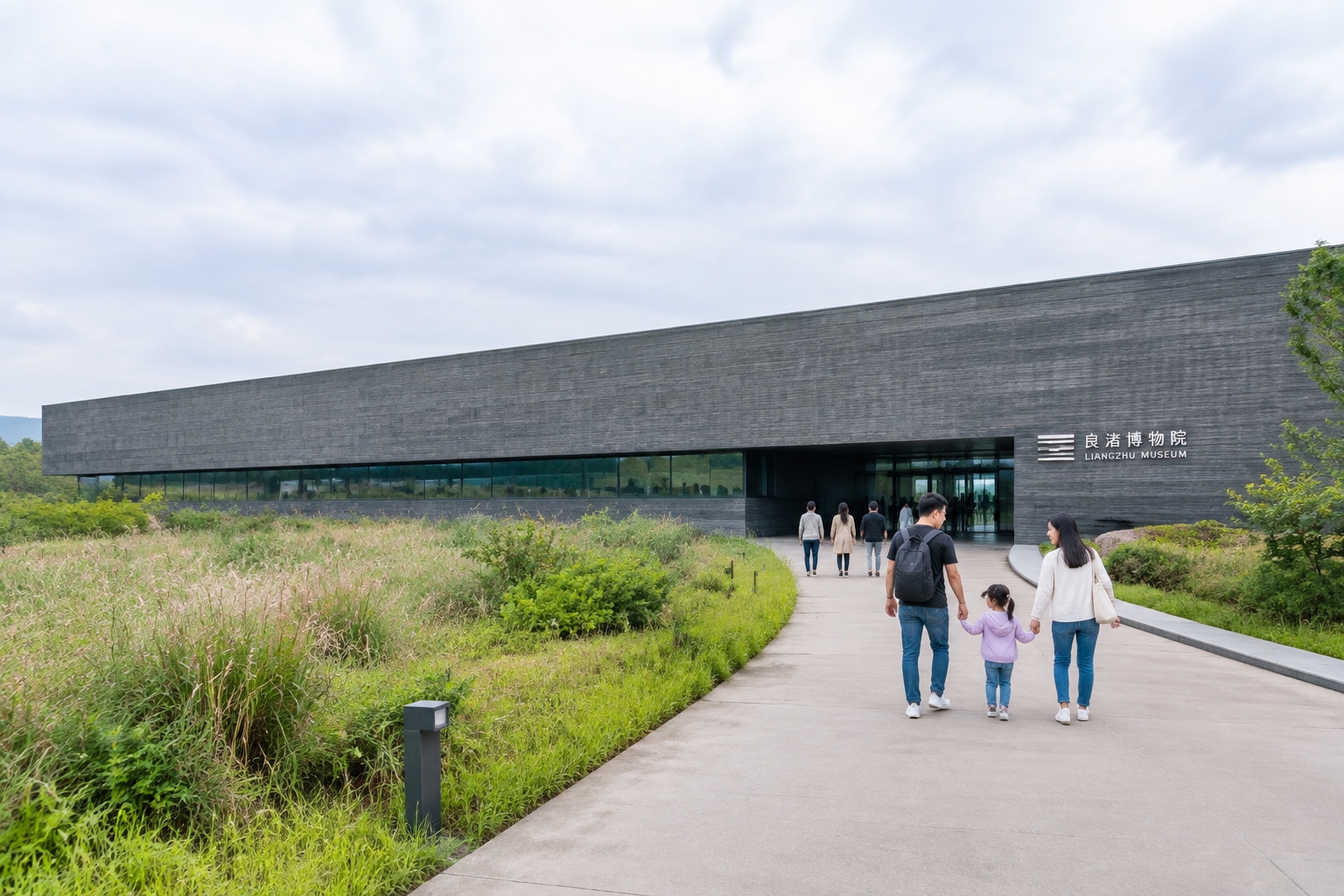
In 2019 UNESCO added Liangzhu to the World Heritage list, describing it as an outstanding example of early urban civilisation. The Liangzhu Museum, designed by the British architect David Chipperfield, opened in 2008; the archaeological park opened in 2019 and caps daily visitor numbers so the earthworks and grass cover can be maintained. Since 2004, a state research programme on the origins of Chinese civilisation has used Liangzhu as a central piece of evidence for the claim that Chinese civilisation is 5,000 years old.
There is more than politics behind the attention. Twenty years of better dating, drone mapping, soil chemistry and residue analysis have turned a scatter of jade finds into a picture of a working city with canals, storage, workshops and a water authority.

What Liangzhu does not prove
Potters at Liangzhu left marks on some vessels, but nothing that scholars agree is writing. There is no bronze, no wheeled vehicle, no pyramid visible from a distance. Whether this adds up to a civilisation, or to a state, depends on which checklist you use. The British archaeologist Colin Renfrew has argued that Liangzhu meets the criteria for a state; others prefer to describe what the evidence shows and leave the labels alone.
Continuity is worth stating precisely, too. Liangzhu was one of several regional societies in what is now China, and it disappeared. Nobody today is a straightforward descendant of the people buried at Fanshan. What survived is a set of problems — how to hold water, feed a city, and organise thousands of people — that every urban society since has had to solve.
If you go
Hangzhou is 45 to 60 minutes from Shanghai by high-speed train. Metro Line 2 stops at Liangzhu; from there it is a short bus or taxi ride to the site. The ruins park runs shuttle buses and requires a ticket, and the museum asks visitors to book online in advance. One practical note: the most famous cong, the one from Fanshan tomb 12, is displayed at the Zhejiang Provincial Museum in central Hangzhou, not at the site itself.
The point of a pile of dirt
Liangzhu is easy to underestimate because almost nothing stands up. There are no columns, no statues, no carved stone facades. There is earth, shaped with enormous effort, and jade worked with sand and patience. Stand on the walkway above the old wall, though, and the arithmetic is hard to ignore: 5,000 years ago, without metal, wheels or writing, people in the Yangtze Delta moved millions of cubic metres of soil, ran a reservoir system, and buried their dead with objects that took weeks each to make. This is not a legend about ancient China. It is a construction site, and the paperwork is still coming out of the ground.
Start the discussion at forum.chinacomes.com