
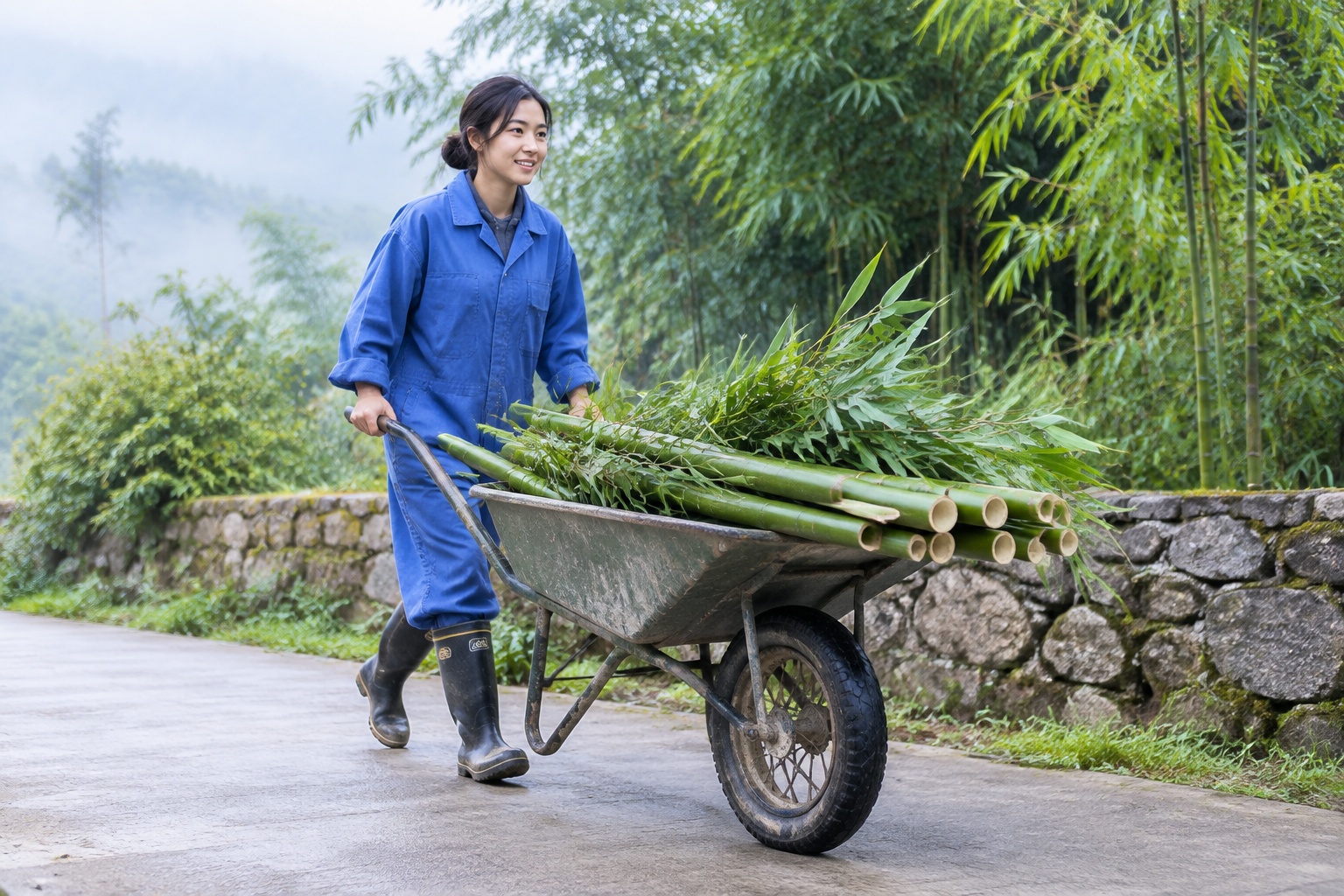

A wheelbarrow, a shovel, and a panda who could not care less
It is 8:15 in the morning at a panda base outside Dujiangyan, about an hour northwest of Chengdu, and someone has just handed me a shovel. I am wearing blue cotton coveralls two sizes too big, white cotton gloves, and rubber boots that smell like they have been steamed. In front of me is an outdoor enclosure with about four kilos of leftover bamboo stalks, a scatter of droppings, and one adult giant panda who is asleep in the corner with his back to me.
Everyone who signs up for the panda keeper program has the same fantasy. You bottle-feed a cub. You scratch an ear. You get a photo that makes your friends jealous. Nobody’s fantasy involves raking.
Here is what the day actually looks like.
What the panda keeper program actually is
This is not a zoo internship, and it is not free. The Chinese Conservation and Research Center for the Giant Panda runs a one-day keeper program at several of its bases. The easiest one for visitors is Dujiangyan, with others at Bifengxia in Ya’an and further out at Wolong. You pay, you book in advance, and you spend a day doing the grunt work that real keepers do every morning.
The cost is roughly 700 yuan, about 100 US dollars, if you book directly through the base. Go through an English-language tour operator and the same day can cost 250 to 400 dollars, mostly because it bundles in a driver, a translator, and a hotel pickup.
Why would a research center sell this? Two reasons. Breeding and research bases are expensive to run, and public participation helps pay the bills. And in China, this kind of paid experience travel has become a genuine trend. Travelers increasingly want to do the thing rather than look at the thing: pick tea in Hangzhou, harvest rice in Yunnan, throw pots in Jingdezhen. Spending a day shoveling for a panda is the premium version of that instinct.
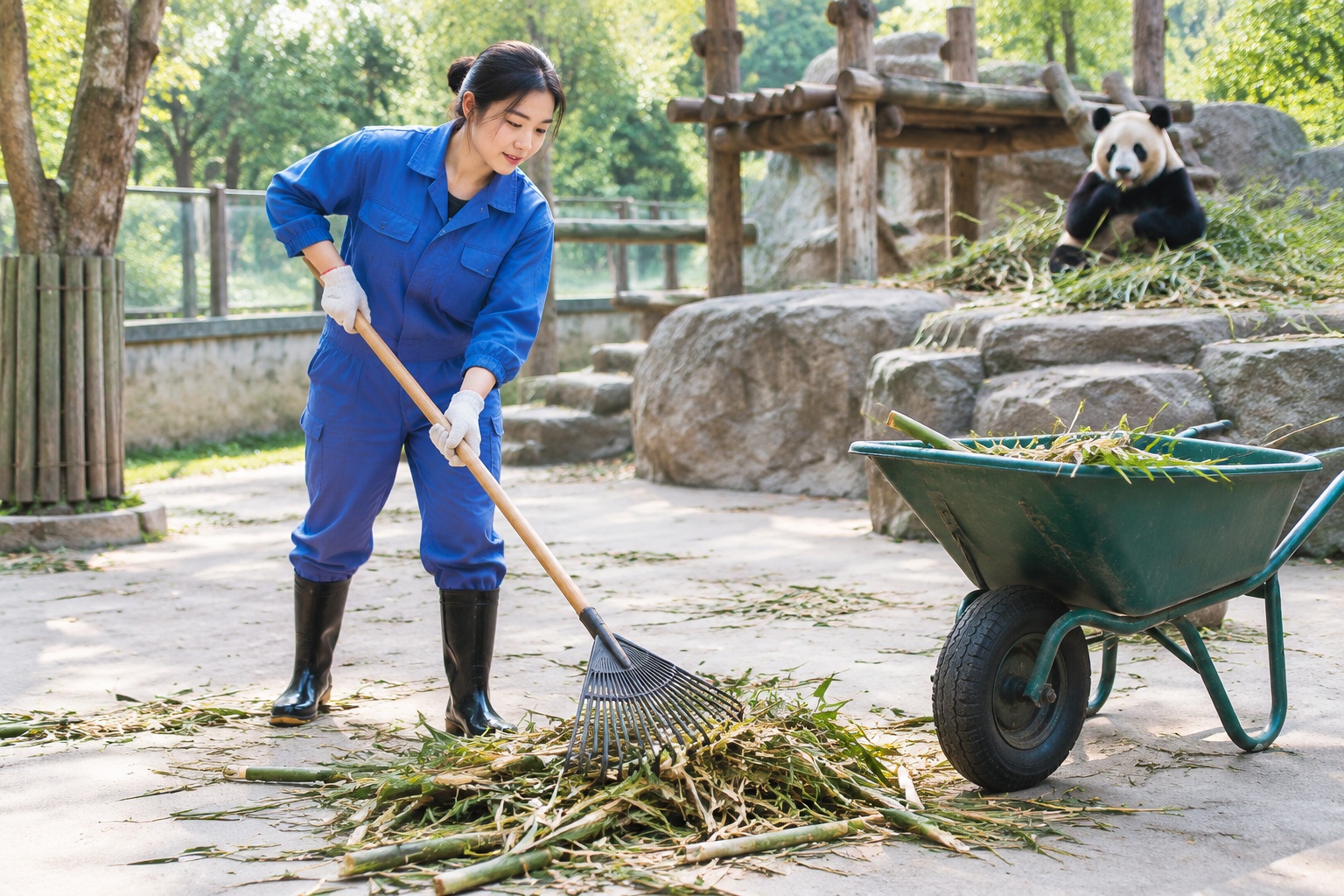
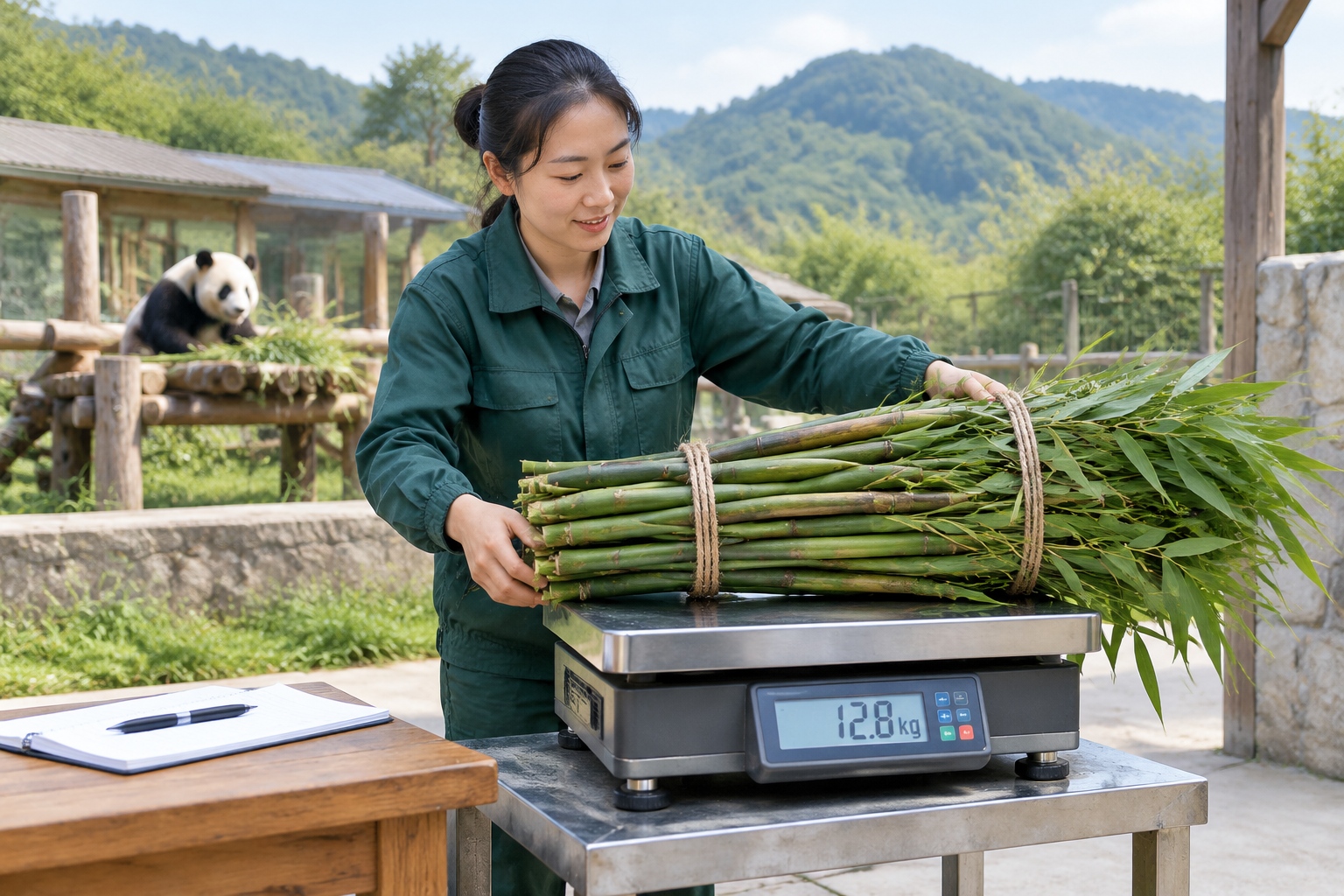
8 a.m.: the bamboo weigh-in
The first task of the day is more scientific than it looks. Keepers weigh every bundle of bamboo before it goes into an enclosure, then weigh what is left over the next morning. The difference tells them how much that specific animal ate. A sudden drop in appetite is usually the first sign a panda is getting sick, often days before anything else looks wrong.
An adult giant panda eats somewhere between 12 and 38 kilograms of bamboo a day, depending on the season, the bamboo species, and how much of it is shoots. It also digests only about 17 percent of what it eats. That single number explains both the volume of the work and what comes next.
My job was to wheel the bamboo in, drop it, and then watch the panda ignore it. Pandas are picky. They will refuse a bundle that is slightly wilted, or one that another panda has already sniffed. Keepers sort the good stuff from the rejects and stack the rest for later.
9 a.m.: the cleaning, which is most of the day
Panda droppings are not what most people picture. Bamboo is almost pure fiber, and pandas extract very little of it, so what comes out looks like a damp green log of sawdust. It smells like cut hay. Unpleasant, but not the catastrophe you brace for.
There is just a lot of it. One panda produces droppings 40 or more times a day, adding up to 10 to 15 kilograms of material. On top of that there is leftover bamboo to rake out, a concrete floor to hose down, a feeding platform to scrub, and a small pool to skim.
Forty minutes in, my shirt was soaked through. Sichuan is humid in a way that coastal visitors underestimate. The basin traps moisture, and by mid-morning the air feels like a wet towel. Add mosquitoes, and the fantasy has fully evaporated.
What surprised me was how much the keepers notice. One of them stopped mid-sentence, looked into an enclosure, and said the animal on the left had been sitting differently for two days. She wrote it down. That is the difference between a volunteer and a keeper.
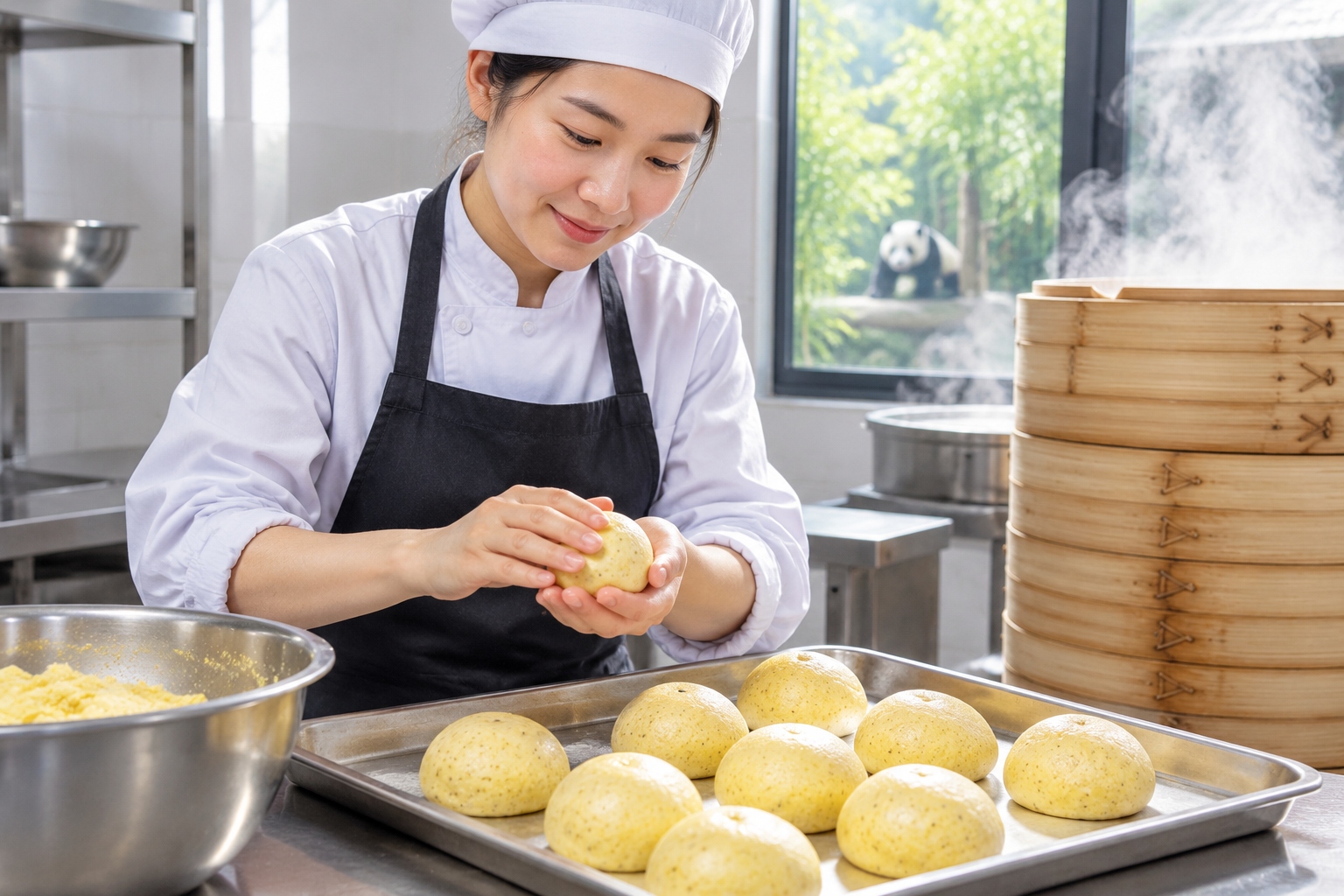
10:30 a.m.: making panda cakes
The most enjoyable task happens in a stainless steel kitchen. You make wotou, a dense steamed bun of cornmeal, soybean powder, rice flour, a little sugar, an egg, and a mineral and vitamin premix. You shape them by hand, they go into a steamer, and the whole room smells like a health food bakery.
Captive pandas need these cakes because bamboo alone does not reliably deliver enough calories or micronutrients, especially for pregnant females and growing cubs. The cakes are also the delivery system for medication. Every panda gets a portion weighed to the gram, because pandas put on weight easily when they are not moving much.
We did not feed them by hand. Keepers do that, usually from behind a barrier. The closest we got was handing the steamed cakes to a staff member, who carried them out on a tray. It felt a bit like catering for a very famous person who will never say thank you.
11:30 a.m.: the part that is genuinely fun
Enrichment is where the day gets interesting. Keepers hang bamboo tubes stuffed with apple slices, freeze fruit into blocks for hot days, and hide food in different corners of an enclosure to force the animals to move and search the way they would in the wild. We helped assemble a few of these, then watched what happened.
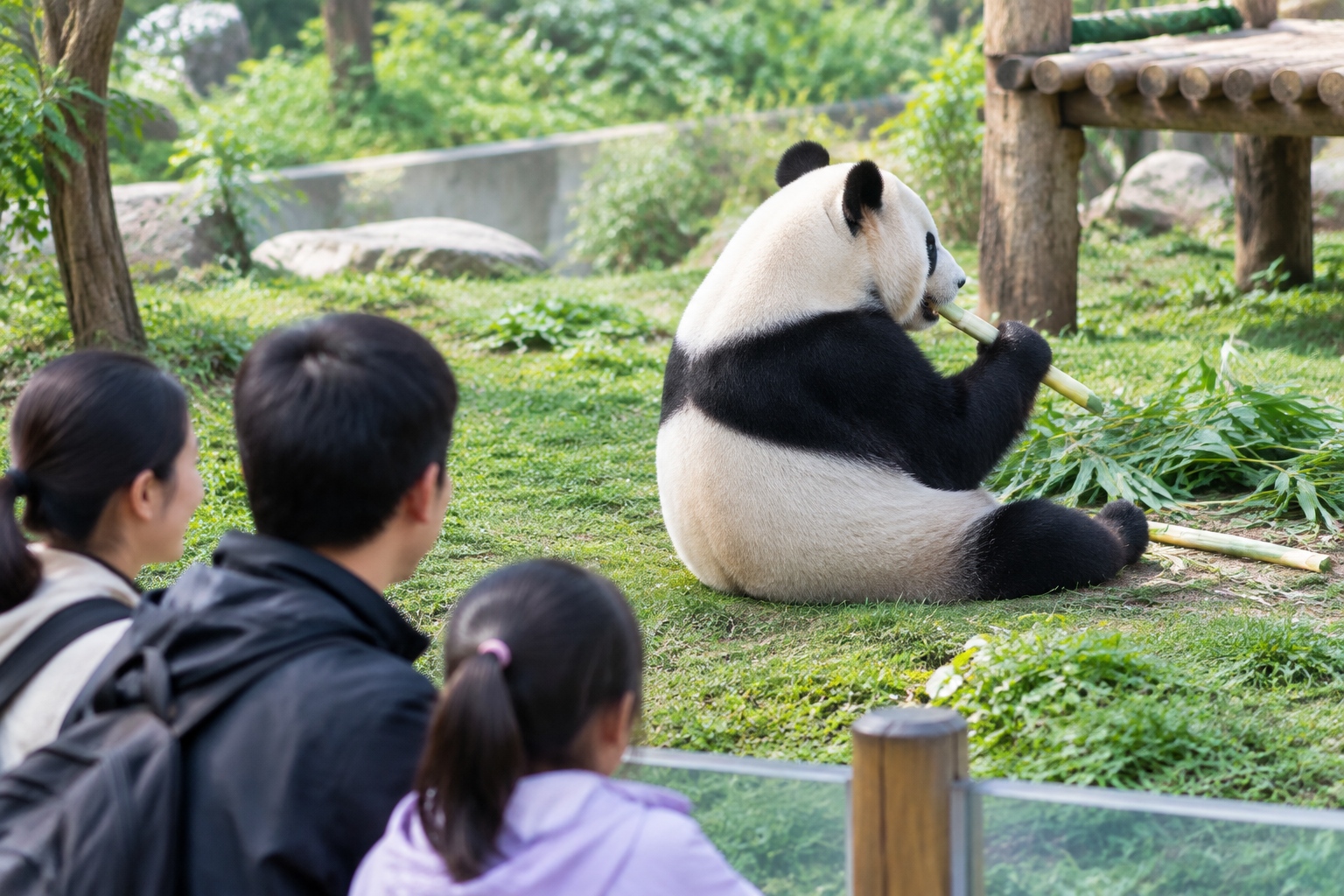
Then came observation, the part that makes the day feel like research rather than a tour. You sit with a clipboard and record behavior in timed intervals: eating, resting, walking, scent-marking, climbing. For the first 20 minutes nothing happens, and you start to wonder whether you are wasting your money. Then the panda stands up, ambles eight meters, and does something you have never seen a bear do. He sits down like a person on a park bench, picks up a shoot with that odd extra wrist bone that works like a thumb, and eats it the way someone eats corn on the cob.
That wrist bone, a modified sesamoid, is one of the strangest bits of evolution in the animal kingdom. It is not a real thumb. It is a workaround, and it works well enough to strip bamboo all day.
The rule that disappoints almost every foreign visitor
You do not touch the pandas.
Many overseas visitors arrive expecting the classic photo of themselves cradling a cub. That option has largely been phased out at China’s major panda bases, including Dujiangyan. The reason is partly biosecurity, since pandas can catch human viruses and cubs are especially vulnerable, and partly a shift in how the bases present themselves. They are research and conservation facilities, not petting zoos.
It also helps to remember what a giant panda physically is: a bear weighing well over 100 kilograms, with jaws built for crushing woody stalks. The cuteness is real, but it is a human reading, not a panda strategy.
Why this exists, and why it matters more than a souvenir
Giant pandas were moved from endangered to vulnerable on the international list in 2016. The wild population is estimated at roughly 1,900 animals, spread across mountain ranges in Sichuan, Shaanxi, and Gansu. In 2021, China connected those fragmented habitats into the Giant Panda National Park, an area of about 27,000 square kilometers, larger than the state of Vermont, covering corridors that let isolated populations meet and breed.
Breeding centers remain central to that effort, and they are not cheap. Volunteer fees are one small stream of funding. Public support is another, and that is where the day program does its quiet work: Chinese families, school groups, and now foreign visitors leave with a personal stake in the animal.
The uncomfortable questions
Is a paid volunteer day conservation, or is it animal tourism in a lab coat? Critics make a fair point. A one-day volunteer is not performing skilled labor, and some of the tasks are created for the visitor rather than required by the animals. You are, honestly, a paying helper.
The counterargument is that the fee funds real work, the program generates public and political support for conservation, and without the panda’s popularity there would be far less money for habitat protection in the mountains. I came down somewhere in the middle. I did not contribute much, but I understood the operation better than any signboard could have taught me.
Practical details if you want to go
Book weeks ahead, since daily volunteer slots are limited and often capped at a few dozen people. Dujiangyan is the easiest base to reach from Chengdu, about an hour by car. Bifengxia, near Ya’an, takes around two and a half hours. Wolong is further still, better combined with an overnight trip.
Expect a health declaration form and age limits, usually somewhere between 8 and 65. Wear closed-toe shoes and clothes you do not care about, and bring a second shirt. Spring and autumn are the most comfortable. Summer is humid and punishing. Winter is cold, but the pandas are active and the crowds are thin. Check in advance whether your session has English-speaking staff, because some run in Chinese only.
Would I do it again?
Yes, with different expectations.
The moment that made the day worth the money came at the end. A keeper called out a name, and a large male shuffled over, sat down, and ate bamboo shoots with his back to all of us for 20 minutes. He was not performing. He had no idea we existed.
Oddly, that was the best part of the whole day.
Start the discussion at forum.chinacomes.com