
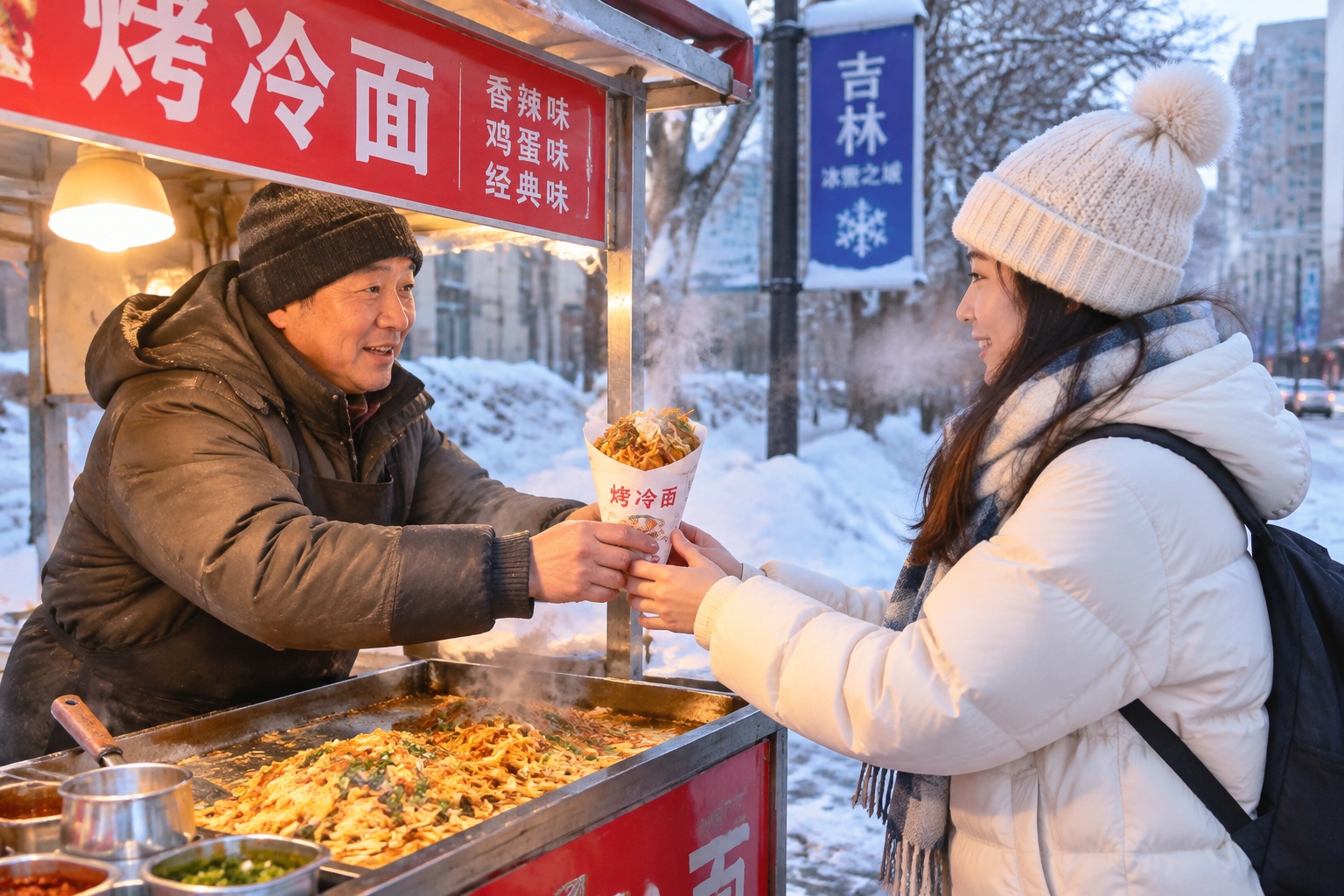

How Cold Is a Jilin Winter? Cold Enough to Plan Your Day Around Food
Walk outside in Changchun or Jilin City in January and the air hits your face like a frozen towel. Temperatures routinely sit between -15°C and -25°C (5°F to -13°F), and on the worst days, they dip below -30°C. People don’t stroll — they move with purpose, shoulders hunched, breath visible, phone in a gloved hand that stays in a pocket as long as possible.
In this kind of cold, food isn’t just comfort. It’s infrastructure. It’s how you get from one heated space to the next without losing feeling in your fingers. Hot pot is the dish most outsiders know, and yes, it’s everywhere. But ask anyone who lives here what they actually eat in winter, and you’ll get a very different list.
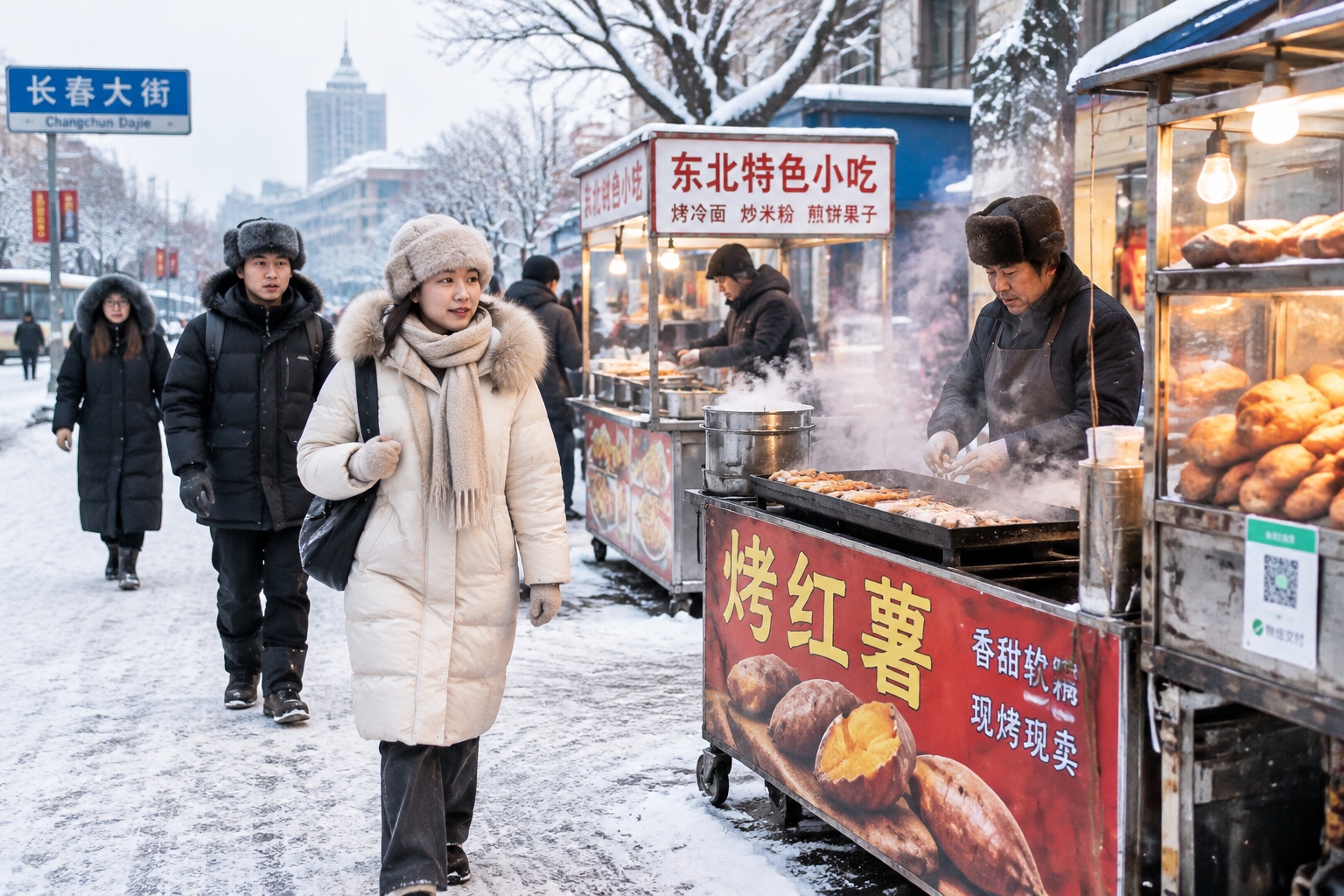
Street Snacks That Keep Your Hands Warm
Before you even sit down for a meal, the streets offer their own warmth. In Jilin, winter street food is not a tourist gimmick — it’s how office workers, students, and shoppers get through the afternoon.
Grilled Cold Noodles (烤冷面)
A flat sheet of pressed noodles goes onto a hot griddle, crack an egg on top, add sausage, onion, cilantro, and a brush of sweet-savory sauce. It’s folded, chopped, and handed over in a paper cone for about 6 to 10 yuan (roughly $1). You’ll find these carts near school gates, subway exits, and night markets. The griddle’s heat radiates through the paper, and for a few minutes, your hands forget the cold.
Roasted Sweet Potatoes (烤地瓜)
A barrel-shaped oven on a cart, sweet potatoes stacked inside, skins caramelized and sticky. Vendors sell them by weight, usually 8 to 15 yuan. You peel back the charred skin, steam rises, and the orange flesh is so hot it almost burns your tongue. This is the classic hand-warmer snack — you hold it long after you’ve finished eating.
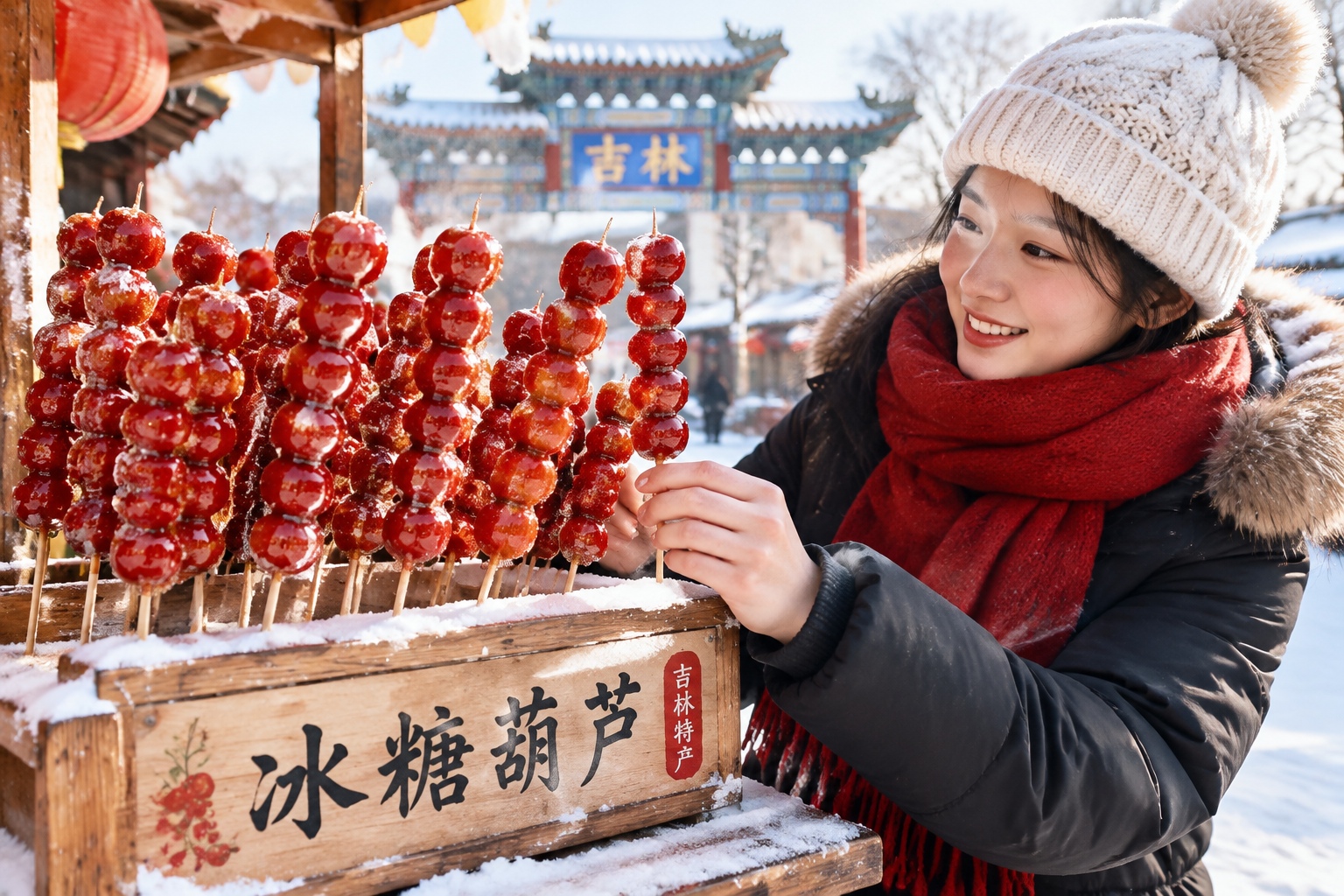
Candied Hawthorn (糖葫芦)
Hawthorn berries — tart, small, and bright red — are skewered, dipped in molten sugar, and left to harden into a glassy shell. In winter, the syrup freezes almost instantly, giving each bite a crackle before the sour fruit hits your tongue. A stick costs 5 to 10 yuan. You’ll see them at every street corner, sometimes with strawberry or grape variations, but the classic hawthorn is still the winter standard.
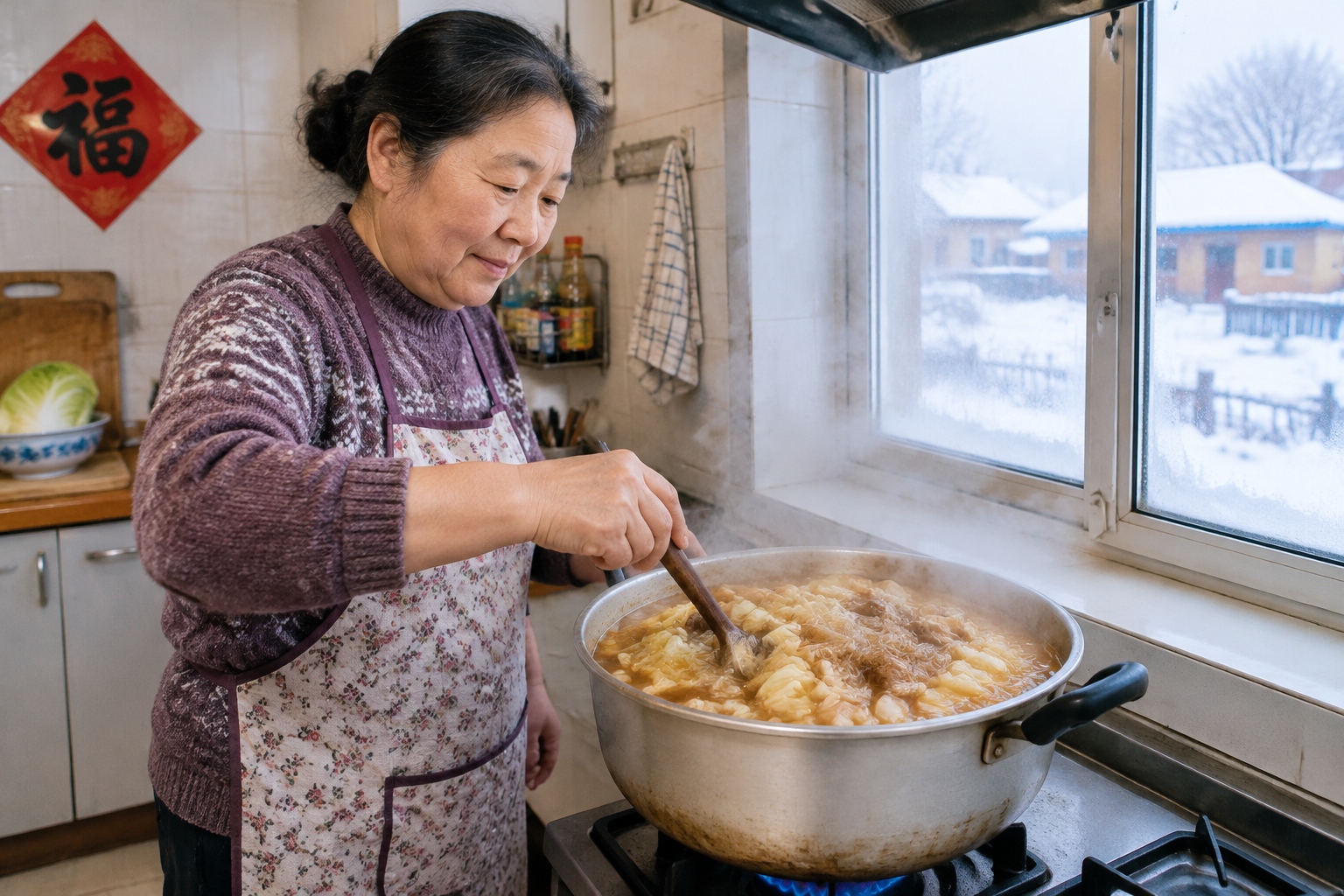
Stews and Soup Rice: The Everyday Warmth at Home and in Restaurants
When the sun sets and the temperature drops another five degrees, Jilin families turn to the stove. Winter cooking here is slow, heavy, and designed to fill the apartment with steam and smell.
Pickled Cabbage and Pork Stew with Vermicelli (酸菜白肉炖粉条)
This is the dish that defines a Northeast winter. Pickled Chinese cabbage (酸菜) is simmered with pork belly slices, glass noodles, and sometimes blood sausage or tofu. The broth is sour, rich, and slightly salty. Every family has its own ratio. It’s served in a big pot in the middle of the table, and you ladle it over rice again and again.
Chicken and Mushroom Stew (小鸡炖蘑菇)
Free-range chicken, dried wild mushrooms (often hazel mushrooms from the surrounding forests), and vermicelli cook together until the meat falls off the bone. It’s a Sunday dish, a New Year dish, a dish for when someone comes home after a long time away.
Pork and Vermicelli Stew (猪肉炖粉条)
Simpler than the others, but just as common. Fatty pork, thick sweet potato noodles, soy sauce, and time. It’s the kind of food that doesn’t look impressive but disappears from the bowl faster than anything else on the table.
Korean-Chinese Soup Rice (汤饭)
Jilin has a large Korean-Chinese population, and their soup rice culture is woven into everyday eating. Doenjang-style soybean paste soup (酱汤) with tofu and vegetables, or beef bone soup rice (牛肉汤饭), served bubbling in a stone bowl. You break an egg into it, add rice, and eat it with pickled radish and kimchi. It’s similar to Korean gukbap, but in Jilin, the portions are bigger, the broth often less spicy, and the clientele is a mix of office workers, taxi drivers, and students — not just a niche crowd.
Frozen Pears and Frozen Persimmons: The Original Winter Dessert
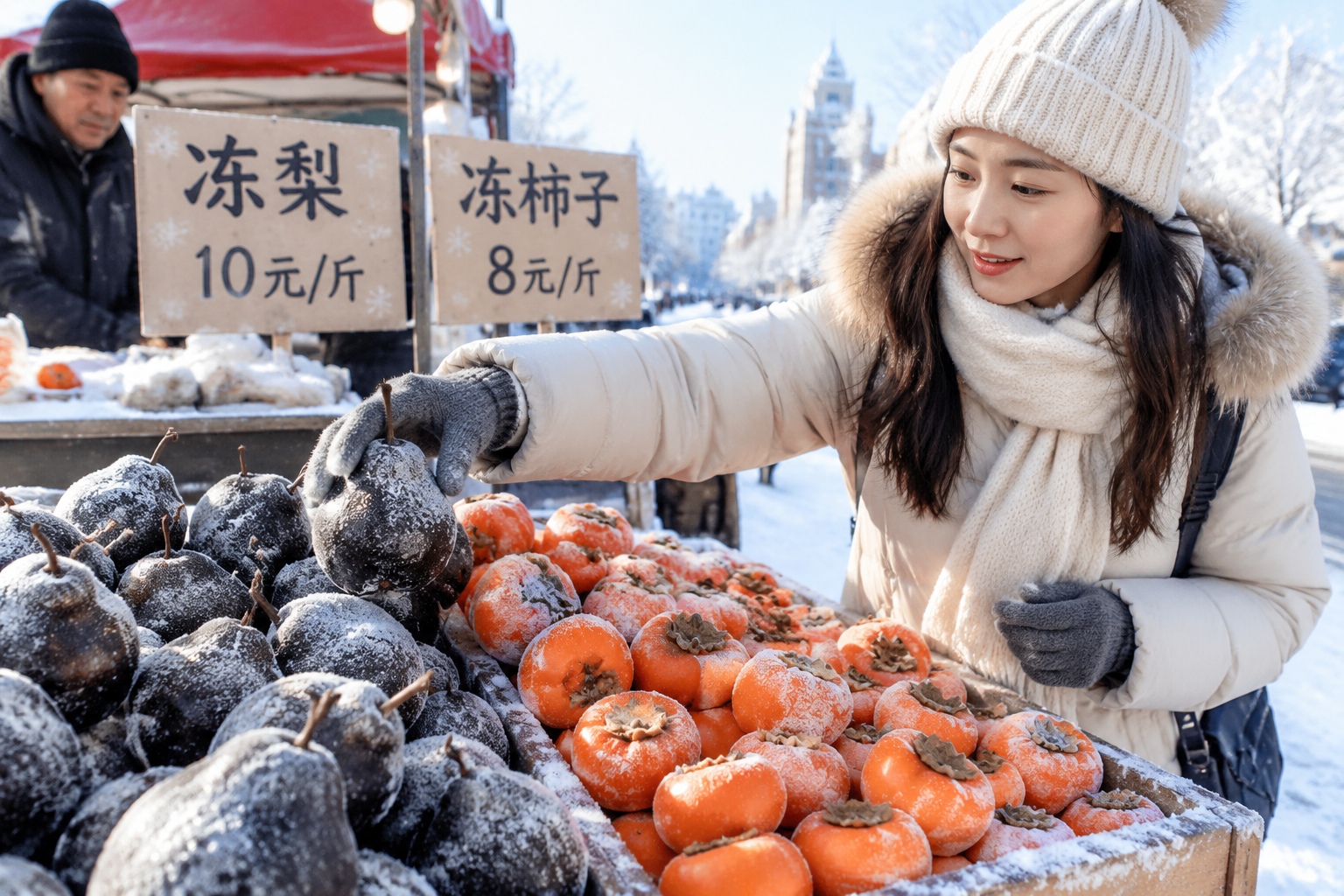
Walk into any Jilin supermarket or street market in winter and you’ll see a bin of dark, rock-hard pears sitting next to a pile of orange persimmons. These are 冻梨 (frozen pears) and 冻柿子 (frozen persimmons), and they are one of the most distinctive winter foods in Northeast China.
Why frozen fruit? Historically, winter in the Northeast meant months without fresh produce. Families stored pears and persimmons outside, where the sub-zero air turned them into natural frozen desserts. The freezing process breaks down the cell walls, so when you thaw them in cold water — the proper way — the flesh becomes soft, juicy, and intensely sweet. You bite a small hole and suck the liquid out. It’s messy, cold, and completely addictive.
Today, you can buy them year-round in freezers, but the tradition continues because people genuinely prefer the taste. A frozen pear costs 3 to 8 yuan. Eat one after a heavy stew, and it resets your palate like nothing else.
BBQ and Iron Pot Stew: Where Winter Nights Actually Happen
When the sun goes down at 4:30 p.m., social life moves indoors — but not to quiet restaurants. It moves to tables crowded with skewers, beer, and steam.
Jilin BBQ (烧烤)
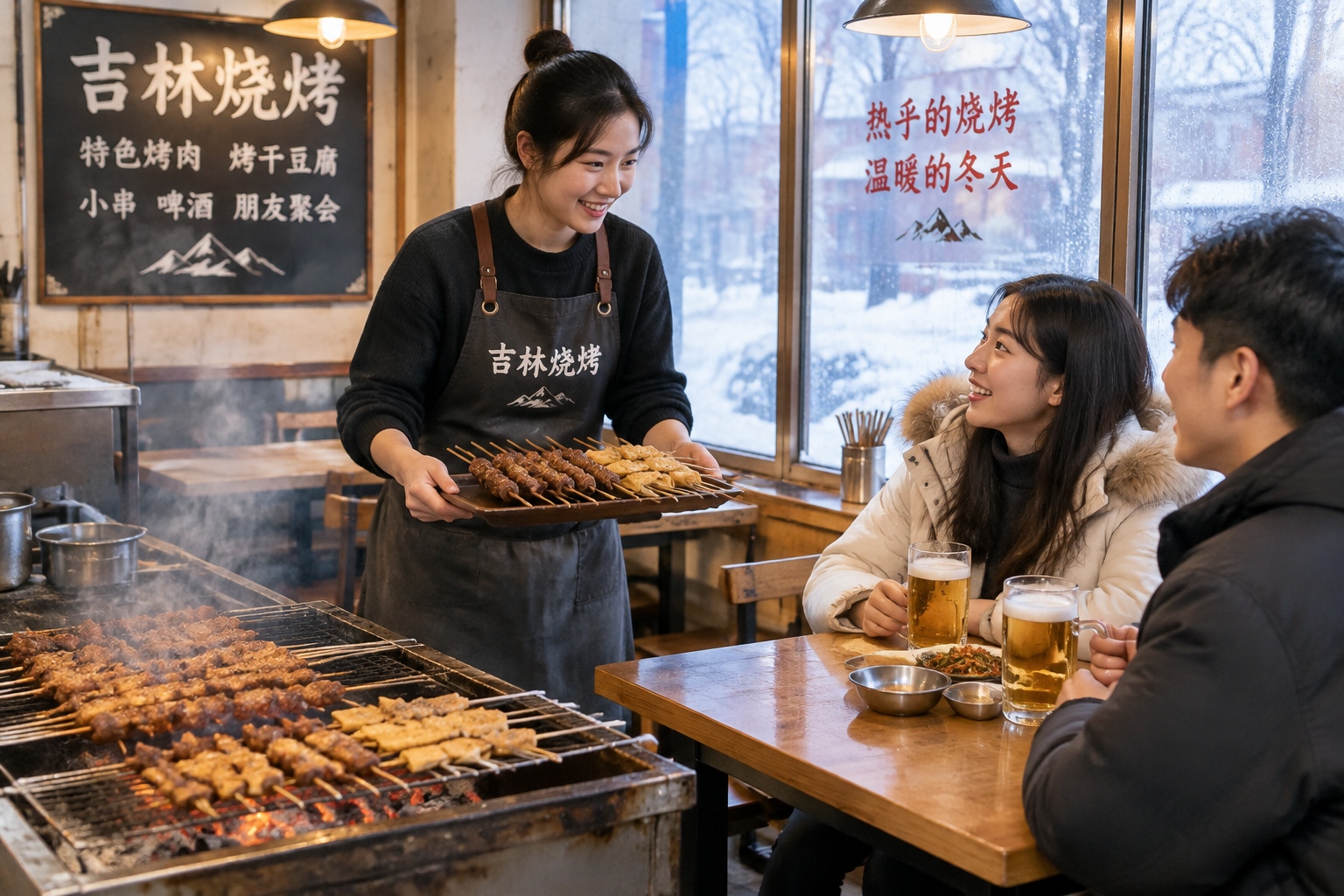
Northeast BBQ is its own genre. Small skewers of lamb, beef, and chicken wings are grilled over charcoal, seasoned with cumin, chili, and sesame. But the real local favorites are the non-meat items: grilled dried tofu skins (干豆腐串), grilled eggplant split open and stuffed with garlic and cilantro, grilled corn, and grilled flatbread. You sit at a low table, order by the dozen, and eat with your hands. A typical meal for two costs 80 to 150 yuan. It’s loud, smoky, and warm — not just from the grill, but from the crowd.
Iron Pot Stew (铁锅炖)
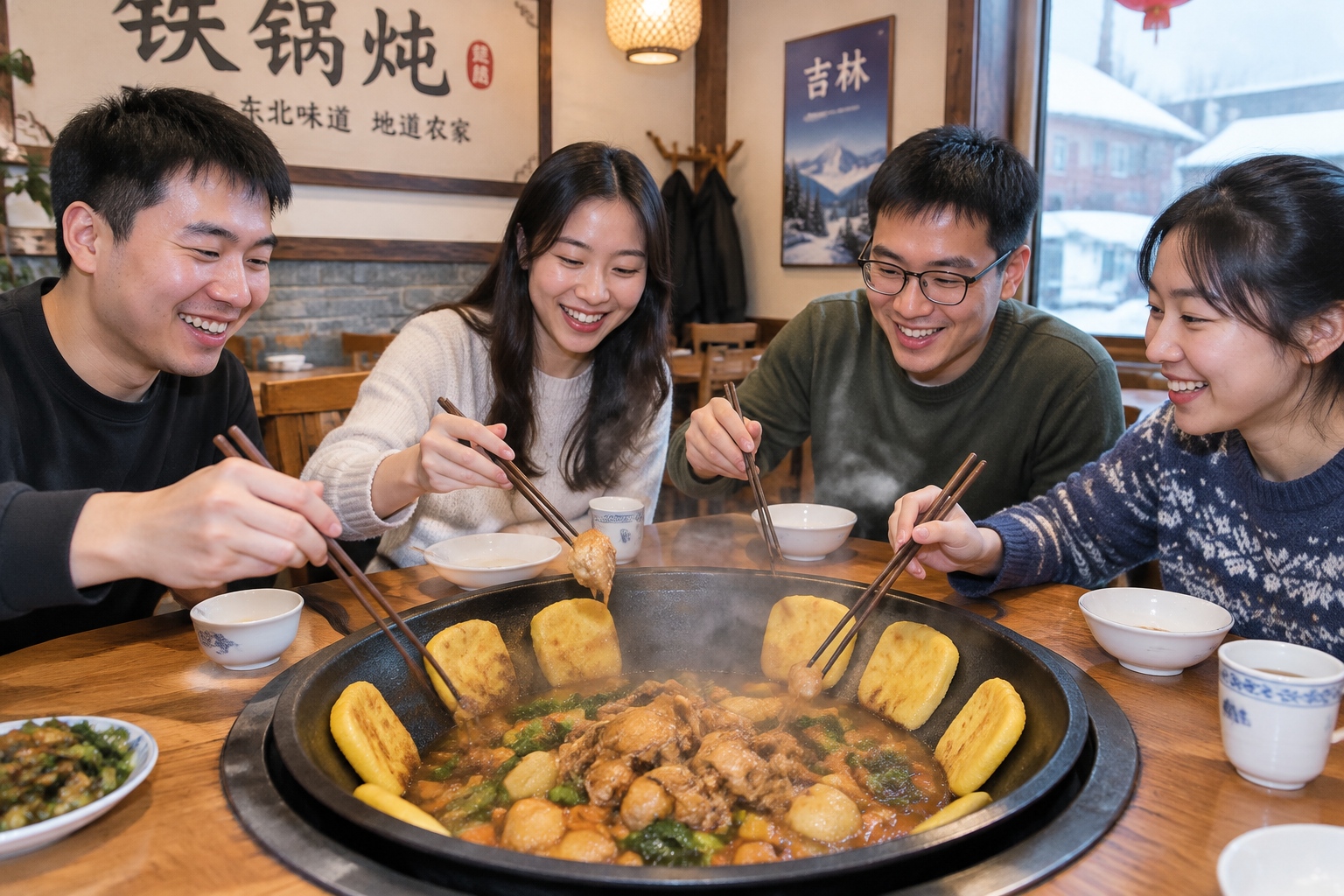
This is the communal winter meal. A giant iron pot is set into the table, filled with chicken, pork ribs, or fish, plus potatoes, cabbage, and tofu. The broth simmers for an hour while you wait, drinking tea or beer. Then the server slaps cornmeal dough around the inside rim of the pot to make tie bingzi (贴饼子) — flatbread that steams and crisps against the hot metal. When it’s ready, everyone reaches in with chopsticks. It’s not a meal for one. It’s a meal for four, six, or ten. And in winter, that’s exactly the point.
Hot Drinks and Alcohol: The Quiet Warmers
Not every winter warmth is dramatic. Some of it is a paper cup of soy milk at 7 a.m.
Breakfast stalls across Jilin sell hot soy milk (豆浆), hot milk, and sometimes ginger tea in winter. A cup costs 2 to 5 yuan. You wrap your hands around it on the walk to the bus stop. It’s not a ritual — it’s just how the morning works.
At dinner, local baijiu (白酒) appears on many tables. A small glass — not a shot, but a slow-sipping amount — is common. It’s not about getting drunk. It’s about the warmth that spreads from your chest outward. Beer is also popular, even in winter, though it’s often served at room temperature or slightly warmed in the south of China. In Jilin, cold beer with hot BBQ is still a standard combination, because the contrast is part of the pleasure.
How Food Connects People to Winter
None of these dishes are fancy. Most cost less than a movie ticket. But together, they form a kind of survival map for the coldest months.
The frozen pear is a memory of scarcity turned into a treat. The iron pot stew is a reason to gather. The grilled cold noodles are a small, affordable pleasure on a day when the wind hurts. And the pickled cabbage stew is what home tastes like when it’s -25°C outside.
If you visit Jilin in winter, don’t just order hot pot. Walk to a street cart and buy a roasted sweet potato. Sit in a BBQ shop and order the dried tofu skewers. Go to a supermarket and buy a frozen pear, then thaw it in a bowl of cold water and wait. You’ll understand something about this place that no temperature reading can explain.
Start the discussion at forum.chinacomes.com