
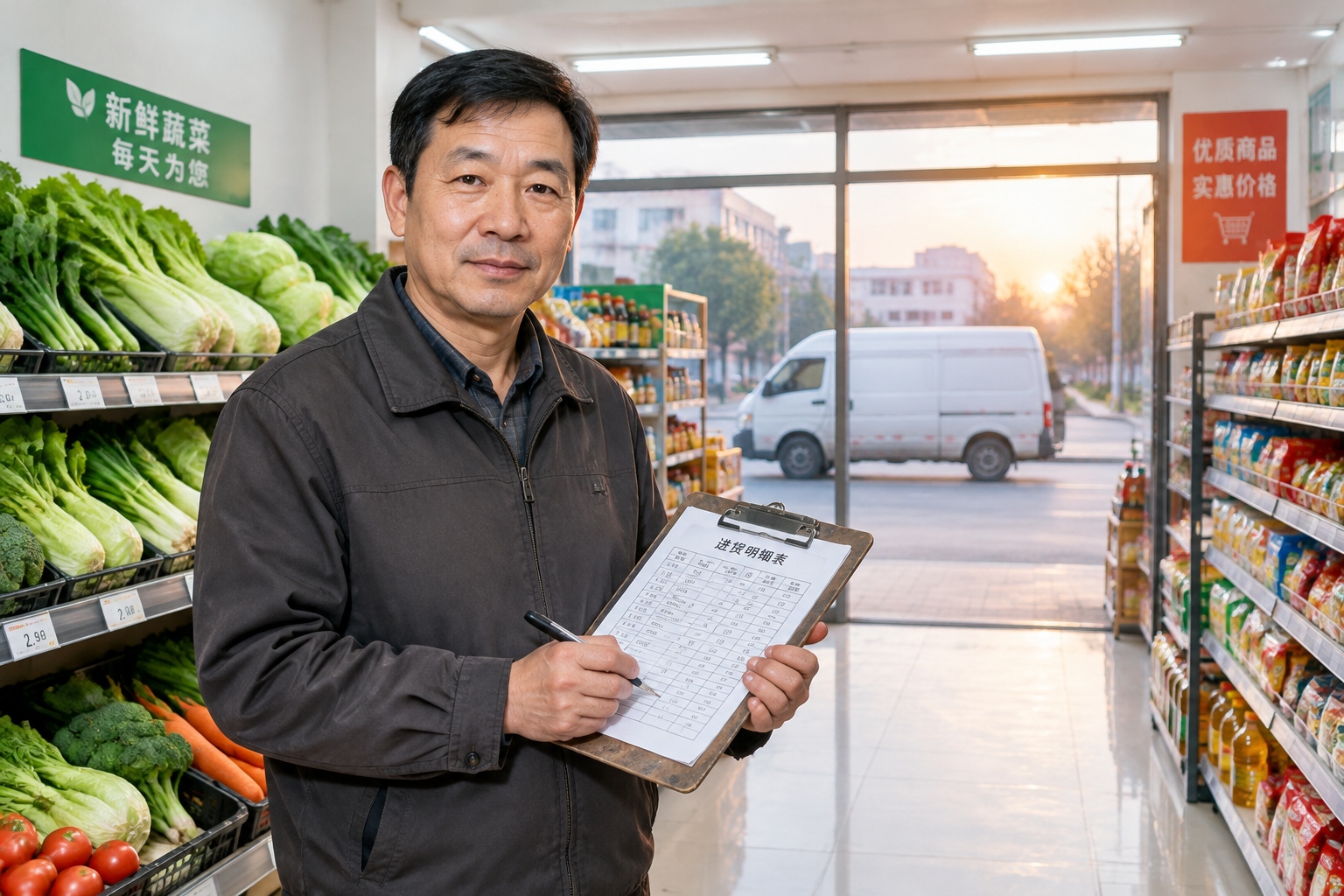

Introduction: The Purchase Ledger That Tells a Different Story
Every Tuesday at 5:30 a.m., Zhang Wei drives his small white van to the county’s wholesale market on the eastern edge of town. The market is already awake—florescent lights buzz over crates of cucumbers, tomatoes, and leafy greens. He parks, pulls out a worn clipboard with a printed spreadsheet, and starts writing down prices. Zhang, 43, has run a 200-square-meter supermarket in this central Chinese county for nine years. His purchase ledger is not just a record of costs; it is a map of the invisible forces that make vegetables here more expensive than in Shanghai, a city 800 kilometers away.
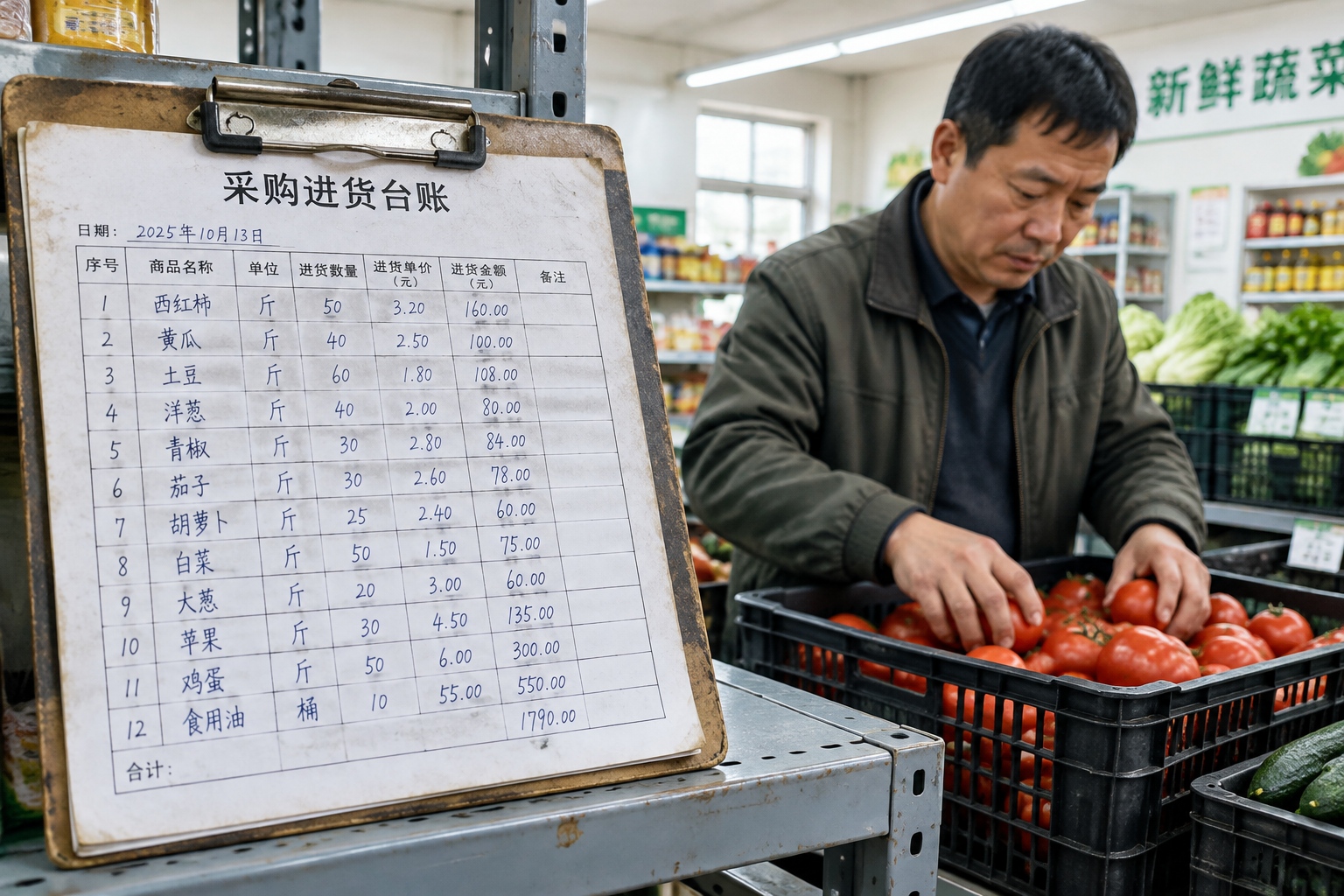
The Ledger’s First Entry: Scale and the Cost of Small Orders
On the first page of Zhang’s ledger, a column labeled ‘Unit Price’ shows what he paid for 20 kilograms of tomatoes: 6.2 yuan per kilogram. In Shanghai’s wholesale markets, the same tomatoes often go for 4.5 yuan per kilogram. The difference is not quality or season. It is volume. Zhang buys 20 kilograms. A Shanghai chain supermarket buys 20 tons. ‘I can’t negotiate,’ he says. ‘I take what the local distributor gives me. They know I have no other choice.’ His small order size means he buys from a second- or third-tier wholesaler, each adding a markup. A bottle of shampoo on his shelf costs him 12 yuan from a local agent; the same bottle at a Shanghai hypermarket might cost 8 yuan because the chain buys directly from the manufacturer.
Logistics: The Long Road from Farm to Small-Town Shelf
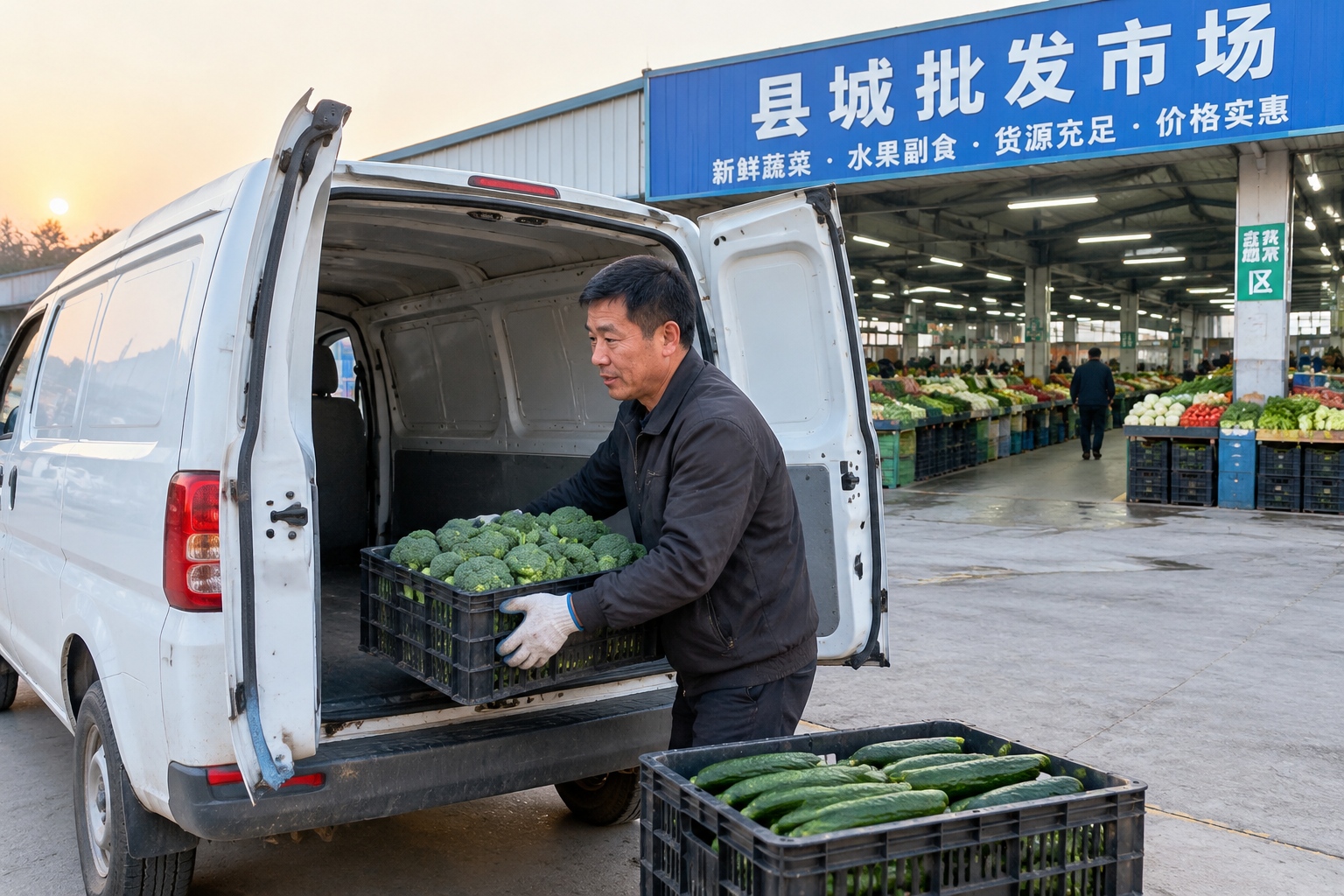
Zhang points to a crate of broccoli. ‘This broccoli was grown three hours south of here. But it didn’t come straight to me. It went to the provincial capital’s wholesale market first—four hours north—and then a small truck brought it back here. That’s eight hours of driving for a vegetable that could have traveled three.’ This detour is common in China’s smaller cities. Large cities are logistics hubs with cold-chain warehouses, consolidated deliveries, and full trucks. Small towns sit at the end of the line: deliveries are smaller, less frequent, and often return empty. The unit cost of moving one kilogram of broccoli to Zhang’s store is nearly double what it costs to move it to a Shanghai supermarket. ‘I pay for the empty return trip,’ he says. ‘The driver doesn’t care what he carries back.’
Competition: Why Shanghai’s Losses Become Small-Town Profits
In Shanghai, Zhang’s cousin runs a vegetable stall in a wet market. She sells tomatoes at 5.8 yuan per kilogram—barely above her cost. ‘We make money on other things,’ she says. ‘The vegetables bring people in.’ Her market is one of dozens within a two-kilometer radius, competing with supermarkets, online group buying, and discount stores. Fresh produce is a loss leader. In Zhang’s county, there are three supermarkets and one wet market. ‘We don’t have price wars,’ he says. ‘If I lower my prices, the other stores just wait. They know I can’t sustain it.’ Weak competition means local distributors and regional agents can control prices. Zhang’s ledger shows a 15% markup on packaged goods that would be 5% in Shanghai.
The Hidden Costs of Slow Turnover
Zhang’s ledger includes a column for ‘Spoilage.’ Last month, he threw away 18 kilograms of lettuce, 12 kilograms of strawberries, and 8 kilograms of pork. ‘In Shanghai, a supermarket sells out of lettuce in a day. Here, it takes three days. By then, half is wilted.’ Slow turnover means higher losses, and those losses are baked into the shelf price. His rent is lower than a Shanghai store’s—about 8,000 yuan per month versus 80,000—but his sales per square meter are a fraction. ‘Low rent doesn’t help if you can’t sell enough,’ he says. ‘I spread the same rent over fewer customers.’
What the Ledger Doesn’t Show: The Local Advantage
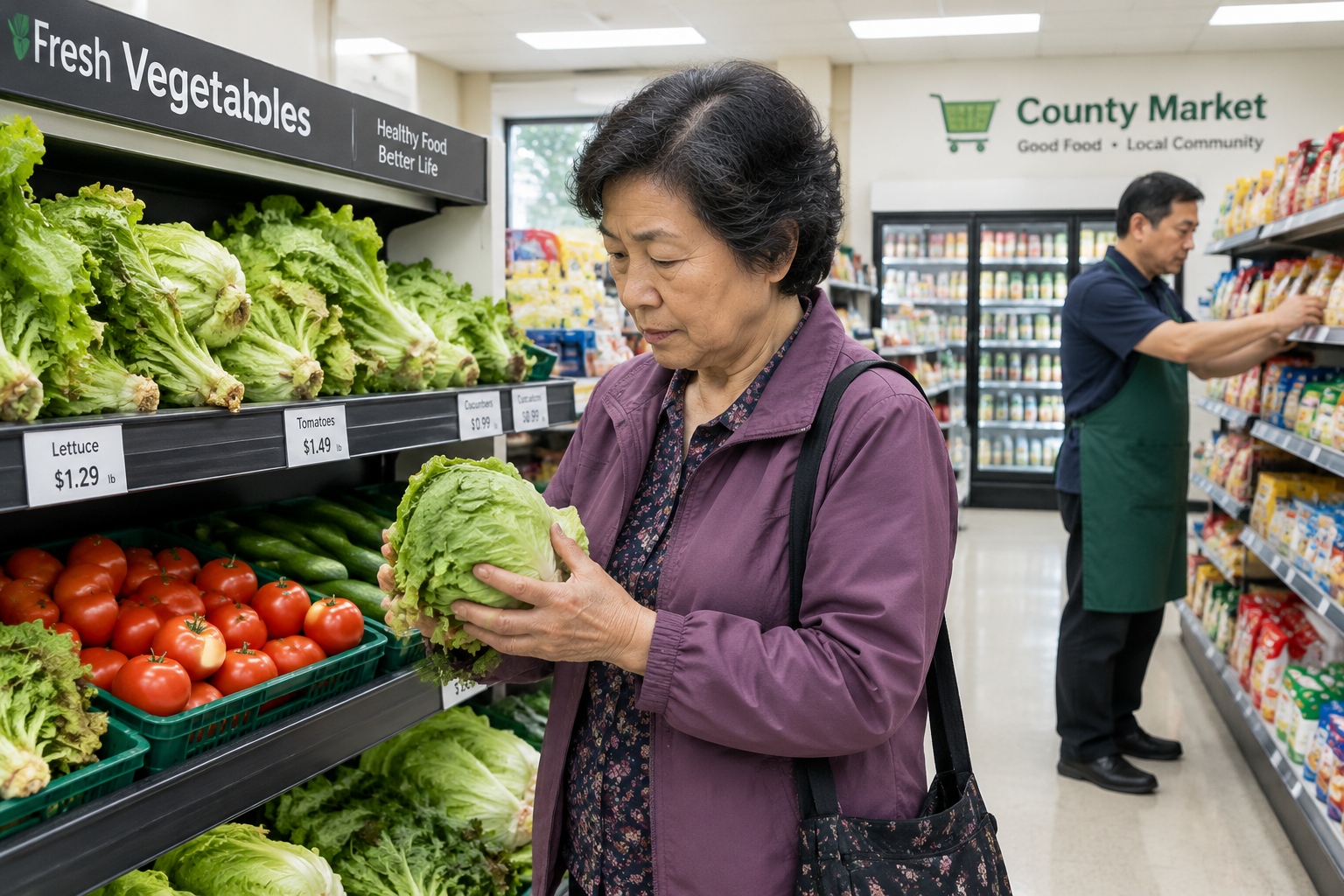
Not everything in Zhang’s store is more expensive. In summer, when local farmers harvest cucumbers and greens, he buys directly from them at the roadside. ‘Those are cheaper than Shanghai,’ he says. ‘But in winter, I have to buy from the wholesale market, and the price doubles.’ The same pattern applies to services: haircuts, meals, and childcare cost less in his county. The paradox is only for standardized goods and out-of-season produce. ‘People think small towns are cheap,’ Zhang says. ‘They are—for some things. But for a head of lettuce in January, you pay more here than in Shanghai.’
Conclusion: The Real Map of Prices
Zhang’s ledger tells a story that is not about city size but about systems. Scale, logistics, competition, and turnover determine the price of a tomato more than rent or wages. In Shanghai, high costs are offset by high volume and fierce competition. In a small county, low costs are undermined by small scale, long supply chains, and weak competition. The next time you see a price tag in a small-town supermarket, remember the journey behind it—and the ledger that records it.
Start the discussion at forum.chinacomes.com