
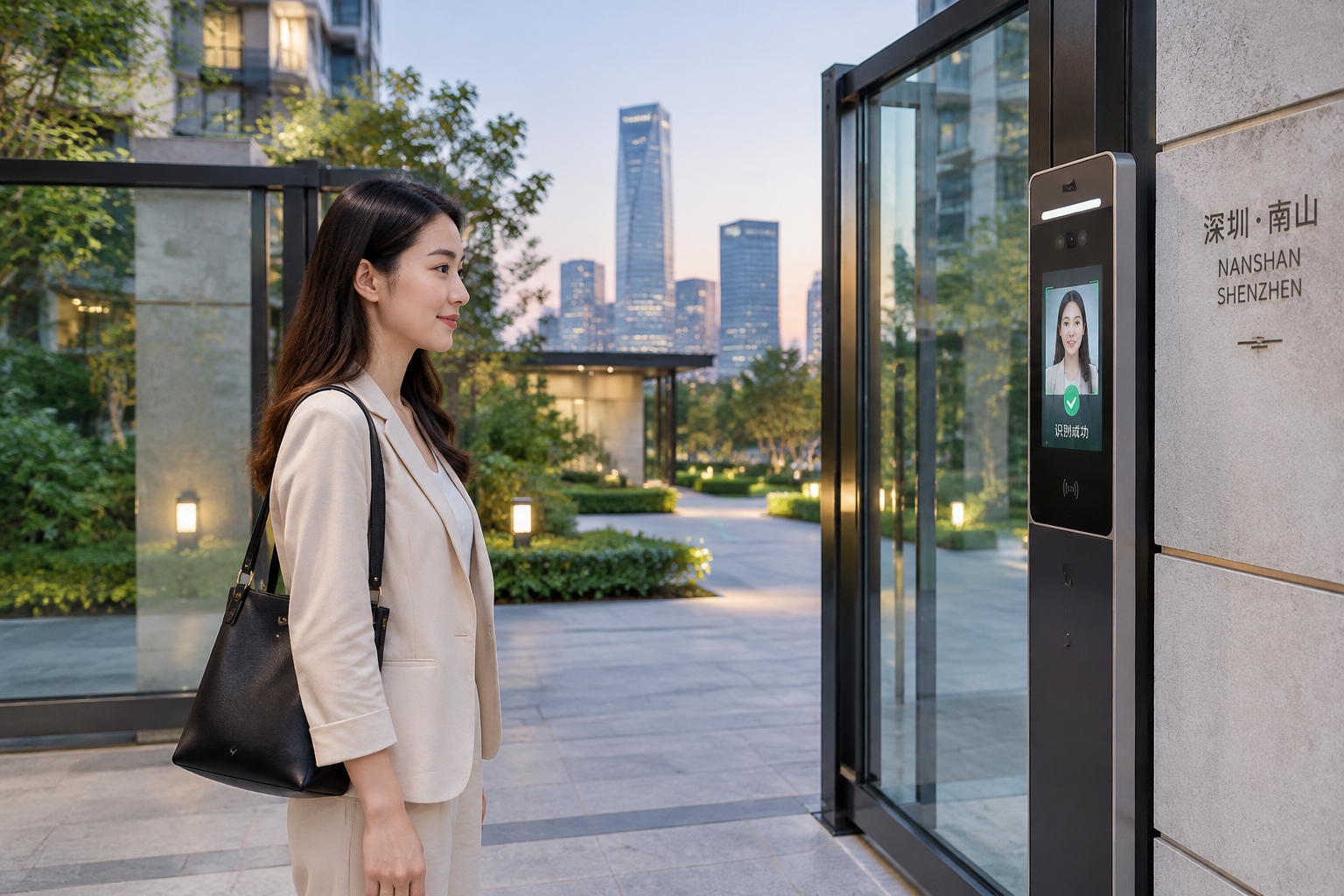

A Gate That Knows Your Face
The first thing I noticed was not the marble lobby or the scent of fresh eucalyptus. It was the fact that nobody was watching the door. I stood in front of a slim panel at the entrance of a residential compound in Shenzhen’s Nanshan district, and a green light blinked. The glass gate slid open. No key card, no security guard asking my name. Just my face, matched against a database I had been added to an hour earlier.
This is not a sci-fi set. It is a Tuesday afternoon in one of China’s most expensive neighborhoods, where a three-bedroom apartment can sell for around 20 million yuan — roughly $3 million. The compound sits a few subway stops from Tencent’s headquarters and the sprawling tech offices of Shenzhen High-Tech Park. Many residents here work in artificial intelligence, hardware startups, or venture capital. Their homes are, unsurprisingly, early adopters of the same technology they build for a living.
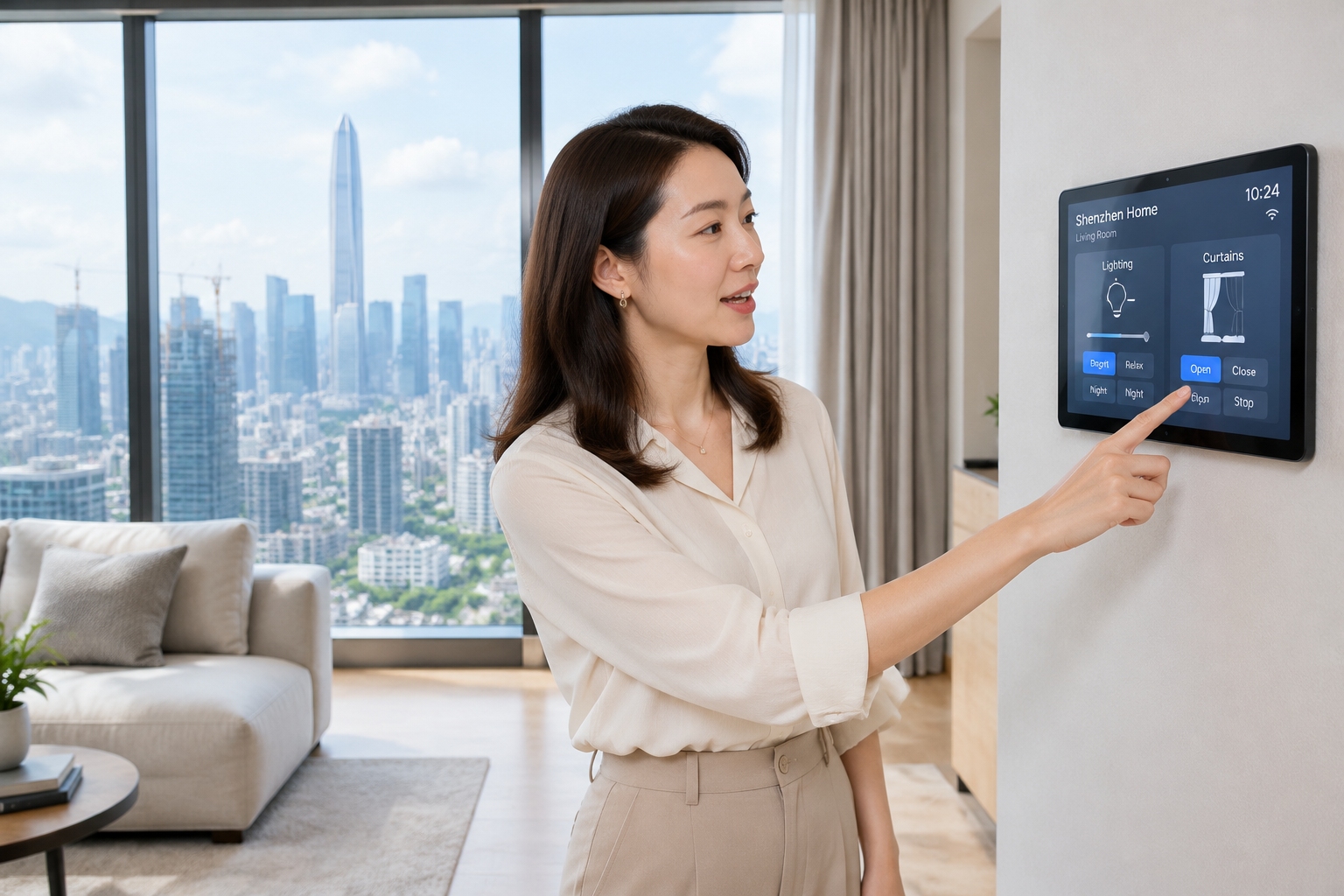
Inside the Apartment: Where the Lights Listen
The apartment itself is 140 square meters, which in Nanshan counts as generous. But the real square footage is invisible. It lives in the software layer. A wall-mounted tablet near the kitchen controls lighting, temperature, curtains, and air purification. Voice commands work in Mandarin and English. “Good night” dims the living room, closes the curtains, and locks the front door. “Movie time” drops the lights to 20 percent and switches the TV to a pre-set input.
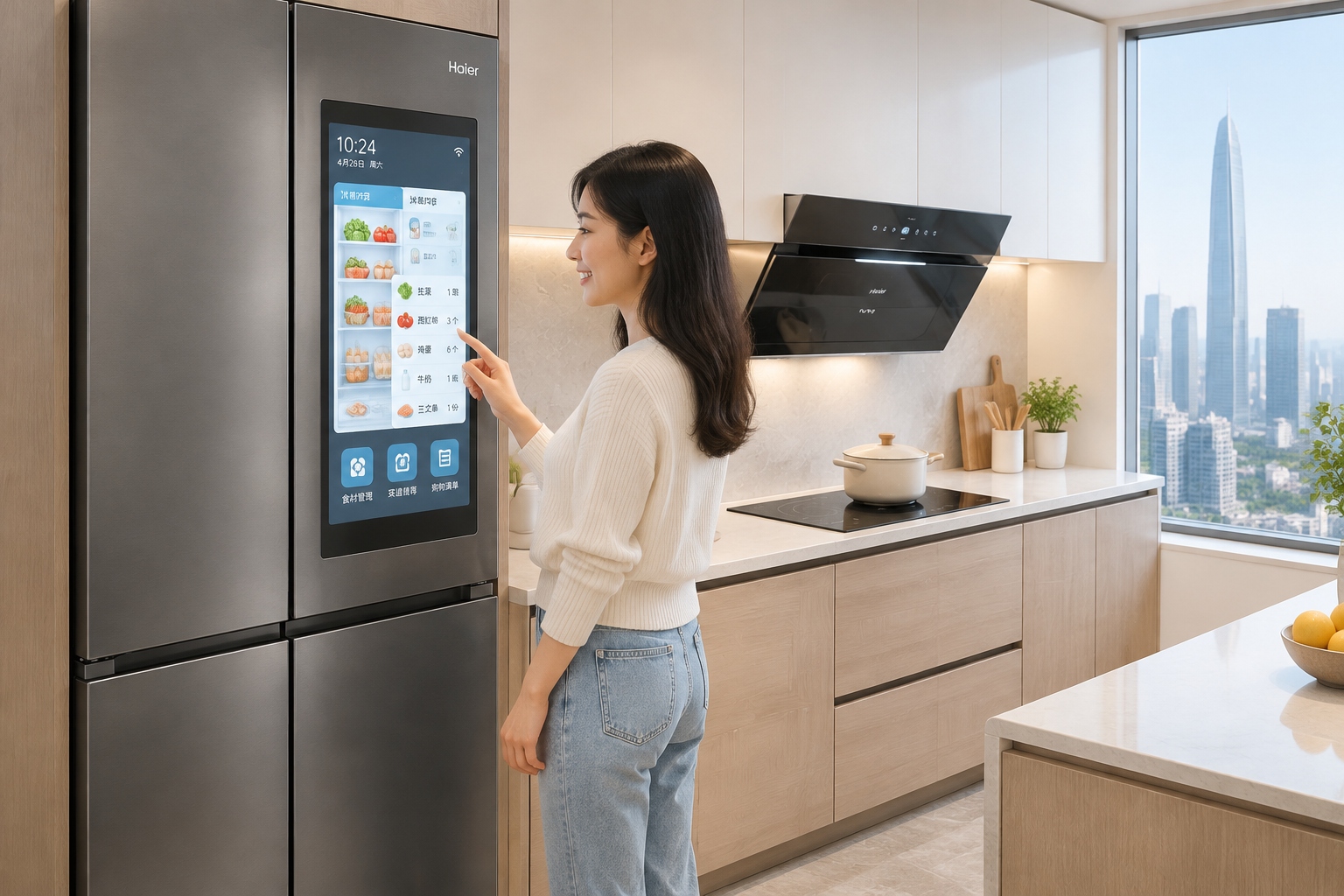
The kitchen is where the quiet magic happens. The refrigerator has a camera inside. When I opened it, a screen on the door showed me what was inside without me having to bend down. It also tracks expiration dates and suggests recipes based on what is about to go bad. The induction stove pairs with the exhaust fan automatically — turn on the burner, and the fan adjusts its speed. None of this is exotic in China’s premium housing market anymore. It is simply what buyers in this price bracket now expect.
What surprised me was how little the residents talk about it. My host, a product manager in her early thirties, shrugged when I asked about the smart features. “It is convenient,” she said. “But honestly, I mostly care about the noise insulation and the school district.” The technology is not the selling point. It is the baseline.
The 24-Hour Concierge and the Price of Privacy
Downstairs, a concierge desk operates around the clock. But you will rarely see the concierge. Requests go through an app: package delivery, dry cleaning, apartment maintenance, even a car wash for the parking garage. A robot vacuum cleans the lobby floors after midnight. Deliveries are placed in refrigerated lockers by the service elevator, and residents get a notification when they are ready.
This level of service comes with a trade-off that residents are acutely aware of: the more the building knows you, the less anonymous you are. Facial recognition logs every entry. Elevators know which floor you live on. The app tracks when you request services. For a certain kind of buyer — often wealthy, often public-facing — this is a problem. For others, it is the entire point. One resident, a founder of a hardware startup, told me he chose this compound precisely because he never has to speak to anyone on his way to work. “I spend all day talking to investors and engineers,” he said. “I want my building to be silent.”
What This Says About China’s New Middle Class
Twenty years ago, the dream apartment in Shenzhen was about space: a bigger living room, a balcony, a view of the sea. Ten years ago, it was about location: near a subway, near a good school, near a shopping mall. Today, for the top slice of the market, it is about seamlessness. The apartment should anticipate your needs, reduce your decisions, and protect your time.
This shift reflects something broader. China’s urban middle class — especially in tech hubs like Shenzhen, Hangzhou, and Beijing — has spent the past decade accumulating convenience. Mobile payments, high-speed rail, same-day delivery, shared bikes. The smart apartment is the home version of that same expectation: that daily life should be frictionless, and that technology should be invisible until you need it.
But there is a social layer here too. These apartments are not just homes. They are signals. In a city where housing prices have risen faster than almost anywhere else in the world, a 20-million-yuan apartment is a membership card to a certain kind of life: private, efficient, and gated. The walls are not just physical. They are economic.
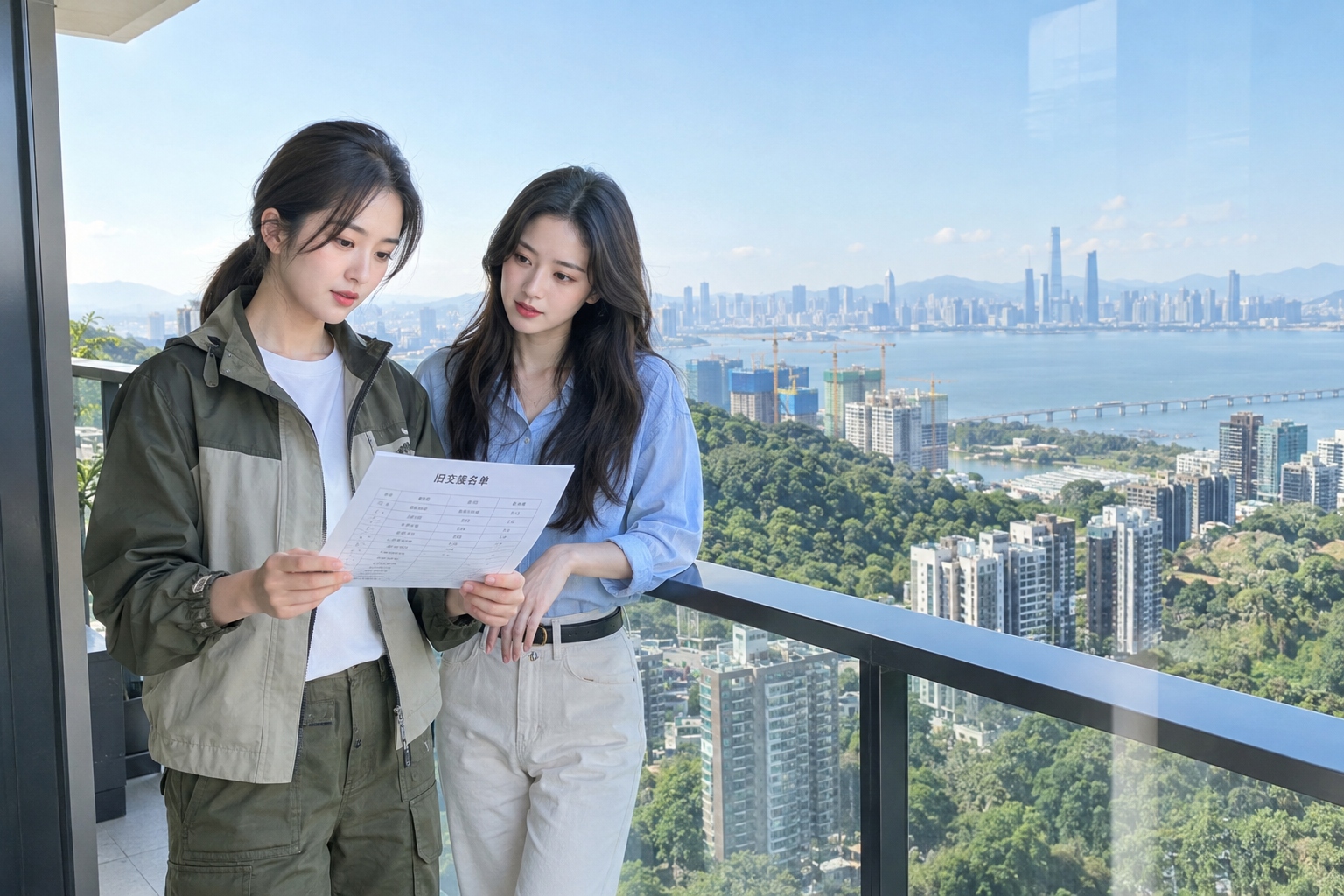
The View From the 32nd Floor
I ended my visit on the balcony. From the 32nd floor, Shenzhen stretches out in every direction — construction cranes, green hills, the silver curve of the bay. The city below is loud, crowded, and constantly rebuilding itself. Up here, the glass muffles the traffic. The air purifier hums softly. The curtains close on their own when the sun gets too bright.
It would be easy to call this a bubble. But the people living here are not hiding from China’s future. They are beta-testing it. The smart apartment is not a fantasy. It is a product, and like most products in Shenzhen, it will get cheaper, simpler, and more common. The question is not whether the rest of the city will catch up. It is what happens when it does.
Start the discussion at forum.chinacomes.com