

At 11 p.m. in Wenzhou, the Tables Are Still Full
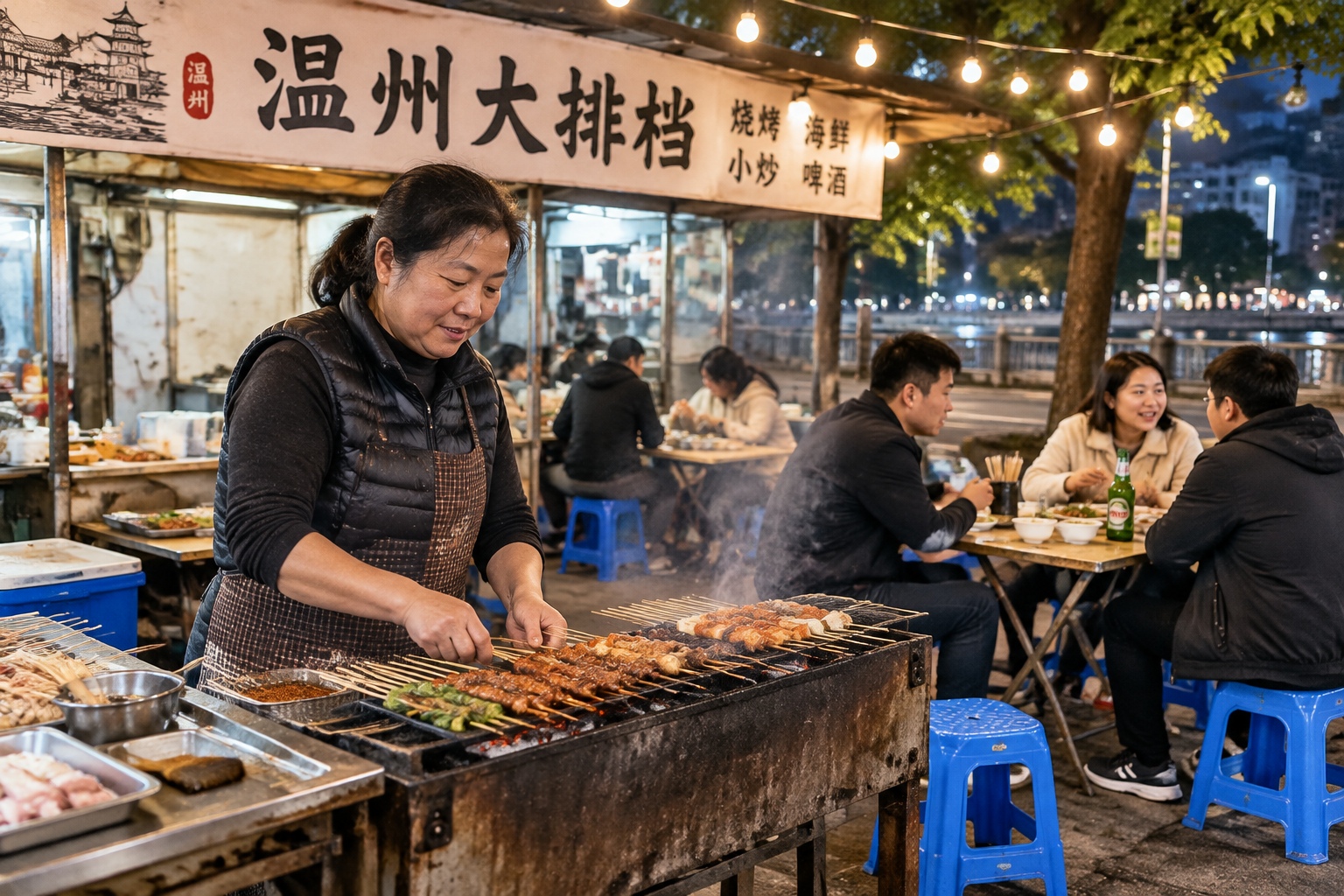
It is almost eleven on a Tuesday night in Wenzhou, a coastal city in Zhejiang known for its private businesses and restless energy. On a side street off Wuma Street, the evening’s second shift is just beginning. A woman in a puffer vest flips skewers of lamb over a charcoal trough. The smoke drifts sideways, mixing with the smell of garlic and dried chili. A group of four young men in office shirts sit on low plastic stools, ties loosened, phones face-down on the table. One of them laughs too loudly, then catches himself.
This is dapaidang — the Chinese term for a no-frills street stall or open-air food stand. Not quite a restaurant, not quite a food truck. In Zhejiang, dapaidang are everywhere after 10 p.m., from the wealthy manufacturing towns of Wenzhou and Taizhou to the wholesale markets of Yiwu. They are where ordinary Chinese people — not tourists, not influencers — go to eat cheap, drink cold beer, and stop performing.
What a Zhejiang Night Stall Actually Looks Like
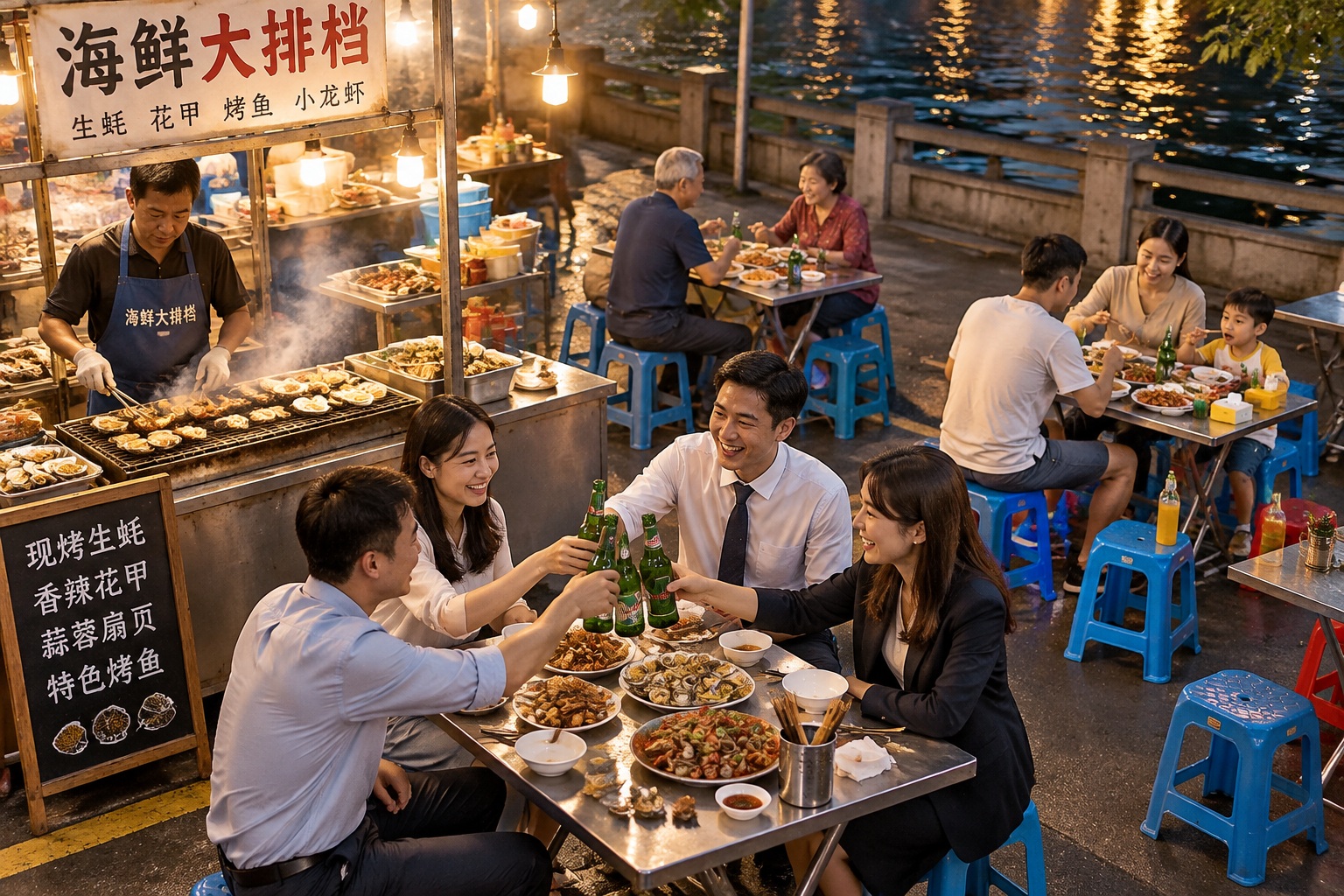
A typical dapaidang in Zhejiang is assembled and disassembled every day. The setup is simple: a few folding tables, a dozen plastic stools, a portable gas burner or charcoal grill, a cooler of beer and soda. The menu is handwritten on a piece of cardboard or scrawled on a whiteboard. Prices are low. A plate of stir-fried clams costs 15 to 25 yuan (about $2–3.50). Grilled oysters with garlic run 8 to 12 yuan each. A large bottle of local beer is 6 to 10 yuan.
The food is not delicate. It is salty, oily, spicy, and meant to be shared. Common dishes include chao fen (stir-fried rice noodles), kao yu (grilled fish), ma la tang (a choose-your-own-ingredients spicy soup), and chuan’r (skewers). In coastal cities like Wenzhou and Ningbo, you will also find fresh seafood — crab, mantis shrimp, small yellow croaker — grilled or boiled on the spot.
What matters is not the food. It is the arrangement. The tables are close together. Strangers sit elbow-to-elbow. The stall owner knows half the customers by face, if not by name. There is no reservation, no dress code, no time limit. You sit down, you order, you eat, you talk. When you leave, someone else takes your stool within minutes.
Three People Who Come Here to Drop Their Guard
The Programmer Who Finishes at 10:30
Liu Wei, 28, works at a software company in Wenzhou’s Longwan District. He finishes at 10:30 most nights. He does not go home immediately. Instead, he walks five minutes to a dapaidang near his apartment and orders a bowl of wonton soup and two skewers of grilled tofu.
“At work, I have to be careful about what I say,” he says, stirring chili oil into his soup. “My manager listens. My teammates watch. Here, nobody cares who I am.” He eats alone most nights, but he does not feel lonely. The stall owner nods at him. The man at the next table is also eating alone. They do not talk, but they share the same quiet rhythm.
The Couple Who Run the Stall
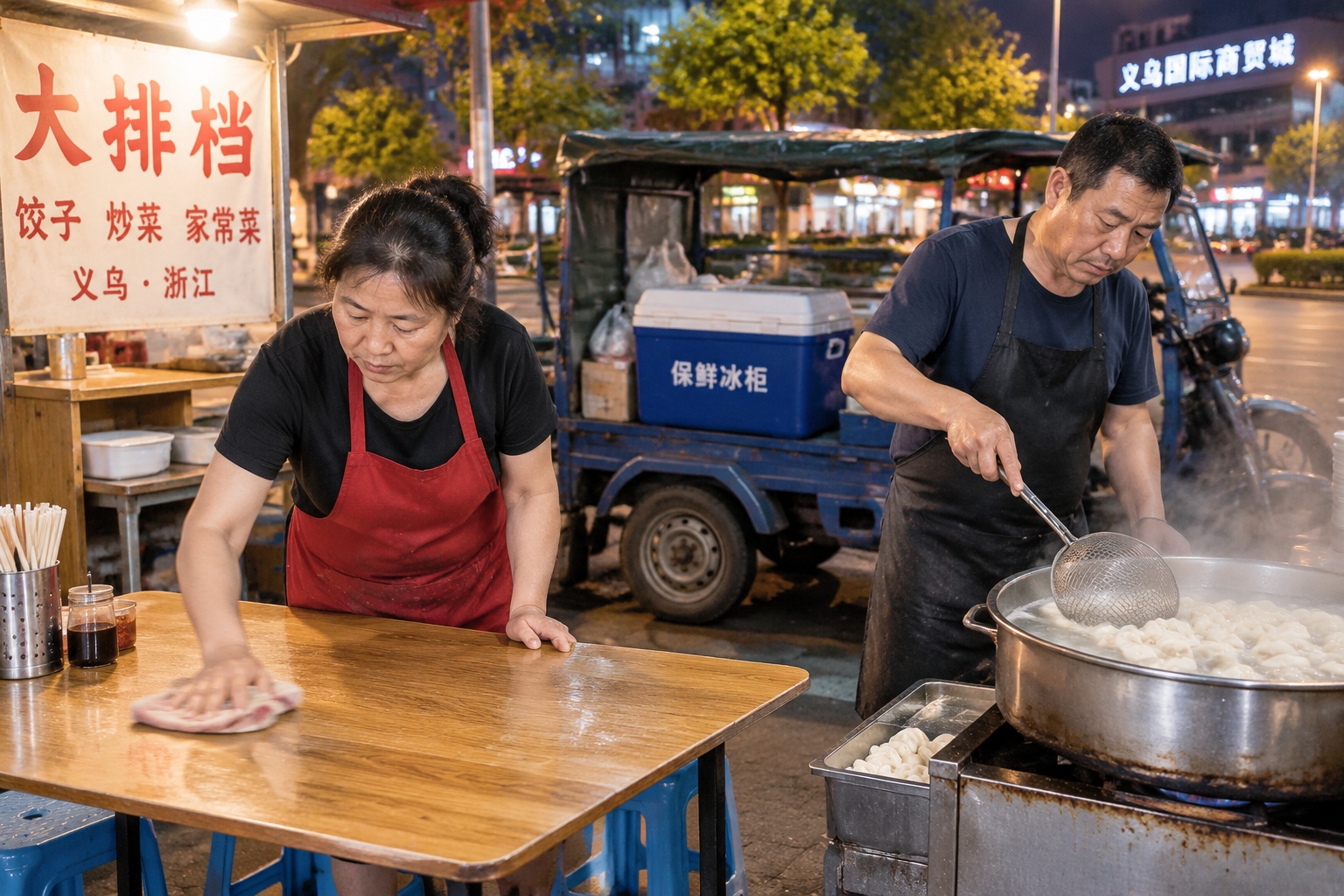
Chen Yulan and her husband, both in their fifties, have run a dapaidang in Yiwu for eleven years. They arrive at 6 p.m., set up by 7, and serve until 2 or 3 a.m. Their specialty is jiaozi — boiled, then pan-fried — and a simple pork bone soup.
“We used to work in a factory,” Chen says, wiping down a table. “But we wanted to be our own bosses. This is harder. But we decide when to rest.” They take one day off every two weeks. Their daughter is in college in Hangzhou. They send her money every month. “She says we work too much. But this is our life.”
The Retired Man Who Comes Every Night
Mr. Zhou, 67, lives alone in a 1980s apartment block in Taizhou. His wife passed away three years ago. His son works in Shanghai. Every night around 9:30, he walks ten minutes to a dapaidang near the wet market and orders a small bowl of rice wine and a plate of salted peanuts.
“I don’t drink at home,” he says. “It’s too quiet. Here, I can hear people. I can watch.” He stays for an hour, sometimes two. He knows the stall owner’s name. He knows which table gets the best breeze. He is not lonely here, even though he is alone.
The Micro-Economy Behind the Smoke
Dapaidang are not just a cultural habit. They are a form of flexible employment. According to China’s National Bureau of Statistics, the country’s “flexible employment” sector — which includes street vendors, delivery riders, and gig workers — had reached around 200 million people by 2023. Many dapaidang owners are former factory workers, laid-off employees, or rural migrants who cannot find stable work.
Local governments in Zhejiang have adjusted their approach to street vendors over the past decade. After years of strict crackdowns, cities like Wenzhou, Ningbo, and Hangzhou began designating “night market zones” where vendors can operate legally. In 2020, the central government explicitly encouraged the “night economy” as a way to boost consumption after the pandemic. Some cities even offered small subsidies or waived fees for street vendors.
The result is a patchwork system. Some stalls operate in designated areas with permits. Others move around, staying one step ahead of inspectors. Most operate in a gray zone — tolerated as long as they do not block traffic or generate too many complaints. It is not perfect. But it works for the people who depend on it.
What This Tells Us About How Chinese People Unwind
For readers in the West, the late-night dapaidang might look familiar. It is not so different from a food truck lot in Austin, a kebab stand in Berlin, or a taco truck in Los Angeles. The need is the same: cheap food, cold drinks, a place to sit without pretense.
But the social context is different. In China, dapaidang are not just for the young or the hip. They are intergenerational. You will see a group of twenty-somethings next to a retired couple next to a family with a sleeping toddler. The boundaries are softer. And because many Chinese cities are extremely safe at night — violent crime is rare — women, elderly people, and solo diners feel comfortable staying out late.
Another difference: in the West, late-night eating is often tied to drinking culture — bars, pubs, clubs. In China, dapaidang are more about eating than drinking. People do drink beer, sometimes a lot of it. But the focus is on the food, the conversation, and the simple act of sitting outside together. You do not need to be a drinker to belong here.
2 a.m.: The Last Customer Leaves
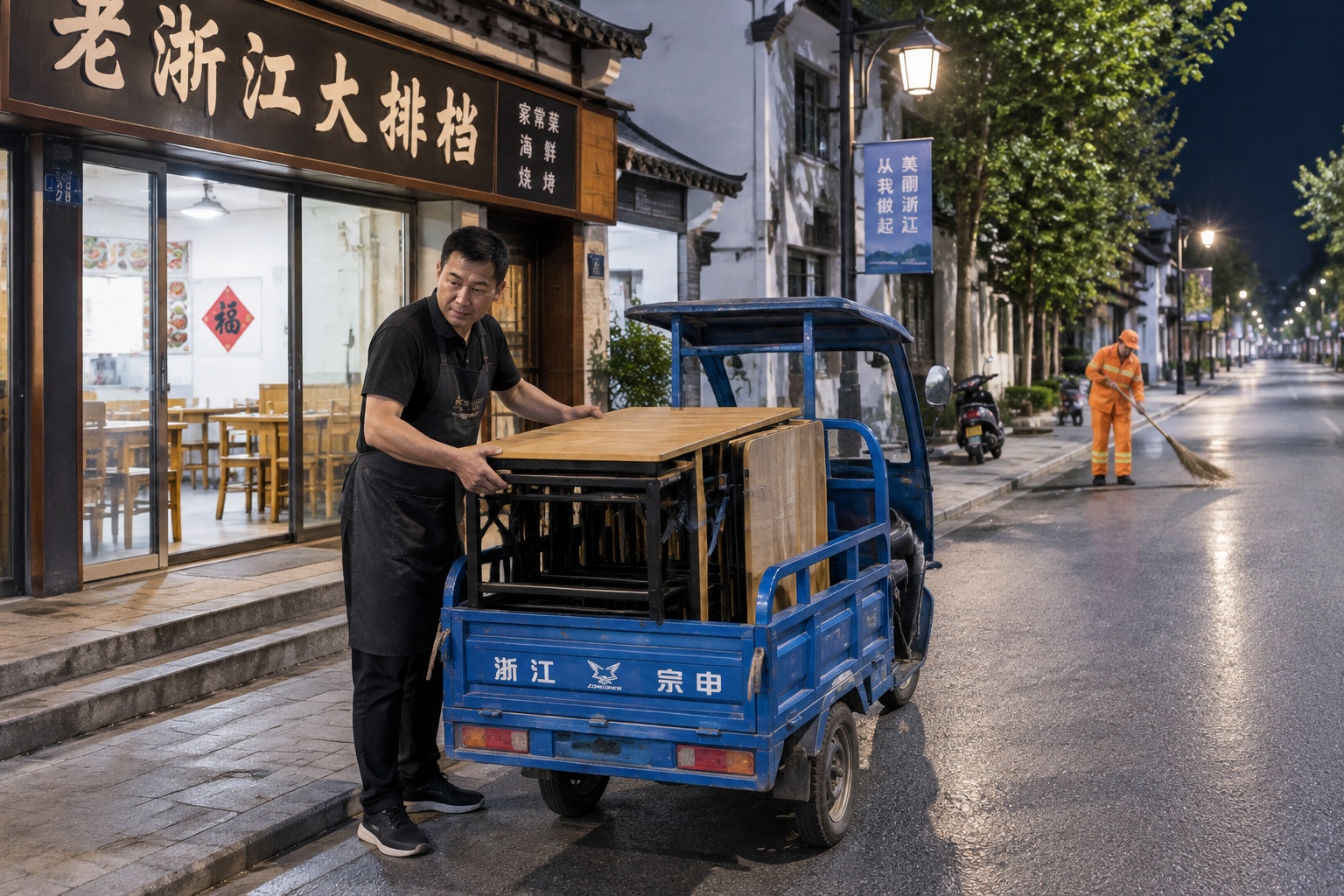
By 1:30 a.m., the crowd has thinned. The young men in office shirts have gone home. Liu Wei finished his wontons an hour ago. Mr. Zhou walked back to his apartment at 11. The stall owner, Chen Yulan, begins stacking the plastic stools. Her husband pours water on the charcoal to put it out. The street is quiet now, except for the hum of a distant scooter.
Chen wipes down the last table. She does not look tired. She looks like someone who has done this ten thousand times before. She loads the folding tables into a three-wheeled cart. Her husband ties down the cooler with a rubber cord. They will be back tomorrow at 6 p.m. For now, the street belongs to the street cleaners. The smoke is gone. The city sleeps.
Start the discussion at forum.chinacomes.com