

Inside an Ordinary Notebook, a Wuxia World
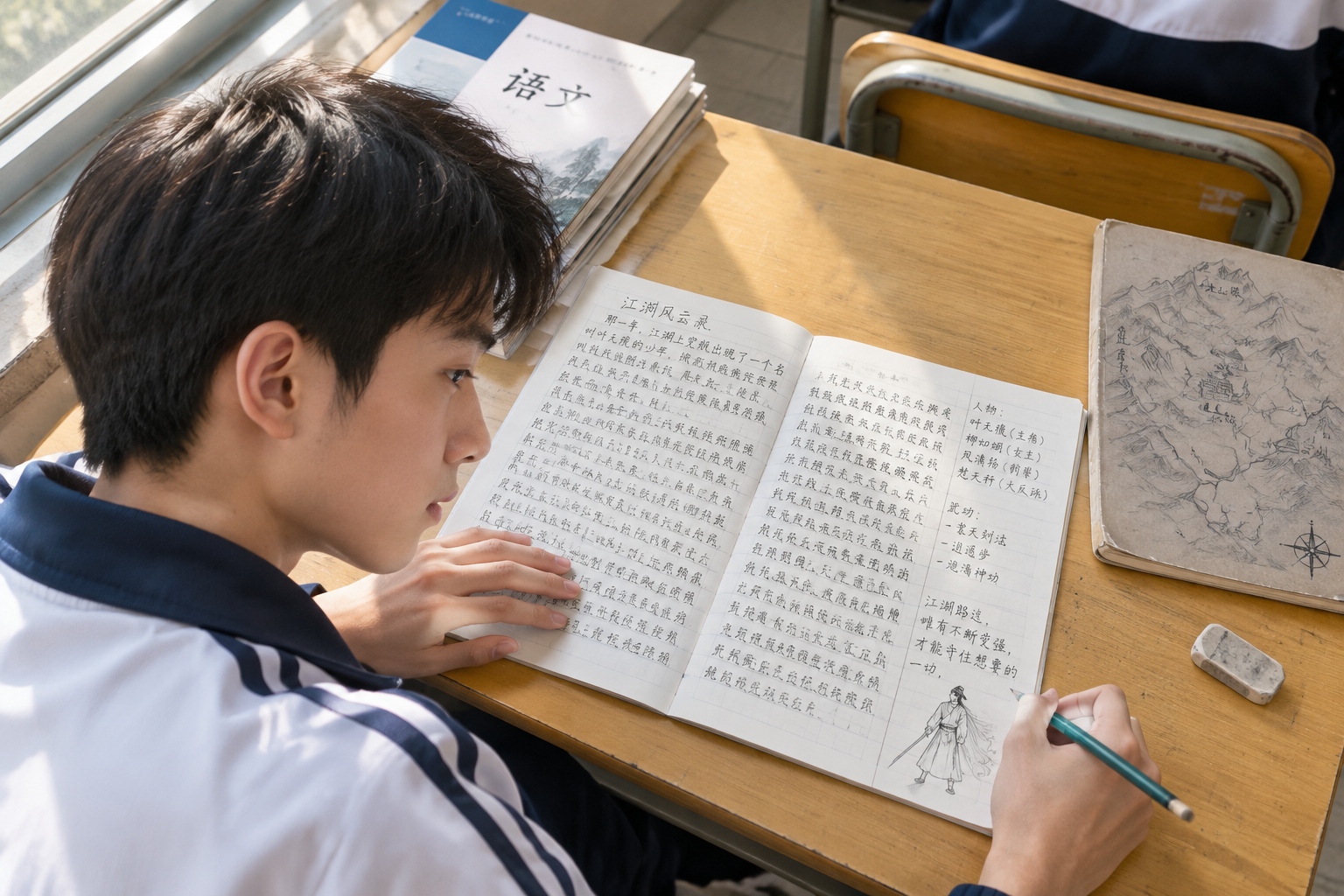
When I first saw the exercise book, I thought it was just another pile of homework. Then I flipped it over. The back pages were covered in tiny handwriting: a wuxia novel, complete with sect names, martial arts moves, and a map of the martial world drawn in pencil. The author was 14-year-old Li Cheng (not his real name), a middle school student in a mid-sized city in central China.
“I started writing during math class,” he told me, laughing. “The teacher was talking about equations, and I was thinking about a sword fight on a cliff.” He writes in the margins, between homework problems, and on the back of his exercise book. His story is not just a hobby—it is a window into how Chinese teenagers are using writing to carve out their own space.
From Reader to Author: The Urge to Create
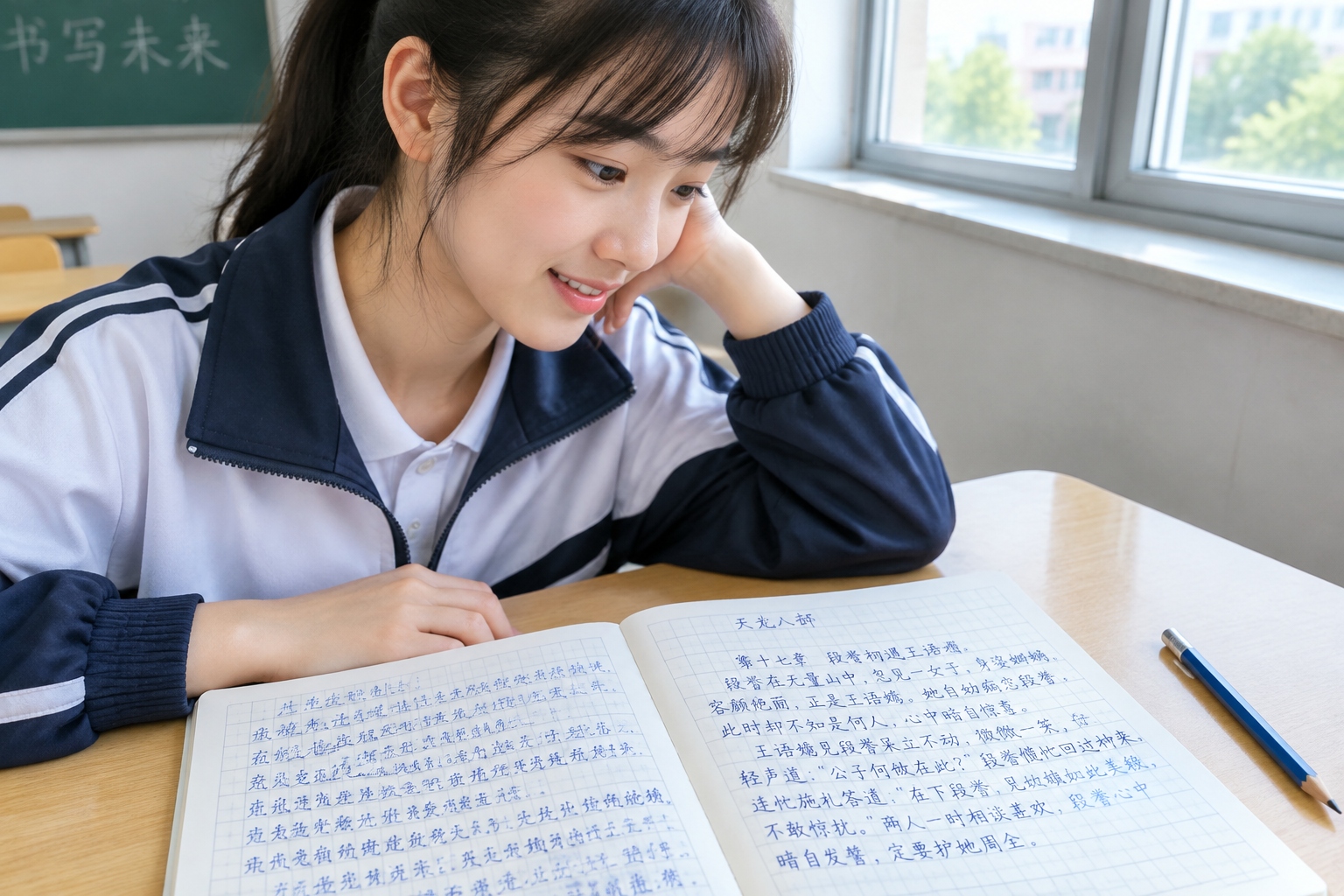
Li Cheng grew up reading Jin Yong and Gu Long, the giants of Chinese wuxia fiction. He also devours online wuxia serials on his phone. But reading wasn’t enough. “I wanted to make my own characters suffer and win,” he says. “It felt like building a world that belonged only to me.”
Why write in a notebook instead of a computer? “Inspiration comes in class,” he explains. “I can’t open a laptop, but I can flip to the back of my exercise book.” The notebook is portable, secret, and always with him. During breaks, classmates pass it around, reading the latest chapter. “They argue about who is the strongest fighter,” Li Cheng says. “It’s like a tiny fan club.”

Building a Sect: The Making of a Teenage Martial World
Li Cheng’s story centers on a sect called “Blue Cloud Pavilion.” He spent weeks designing its hierarchy: a grandmaster, four elders, and a group of young disciples. Each character has a backstory, a signature move, and a rivalry. “I borrowed the idea of internal energy from Jin Yong,” he says, “but I added a rule: my characters get stronger only when they help others.”
He draws inspiration from real life too. A strict teacher becomes a stern sect leader. A friend who is good at basketball becomes a martial arts prodigy. “Sometimes I get stuck,” he admits. “I don’t know what happens next. So I skip to a fight scene and figure out the plot later.”
Life Between Homework and Heroics
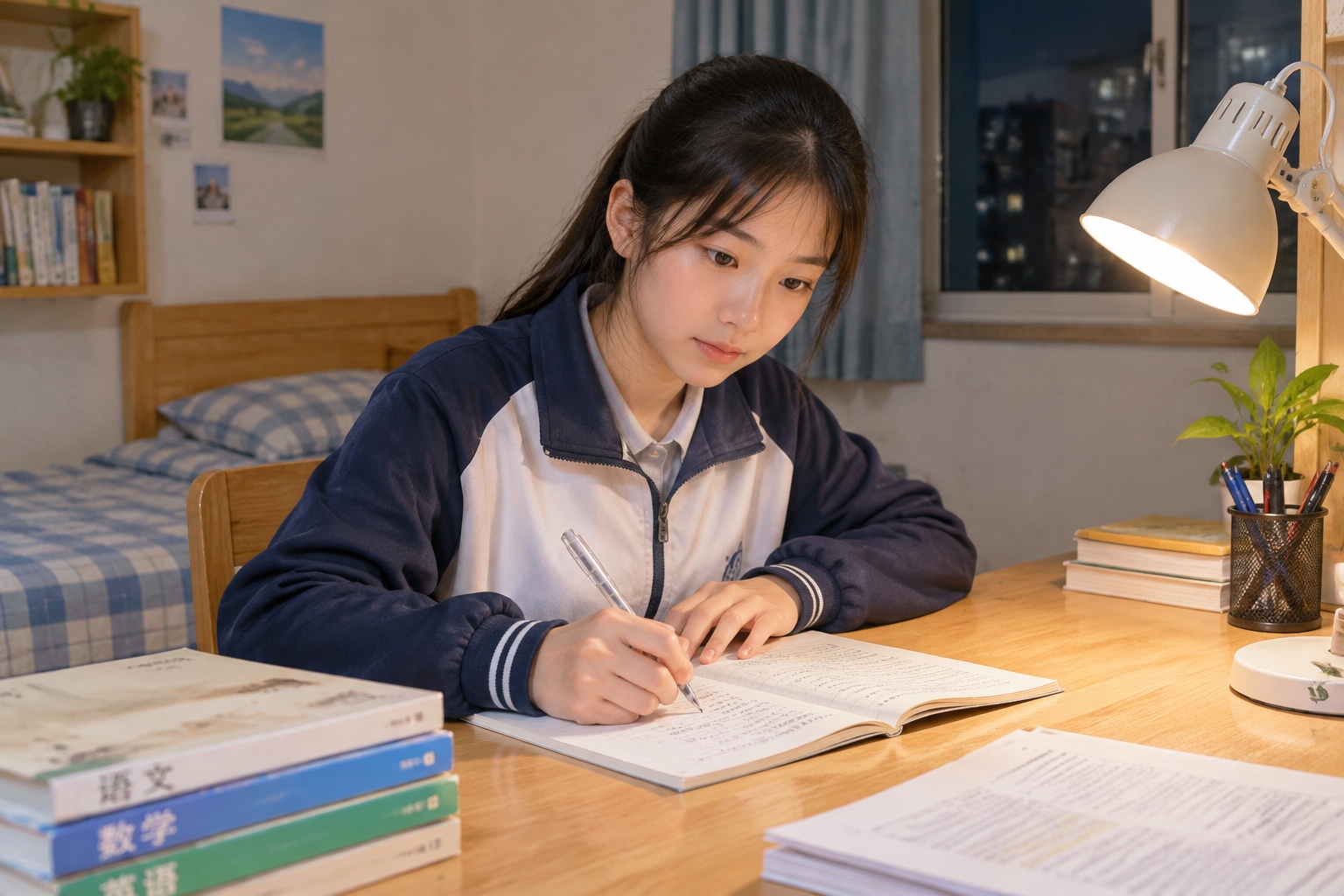
Writing time is squeezed into the cracks of a busy school day: ten minutes after lunch, a few minutes before sleep, sometimes under the covers with a flashlight. His parents initially worried it would hurt his grades. “My mom confiscated my notebook once,” he says. “But then my Chinese teacher told her my writing had improved. Now she just tells me not to stay up too late.”
The writing has changed him. His vocabulary is richer, his essays are more vivid, and he speaks with more confidence. “I used to hate writing,” he says. “Now I feel like I have something to say.”
A Wider Ecosystem for Young Chinese Creators
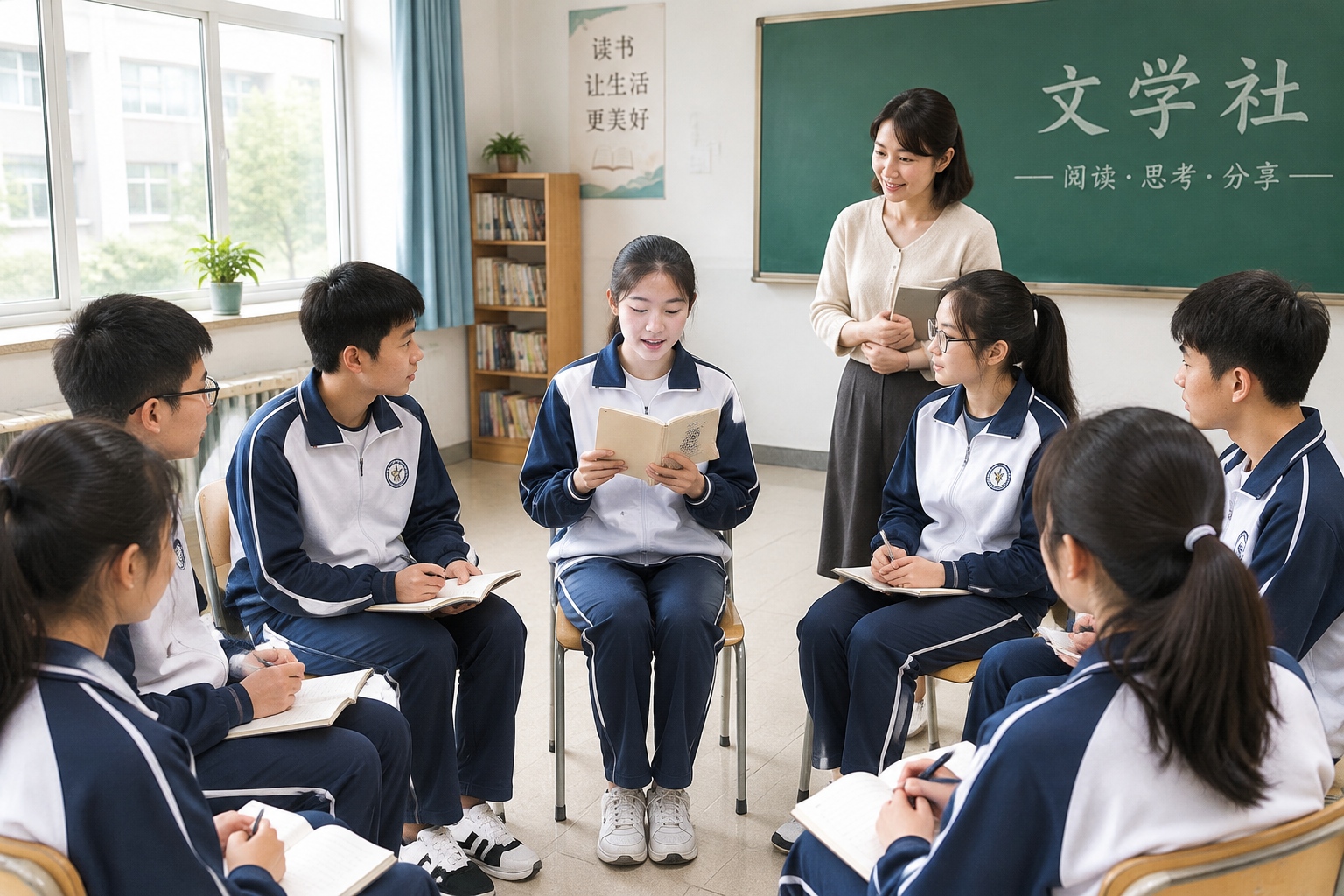
Li Cheng is not alone. Across China, middle school students are writing novels, posting them on platforms like Qidian and Douban, and joining school literary clubs. Online serialization has lowered the barrier: anyone with a phone can publish a chapter and get feedback. Some teen writers even attract thousands of readers.
Schools are responding. Many hold creative writing contests and support student magazines. “We see more students writing wuxia, science fiction, and fantasy,” says Ms. Wang, a middle school Chinese teacher in Beijing. “They are not just copying. They are mixing genres and experimenting.”
Where Does a Notebook Sect Lead?
Li Cheng doesn’t know if he will become a writer. “Maybe I’ll study engineering,” he says. “But I’ll keep writing. It’s my world.” His story is a small, specific Chinese story: a teenager with a notebook, a love for wuxia, and the quiet determination to create something of his own.
In a country often described through big numbers and grand narratives, the back of an exercise book reminds us that the most meaningful changes often start small—on a page, in a classroom, in the mind of a 14-year-old.
Start the discussion at forum.chinacomes.com