
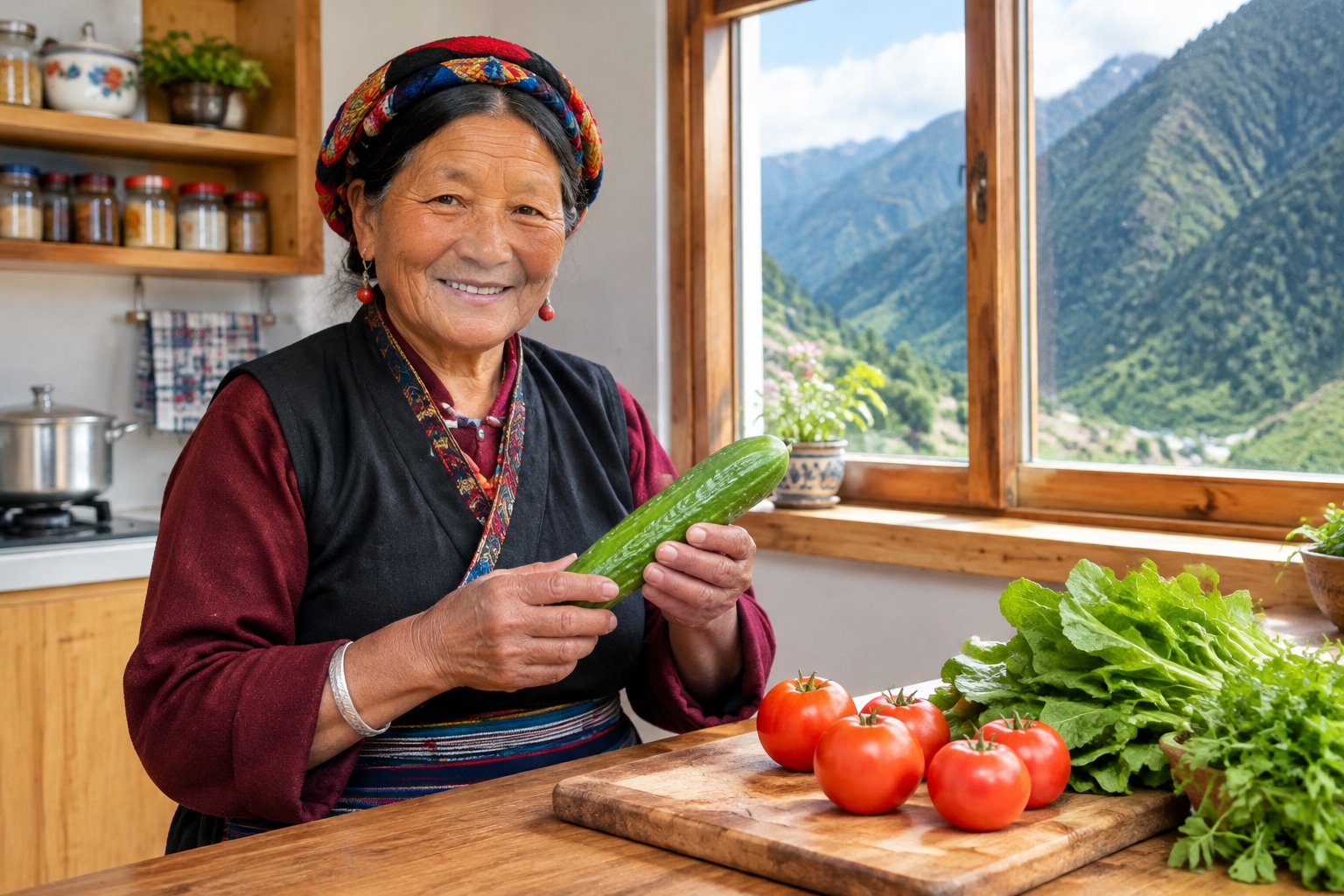

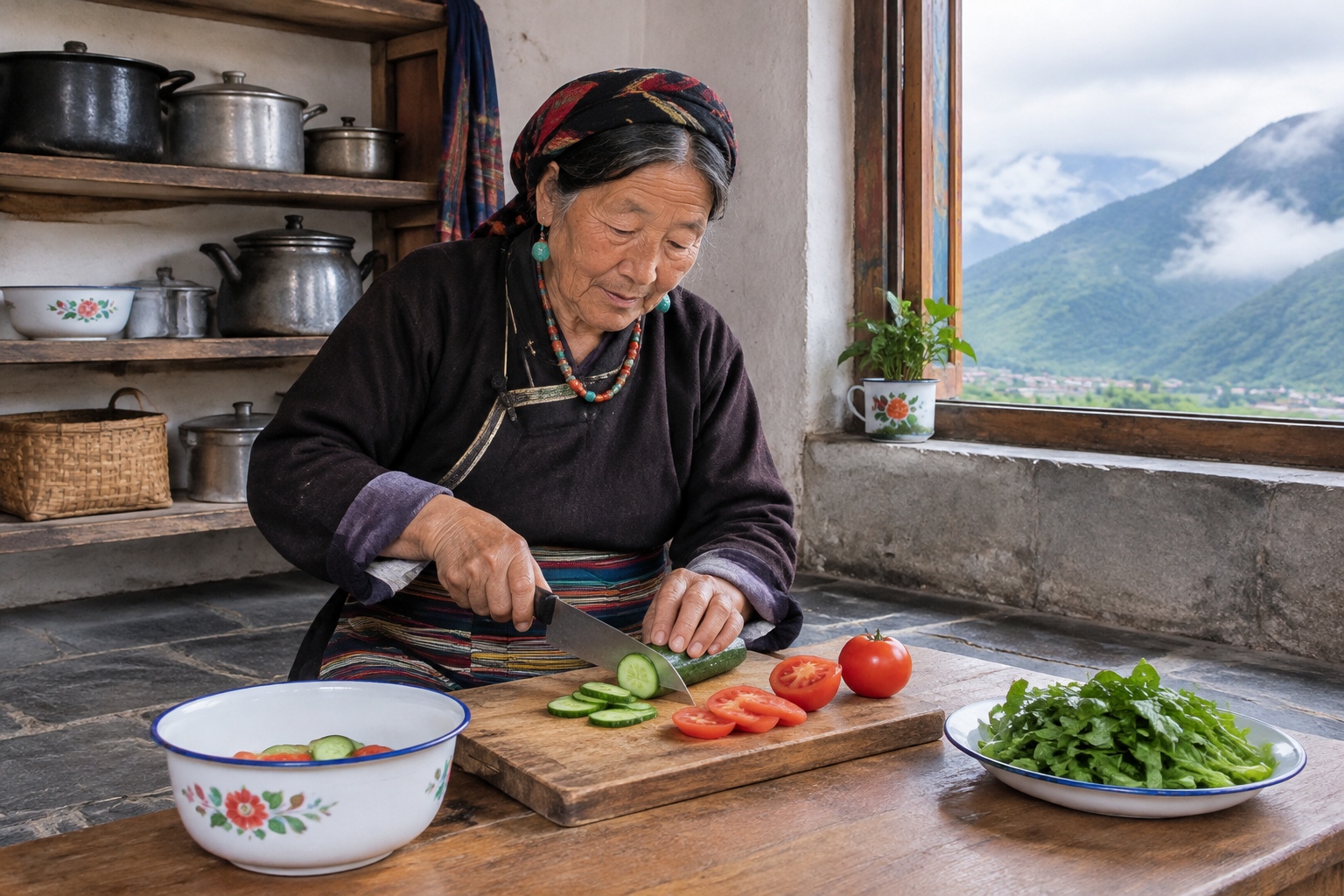
Yudron’s kitchen smells of smashed garlic and warm yak butter. Outside her window, the mountains of Metog rise sharply, dark green against pale sky. She slices a cucumber and a tomato, then adds a handful of spinach leaves into a bowl. For most of her life, such a bowl would have been almost impossible to gather in this remote corner of southeastern Tibet.
Yudron is a 62-year-old Lhoba woman. The Lhoba are one of China’s smallest ethnic groups, with fewer than a few thousand people living mostly in the deep valleys of the Himalaya. She was born here, and she never left. But in the past decade, her daily life has changed more than in the previous sixty years.
A Village That Lived on What It Could Carry
Before the road, Metog was the last county in China not connected by an all-season road. The surrounding mountains were so steep that even pack mules had to move slowly. People travelled with heavy loads on their backs, crossing the 4,000-meter Doxung La pass on trails that turned into mud and ice in winter. A trip from Metog to the nearest town used to take at least three or four days on foot. A box of apples, if you dared to carry it, was a luxury.
“We grew some wheat and potatoes near the house,” Yudron recalls. “Most of the year, we ate tsampa, dried meat, and preserved butter. Fresh vegetables were only for festivals, or when someone brought them from outside.”
That outside world was not far in distance, but it was effectively unreachable. A leaf of cabbage could bruise on the mountain path; a tomato would not survive a week’s climb. So most villagers relied on a narrow diet that lasted through the long winter. Powdered barley, dried roots, salt tea, and occasionally a chicken. Yudron says she remembers going months without seeing anything green.
The Day the Road Opened
Everything changed in 2013. After five years of construction, the Zhamo Road was completed, linking Metog to Bomi County and the larger network of Tibetan highways. The 117-kilometer route is not a long highway by world standards, but it cuts through some of the hardest terrain on Earth. Engineers dealt with landslides, cliffs, and rivers that seemed to move overnight. Today it is paved and open all year in most weather, though it can still close for short stretches during storms.
For Yudron, the most memorable day was not the opening ceremony. It was a week later, when a neighbor came home with a bunch of bok choy from the new market in town. “It was deep green,” she says. “I turned it over in my hands and didn’t know whether to wash it or just look at it. I eventually cooked it with dried meat and garlic. Even the smell felt different.”
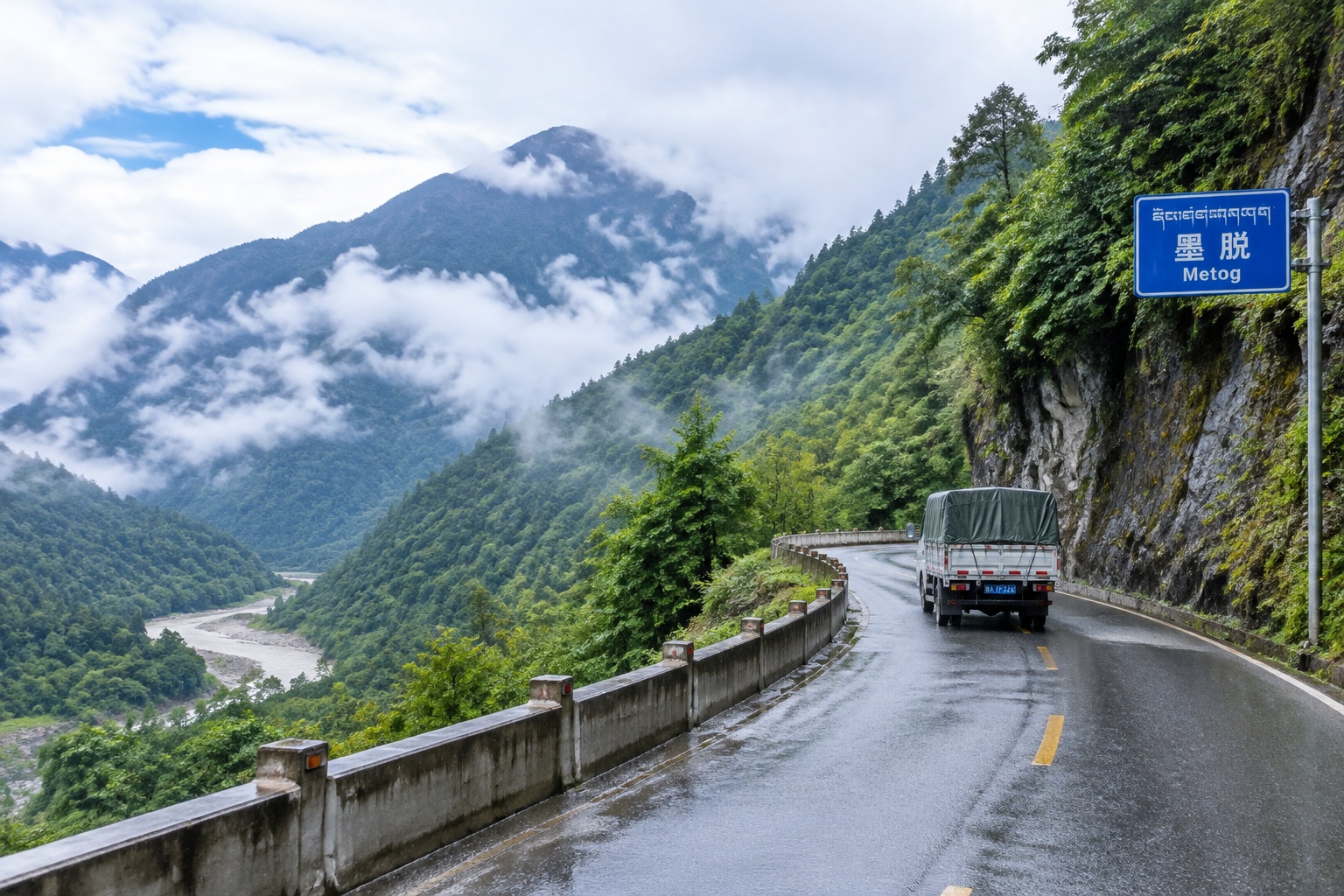
The road quickly changed what was possible. Trucks could carry fresh vegetables from the lower valleys to Metog in a few hours. Once, it had taken days or weeks. Now bus drivers and small traders found that bringing produce to the county seat was a paying business.
A Table That Turned Green
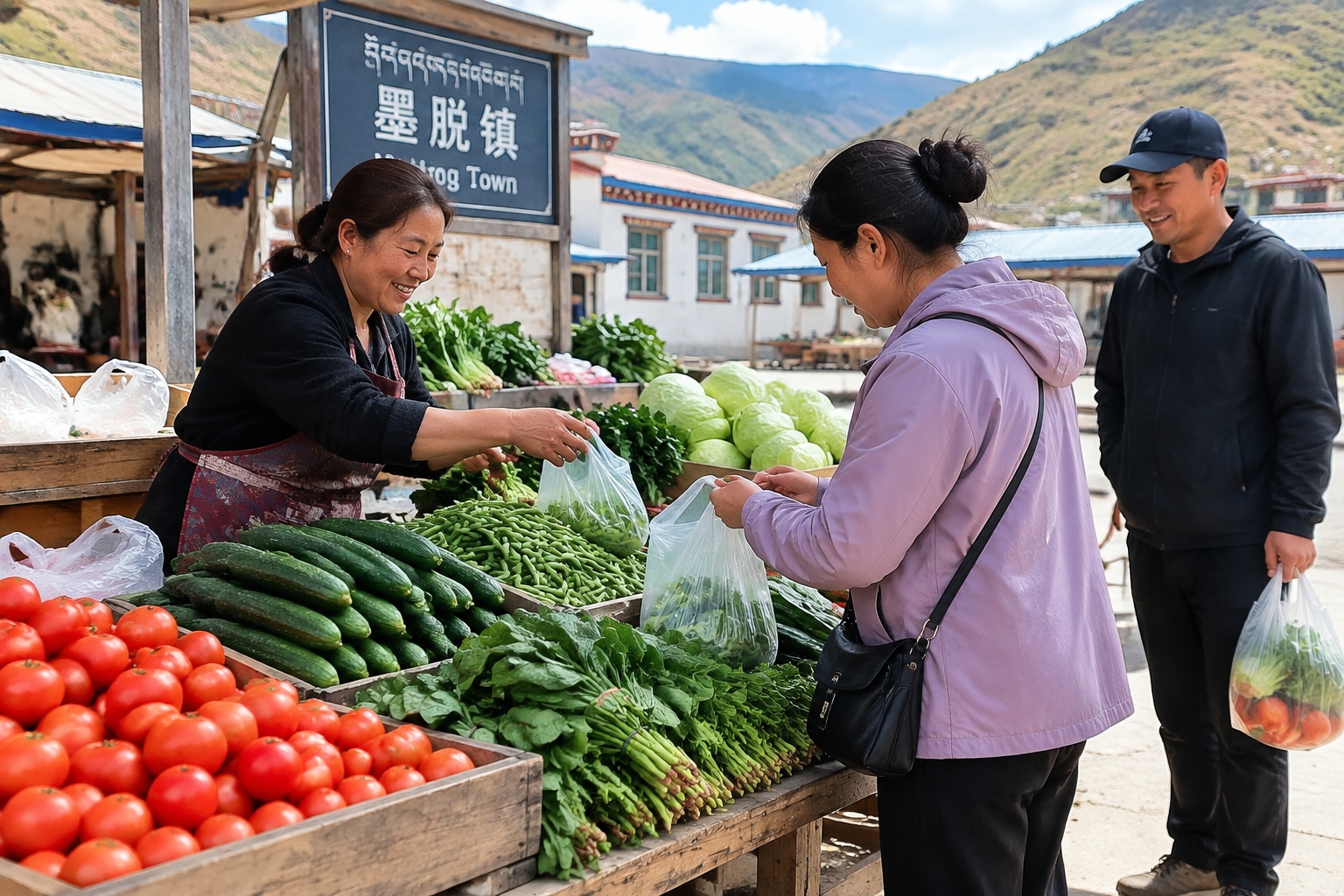
The weekly market in Metog now includes stalls piled with tomatoes, cucumbers, green beans, broccoli, and several kinds of leafy greens. Some are grown in greenhouses in the valley; others come from Nyingchi, about 200 kilometers away, or even farther. The choice is smaller than in a city, but it is real.
“I buy fresh greens every few days now,” Yudron says, pointing to the spinach in her sink. “I love making soup with them. My husband always says the kitchen smells like a different place.”
For older villagers, the shift is emotional, not just nutritional. They remember times when the diet hurt people. “In winter, we used to worry about our families’ health,” Yudron says. “There were no vegetables, and just a limited amount of fruit. Now a person can cook with the same green things they see in the south of China.”
Younger people don’t have that memory. “My granddaughter picked a cherry tomato from a greenhouse the other day,” Yudron laughs. “She asked me to wash it, simple as that. I didn’t know what a cherry tomato was at her age.”
A Quiet Rural Change
The arrival of vegetables is one small sign of a much larger transformation. The road did not only bring food. It brought medical supplies, school buses, mobile phone service, and more reliable electricity. Farmers started growing vegetables not just for themselves, but for the market. Some families built small greenhouses with government subsidies. Others opened guesthouses, because the road also brought tourists wanting to see Lhoba culture and the mountain scenery.
Yudron’s daughter runs a guesthouse with five rooms. The menu includes a mix of traditional Lhoba dishes and stir-fried vegetables from the greenhouse behind the building. “Before, I could not imagine a tourist coming here by car,” Yudron says. “Now they come, eat a meal, and leave with photos.”
Still a Hard Mountain, but an Open One
The highway is not a perfect answer. The mountain route can still be blocked by landslides during monsoon season. In winter, a layer of ice may delay trucks, and vegetable prices can go up for a few days. But these are short interruptions, not a way of life.
Metog has entered a period where the outside world is no longer filtered through the gates of the pass. On a normal morning, Yudron can walk to the market, buy vegetables, and be home before the tea boils. She still feels a small thrill each time she picks something green.
“I grew up thinking that the road would come when I was an old woman,” she says. “It came before I was old, and now my grandchildren eat like the road has always been there.”
The mountains are still steep, but the window is open. Outside, the cucumber is crisp, the spinach is washed, and the bowl is green.
Start the discussion at forum.chinacomes.com