
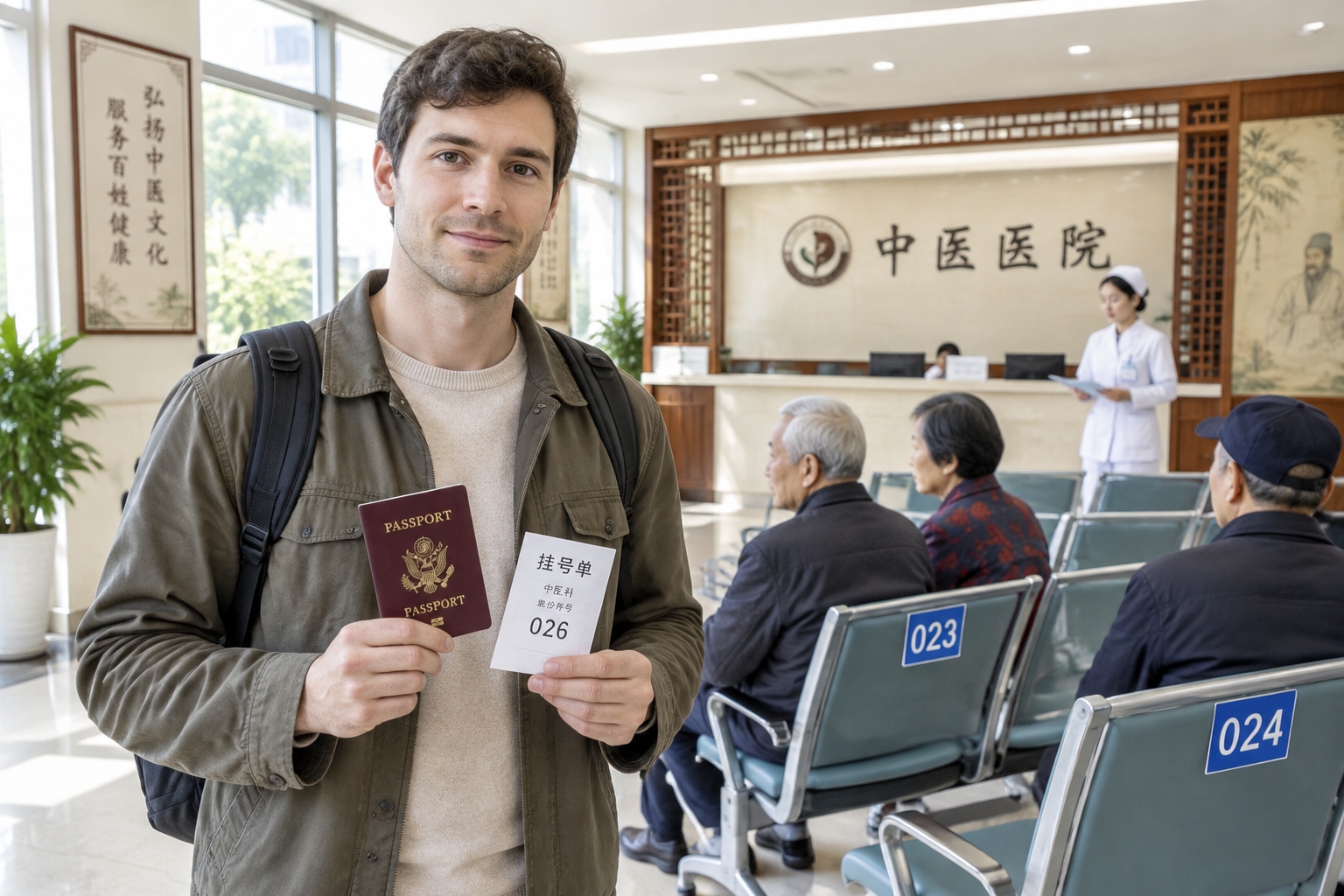

A normal morning at a TCM hospital
At 8:40 on a Tuesday in Chengdu, a Spanish student walks into the outpatient hall of a public hospital of traditional Chinese medicine. She is not there for a show. She has insomnia, neck pain from laptop work, and a friend’s advice to try acupuncture. Around her, retirees hold queue numbers, a mother carries a child, and a nurse directs people to the second floor. The student pays a registration fee, waits, and is asked to show her tongue and describe her sleep. The doctor takes her pulse, writes a short plan, and quotes a price for one acupuncture session. She had expected something mysterious. What she finds is closer to a normal clinic visit, with a different set of questions.
That is the first thing a foreign visitor should know about TCM in China. Traditional Chinese Medicine is not a fringe spa product or a tourist performance. It sits inside the regular health system, from large public TCM hospitals to small community clinics. Foreigners can use it, usually with a passport. The practical questions are simpler than the philosophical ones: Where should I go? What will it cost? Will anyone speak English? What should I avoid? This guide focuses on those questions, with 2024–2025 price bands and ordinary clinic routines.
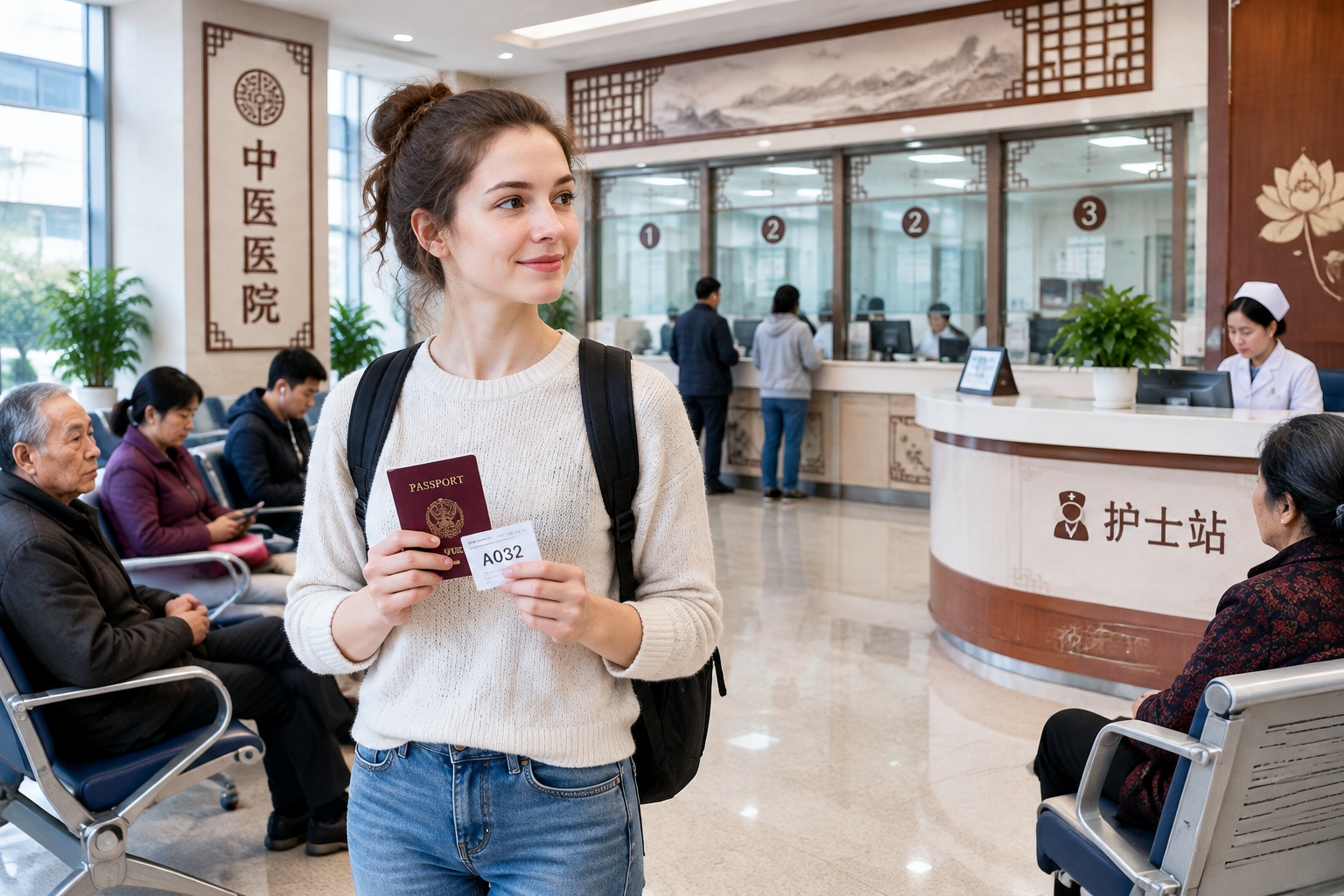
Where to go: four kinds of TCM care
Public TCM hospitals are the backbone. Many cities have a hospital named 中医院. They handle everything from herbs to acupuncture, tuina massage, and inpatient care. A general hospital may also have a TCM department; this is often the easiest option if you are already seeing a Western doctor in the same building. Community health centers provide basic TCM services at lower prices, but English support is rare. Private and international clinics are the most foreigner-friendly on language and paperwork, and the most expensive.
For a TCM clinic for foreigners, the key distinction is not ancient versus modern. It is public versus private, and ordinary versus international department. Public hospitals are where most Chinese patients go. International departments and private clinics sell convenience: appointments in English, longer consultations, card payment, and help with insurance. You are often paying for time and translation as much as for the needle.
City-by-city: what fits a foreign visitor
Do not pick a city only because it sounds spiritual. Pick it because the clinic is easy to reach, the appointment system works for you, and the trip makes sense with the rest of your travel. This is not a wellness travel China guide built around resorts. It is a city guide for ordinary medical access.
| City | Good for | Public acupuncture, per session | English support | Watch-outs |
|---|---|---|---|---|
| Beijing | Top TCM hospitals and international departments | RMB 60–150 | More available at international departments | Book early; do not chase only famous experts |
| Shanghai | English help plus city convenience | RMB 60–150 | Many private and international clinics | High-end prices are not the local norm |
| Guangzhou | Strong TCM tradition and food culture | RMB 50–120 | Limited outside international departments | Ordinary clinics may need translation |
| Chengdu | Lower costs and a slower pace | RMB 40–100 | Limited; translation apps help | Avoid tourist-area wellness packages |
| Hangzhou | Easy digital booking and pleasant travel | RMB 50–120 | Moderate | Popular hospitals need advance booking |
| Nanjing | Good hospitals at lower cost | RMB 40–100 | Little in ordinary clinics | A Chinese-speaking friend helps |
| Smaller cities | Time, lower cost, local routine | RMB 30–80 | Very limited | Stick to public TCM hospitals |
Smaller cities have legitimate TCM hospitals too. If you have a Chinese-speaking friend, a lower-tier city can be cheaper and less crowded. The city matters less than the institution. A well-run public hospital in Nanjing may be a better first experience than a high-priced tourist clinic in a scenic district.
What acupuncture actually costs in China
Chinese public hospitals usually separate registration, consultation, treatment, and medicine. For a first visit, expect a registration fee of RMB 20–50 for an ordinary TCM doctor, RMB 50–150 for a senior specialist, and RMB 300–800 or more at an international department or private clinic. Acupuncture itself is often RMB 40–150 per session in a public hospital, depending on city and whether the fee is charged per session or per point. Tuina massage is commonly RMB 80–300. Herbal medicine, if prescribed, can add RMB 100–500 per week. Private and international clinics often charge RMB 400–1,000 or more per acupuncture session, with the first consultation separate.
A realistic public-hospital first visit in Beijing, Shanghai, or Chengdu often lands around RMB 100–300 including registration and one session. A five-session public course might cost RMB 300–800 before medicine. At a private clinic, the same first visit can easily reach RMB 600–1,500. Tourist-area wellness packages at RMB 500–2,000 per session are not the normal market. They are entertainment prices. Ask for an itemized price before the first needle. If the counter cannot explain what is included, walk away.
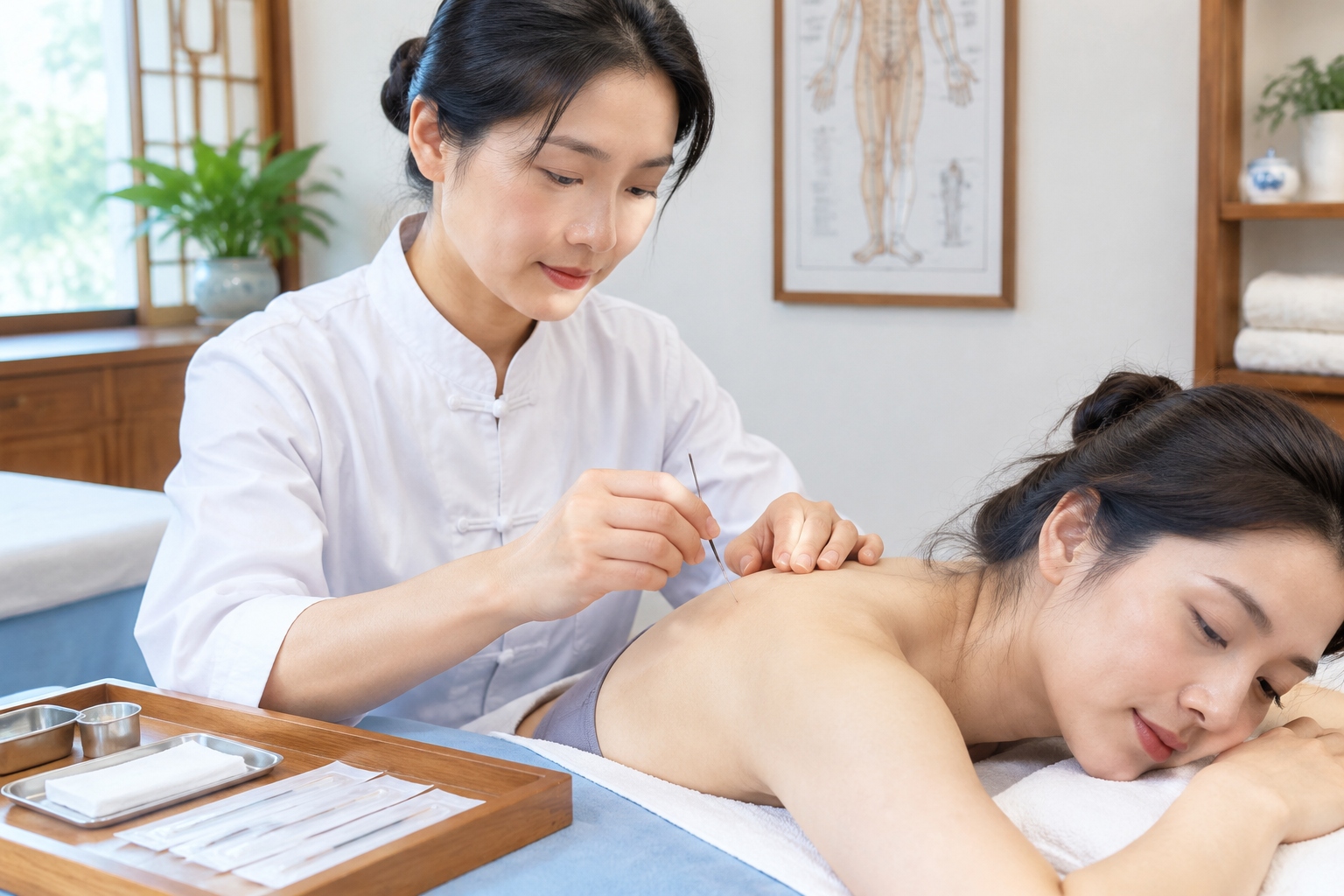
Booking and language: the practical steps
Many Chinese hospitals use WeChat mini-programs or local apps for appointments. Some accept passport numbers; others do not for a first visit. If the app rejects you, go to the registration hall with your passport. The Chinese word for acupuncture department is 针灸科, pronounced zhen jiu ke. The TCM department is 中医科. At a large hospital, ask for the international department or 特需门诊 if you want English help and can pay more. Private clinics usually book by email or WeChat.
Bring your passport, a payment method, and a translation app. WeChat Pay and Alipay can be linked to many international cards, but small counters may still prefer local payment. Carry some cash as backup. Write down your main symptoms, sleep, digestion, pain location, medicines, and allergies in Chinese if possible. Keep the registration slip, receipt, and medical record; your insurer may ask for them. If you plan a longer course, ask the Chinese embassy or consulate which visa category fits. For a short acupuncture visit, most travelers use a normal tourist visa. Do not assume a dedicated medical visa will solve the paperwork.
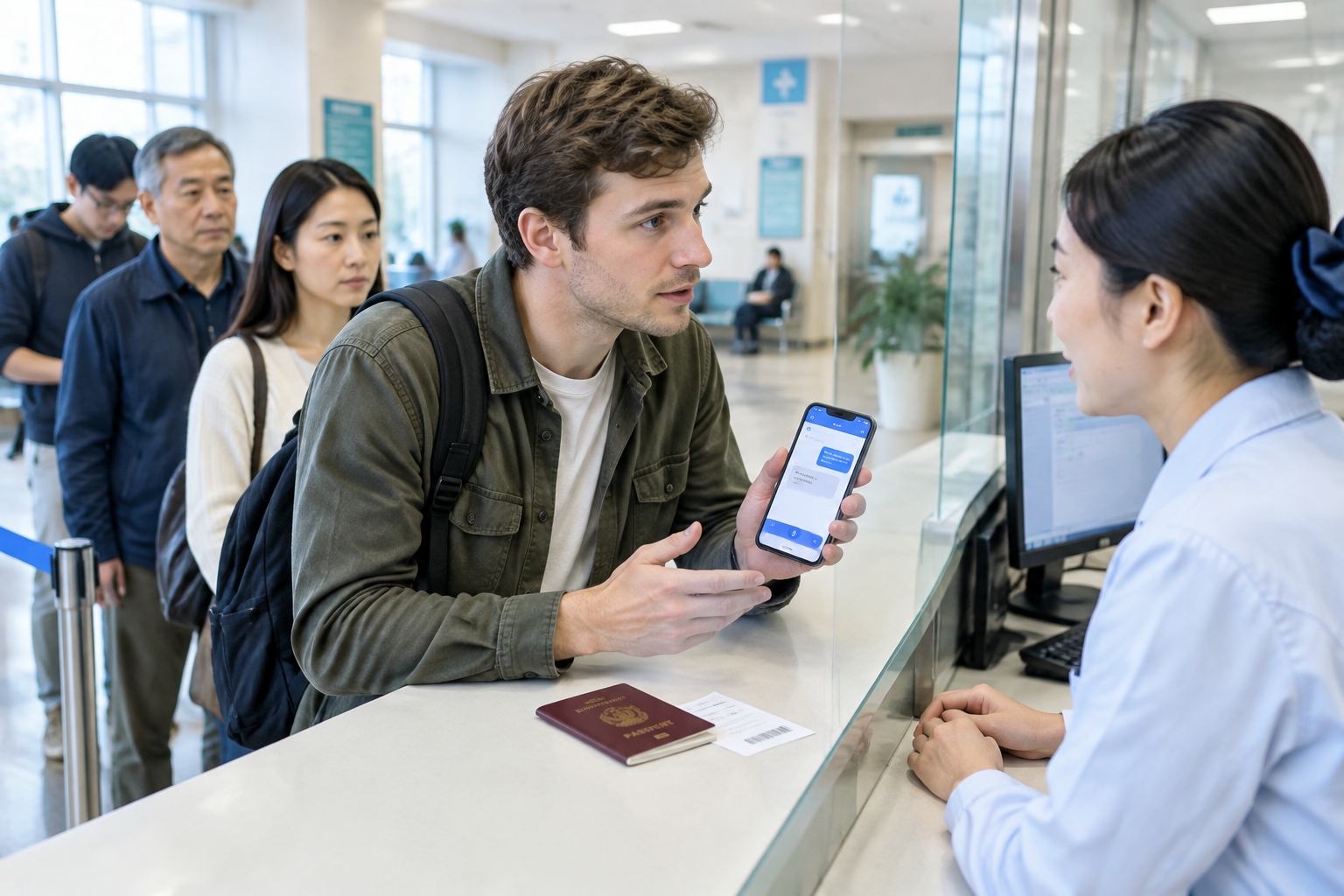
What is worth paying for, and what to skip
Worth paying for: a licensed institution, a real consultation, single-use needles opened in front of you, a clear treatment plan, and a receipt. A good doctor will ask about your history and tell you how many sessions to try before judging whether it helps. Worth paying for is also honesty. If acupuncture is not the right tool for your problem, a decent clinic will say so.
Skip the tourist 养生馆 that promises to cure insomnia, infertility, diabetes, and jet lag in one package. Skip anything sold by a tour guide on commission. Skip clinics with no displayed license or price list, pressure to buy expensive herbs, and claims that acupuncture can replace cancer treatment or insulin. A useful test: ask what happens if you do not buy the package. A legitimate clinic will still treat you. A hard sell will not.
Safety and realistic expectations
Acupuncture is generally safe when performed with sterile, single-use needles by a trained practitioner. Tell the doctor if you take blood thinners, are pregnant, have a bleeding disorder, or have a pacemaker. Ask them to open the needle packet in front of you. For emergencies, go to a Western-style emergency room first; TCM is not the place for chest pain or a high fever. If you take prescription medicine, do not stop it on your own. Herbs can interact with drugs, so show the doctor your full medication list.
Evidence for acupuncture is mixed but not empty. It is best studied for some kinds of chronic pain and nausea; it is not a cure-all. Think of it as a possible adjunct, not a replacement for necessary medical care. That modest framing is also how many Chinese patients use it: one option among several, chosen for a bad back, a headache, or recovery support.
A first visit you could actually replicate
A composite of several foreign-patient accounts looks like this. An American teacher in Shanghai books a public TCM hospital near a metro station. At the counter, she pays RMB 50 for registration and sees a TCM doctor. The consultation costs RMB 50. She describes neck pain and poor sleep; the doctor checks her tongue and pulse, asks about coffee and screen time, and recommends three acupuncture sessions. The first session costs RMB 80. The total is RMB 180, less than a nice dinner in the city. The needles go in for about 20 minutes. She feels heaviness, not drama. No herbs are prescribed. She leaves with a receipt and a follow-up appointment.
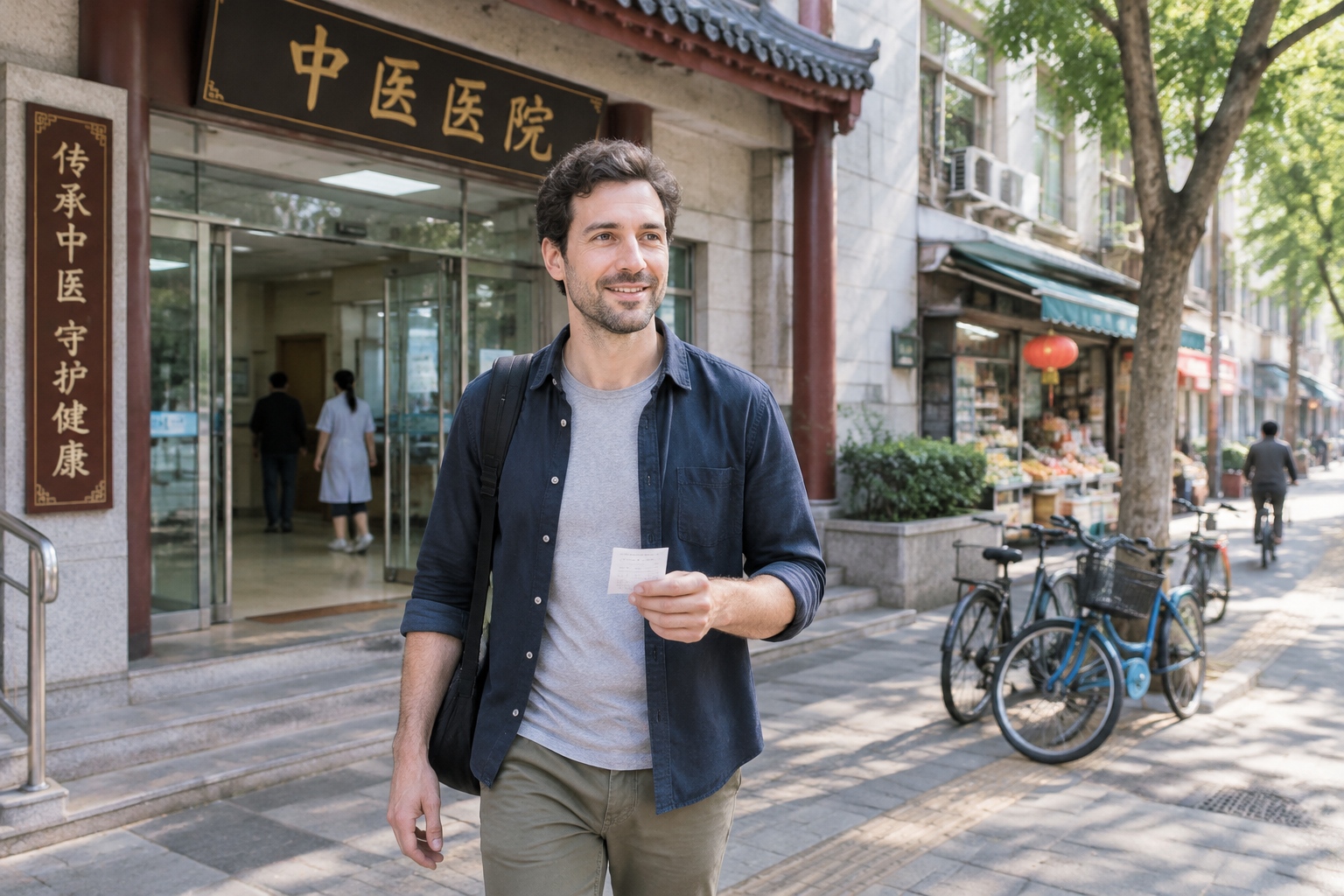
Not every visit is this smooth. Language can be a barrier, waiting rooms are busy, and some doctors are more comfortable with local patients. But the core routine is ordinary and repeatable: passport, registration, short consultation, treatment, payment, receipt.
A simple plan: three days to two weeks
For a three-day stop, book one consultation and one acupuncture session. Do not cram a course into a holiday. For a week, try two or three sessions with a rest day between them. For two weeks, four to six sessions is a more sensible trial, ideally with the same doctor. Combine treatment with normal travel: museums, neighborhoods, markets, and parks. A trip built only around needles is likely to disappoint.
Before you go, check your insurance, save the hospital address in Chinese, download a translation app, and write down your medication list. Useful phrases: 我想挂针灸科, I want to register for the acupuncture department; 一次多少钱, how much per session; 针是一次性的吗, are the needles single-use; 有没有英文医生, is there an English-speaking doctor. Keep your receipts. Ask for the price before treatment, not after.
Conclusion
TCM in China is neither a miracle nor a scam. It is a working part of the medical system, used by millions of ordinary people alongside scans, antibiotics, and surgery. For a foreign visitor, a good first visit is almost boring: a licensed clinic, a clear price, a sealed needle, and modest expectations. That ordinary experience is also a useful window into daily life in China, where tradition survives not as a performance but as one more choice in a crowded, practical health system.
Start the discussion at forum.chinacomes.com