
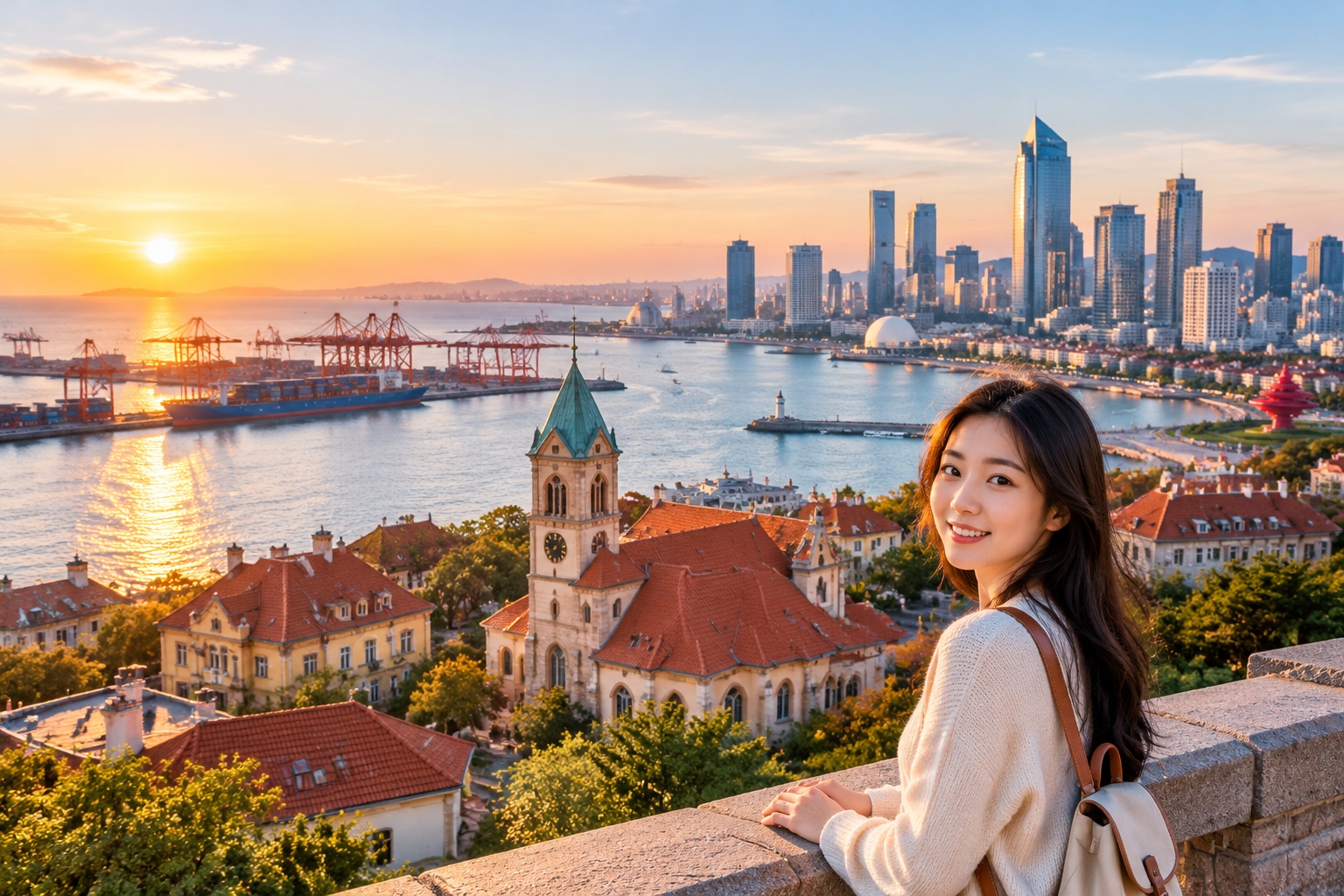

Introduction
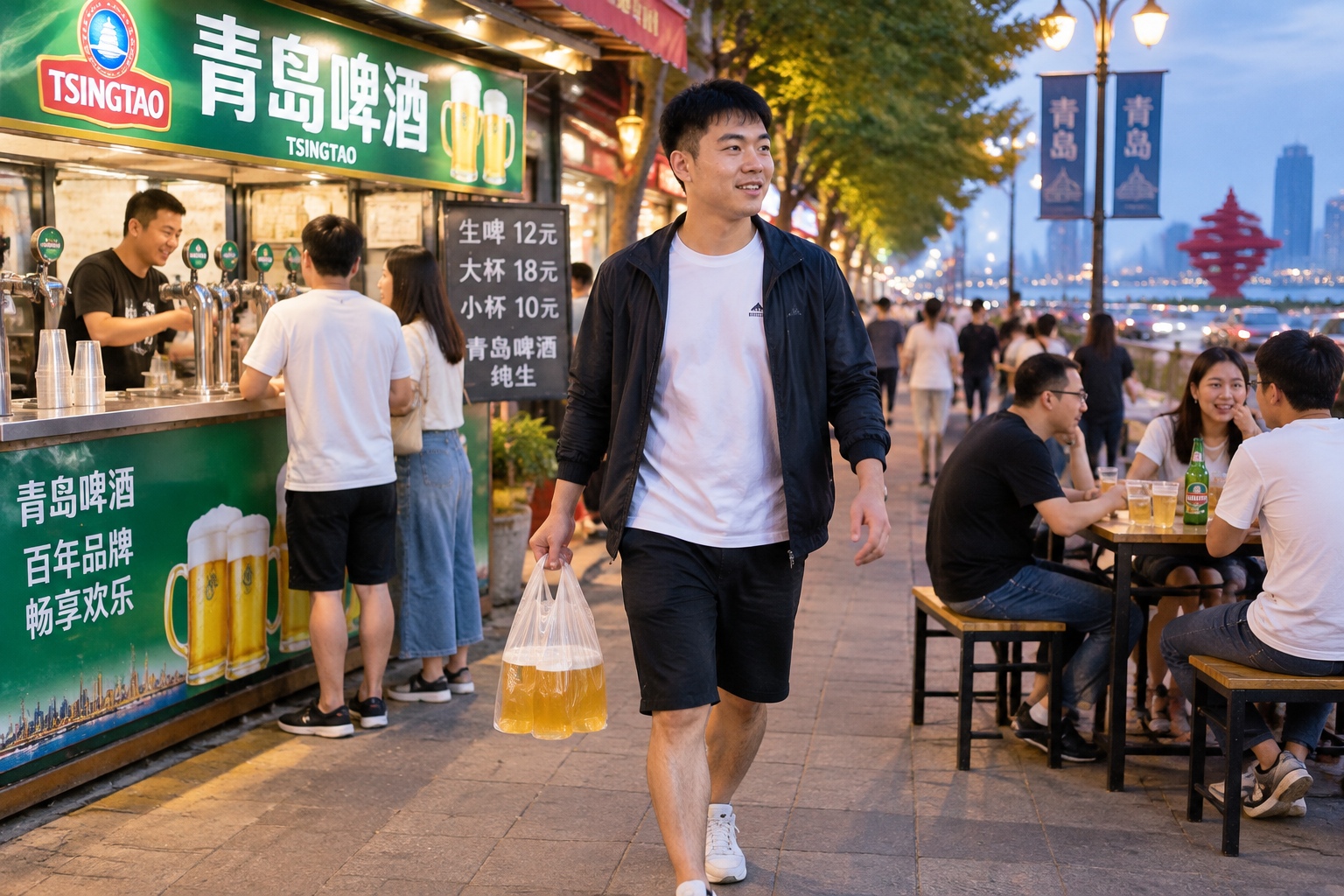
On a warm evening in Qingdao, a coastal city in eastern China, the air smells of asphalt, salt, and roasted seafood. Outside a small beer stall on Yingkou Road, a man in his 50s fills a clear plastic bag with golden draft beer from a tap. He ties the bag with a rubber band and walks off, a scene that has repeated itself for over a century. This is Qingdao, the birthplace of Tsingtao Beer, but also a gritty industrial giant. To outsiders, it’s a tourist destination with German-era architecture and beaches. To the Chinese, it’s a symbol of maritime ambition, a city that has turned its port into a gateway to the world and its factories into an innovation engine. This is the story of a city that learned to orchestrate beer, port, and industry into one symphony.
Beer: The Flavor of a Century
Qingdao’s beer story began in 1903, when German settlers founded the Germania-Brauerei on the outskirts of the city. That brewery later became Tsingtao Brewery, now China’s largest and the fifth-biggest beer brand in the world. But what’s more interesting than corporate history is how the locals embrace beer. Unlike in many Western countries, where beer is often consumed in bars or at home, Qingdao people drink it as an integral part of street life. They pour it into large plastic bags, hang them on car door handles, or carry them home for a family dinner.
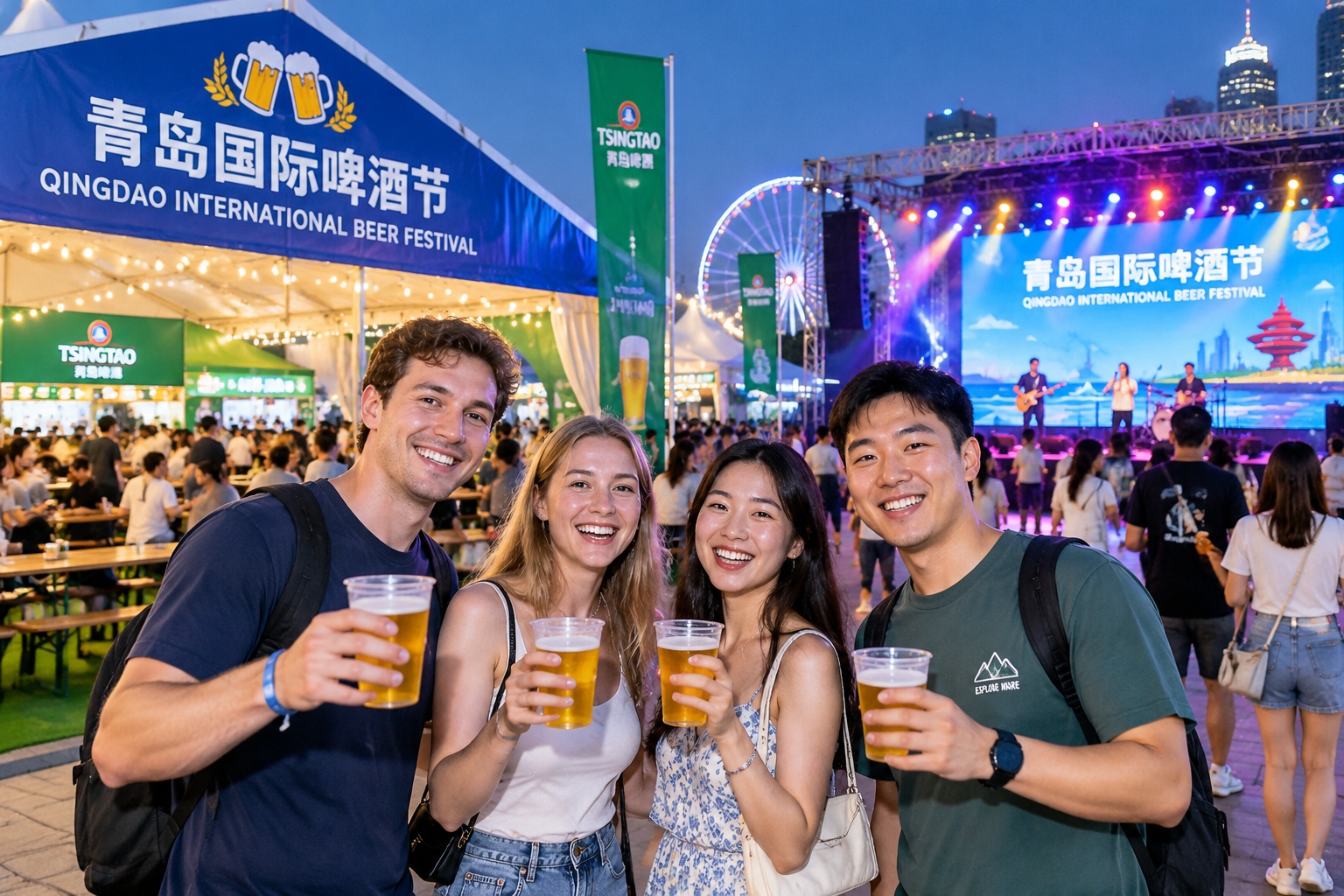
The Qingdao International Beer Festival, held every August, attracts millions of visitors and mimics Munich’s Oktoberfest, yet it has its own quirks: tents that offer dozens of Chinese microbrews, barbecue stalls, and karaoke. In 2023, the festival drew over 3 million attendees and consumed more than 1 million liters of beer. It’s a celebration that reflects the city’s hybrid culture.
If you’re from a country that brews beer, you’ll immediately notice a difference in taste: Qingdao’s lager is lighter, more carbonated, and a bit sweeter, tailored for local palates. The city’s taps and bottles are a testament to a product that survived colonialism, war, and political upheaval, and came out as a cultural icon. Beer isn’t just a drink here; it’s a social lubricant that bridges generations and classes. On any given evening, you’ll see office workers in suits grabbing beer bags next to construction workers in dusty vests.
Port: From German Docks to Smart Containers
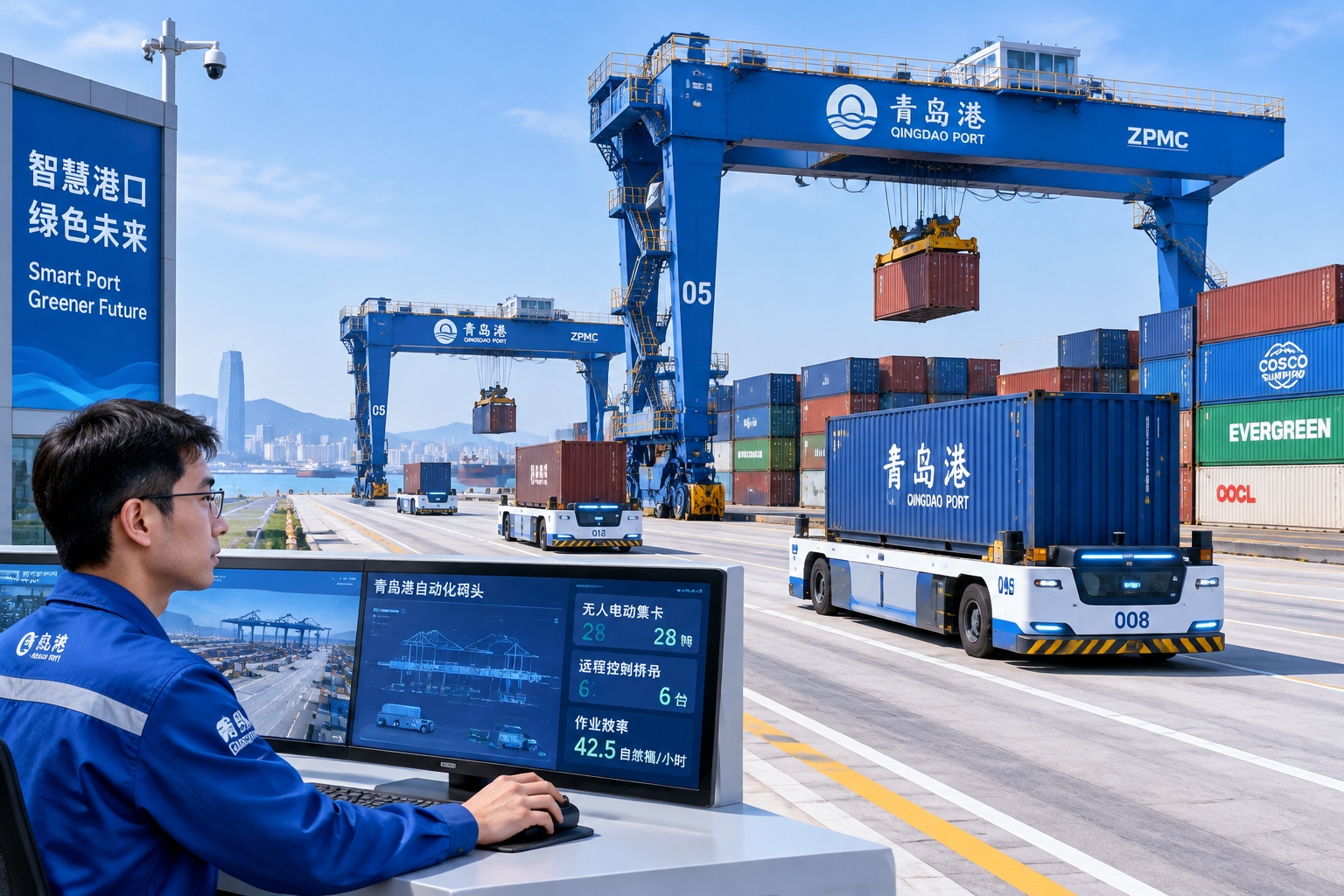
Qingdao’s port is not just a backdrop; it’s the city’s backbone. The Germans built a modern harbor in the early 1900s to export coal and minerals. After World War I, the Japanese expanded it for their textile industry. Today, the port has grown into one of the largest in the world. In 2022, Qingdao Port handled over 730 million tons of cargo and more than 25 million twenty-foot equivalent units (TEUs) of containers, ranking in the global top five.
Walking along the port, you might notice something unusual: there are no drivers in the quayside trucks. Automated vehicles, controlled by a central computer with 5G signal, move containers with precision. The gantry cranes are operated from a remote control room where workers monitor screens, much like playing a video game. This is not science fiction; it’s been a reality since 2019. The automation has doubled efficiency while cutting labor costs by half, according to port authorities.
You might wonder why a city in China would invest so heavily in technology. The answer lies in scale. Qingdao is a key node on the Belt and Road Initiative, serving as the eastern endpoint for the China-Europe freight rail corridor. Cargo from Japan and South Korea is shipped to Qingdao, then transferred by rail to Central Asia, cutting transport time significantly compared to via sea. In 2019, the State Council approved a pilot free trade zone (FTZ) in Qingdao, which has streamlined customs procedures and encouraged foreign investment. This makes the port a vital link for manufacturers across East Asia, not just in China.
Industry: From Textile Mills to Smart Factories
In the Japanese era, the city’s textile factories were among the largest in Asia. The Number One Cotton Mill, built in 1920, still stands in the northern district, but it now houses an art museum and studios. This pattern of adaptive reuse is common in Qingdao, where the old and new coexist. After 1949, these factories were expanded and transformed into heavy industry. Shipbuilding, rolling stock, and petrochemicals became the new pillars. Today, Qingdao’s industrial base spans everything from household appliances to high-speed trains.
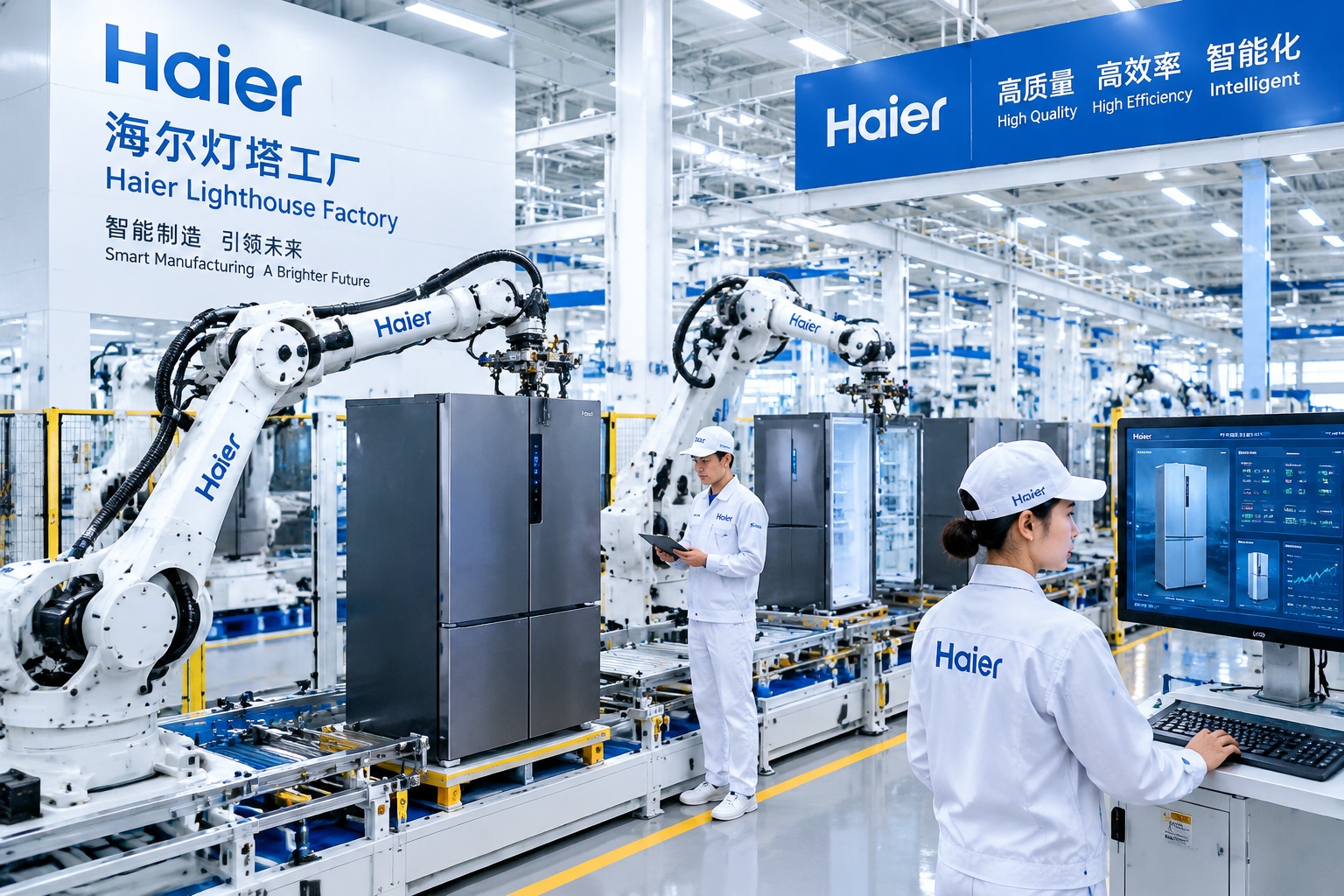
Take Haier, for example. Founded in 1984 with what was basically a failing refrigerator plant, it is now the world’s largest home appliance maker. The company’s factory in Qingdao is often cited as a “lighthouse factory” – a facility that uses artificial intelligence and Internet-of-Things to manage production. Workers in white uniforms oversee robots that assemble fridges with minimal human intervention. This is the new face of Chinese manufacturing: high-tech, automated, and globally competitive.
In the port area, you’ll see a different industrial vibe. Here, companies like CRRC build subway and train cars that are exported to countries such as Brazil, South Africa, and Pakistan. The city also hosts a vibrant marine engineering sector, producing drilling platforms and wind farm components. The economic output is enormous, but it also comes with challenges. The heavy industry has left its mark on the environment, and many factories have had to adapt to stricter pollution norms. The city is working on sustainable transition, but like many industrial hubs, the path is not linear. Yet the energy in the industrial parks is unmistakable. Small workshops and tech startups are popping up, often founded by former factory engineers who are applying their skills to new domains like robotics and biotech.
Living in Qingdao: Where Work and Life Meet
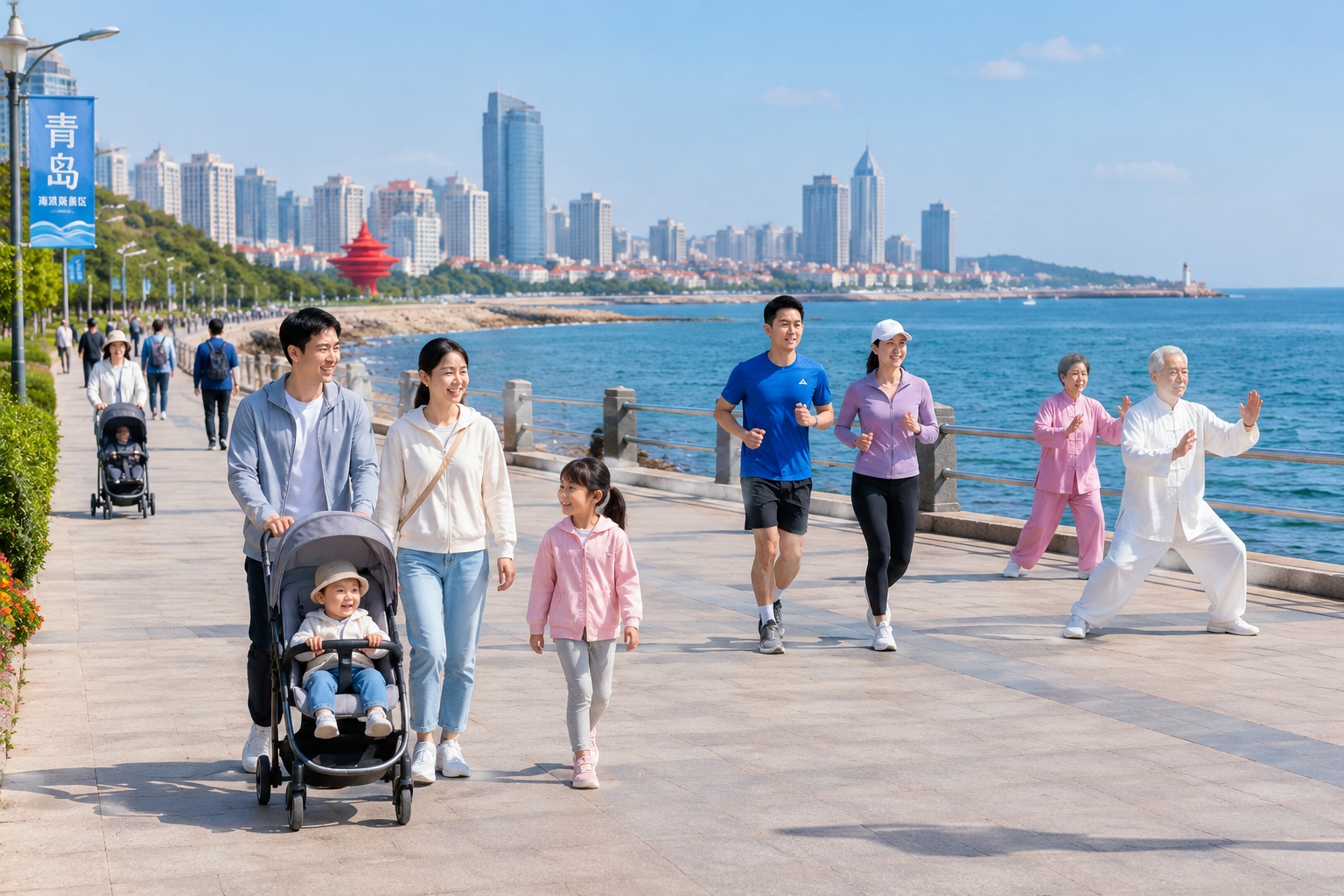
For all its industry, Qingdao is also a livable city. The local government has invested heavily in public spaces. The Olympic Sailing Center, built for the 2008 Summer Olympics, is now a popular promenade. On weekends, families stroll along the 64-kilometer coastal path, kite surfers ride the waves, and old men play chess under pine trees.
One thing that will stand out to any foreigner is the digital convenience. When you buy a snack at a local bakery, you pay with Alipay or WeChat Pay by scanning a QR code. Even street vendors selling candied fruit accept mobile payments. In the hospital, you can book appointments online and receive test results on your phone. This isn’t unique to Qingdao, but this city shows how deeply digitalization has embedded into daily life.
A conversation with a local worker might go like this: “Do you miss the old days when beer was cheaper?” I asked a retiree nursing a glass at a neighborhood beer bar. He laughed, “Everything changes, but the taste of beer hasn’t. Now I can even order it on my phone and get it delivered.” This is the reality of a city in transition. The housing market, too, reflects the nation’s larger shifts. Older neighborhoods in the “German area” on the southern coast are being regenerated, while new high-rise residential complexes rise in the suburbs. Residents have access to modern amenities—gyms, green parks, and efficient public transport—especially the metro system that connects the city’s parts.
You’ll also notice how community life is organized. Living in a “shequ” (neighborhood committee) is a common experience. Unlike a homeowners’ association in the West, the shequ is a semi-official body that mediates disputes, organizes cultural events, and helps elderly residents use digital services. It’s a form of governance that many expats find both curious and effective.
However, not everything is smooth. Traffic congestion during rush hours and income inequality are visible. A port worker’s salary might be half of a tech engineer’s, yet both remain in the city because of opportunities and quality of life.
A Comparative View: Qingdao in the Global Context
If you’re from Europe, Qingdao might remind you of Hamburg, with its mix of warehouse districts, water, and trade. If you’re from America, it could be like a smaller version of Los Angeles, with the ocean and a sprawling port. But Qingdao is more than a Chinese version of these cities. It’s a place where colonial history coexists with modern innovation. The German-built courthouse now hosts art exhibitions; the former Japanese textile dormitories have become creative industry parks.
This is not to say that history is always easy. The memories of occupation are complex. Chinese people respect the technology and infrastructure brought by foreigners, but they also remember the exploitation and war. For overseas readers, it’s crucial to know that the Chinese view of Qingdao’s past is neither romanticized nor completely negative. It’s a practical acknowledgment that a city must build on what it has, even if some foundations were laid under less ideal circumstances.
On a more personal level, many foreigners living in Qingdao say they enjoy the “sea life” and the slower pace compared to Shanghai or Beijing. The international community is growing, with expats working in factories, schools, and businesses. They often note the efficiency of the city’s services, from police to utilities, and the friendliness of locals who are curious about visitors but respectful of their boundaries.
Conclusion
Qingdao’s symphony is not just about beer, ports, and factories. It’s about a people who have learned to harmonize different rhythms – the clink of beer glasses, the hum of container cranes, and the buzz of automated assembly lines. For any international visitor or business partner, getting to know Qingdao means seeing China’s development in a microcosm. The city is both a product of history and a glimpse into the future. It may lack the old-world charm of some European ports, but it compensates with an unmatched energy. In the end, the symphony is still playing, and the city is writing new movements every day.
Start the discussion at forum.chinacomes.com