
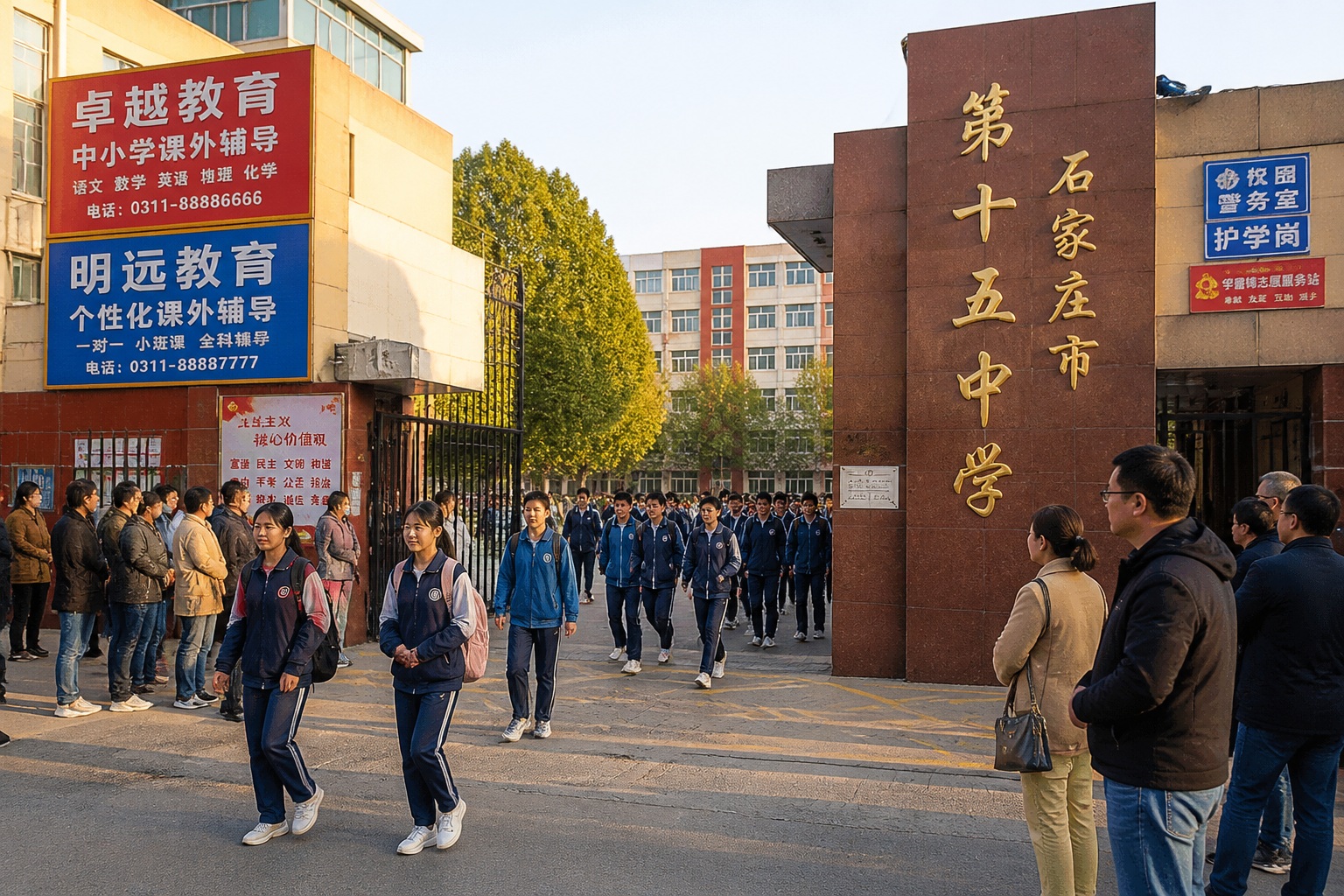

On a high-speed train from Beijing to Shijiazhuang, I sat across from a mother and her daughter. The daughter, about 14, was flipping through vocabulary cards; the mother occasionally pointed to one and repeated the word. When I asked where they were going, the mother said, “A week of summer school in Hebei.” It was not summer school in the Western sense. It was a boarding camp inside a private education park, designed to make the girl “fall in love with discipline” before she started high school.
That small conversation is a door into something large. Most foreign readers have heard about Hengshui High School, the notoriously strict Chinese school where students spend long hours preparing for the gaokao, the national college entrance exam. But Hengshui is only the visible tip. In Hebei, the province around Beijing, an entire industry has grown around that model—and now thousands of schools, tutoring centers, study camps and companies live on it. This is the part that rarely appears in foreign news reports.
What Counts as “Education Industry” in Hebei?
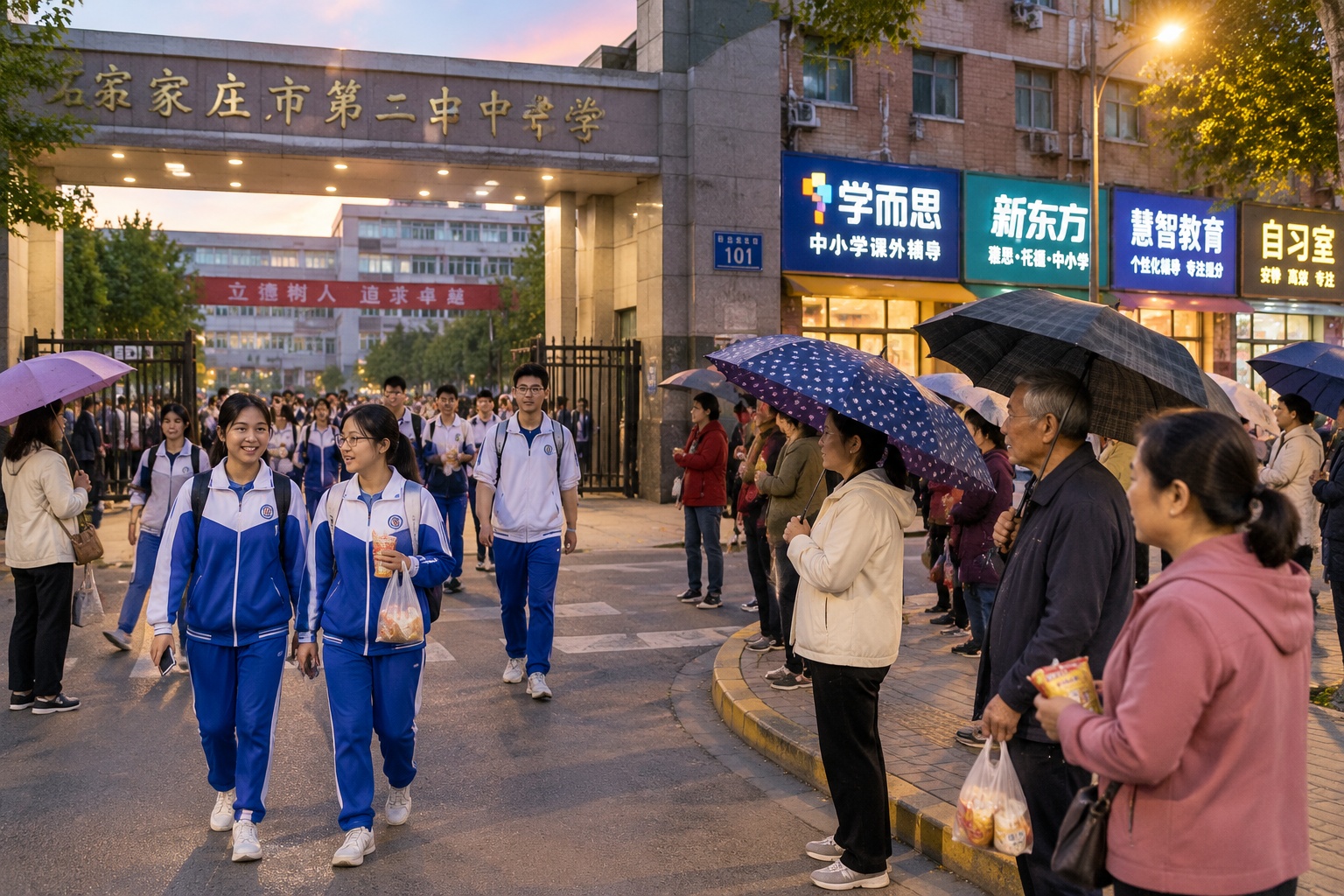
Ask a local parent and you get a practical answer: private boarding schools, after-school tutoring, one-on-one online classes, art-school prep, exam-marketing courses, study-tour groups, and even the value of a nearby apartment when a new school opens. The official statistical category puts many of these under “education” or “culture, sports and entertainment,” but the real size is easier to see from the ground. In Shijiazhuang, for example, a busy street might have a public school at one end, three “study rooms” in office buildings, at least one “college consulting” storefront, and signs announcing a seminar for parents called “How to survive senior year.”
Why so much demand? The simplest reason is the gaokao. For most families in Hebei, the exam still decides whether a student can enter a highly selective university, and that decision shapes their later career, marriage and social status. The education industry sells a strategy to navigate that pressure.
The Hengshui Brand Is No Longer Just a Place
Hengshui High School was founded in 1951, but its current fame dates to the early 2000s. The school began sending impressive groups of students to top universities, and parents outside Hebei started asking how. In response, Hengshui High School and its affiliated campuses expanded. Some are directly run; many are private schools that pay to use the name or follow the so-called “Hengshui style”: military discipline, endless mock tests, and motivational speeches over loudspeakers. Today, “Hengshui” functions less like a city and more like a franchise.
That franchise economy turned Hebei into an education-processing center. County-level cities have built education parks around clusters of private schools. Some advertise a direct link to Hengshui; others market themselves as “gentler alternatives.” Almost all sell the same promise: a better score, a safer future.
What Families Actually Spend
Let’s talk about money, because that is where the industry’s size becomes obvious. A two-week “summer study camp” in Shijiazhuang normally costs between 8,000 and 15,000 yuan, roughly 1,100 to 2,100 US dollars. A private high school with a dormitory in Hebei can cost 30,000 to 60,000 yuan a year, including meals. A well-known gaokao tutor may charge several hundred yuan per hour. In a province where average disposable income per person was around 30,000 yuan in 2023, these numbers force real sacrifice. Yet thousands of families still pay, and many borrow from relatives to do it.
I heard about a family in the small city of Handan who sold their old car to pay for a senior-year dormitory at a private school. The father told me, “If she scores 30 more points on the exam, the whole family wins.” That sentence is exactly the logic that keeps the education industry alive.
Double Reduction Didn’t Kill It, It Just Changed Faces
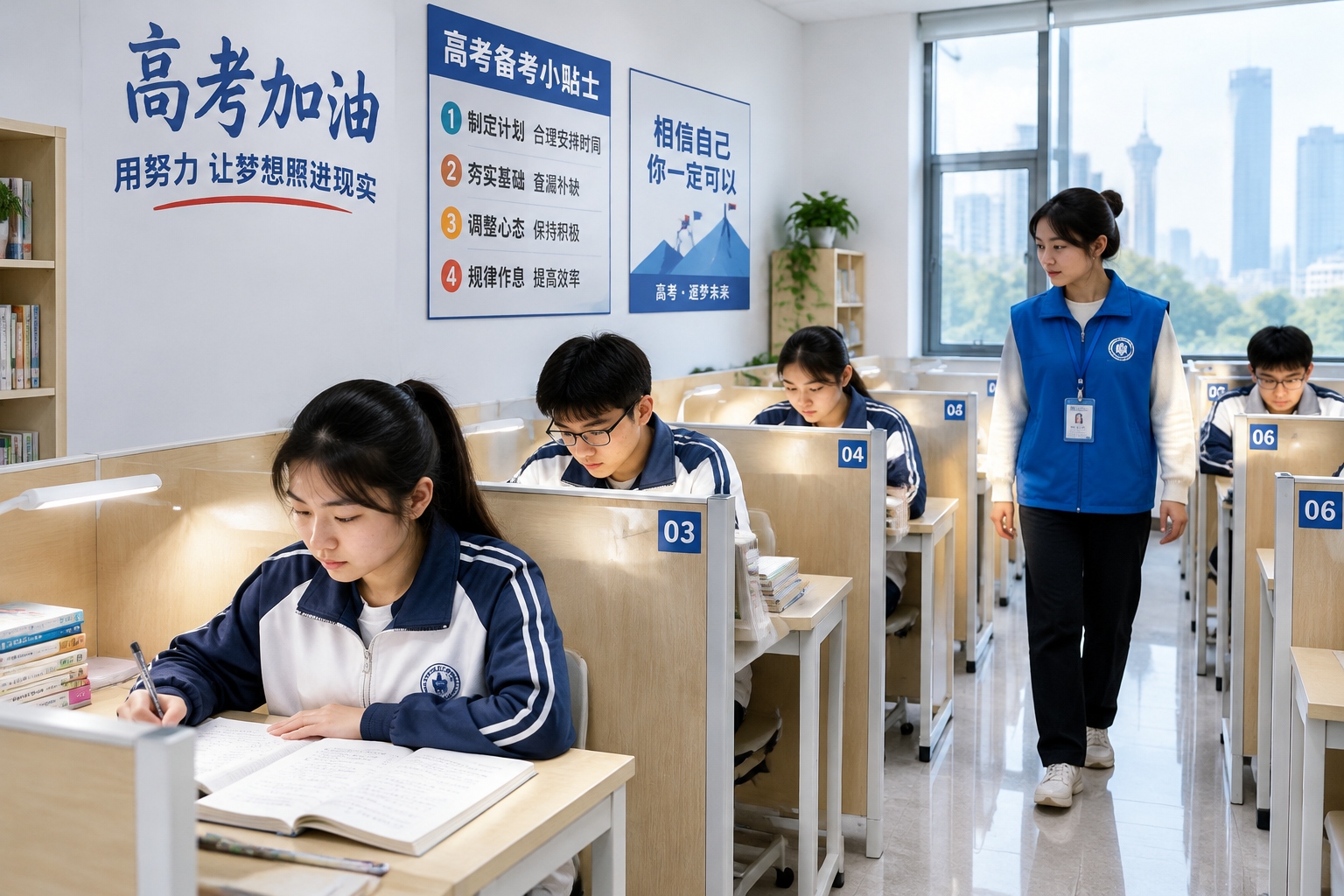
In 2021, China’s “double reduction” policy tried to reduce homework and ban commercial after-school training during the nine-year compulsory stage, which covers elementary and middle school. Many tutoring centers closed overnight. But demand in Hebei did not disappear; it just moved into new forms. Parents now book “study rooms” where students sit in quiet cubicles under supervision, hire tutors through social-media channels, and register for “quality education” classes in art, sport and coding. High-school exam-prep centers, which are not covered by the ban, still run at full speed. The industry didn’t shrink; it changed appearance.
A staff member at a Shijiazhuang study room told me that most of their users are high-school students whose parents work until late. “They don’t need the lesson,” she said. “They need someone to make sure the child doesn’t touch a phone for three hours.”
What the Industry Buys, and What It Costs
Parents pay for more than knowledge. They pay for supervision, a sense of safety, and a feeling that they have not silently given up on their child’s future. That emotional component is what makes the education industry in Hebei so resilient.
There is also a painful side. Students who cannot keep up, or who simply need sleep and exercise, are treated as problems. A former tutoring teacher in Shijiazhuang said she had left the job because she could no longer watch 16-year-olds cry in exam-prep rooms. “I still believe in learning,” she said. “But the industry sells anxiety.” Another teacher, however, argued that the industry gives students a way forward: “If you are a child from a small town and the public school isn’t pushing hard enough, this is how you catch up.” Both statements are true.
Life Outside the Exam-Factory Label
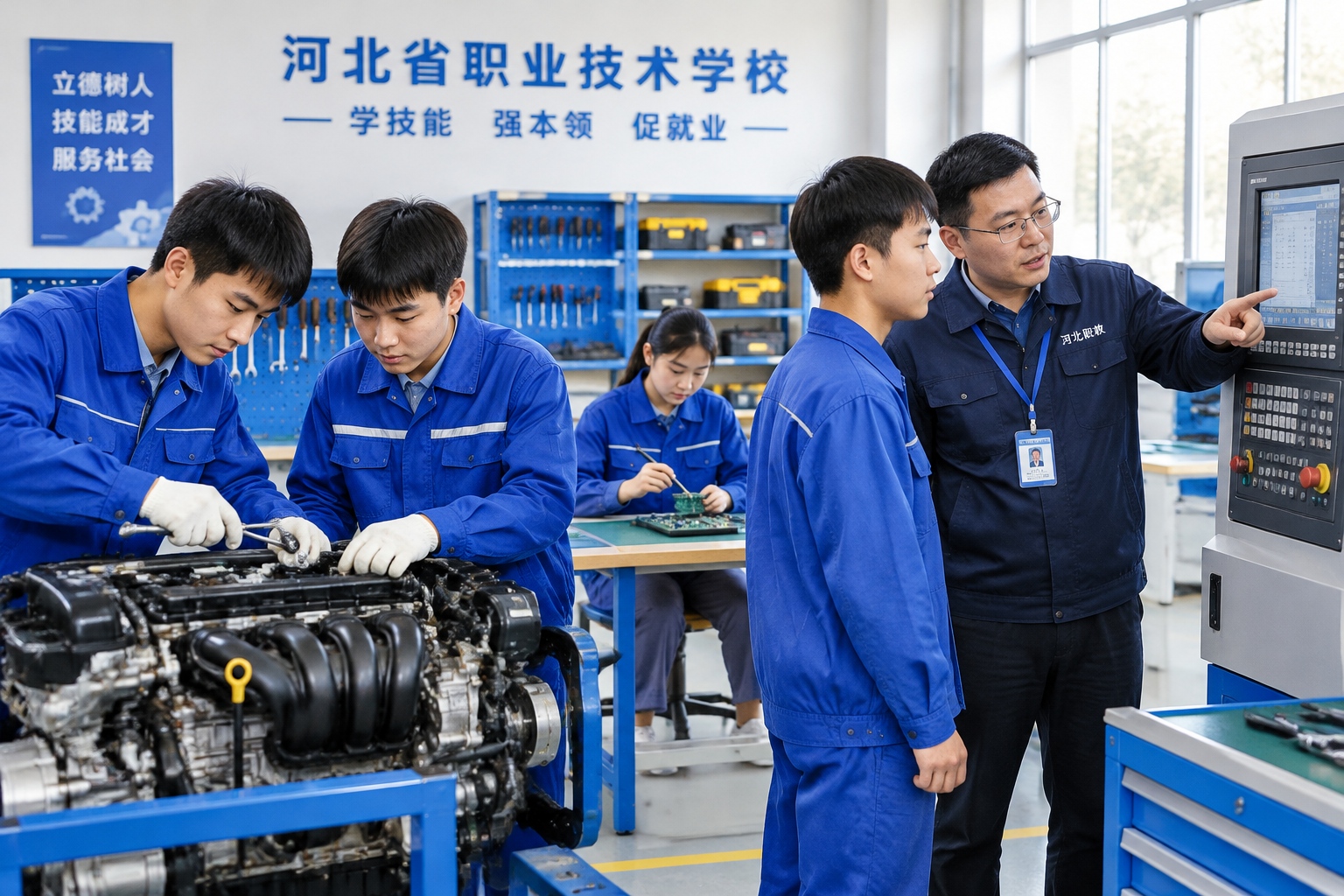
Hebei’s education industry is not all about gaokao. The province has a large vocational sector, with public technical colleges teaching mechanical repair, nursing, cooking, and rail-transport services. In recent years, the government has promoted vocational education as a respectable choice. But parents are often skeptical; for many, vocational school still smells like failure, unless the degree leads to a stable job. To sell that idea, some schools have started rebranding their courses as “digital skills” or “intelligent manufacturing” and signing agreements with companies that hire graduates. That is another, less visible slice of the education market.
There is also the world of art-school prep. Some students choose visual arts, acting, or music because exams for these subjects require a separate portfolio and test. Specialized studios in cities like Shijiazhuang charge high fees but provide a route to university that feels less purely academic. In short, the giant industry has many doors, but nearly all of them lead back to one question: how do I move up?
Size Is Hard to Measure, but You Can Feel It
It is tempting to ask for one number. How big is Hebei’s education industry? Unfortunately, there is no clean official count. You can add private school tuition, tutoring revenue, study rooms, dormitory fees, educational publishing, teacher salaries, and rent for classroom buildings. But the total would still miss the parallel economy of private tutors who are paid with cash and informal “consultants” who promise admissions assistance.
What you can do is look around. In any Hebei city, you’ll see education-related spending even during economic downturns. The tourism industry may suffer in winter, but a gaokao preparation camp fills up. The local supermarket may open a new branch in a neighborhood next to a public middle school, not because of foot traffic, but because parents already find themselves walking that direction every day.
Outside a training building I visited, a man was standing with a small crowd of parents. He worked for a weekly “parent salon” which costs 50 yuan per session. “We are not teaching students,” he said. “We help parents understand the system.” He sold no courses, only copies of a plastic folder with school rankings and exam dates. People bought it.
What This Means Beyond Hebei
The story of Hebei’s education industry is not unique to one province. It is a magnified version of a national pattern in China: high competition, strong parental investment, and a business ecosystem that grows around official exams. But Hebei matters because it is close to Beijing and yet far from the capital’s wealth. It shows how the education economy behaves when household incomes are moderate and university places are limited.
It also helps explain why Chinese students who study abroad are so comfortable with long study hours. For better or worse, the discipline they learn in places like Hebei is part of their personalities. That is not always about doing homework; it is about an environment that treats education as life’s most serious project.
The Schools Are Not the Whole Story
When foreign media talks about Hebei education, the images are often extreme: thousands of students doing morning drills, slogans painted on walls, students marching into cafeterias in silence. Those images are real. They are also only one frame in a long film. The same province has ordinary public schools with new teaching labs, vocational colleges that produce skilled mechanics and nurses, and a whole cohort of young teachers who are trying to make education a little less brutal. The industry is big enough to contain all of them.
The education industry in Hebei does not need more headlines. It needs better questions. Parents are not just statistics; they are people making hard choices. The industry is not an evil plot; it is an enormous mirror of a society that believes in upward mobility through examination. Until that belief changes, the industry will keep finding new ways to grow—inside classrooms, office towers, and family budgets.
Start the discussion at forum.chinacomes.com