

A Tuesday afternoon at Heming Teahouse
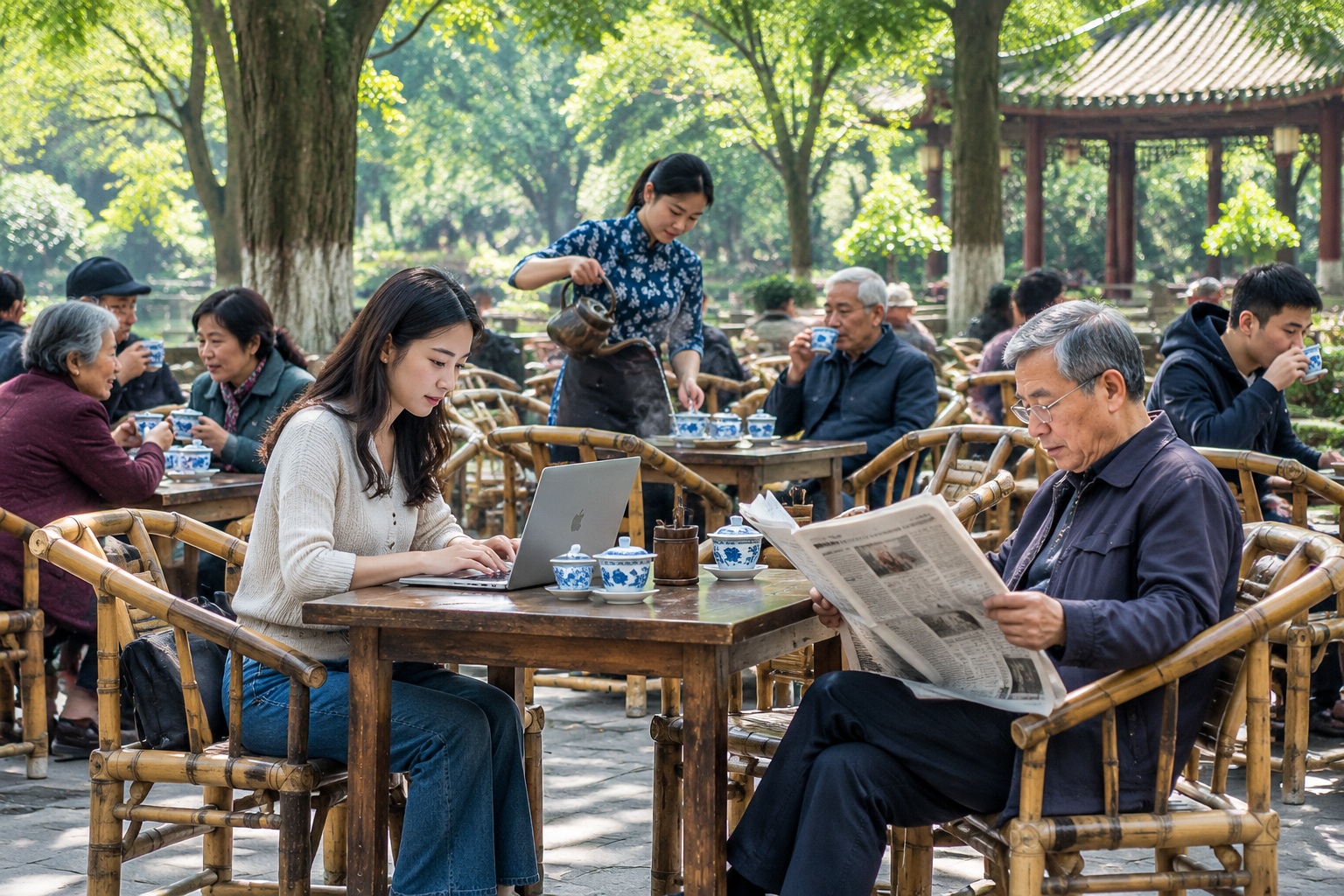
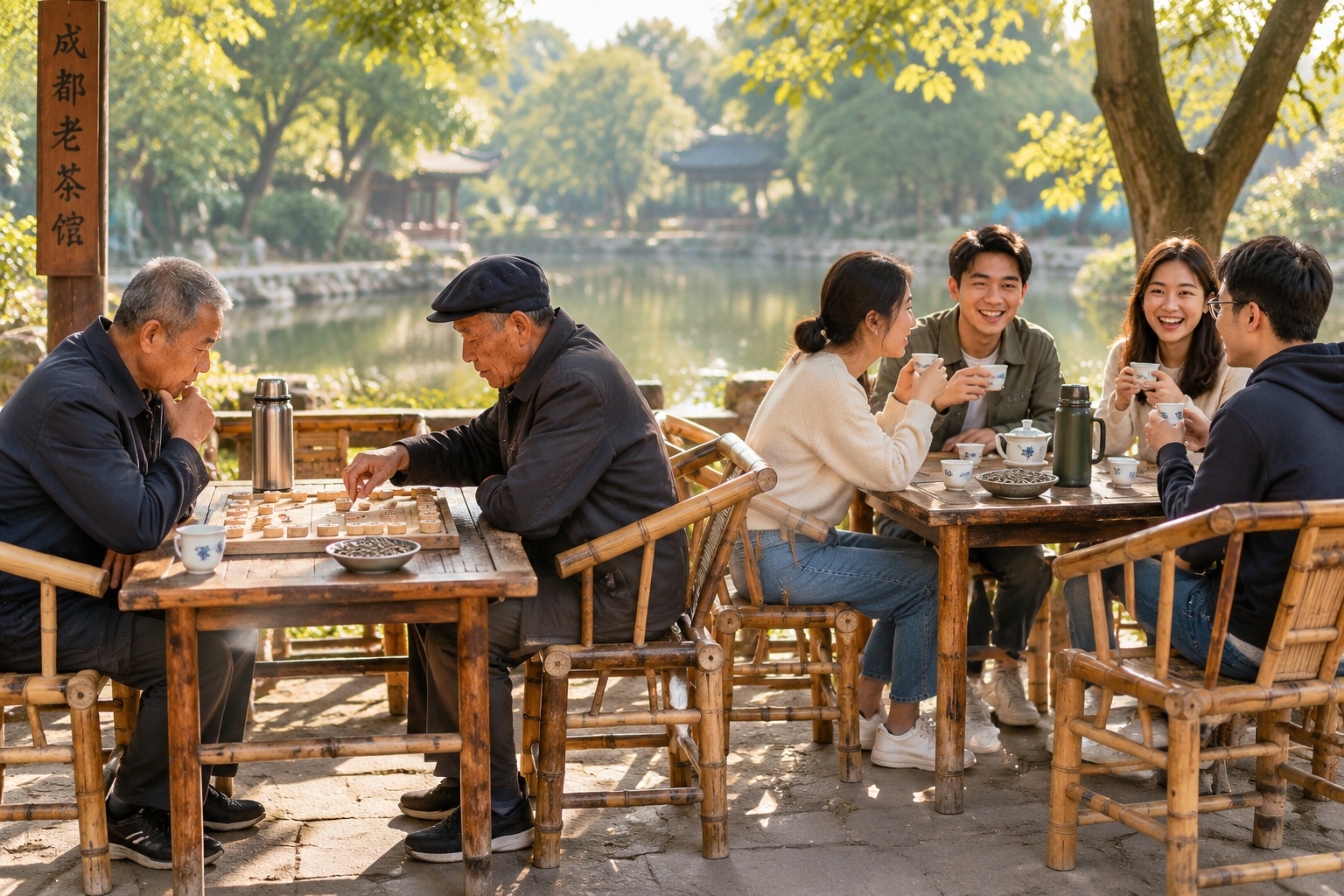
It is 2:40 on a Tuesday, and the courtyard at Heming Teahouse in People’s Park is almost full. A man in his seventies has pushed two bamboo chairs together and gone to sleep with a newspaper over his face. Next to him, four people in their twenties have claimed a table with two laptops, a power strip, a bag of sunflower seeds and one shared bowl of tea.
Nobody is performing anything. The chair legs scrape on the stone. An attendant walks past with a kettle that has a two-foot-long spout and tops up cups without being asked. Somewhere behind the trees, someone is laughing too loudly at a card game.
This is the part that surprises visitors most about Chengdu: the teahouse is not a museum piece that young people photograph and leave. It is where they spend their Tuesday.
First, what a Chengdu teahouse actually is
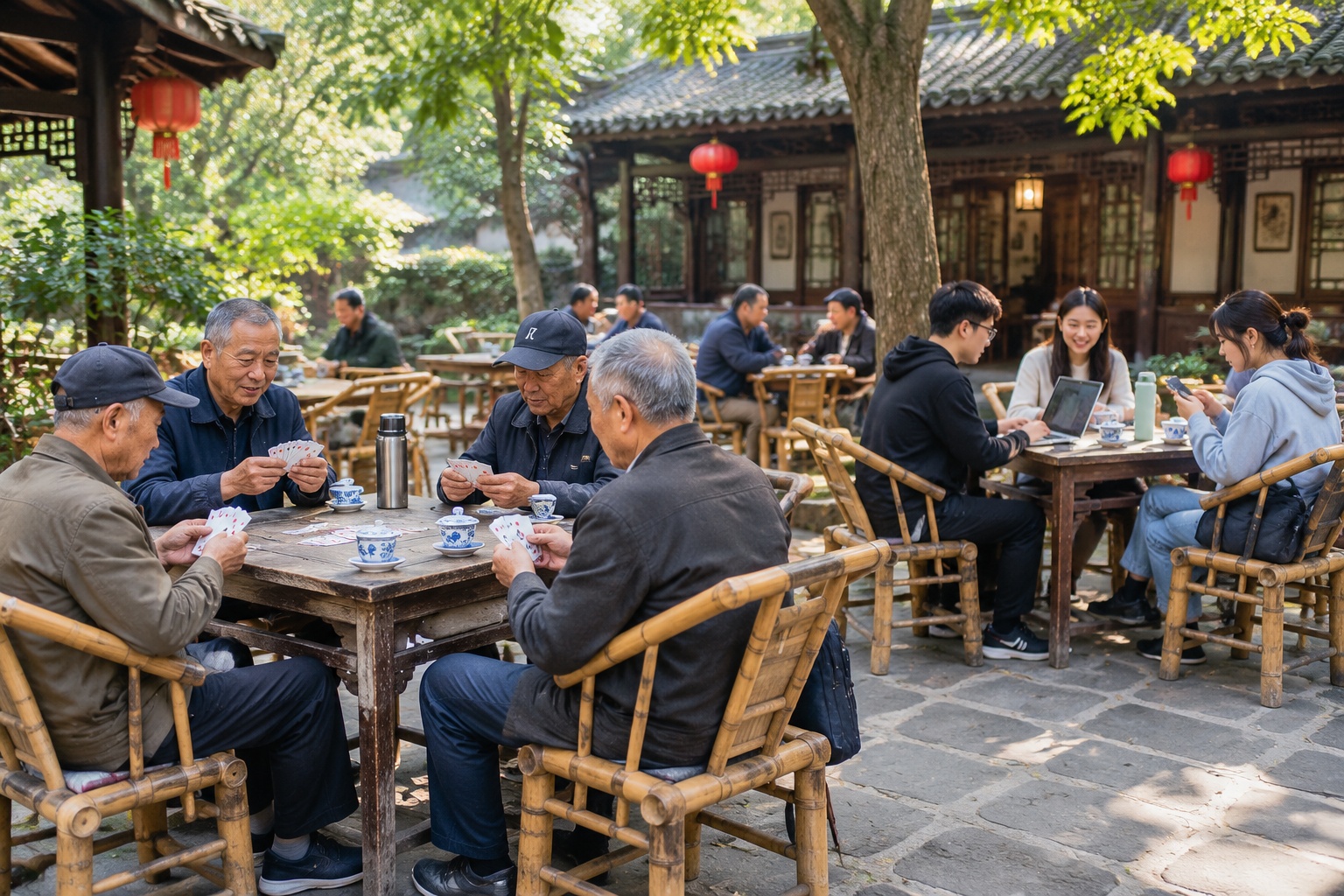
Forget the imagery of a formal tea ceremony. A teahouse here is closer to a room with a chair, a table, a bowl of tea and permission to stay as long as you like. You pay once for the tea. Hot water is refilled for free, indefinitely, until closing.
The default order is gaiwan tea — leaves in a lidded porcelain bowl — usually jasmine, or a green tea from nearby Mount Mengding. In the city’s park teahouses a bowl costs roughly 15 to 40 yuan (about 2 to 6 US dollars). At the old wooden teahouse in Pengzhen, out past the airport, it is still around 10 yuan. Newer, design-forward spots in the center charge 60 to 90.
Chengdu is unusual even within China for how ordinary this is. Local estimates put the number of teahouses in the city above 10,000, and on a weekday afternoon many of them are busy.
Why young people go: the cheapest room in the city
Ask a 26-year-old why she came here instead of a café and she will do the arithmetic for you. A day pass at a co-working space runs 60 to 120 yuan. A latte costs 32, and after ninety minutes you feel awkward about not ordering a second one. One bowl of jasmine tea costs 28 and comes with unlimited water, no time limit and no obligation to buy anything else.
There are unwritten rules, and they are generous. You can bring your own fruit, seeds or cold noodles. You can nap. You can leave your bag on the chair and go for a walk. Nobody will move your things or ask you to free up the table.
The menu is changing, and so is the room
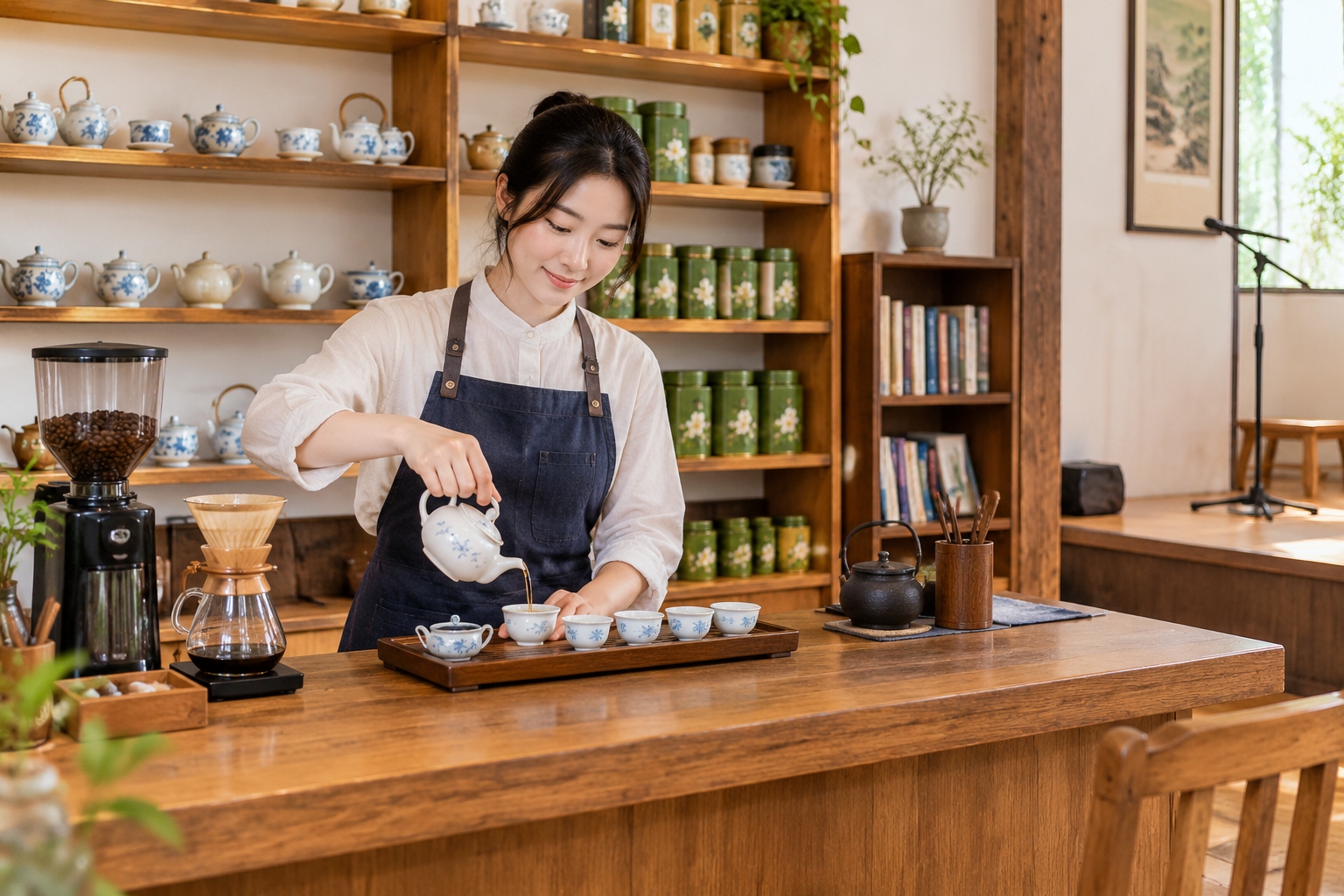
Teahouses have not stayed frozen. Over the past few years, many have added pour-over coffee, simple hot food like noodles and dumplings, bookshelves, and in winter the charcoal stove setup for roasting tea and dried fruit at the table. Some host small stand-up comedy nights, improvised theatre, or weekend markets in the courtyard.
One owner I talked to, 33, took over her family’s teahouse near Tiyuxueyuan in 2021 after working in advertising. She kept the 8 a.m. regulars and their jasmine tea, added a coffee bar, and now says coffee makes up nearly half of weekend orders. The older customers complained about the music for about two months, she said, and then stopped noticing.
Three people, three reasons
Lin, 27, freelance UI designer
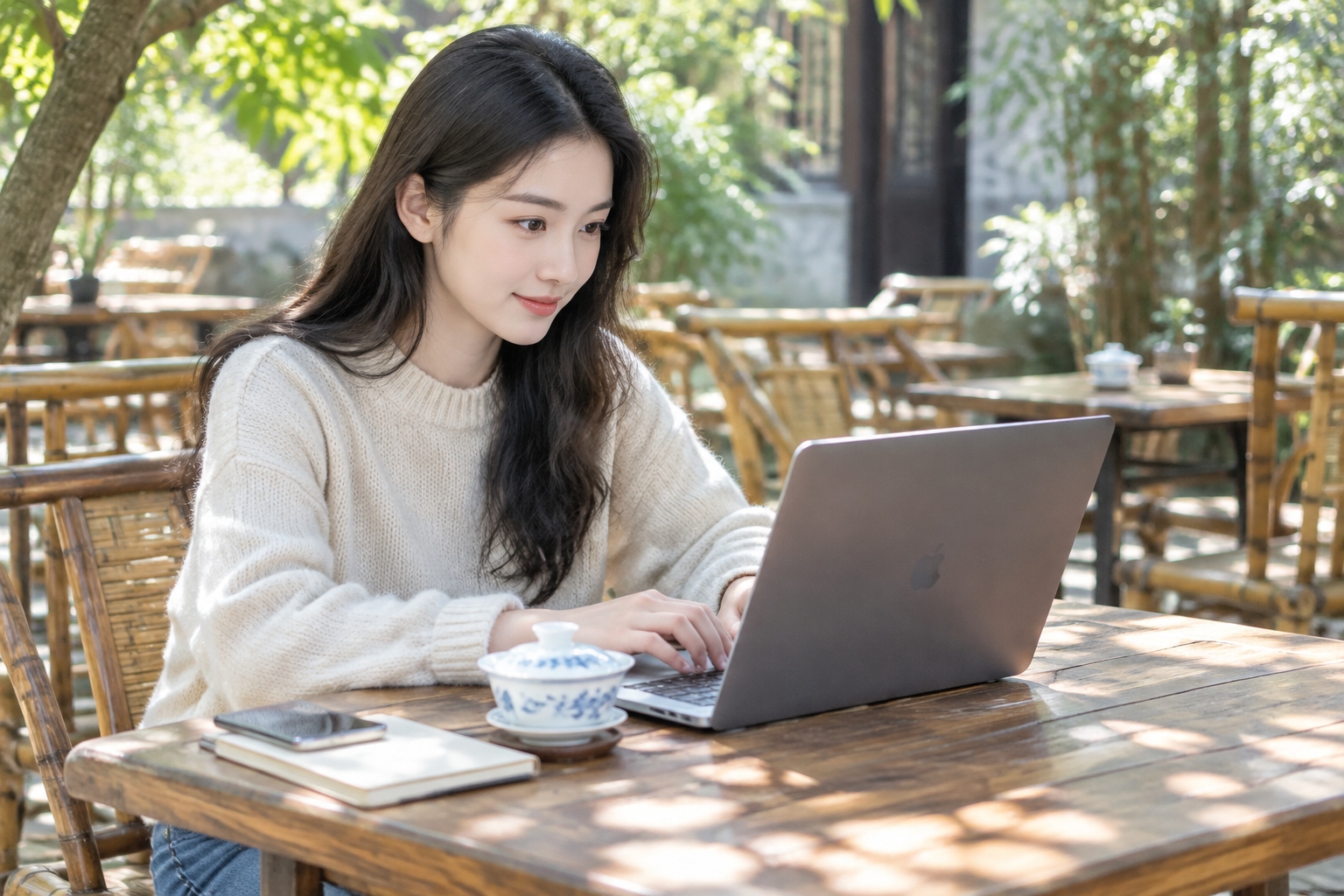
Lin comes three or four times a week, usually to the same park teahouse, and stays five hours. She has a desk at home. She does not have air conditioning she likes, or a reason to put on shoes. Here she pays 28 yuan, plugs in her laptop, and gets a low hum of background noise that makes it easier to work. On Fridays she meets clients here instead of a café, because a teahouse costs less and nobody rushes the table.
Chen, 22, student preparing for the civil service exam
Chen studies with two classmates at a teahouse near Sichuan University. They buy one bowl each and stay from 1 p.m. to 6 p.m. The library is quieter, she says, but it closes at 5 and you cannot talk. At the teahouse they quiz each other out loud, take breaks to walk around the pond, and buy roasted sweet potatoes from a vendor who passes through.
Wang, 31, runs a small tea and Sichuan pepper business
Wang uses teahouses as meeting rooms. He sells online, and most of his suppliers are old enough to prefer talking face to face. A teahouse in the old style puts them at ease in a way a hotel lobby never would: he orders two bowls, they sit for two hours, and the total bill is under 60 yuan.
Grandfathers at the next table
What makes the current moment interesting is not that young people discovered teahouses. It is that they are sitting in the same room as people who never left.
Mr. Zhang, 68, has had roughly the same seat at a park teahouse for fifteen years. He comes after breakfast, plays Chinese chess, goes home for lunch, comes back. He has watched the neighborhood tear down and rebuild itself twice from that chair. He thinks the young people are noisy. He also thinks it is good that the place is still open.
The friction is real and small: phone speakers, table space, the smoking rules that changed a decade ago and are still occasionally ignored. But the arrangement mostly works, because a Chengdu teahouse has never been designed for one kind of person. It is the closest thing the city has to a shared living room.
What this looks like if you’re from abroad
The easiest comparison is a café without the pressure to keep ordering, a co-working space without a membership, a pub without alcohol, and a library that talks. Sociologists have a name for this: the third place, somewhere that is neither home nor work, where you can show up alone and still be among people.
In many Western cities that role is played by cafés, and cafés have quietly become expensive and time-limited. The Chengdu teahouse has kept the old business model — one charge, unlimited time — and that model happens to suit a generation that works flexibly, lives in smaller flats, and does a lot of its socializing on a budget.
It would be too neat to call this pure leisure. Some of these tables are occupied by people between jobs, or graduates waiting on exam results, or freelancers whose income is uneven. With a difficult market for new graduates in recent years, the teahouse has also become a place to sit while figuring things out. Cheap, warm in winter, and nobody asks what you do.
At 6 p.m., the water is still coming
By early evening the light has gone orange through the trees. The attendant makes another round with the long-spout kettle. The man with the newspaper has woken up and is arguing about a chess move with someone he has clearly never met before.
Lin closes her laptop, orders one more bowl, and says she will head home in twenty minutes. She stays another hour. The whole afternoon cost her 28 yuan.
Start the discussion at forum.chinacomes.com