
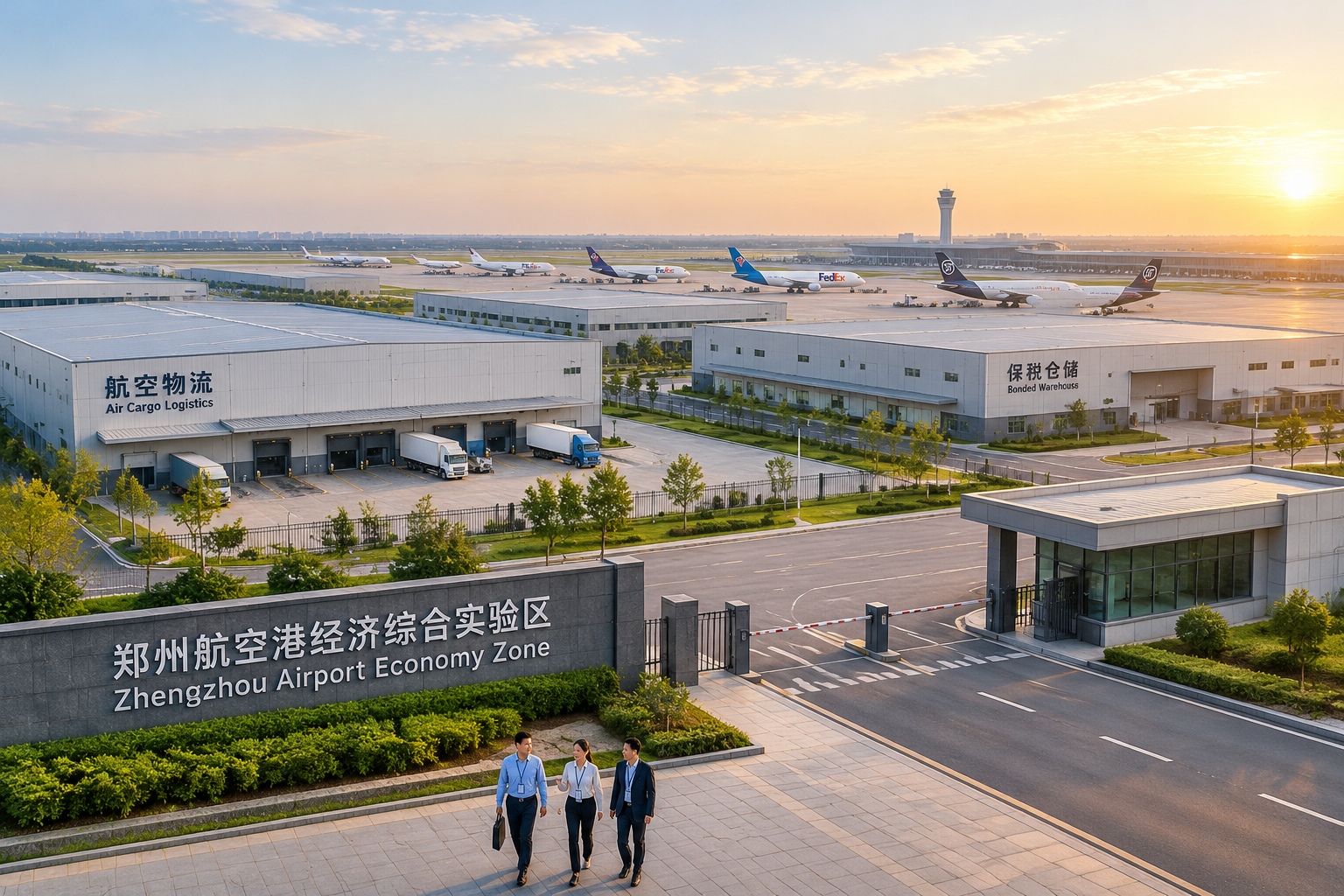

When Apple’s latest iPhone hits store shelves in London, New York, or Singapore, few buyers pause to think about the journey the device has taken. Many of them, in fact, come from a specific place: the Zhengzhou Airport Economy Zone, a sprawling industrial and logistics hub in central China.
It is not just a factory. It is an entire city built around the production of smartphones—and above all, the iPhone. At its peak, this zone can employ over 200,000 people, the vast majority of them working in Foxconn plants that assemble Apple products. According to industry analysts, roughly half of all iPhones sold around the world are manufactured here. When something goes wrong in Zhengzhou—a COVID outbreak, a supply chain hiccup—the ripple effect is felt from Silicon Valley to Rotterdam.
What Exactly Is the Zhengzhou Airport Economy Zone?
Located about 40 kilometers southeast of Zhengzhou, the capital of Henan province, the zone was approved by China’s State Council in 2013 as a national-level airport economy experimental zone. It is centered on Xinzheng International Airport, which has been transformed from a regional hub into a major cargo airport. The zone covers roughly 415 square kilometers—about the size of the city of Phoenix—with industrial parks, logistics centers, residential compounds, and infrastructure designed to move goods as quickly as possible.
Its anchor tenant is Foxconn, also known as Hon Hai Precision Industry, the Taiwanese electronics maker that has become Apple’s most important manufacturing partner. The Chinese name of the zone, Hang Kong Gang Qu, literally means “airport port zone,” which reflects its purpose: to merge manufacturing with aviation.
Before this project, Henan was better known as China’s breadbasket, producing wheat and corn. Today, the zone accounts for the overwhelming majority of Henan’s electric exports. It is a case study in how China’s coastal economy has slowly moved inland, bringing with it jobs, infrastructure, and new social patterns.
The People Behind Your iPhone
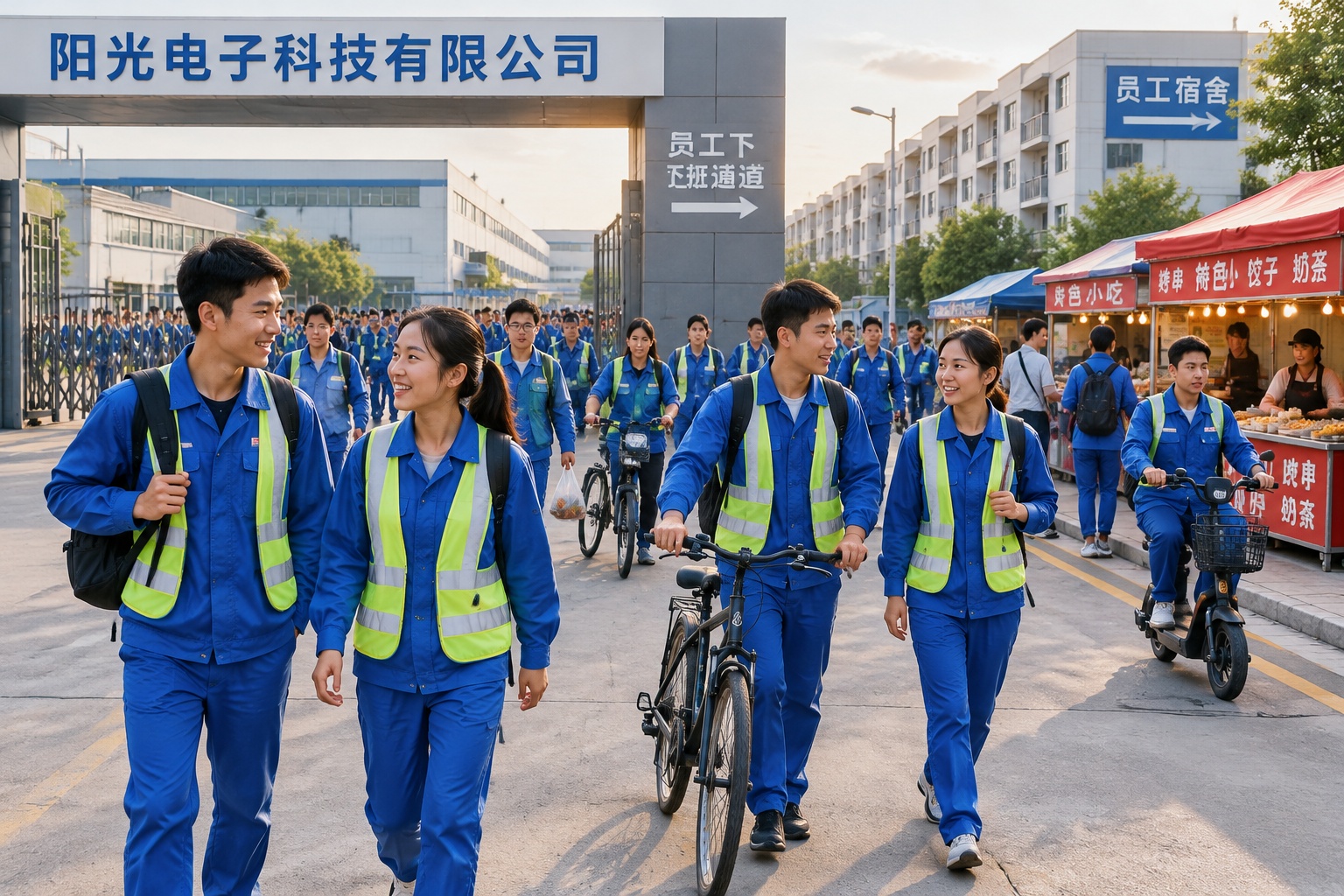
Step through the gates of the Foxconn Zhengzhou campus, and you will see a miniature society. There are massive dormitory blocks, each housing thousands of workers in rooms of six to eight. There are canteens serving Xiaomian noodles and braised pork rice to shift after shift. There are supermarkets, basketball courts, and even pop-up stalls where workers buy phone cases and snacks.
The workforce is overwhelmingly young and migrant. Most are in their late teens or early twenties and come from rural counties across Henan and neighboring provinces such as Anhui, Shandong, and Hebei. For many, this is their first job outside the farm. They are drawn not by Apple’s sleek advertisements but by the promise of a monthly salary—around 4,000 to 6,000 yuan ($550-$850) including overtime—which is significantly higher than the income they could earn from planting crops or raising pigs.
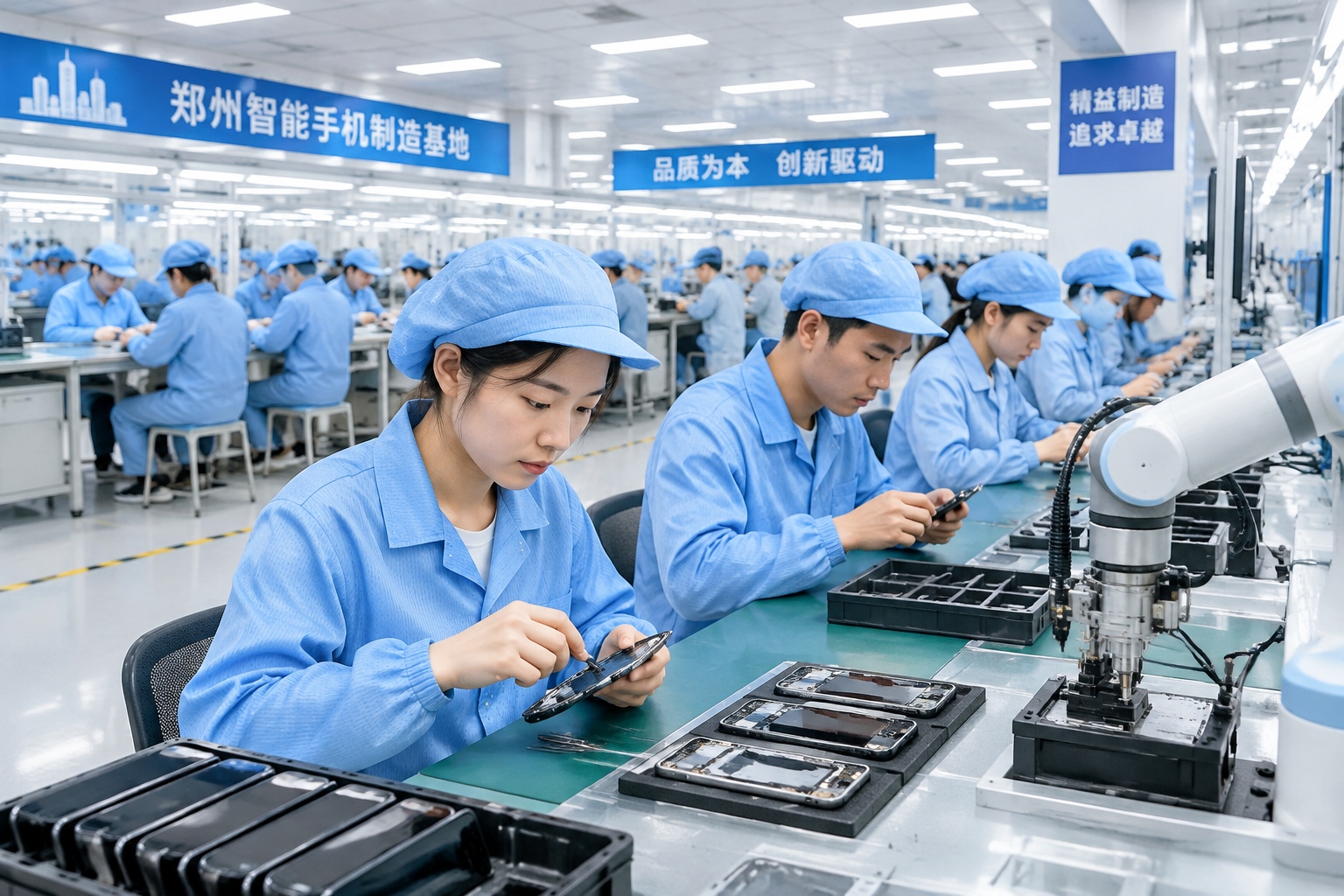
Working in an iPhone factory is not glamorous. Shifts typically run 10 to 12 hours, with short breaks. Assembly workers often stand at a station repeating the same tiny action—securing a screw, attaching a ribbon cable, snapping a cover—hundreds of times a day. The process is designed with rigorous precision. A mistake can hold up an entire line, so the pressure is real.
The Workday: Long Hours, Precise Movements
Morning begins around 7:30 a.m. for the day shift. Thousands of workers pour through security gates, swiping ID badges and passing metal detectors. Inside the factory, the atmosphere is strangely calm. The floors are spotless, the lighting is bright, and the hum of ventilation systems mixes with the metallic clicks of tools.
Robotics have entered the floors, but not the way many Westerners imagine. In Zhengzhou, automated machines handle some polishing, cutting, and welding tasks. Yet final assembly of an iPhone relies on human dexterity. The tiny logic boards, the alignment of the camera module, the placement of flexible cables—these steps require fine motor skills that robots still find hard to match in such a mass-scale, fast-changing design.
Work intensity rises dramatically in the months before a new iPhone launch. The so-called “ramp-up” period, typically from July to October, brings longer overtime and more night shifts. Temporary workers are hired by the tens of thousands, and recruitment offices near the factory post big banners offering signing bonuses. In the city’s bus and train stations, recruiters approach young arrivals with leaflets: “Foxconn, free shuttle, monthly salary up to 6,000 yuan.”
The Numbers That Explain the “iPhone City”
How important is Zhengzhou to the iPhone ecosystem? Exact production figures are not published by Apple or Foxconn, but numerous independent estimates converge on a striking picture.
In a report from 2019, the Associated Press estimated that around half of all iPhones are made in Zhengzhou. Some analysts put the figure higher, around 70 percent during certain launch cycles. When the COVID-19 pandemic hit in early 2020, the Zhengzhou plant conducted one of the largest re-employment drives in Chinese corporate history, hiring 100,000 temporary workers in a few months to meet demand. In 2022, when local lockdowns triggered worker protests and a grueling walkout, Apple and Foxconn were forced to adjust to avoid a global shortage in the holiday season. These events demonstrated how enmeshed the city is in global consumer electronics.
The output is staggering. On a busy day, Zhengzhou’s Foxconn complex can produce over 500,000 iPhones. That translates to millions of units per week. The scale is so large that the factory precinct has its own power substations, water treatment plants, and even a fire department.
The Logistics Engine That Moves Millions of Phones
But manufacturing alone is only half the story. To deliver iPhones to consumers within days of release, Apple relies on an extraordinary logistics machine—and the airport economy zone is its spine.
Finished iPhones are moved from assembly lines to packing lines, where they are placed in white boxes, sealed, and loaded onto trucks. The trucks make a short drive to Xinzheng Airport, where dedicated airfreight terminals await. Zhengzhou is one of the few airports in China that does not shut down for curfew, allowing 24-hour cargo operations. In peak months, a large cargo plane such as a Boeing 747 can take off every two hours, filled to the brim with iPhone shipments.
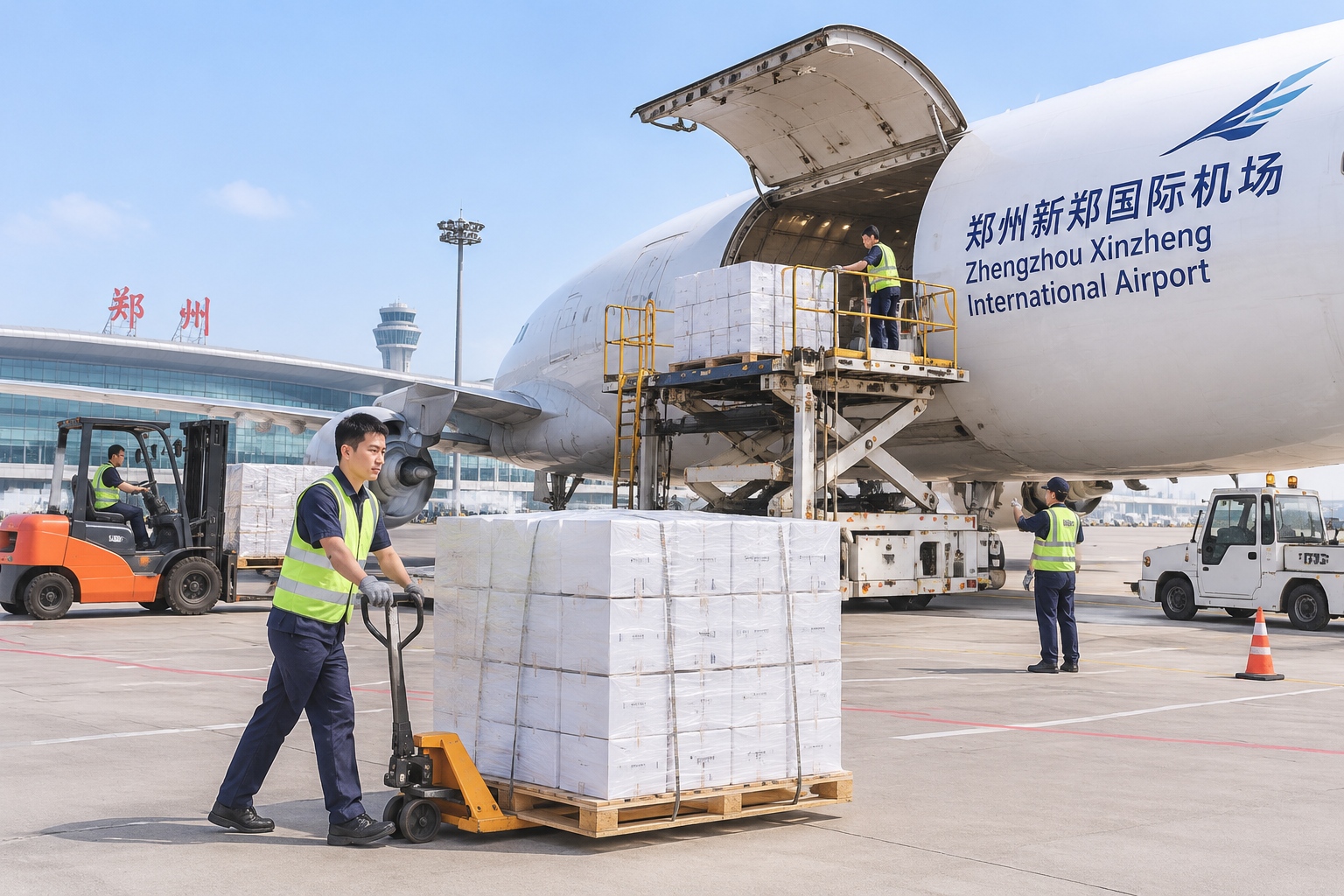
The airport’s cargo volume has grown exponentially. Before the zone was created, Xinzheng was a minor airport handling mostly passengers. In 2022, it reported a cargo throughput of over 600,000 tons, ranking it among the top five cargo airports in China. Much of that volume consists of electronics components arriving for assembly and finished products leaving for global markets.
This logistics network is not just about iPhones. It has turned Zhengzhou into a key node in global trade. Air freight companies like the global delivery firm UPS operate dedicated flights. In many ways, the iPhone you buy in New York has been on a journey that ends in your hands, but its starting point is unmistakably a runway in a wheat-growing province.
The Cracks in the Model
For all its success, the Zhengzhou Apple model has a fragile side. The dependence on a single company and a single product makes the zone vulnerable to market changes. Apple has been actively diversifying its supply chain, encouraging Foxconn to build plants in India, Vietnam, and Mexico. As production costs in China rise, those locations become more attractive.
There are also labor issues. The young worker pool is shrinking, because fewer rural Chinese are willing to do repetitive factory work. In the mid-2010s, applicants lined up outside the Foxconn gate; today, recruiters have to work harder, offering bonuses and flexible shifts. Some of the most demanding assembly work is still done by hands, but every year more robots replace the workforce. In a 2021 report, Foxconn said its Zhengzhou plant had integrated more than 100 robotic production lines, each carrying out tasks that once required thousands of workers.
The pandemic also revealed how fragile a huge, single-site factory can be. In October 2022, a COVID outbreak within the plant led to a strict containment that some workers perceived as a lock-in. Several thousand workers left the facility on foot, walking 30 kilometers or more to their home villages. Videos of the march spread globally and forced Apple to examine the resilience of its operations. It was a sobering reminder that the iPhone supply chain, no matter how efficient, is not immune to human and social realities.
What’s Next for the iPhone City?
Despite these challenges, Zhengzhou is not about to disappear from the map. The zone is diversifying into other sectors, including electric vehicles, bio-pharma, and logistics. Foxconn itself is expanding into new energy vehicles, with plans to produce them in Zhengzhou as well. The “iPhone City” may soon be more than just that.
For the local government, maintaining the zone is a priority. They are investing in automation training, aiming to transform a low-wage labor hub into a high-tech manufacturing center. Jack Ma’s Alibaba has even set up data centers nearby. The goal is to create a more balanced economy so that if Apple’s orders shift, Zhengzhou won’t fall flat.
No one expects iPhone production to move away overnight. The scale, the skilled workforce, and the integrated supplier network in Zhengzhou are hard to replicate elsewhere. As one Foxconn manager said to a reporter in 2020: “If you want to make millions of phones in a few weeks, there is no place like Zhengzhou.”
A Global Mirror
The Zhengzhou Airport Economy Zone shows us a complex side of globalization. It is a place where billions of dollars in electronics are made, where rural migrants find modern jobs, and where the world’s largest tech company places its bets. It also embodies the tension between efficiency and resilience, automation and human labor, growth and uncertainty.
Next time you hold an iPhone, look at it for a second. Think about the young man or woman in blue who tightened its screws under factory lights, and the cargo pilot who flew it across continents. The phone in your hand is a reminder that modern life is built on connections we rarely see—but they are all made possible by places like this.
Start the discussion at forum.chinacomes.com