

Introduction
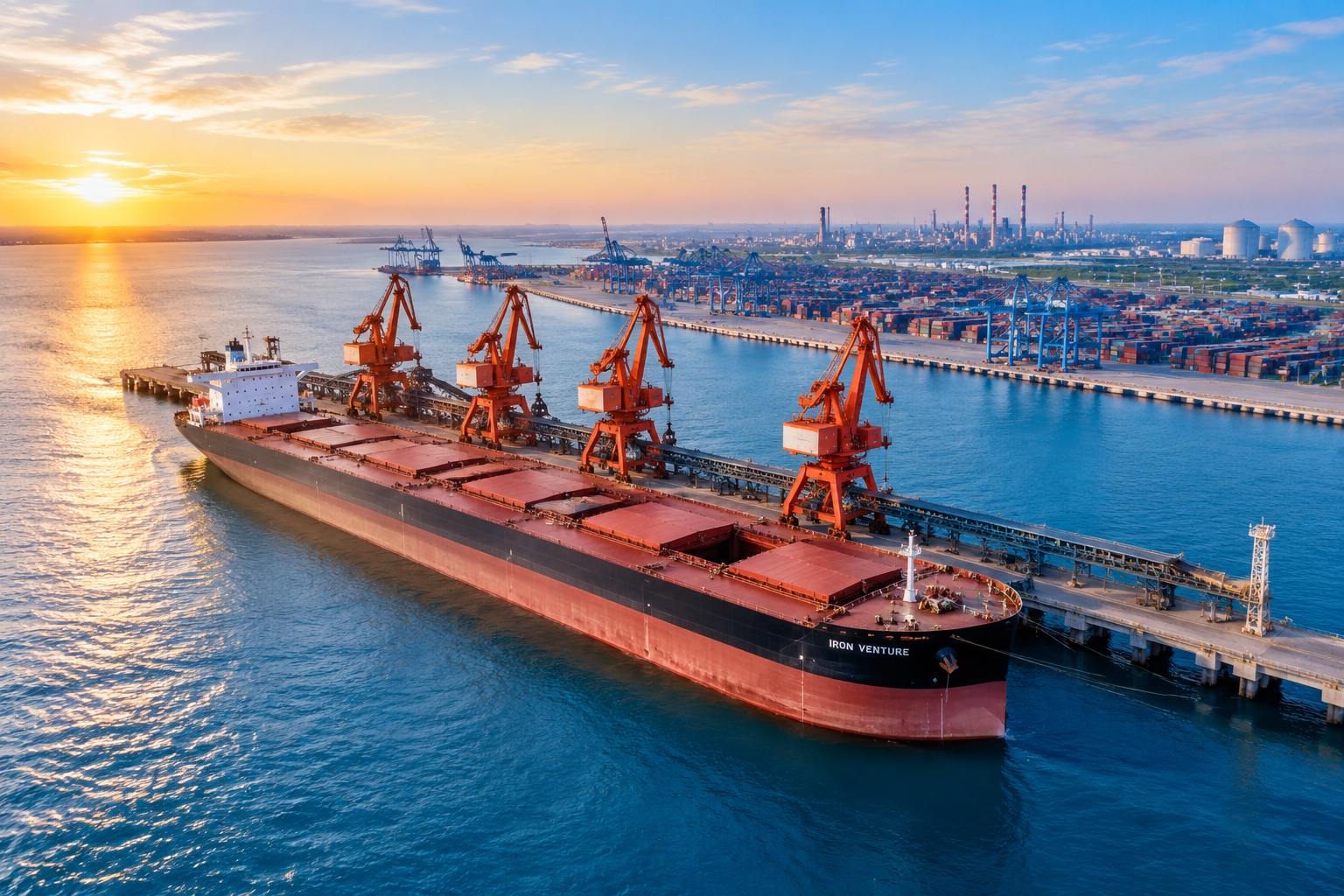
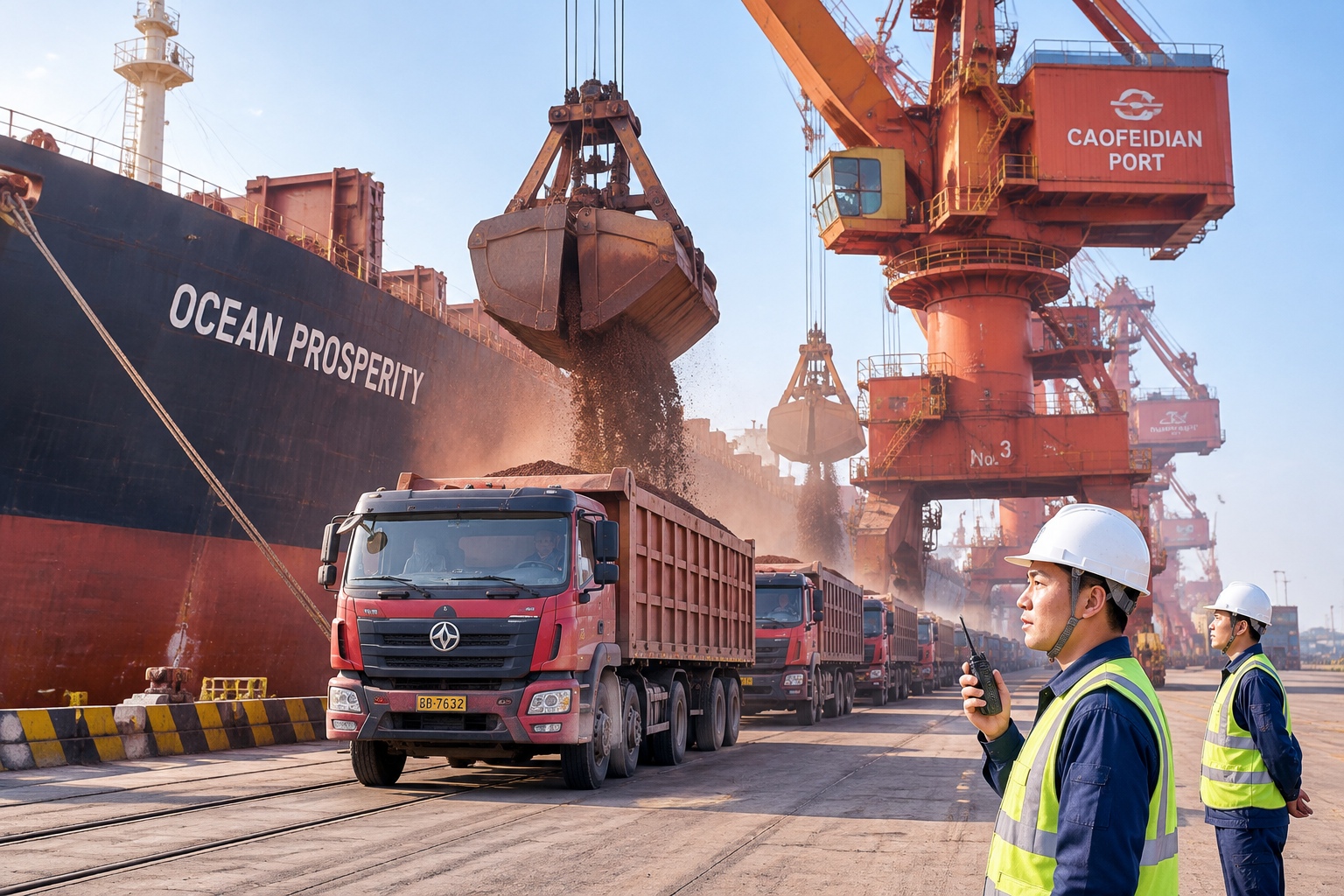
On a clear morning at Caofeidian, a 400,000-tonne iron ore carrier from Brazil edges into a berth that was still open sea only sixteen years earlier. Four huge cranes, each taller than a ten-storey building, unload the ship with a quiet rhythm. Every few seconds, a grab pours ore into a hopper; below, a line of trucks waits to take the material to nearby steel mills. The port looks orderly, almost calm. This calm is deceptive. For Tangshan, one of China’s most iconic industrial cities, Caofeidian is not simply a new harbor. It is the driving force of a slow economic rewrite.
Tangshan is about 150 kilometers east of Beijing, on the Bohai Bay coast. Historically, it was a mining and steel center. The city’s coal mines and blast furnaces fueled China’s industrialization, but they also left a heavy environmental and economic footprint. When Beijing began to move away from smokestack industries, Tangshan had to find a new direction. The government chose to invest in a deep-water port on a sandbank called Caofeidian, and the choice has had consequences across the entire region.
Why a Deep-Water Port Mattered
Before Caofeidian was built, northern China’s major ports were often limited by shallow drafts. The giant ships that now cross the world’s oceans—ships with capacities of 200,000 or even 400,000 tonnes—could not come alongside without transshipment or lightening. This made importing iron ore and other raw materials from long distances costly and slow. Caofeidian’s location, with a natural underwater channel that is more than 40 meters deep, offered a rare solution. It is one of the few places on mainland China’s northern coast where fully laden capesize carriers can dock directly.
But nature did not provide a ready-made port. Caofeidian was only a narrow sandbank, half a kilometer wide, much of it above water only at low tide. Construction began in 2005 with massive land reclamation. Dredgers pumped sand from the seabed to create more than 45 square kilometers of new land. Engineers built breakwaters and berths designed to withstand typhoons and earthquakes—a sensitive subject for anyone who knows Tangshan’s 1976 earthquake, which killed nearly 250,000 people. By 2010 the first terminal was operational, and the port has not stopped expanding since.
The results are visible in national statistics. In 2023, Tangshan Port moved more than 820 million tonnes of cargo, ranking among the top five ports in the world by volume. Caofeidian accounted for roughly 530 million tonnes of that volume. Most of the cargo remains bulk: iron ore, coal, crude oil, steel products. But a closer look at the industrial pattern shows the port is being used as a springboard for diversification.
From Steel Monoculture to an Industrial Cluster
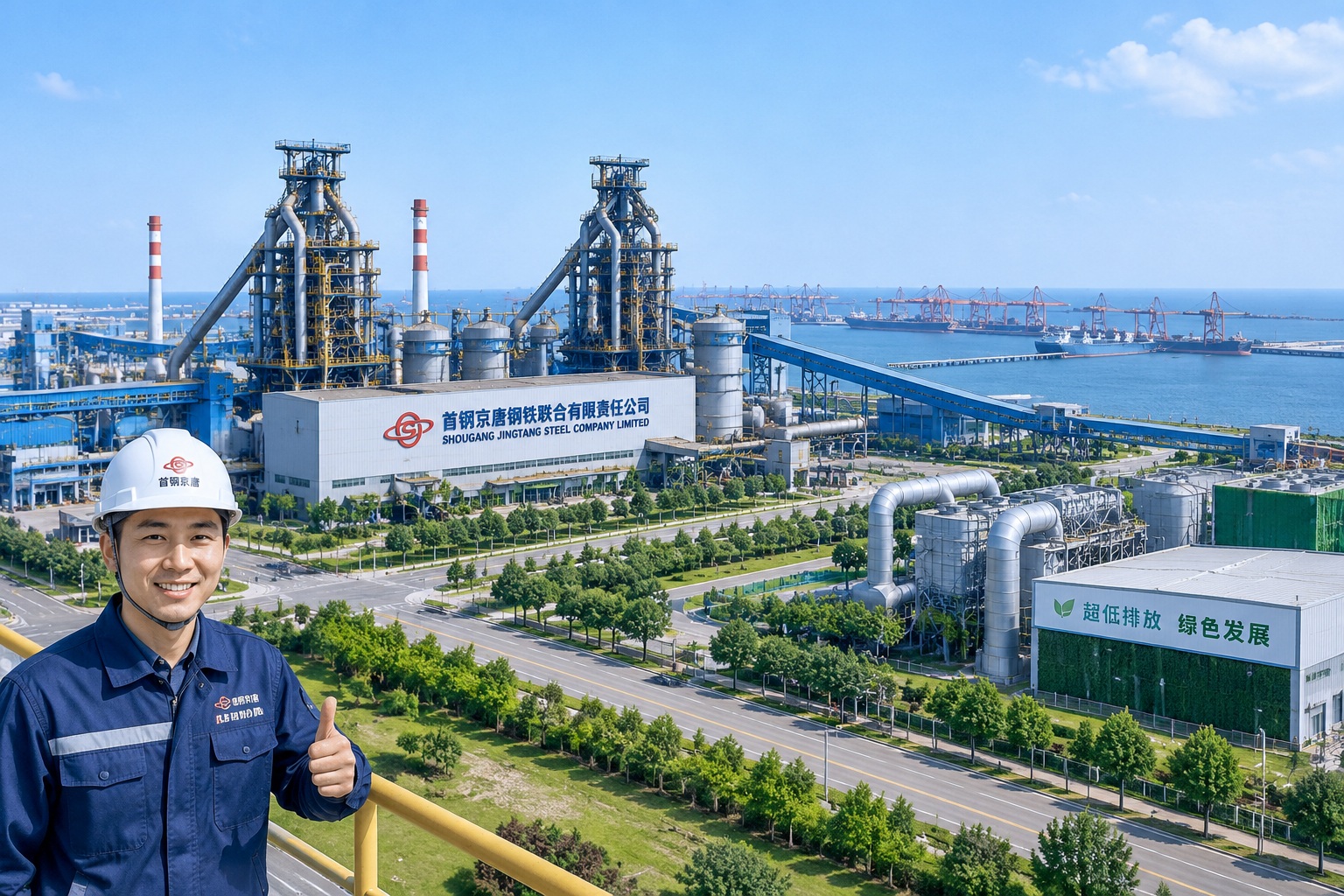
The single biggest driver of Caofeidian’s development is steel. The decision to relocate steel mills from Beijing to the coast, led by the state-owned Shougang Group, created a powerful anchor. Shougang Jingtang, a $22 billion plant completed in 2010, now produces steel for export-quality automobile chassis and home appliance panels. It uses seawater for cooling, a dry coke-quenching system, and fully automated rolling lines that require far fewer workers per tonne than older factories. In environmental terms, emissions of major pollutants in the Caofeidian industrial zone have fallen by over half since 2015, despite higher production.
The port’s physical proximity matters. Imported iron ore can reach the blast furnaces in a matter of minutes, saving real money. Local steelmakers also benefit from the port’s ability to export finished steel to Southeast Asia and the Middle East, avoiding rail bottlenecks to other harbors.
Rather than stop at steel, Caofeidian is now an industrial cluster. Global energy companies, including Sinopec and China National Petroleum Corporation, have opened LNG terminals. Norinco, a defense and chemicals conglomerate, built a $2.6 billion petrochemical complex that converts imported crude into ethylene, a building block for plastics and textiles. Chinese manufacturers in wind power and electric vehicles are establishing factories. A local company, Envision Energy, uses the port to ship offshore wind turbines to Japan and Vietnam.
These new industries are not just extra volume; they represent a shift towards more complex production. Workers who previously might have gone into construction or low-skilled steel jobs are now trained in precision valve repair, automated logistics, and environmental monitoring. The port has also attracted data centers that are powered by low-cost renewable energy from nearby wind farms, proving that the region can compete beyond heavy industry.
Changing the Shape of a City
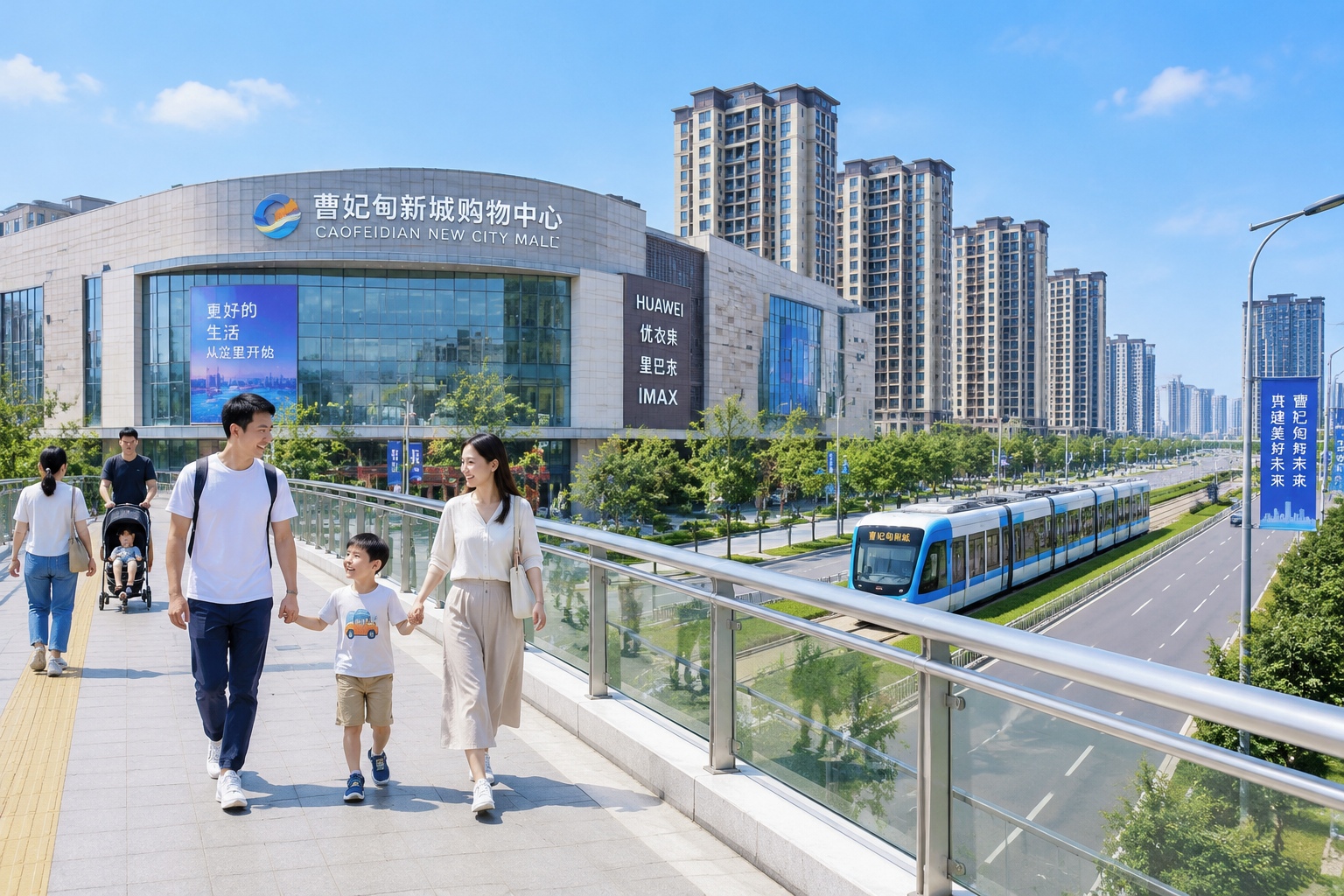
The economic changes are visible from the road. Caofeidian’s new urban district, built on reclaimed land, has straight boulevards, a Grade-A hospital, and a university campus operated by North China University of Science and Technology. Of course, not everything is perfect. Some streets remain slow to fill with shops, and the region still depends on the cyclical demand for steel. But the everyday quality of life has improved. A decade ago, most people working on the docks lived in temporary dormitories; now many have bought apartments in the new city, and the light rail line connecting the port with Tangshan’s urban core allows thousands of workers to commute.
Employment data suggests the effect. Port logistics, heavy industry, and service businesses in Caofeidian directly employ around 180,000 people, up from about 60,000 a decade ago. Population in the district has grown to around 300,000, a rare story of population growth in northern China, where many smaller cities have seen declines. Local officials point to a steady opening of schools and kindergartens to keep up with demand.
One restaurant owner in the new city, a former fisherman named Li Wei, says the port’s construction allowed him to open a catering business that now serves some 300 customers a day during the peak season. His two daughters both work in port-adjacent offices, one in a shipping agency, one in a logistics platform. It is the kind of upward mobility that many Chinese cities are trying to recreate. Li’s story is not exceptional, but it shows how a large-scale port project can ripple through local society.
Challenges and the Road Ahead
Caofeidian’s progress has not eliminated old problems. Its economy is still heavily tied to steel, and steel prices are sensitive to China’s property sector and global trade. When the real estate market cooled in the early 2020s, local steelmakers had to cut hours. The port itself is also part of the country’s carbon-heavy supply chain; moving 820 million tonnes of cargo produces greenhouse gases that cannot be ignored. There is also the question of whether the deep-water advantage is as unique as before, as other Chinese ports upgrade their channels.
Still, the port’s development is not slowing. The Caofeidian government recently announced plans to become a ‘zero-carbon industrial park,’ partly driven by its use of offshore wind and hydrogen. There are also efforts to expand the container business, which is the fastest-growing segment. In 2022, Caofeidian launched a freight train to Europe, giving exporters a land-ocean corridor that cuts east-west shipping times by as much as two weeks. As trade patterns evolve, Tangshan Caofeidian may benefit from its position at the meeting point of the Belt and Road Initiative and Chinese coastal shipping.
Conclusion
Caofeidian is a reminder that infrastructural investments can reshape an entire urban region. The port has not just added a few docks; it has altered the economic geography of Tangshan. By giving the city access to deep-water shipping, it lowered costs for old industries and created the foundation for new ones. It also changed the texture of daily life: from shopping malls to light rail to new schools, the port is now woven into the city’s fabric. The transformation is far from perfect—challenges around pollution and dependency remain—but the direction is clear. For anyone trying to understand how China upgrades its industrial heartlands, looking at Tangshan through the lens of Caofeidian is a good starting point. The old city has not found a magic cure, but it has found a maritime path to something new.
Start the discussion at forum.chinacomes.com