

Three questions about China you might actually ask
If a friend who had never been to China asked you three questions about what life is like there, they probably wouldn’t be about GDP growth or high-speed rail. They’d be more like: “Can a regular person just start a company?” “What does a typical workday look like?” “Is it all just grinding and stress?”
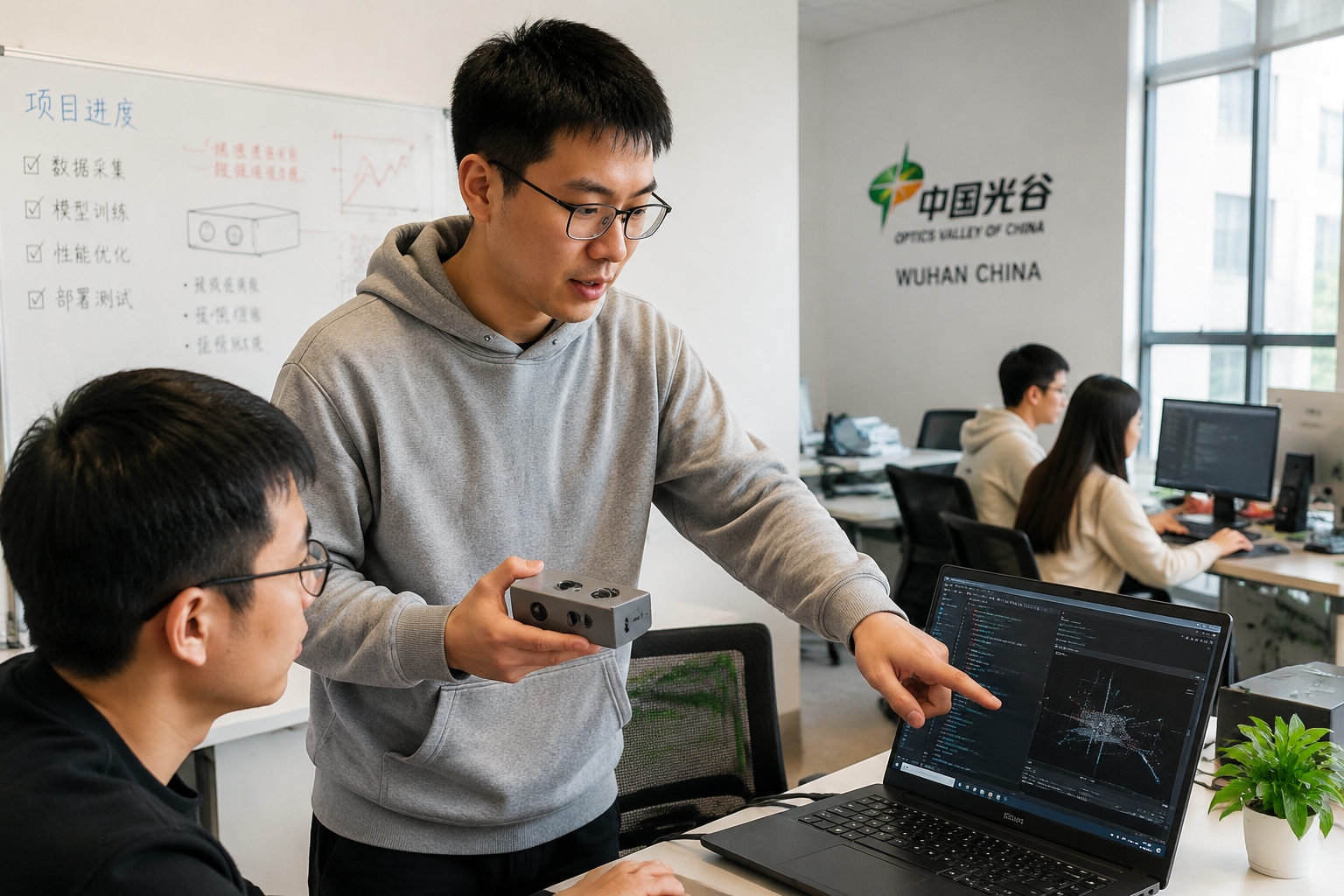
To find real answers, I spent a day with Chen Wei, a 29-year-old hardware engineer who co-founded a small IOT startup in Wuhan’s Optics Valley, also known as Guangu. This is what he showed me.

The 8:30 a.m. metro ride
Chen meets me at the Optics Valley Square metro station. He’s carrying a backpack with a laptop, a small oscilloscope, and a bag of steamed buns he grabbed from a street stall. “I don’t need a car,” he says. “The metro here reaches almost everywhere. My office is three stops away.”
Wuhan’s Optics Valley is often compared to Silicon Valley, but it feels different. Instead of suburban office parks, you get a dense mix of glass towers, university campuses, and construction sites. Chen’s company rents two rooms in a shared incubator building. The monthly rent is around 2,000 RMB (about $280) per room—cheap even by Chinese standards.
A startup that makes sensors “smell”
Chen’s company builds gas sensors for smart agriculture. Their main product looks like a small grey box with an antenna. It measures temperature, humidity, and ammonia levels in poultry farms.
“We started with four people,” he explains. “Two engineers, one sales guy, and one guy who does finance and takes out the trash.” Today they are nine. “We still take out the trash ourselves.”
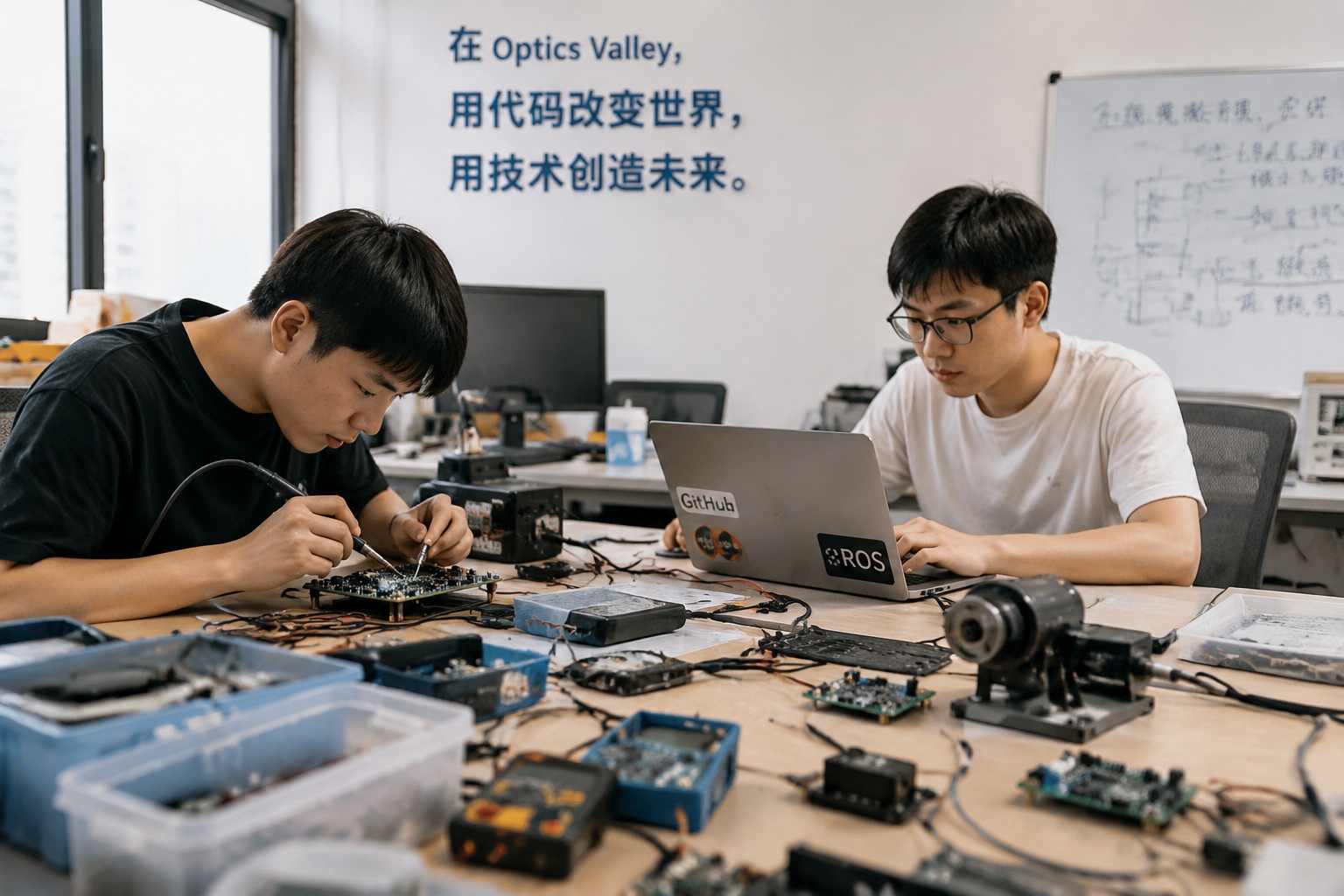
His typical morning is not glamorous. He reviews code, argues with the team about a bug on WeChat, and makes a dozen phone calls to suppliers. “People think startups are all about launches and funding rounds. Most days it’s just making sure components don’t arrive late.”
What “working overtime” really looks like
You’ve probably read about China’s famous “996” culture. Chen doesn’t deny it exists, but he says it’s more complicated than a slogan.
“In a hardware startup, you can’t force creativity with a clock. Some nights we stay till 11 p.m. because we’re debugging a sensor that keeps giving wrong readings. Other days we leave at 6 because the problem is fixed and we want to go home.”
He adds: “Our generation is more aware of work-life balance than the older one. We don’t want to burn out. But when there’s a deadline, we push.”
One reason they can push is the convenience of Chinese city life. At 9 p.m., Chen orders noodles on his phone, and they arrive in 20 minutes. “If you live in a place where everything is open late and delivery is fast, working late is less miserable.”
Money, funding, and the reality of starting up
What about funding? Chen’s company started with personal savings and a small government grant for college graduates. They didn’t chase venture capital at first.
“Optics Valley has a lot of support for early-stage projects,” he says. “The local government offers cheap office space, tax breaks, and help with applying for patents. But the money is not free—you still need to build something people want to buy.”
His frankness is refreshing: “Some friends in bigger cities like Beijing or Shenzhen get huge funding rounds, but they also spend a lot on salaries and rent. Here we can keep costs low. That gives us time to make mistakes.”
Asked if he feels pressure to succeed, Chen laughs. “Of course. I’m 29, unmarried, and my mother asks every Spring Festival if I’ll go back to a ‘real job.’ But I like building things. In a big company, I’d be writing a small piece of code for years. Here, I own the whole product.”
The people behind the startup
Chen’s team is younger than he is—the newest member just turned 24. They eat lunch together in the building’s canteen, where a meal costs about 15 yuan. Conversation ranges from video games to a factory problem in Shenzhen.
I ask how they handle disagreements. “We argue a lot,” Chen says. “But we argue about work, not about personal stuff. We have a rule: unless someone is really crossing a line, the most senior engineer’s decision wins. It’s not democratic, but it’s fast.”

What outsiders get wrong
Chen has met foreign visitors at industry events who ask awkward questions about China’s tech scene. “Some think every startup is state-controlled or a copycat. That’s outdated. A lot of us are just solving boring but real problems—like helping farmers track air quality. There’s no ideology in that.”
He also points out that Wuhan is not a “second-tier” city in spirit. “Chengdu has fun, Shenzhen has hardware, Beijing has media. Wuhan has a massive base of students from 80 universities. That’s a huge talent pool. Last year, two new graduates joined us. They are as skilled as anyone from Shanghai.”
An evening by the lake
We end the day at East Lake, a short bike ride from his office. The lakefront is packed with joggers, couples, and families. Chen parks his shared bike and points across the water: “In 2019, you could not swim here. Now they’ve cleaned the water. There’s even a sculpture park.”
He says he doesn’t know if his startup will change the world. “Maybe we’ll just become a company that makes farm sensors. That’s fine. We make a living, we solve a problem, and we help a few families run better farms. That’s a good day.”
As the sun fades, he checks his phone. A client in Henan has sent a message: the prototype is working. Chen smiles and orders another cup of coffee from a vending machine. “Tomorrow we’ll start a new bug. That’s the cycle.”

A few practical takeaways on China’s startup life
- Costs matter: Low rent and government-backed incubators make early-stage experimentation more affordable in cities like Wuhan.
- Convenience is underrated: Cheap food delivery, widespread public transit, and late-night services reduce the pain of long workdays.
- Diverse models: Not every Chinese tech company is racing for unicorn status. Many are building small, profitable businesses.
- People are people: Discussions about Chinese startups often focus on policy or “hardcore” culture. But most days are about fixing bugs, managing suppliers, and grabbing a quick meal with teammates.
If you ever visit Wuhan, get off the metro at Optics Valley Square and walk around. Look for the young people with backpacks and hurried steps. Behind every company name on those glass towers, there’s a story not so different from what you’d find in Austin or Manchester—just with more noodle shops.
Start the discussion at forum.chinacomes.com