


When Maya, a tourist from Austin, took her first bite of luosifen in a tiny shop in Nanning, she made a face that mixed suspicion and surprise. “It smells like a tire fire,” she said. “But I can’t stop eating.” That moment, captured on TikTok, is now one of the most-searched videos about Chinese food on the platform. The noodle soup from Guangxi has gone from regional curiosity to international obsession.
Luosifen (螺蛳粉) is a dish from Liuzhou, a city in the southern province of Guangxi. It’s a bowl of rice noodles served in a spicy, sour broth made with river snails, pickled bamboo shoots, chilies, peanuts, tofu skin, and fresh vegetables. The broth simmers for hours with pork bones and snail meat. The moment the spoon hits the soup, a sharp, earthy funk rises—and you either love it or you run.
What Is Luosifen, Exactly?
For the uninitiated, luosifen is a lesson in trusting your taste buds more than your nose. The trademark “stink” comes from fermented bamboo shoots, a method of preservation that gives the plant a deep, almost blue-cheese-level aroma. In English, some people call it “snail rice noodle soup,” which doesn’t sound all that brave. But the first spoonful is a sequence of sour, spicy, salty, and umami hitting you in waves. The noodles are chewy and smooth, the broth coats your tongue, and the crispy peanuts add a counterpoint to the tenderness of the tofu skin.
The dish has been around for decades in Liuzhou’s night-market stalls, where construction workers, taxi drivers, and teenagers queue for a steaming bowl that costs less than two dollars. But for a long time, it stayed south of the Yangtze, unknown beyond Guangxi.
From Night Markets to Factory Lines
In 2012, a popular Chinese documentary, A Bite of China, introduced luosifen to a nationwide audience. Suddenly, people in Beijing and Shanghai were craving the dish — but they couldn’t easily get it. Restaurants were few, and fresh rice noodles don’t travel well.
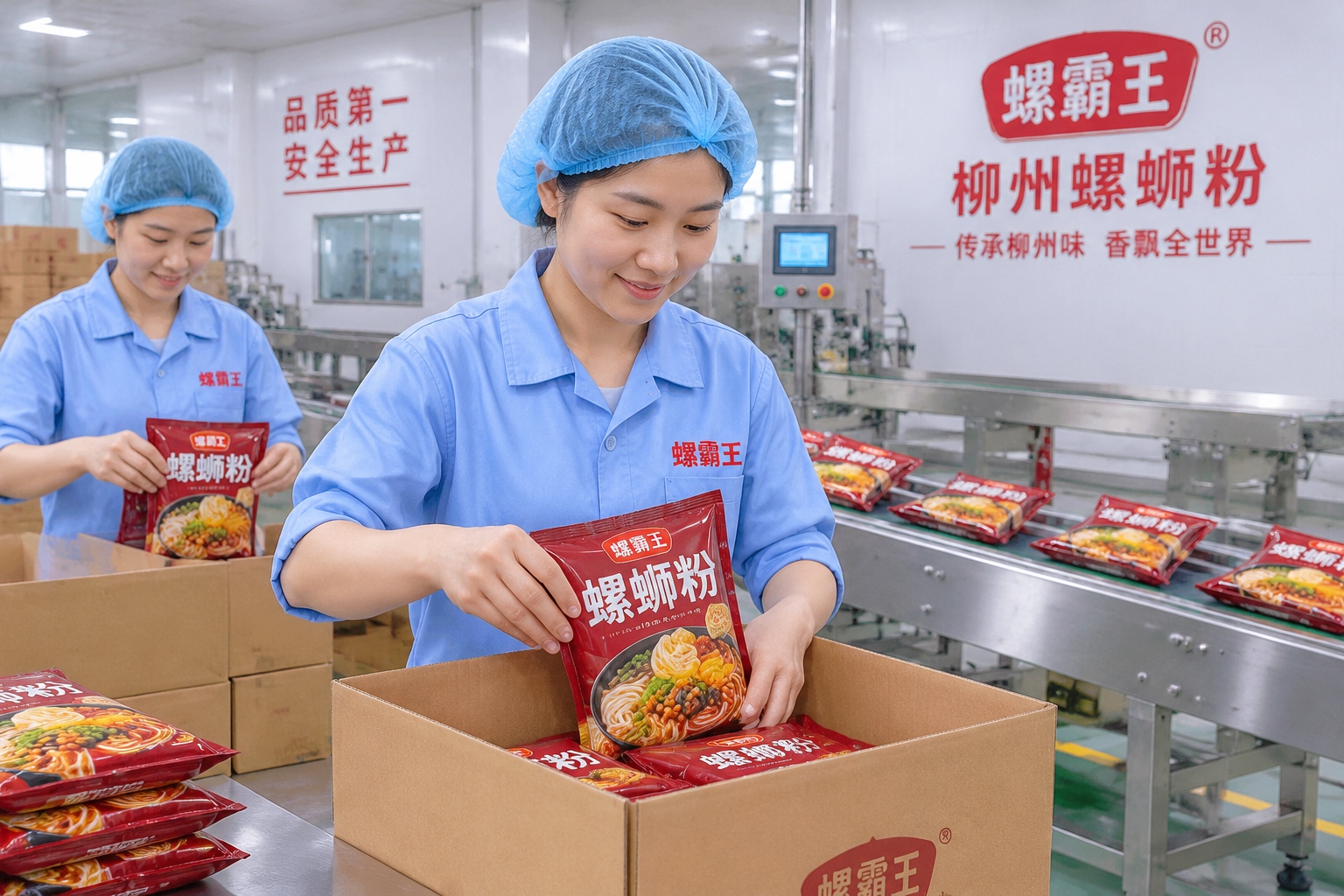
That problem birthed an industry. Around 2014, food companies in Liuzhou began producing “convenience luosifen” — vacuum-packed rice noodles, soup base, and toppings in a box. All you needed was boiling water. It was like instant ramen, but with the soul of a stockpot. By 2017, this packaged version was selling like crazy on Chinese e-commerce sites. Sales exploded further during the COVID-19 lockdowns in 2020, when people stuck at home craved something exciting.
Today, the Liuzhou luosifen industry is a full-blown ecosystem. There are some 650,000 jobs connected to it in the region, according to local government statistics. The entire supply chain — snail ponds, bamboo farms, noodle factories, packaging plants — covers hundreds of square miles of rural Guangxi. In 2022, the industry’s total sales revenue crossed the 60 billion yuan mark (about $8.3 billion), with packaged luosifen accounting for most of it.
How It Conquered the World
The packaged format changed everything. Suddenly, a dish from a mid-size Chinese city could be shipped to a Chinese student in London, a factory worker in Tokyo, or a chef in São Paulo. But the foreign market didn’t happen overnight. It started with the Chinese diaspora.
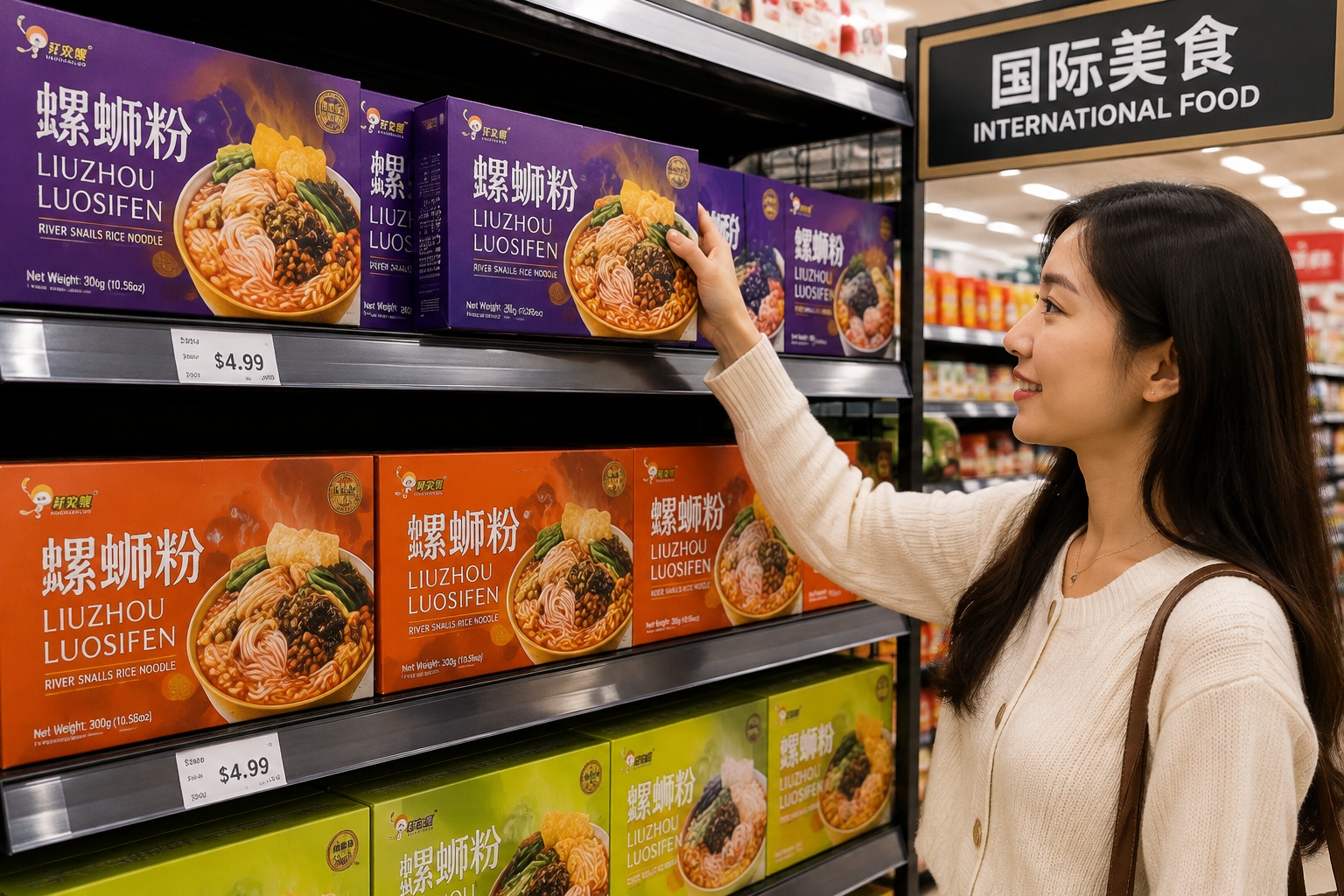
By 2020, luosifen was appearing on online shops like Yami Buy and Weee!, the two largest Asian grocery e-commerce platforms in the United States. Chinese students and professionals abroad bought boxes by the dozen. A noodle that smelled like the streets of their childhood quickly became a dorm-room essential.
Then came the non-Chinese foodies. YouTube personalities started filming reaction videos. Videos with titles like “Americans Try the Smelly Snail Noodles” racked up millions of views. Some reviewers gagged; more went back for second bowls. The hashtag #luosifen has hundreds of millions of views on TikTok, where the challenge is not eating it, but ignoring the smell in the name of deliciousness.
Today, you can find pre-packaged luosifen in regular supermarkets in Australia, Singapore, Canada, and parts of Europe. In 2022, Chinese customs data showed that the country exported more than 83 million yuan (about $12 million) of luosifen products, a year-on-year increase of over 60%. The biggest markets: the United States, Vietnam, South Korea, and Thailand. There are even specialized luosifen restaurants opening in Chinatowns from Melbourne to Milan.
Why Younger Chinese Love That Smell
If you ask a young Chinese person why they love luosifen, you’ll hear a surprising answer: it’s not just the taste, it’s the vibe. For many, the dish is a comfort food that reminds them of late-night street scenes. But it’s also a social media statement. Ordering a bowl of something so pungent, posting a video of yourself struggling through the first bite, and finally giving in — those are small rituals of internet-era Chinese culture.
Luosifen is also cheap. A bowl at a street stall costs less than $3. A box of the instant version costs around $1.50 online. In a country where the cost of eating out is rising, it’s become the go-to meal for students and young office workers. Food delivery platforms report that luosifen orders spike after midnight. It’s the hangover cure, the study-break fuel, the thing you eat when you want something loud and messy and warm.
The Taste Test: What Do Foreigners Say?
Some cultural clashes are unavoidable. The smell, for one, can clear a room. But the conversation around luosifen has changed from “ew” to “how did I ever live without this?”
Take British food writer Molly Brown, who wrote a profile of luosifen for a London food magazine after a trip to China. “I expected to be repelled,” she says. “Instead, I found that after the first wave of pungency, there’s an actual ballet of flavors — umami, sourness, a warm spice that lingers. To compare it to something Western, it’s part soup, part pickled herring, part spicy ramen, without the rules.”
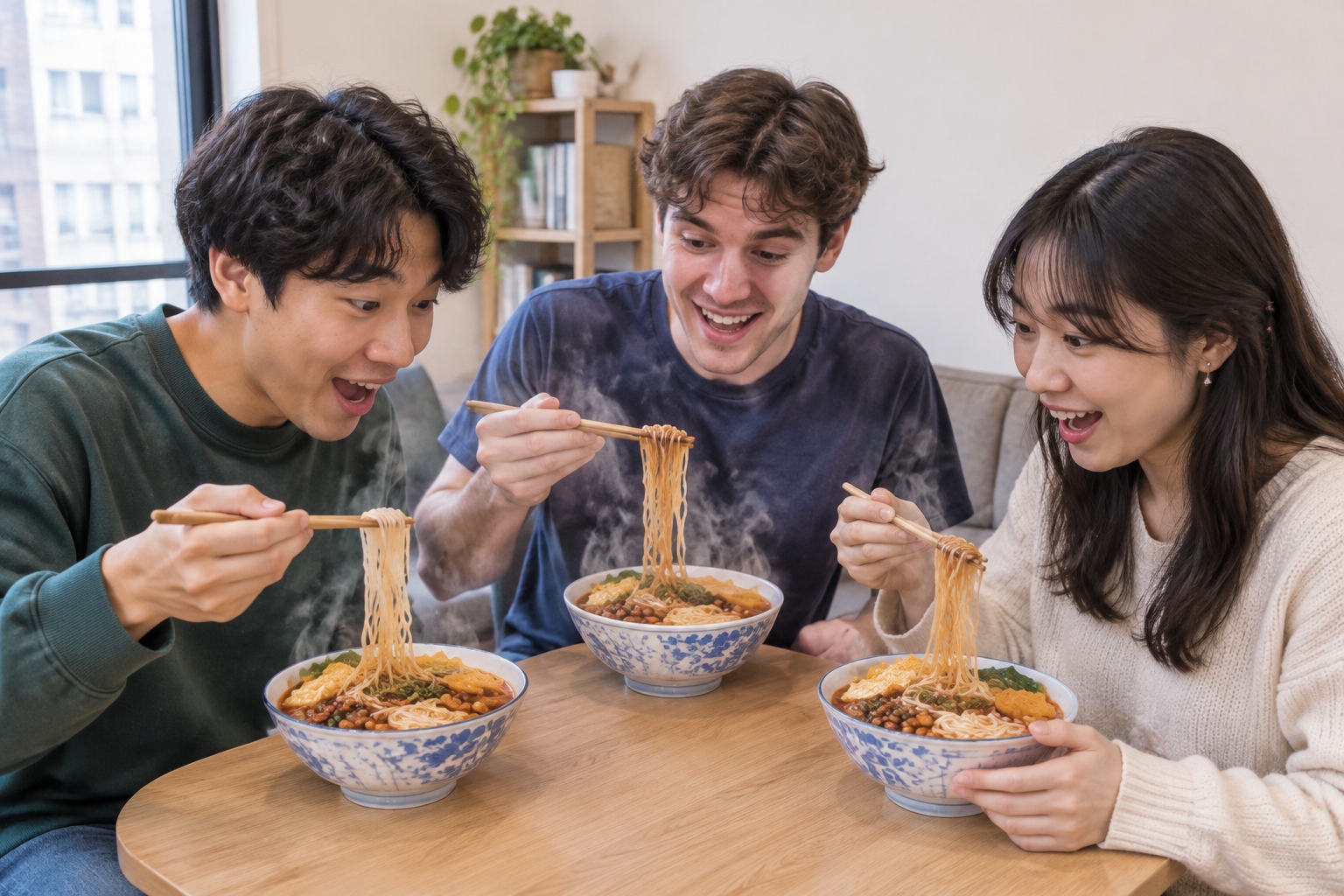
On Reddit’s r/Houston, a user named u/snacklover posted: “Got a box from H-Mart. My wife left the room. I ate the whole thing and felt like a hero. Never cried so good from spice.” These stories may be unscientific, but they show how a regional snack can travel because of curiosity — not despite the smell, but because of it.
What’s Next for the Snail Noodle?
Luosifen is no longer just a street snack. It’s a food-processing export powerhouse with ambitious goals. Local authorities in Liuzhou have set up food safety standards and industrial parks to ensure the quality of exported products. They’re also working with foreign distributors to get luosifen into mainstream supermarkets, not just Asian ones.
But there are bumps. Some countries worry about the strong odor and the snail ingredient itself — sometimes sidelined by customs or delayed by stricter labeling rules. The rice noodles need proper storage, and the broth sachets are high in salt. To grow further, brands are experimenting with lower-sodium versions, smaller packaging, and even cold-pack variations that can be cooked in under two minutes.
There’s also a broader question: can luosifen go from novelty to everyday staple? The path is not unlike how kimchi or instant ramen became globally recognized. It takes time. But the first step is getting people to try it. And once they do, the smell does the marketing.
More Than a Trend
Luosifen’s journey is more than an export success story. It reflects a changing China: a country where local flavors are celebrated, small city entrepreneurs are reaching global markets, and young people are confident enough to poke fun at their own culture while sharing it with the world. It’s not a government campaign or a corporate push — it started with a bunch of night-market cooks and a hungry nation that wanted a taste of home.
So the next time you see an orange-and-red paper bowl with a steaming broth and a smell you’ve never encountered, don’t run. Sit down, pick up your chopsticks, and ask for a glass of cold milk. The screw-noodle soup — the world’s most unexpectedly friendly dish — will do the rest.
Start the discussion at forum.chinacomes.com