

Meet the unseen capital of your bathroom
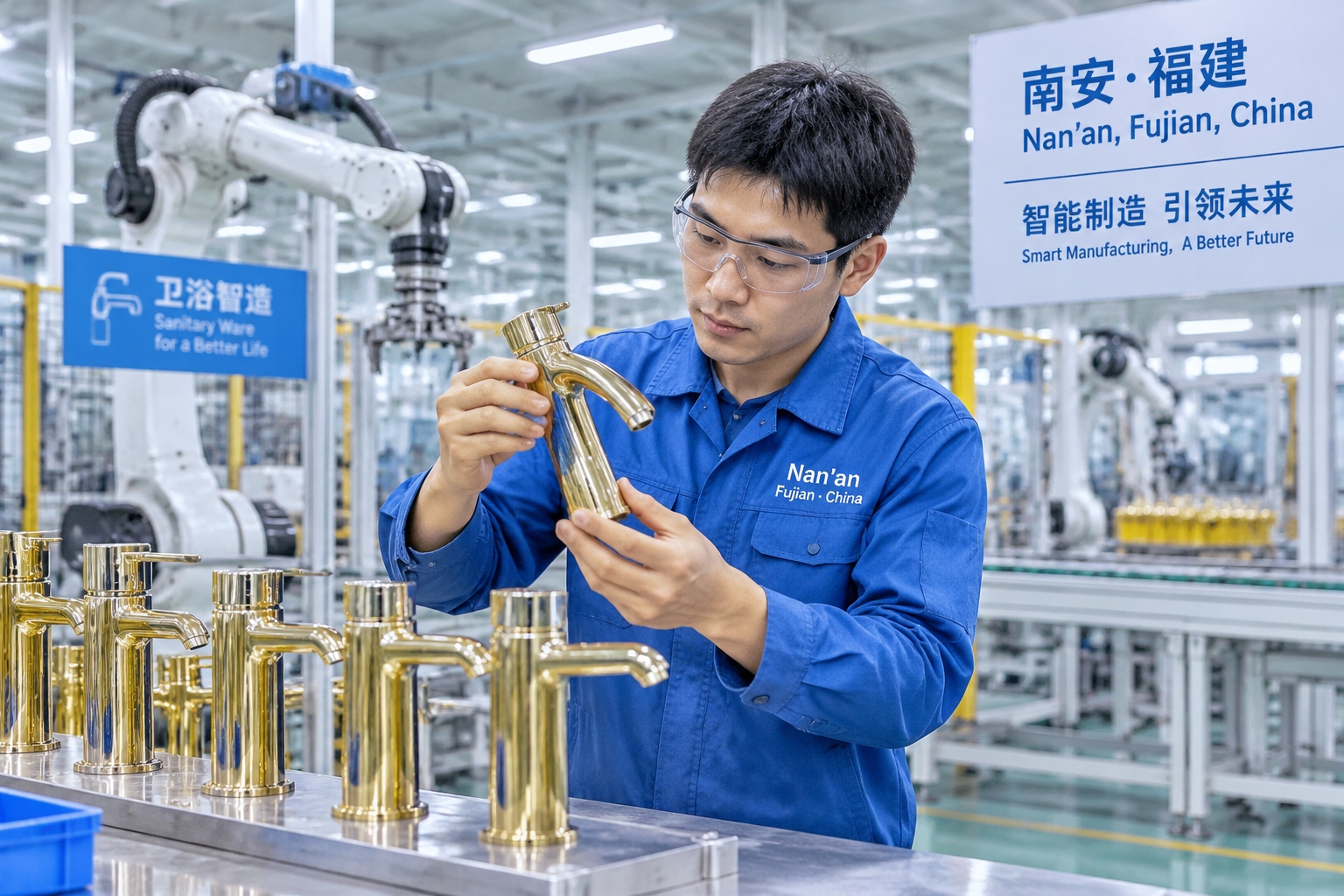
Walk into a hardware store in Chicago or Frankfurt, and you might spend a minute choosing a bathroom faucet. The finishes range from brushed nickel to matte black. You hold one, and the label reads ‘Made in China.’ But which city? The label rarely says. Often, it should say Nan’an, a county-level city in Fujian Province. Nan’an is not a famous name, but it’s one of the most important places in the global plumbing industry. With a population of about 1.5 million, this city has turned itself into a hidden workshop for faucets, shower heads, valves, and many other pieces of bathroom hardware. This article looks at how Nan’an grew, how it ships products to over 100 countries, and why it matters for anyone who has ever turned on a tap.
A town of metal and water
Nan’an’s story starts with a tradition of metalworking. The city sits near the coast of Fujian, not far from the port of Xiamen. For centuries, locals were famous for stone carving and shipbuilding, and the skills of casting and forging were passed down in families. When China’s economic reforms began in the 1980s, some villagers took these skills and started making simple brass fittings in their backyards. The first products were rough, but the new housing demand inside China was enormous.
By the 1990s, Nan’an had become a hub for plumbing fittings. Thousands of small workshops appeared, each specializing in one step: casting, polishing, electroplating, or assembly. Local people say you can find every part of a faucet and every service you need within a few kilometers. Economists call this a cluster. And this cluster gives Nan’an a decisive advantage: speed.
The powerful cluster behind your tap
Today, the sanitary ware industry in Nan’an includes more than 700 companies and over 50,000 workers. Some reports suggest the cluster supplies as much as half of China’s total output of sanitary ware. The products range from simple water valves to smart touchless faucets. The size of the cluster means that a factory can develop a new model in a few weeks, because the molds, materials, and expertise are all close by.
Cost is another factor. Even with rising labor costs in China, Nan’an stays competitive because of economies of scale. A basic faucet might cost $10 to make here and sell for $30 to $50 in western stores. The price difference keeps bathroom renovation affordable. And for global importers, Nan’an is a one-stop shop: they can send a design drawing, and receive finished goods in weeks.
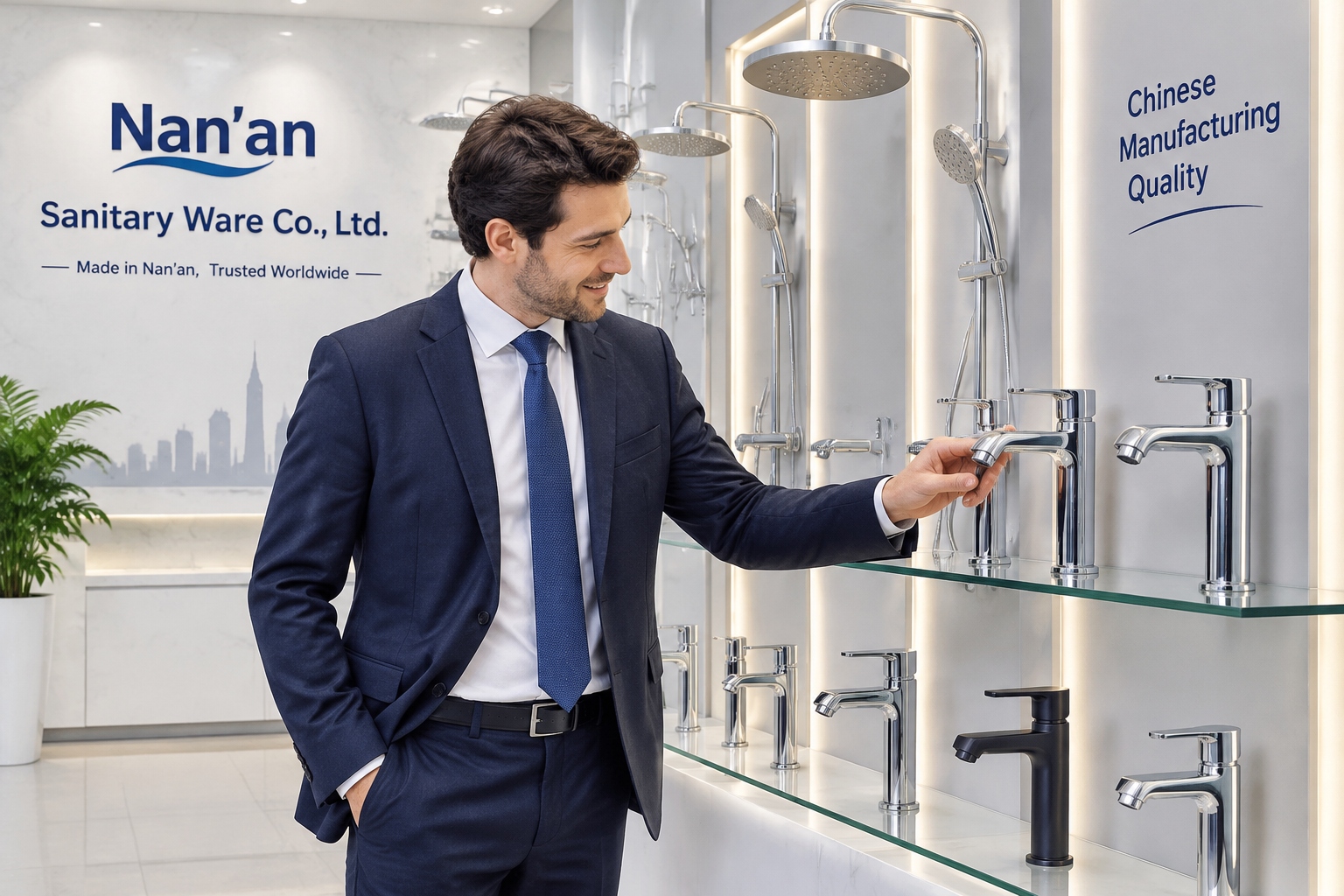
Take the example of Xingda, a mid-sized company in Nan’an that makes shower heads for a well-known European brand. The owner, Mr. Chen, said his factory uses CNC machines and 3D printing for prototypes. ‘We can make a sample in five days,’ he told me during a visit last year. ‘Our best advantage is that the buyer can sit in our showroom and see every component being made in the same town. That is rare anywhere in the world.’
How Nan’an products travel the world
Nan’an’s global reach is built on trade shows, online platforms, and long-term relationships. Many local manufacturers exhibit at the Canton Fair in Guangzhou and the Hong Kong Trade Fair. They also use platforms like Alibaba International to receive overseas orders. A typical business model is OEM: a German or American company sends its design, and the local factory produces the final product with the customer’s brand.
Over time, some Nan’an companies have developed their own brands. The most famous is Joyou (九牧), which started as a small workshop in 1990 and has become one of Asia’s largest sanitary ware companies. Its products are used in hotels, airports, and even residential towers. But Joyou is just the tip of the iceberg. Hundreds of mid-sized companies are building brand recognition in Southeast Asia, the Middle East, and Africa.
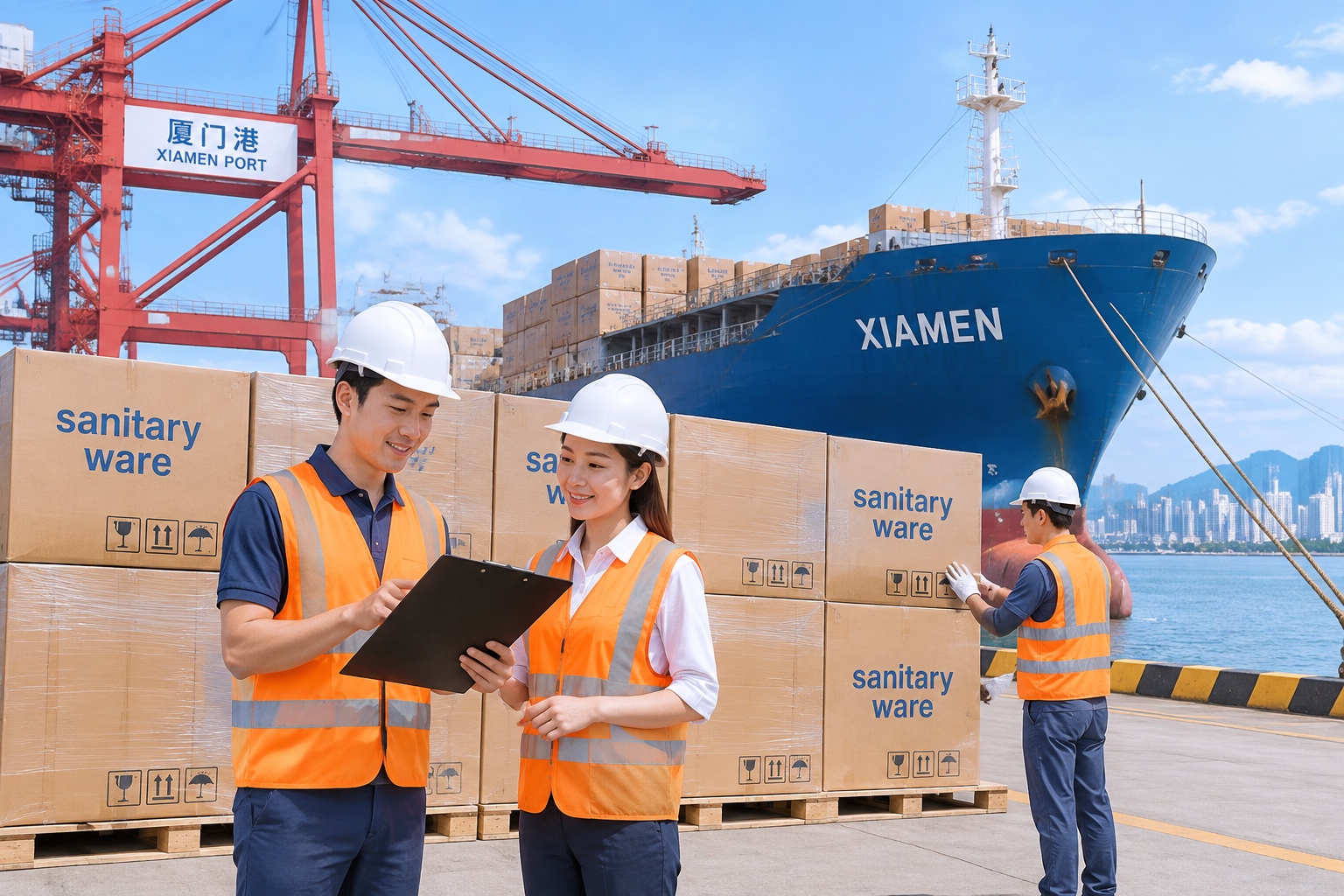
Customs data shows that Nan’an’s sanitary ware industry exports over 3 billion yuan (around $420 million) directly every year. The real number is likely much higher, since many goods are shipped through trading companies in Xiamen or Shanghai. The main markets include the United States, Germany, Saudi Arabia, and Singapore.
One overseas buyer, a manager from a Dubai-based building supply company, explained why he keeps coming back. ‘We have been importing from Nan’an for eight years,’ he said. ‘They are flexible with small orders and their quality has improved a lot. We used to buy from Europe, but these faucets are just as good for half the price.’ His company now, despite the higher shipping costs, still finds it cheaper than sourcing from closer countries.
Why Nan’an? And why now?
You might wonder why this small city, not some other part of China, became the plumbing workshop of the world. Part of the answer is luck and tradition. The early entrepreneurs happened to be in the right place with the right skills. Another part is the chain reaction of the cluster: as more workshops moved in, specialization became finer, and the cost of learning from neighbors dropped. With time, Nan’an developed an ecosystem that can’t be built in a few years.
And the timing matters. The world’s construction and home-improvement market has grown nonstop for three decades. As countries from Indonesia to the United States renovated their housing, they needed strong, cheap, and increasingly well-designed faucets. Nan’an companies were ready.
From cheap copy to premium product
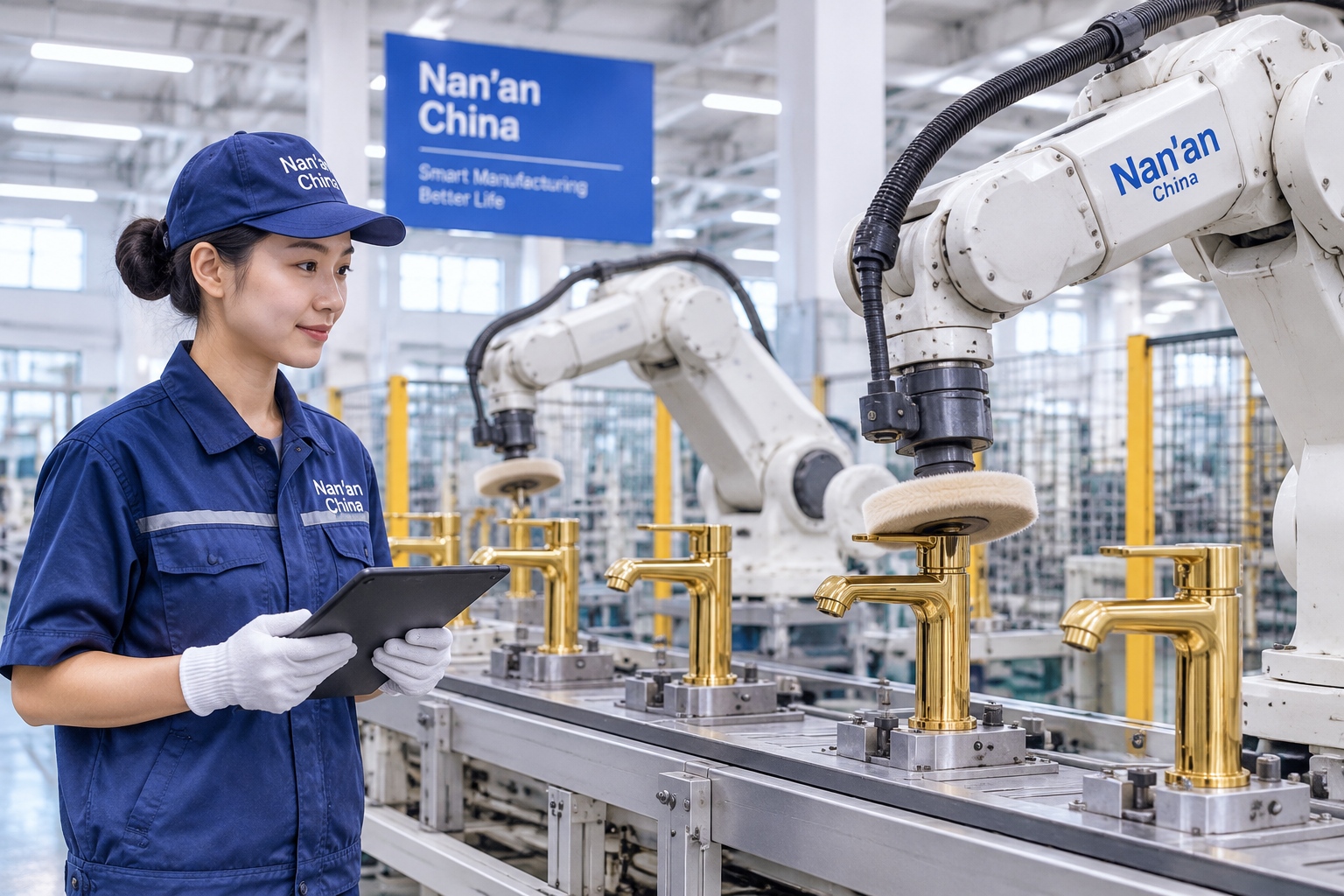
It’s tempting to think of ‘Made in China’ as cheap and low-quality. But in Nan’an, the industry has been upgrading. In the city’s industrial parks, you’ll see robot arms polishing brass parts and automated production lines that make thousands of faucet bodies per day. Some factories use PVD coating, a process that makes the surface scratch-resistant and gives a premium look. Others are installing sensors and even IoT modules to create connected shower systems.
The push for innovation also comes from strict international standards. Europe, for example, has its Water Label and waste-water directives. Nan’an set up a public testing institute where companies can run CE, cUPC, and other certifications without having to send samples abroad. That makes it easier for small firms to export to demanding markets.
Another exciting trend is the smart toilet revolution. Although Japan is famous for high-tech toilets, some Nan’an manufacturers are now making smart toilets with features like warm water washing, air drying, and night lights. These are being exported to Southeast Asia and Europe, where demand is growing. On Taobao and JD.com, domestic smart toilet sales are also rising, and Nan’an brands are competitive against imported ones.
Challenges ahead: pollution and young workers
A global story is not always smooth. The industry has faced tough challenges. Electroplating uses heavy metals that can pollute water if not handled properly. In recent years, China’s environmental inspections have forced many small plating workshops to close. The survivors invested in wastewater treatment and cleaner processes. This raised costs but also made the industry more sustainable.
Another issue is labor. Young people in China don’t want to do the dirty, noisy polishing jobs their parents did. Many factories are turning to automation or moving assembly to inland areas. But the design, R&D, and marketing brains stay in Nan’an. The cluster’s true asset is collective knowledge, which cannot be relocated easily.
Trade tensions also create headaches. When tariffs on Chinese goods increased in the US, some Nan’an companies saw their exports drop. A few decided to open small assembly plants in Vietnam or the Philippines, but they still make the critical parts in Nan’an. The mayor’s office told me they are helping companies diversify into new markets like Latin America and Central Asia to reduce dependence on any single country.
From a rainy day in Nan’an to a shower in Rome
Let’s end with a small scene. In a new apartment block in Rome, a plumber is installing a shower set. He reads the box: ‘Imported from China.’ He may not know that the set was made in Nan’an, where it was cast, polished, and assembled within a week. Meanwhile, in Nan’an, a worker named Li Hua is finishing his shift. He used to polish by hand; now he monitors machines in an air-conditioned control room. His grandfather made brass fittings with a hammer, but the metal still flows through the family.
Nan’an is a reminder that globalization runs on unsung parts. Most headlines talk about chips and electric cars, but daily life depends on a quiet hero: a reliable faucet that offers water at a steady temperature. Next time you wash your hands, think about the path that little piece of metal has traveled. It might have crossed half the world to be in your bathroom.
Start the discussion at forum.chinacomes.com