
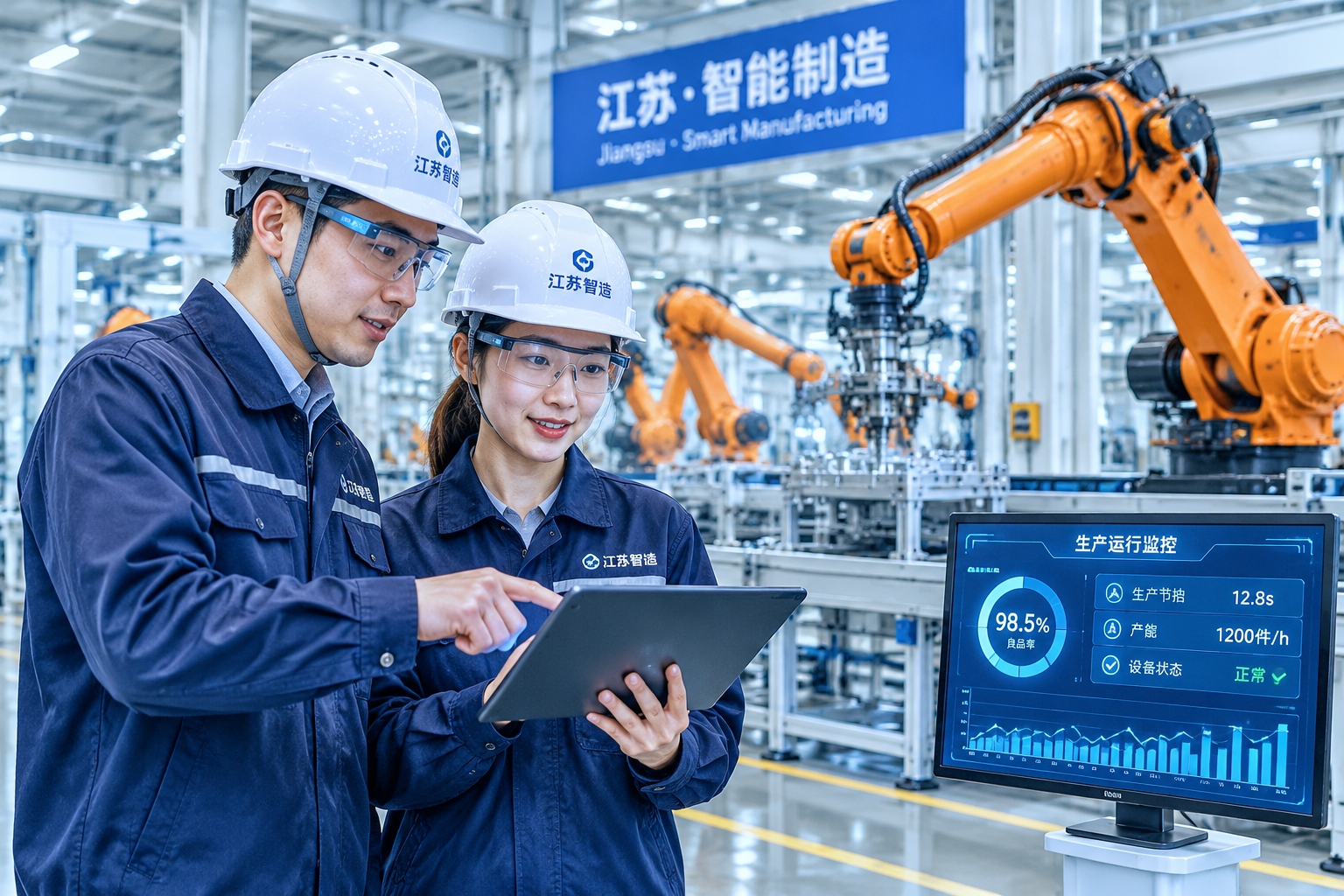

In a cavernous factory in Changzhou, Jiangsu, the machines hum in near darkness. Only the blinking LEDs of robots and the glow of monitoring screens break the gloom. This is a “lights-out factory” — a fully automated production line that runs 24/7 with just a handful of engineers watching from a central control room. A decade ago, this automotive parts plant would have employed hundreds of workers manually assembling components. Today, AI adjusts the production parameters in real time, robotic arms handle the heavy lifting, and quality defects have actually dropped.
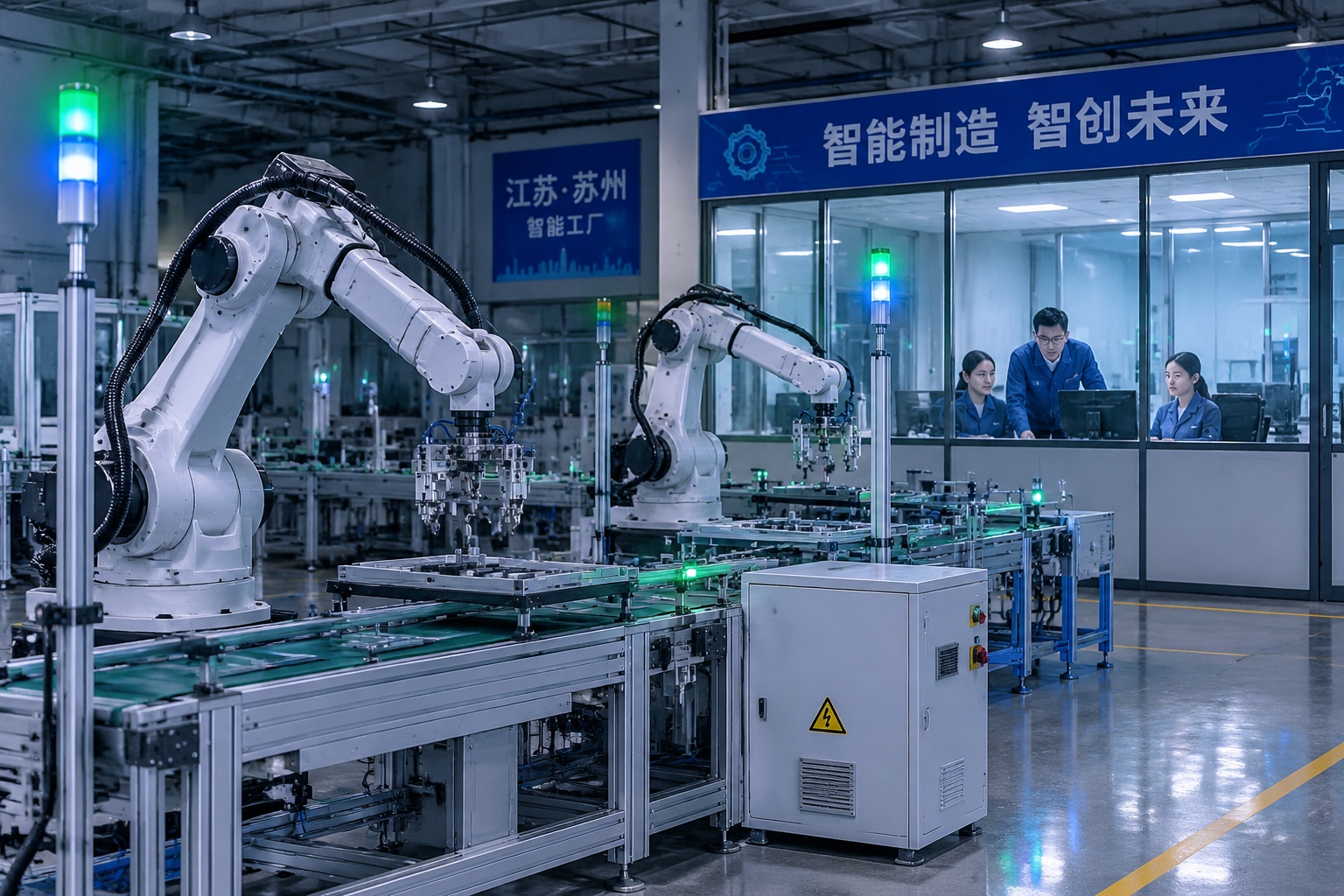
That’s the new face of Jiangsu, China’s second-largest manufacturing province. For decades, Jiangsu was known as the world’s workshop, producing everything from electronics to textiles at scale. Now it’s undergoing a transformation, moving from “Made in Jiangsu” to “Smart Manufacturing in Jiangsu” — and the rest of the world is starting to feel the ripple effects.
Why Jiangsu’s Shift Matters
Jiangsu’s manufacturing sector is massive. In 2023, its industrial added value exceeded 4.5 trillion yuan (around $620 billion), accounting for roughly 12% of China’s total. The province has long relied on low-cost labor and economies of scale to power global supply chains. But demographic changes, rising wages, and international competition have made that model unsustainable. So Jiangsu is reinventing itself, using automation, artificial intelligence, and the Internet of Things to make factories smarter, cleaner, and more efficient.
This isn’t just a business trend — it’s a systemic overhaul that affects millions of workers and countless businesses across the province of 85 million people. The shift also helps explain why China, facing similar pressures nationwide, remains the world’s largest manufacturing country: provinces like Jiangsu are proving that industrial upgrades can happen quickly when government and private sector align.
Jiangsu’s transformation is often compared to Germany’s Industry 4.0, but there is a key difference: in Jiangsu, the speed is faster. While Germany’s Mittelstand companies spend years perfecting each step, Jiangsu’s manufacturers are adopting cloud-based AI tools in months, thanks to a dense network of tech suppliers and local government support.
From Manual to Digital: How Workers Experience the Change
Take Zhang Hua, a 34-year-old technician in Suzhou. Five years ago, he spent his shifts checking phone screens for defects — over a thousand screens a day. Now, after three months of training, he maintains the automated quality-inspection machines that replaced his old job. His income has risen by 30%, and he now spends his time analyzing data instead of staring at glass.
“I used to fear machine breakdowns,” he says. “Now I hope the machine tells me a problem before it happens so I can fix it faster.”
His story is common in Jiangsu. The province has reskilled tens of thousands of workers for new roles in robotics, data analytics, and equipment maintenance. According to official figures, Jiangsu now has more than 15 million skilled workers, including 4.7 million highly skilled technicians. The transition is not always smooth, but it’s creating jobs that are less physically demanding and more intellectually rewarding.
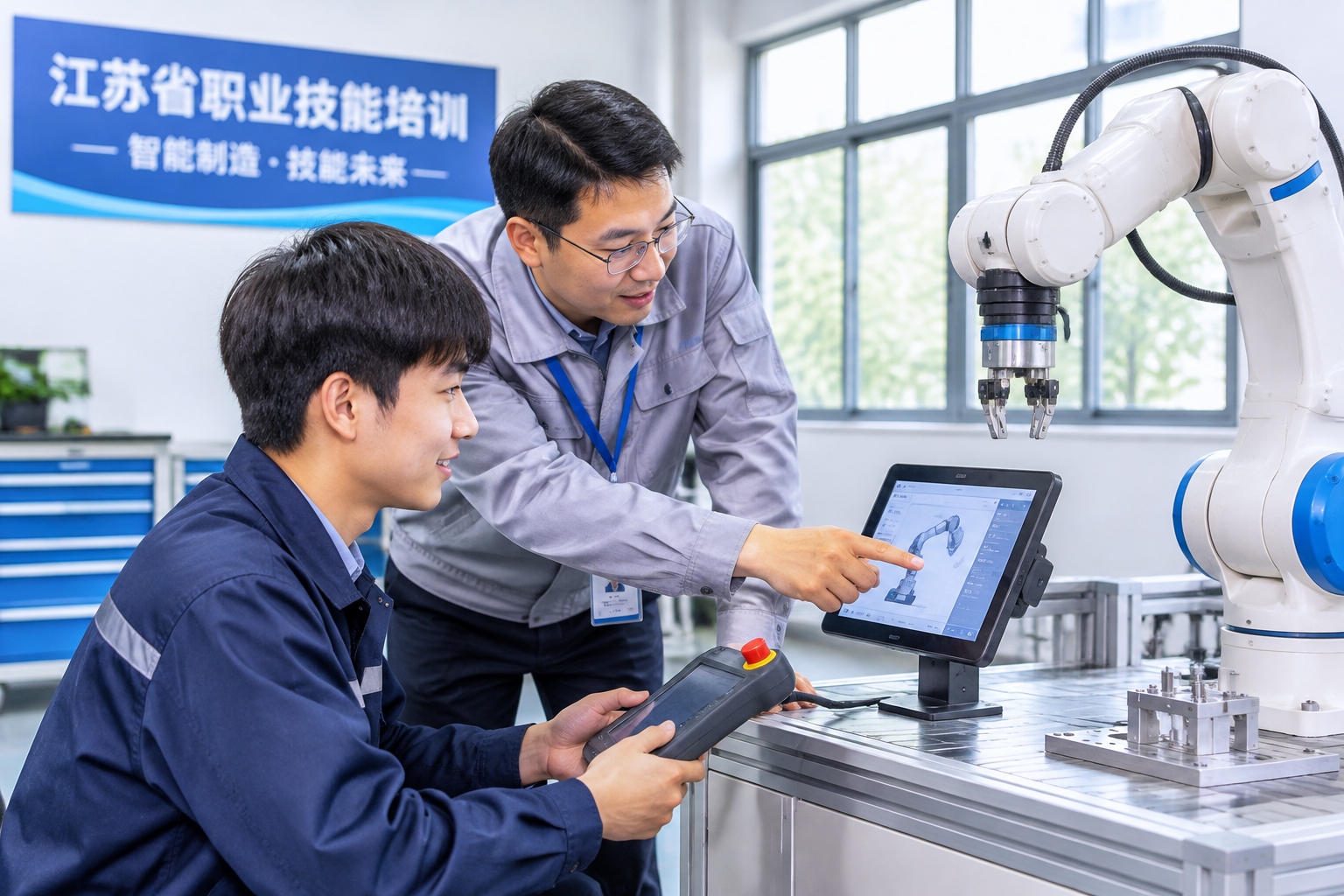
The Jiangsu government has partnered with vocational schools and companies to offer free retraining programs. In 2023 alone, over 200,000 workers completed courses in industrial robot programming, digital design, and predictive maintenance. This helps explain why the province’s unemployment rate has stayed below 3% even as factories have automated.
Technology That Remakes Industries
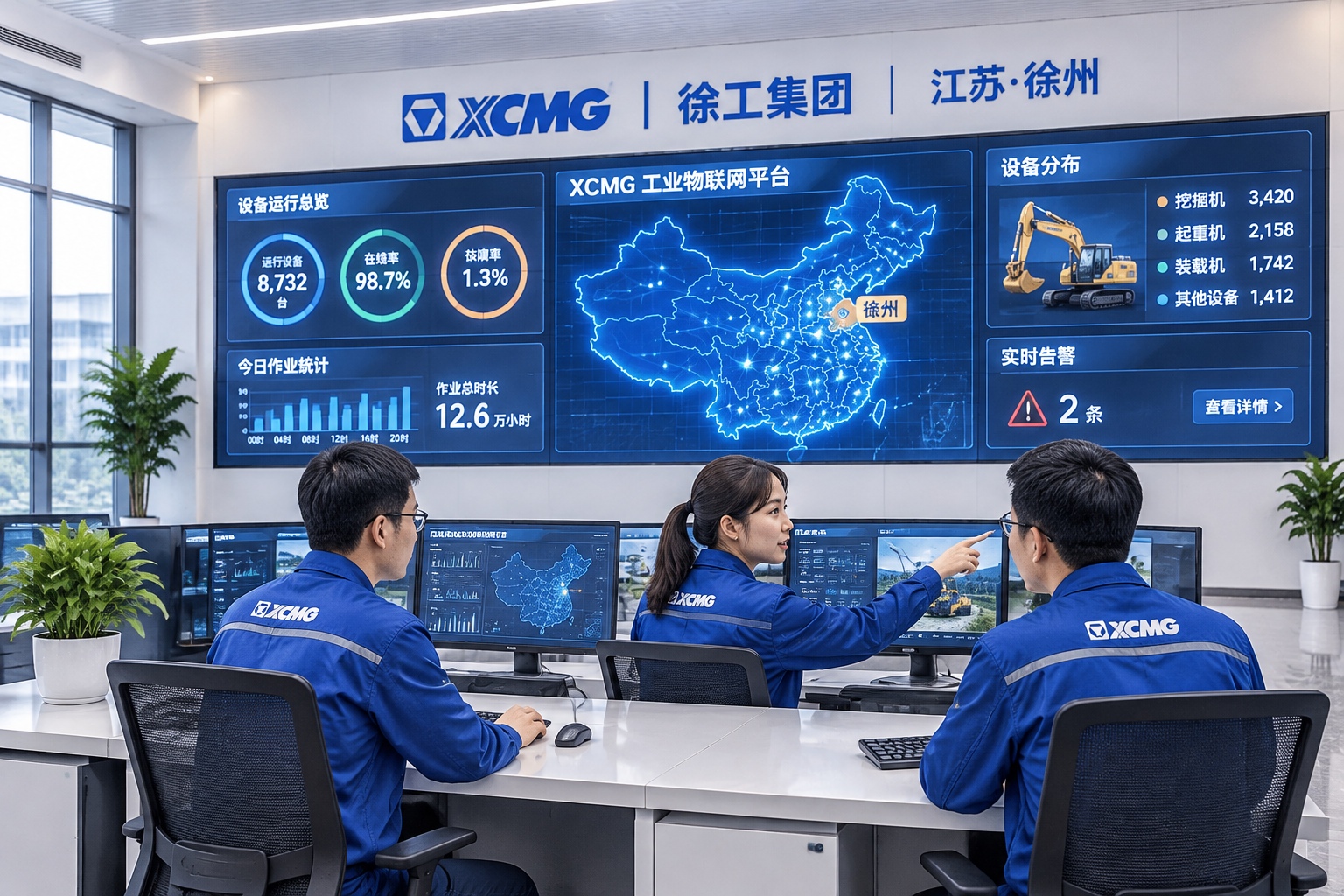
The smart-manufacturing push extends far beyond electronics. In Xuzhou, the construction equipment giant XCMG has connected over 100,000 pieces of machinery — excavators, cranes, trucks — to a cloud-based Internet of Things platform. Engineers can monitor equipment health in real time, diagnose faults remotely, and predict when a part will need replacement days before it fails. This has cut downtime for customers and turned the company from a machine seller into a service provider.
In Wuxi, the “Internet of Things capital” of China, a textile company deployed AI-powered vision systems to detect fabric defects at a speed and accuracy no human could match. Energy consumption fell by 15%, and defective rates dropped by half. Some factories now use large language models to analyze maintenance logs and suggest optimization plans — tasks that once required senior engineers.
Several Jiangsu plants have also deployed 5G private networks to manage fleets of autonomous guided vehicles. In one Nanjing factory, 5G-connected AGVs cut delivery delays by 30%. These factories use edge computing to process millions of sensor data points in milliseconds, enabling real-time adjustment of production lines.
Numbers tell the story: Jiangsu is home to one of the largest industrial digitalization initiatives in the world. In 2023 alone, more than 120,000 companies in the province moved their business operations to the cloud. The penetration rate of digital design and manufacturing tools among larger firms now exceeds 87%.
What This Means for the Global Economy
Jiangsu is a critical node in global supply chains. One in four laptops worldwide is assembled here, and the province produces around 10% of the world’s solar panels. As these factories become smarter, consumers worldwide benefit from higher-quality, lower-priced goods. Chinese manufacturers are also exporting their “smart factory” expertise, building intelligent plants in Southeast Asia and Europe.
The shift also aligns with global carbon reduction goals. Smart factories in Jiangsu use energy-management systems that cut electricity use by 10-20%, and the province is a leader in producing green technologies like solar inverters and battery storage. For multinational companies sourcing from Jiangsu, this means their supply chains become more sustainable.
Some Jiangsu firms are now selling “manufacturing as a service,” using their digital platforms to help overseas clients design and test products remotely. This creates new revenue streams and deepens their ties in global markets.
But the transformation isn’t without friction. Export controls imposed by some countries on advanced semiconductors and AI chips have forced Jiangsu’s tech companies to accelerate domestic innovation. Global demand fluctuations test the flexibility of these factories, pushing them to adopt agile manufacturing methods. These external pressures have paradoxically made the province more resilient.
Challenges and the Road Ahead
Not every factory can afford the leap. Small and medium-sized enterprises (SMEs) often struggle with the cost of upgrading and a lack of tech talent. Rural workers, especially older ones, may find it hard to adapt to new tools. To address this, Jiangsu’s government rolled out an “intelligent transformation and digital upgrade” program, offering subsidies and technical support to SMEs. The target is to have more than 50,000 industrial enterprises above a certain size complete their digital transformation within three years.
The province is also careful not to abandon traditional industries. Instead, it’s applying new technologies to them. In Changzhou, for instance, an old textile mill now uses AI to inspect fabric, giving a centuries-old trade a new lease on life.
Older workers face a steeper learning curve. To ease the transition, the province has set up over 500 public training centers where workers can learn at their own pace, combining online courses with hands-on practice. These centers often include simulation rooms where workers can safely experiment with robotic control before touching real equipment.
With more devices connected, cybersecurity becomes critical. Jiangsu has invested in industrial security platforms, but smaller companies remain vulnerable. The province is working with tech firms to provide low-cost security tools, yet this remains a work in progress.
A Model for Future Manufacturing
What’s happening in Jiangsu offers a rare, real-world example of how a manufacturing ecosystem can evolve. The lesson isn’t that robots replace workers; it’s that technology amplifies workers’ capabilities. When the world debates how to balance productivity and employment, Jiangsu provides a living case study.
From “Made in Jiangsu” to “Smart Manufacturing in Jiangsu,” the change isn’t just about new equipment. It’s about the capacity to create more value with fewer resources, faster iteration, and smarter products. That may well be the future of manufacturing — and it’s already rolling off the lines in Jiangsu.
Start the discussion at forum.chinacomes.com