
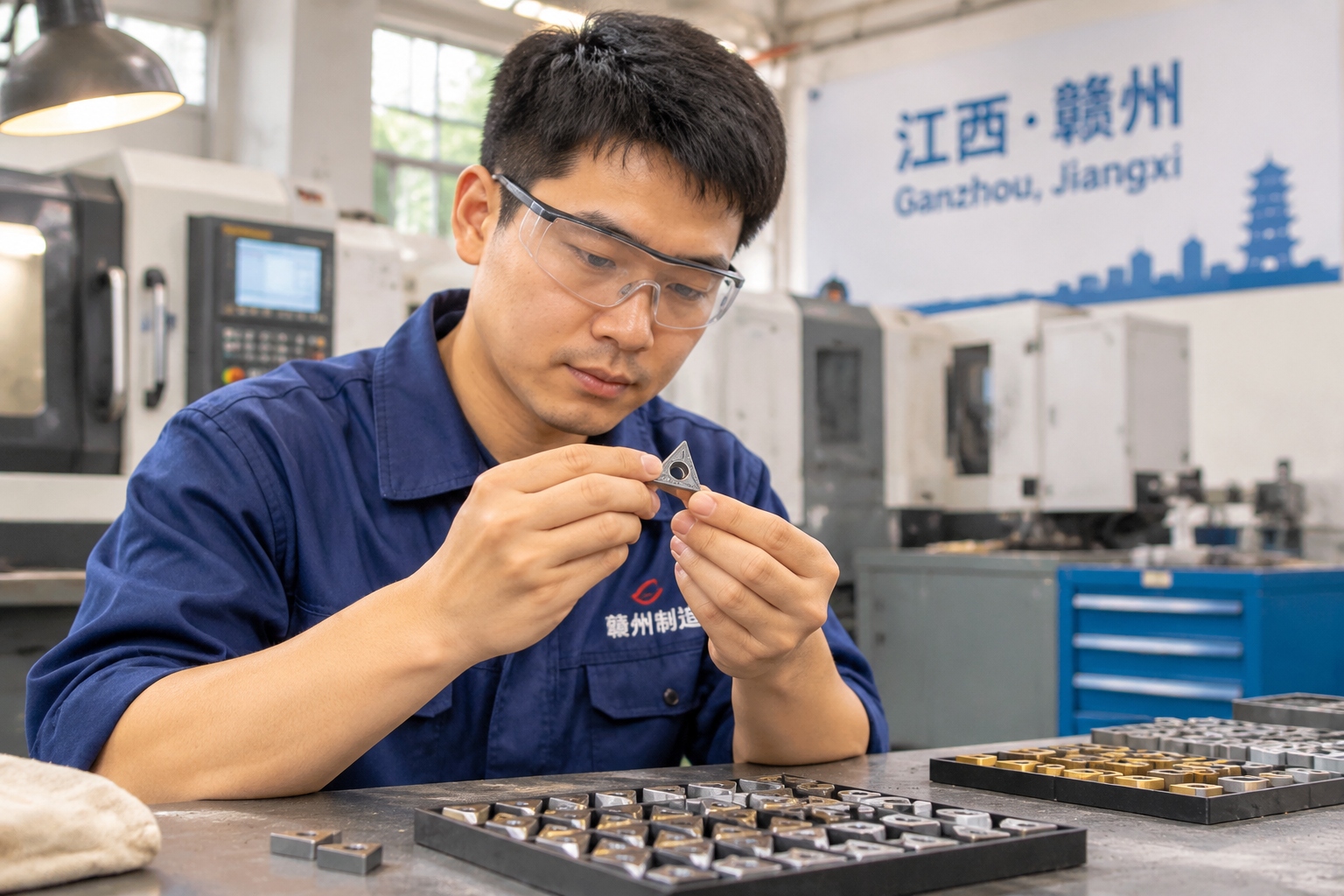

On a busy hardware street in Shenzhen, a salesman hands me a small cardboard box. Inside are hundreds of slippery gray rods that look like oversized chalk. “Tungsten rods,” he says. “They go into drill bits.” He doesn’t mention Jiangxi. He probably doesn’t know the details. Yet those rods started their journey in a southern Chinese province most foreign visitors would be hard pressed to find on a map.
Jiangxi has no Shenzhen-style skyline. It has river towns, old kilns, and some of the most strategically significant red soil in the world. That soil is one of the main sources of tungsten, an ultra-hard metal used in cutting tools, wedding rings, smartphone motors and military armor. Without tungsten, the modern world would literally lose its edge.
What exactly is tungsten?
Tungsten is element 74 on the periodic table, with the chemical symbol W, short for “wolfram.” It is a gray-white metal with the highest melting point of any metal commonly used in industry. More importantly, when mixed with carbon it becomes tungsten carbide, a compound tough enough to cut steel and grind concrete.
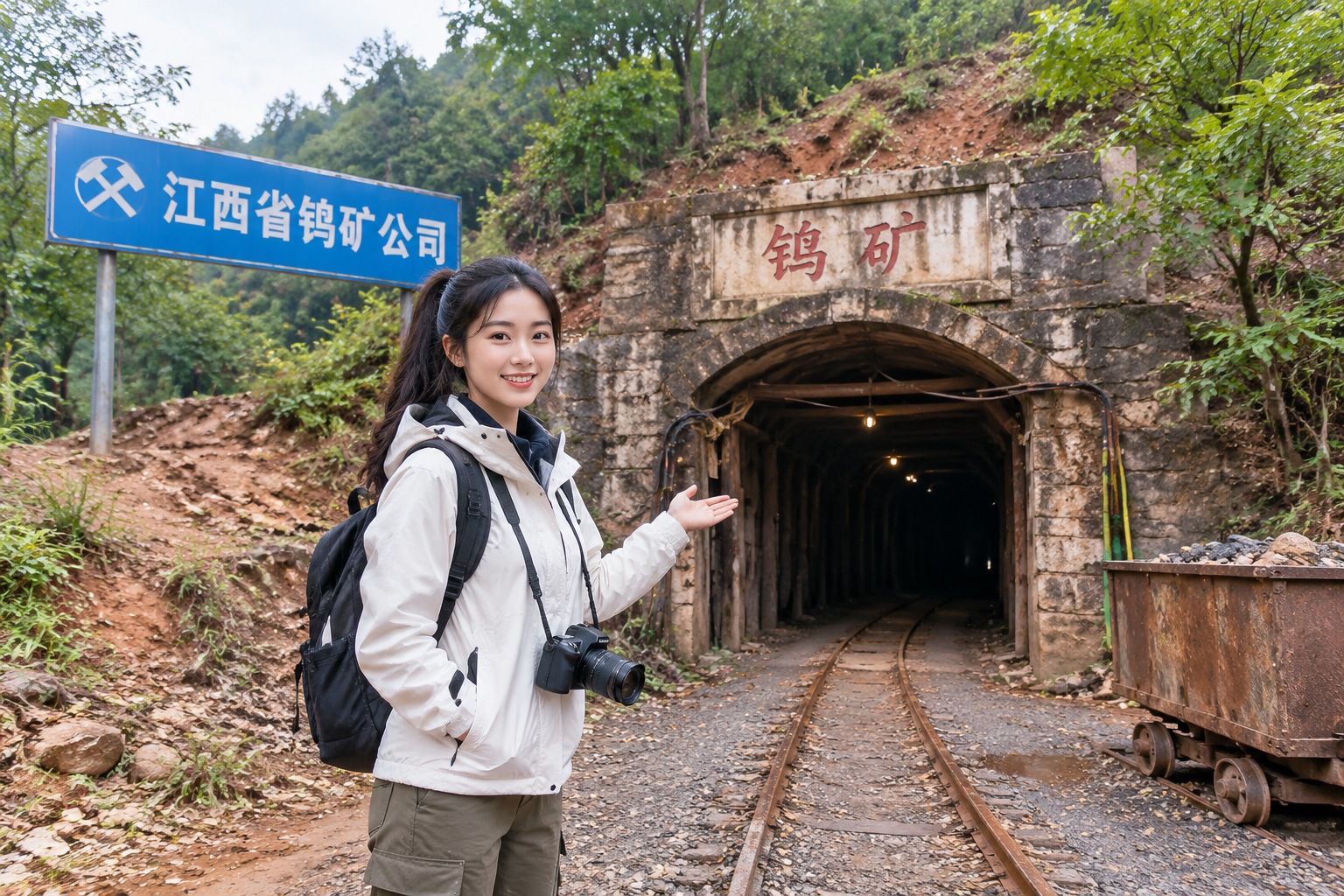
Naturally, the metal appears in minerals called scheelite and wolframite. Both are found in Jiangxi. For more than a century, miners have pulled these ores out of hills in the southern part of the province, especially around the city of Ganzhou.
Why does Jiangxi matter?
China produces roughly 80 percent of the world’s tungsten, and Jiangxi accounts for a large share of China’s output. Industry analysts sometimes call Ganzhou the “tungsten capital of the world.” Some estimates suggest Ganzhou alone contributes more than 60 percent of China’s total production, although exact figures are difficult to verify.
Those numbers matter because tungsten is not an interchangeable commodity. A cutting tool made from poor-quality powder fails in seconds; a good one lasts for hours. So even though the world has other tungsten mines, buyers look to Jiangxi for a steady, consistent supply.
From mine to machine shop: how tungsten moves
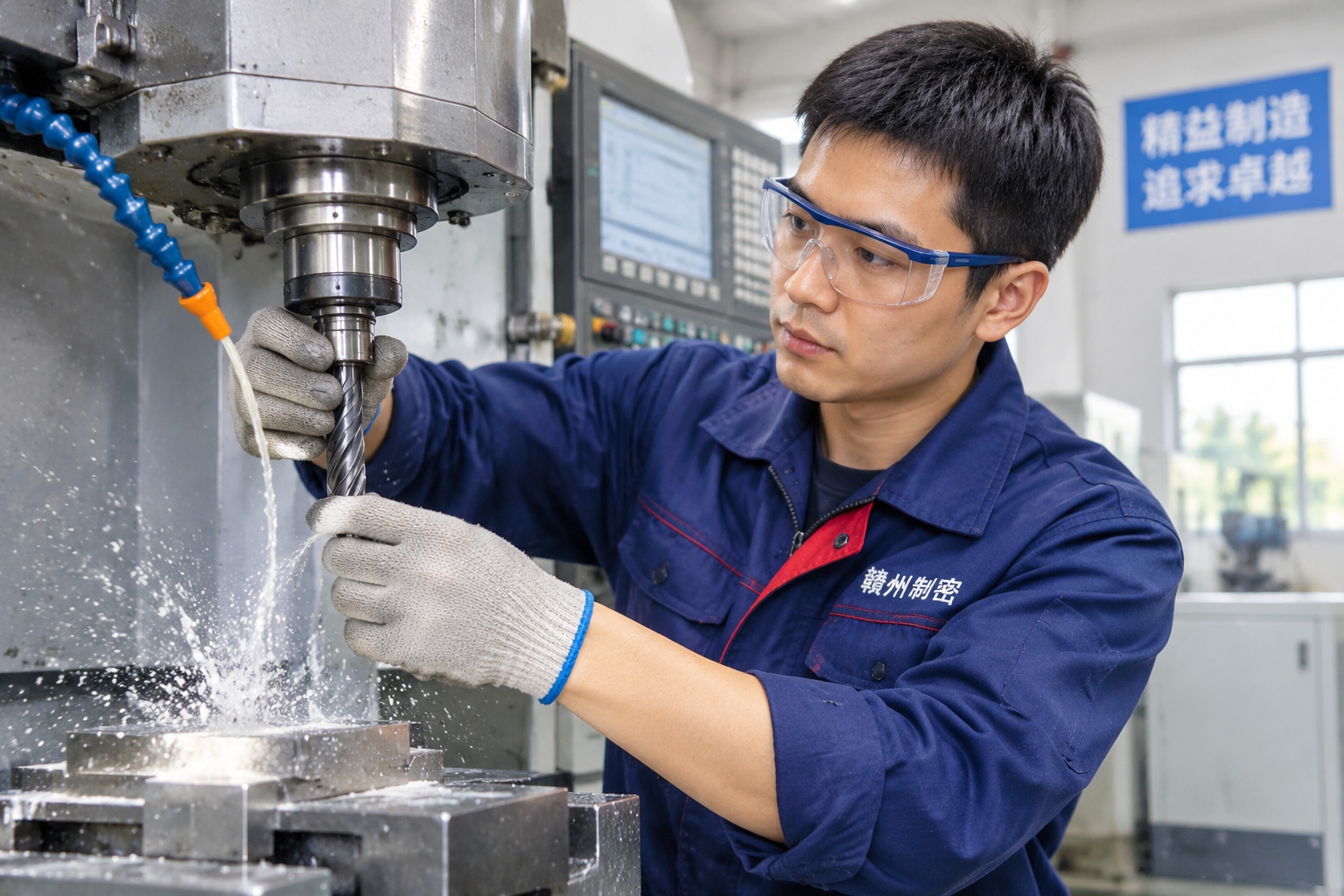
To see tungsten do its job, you don’t go to a mine. You go to a machine shop. I once visited a factory not far from Shanghai that uses tungsten carbide inserts from suppliers with roots in Jiangxi. Inside, a CNC machine was cutting elevator parts from stainless steel blocks. Coolant sprayed across the cutting edge; metal chips spun off in orange curls.
“Steel tools can do this, but they dull too fast,” the line manager explained. “These inserts last longer, so everybody buys them.” Worn inserts do not go to landfill. They are collected and sent to recyclers because tungsten scrap is too expensive to throw away.
Three places you’ve already met Jiangxi’s tungsten
A wedding ring
Tungsten carbide rings are popular because they resist scratches and keep their shape. Their hardness is also a warning: the rings can crack if struck hard. But for many couples, this trade-off is worth it, and a small ring often carries a little bit of Jiangxi.
A vibrating phone
Phone vibrators use a tiny counterweight to turn motor spin into a strong pulse. Tungsten is dense enough to make the pulse feel sharp without adding bulk. Companies like Apple have used tungsten weights in haptic feedback systems. That material has to come from somewhere, and much of it comes from China.
A hospital operating room
Orthopedic surgeons cut through bone with small tungsten carbide drills and saws. They stay significantly sharper than stainless steel, which means less pressure on the patient and fewer stops to change tools. Ask a surgeon what the blade is made of; “carbide” is a common answer.
The hard part: environment and reform
Tungsten has never been a clean business. Decades of unregulated mining in Jiangxi stripped hillsides, clogged rivers and left black dust hanging in the air. Some local residents still remember a time when the river beside the mine ran yellow with tailings, and when “mining fever” created overnight fortunes and sudden layoffs.
The government began tightening control in the mid-2010s. Mining quotas now limit production, smaller illegal mines have been closed, and state-backed companies have consolidated ownership. There is also a visible push for “green mines.” A few abandoned pits in Ganzhou have been transformed into ecological restoration areas where pine trees are slowly reclaiming the ground.

Not everything is fixed. Residents near older waste sites are more cautious than the brochures. But the direction is clear: tungsten extraction in Jiangxi is becoming more expensive, more regulated and more mechanized.
What’s next: tungsten in the age of strategic metals
Tungsten’s biggest market is still cutting tools, but new uses are appearing. The metal is found in X-ray anodes, semiconductor interconnects and experimental fusion reactor walls. It is also required for armor-piercing projectiles, which is why several governments treat tungsten as a strategic mineral and want more of their own supply.
Countries from the United States to South Korea have announced plans to expand domestic tungsten mining and recycling. That makes Jiangxi’s role more visible — and more contested. The gray rods in a Shenzhen cardboard box are no longer only an industrial detail; they are part of a global race for hard materials.
Next time you pick up a drill, slip on a ring, or feel your phone buzz, remember the quiet province underneath the story. In a place that looks like ordinary southern China, some of the hardest rock on Earth is doing the softest job: connecting a sleepy mountain town to every factory and hospital in the modern world.
Start the discussion at forum.chinacomes.com