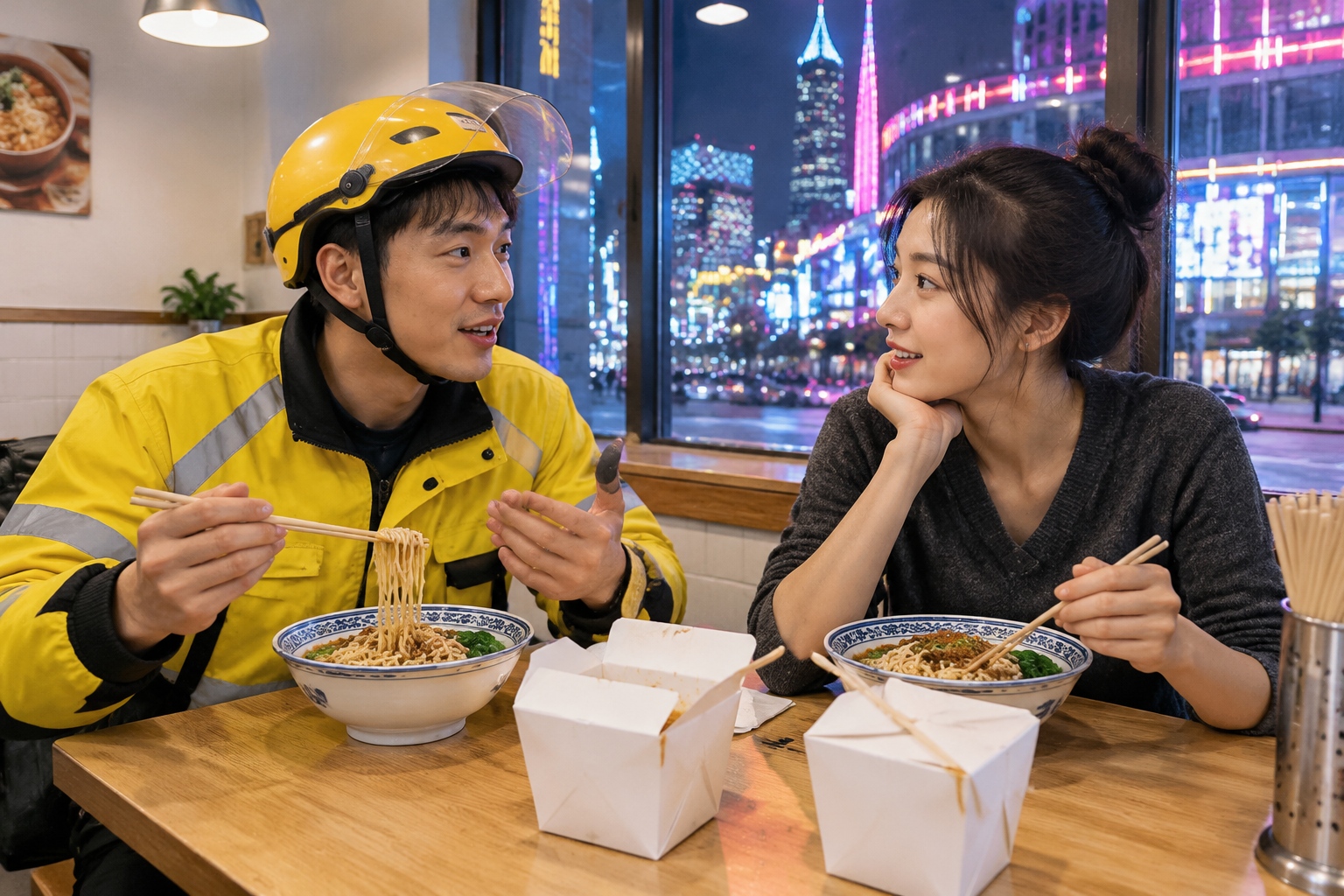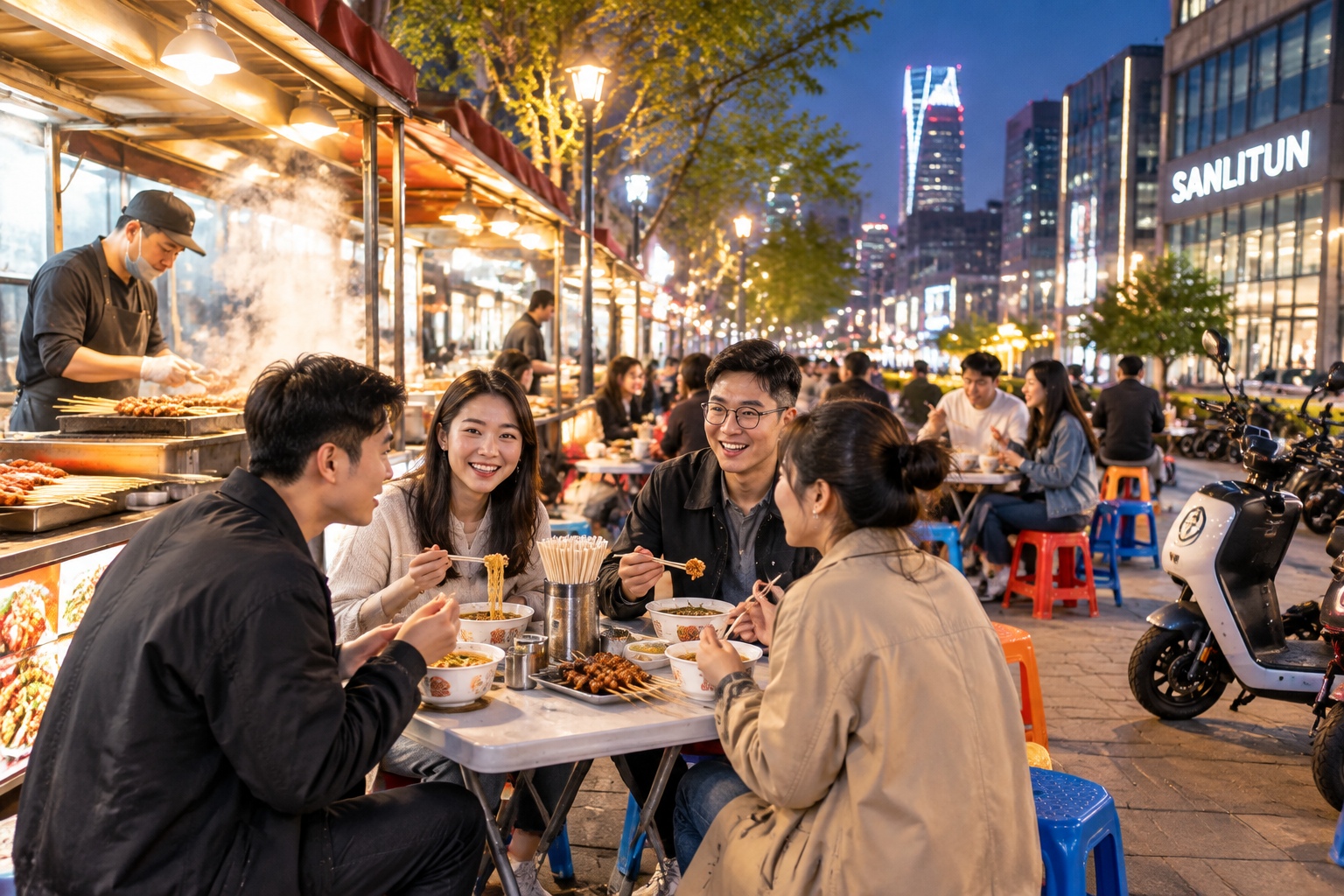

The Real Face of Sanlitun After Dark
If you’ve ever seen Sanlitun on social media, you’d think it’s all luxury boutiques and velvet ropes. But step past the cameras and the cocktail bars, and you’ll find what the crowd actually runs on at 2 a.m.: oily scallion pancakes, barbecue skewers, and steamed dumplings that refuse to quit. This is the night economy, but not the kind you read about in glossy reports.
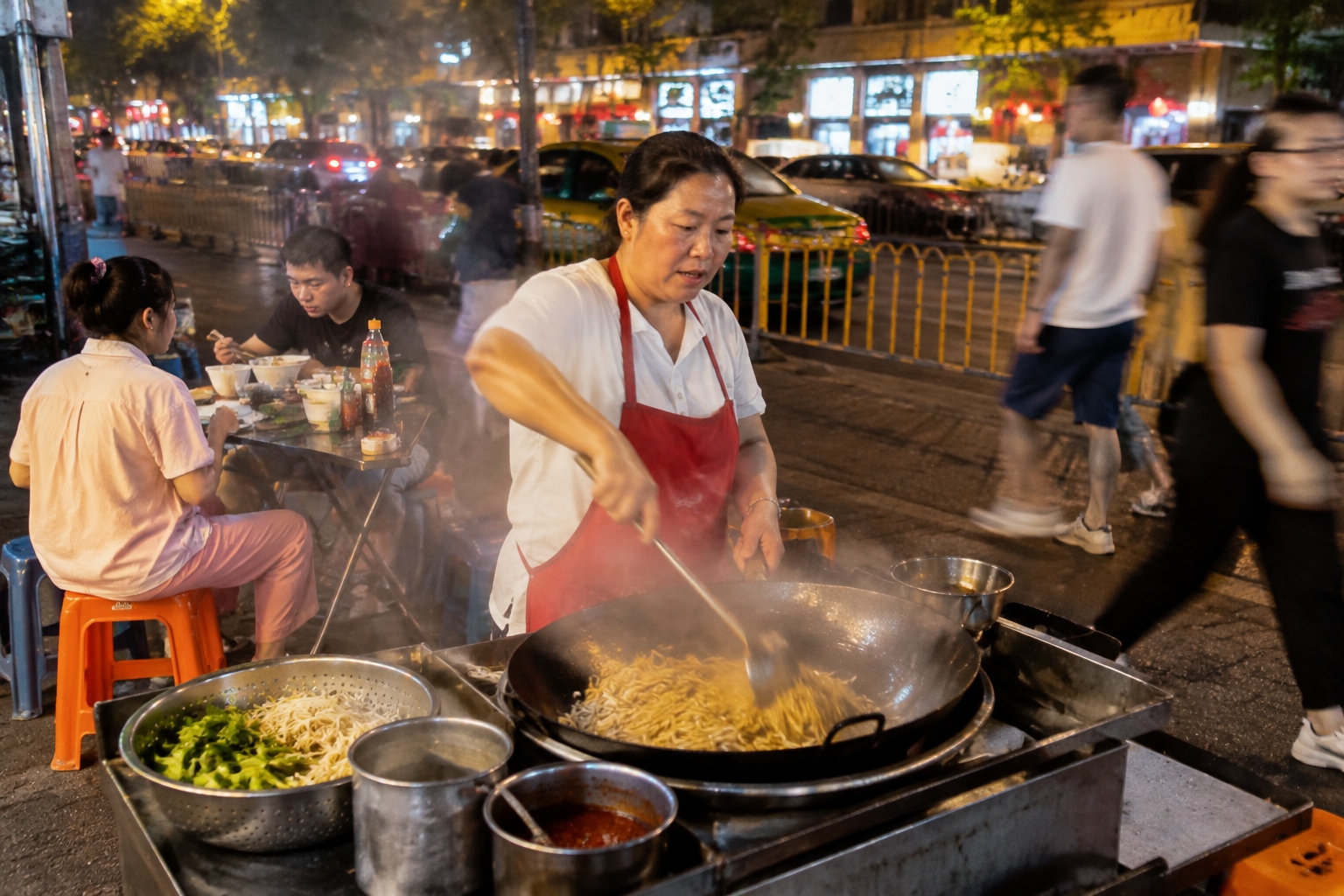
On a Thursday night, the sidewalk in front of the Taikoo Li shopping complex is still buzzing. Office workers, security guards, late-shift delivery riders, and a group of students who just missed the last subway all crowd around a small food cart near Chunxiu Road. “I don’t need a discussion to convince me to eat this — the noodles speak for themselves,” says Xiao Peng, 27, a social media manager, wiping a drop of chili oil off his phone screen.
Sanlitun is not just one place, but several. By day, it’s fashion and suits. By night, it breaks into dozens of small economic zones: bars, pizza places, convenience stores, but also street food corners where a full meal costs about 20 yuan (~$3). International visitors are often surprised by how accessible it is to eat at 3 a.m. — if you know where to look.
Who Eats at 3 a.m.? A Look at the Night-Time Crowd
Ask any late-night vendor who their customers are, and the answer is a cross-section of the city. Wang Ji, who has run a noodle cart in Sanlitun for seven years, waves his hand across the street as he speaks: “Couriers, office workers, a few foreigners, and sometimes—if they’re very hungry—bar security.” It is not just drunk club-goers craving hot food; it’s also the backbone of the city’s night shift economy.
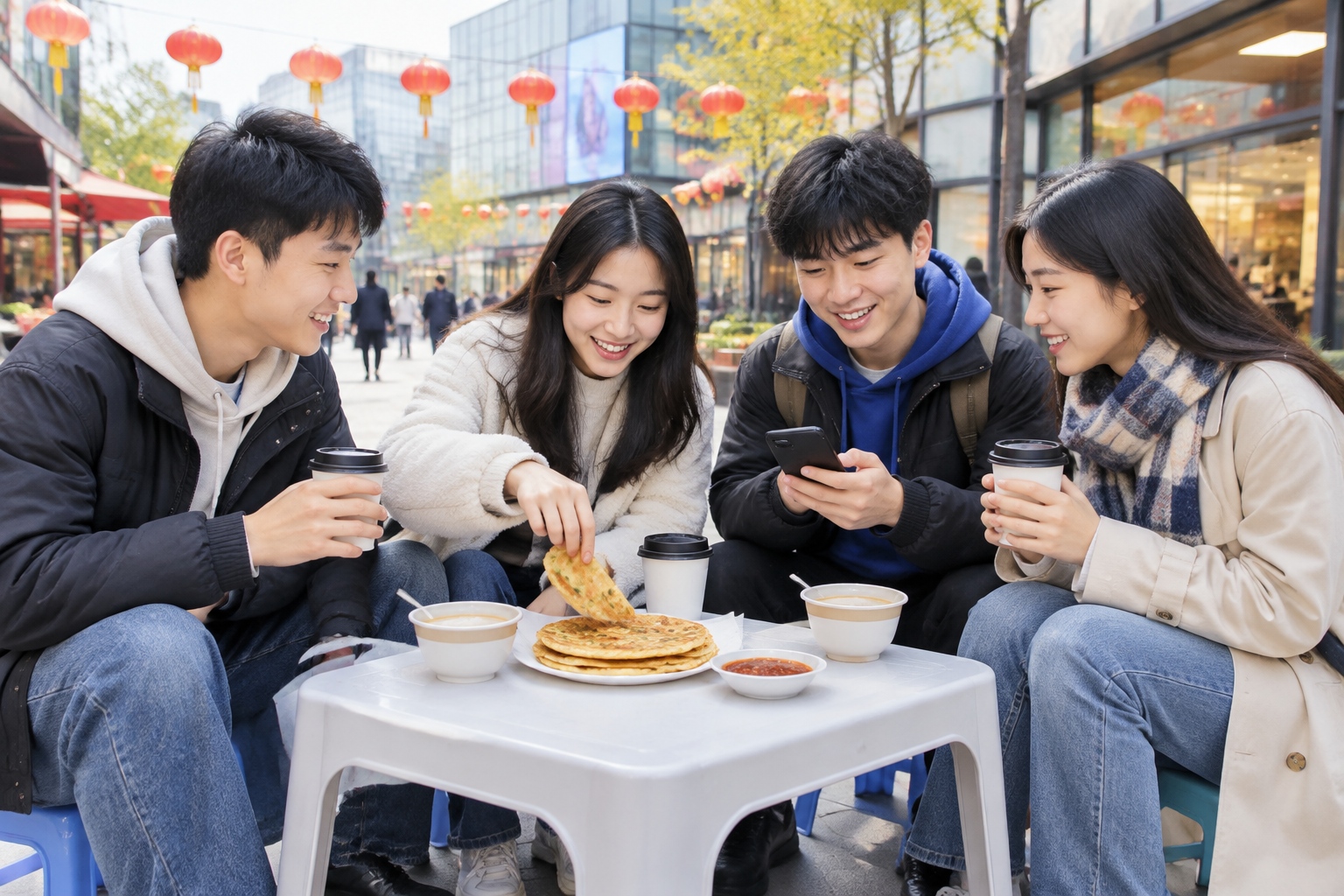
Students from nearby universities make up a chunk of the crowd, especially around midterm season. Jin Hao, 21, sits at a plastic table with two friends, sharing a plate of pork-stuffed jianbing crepes. “Our school closes at midnight, and the library is no fun after 10. So we walk here for a late supper,” he says. His words reflect a deeper shift: night-time food is not just a hunger fix, but a social glue.
Numbers Behind the Heat: China’s Night Economy by the Numbers
According to the Ministry of Commerce, over 60% of China’s total consumer activity takes place between 6 p.m. and 8 a.m. By 2024, cities as far apart as Shanghai and Chengdu launched official “night economy” policies to push the revival of public spaces. Beijing, of course, is not to be outdone: Sanlitun’s Chaoyang District released its own “nightlife development guidelines” last year, granting new licenses to street-food hawkers, which was previously a highly regulated gray area.
Make no mistake: the movement isn’t just about food. The night-time economy includes transport, entertainment, and even health services—like the 24-hour pharmacies and clinics that line the streets of Beijing, still glowing blue at 4 a.m. But for many, night food remains the most personal frontier of urban policy.