
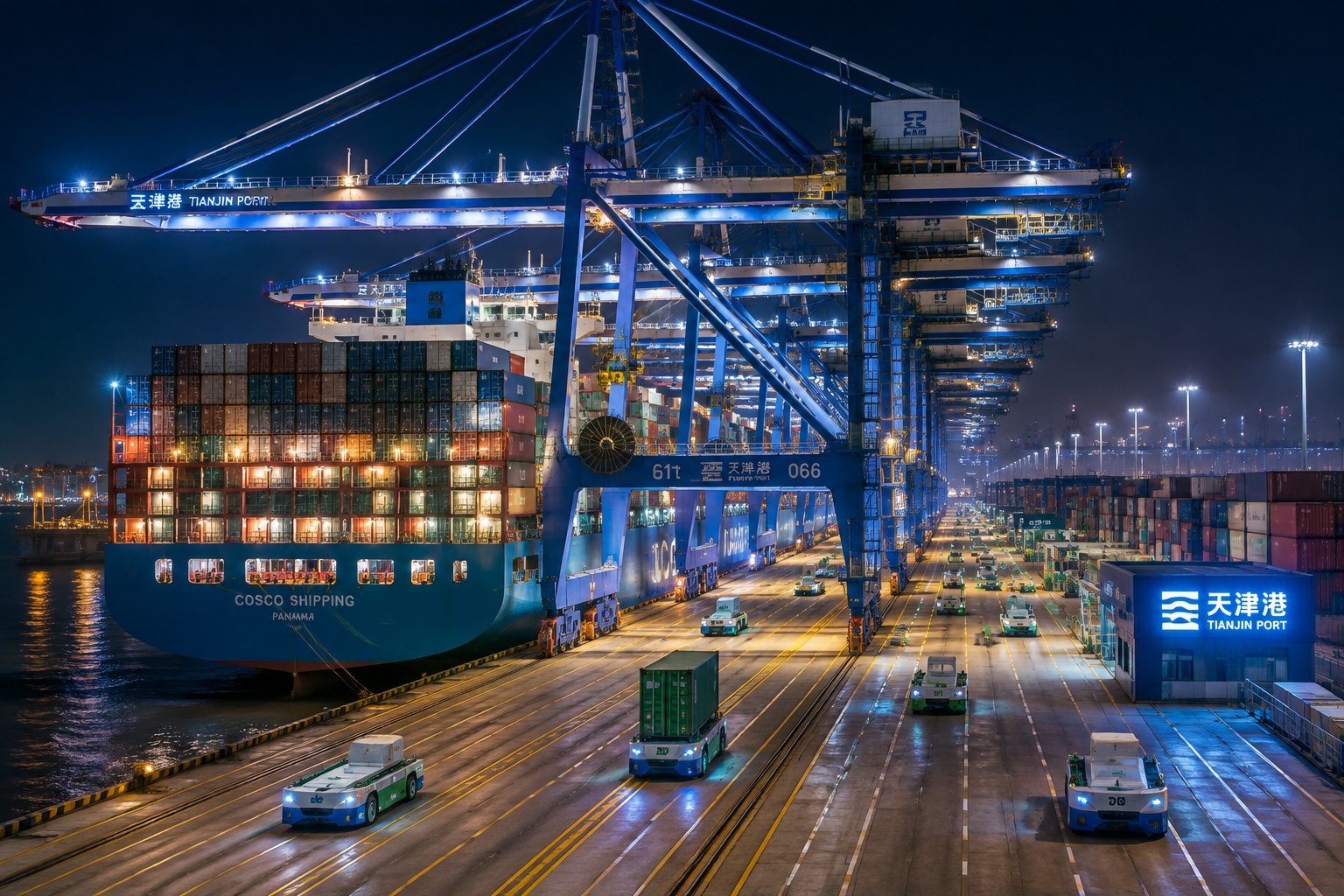

A Port That Never Sleeps
It’s 2 a.m. at Tianjin Port, one of China’s busiest seaports. The air is cold and salty. Huge floodlights turn the night into pale daylight. In the distance, gigantic crane arms move across the decks of container ships, lifting steel boxes one after another. But if you look closely, you’ll notice something surprising: those cranes have no drivers in their cabs. There’s no one on board at all.
This is one of the world’s largest automated container terminals, a place where machines handle the heavy lifting while humans monitor from a remote control center miles away. The operation is so smooth that it feels like a carefully rehearsed ballet, performed every night, without pause.
What Are These Unmanned Machines?
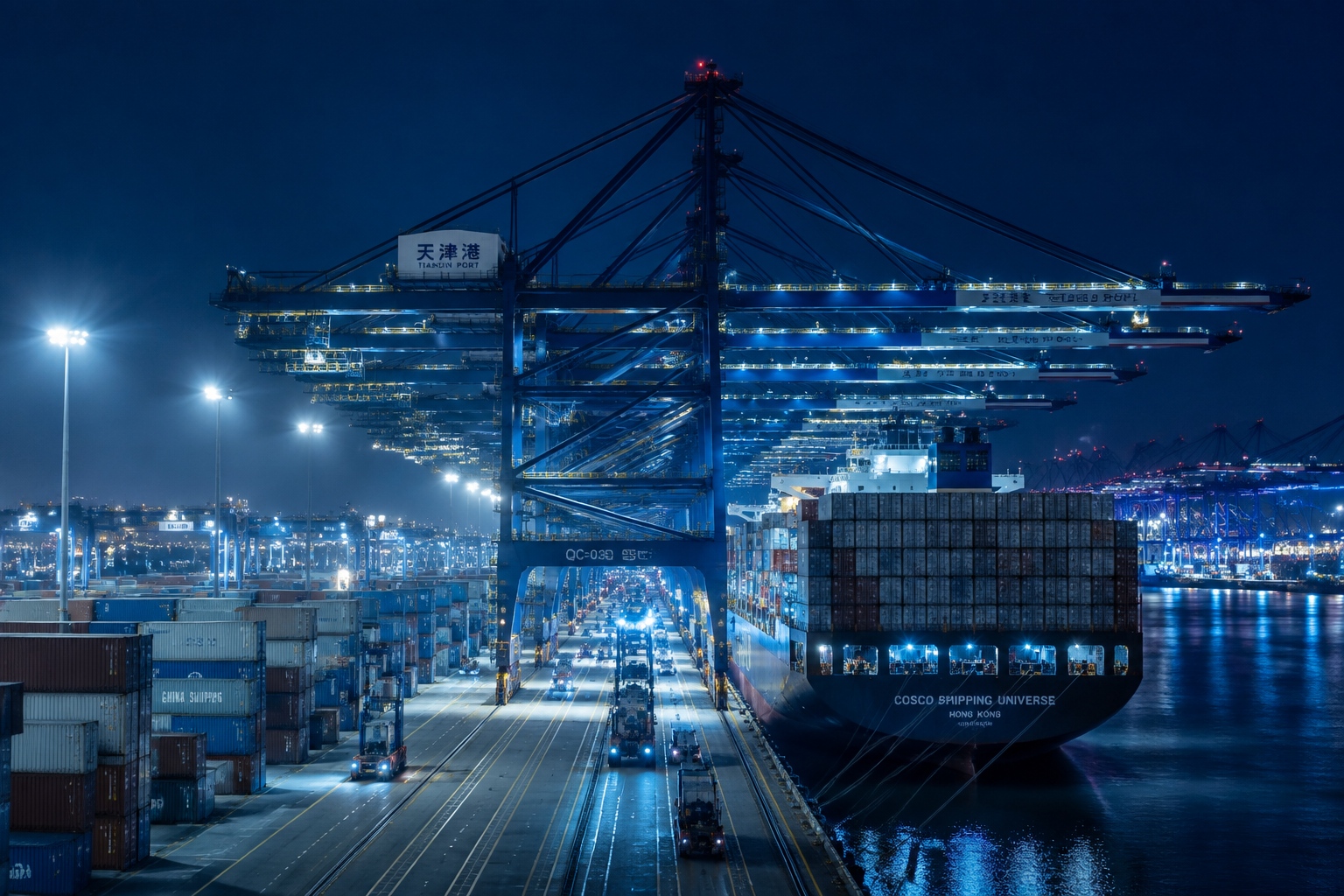
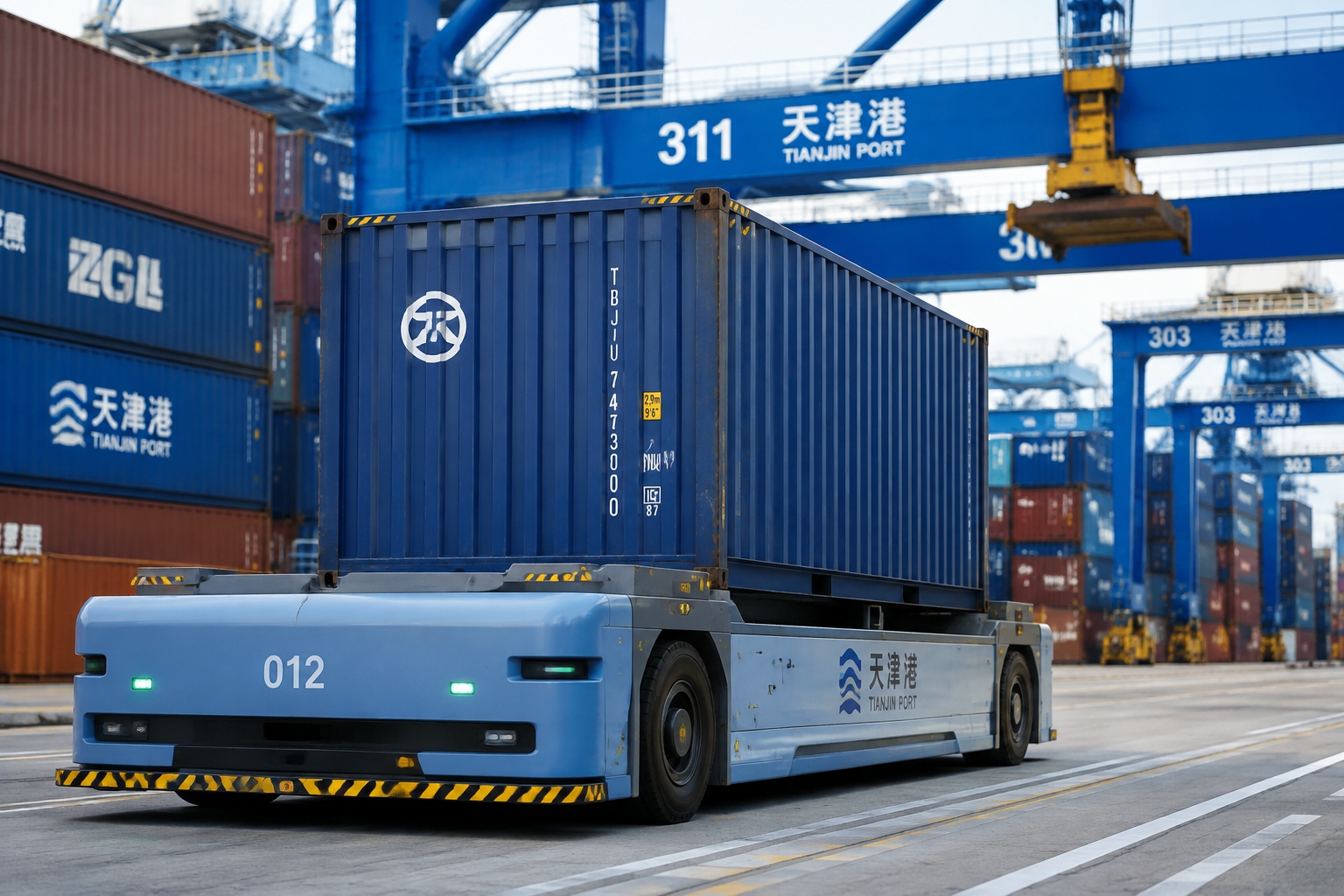
The “unmanned cranes” you see are actually two types of equipment working together: automated quayside cranes (the massive machines that lift containers off ships) and automated rail-mounted gantry cranes (which stack containers in the yard). Between them, a fleet of unmanned vehicles—often called AGVs (Automated Guided Vehicles)—carry the containers around the terminal.
These are not remote-controlled toys. Each crane is equipped with a suite of sensors, including laser radars, cameras, and GPS. They receive commands from a central computer system that plans every move, optimizes container placement, and synchronizes the entire operation. The terminal, which opened in 2021, has 12 automated quay cranes, 42 automated gantry cranes, and 76 unmanned vehicles. It was developed specifically for Tianjin Port, which is one of the first in the world to fully adopt such technology at this scale.
Why Tianjin? The port sits at the northern tip of the Grand Canal and serves the vast manufacturing and logistics hub of the Beijing-Tianjin-Hebei region. With over 22 million TEU (twenty-foot equivalent units) handled annually, efficiency is critical. Automated systems here can handle a ship in roughly 25% less time than a traditional terminal, and they work around the clock without breaks. The entire facility is powered by electricity generated from solar and wind sources, making it one of the first “zero-carbon” ports in the world.
How the Loading Process Works
Loading and unloading start long before the ship arrives. The port’s operations system receives the vessel’s stowage plan and generates a task list for each crane and vehicle. When the ship docks, the quayside crane swings into action. It lifts a container from the ship’s hold, moves it over the dock, and lowers it precisely onto an AGV waiting below. The AGV then follows a magnetic path or uses laser navigation to travel to the designated stack area. There, a rail-mounted gantry crane picks it up and places it in a pre-assigned spot.
The entire sequence is choreographed by algorithms. The system knows the destination of each container—whether it will be loaded onto a truck, a train, or a smaller feeder ship—and decides where it should be stored for quick access later. This is crucial because a single ship can carry over 20,000 containers, and each one must be tracked and moved exactly right. The terminal uses a 5G network supplied by Huawei to ensure near-instant communication between machines and the control center.
The Humans Behind the Machines
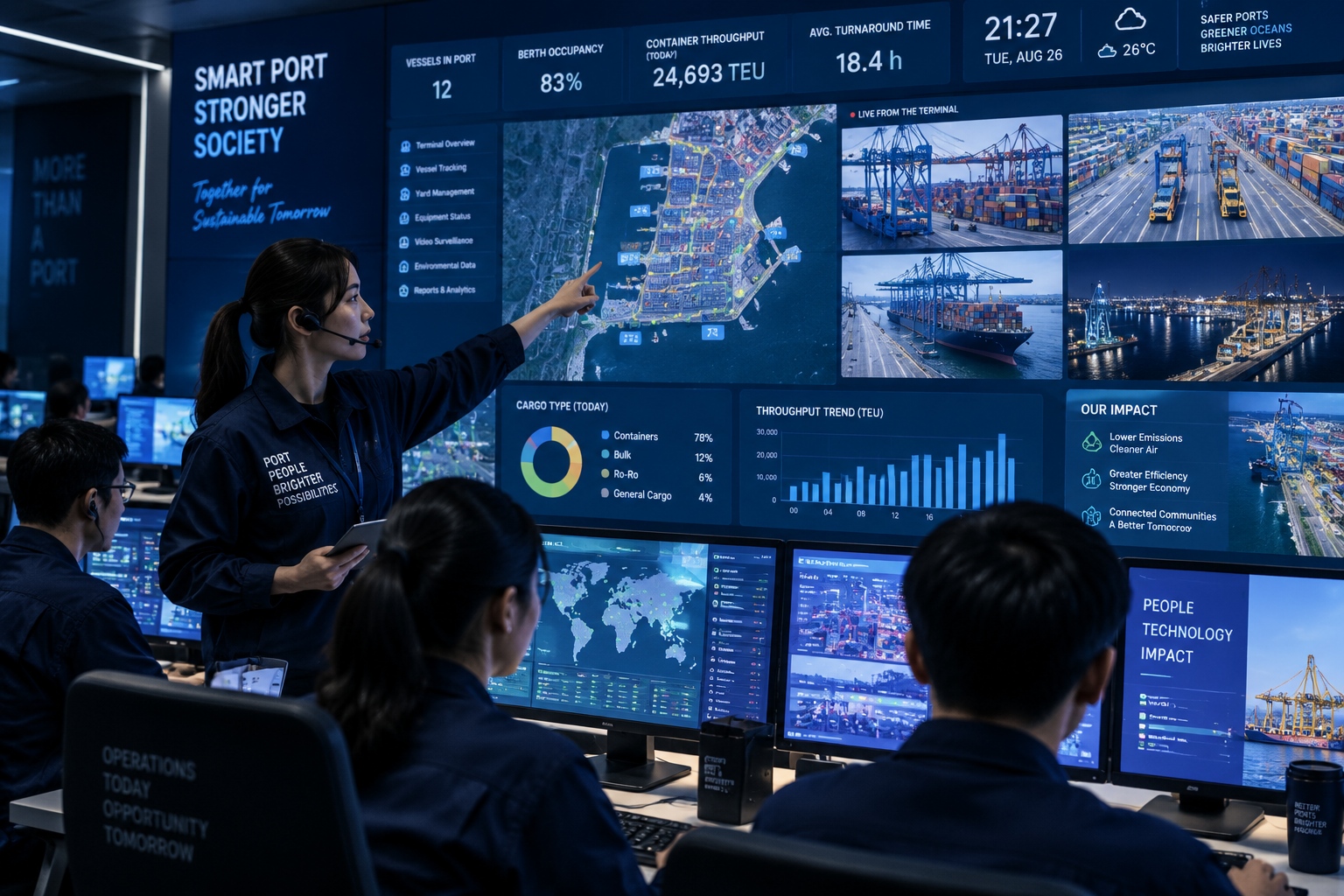
Despite all the automation, people are still part of the story. In a control room about 3 kilometers from the dock, a small team watches over the entire operation. Zhang Wei, a 30-year-old controller, has been working here since the terminal opened. He used to drive a crane himself in a traditional port. “Now I sit at a desk with eight screens,” he says. “My job is to monitor the automated system, step in if something unexpected happens, and solve problems remotely.”
Zhang and his colleagues are not alone. On the ground, there are still maintenance crews who walk among the machines, inspecting equipment and handling tasks that require a human hand. The port has also created new roles, such as algorithm engineers and cybersecurity specialists, many of whom are in their twenties and grew up with technology.
The shift from physical labor to digital oversight has changed workers’ lives. Instead of spending 10 hours a day in a vibrating crane cab, Zhang now works in a quiet, climate-controlled room. He has more time to study, and his salary has grown. “It’s a different job, but it’s a better one,” he says.
From the Port to Your Doorstep
What happens at Tianjin Port affects people thousands of miles away. When you buy a product from an overseas store, there’s a chance it came through a port like this. Faster loading means cheaper transport costs, which means lower prices for consumers. It also means fewer delays for goods like fresh food, electronics, and car parts.
The technology is also spreading. Chinese ports in Shanghai, Shenzhen, and Qingdao are adopting similar automated systems. Tianjin, however, remains a pioneer. Its model combines autonomy, zero emissions, and digital management in a way that few other places have matched. For developing countries, Tianjin Port offers a blueprint for building modern logistics hubs without replicating the outdated, labor-heavy processes of the past.
For local residents, the changes are visible too. The port’s expansion has created thousands of jobs, from technicians to engineers. Surrounding towns have grown into logistics centers, with warehouses and distribution networks serving the northern China market. The night sky over the port is no longer lit by burning coal ships but by clean electric lights and the occasional red drone making a security check.
The Next Morning
As dawn breaks, the pace at Tianjin Port does not slow down. The night shift hands over to the day crew, who continue the same rhythm. Ships arrive and depart on schedule, their cargo moving through a vast, intelligent web of steel and code.
Inside the control room, Zhang Wei logs off and walks to his car, ready to go home to his family. The cranes behind him never stop. They lift and lower, day after day, connecting China to the rest of the world, not with muscle, but with precision and intelligence.