
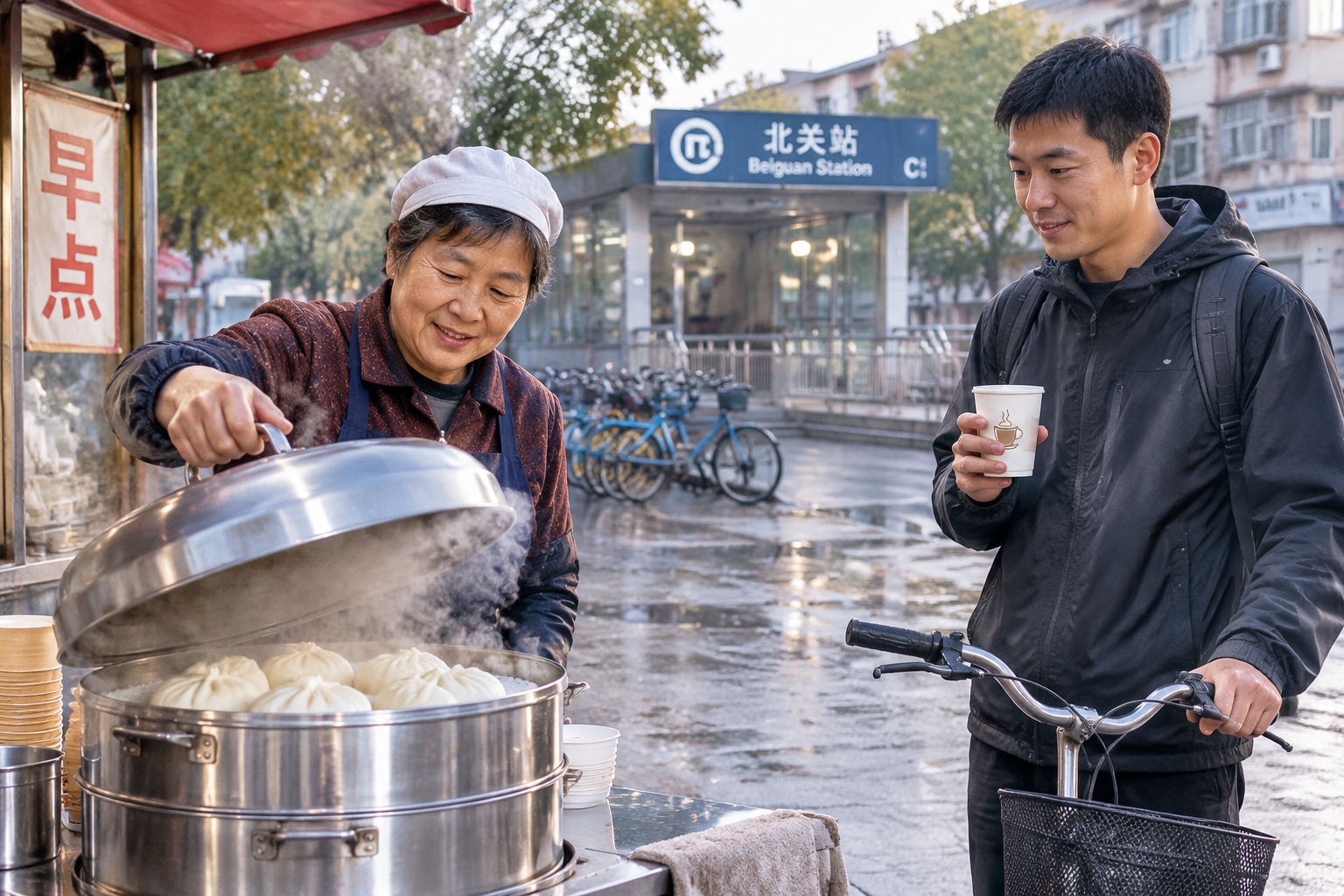

6:30 A.M. at Beiguan Station
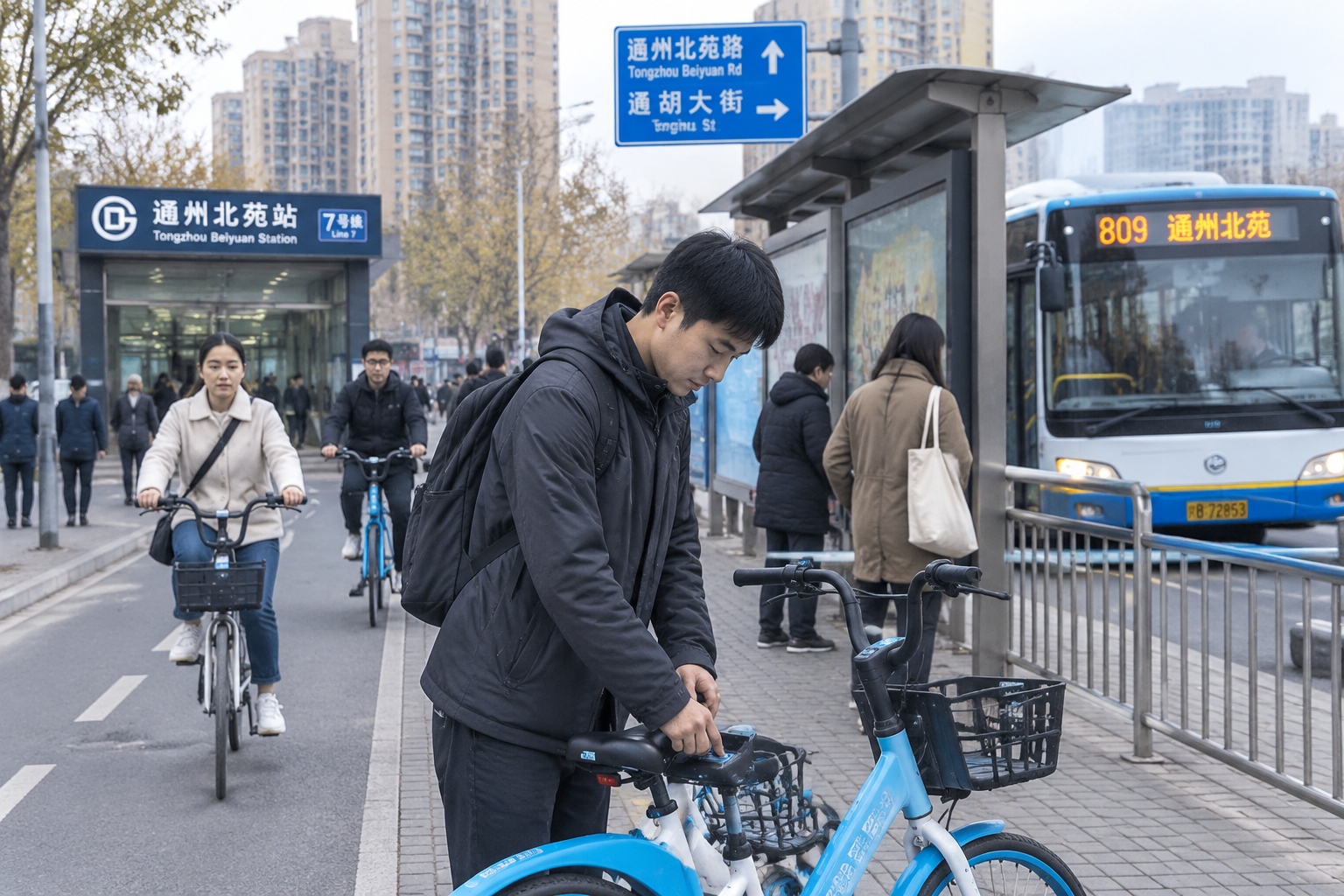
At 6:30 on a Tuesday, the corner near Beiguan Station smells of steamed buns and wet pavement. A woman in a dark blue apron lifts the lid from a stainless-steel steamer. A cyclist in a thin windbreaker brakes beside her, buys a soy milk, and checks his phone. Behind them, office workers come up from the subway in a steady stream, coats still creased from the train.
This is not the Beijing of postcards. There is no palace wall, no famous square, no tourist queue. It is an ordinary morning in Tongzhou, a district about 30 kilometers east of Tiananmen Square. And it is one of the best places to see what Beijing’s new administrative center actually feels like.
The phrase ‘sub-center’ can sound abstract. On the ground, it looks like this: a breakfast stall, a bike lane, a subway entrance, and thousands of people trying to arrive somewhere on time.
For decades, Beijing’s jobs, hospitals, universities, and government offices were concentrated in the historic center. The city kept building ring roads, but the rings filled up. In the 2010s, planners took a different approach: move a large share of the municipal government and its affiliated public services to Tongzhou, and build a second urban core around them.
This is not a move of the national government. China’s central ministries remain in central Beijing. The relocation is mainly about the Beijing city government: the agencies that manage transport, education, health, urban management, and many everyday rules that shape city life. Think of it as moving a big part of city hall, plus thousands of civil servants and support staff, about 20 miles east.
Tongzhou was not empty land. It already had old neighborhoods, markets, farms, and new apartment compounds. The first batch of municipal departments began moving into the new administrative office area in 2019. Since then, the district has gained new roads, schools, hospital branches, office parks, and a growing number of restaurants and coffee shops. The Grand Canal, once a working waterway, has become a long green edge for walking and cycling.
The Commuter’s Timetable
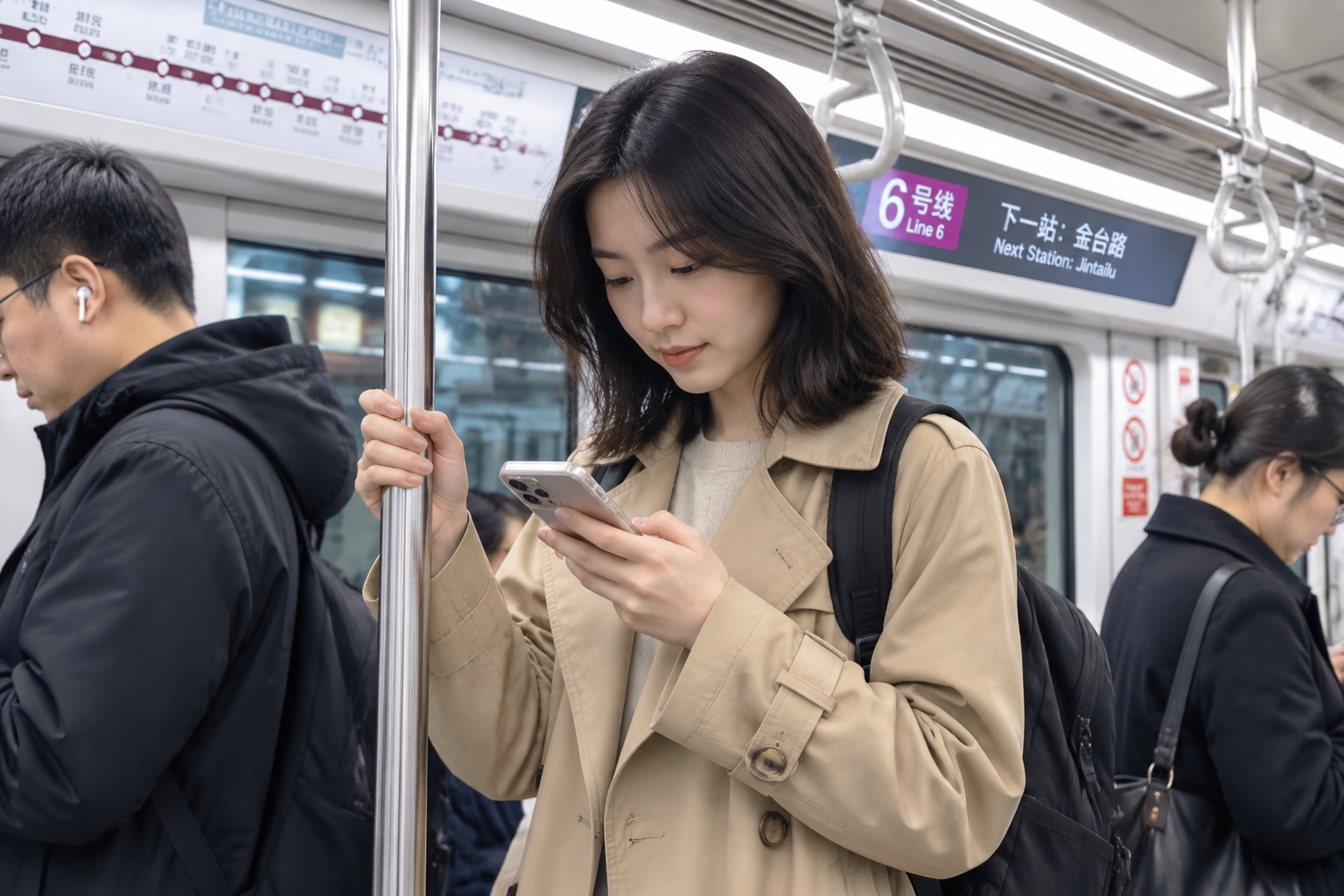
Chen Yu, 27, works for a marketing company near the Canal business district. She lives in Chaoyang, closer to central Beijing, and takes Line 6 east every morning. Her trip is about 45 minutes door to door: a ten-minute walk, a 30-minute train, and another short walk past a construction fence and a row of new cafes.
Line 6 is one of Beijing’s longest subway lines. At 7:20, the westbound platform is packed with people heading into central Beijing for work. Chen Yu rides the other way. Her train is less crowded, but not empty. It carries nurses, teachers, cleaners, delivery riders, and other people whose jobs have followed the city east.
‘People think everyone in Tongzhou sleeps here and leaves in the morning,’ she says. ‘But a lot of us now work here too. The difference is that the jobs arrived faster than the neighborhoods.’
Her commute is not expensive. A subway ride across several zones costs around 5 yuan, less than a dollar. The bigger cost is time. When she has an early meeting, she leaves home at 6:15. When she misses a train, the next one comes in two or three minutes, but the walk from the platform to the office adds another ten.
A Civil Servant’s New Routine
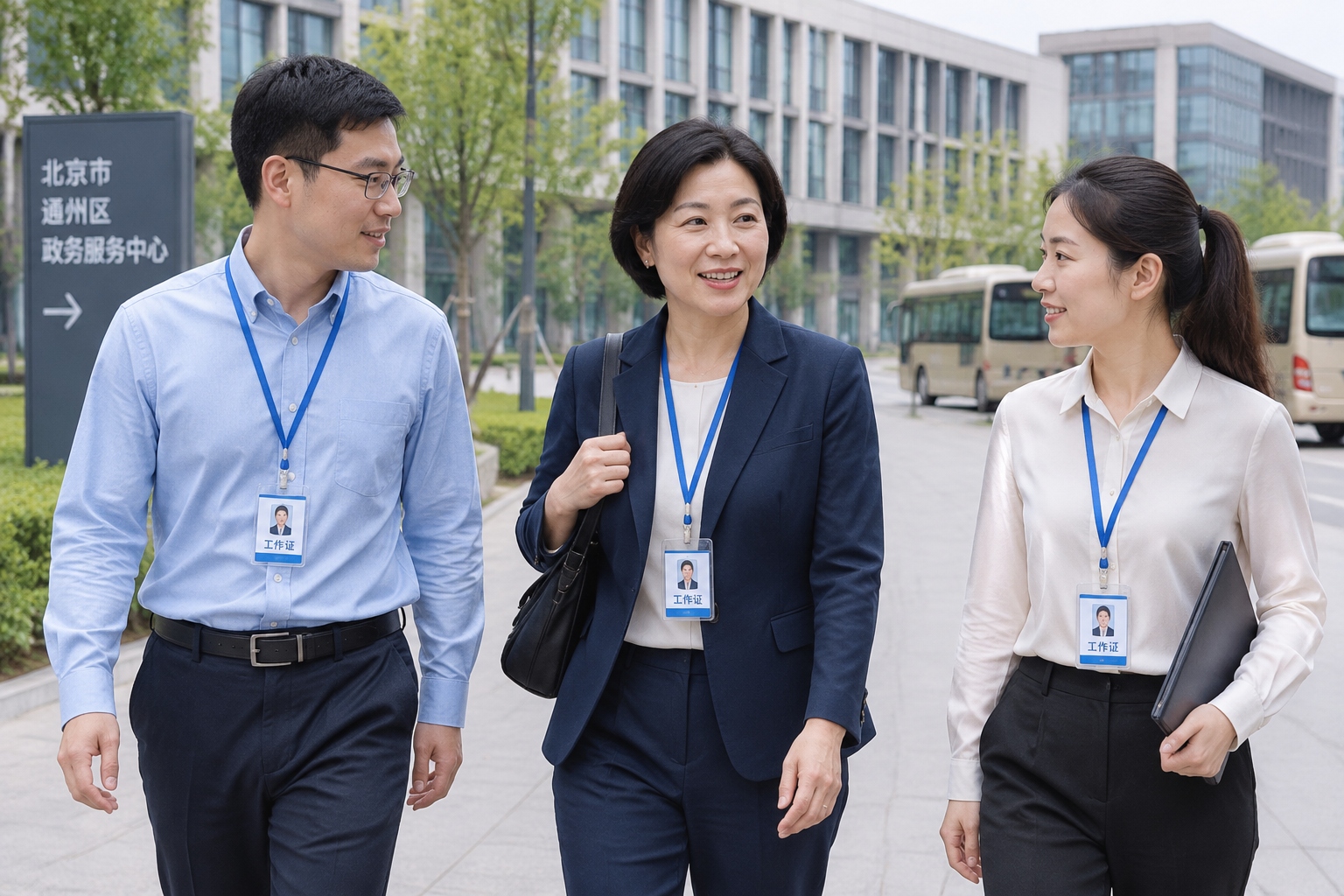
Zhao Na, 41, works for a municipal agency that moved to Tongzhou in 2020. She lives in an older apartment compound in Tongzhou with her husband and daughter. Before the move, her office was in central Beijing. Her commute was 25 minutes by bike. Now it is 50 minutes by bus and shuttle, even though she lives in the same district.
The new office area is designed like a campus. Buildings are low and spaced apart, with wide sidewalks and landscaped courtyards. Security checks slow the morning entry. Inside, there are canteens, meeting rooms, and a small shop. Lunch is cheap and fast, but the surrounding streets are still filling in. ‘At first we joked that we had a beautiful office and nowhere to go for coffee,’ she says. ‘Now there are more places, but it still feels quiet at night.’
Her family life has changed in small ways. She can leave work at 6 and be home before 7. Her daughter’s school is nearby, but the best-known schools still have long waiting lists. Her husband works in central Beijing and leaves before 6 a.m. They trade off school drop-off and pick-up. The administrative center gave her a shorter trip to the office, but not always a simpler day.
For Old Tongzhou, Change Arrives Street by Street
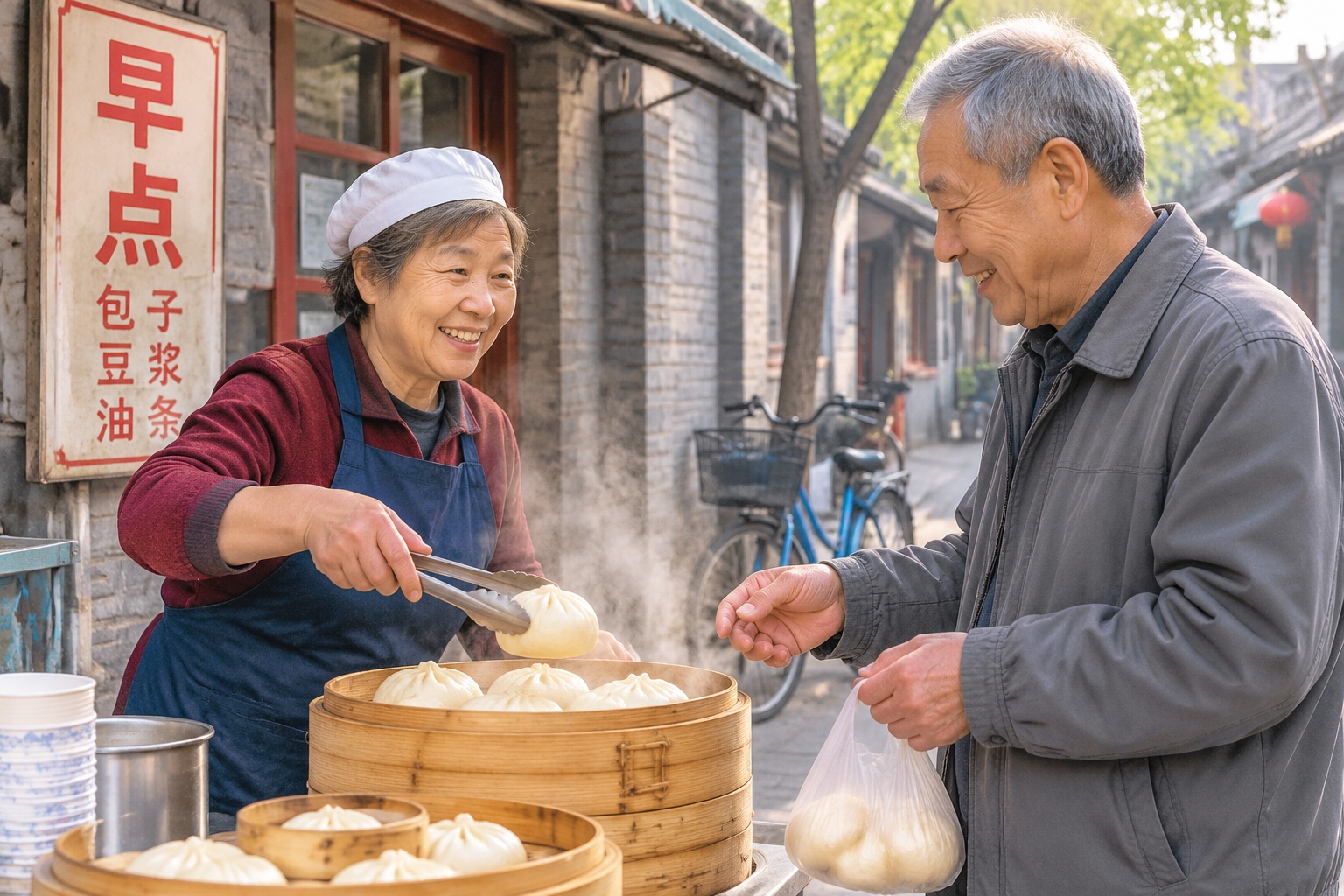
Auntie Ma, 58, has sold baozi and soy milk near Beiguan for more than a decade. She remembers when the subway entrance was smaller and the street was darker. Now the pavement is wider, the station is bigger, and her customers include more young people in office clothes. She has mixed feelings. ‘More people means more business,’ she says. ‘But the old neighbors are moving away. The rent for my stall went up.’
Longtime residents point to real improvements: a new hospital branch, renovated parks, cleaner streets, and better bus connections. They also point to the gaps. In older neighborhoods, parking is tight, buildings lack elevators, and some community clinics are still small. A new shopping mall can open in a year, but a good neighborhood clinic or a reliable after-school program takes longer to settle in.
Morning by the Canal
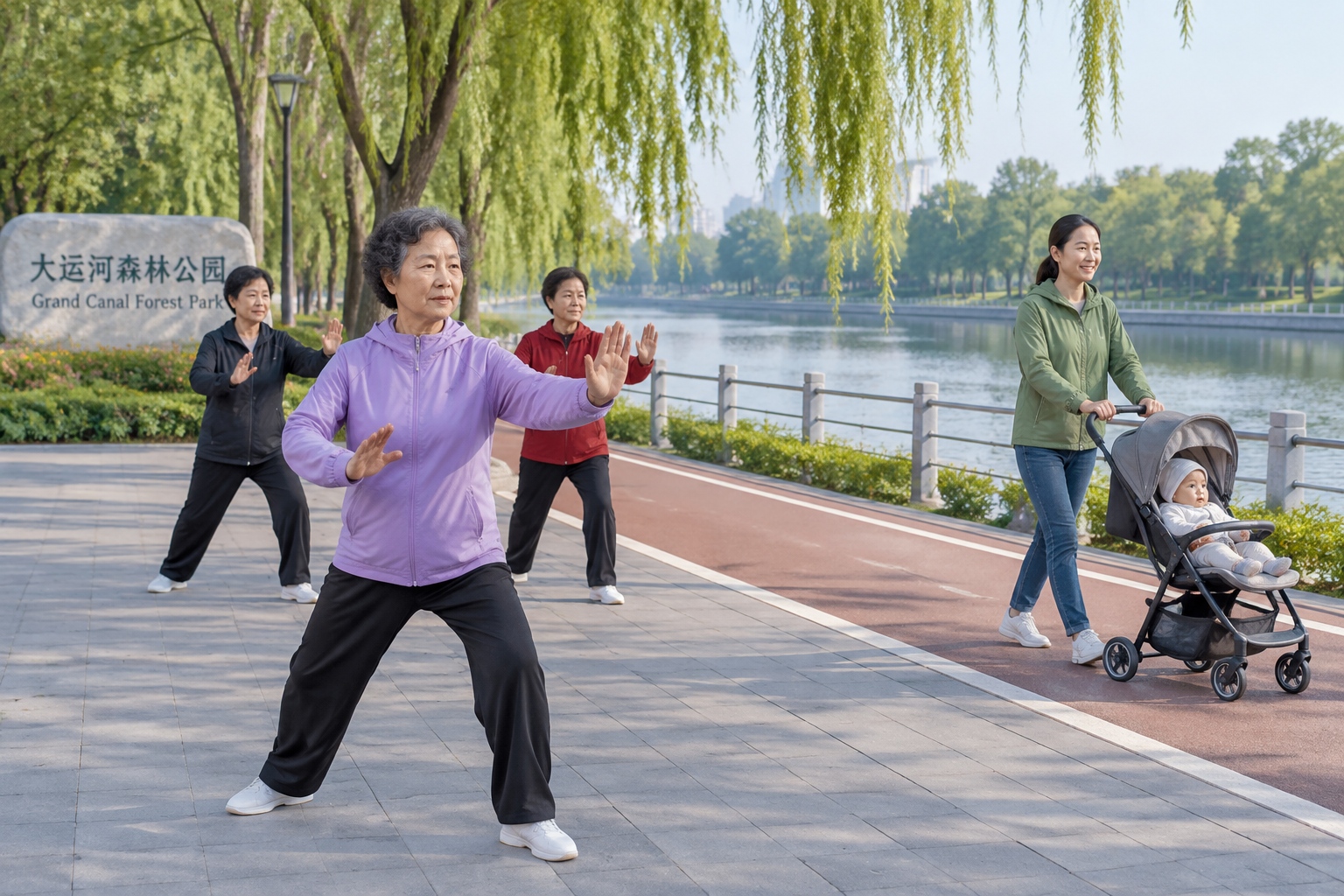
By 8 a.m., the Grand Canal Forest Park is already busy. A group of retirees practice tai chi under the trees. A woman pushes a stroller along the greenway. Two men in cycling gear stop for water. The canal is wide and calm, and the path along it is one of the few places in eastern Beijing where you can walk for an hour without crossing a major road.
This is the softer side of the sub-center. The park is not a theme park or a monument. It is a piece of public space that makes daily life more livable: a place to run before work, to take a child after nursery, or to sit with a thermos and watch the water. On weekends, families come from other districts. On weekday mornings, it belongs mostly to local residents.
The Hard Parts
The sub-center has not solved all of Beijing’s urban problems. Jobs and housing are still not fully balanced. Many people who live in Tongzhou still commute west to central Beijing, and many who work in the new administrative area still live closer to the center. That creates a two-way rush hour: trains packed in both directions, roads crowded near schools and office gates.
Housing is another pressure point. Rents near subway stations have risen. New apartments are often larger and more expensive than the old housing stock. In older neighborhoods, residents want elevators, parking, and better maintenance. The city has programs for renovation, but they move building by building, not overnight.
Public services are catching up. New schools and hospital branches have opened, but reputations take time to build. A parent may still choose a long commute to a familiar school rather than a new one closer to home. A patient may still go to a central hospital for a complex diagnosis. These choices are rational, and they show why a new administrative center is not just a construction project. It is a slow transfer of trust.
What the Morning Shows
The best way to judge the sub-center is not to look at the skyline. It is to look at the timetable. Can a civil servant pick up her child without missing a meeting? Can a nurse afford to live near the hospital? Can a breakfast vendor keep her regulars? Can a cyclist ride to the station without dodging cars? These are small questions, but they decide whether a new center becomes a real part of the city.
At 8:30, the rush at Beiguan Station fades. Auntie Ma wipes down her counter. The cyclists lock their bikes and disappear into office buildings. The canal path empties, except for a few walkers and a man practicing trumpet under a bridge. Tongzhou is still growing into its new role. The signs are not only in the government buildings. They are in the breakfast steam, the crowded train, and the quiet morning water.