

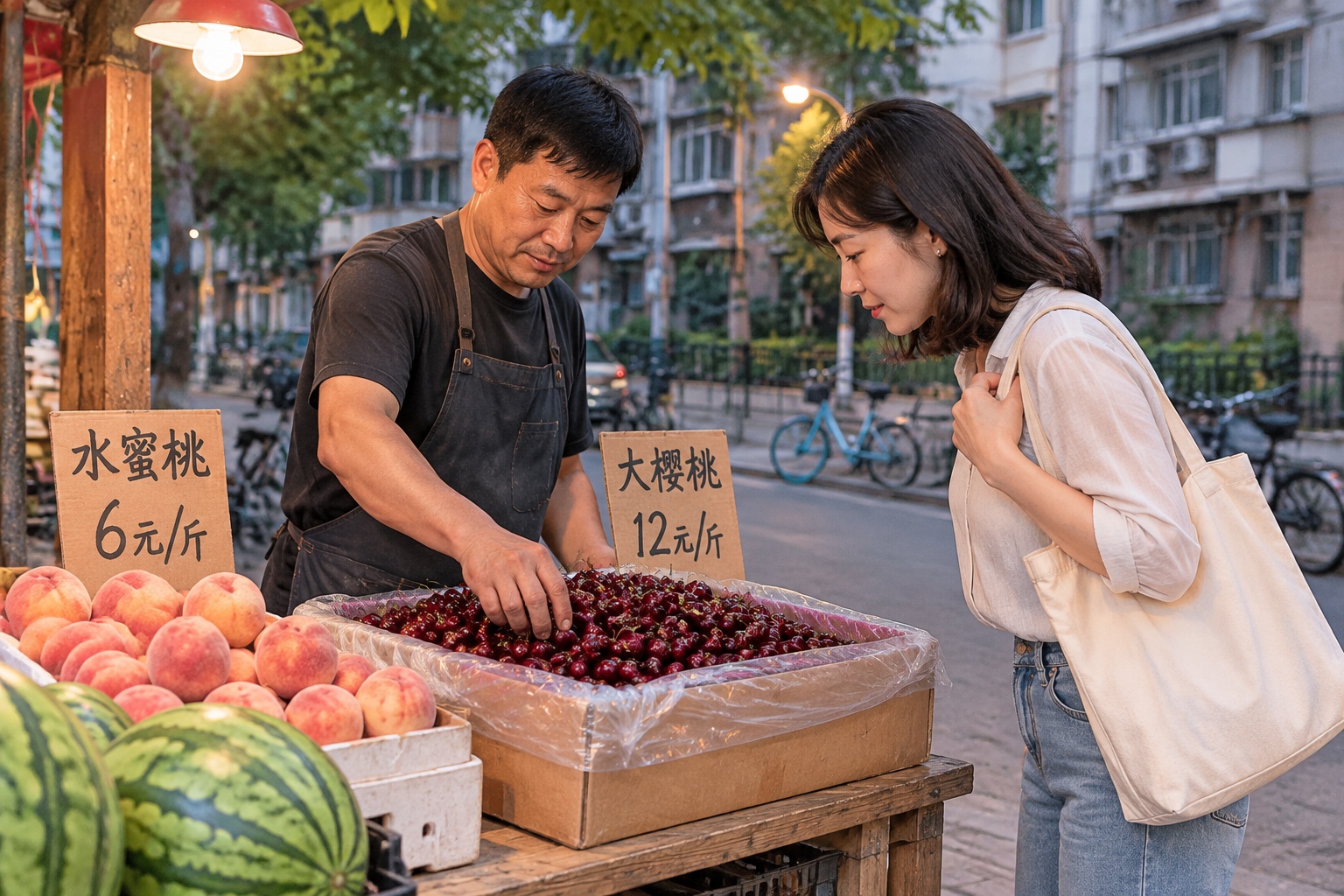
A plastic crate on a Beijing pavement
At six in the evening in early June, a fruit stall on a side street in eastern Beijing sets out the first crate of the season. The cherries are dark, almost purple-red, packed shoulder to shoulder in a cardboard box lined with plastic. A hand-written sign says 25 yuan a jin — half a kilo, about $3.50.
A woman on her way home from work stops and asks the question Chinese shoppers ask about almost every fruit: “Where are they from?” The vendor wipes his hands on his apron and gives a two-word answer: “Dalian.”
That is enough. For the next six weeks, Dalian — the biggest city on the Liaodong Peninsula in southern Liaoning province — functions as a quality label at fruit stalls and supermarket chillers from Shanghai to Chengdu. People will pay a few yuan more for it, the same way some shoppers abroad will pay more for a named region of produce. In China, cherries from the Liaodong Peninsula have become that kind of name.
The season is short. Greenhouse cherries start in April, open-field cherries land in late May and are mostly gone by early July. That brevity is part of the appeal: cherries are one of the few fruits in China that still feel like an event rather than a year-round fixture.
Why this peninsula, and why these cherries
The Liaodong Peninsula is a narrow finger of land that reaches south between the Bohai Sea and the Yellow Sea, ending at Dalian. It sits at roughly 39 degrees north — the latitude of Lisbon or Naples — but the resemblance stops there. Winters are properly cold, summers are cooled by sea wind, and spring arrives late and slowly, which is exactly what a cherry tree wants.
Cherries need a cold winter to break dormancy, then a long, mild ripening period without late frost. The peninsula’s maritime climate delivers both. Summer days are warm but not scorching, and nights stay cool, so the fruit ripens slowly and builds up sugar instead of swelling with water. The hilly ground drains well, which matters because cherry trees hate wet feet.
The result is a cherry that is firm enough to snap when you bite it, sweet with a faint almond edge from the pit, and juicy without turning to mush in the bag. Local growers talk about “the taste of the peninsula” the way wine people talk about terroir, and while that is partly marketing, the physical differences are real. Ripening two to three weeks later than cherries from Shandong, further south along the coast, also helps: they arrive when the market has already emptied the earlier crop.
Five in the morning in the orchard
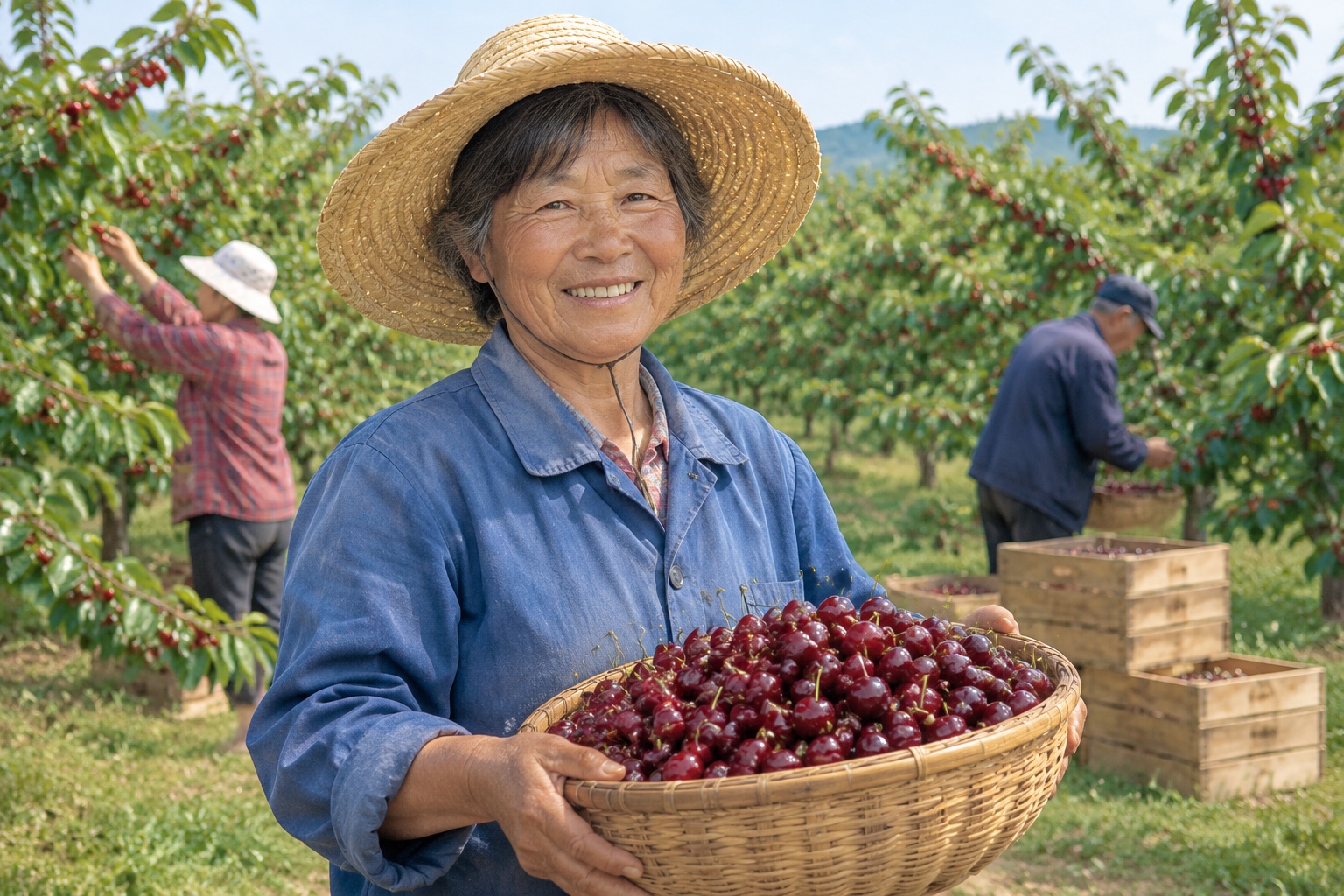
Wang Guilan, 52, farms about 0.8 hectares of cherries in a village in Jinzhou district, on the edge of Dalian. On a harvest morning she is in the orchard before five, wearing a faded blue work jacket and a straw hat, with a shallow basket hooked over one arm.
Picking is delicate work. Every cherry is taken with its stem attached, because a fruit without a stem is a fruit that will bruise and rot on the truck. Pickers work with both hands, dropping cherries into baskets that hold three or four kilos, then carry them down to the packing shed themselves rather than risk a full basket on a ladder.
Nothing about the harvest is evenly paced. A single tree ripens over two weeks and is picked three or four times. Rain is the enemy — a wet spell in June can split the fruit open on the branch — so when a storm is forecast, picking continues after dark under headlamps.
Plastic tunnels and open sky
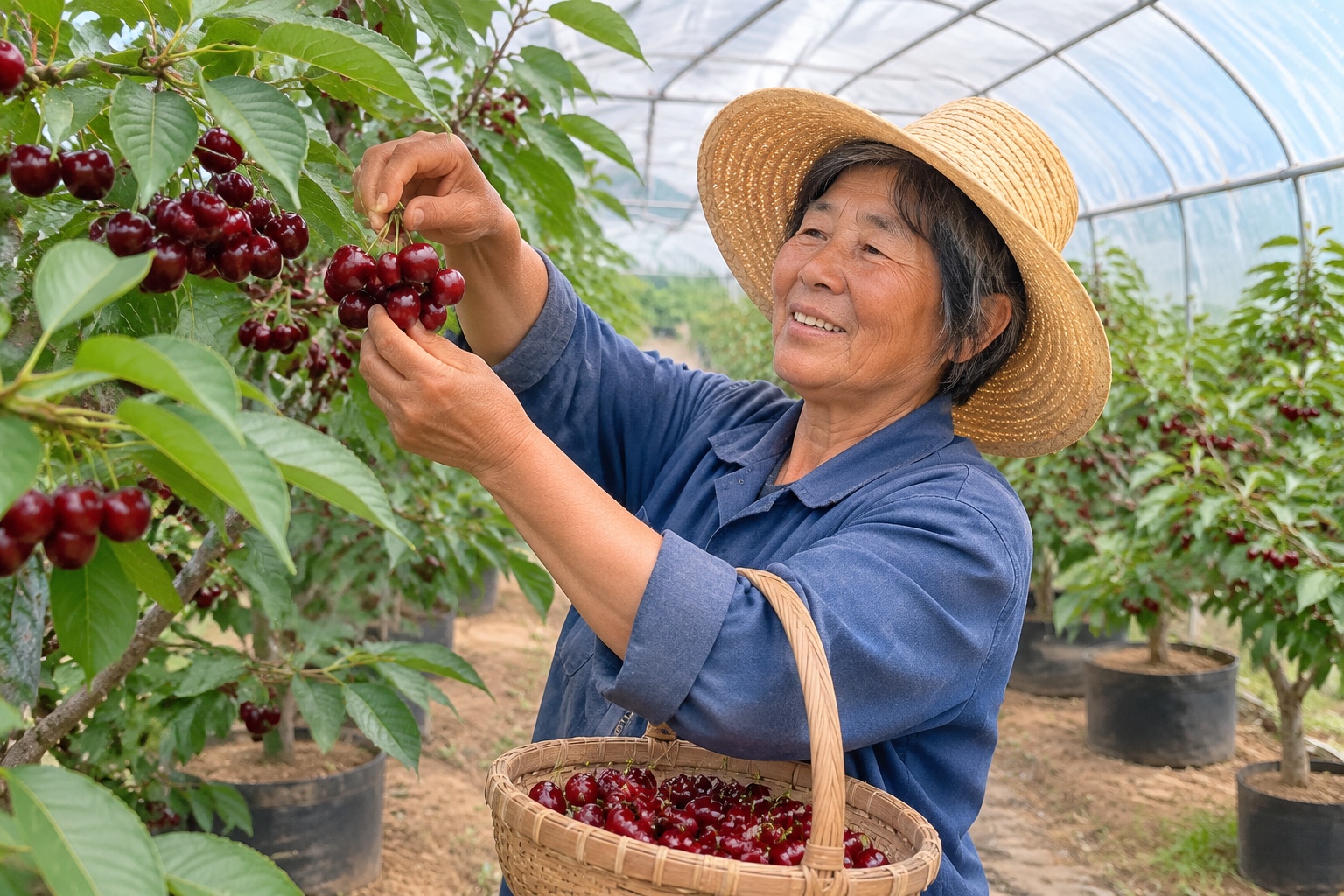
Wang grows both kinds of cherries. Under plastic tunnels, trees flower earlier and fruit ripens from mid-April, selling for two or three times the open-field price. Out in the open, the harvest runs from late May into early July. The varieties have names that mean little outside China — Meizao, Hongdeng, Summit, Russian No. 8 — but they split into a simple logic: early ones for high prices, later ones for volume and flavour.
From the branch to the shelf in 24 hours
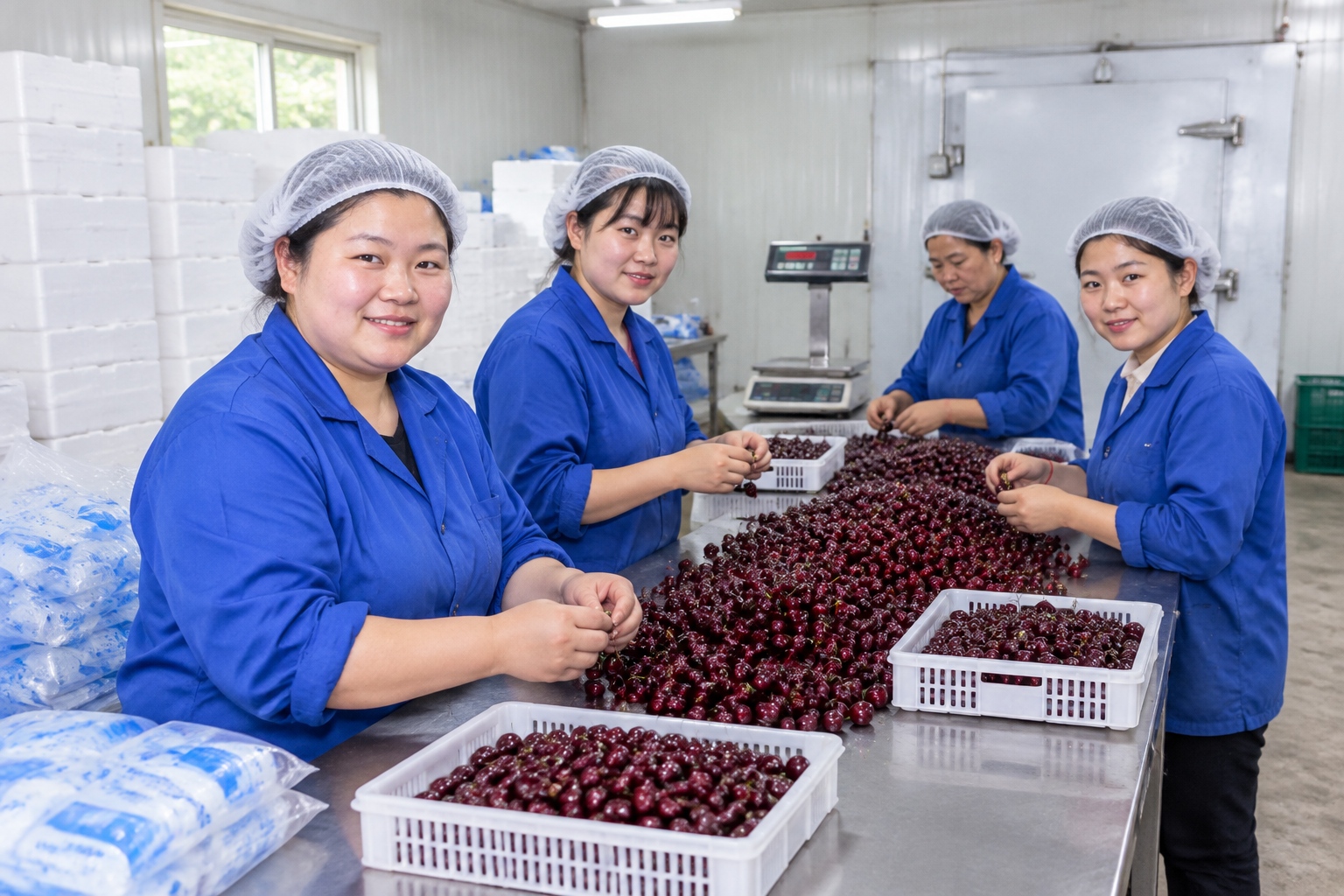
The journey from that orchard to the Beijing stall is now strikingly fast. Cherries picked at dawn are cooled the same morning, either in cold water or with forced-air units, because dropping the fruit’s temperature quickly is the single biggest factor in shelf life. Then they are graded by size and colour, packed in foam boxes with ice packs, and trucked to Dalian airport.
From there they fly to Beijing, Shanghai, Guangzhou or Shenzhen. Most reach a wholesale market within a day and a fruit stall within 36 hours. Some travel by high-speed rail instead, in dedicated cold-chain carriages that leave in the evening and arrive before dawn. All of this is why a fruit that bruises if you look at it wrong can now be sold 1,500 kilometres from the tree.
E-commerce changed the other half of the equation. Boxes of Liaodong Peninsula cherries are sold weeks in advance on group-buying platforms, shipped direct from packhouses, and marketed in livestreams filmed inside the orchard itself, with a farmer holding up a cherry to the camera and biting into it.
Why the price moves so much
Cherry prices in China swing wildly, and the pattern is fairly easy to explain. In the first week of the greenhouse season, a jin can cost 80 to 120 yuan. By mid-June, when open-field fruit floods in, the same weight might cost 12 to 20 yuan at a neighbourhood stall. Same fruit, same region, one month apart.
For ordinary families, that shapes how they eat. Nobody buys cherries in April except as a gift or a treat. In June, people buy two or three kilos at a time, share a box with neighbours, or bring a bag to the office. Cherry boxes also function as a social object — a decent box is a common gift for a teacher, a colleague or a relative during the season, and the packaging is designed with that in mind.
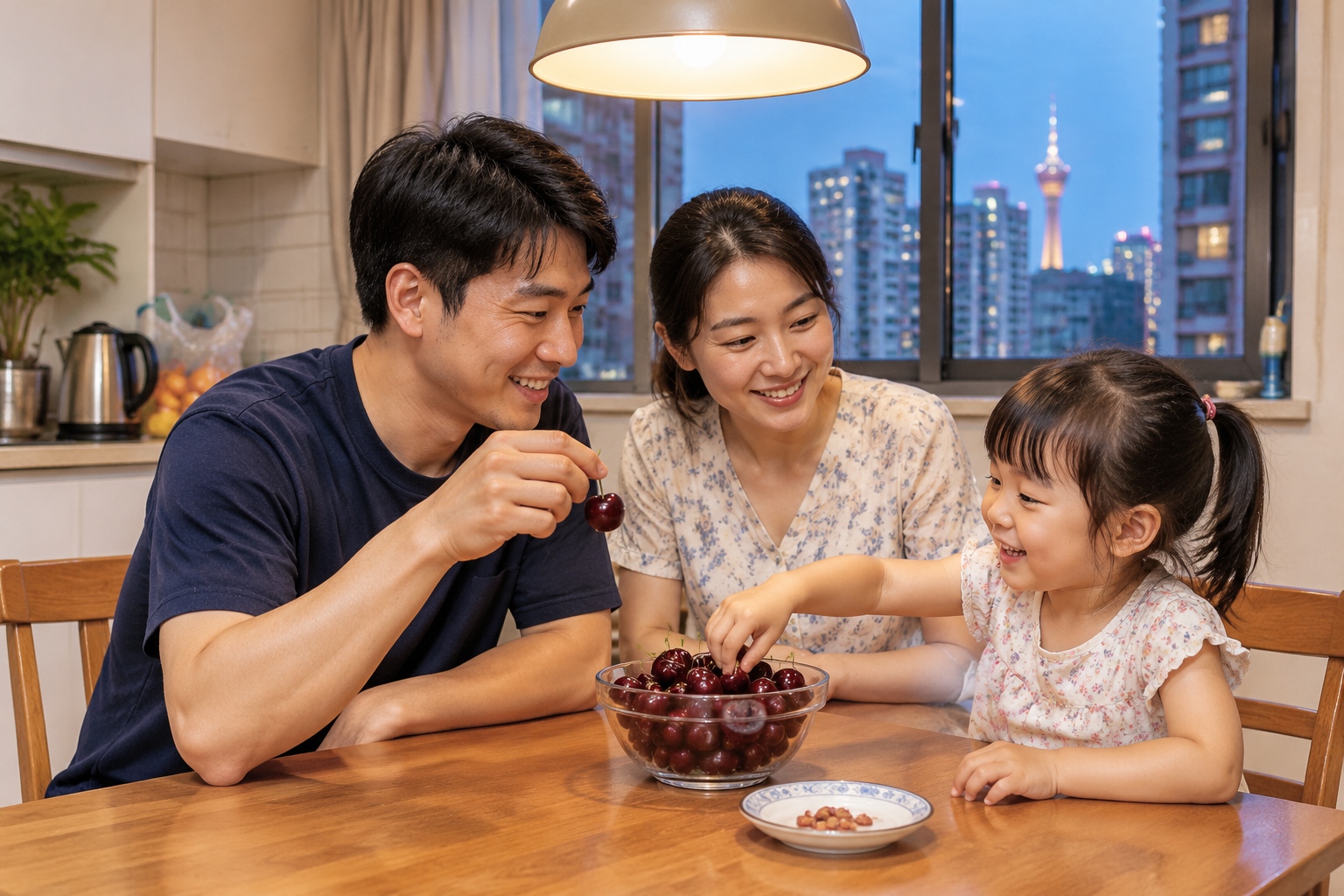
Younger shoppers have added a new layer. Photographs of cherries in a glass bowl, or a hand holding one against a sunset, are a small seasonal ritual on social platforms, along with comparisons of this year’s price with last year’s. The fruit is ordinary; the ritual is what makes it feel like summer has started.
What changed in the village
Wang remembers when cherries were a local fruit sold by the roadside. Twenty years ago, a good year meant a trader from the city drove out and offered whatever he wanted; a bad year meant fruit rotting in baskets.
Three things shifted. Cold storage and packing facilities moved closer to the orchards, so fruit no longer has to leave the same day. Online sales cut out some of the middle layers, and growers who never learned to sell now run accounts with a few thousand steady customers. And picking tourism arrived: in June, families drive out from Dalian city at weekends, pay an entrance fee, and eat cherries off the tree.
The change is visible in the village itself — better roads, new houses, more cars. It is also uneven. Good land, a good variety and a good online account can make a comfortable living; a small plot on poor ground with no cold storage is a much harder business. Seasonal pickers, many of them from surrounding counties, are paid by the day and carry most of the physical strain of the harvest.
The taste of an ordinary summer
What makes the Liaodong Peninsula cherry interesting is not that it is exotic. It is that it is completely ordinary. For six weeks a year, a fruit grown on a cold peninsula in northeast China moves through greenhouses, packing sheds, airports and wholesale markets to end up in a plastic bag on a kitchen table, where someone spits the pits into their hand and reaches for another.
Ask people in Beijing or Shanghai why they buy them and they will not talk about climate or cold chains. They will say they are sweet, they are in season, and they are from Dalian. That short chain of reasoning — a place name that means something at a fruit stall — is probably the clearest sign that a local speciality has made it.