
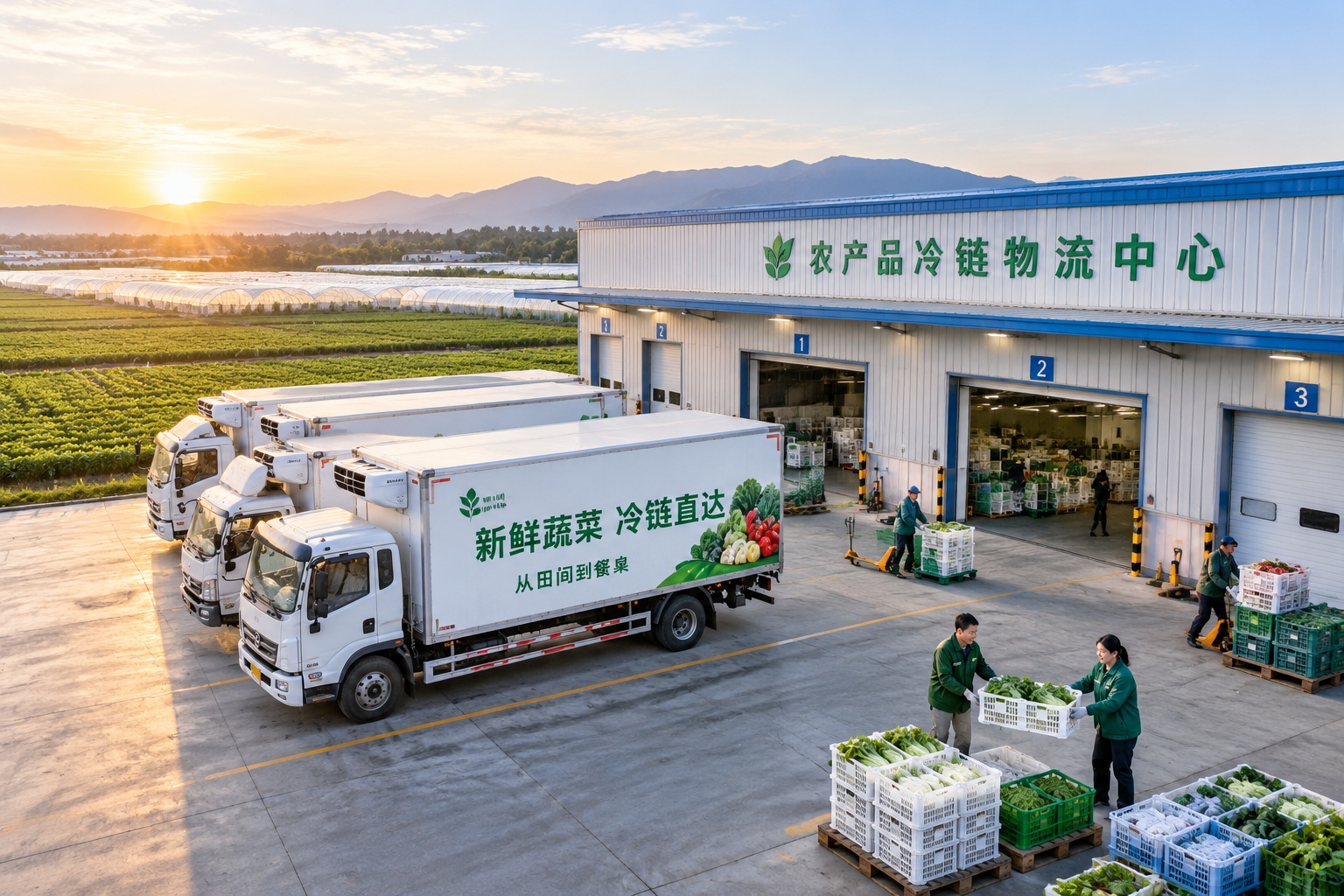

One Tomato’s 1,000-Kilometer Trip
At 6:30 a.m. in Shanghai, 27-year-old Chen Lin taps her phone, selects a bunch of pak choi, a pack of pork slices, and two tomatoes. The app promises delivery within 40 minutes. When the courier arrives at her door before breakfast is ready, the tomatoes are still cool from the ventilated box. Chen Lin probably doesn’t think about how they got there. But the answer to that simple question involves more rural greenhouses, highway trucks, and refrigerated warehouses than almost anything else in China.
Why Moving Food in China Is So Hard
China must feed about 1.4 billion people on around 9 percent of the world’s arable land. These people are spread across a country larger than the United States — but their cities are far from many of the food-growing areas. Rice is usually grown in the south and the northeast; wheat in the northern plains; vegetables in Shandong, Henan, Yunnan and Hainan; pork is concentrated in a few land-rich provinces. To get a varied meal into an apartment in Shanghai or Xi’an, the food system must move huge volumes over massive distances before it spoils.
The solution that has taken shape over the past 20 years is a combination of hard infrastructure and digital logistics.
Greenhouse to Warehouse
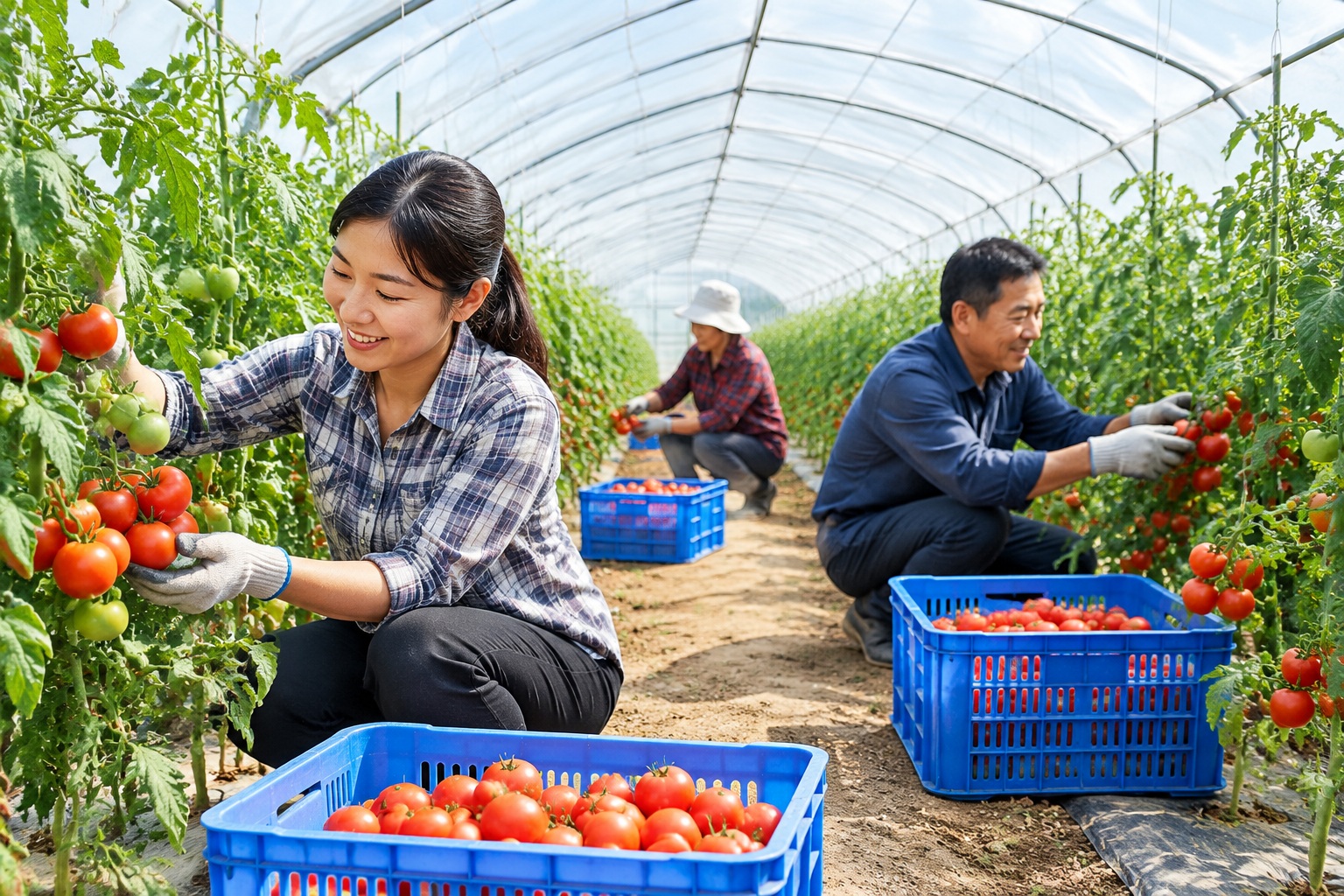
Let’s zoom in on the tomato on Chen Lin’s table. Probably born in a greenhouse in Shouguang, Shandong Province — a city that produces more vegetables than almost anywhere else in China. A typical cooperative greenhouse is long and curved, with transparent plastic stretched over steel frames. Inside, rows of tomato plants are tied to strings hanging from the ceiling. The grower usually checks soil moisture not with a pitchfork, but with a simple sensor app on his smartphone. Temperature, humidity and CO2 data are collected automatically.
When tomatoes reach the right color, workers pick them before sunrise, when the heat is low. They send them down a sliding rail to a packing shed steps away. The packed boxes are moved into a pre-cooling room, where they stay until the core temperature drops from about 28°C to below 10°C. This step matters more than the truck itself. In China’s warm south, if you don’t pre-cool quickly, the vegetable loses water and sugars on the road. The same process happens in a modern facility for pork or for fish: an early step that no one celebrates but without which food arrives limp.
The Road Network Beneath the Dinner Table
At 9:00 a.m., a refrigerated truck leaves Shouguang. The driver has about 500 kilometers ahead of him to reach Beijing. Thanks to China’s expanded expressway network — now more than 170,000 kilometers, the longest in the world — his route is mostly smooth highway. Cold-chain vehicles keep the cabin between 0°C and 4°C, powered by a small diesel engine or an electric unit that runs even when the truck is parked.
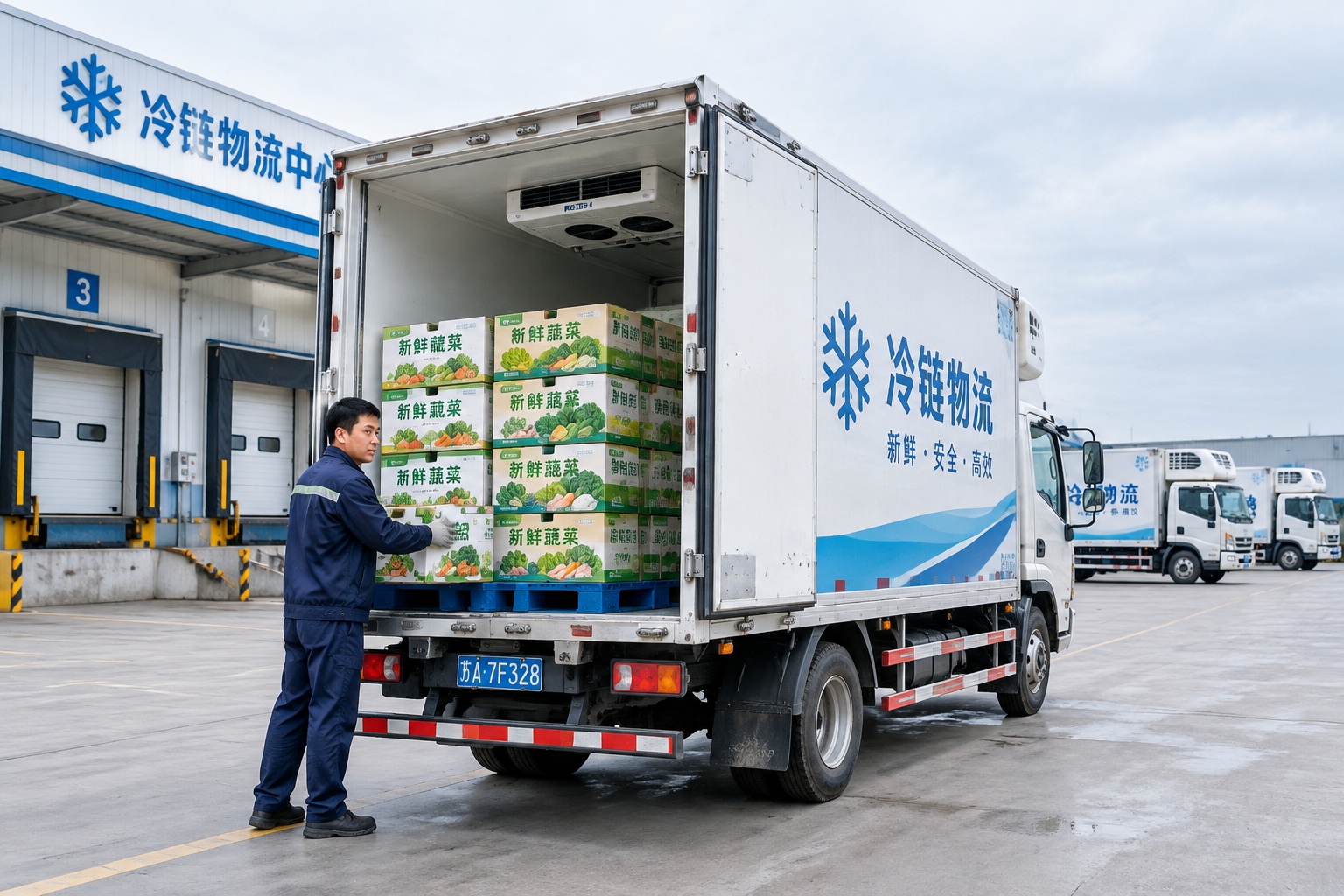
In many other corridors, produce moves by rail. Since the opening of new high-speed freight routes, some fresh fruit from Guangxi can reach Beijing in less than 24 hours. But for short and medium trips, trucks still win because they can go from field door to loading dock without transferring the load. A driver may receive his delivery contract from a freight-matching app, much like the way taxi drivers receive passengers. When the order is done, the app helps him find a return load, so the truck doesn’t travel empty.
Not All Tomatoes Visit Wholesale Markets
For decades, most fresh food in Chinese cities travelled to a wholesale market — a noisy, often colossal space under open-air sheds, where thousands of buyers and sellers gamble on daily prices. Beijing’s center for this is Xinfadi in the south of the city, which handles produce from all over China and even imports. The system still matters, but it is not the only route to dinner.
A more recent model, called “front-line warehouses” or “front cabins” inside the e-commerce companies, pulls food straight from farms or regional warehouses to the edge of city neighborhoods. In a typical Shanghai community, an ordinary-looking ground-floor store is actually a micro warehouse with three zones: chilled, frozen and ambient. It may hold up to 2,000 different fresh items in no more than 300 square meters. It is designed to let a trained picker fill an online order in under two minutes.
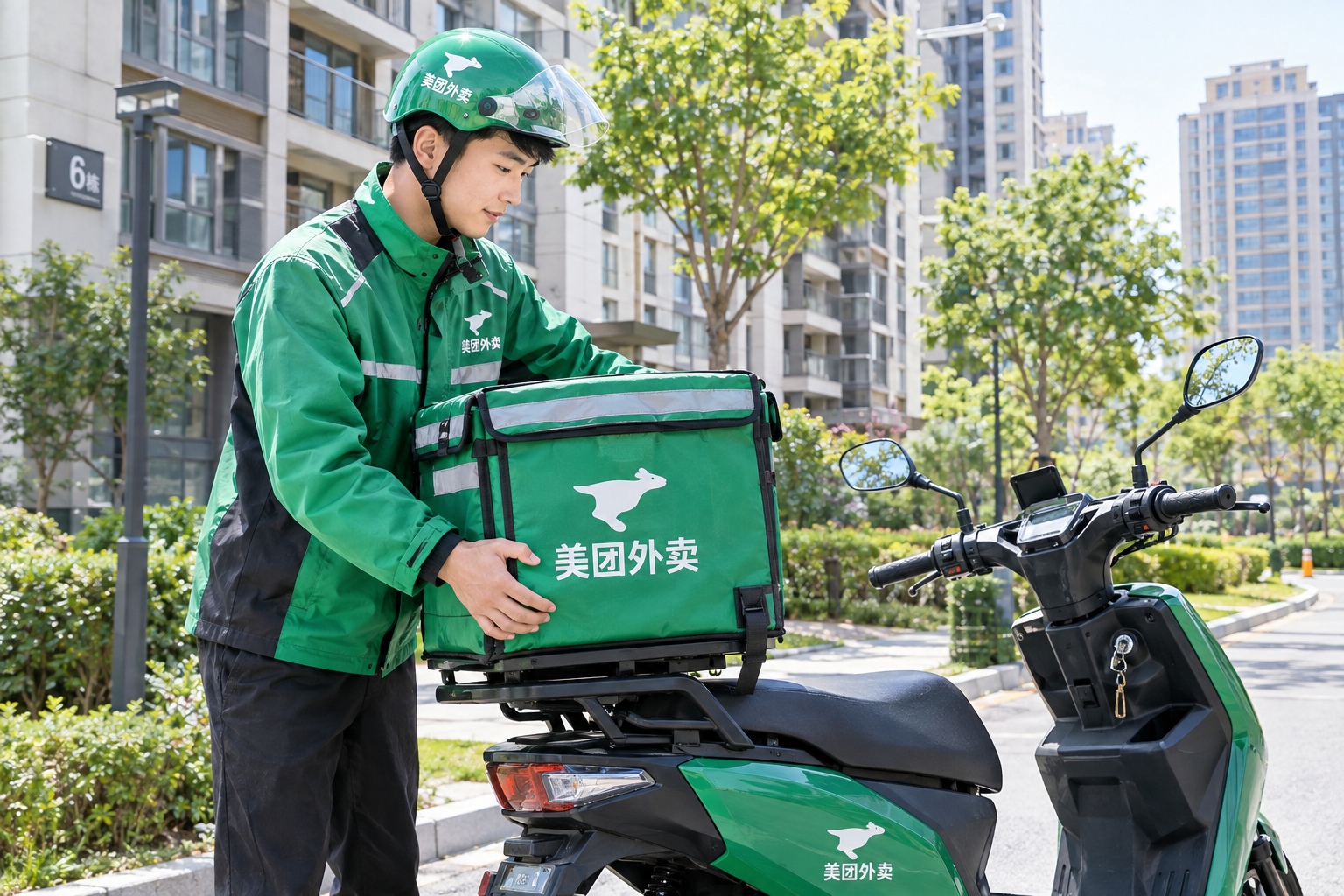
By 10 o’clock, Chen Lin’s tomatoes are loaded into an insulated delivery courier’s box. The rider’s route is planned by a navigation system that groups residences by floors and elevators. Forty minutes later, they arrive at her apartment. For Chen Lin, the distance between farm and fork has compressed to just a few hours.
Cold Storage Is Growing, but Gaps Remain
China’s cold chain industry has grown accordingly. Industry estimates say the country now has over 200 million cubic meters of cold storage and more than 400,000 refrigerated trucks, roughly double what it had in 2016. Chinese provinces have built high-standard farms, agricultural industrial parks and logistics hubs. The technology used by cold warehouses — from temperature mapping to electronic traceability — is everyday engineering.
Behind these numbers lives a less perfect reality. A lot of small farmers in central and western China still cannot afford local cold-storage rooms, and they remain at the mercy of the weather and the middlemen. When a highway is blocked by snow for half a day, perishable vegetables may lose 5 percent of their price or are turned into feed. In less-developed rural areas, fruit and vegetable loss after harvest is still above 20 percent, even though cities nearby enjoy abundant fresh supplies. So the bigger story should include two networks: the one you see when you open an app, and the uneven one that still exists away from wealthy provinces.
Trust and Transparency on a Plate
Food safety is a sensitive topic for Chinese eaters. Because fresh food crosses provinces and often changes hands, tracing a single item’s origin matters. Since around 2020, Chinese cities have pushed for digital food traceability. In many modern supermarkets, you can scan a QR code on a package and check the origin, the date of dispatch, and the laboratory inspection result of the farm.
At the edge of the food system, ordinary residents have become exacting customers. They expect leafy greens not to be wilted, and meat not to be grey. Delivery companies respond with shorter time windows: some offer “30-minute grocery delivery”, while “next-day” or “morning delivery” is now perceived as slow. The standard for fresh has risen so high that storage technology must keep pace.
Feeding the Future
The scale of China’s food logistics explains how dinner can be both cheap and fresh. But it also raises questions about energy and environmental cost. Electric trucks are slowly entering urban fleets, while packaging waste remains an unsolved problem. The next chapter will be about reducing that footprint, building cold-chain capacity in poorer farm regions, and making agriculture more resilient during floods, heatwaves and storms.
For now, Chen Lin is not thinking about any of this. She rinses the tomatoes, cracks a few eggs, and stir-fries dinner in eight minutes. The entire process that brought food from dirt and rain to her kitchen worked without her noticing. In China, that seems like the real achievement.
Start the discussion at forum.chinacomes.com