

The Evening Ritual
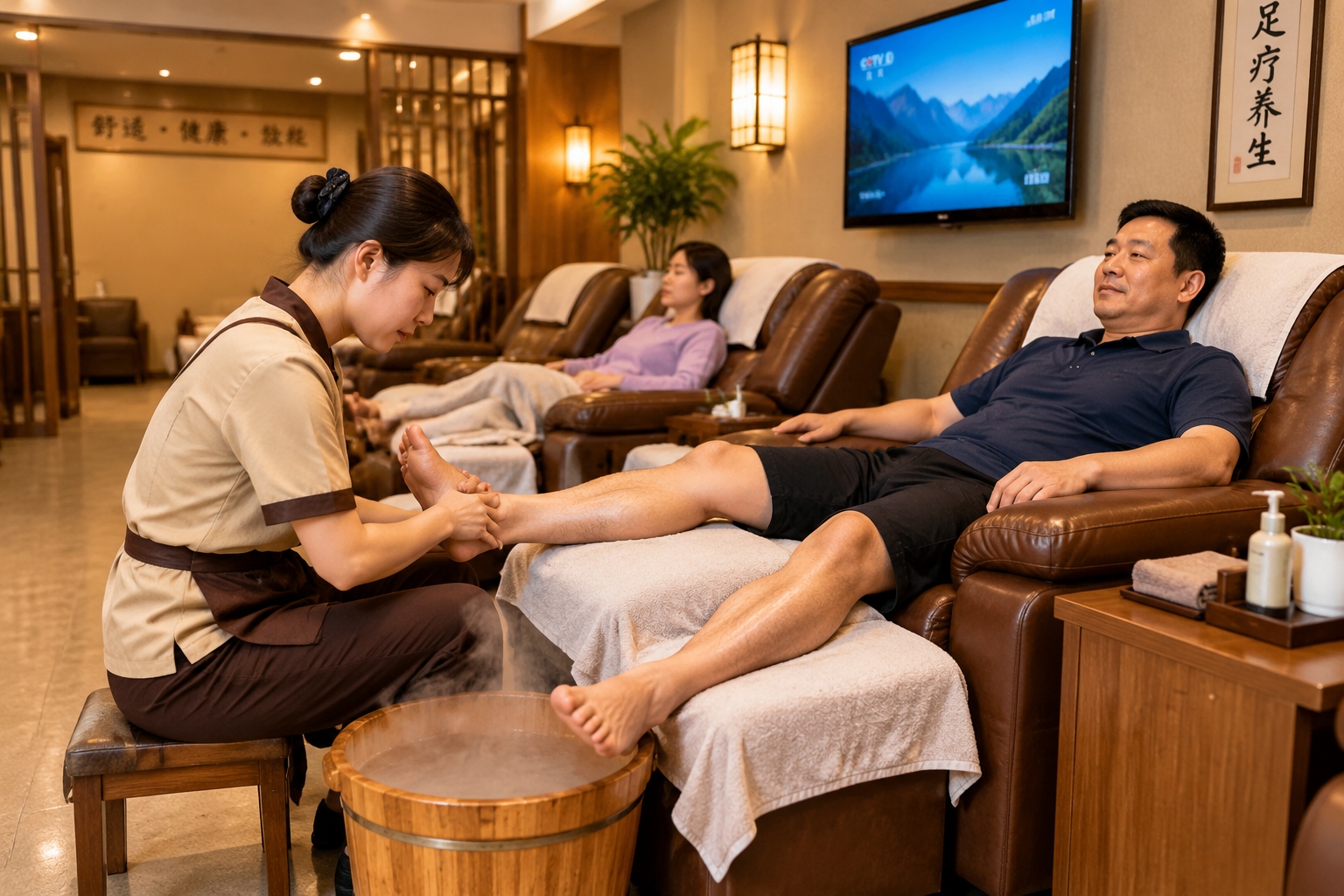
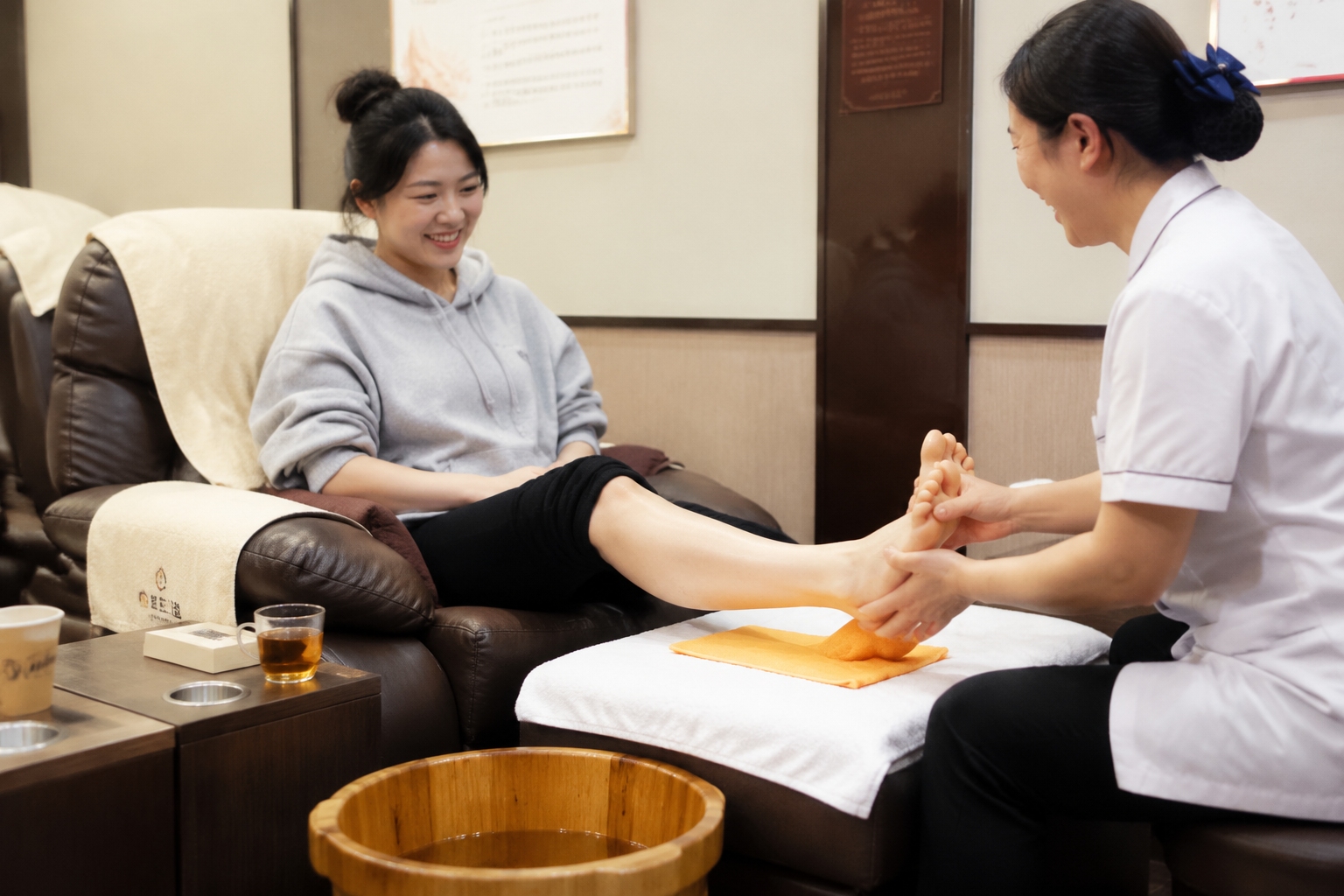
At nine on a Tuesday night, a small foot massage shop in a residential corner of Shanghai is still busy. The sliding door opens, and a young woman in a hoodie slips off her sneakers, sinks into a worn leather recliner, and lets out a long sigh. “The usual,” she says to the receptionist, who nods and starts filling a wooden bucket with hot water. The woman has been on her feet for ten hours at a nearby bakery. Tonight she wants a 40-minute foot massage with hot stones.
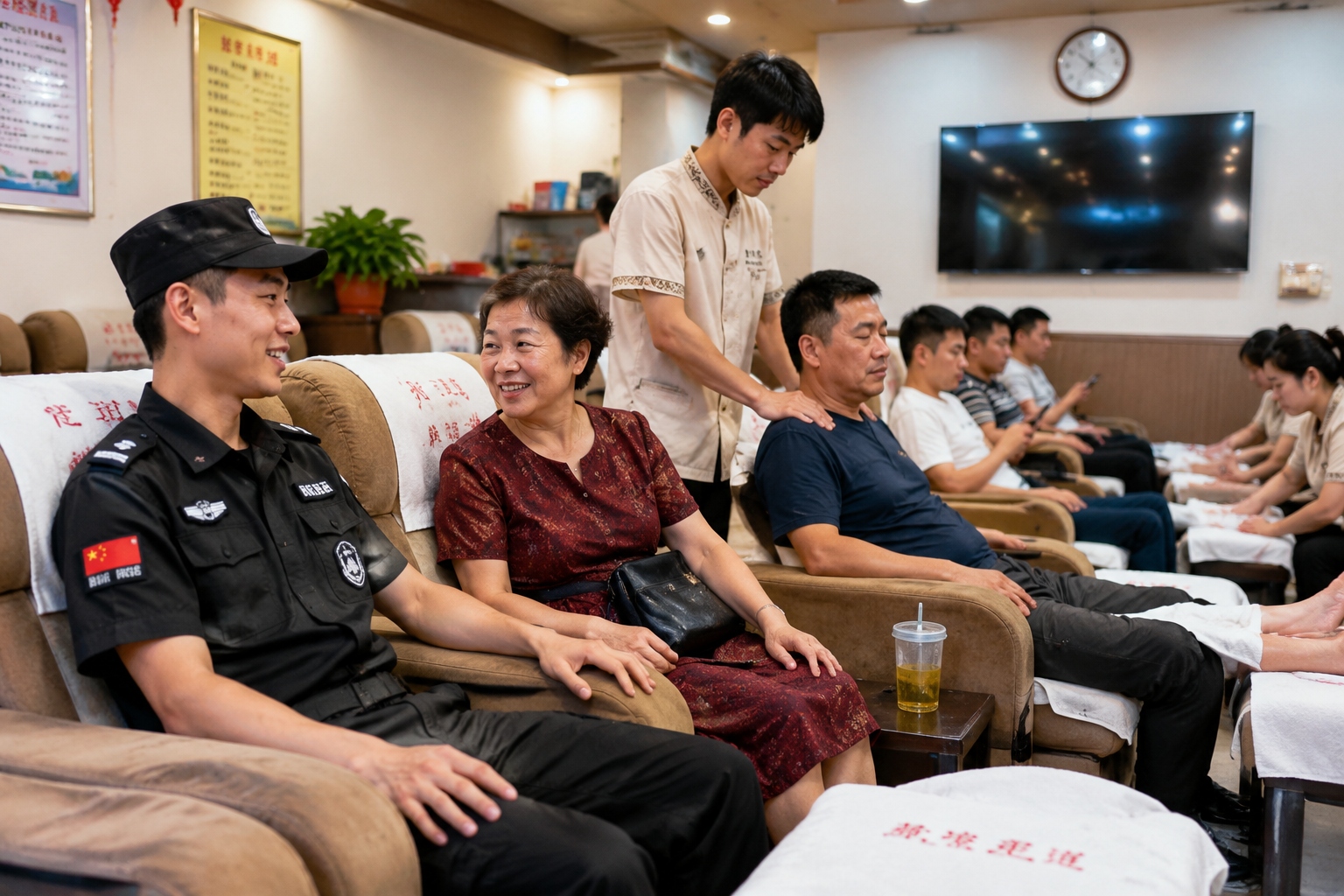
The shop is not fancy. There are plastic bins of dried herbs, a big-screen TV playing a Chinese drama, and the faint scent of mugwort and peppermint. On the wall, a printed price list: basic foot massage 68 yuan, full body massage 98 yuan. That’s about $9 and $14 respectively. Nobody here is a celebrity or a corporate tycoon. In the next chair, a security guard from the office tower across the street is scrolling his phone, his shoes placed neatly under the seat. Next to him, a retired grandmother is telling the therapist about her grandson’s piano exam. The door keeps opening: a courier, a teacher, a young couple. Within half an hour, every seat is filled.
Why Massage Is Not a Luxury
For many people outside China, getting a regular massage might sound like a self-indulgent treat. But here, it’s closer to buying a cup of coffee. A neighborhood foot massage costs about the same as a movie ticket or a pizza slice. In first-tier cities like Shanghai or Beijing, basic foot massages range from 60 to 120 yuan ($8–$17). In smaller cities, you can pay as little as 30 yuan. By contrast, a one-hour massage at a luxury hotel spa in New York or London often sets you back $150–$250.
This price difference is not the result of low wages alone. It’s about scale and competition. China has an estimated 500,000 foot massage shops, from tiny family-run parlors to national chains with thousands of locations. The industry employs millions of trained therapists, and the sheer number keeps prices down. The government has even issued national qualification standards for foot therapists, so you know the person pressing your sole has passed a real exam.
Low cost, however, does not mean low quality. In fact, many Chinese massage therapists are trained in reflexology—the practice of applying pressure to specific points on the feet that correspond to internal organs. It’s a tradition that traces back centuries, but today it’s a professional service open to everyone. You don’t need a membership or a special occasion to walk in. You just walk in.
A Hub of Community and Care
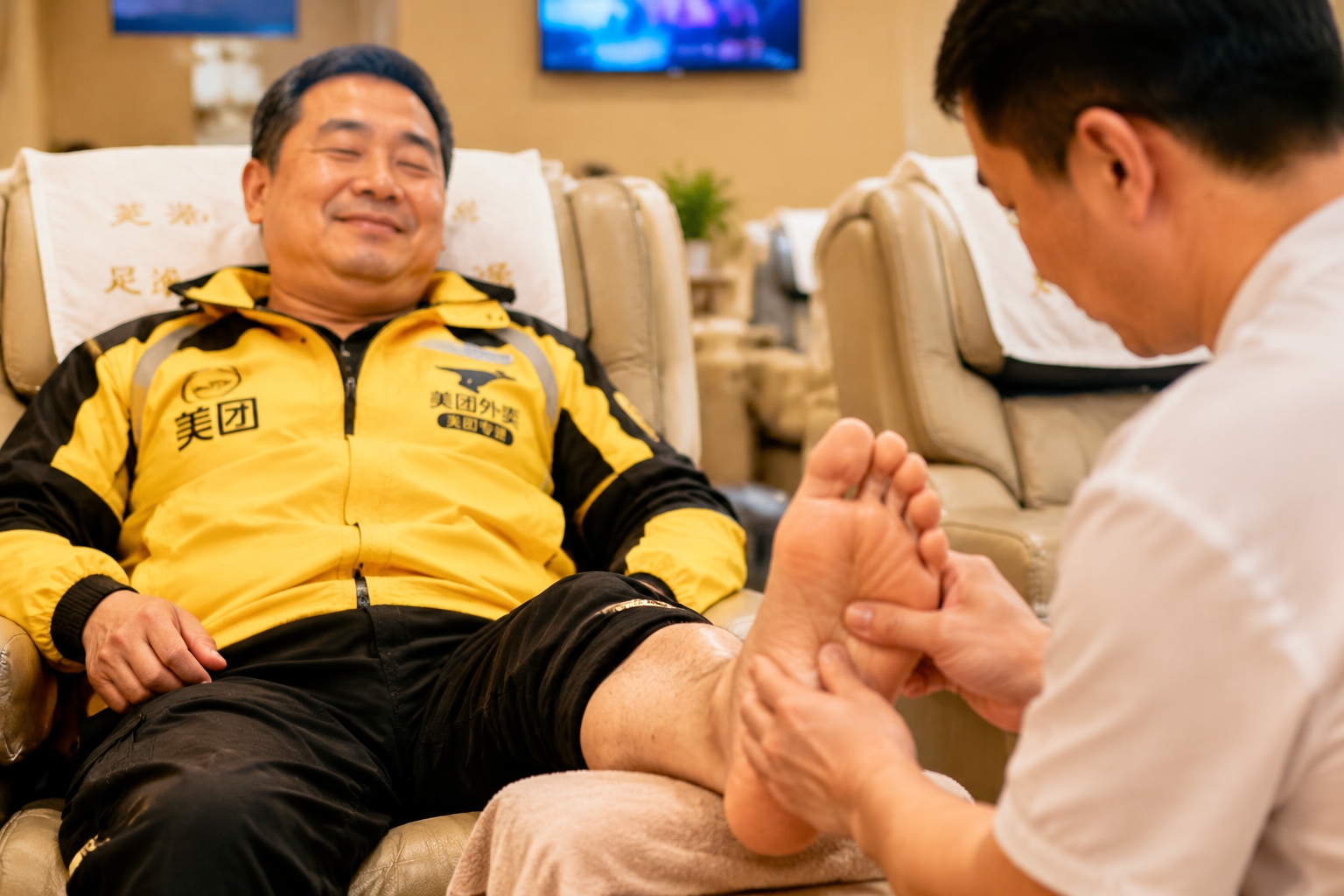
Step inside a typical parlor, and you’ll find a surprisingly social space. There are usually rows of reclining chairs, a large television, and a hot water dispenser with tea. People don’t just sit in silence. They chat with the therapists, who often know them by name. A delivery rider might be discussing his aching shoulders with the woman next to him. A middle-aged office manager might be asking the therapist for advice on knee pain—for his mother, not himself.
The therapists themselves are often migrants from smaller towns who moved to the city to build a better life. Many have completed months of intensive training, then taken a certification exam. They are proud of their skills, and they are not shy about offering health tips. Once, when I mentioned that my eyes felt tired, the therapist pressed a point between my thumb and index finger. “That’s for the eyes,” she said. “Do it yourself after long screen time.” It’s that kind of personal, cost-effective care that turns a business transaction into a ritual of human connection.
Some regulars use the shop as an extension of their living room. They bring their own tea, or nap for twenty minutes, or even set up a laptop and work while the therapist works on their feet. The sound of snoring is not uncommon. In that sense, a foot massage shop is less like a clinic and more like a neighborhood café—a place to pause, reset, and be taken care of.
The Culture Behind the Kneading
Why has massage become so woven into the rhythm of daily life in China? One reason is tradition. In Chinese medicine, the feet are called the “second heart.” They contain more than sixty acupoints connected to different organs, and massaging them can improve circulation, relieve stress, and prevent illness. For generations, older people have soaked their feet in warm water before bed. Going to a professional massage parlor is simply an upgraded version of that home habit.
Another reason is speed. Chinese cities move fast, and workers often have long commutes and long hours. A 30-minute foot massage during a lunch break or after a late shift is an efficient way to decompress. Most shops open from 10 a.m. to midnight, and many stay open past 1 a.m. on weekends. They meet people where they are—literally, on nearly every commercial street.
But perhaps the most important factor is consumer attitude. The so-called “golden shield” generation—people born after the 1980s and 1990s—does not view small spending as waste. They are willing to pay for comfort and convenience as long as it feels fair. A 60-yuan massage is seen as an investment in tomorrow’s productivity, not an extravagance. The same logic explains why so many convenience stores sell hot tea and ready-made snacks, why people rent karaoke booths for a few dollars an hour, and why street food stalls are packed late into the night. These aren’t luxuries; they’re the texture of ordinary life.
Redefining the Ordinary Chinese Day
For years, foreign media have tended to portray China in extremes. Either you see the country as a workshop of tireless workers who live only to produce, or as a playground for the ultra-wealthy who buy up luxury goods. Both pictures are caricatures. The great middle of Chinese society—the office clerks, the delivery riders, the schoolteachers, the shop assistants—expects comfort, and they get it at a price that doesn’t demand a second thought.
The foot massage parlor is a small but vivid counterpoint to these stereotypes. It shows a society where self-care is not reserved for the rich, where a working mother can take an hour to herself for less than the cost of a sandwich, and where an essential part of wellbeing is just built into the street.
So the next time you imagine China, don’t just picture factories and high-speed trains. Picture a warm, dimly lit room, the murmur of conversation, the sigh of someone letting go of a long day. Picture a security guard and a grandmother and a bakery cashier, all in their own recliners, all being loved by strong, careful hands. That, too, is China. It’s not a luxury. It’s a normal Tuesday night.
Start the discussion at forum.chinacomes.com