

The Weekend Scene That’s Hard to Miss
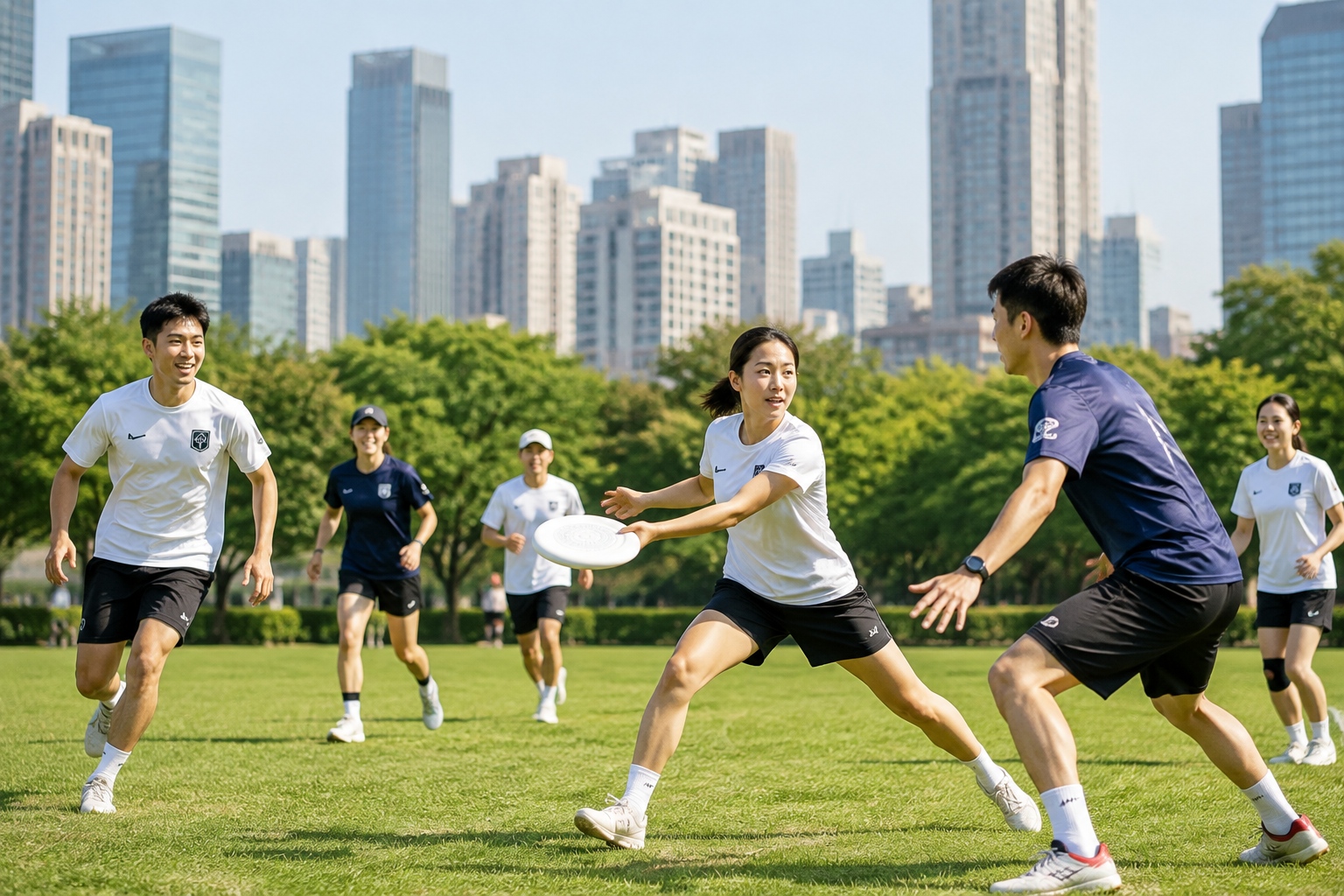
On a Saturday afternoon, a group of young people in a Shanghai park are throwing a black-and-white disc back and forth. Some are beginners, some have clearly practiced before. They laugh, sprint, and cheer for each other. Weekends like this are now common across Chinese cities — from Beijing’s Chaoyang Park to Chengdu’s greenways — as young adults swap basketball courts and soccer fields for open grass and a 175-gram plastic disc.
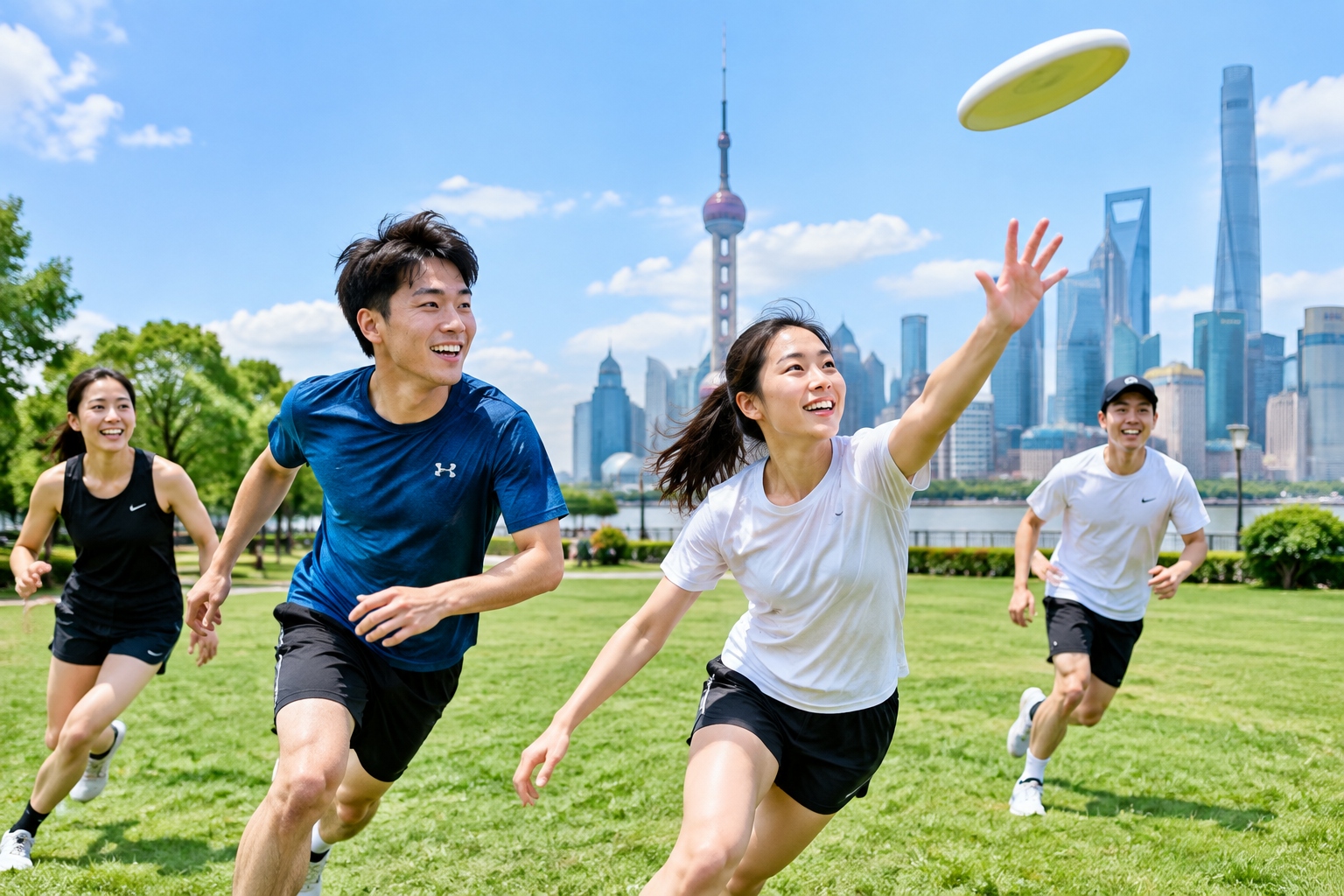
That scene raises an obvious question: when did a game that many associate with beach holidays become one of China’s fastest-growing urban sports? And why is it the young, the urban, and the style-conscious who are most hooked?
How Did a 1980s Game Suddenly Explode in China?
Frisbee is hardly new to China. Chinese universities have had frisbee societies for over a decade, but they were niche. Then came the pandemic. From 2020, people were desperate for outdoor activities that felt safe and social. The game’s big moment arrived around 2022, when it seemed to flood Instagram-like app Xiaohongshu (Little Red Book), where lifestyle and sports content go viral.
According to public reports, Xiaohongshu saw a dramatic surge in frisbee-related posts and searches in 2022. Searches for “frisbee” grew nearly 500% in just a few months. E-commerce platforms reported that frisbee sales doubled or tripled year on year. Clubs that had a few dozen members suddenly found themselves managing hundreds of sign-ups. City sports events added frisbee to their schedules, and brands began sponsoring local tournaments.
What made it go viral was not just the sport itself, but the ecosystem around it. On Xiaohongshu, frisbee posts came with sun-drenched photos, well-designed jerseys, and group shots that looked more like a lifestyle magazine than a match report. For a generation raised on social media, the visual appeal mattered. It was photogenic, affordable, and easy to learn – perfect for a short video or a nice Instagram story.
Why Are Young Chinese Choosing Frisbee Over Basketball or Soccer?
Traditional team sports in China, like basketball and soccer, have a higher entry threshold. They demand a certain level of skill, physical endurance, and often a specific gender composition. Basketball courts are dominated by men; soccer pitches have their own club culture. For many young women and less athletic men, these spaces can feel intimidating.
Frisbee is different. There is no complex set of skills to master: within fifteen minutes, a beginner can throw, catch, and join a game. It’s also cheap – a frisbee costs as little as 30 to 50 yuan (about $4-7), and most city parks are free. The social side is built into the sport. After games, teams often go for dinner together. It’s less about winning and more about belonging to a group, enjoying the outdoors, and having a good workout without the pressure.
There is also the aesthetic factor. Let’s be honest: it looks good. The colors, the open grass, the dynamic poses, the group photos – all of it creates a desirable “urban sport” image. On a platform like Xiaohongshu, that’s enough to drive a trend.
More Than a Game: Inside a City Frisbee Club
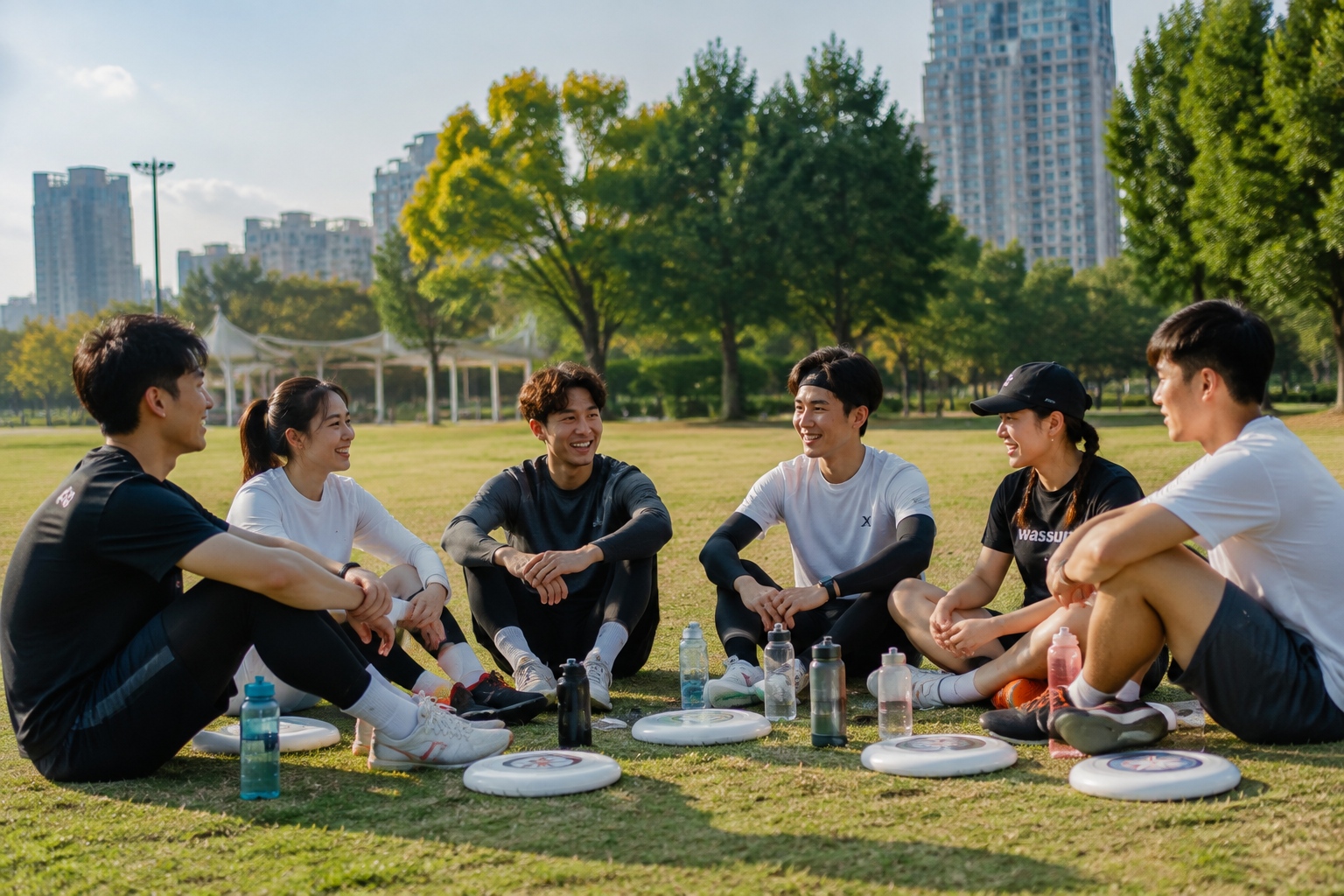
To understand the fixation, I spoke with members of a Shanghai-based frisbee club. Li Jia, a 26-year-old marketer, first tried frisbee in April 2022 after seeing a post on Xiaohongshu. “I had played soccer before, but I always felt like an outsider,” she says. “In frisbee, the atmosphere was immediately inclusive. The captain welcomed me, taught me the basic throwing technique, and by the end of the first session, I felt like part of the team.”
Li now plays every Sunday afternoon, rain or shine, and also helps organize social events. “It’s not just about exercise,” she tells me. “It’s a community. We celebrate birthdays together, support each other at work, and sometimes travel together for tournaments.”
Her club, which once had around 30 regulars, now has over 200 active members, with a waiting list for weekend sessions. Club organizers say the surge is not just from people wanting an activity; it’s from people wanting a connection. Frisbee clubs function as social clubs with a sports layer on top.
A New Kind of Urban Sport Culture
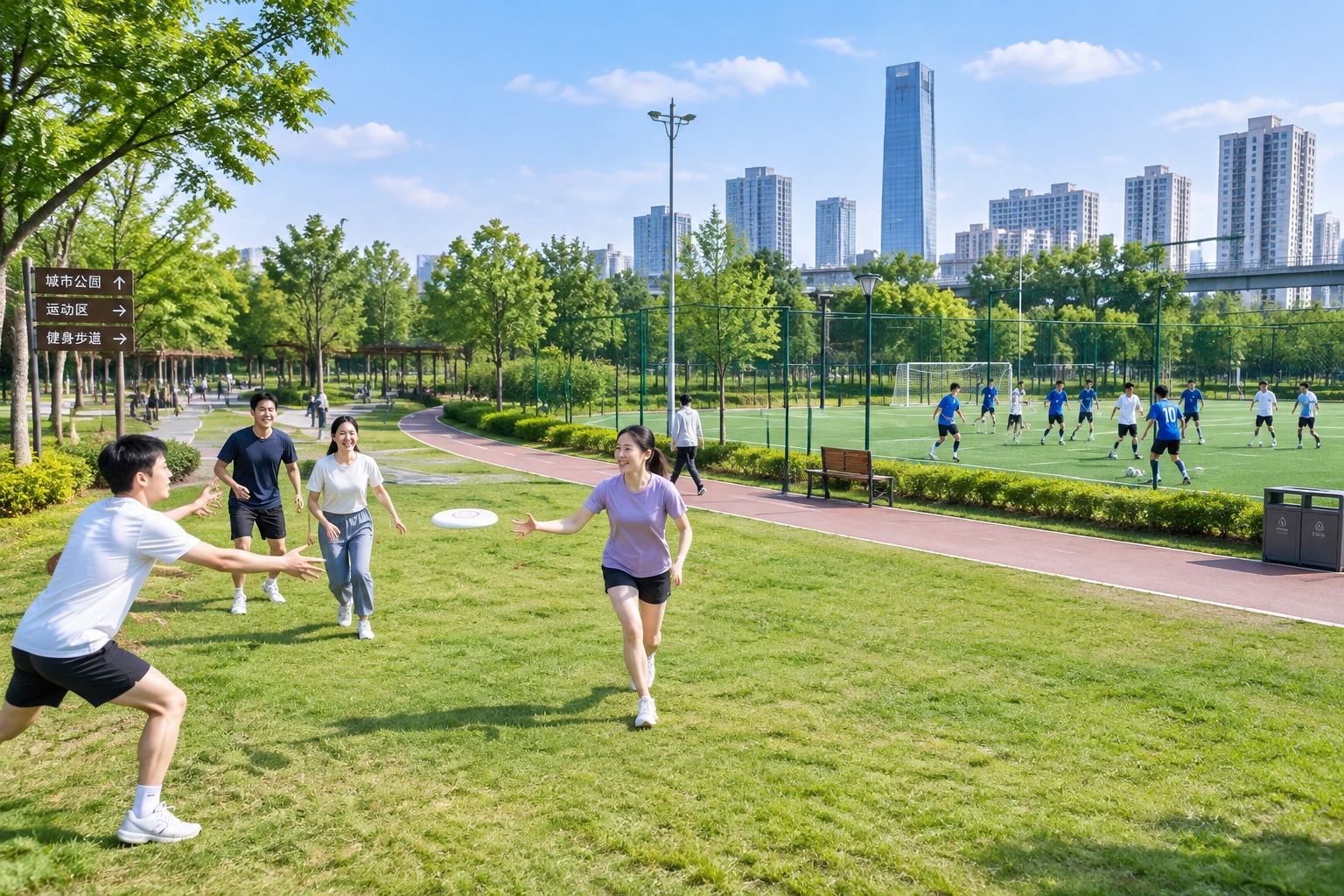
The frisbee boom is also a story about public space. Chinese cities have invested heavily in parks and greenways in recent years, but not all of these spaces are well designed for sports. Traditional ball sports need facilities. Frisbee only needs grass, so parks that were once just for strolling are now being used for active recreation.
City administrations have noticed. Some parks have set aside specific areas for frisbee; others have added dedicated sports lawns. Local sports bureaus have included frisbee in public fitness initiatives. The sport is also being used in some schools as a mixed-gender physical education class.
But rapid growth has also created friction. In some parks, dog walkers have complained about frisbees flying in their direction. Soccer players complain about frisbee groups occupying pitches. These conflicts are, in their own way, a sign of how many different groups now want a share of the same green space. Finding a balance is an ongoing process.
Beyond the logistics, frisbee has become a cultural symbol for young Chinese – a badge of an urban lifestyle that values freedom, equality and fun. It represents a move away from the competitive, zero-sum thinking embedded in many traditional sports, and a step towards a more relaxed attitude to exercise and society.
Will the Frisbee Fever Last?
Every trend cools down, and frisbee is no exception. Some observers have already predicted a fade, pointing to the end of pandemic-era restrictions and a return to other activities. Yet the sport’s standard-bearers believe the core habit is here to stay.
“The people who came in 2022 because it was trendy may leave, but a significant number will stay because it’s a good sport and a good community,” says Li Jia. “Casual frisbee has become part of the urban rhythm, like running.”
Indeed, the boom has helped establish a local infrastructure: training leagues, coaches, indoor winter facilities, and a steady calendar of tournaments. If participation levels off, it will still be a vastly bigger sport than it was before 2020.
Conclusion
The sudden obsession with frisbee in China is really about a generation’s search for something missing in modern urban life: easy access to outdoor activity, a social circle outside work, and a way to express themselves without excessive performance pressure. It took social media to spark the trend, but what sustains it is something deeper: a community feeling and the simple, human pleasure of running after a plastic disc on a Sunday afternoon.
In that sense, frisbee is not just a game. It’s a quiet reassessment of how young Chinese choose to spend their free time, and what they expect from city life.
Start the discussion at forum.chinacomes.com